Skip to content
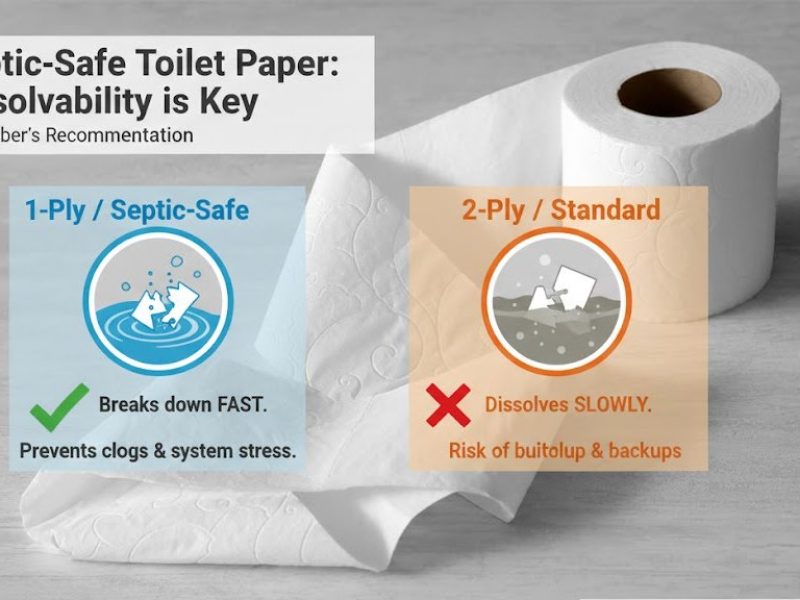
Selecting the right toilet paper for a home with a septic system involves more than personal comfort—it directly affects how efficiently the system operates. The wrong type can increase maintenance frequency and the risk of clogs, while the right one supports long-term reliability and lower upkeep costs. This article breaks down the key differences between 1‑ply and 2‑ply toilet paper, comparing their dissolvability, material use, comfort, and impact on septic performance so you can make an informed, system-safe choice.
Core Differences at a Glance
This table compares 1‑ply and 2‑ply toilet papers in terms of comfort, dissolvability, cost, and environmental impact. It provides a quick overview to help you choose the best option based on your septic system’s condition, performance, and maintenance requirements.
| Feature | 1‑Ply Toilet Paper | 2‑Ply Toilet Paper |
|---|---|---|
| Thickness & Comfort | Thinner, less durable, and less cushioned | Thicker, sturdier, and more comfortable |
| Dissolvability | Dissolves rapidly; ideal for septic system health | Dissolves more slowly; may raise clog risk |
| Material Usage & Cost | Uses less pulp and is typically more economical | Uses more material and is usually higher priced |
| Septic System Impact | Reduces buildup and lowers maintenance frequency | Can require more frequent pumping and system checks |
| Environmental Considerations | More sustainable due to lower fiber and energy use | Higher resource use; opt for recycled or septic‑safe options |
What Is 1-Ply Toilet Paper?
Definition and Features
1-ply toilet paper is made from a single layer of paper, giving it a thinner texture than multi-ply options. This lightweight structure makes it easy to tear and quick to dissolve once flushed, which helps prevent buildup and protects both the septic tank and plumbing system.
Because it disintegrates rapidly in water, 1-ply is often the safer choice for septic systems, particularly those that are older or have limited capacity. Its fast breakdown minimizes clogs and extends the life of septic components. It also requires fewer raw materials to produce, making it both affordable and environmentally considerate.
While it may lack the plush feel of thicker papers, 1-ply delivers a practical balance of comfort, system safety, and cost efficiency. For households focused on reliability and sustainability, it supports smooth septic performance without compromising hygiene or usability.
What Is 2-Ply Toilet Paper?
Definition and Features
2‑ply toilet paper consists of two bonded layers, giving it added thickness, softness, and durability compared to single‑ply options. The extra layer provides a smoother texture and stronger sheet, which many households prefer for comfort and reliability in everyday use.
However, its denser construction means it usually dissolves more slowly after flushing. The additional material can accumulate in septic systems—especially older or less efficient ones—raising the potential for buildup or more frequent maintenance. Non‑septic‑safe versions of 2‑ply should be used with caution in such systems.
Recent product innovations have addressed many of these concerns. High‑quality 2‑ply papers labeled “septic‑safe” are engineered to break down more efficiently while maintaining softness. For newer or well‑maintained septic setups, these improved versions offer a balanced approach—combining everyday comfort with dependable plumbing performance.
Custom Toilet Paper Solutions Built for Your Brand
Top Source Hygiene brings nearly three decades of expertise in producing high-quality, customizable toilet paper. Whether you prefer soft virgin pulp or sustainable bamboo, our OEM services help you design products that align with your brand and customer values. We ensure consistent quality and on-time global delivery so your supply chain runs smoothly and your customers trust every roll.
Head-to-Head Showdown: 1-Ply vs. 2-Ply Toilet Paper
Dissolvability and Septic Safety
The dissolvability of toilet paper is a critical consideration for any home with a septic system. Single‑ply paper breaks down rapidly in water, minimizing the likelihood of buildup in pipes or tanks. This quick disintegration helps prevent blockages, maintains healthy bacterial balance in the septic tank, and reduces the need for frequent pumping or maintenance.
In contrast, two‑ply toilet paper—composed of two bonded layers—dissolves more slowly. Although some “septic‑safe” variants degrade faster, heavier materials can remain longer in the system. For newer or well‑maintained setups, high‑quality septic‑safe two‑ply can perform reliably, while older or sensitive systems benefit more from single‑ply’s faster breakdown. Overall, single‑ply offers greater assurance for long‑term system protection.
Comfort and User Experience
Comfort often drives household preference. Two‑ply paper delivers a thicker, softer texture that appeals to users seeking a smoother feel and stronger durability. It typically absorbs more effectively, requiring fewer sheets per use and providing a sense of efficiency and quality.
Single‑ply paper, while thinner and less cushioned, remains fully functional and hygienic for most households. Many choose it for practicality, especially when preserving septic performance is a priority. Increasingly, brands offer septic‑safe two‑ply options that retain softness while dissolving efficiently—a balanced solution for families seeking both comfort and system safety.
Environmental Impact and Material Use
The environmental impact of toilet paper depends heavily on ply count and manufacturing inputs. Single‑ply paper uses fewer fibers, involves less processing, and generally consumes less energy, making it a more sustainable and economical option for resource‑conscious homeowners.
Two‑ply varieties enhance comfort but require more material and often greater water and chemical use during production. Selecting paper certified by the Forest Stewardship Council (FSC) or labeled biodegradable supports both septic health and environmental responsibility. For eco‑focused households, single‑ply or recycled options help reduce resource consumption while maintaining reliable septic performance.
Selecting the Right Toilet Paper for Your Septic System’s Condition
The ideal toilet paper for your home depends largely on your septic system’s age, capacity, and upkeep. Some households prioritize softness, while others focus on minimizing maintenance and extending system life. Understanding how different paper types interact with your setup helps you balance comfort, dissolvability, and long-term reliability.
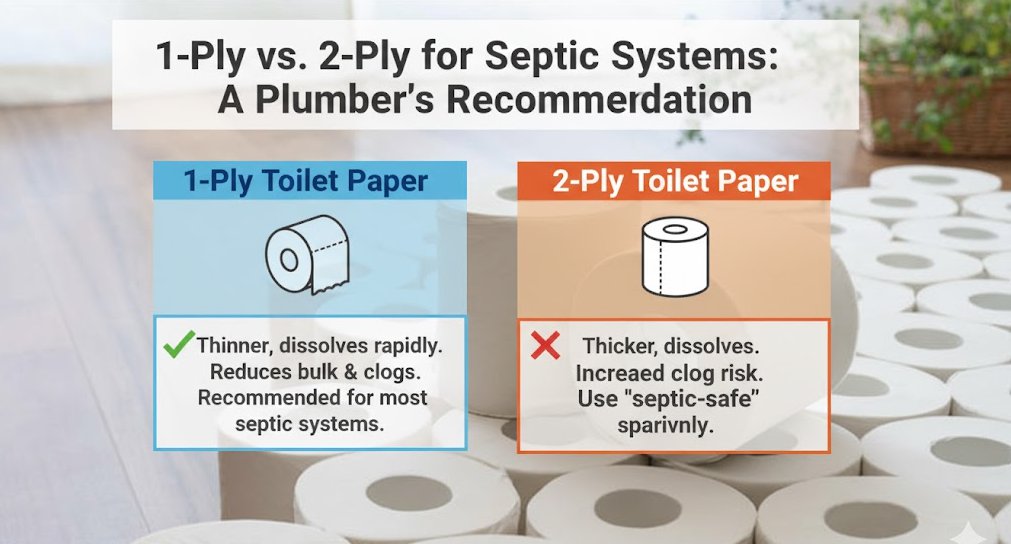
If your system is older, prone to slow drainage, or you prefer fewer maintenance interventions, single‑ply paper is the safer choice. It dissolves quickly, uses less material, and keeps waste lines clear. For newer, well‑maintained systems, a high‑quality, septic‑safe two‑ply paper typically delivers better comfort without increasing the risk of blockages.
Household usage also plays a role. Larger families or homes with frequent flushing introduce more paper into the system, making single‑ply more efficient for maintaining flow and capacity. Regular inspections and pump‑outs can add flexibility if you prefer the feel of thicker paper while keeping your system performing efficiently.
Plumbing Maintenance and Septic System Longevity
The type of toilet paper you use can significantly influence the health and longevity of your septic system. Selecting a septic-safe option helps reduce long-term maintenance, while unsuitable paper can gradually shorten the system’s lifespan.
Single-ply toilet paper dissolves quickly, minimizing residue in pipes and preventing excess material from reaching the septic tank. This fast breakdown helps avoid clogs, backups, and unnecessary service calls. In contrast, thicker two-ply varieties dissolve more slowly, which can lead to sludge buildup and require more frequent pumping or inspections.
Avoid chlorine-bleached paper, as it can disrupt the beneficial bacteria essential to septic function. Opting for biodegradable or NSF-certified products supports these natural biological processes, helping both plumbing and wastewater components operate efficiently for years to come.
Frequently Asked Questions
Is 1‑ply toilet paper better for a septic tank?
Yes. Single‑ply paper dissolves faster, allowing waste to pass smoothly through plumbing and preventing buildup in the septic tank. It uses less material and is generally safer for older systems or homes prone to clogs.
Can I use 2‑ply toilet paper with a septic system?
Yes, provided the product is labeled septic‑safe. High‑quality 2‑ply paper dissolves adequately in well‑maintained systems, though it introduces more material and may require more frequent pumping in smaller or older setups.
What type of toilet paper dissolves the fastest?
Single‑ply or biodegradable toilet paper dissolves most quickly. Septic‑safe varieties are tested to disintegrate rapidly in water, reducing clog risk and supporting a balanced microbial environment in the tank.
Is 3‑ply toilet paper safe for septic systems?
Three‑ply paper is rarely recommended. Its thickness slows dissolving, increasing the risk of blockages and more frequent maintenance. Even “septic‑safe” 3‑ply paper should be used sparingly, if at all.
Does thicker toilet paper fill a septic tank faster?
Yes. Thicker or multi‑ply papers add more volume and break down slowly, causing the tank to fill more quickly. Choosing single‑ply or recycled options can extend pumping intervals and keep your system operating efficiently.
Final Thoughts
The choice between 1‑ply and 2‑ply toilet paper ultimately depends on your septic system’s condition and your comfort preferences. For older plumbing or systems prone to buildup, 1‑ply remains the safer option because it dissolves quickly and places minimal strain on the tank. Its efficient breakdown also supports lower maintenance and reduced environmental impact.
In newer, well‑maintained systems, a high‑quality, septic‑safe 2‑ply paper can deliver added softness and durability without increasing risk—provided it’s used responsibly. Whichever type you select, prioritize biodegradable or certified septic‑safe products and maintain your septic system on a regular schedule to ensure consistent, long‑term performance.