Skip to content

Sourcing from a paper mill requires more than just checking price points; a single failure in process stability can ruin an entire production run of OEM hygiene products. Buyers need to verify that a facility maintains a process capability index (Cpk) of 1.33 and keeps airborne dust levels below the 5 mg/m³ threshold to ensure both product strength and site safety. Without these specific technical benchmarks, maintaining the quality of high-volume orders remains a significant risk for 2026 supply chains.
This guide details a 32-point inspection framework to help you evaluate potential manufacturing partners. We examine machine-level technical testing for ISO 1924-2 tensile strength, social compliance through BSCI and SEDEX, and the engineering controls necessary for raw material moisture management. You will also find specific criteria for automation integration and essential safety protocols for equipment fit that define a top-tier factory audit checklist.
Why Paper Mills Require Specific Audits
Paper mill audits are essential because continuous production processes like pulping and drying directly impact critical properties such as tensile strength and grammage. These audits verify that mills maintain a process capability index of 1.33 and adhere to ISO/TAPPI standards, ensuring consistency in high-volume OEM/ODM manufacturing for 2026 global markets.
Continuous Process Stability and Compliance Standards
Auditors verify that the facility holds active ISO 9001, 14001, and 22000 certifications. These documents confirm that the site manages quality, environmental impact, and safety risks according to international expectations. For mills producing materials for food packaging, compliance with FDA 21 CFR 176.170 is a mandatory checkpoint to ensure the paper is safe for food contact.
The audit team evaluates the process capability index (Cpk) to ensure it stays at or above 1.33. This metric proves the mill can produce consistent quality across high outputs, such as a 2,860-ton monthly run, without significant deviation. Furthermore, the inspection includes a review of change control logs. Any shift in raw materials or equipment upgrades must be documented to prevent unapproved changes from altering the final product specifications.
Technical Testing Protocols and Machine-Level Inspections
Technical validation takes place in climate-controlled laboratories maintained at 23°C and 50% humidity. Testing follows strict ISO standards, including ISO 536 for grammage, ISO 287 for moisture levels, and ISO 1924-2 for tensile strength. These benchmarks ensure the paper performs correctly during high-speed printing or converting. Additionally, auditors apply burst strength tests under ISO 2758 and Cobb absorptiveness tests under ISO 535 to confirm the material meets regional hygiene and durability requirements.
On the production floor, inspectors examine specific machine subsystems including the stock approach, vacuum systems, and reel components. Tools like infrared thermometers help monitor bearing temperatures to identify potential mechanical failures before they impact the run. The audit also covers the intake of recycled materials. Using EN 643 grades, auditors perform visual and gravimetric assessments to ensure incoming fibers are free from contaminants that could damage mill machinery or degrade the finished paper.

Machinery & Automation: Assessing Production Speed
Assessing production speed requires measuring Overall Equipment Effectiveness (OEE) and throughput consistency. By 2026, paper mills use SCADA and ERP integration to monitor real-time output, identifying bottlenecks in manual labor and machinery age to ensure high-speed delivery of products like the 2,860-ton monthly capacity at Top Source Hygiene.
Key Performance Metrics and OEE Benchmarks
Measuring machine efficiency starts with tracking Overall Equipment Effectiveness (OEE). Data from Peak Performance Assessments show that factories can target an improvement of 22 points by identifying specific operational gaps. These assessments involve on-site visits from reliability engineers and subject matter experts who evaluate maintenance and asset health to pinpoint exactly where speed drops occur.
Engineering teams use Factory Acceptance Testing (FAT) to set hard targets for new or upgraded equipment. These targets focus on specific metrics such as seconds per part cycled and total machine runtime hours per shift. By analyzing annual unit production against these benchmarks, management can determine if the machinery ROI justifies replacing manual labor processes. Adopting Lean Six Sigma guidelines further helps teams spot minor variations in the cycle that lead to waste or unexpected slowdowns.
Automation Integration and Real-Time Monitoring
Modern paper mill audits emphasize the role of SCADA systems in bridging data gaps. Older machinery often lacks the built-in sensors needed for precise tracking, so implementing SCADA provides the necessary oversight for process integration. When these systems connect with an ERP, production data flows directly to decision-makers, allowing for more accurate operational planning for the 2026 fiscal year and beyond.
Integrating modular workcells allows for real-time traceability and instant defect analysis. This setup ensures that high-speed demands do not compromise quality, as any deviation in speed metrics triggers an immediate review. Beyond output volume, these upgrades impact the bottom line through maintenance optimization. Refined monitoring and asset management can yield significant financial gains, with documented savings reaching between $2 million and $2.3 million over a four-year cycle for large-scale producers.
Quality Control Nodes: From Raw Pulp to Individual Wrap
Modern mills in 2026 utilize Advanced Process Control (APC) and Quality Management Systems (QMS) to monitor variables like Kappa number, moisture, and basis weight. These sensors track pulp consistency and sheet profiles in real-time, allowing manufacturers to trace every finished roll back to specific chemical and thermal conditions in the fiber line.
| Process Stage | Critical Control Variables | Instrumentation Technology |
|---|---|---|
| Pulping & Digestion | Kappa Number, Residual Alkali, Chip Moisture (45–55%) | NIR Analyzers, Model Predictive Control (MPC) |
| Bleaching & Washing | ISO Brightness, pH, Black Liquor Density Variation | Online Conductivity & pH Sensors, Soft Sensors |
| Paper Machine (QCS) | Basis Weight (up to 4900 gsm), Caliper, Moisture | Krypton (STLK11) / Strontium (TLS-1) Nucleonic Scanners |
Fiber Line Instrumentation and Chemical Stability
Mill operators stabilize front-end quality by monitoring wood chip moisture via Near-Infrared (NIR) or microwave analyzers. Maintaining chips within a 45–55% moisture range ensures consistent digester residence time and prevents fluctuations in the Kappa number. By using Model Predictive Control (MPC), systems like the ABB OPT800 predict residual lignin levels and adjust alkali charges before off-spec pulp moves to the washing stages. This proactive adjustment reduces chemical waste and protects downstream energy balances by stabilizing black liquor density.
The bleaching process relies on continuous loops that track pulp consistency, brightness, and pH. Online analyzers detect residual chemicals to prevent over-bleaching, which can degrade fiber strength. Modern pulp tracking software forecasts when a specific “slug” of material will hit the next stage, allowing for precise chemical dosing. These nodes ensure the fiber meets ISO brightness and conductivity standards before entering the stock preparation area, where flow and freeness are managed to set the foundation for the final basis weight.
Online QCS Scanning and Final Product Reconciliation
At the paper machine, Quality Control System (QCS) platforms deploy scanners reaching up to 10.23 meters in trim. These scanners use Krypton or Strontium sources to measure basis weight with high precision across a wide range of grades. Dual-beam infrared sensors provide real-time profiles of moisture and fiber orientation, which are essential for maintaining sheet runnability and strength. For specialized light tissue production, manufacturers use HPIR-FW sensors to combine moisture and ash measurements into a single scanning head, reducing maintenance complexity while maintaining accuracy.
Final product reconciliation occurs when the system integrates real-time scanning data with unique roll IDs. This data link allows the mill to trace the quality of an individual wrap back to the specific thermal and chemical conditions present during the pulping stage. Automated profilers for coat weight and induction heating correct cross-directional deviations instantly. By aligning lab results with online process data, compliance teams can verify that every roll meets the required 2σ statistical performance for caliper and moisture before it leaves the facility.
Scale Your Brand with China’s Premier OEM Toilet Paper Manufacturer

Social Compliance: Understanding BSCI and SEDEX
BSCI and SEDEX SMETA serve as the primary global benchmarks for social compliance in the paper manufacturing supply chain. BSCI operates through an amfori-managed system tailored to a 1,000-member European buyer network, while SEDEX SMETA supports over 60,000 companies with a UK-centric origin. Both frameworks verify that factories adhere to International Labour Organization (ILO) standards and ethical business practices to secure 2026 operations.
Core Principles of amfori BSCI and SEDEX SMETA
Both frameworks align with the International Labour Organization (ILO) guidelines and the UN Guiding Principles on human rights to create a unified standard for labor protection. These systems ensure that paper manufacturing facilities operate with transparency regarding worker treatment and safety. By adopting these standards, suppliers meet the rigorous ethical demands of global retailers and distributors.
BSCI enforces 11 core principles that focus on freedom of association, fair remuneration, and occupational health and safety. The amfori system requires factories to demonstrate active management of these areas through regular site assessments. In contrast, SEDEX SMETA utilizes a 14-pillar structure. This framework includes specific protections against harsh treatment, restrictions on subcontracting, and requirements for regular employment documentation to prevent labor exploitation.
A primary focus for the 2026 supply chain remains the strict prohibition of child labor, bonded labor, and discrimination. Both amfori and Sedex audit for these violations across all manufacturing tiers. While the audit protocols differ in their documentation style, their goal is to eliminate human rights risks and ensure that every worker in the paper production cycle operates under safe and legal conditions.
Operational Differences and Audit Application
Regional adoption patterns often dictate which framework a factory selects. BSCI sees heavy use among EU-based retailers such as Aldi and Carrefour, making it the standard for suppliers targeting the European market. SEDEX Smeta maintains a broader global footprint and is frequently the preferred choice for multinational corporations like Walmart and Procter & Gamble. Choosing the right audit often depends on the geographic location of the primary buyer network.
Specific mandates regarding working hours also set these frameworks apart. SEDEX uniquely enforces strict caps on maximum weekly working hours to prevent staff burnout and ensure compliance with local labor laws. This granular focus on time tracking provides buyers with detailed data on factory capacity and worker welfare. BSCI focuses on a continuous improvement model, using an A-E performance scale on the amfori platform to track how a facility improves its social performance over time.
Efficiency in the supply chain is maintained through mutual recognition and shared reporting. Since neither system issues a “pass/fail” certificate, they rely on shared digital platforms where audit reports are uploaded for member review. This approach allows a single audit to satisfy the requirements of multiple buyers, reducing the administrative burden and costs for factories serving over 60,000 Sedex-affiliated sites or the amfori network.

Hygiene Standards: Dust Control and Pest Management
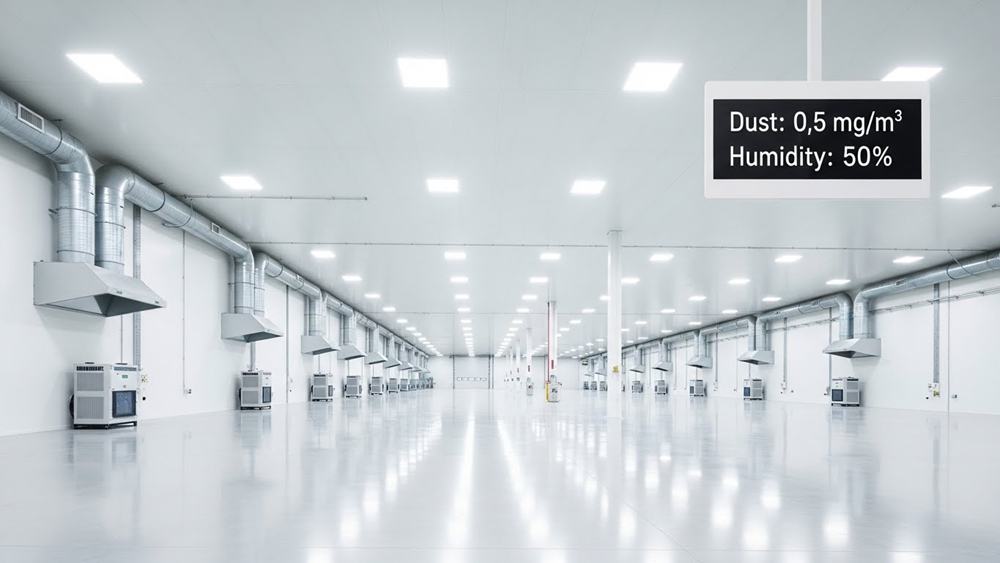
Audit compliance focuses on limiting airborne particles to a 5 mg/m³ 8-hour average and maintaining surface dust below 0.8 mm. Effective management combines Local Exhaust Ventilation (LEV) with rigorous housekeeping to eliminate ignition sources and prevent pest harborage in paper production environments.
| Compliance Factor | Mandatory Threshold | Control Method |
|---|---|---|
| Airborne Dust (TWA) | 5 mg/m³ | Local Exhaust Ventilation (LEV) |
| Surface Accumulation | 0.8 mm (1/32 inch) | Industrial Vacuuming / Wet Methods |
| Hazard Analysis | NFPA 652 Compliance | Dust Hazard Analysis (DHA) |
Combustible Dust Regulation and OSHA Compliance
Facilities must adhere to the OSHA 8-hour Time-Weighted Average (TWA) exposure limit of 5 mg/m³ for general paper dust. This standard serves as a baseline for air quality during 2026 audits. Operations exceeding these limits require immediate intervention through engineering controls. NFPA 652 mandates a formal Dust Hazard Analysis (DHA) for any facility handling combustible materials. This analysis identifies specific risks associated with the production process and establishes necessary safety protocols.
Maintaining surface dust levels below the 0.8 mm (1/32 inch) threshold prevents secondary explosions, which often cause more damage than initial fires. We prioritize engineering controls, such as enclosed processing and Local Exhaust Ventilation (LEV) systems, over secondary personal protective equipment. These systems capture particles at the source and maintain the required duct velocity to prevent blockages within the ventilation infrastructure.
Integrated Pest Management and Sanitation Protocols
Integrating Good Manufacturing Practices (GMP) links dust reduction directly to pest prevention. Paper dust provides both harborage and nesting material for various pests, making cleanliness a primary deterrent. We utilize industrial vacuuming and wet cleaning methods to replace dry sweeping. Dry sweeping redistributes airborne particles and increases the risk of contamination across different production zones.
Technical inspections focus on ignition controls, including proper grounding and electrical classification, to mitigate fire risks and secondary hygiene hazards. Daily monitoring of horizontal surfaces and vertical machinery nodes eliminates contamination vectors. Consistent sanitation ensures that paper products remain free from biological and physical contaminants throughout the manufacturing cycle.
Raw Material Storage: Preventing Humidity and Mold
Maintaining storage environments between 40-60% relative humidity at 23°C prevents mold growth and material brittleness. By 2026, paper mills must implement continuous T/RH monitoring and industrial dehumidification to meet ISO 9001 and GSP standards, ensuring raw material integrity before production begins.
Environmental Thresholds for Pulp and Film Integrity
Maintaining a stable relative humidity (RH) band between 40% and 60% prevents mold colonization and fiber brittleness in organic materials. Technical data indicates that mold risk rises sharply once humidity exceeds 65% for several days. Industrial facilities use these setpoints to protect the structural integrity of paperboard and virgin wood pulp, often following the TAPPI T402 standard of 23°C at 50% RH.
Moisture-sensitive polymers require even tighter environmental controls. For example, PLA compostable films often need a range of 35% to 50% RH to prevent roll deformation, core swelling, or blocking. Controlling these variables ensures that hygroscopic materials remain stable during long-term storage and subsequent conversion processes.
Engineering Controls and Monitoring Protocols
Facilities manage these environments through industrial HVAC systems equipped with integrated desiccant dehumidifiers. These systems provide zoned control, allowing operators to set specific parameters based on the material type. Continuous T/RH data-loggers provide real-time tracking and automated alarms to alert staff if conditions drift outside of established safety limits.
Adhering to regulatory frameworks like WHO Annex 9 (TRS 961) and Good Storage Practice (GSP) codes requires documented evidence of stability for high-hygiene products. Practical warehouse layout also plays a role in moisture management. Keeping sensitive materials away from exterior walls and floor surfaces minimizes the risk of moisture transfer from the building envelope to the raw stock.
Employee Safety and PPE Protocols
By 2026, factory audits prioritize systematic hazard assessments under OSHA 29 CFR 1910 Subpart I and 29 CFR 1926.95. Compliance requires providing properly fitted gear, such as ANSI Z87.1 eye protection and ISO 45001-aligned management systems, supported by hands-on training and documented enforcement policies.
Regulatory Framework and Hazard Assessment
Industrial safety begins with a thorough hazard assessment as mandated by OSHA 29 CFR 1910 Subpart I. This standard requires employers to evaluate specific workplace risks, including machinery motion, chemical exposures, and high-heat processes, before selecting protective equipment. By identifying these variables, facilities can implement job-specific protection that addresses the actual environmental risks present on the factory floor.
Recent regulatory updates place a heavier emphasis on individual equipment fit. Under the updated 29 CFR 1926.95(c) standard, which becomes a focal point for 2026 audits, PPE must fit each worker properly to ensure it does not create secondary hazards. A loose-fitting glove or an oversized respirator can fail to protect the user or even get caught in moving parts, making precise sizing a critical compliance metric.
Integrating these requirements into an ISO 45001 Occupational Health and Safety Management System allows for a proactive rather than reactive safety culture. This global standard encourages continuous improvement by tracking the performance of safety protocols and adjusting them based on internal audit findings and worker feedback. Systematic evaluation of chemical handling and environmental risks ensures that the protection strategy remains relevant as manufacturing processes evolve.
Equipment Standards and Training Protocols
Technical specifications for protective gear must meet recognized national and international standards to pass rigorous factory audits. Production zones typically require eye and face protection that meets ANSI Z87.1 and head protection compliant with ANSI Z89.1. For facilities operating or exporting within the European market, equipment must also align with EU 2016/425 and BS EN standards, which govern the design, performance testing, and marketing of PPE.
Equipment alone cannot guarantee safety without comprehensive hands-on training. Workers need to demonstrate competency in the correct use, daily maintenance, and storage of their gear. Training programs should focus on how to inspect equipment for damage and the specific limitations of each item. Documenting these training sessions provides the necessary evidence for auditors that the workforce is prepared to use the provided tools effectively.
Modern safety management often incorporates digital monitoring tools to maintain high standards. These systems track maintenance schedules, such as respirator filter changes or the expiration dates of hard hats, and document the enforcement of safety policies. By maintaining a digital paper trail of inspections and PPE replacements, management can prove a consistent commitment to safety and regulatory alignment during external inspections.
Final Thoughts
Success in the B2B paper market depends on moving beyond surface-level inspections toward rigorous, data-driven oversight. A 32-point audit provides the necessary framework to verify that a facility balances high-speed output with technical precision. By focusing on measurable benchmarks like a 1.33 process capability index and ISO-standard laboratory testing, buyers can confirm that a mill maintains the stability needed for large-scale global distribution. These technical checks ensure the final product meets the exact weight, strength, and safety requirements expected in 2026.
A factory that integrates social compliance through BSCI or SEDEX alongside strict hygiene and safety protocols offers more than just a product; it provides supply chain security. When mills invest in automated monitoring and real-time defect analysis, they reduce the risk of costly failures and ethical lapses. Prioritizing these standards helps businesses build partnerships with manufacturers that can sustain reliable production cycles while protecting worker welfare and material integrity across the entire fiber line.
Frequently Asked Questions
What are the primary technical metrics required for a paper mill audit in 2026?
Audits focus on physical properties including grammage per ISO 536, tensile strength via ISO 1924-2, and burst strength per ISO 2758. Factories must demonstrate a process performance index (Ppk) of 1.33 or higher and maintain environmental controls of 23°C and 50% relative humidity as per ISO 187.
How often should hygiene product manufacturers undergo factory audits?
Audit frequency depends on the supplier risk profile. High-risk facilities require annual audits every 12 months, while medium-risk suppliers typically undergo inspections every 1 to 3 years. Low-risk operations may extend the cycle to every 3 to 5 years.
What distinguishes an ISO management audit from a BSCI social audit?
ISO audits like ISO 9001 and ISO 14001 evaluate quality and environmental management systems. In contrast, BSCI audits assess social compliance against the amfori Code of Conduct, focusing on fair wages and labor rights. BSCI certifications generally remain valid for 2 years.
Can paper mills maintain compliance through remote auditing protocols?
Yes, using ICT and video tools allows for remote inspections. The process requires submitting documentary evidence at least 5 working days before the audit. Auditors use color-coded checklists to differentiate between document reviews and live online production observations.
Why are machine maintenance records considered a critical audit failure point?
Maintenance logs are mandatory under ISO 9001:2015 to ensure infrastructure conformity. Data shows that 60% of businesses fail compliance audits due to poor documentation, including the failure to prove that major machinery is maintained according to manufacturer specifications.
What onsite red flags indicate poor quality control in a tissue factory?
Significant red flags include blocked fire exits, lack of calibration stickers on testing tools, and missing production logs for the previous 30 days. Weak traceability systems that rely on handwritten labels instead of automated ERP systems also signal high risk.