Skip to content
Sourcing from China involves more than comparing factory production costs; it requires a clear understanding of how the government supports exports through tax policy. Most buyers notice that USD quotes for goods like paper products often sit 10% to 15% lower than domestic CNY prices because manufacturers incorporate a 13% VAT rebate into their international pricing. Ignoring these financial mechanics leaves your supply chain vulnerable to sudden cost escalations when tax regulations or currency values shift.
This guide explains the Exempt, Credit, and Refund (ECR) system and details why certain strategic sectors recently saw their rebate rates drop from 13% to 9%. You will find a breakdown of the pricing formulas used by Grade A manufacturers, an overview of the April 30th filing deadlines, and strategies to manage the 1.3% monthly USD/CNY volatility that can quickly erode profit margins on high-volume orders.
What is the China Export Tax Rebate System?
The system returns Value Added Tax (VAT) to manufacturers for goods sold internationally. By applying the Exempt, Credit, and Refund (ECR) method, China eliminates domestic taxation on exports. This ensures products like household paper remain price-competitive in global markets while preventing the accumulation of non-refundable input taxes for high-volume producers.
The ECR Method and VAT Calculation Logic
Factories use the Exempt, Credit, and Refund (ECR) system to manage tax liabilities on exported goods. This mechanism allows manufacturers to offset input VAT paid on raw materials against their output tax obligations. By doing so, the system ensures that the tax paid during the production phase does not increase the final price of the product in the global market.
VAT calculation follows a specific formula where the payable tax equals the Output VAT minus the Input VAT. Since exports generally have a 0% output tax rate under the exemption rule, the calculation often results in a negative figure. This negative balance qualifies the manufacturer for a refund. This process prevents double taxation and ensures that China-made products, such as stainless steel and sanitary ware, remain accessible to international buyers.
Current Rebate Rates and Eligibility Standards
Rebate rates depend on the product’s classification within the Harmonized System (HS). Most paper products and stainless steel items qualify for a 13% rebate rate. Recent policy updates shifted certain strategic categories, including photovoltaic products and batteries, from a 13% to a 9% rate. Other materials, such as aluminum and copper, no longer receive rebates. These adjustments allow the government to influence export volumes and prioritize domestic supply for specific industries.
To participate in the rebate program, manufacturers must maintain Grade A or B taxpayer status and complete registration with customs authorities. The application process requires digital declarations and proof of foreign exchange receipts. Exporters submit these documents by the April 30 annual deadline to secure processing. The State Taxation Administration typically completes the refund cycle within two to three months after the submission of all required export and VAT documentation.
The 13% Rule: How Factories Calculate Export Pricing
The 13% rule represents the Value Added Tax (VAT) rebate that Chinese manufacturers reclaim from the government upon exporting goods. By 2026, factories continue to subtract this expected refund from their domestic production costs to offer lower USD prices to global buyers, effectively passing tax savings onto the customer.
| Pricing Variable | Value / Rate | Financial Impact |
|---|---|---|
| VAT Export Rebate | 13% | Reduces the net cost of goods sold for export orders |
| Standard MFN Tariff | 5% | Applies to CIF value for non-FTA trade regions |
| Lead Time | 20–25 Days | Covers production and export declaration processing |
Value Added Tax Rebates and Export Margin Adjustments
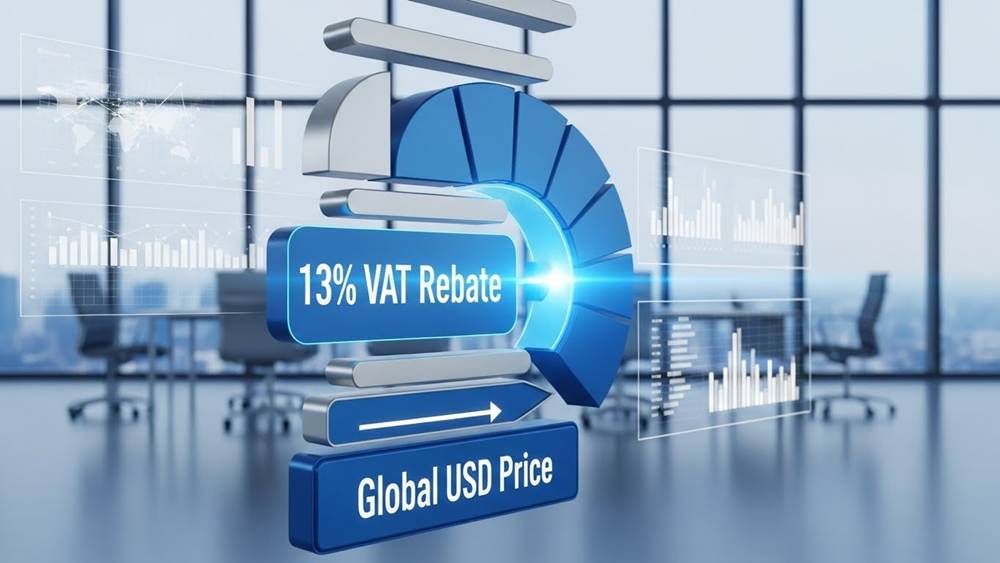
China applies a 13% VAT to domestic paper product sales, but exporters receive a refund of this amount after the goods leave the country. Manufacturers like Top Source Hygiene treat this 13% rebate as a subsidy that lowers their net cost of goods sold. This financial structure allows factories to provide two separate quotes: a tax-inclusive CNY price for local distributors and a tax-exempt USD price for international sourcing.
By 2026, maintaining high production volumes—such as 2,860 tons per month—allows factories to maximize these tax recovery benefits. High-volume output ensures a steady stream of rebate claims, which stabilizes the cash flow needed to offer competitive international pricing. Buyers benefit from this system because the factory incorporates the anticipated tax refund into the initial quote, reducing the final price per unit compared to domestic retail rates.
Mathematical Breakdown of USD Export Price Formulas
Factories determine the “No-Tax Price” by dividing the domestic cost by 1.13 to remove the internal VAT component. Calculation models then add a standard profit margin and local port fees to this no-tax price to reach the final FOB (Free on Board) value. This method ensures that the international buyer does not pay for Chinese internal consumption taxes that the manufacturer will eventually reclaim.
Shipping a 40’HQ container involves factoring in the 13% rebate alongside 5% MFN tariff rates for specific HS codes. While the rebate lowers the factory’s base price, the landed cost at the destination still depends on the sequential application of duty and local VAT. Lead times of 20-25 days include the administrative time required to process export declarations and secure the necessary paperwork for rebate eligibility.
Why “Tax-Inclusive” (CNY) vs. “Export” (USD) Prices Differ
Domestic CNY prices include a 13% Value Added Tax (VAT), while export quotes remove this tax through government rebates. Factors like the 95% US tariff passthrough and the 12% CNY depreciation needed to offset high tariffs further widen the gap between local and international pricing.
| Pricing Factor | Domestic (CNY) Quote | Export (USD) Quote |
|---|---|---|
| VAT Application | 13% Standard Rate Included | 0% (Full/Partial Rebate Applied) |
| Cost Basis | Gross Price with Tax | Net Price (DPV Calculation) |
| Currency Dynamics | Fixed Renminbi Value | Adjusted for 10-12% Depreciation |
China VAT Rebate and Domestic Net Pricing
Domestic transactions in China include a mandatory 13% Value Added Tax. Export quotes reflect the net price because the government provides a full or partial rebate of this tax once goods leave the country. This system allows manufacturers to offer FOB USD quotes that are significantly lower than their local CNY counterparts. When calculating the duty-paying value (DPV), customs officials exclude costs related to freight, insurance, and commissions added after the goods are loaded. Exporters leverage these tax savings to remain competitive in the global paper market, often resulting in USD quotes that appear 10% to 15% lower than domestic prices before accounting for currency conversion.
Tariff Passthrough and Currency Offset Metrics
US importers currently face a 95% passthrough rate on tariffs applied to Chinese goods. A 20% tariff rate adds approximately 18.5% to the total importer cost, while retail prices generally see a smaller rise of 0.9%. To keep prices stable under extreme scenarios, such as a 60% tariff, the CNY must depreciate by 10% to 12% against the USD. This currency shift helps neutralize the impact of high duties on the final landed cost. For smaller scale trade, cross-border e-commerce (CBEC) limits for 2026 are set at RMB 5,000 for single transactions. These transactions benefit from a reduced effective VAT rate of 9.1%, providing an alternative pricing structure for low-volume buyers compared to standard commercial exports.
Build Your Unique Toilet Paper Brand with Expert OEM Manufacturing
Impact of Rebate Policy Changes on Global Sourcing
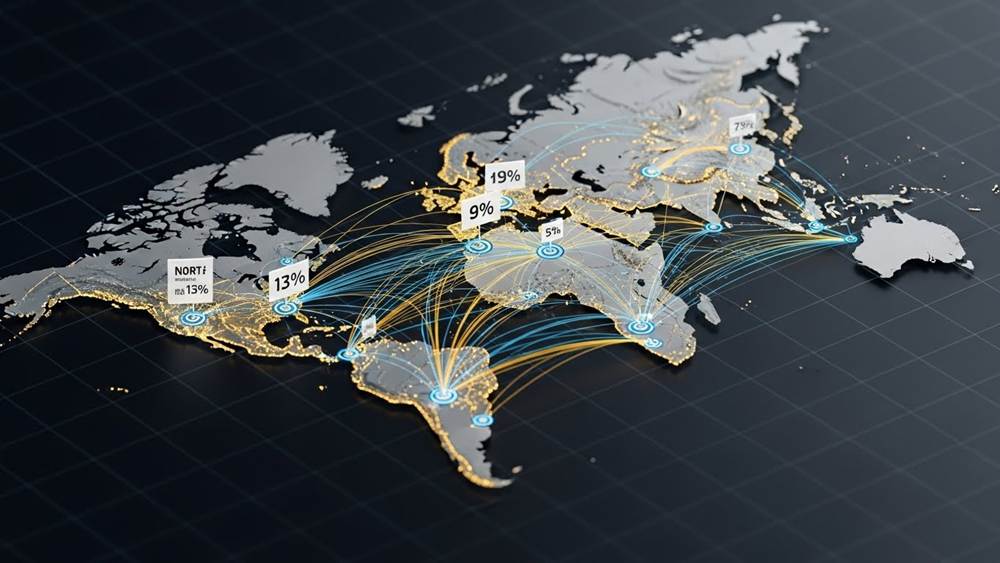
Global sourcing in 2026 reflects the permanent shift from a 13% to a 9% rebate on key industrial materials, adding a 4% tax burden to general trade exports. This change forces procurement teams to manage higher landed costs and navigate a 7% drop in export availability for every percentage point of rebate lost.
Cost Escalation and Margin Management for Raw Materials
Suppliers pass an effective 4% VAT cost to international buyers because the rebate cap for photovoltaics and batteries fell to 9%. This policy shift removes the tax refund that previously offset production expenses. Removing rebates for 59 tariff items, such as copper and aluminum, raises the acquisition cost for manufacturing machinery and specialized equipment. Procurement teams also face a $3/b margin erosion in refined oil and chemical feedstocks, which drives up secondary costs for packaging and logistics.
Supply Chain Realignment and Trade Route Optimization
Historical trade data shows that sourcing volumes fluctuate by 7% for every 1 percentage point change in the export tax rebate rate. In the mechanical goods sector, every 1 percentage point increase in the effective tax burden leads to a 2.07% decrease in exports. These shifts tighten availability for heavy industry buyers globally. Many procurement departments now move orders to processing trade routes to utilize tax-free quotas and secure stable pricing for large-scale contracts.
Ensuring Your Factory is Compliant for Tax Rebates
Factories secure export tax rebates by maintaining high tax credit ratings and verifying industry eligibility. Compliance involves submitting precise customs and VAT documentation before the annual April 30th deadline. Maintaining these standards allows companies to access 9% to 13% rebate rates while adhering to the 2026 VAT regulations.
Standard Eligibility and Tax Credit Ratings
Manufacturing plants must maintain an A or B tax credit rating to qualify for full VAT refunds. Regulations require eligible companies to generate at least 50% of their VAT sales from specific sectors such as manufacturing, software, or technical services. Additionally, financial departments must confirm the factory has no record of VAT fraud or repeated tax evasion penalties within the last 36 months to ensure uninterrupted access to the rebate system.
Filing Requirements and Rebate Percentages
Tax authorities apply a 13% rebate to approximately 75% of export items, including stainless steel and sanitary ware, while other goods receive a 9% rate. Accounting teams track input credits using special VAT invoices to align with the VAT law effective January 1, 2026. Exporters submit business licenses, monthly tax declarations, and customs forms by the April 30th annual deadline. Local tax bureaus process refund applications within a two-to-three-month window following the submission of all required VAT declaration forms.

Currency Exchange Impact: USD/CNY Volatility
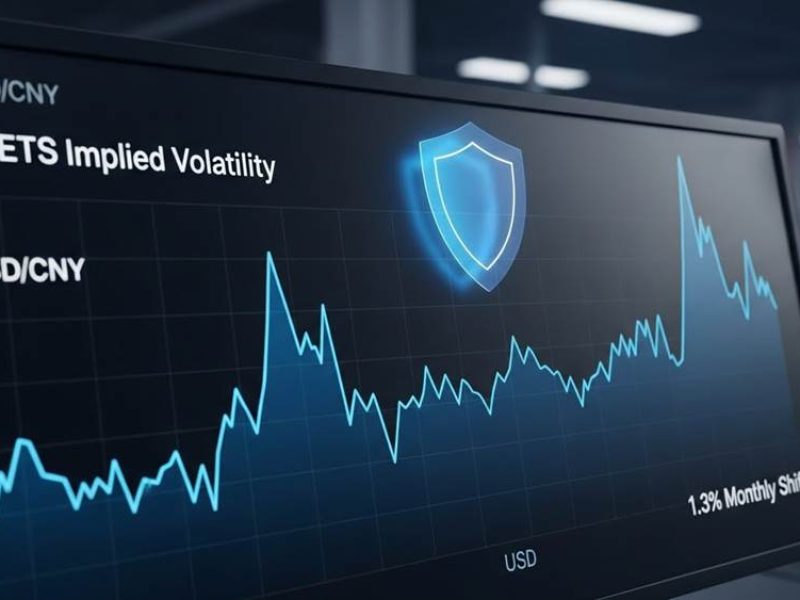
Exchange rate shifts directly alter the value of the 13% tax rebate. With USD/CNY monthly volatility averaging 1.3%, a small currency move can wipe out thin profit margins. Companies use CFETS implied volatility curves and stress tests to manage these risks and maintain stable pricing for high-volume paper product orders in 2026.
Impact of Currency Swings on Export Profitability
Monthly USD/CNY volatility typically reaches 1.3%, which creates significant risk for paper product deals where net margins often sit between 2% and 3%. A 1.25% shift in the exchange rate during the 30-90 day payment window can remove or double the expected profit from the VAT rebate. This sensitivity forces a shift in how factories structure their international agreements.
Factories frequently quote prices in CNY to lock in the rebate value, yet they receive payment in USD. This arrangement makes the final revenue dependent on the spot level at the time of settlement. Historical data shows recent 52-week trading ranges between 7.04 and 7.35, requiring exporters to build specific buffers into their initial pricing structures to maintain stability.
CFETS Benchmarks and Quantitative Risk Modeling
The China Foreign Exchange Trade System (CFETS) publishes implied volatility curves five times daily to provide a reliable reference for 1-month to 3-year tenors. Finance teams use these official benchmarks to price forwards and options. This alignment ensures that corporate treasury actions match the data used by Chinese banks and regulators for currency valuation.
Risk models for 2026 incorporate jump-diffusion processes to account for sudden spikes in RMB value that standard models often miss. Standard risk management involves stress-testing contracts against 2.5% to 4% currency moves. These tests protect the 13% tax rebate cash flow from adverse market sentiment shocks and ensure long-term contract viability.
Financial Due Diligence for High-Volume Contracts
Verify a supplier’s stability by reviewing financial statements from the past five years, focusing on revenue recognition and net debt. Establish net working capital targets to ensure the factory maintains enough liquidity to fulfill high-volume orders without production delays or insolvency risks.
Auditing Historical Performance and Revenue Recognition
Analyzing income statements and cash flow records from the five-year period ending in 2026 helps identify long-term growth trends and operational stability. Financial teams validate revenue recognition using the U.S. GAAP five-step process to ensure consistency in contract reporting. This step prevents valuation errors and clarifies the timing of earnings across different cycles. Screening for customer concentration risks determines if the factory relies on too few accounts for its recurring income, which could create volatility if a major partner departs. For publicly traded entities, verifying 10-K and 10-Q filings provides the necessary transparency to confirm financial health before entering high-volume commitments.
Normalizing Working Capital and Liability Exposure
Calculating net debt by subtracting cash and cash equivalents from total interest-bearing liabilities reveals the supplier’s actual debt burden and impacts the overall valuation. Establishing net working capital (NWC) targets ensures the factory maintains normalized liquidity levels during the contract term to avoid production delays or manufacturing halts. Reviewing ongoing litigation and regulatory disputes allows for the quantification of financial exposure and potential reputational damage. Comparing profitability and asset quality ratios against 2026 industry standards identifies operational inefficiencies that may impact the factory’s ability to scale production for large-scale paper product orders.
Final Thoughts
Chinese export tax rebates function as a primary lever for international price competition. Manufacturers rely on the 13% VAT refund to bridge the gap between production costs and the lower USD quotes required by global markets. This financial mechanism allows sourcing teams to secure products at rates that local buyers cannot access.
Success in 2026 requires constant monitoring of rebate eligibility and currency trends. Policy adjustments on raw materials and fluctuations in the USD/CNY exchange rate can quickly alter the landed cost of a shipment. Procurement professionals who verify factory compliance and lock in pricing based on these tax structures gain a significant advantage in volatile markets.
Frequently Asked Questions
What is the standard China export tax rebate for paper products in 2026?
Most paper products qualify for a 13% export tax rebate. Some sectors like metals and batteries saw reductions recently, but the paper manufacturing industry retains this standard rate. This stability helps factories maintain competitive pricing for international clients.
Why are USD quotes from Chinese factories often lower than local domestic prices?
USD export prices benefit from VAT rebates and steady producer price deflation. These factors create a cost advantage of roughly 5% over domestic pricing. Factories include the tax refund in their international quotes to provide more attractive rates for global buyers.
How does the VAT rebate system influence factory profit margins?
The system refunds input VAT based on the ex-factory FOB value. This refund covers taxes already paid during domestic production. It raises the factory’s net profit margin by 13% to 17% without needing to increase the selling price to the customer.
Does paying in CNY result in better contract terms?
Yes. Paying in CNY removes the currency exchange risk that suppliers typically cover with a price buffer. USD/CNY volatility often forces factories to add a 7% markup to protect their margins. Direct CNY payments bypass these extra fees for lower overall costs.
What happens to pricing if the rebate policy changes?
A reduction in the rebate rate increases the factory’s net operating costs. This shift leads to price increases for the buyer or lower profit margins for the supplier. Such policy changes directly impact how Chinese goods compete in the global market.
How can I confirm if a factory is eligible for these tax rebates?
Verification requires checking the factory’s Tax Credit Rating. Only businesses with an A or B rating qualify for full rebates. Ensure the supplier is a General VAT Taxpayer with a valid export license and up-to-date customs filings to guarantee compliance.
SEO
Title: The Finance of Sourcing: Understanding China Export VAT Rebates
Description: China export tax rebate policies allow factories to offer lower USD prices by reclaiming VAT, though currency shifts impact final costs.
URL: china-export-tax-rebate-pricing-guide
Keywords: China export tax rebate