Skip to content

Procurement in the Chinese market often falters when buyers treat supply chains as a series of cold transactions. Success depends on Guanxi—a deep-rooted trust that secures your place in the production line when global demand peaks. By moving beyond a simple vendor model, you protect your business from sudden delays and market volatility.
We examine how to blend informal communication via WeChat with strict AQL and ISO 9001 standards to maintain quality and reliability. You will see how implementing AS2 or EDI protocols reduces lead times by up to 15% through automated data exchange. We also explore why owner-to-owner alignment often yields a 30% boost in operational efficiency, ensuring your orders remain a priority within a 2,860-ton monthly capacity.
Why Sourcing in China is More than Just a Transaction
Sourcing in China relies on Guanxi, a relationship-based trust that prioritizes long-term stability over one-off transactions. By 2026, successful buyers blend informal communication via WeChat with strict technical standards like AQL and ISO 9001 to secure priority production, reduce risks, and maintain reliable supply chains.
The Shift from Transactional Buying to Guanxi Partnerships
Suppliers in the Chinese market prioritize long-term partners to ensure stable income and operational continuity. Relationship-based trust, or Guanxi, often carries more weight than rigid Western contracts. Developing these ties secures priority production slots and protects buyers from sudden delays during peak manufacturing seasons.

Informal negotiation cycles on platforms like WeChat replace rigid service level agreements for faster problem resolution. This real-time communication allows for quick adjustments to orders and logistical hurdles. Deep-rooted vendor ties also reduce search costs for new factories and provide increased flexibility in pricing and contract terms compared to new accounts.
Consistent engagement with a single factory encourages the supplier to invest in the buyer’s specific needs. These partnerships create a buffer against market volatility, as trusted vendors are more likely to absorb minor cost fluctuations to maintain the relationship. This stability proves essential for maintaining a reliable supply chain amid shifting global trade pressures.
Anchoring Relationships with Technical and Quality Frameworks
Documenting Acceptable Quality Limit (AQL) standards in writing eliminates language barriers and clarifies specific defect thresholds. While relationships build rapport, these technical specs provide the objective baseline needed for inspections. Clear documentation prevents communication breakdowns and ensures that the factory understands the precise quality expectations before production begins.
Verifying mandatory certifications remains a critical step for international buyers. Factories must hold ISO 9001 for quality management, while export-ready products require CE, RoHS, or REACH certifications depending on the destination market. Many domestic suppliers focus on speed and cost, making strict due diligence on these certifications necessary for legal compliance and consumer safety.
Effective Supplier Relationship Management (SRM) involves monitoring key performance indicators such as the 15-25 day production lead time typical for high-volume paper products. Regular face-to-face audits and social visits verify factory-direct capabilities and ensure the vendor maintains export-ready standards. Combining technical oversight with personal trust results in a resilient and efficient procurement strategy.
Building Trust: Communication Protocols Beyond Email
Relying on email creates silos and security risks. Transitioning to standardized protocols like AS2, RosettaNet (RNIF), and EDI ensures nonrepudiation, where every message is digitally signed and verified. These systems automate the supply chain flow, providing a single source of truth for orders, inventory, and logistics that manual communication cannot match.
Standardizing Data Exchange with EDI and RosettaNet Frameworks
Regional standards dictate the structure of business data for international trade. North American retail sectors predominantly utilize ANSI X12, while European and Asian markets rely on EDIFACT as the primary standard. These frameworks ensure that every trading partner uses a compatible data architecture, which eliminates the risks associated with manual data entry and translation errors between different enterprise systems.
The RosettaNet framework offers a specialized ecosystem for industries requiring high-precision data exchange, such as paper and electronics manufacturing. This framework evolved from RNIF 1.1, which used HTTP-based transport and RosettaNet Object (RNO) packaging, to version 2.0. The updated version employs MIME packaging and supports multiple protocols, providing the mandatory authentication and encryption needed to maintain trading partner accountability.
Direct system integration replaces manual processes by allowing Top Source Hygiene to sync production metrics directly with buyer ERP systems. This automated connection ensures that technical specifications, such as ply count or GSM (grams per square meter), remain consistent across all platforms. Real-time data synchronization prevents discrepancies that often arise when teams rely on static spreadsheets or intermittent email updates.
Standardization also facilitates ISO 9001 compliance by establishing a permanent digital audit trail. Every product change request and approval cycle is recorded within the data exchange layer, providing a verifiable history of quality control decisions. This transparency builds a foundation of trust between manufacturers and global buyers, as every technical adjustment is backed by a signed digital record.

Implementing AS2 and AS4 for Secure Factory Integration
AS2 (Applicability Statement 2) remains the preferred protocol for global trade due to its robust security features. It utilizes Message Disposition Notifications (MDNs) to provide legally binding evidence of receipt. This mechanism creates nonrepudiation, meaning neither the factory nor the buyer can deny the origin or arrival of a message, which is essential for managing high-value contracts and production schedules.
Modern implementations now leverage AS4 protocols to provide a high availability architecture. AS4 separates the message processing layer from the transport layer, ensuring that the communication system remains online during peak production surges. This independence allows for 24/7 uptime, preventing delays in logistics or order processing when factory volumes increase during seasonal demand.
The ebMS framework uses digital signatures and encryption to protect sensitive data during the OEM/ODM transfer process. This level of security is vital for safeguarding proprietary packaging designs and branding assets. By encrypting data at the protocol level, manufacturers ensure that sensitive technical intellectual property remains confidential as it moves between Baoding-based production facilities and international corporate offices.
Automated protocols reduce lead times by up to 15% by removing the communication lag inherent in manual systems. By bypassing time zone delays and the need for manual email confirmations, production orders move from the buyer’s system to the factory floor instantly. This streamlined workflow allows global brands to respond faster to market changes while maintaining a secure and verified connection with their manufacturing partners.
The Role of Social Visits and Face-to-Face Meetings
Social visits transform business relationships from distant strangers (sheng-ren) to trusted insiders (zi-ji-ren). By 2026, these face-to-face meetings remain essential for building emotional closeness (ganqing) and mutual obligation (renqing), which simple digital communication cannot achieve. These interactions directly increase sharing intentions and resource priority through measurable face-management (mianzi).
Transitioning from Transactional Contacts to Inner-Circle Partners
Physical meetings bridge the psychic distance that digital-only communication creates. Partners use on-site visits to move from a sheng-ren (stranger) position toward the zi-ji-ren (insider) cluster. This shift involves developing high affective closeness and a commitment to favor reciprocation. By moving beyond simple data exchanges, firms establish family-like altruism and long-term commitment.
Managers quantify this relational depth using 7-point Likert scales. Higher scores in ganqing (emotional closeness) and mianzi (face management) correlate with increased purchasing intentions. Achieving a Chi-square/df threshold of 1.286 indicates the successful transition from a transactional contact to a trusted partner within the inner circle.
Quantifying the Impact of Face-to-Face Interaction on Supply Chains
Technical network analysis maps relational progress through a 0-1 guanxi matrix. This approach identifies structural holes and bridge ties within a supplier’s internal network. These meetings foster renqing (reciprocity rules) that encourage creativity and resource exchange. This evolution moves the relationship away from a rigid “vending machine” model toward a dynamic, collaborative partnership.
Social Network Analysis (SNA) metrics validate the actual coordination between buyer and supplier. A low RMSEA of 0.029 suggests high-fit coordination and strong relationship health. Building obligation-based ties through face-to-face interaction secures priority status, ensuring necessary support during production surges and market fluctuations that digital-only vendors often miss.
Build Your Unique Toilet Paper Brand with 30 Years of Manufacturing Expertise

How to Get “Priority Status” During Production Surges
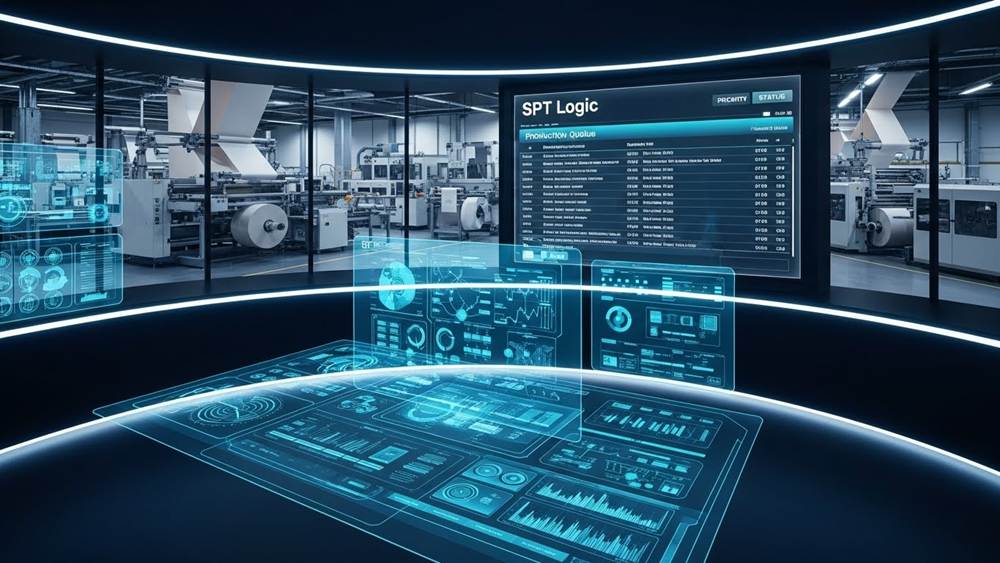
Securing priority status requires moving beyond standard First-In, First-Out (FIFO) protocols by establishing expedited work order (WO) agreements. By leveraging Shortest Processing Time (SPT) logic and demand-pull authorization, buyers can ensure their orders advance through work centers ahead of non-expedited batches, maintaining 15–25 day lead times even during seasonal peaks.
| Logic Type | Primary Mechanism | Operational Impact |
|---|---|---|
| FIFO (Standard) | Chronological order arrival | Manages standard 25-day cycles |
| SPT Logic | Shortest Processing Time prioritization | Reduces queue volume and wait times |
| Expedited WO | Management override/Fee-based priority | Bypasses standard production queues |
| Demand-Pull | Real-time work center tiebreakers | Ensures continuous material flow |
Mechanics of Production Sequencing and Queue Management
Standard FIFO (First-In, First-Out) models manage basic work order arrival, but management policies often override these during surges to prioritize high-value accounts. This ensures that critical supply chains remain functional even when total factory demand exceeds nominal capacity. By formalizing these overrides, buyers secure a guaranteed slot in the production window.
Shortest Processing Time (SPT) sequencing prioritizes orders with the quickest finish times to reduce overall queue volume and streamline factory flow. This logic helps the facility clear smaller batches rapidly, preventing a bottleneck of minor orders from delaying large-scale shipments. Factories utilize this method to maintain high throughput during seasonal peaks.
Demand-pull authorization uses real-time tiebreakers at each work center to ensure priority materials advance whenever capacity becomes available. If two orders arrive simultaneously, the system checks the priority status to determine which batch enters the machine first. This granular control prevents high-priority materials from sitting idle in the work-in-progress zone.
Longest Processing Time (LPT) logic occasionally takes precedence for specific product lines to minimize machine changeovers and maximize the 2,860-ton monthly capacity. While this seems counter-intuitive to speed, reducing the time spent on recalibrating equipment actually increases the total available hours for all orders. Efficient scheduling balances these competing logics to optimize the entire floor.
Executing Expedited Protocols for Urgent Capacity
Formalized ‘Urgent Order’ clauses enable expedited production and shipping options that bypass the standard 20–25 day manufacturing cycle for 40-foot containers. These contractual agreements pre-define the conditions under which an order moves to the front of the line. Establishing these protocols before a surge occurs remains the most effective way to protect delivery timelines.
Real-time monitoring and data analysis identify bottlenecks in the 2026 production environment, allowing for immediate corrective actions to keep schedules on track. Production control teams track the progress of every work order across different zones. If a specific phase slows down, managers reallocate personnel or equipment to maintain the promised lead time.
Pre-planned growth strategies per product line balance quality consistency against cost, preventing the delays common with over-extended capacity. By matching production scaling with verified quality standards, we avoid the rework and inspections that often stall urgent shipments. This stability ensures that “priority status” does not come at the expense of product integrity.
Active production control tracks specific work orders across zones to prevent excessive work-in-progress (WIP) inventory from stalling critical shipments. Limiting the amount of unfinished goods on the floor keeps pathways clear and ensures that priority batches move through the facility without physical or administrative interference. This disciplined approach maintains the 15-25 day delivery window despite external market pressures.
Resolving Conflict Without Burning Bridges
Conflict resolution in 2026 relies on the hierarchical guanxi model, which prioritizes informal communication and mutual trust over legal confrontation. By aligning goals through relationship audits and respecting cultural norms like face-saving and seniority, partners resolve issues while strengthening the underlying business bond.
Managing Disputes via the Hierarchical Guanxi Model
Dispute resolution centers on engaging core stakeholders such as CEOs and VPs to coordinate resources and align production goals. By focusing on these primary decision-makers, partners cut through departmental friction to reach consensus quickly. This model utilizes informal group processes to foster information flow and loyalty, which maintains group harmony even during high-stress production surges.
Addressing issues within the inner circle prevents reputational damage and the loss of face that restricts future business opportunities. This approach prioritizes hierarchy and trust, ensuring that internal goal conflicts between departments like production and marketing do not stall operational progress or damage the long-term partnership.
Practical Tools for Conflict Mitigation and Relationship Audits
Periodic guanxi audits allow firms to diversify ties and prevent single-point failures if a primary contact leaves the factory. By maintaining multiple connections across various management levels, companies protect their interests against sudden personnel changes. Matching the age and seniority of negotiators to their counterparts honors cultural obligations and facilitates smoother dispute resolution through established social hierarchies.
Companies leverage moral obligations and long-term reciprocity to find technical solutions that satisfy ISO 9001 and FDA compliance standards. This method uses the underlying bond as a substitute for legal enforcement, ensuring that both parties work together to solve quality or regulatory issues without resorting to adversarial tactics that could end the relationship.
Multi-level Relationship Building (Owner to Owner)
Establishing direct lines between business owners shifts the supplier dynamic from a simple transaction to a strategic alliance. This high-level rapport often results in a 30% increase in operational efficiency and ensures priority production status, as both parties align their long-term growth and capacity goals.
| Engagement Strategy | Communication Frequency | Operational Benefit |
|---|---|---|
| Executive Facility Visits | Quarterly / Semi-Annually | 30% efficiency increase via on-site reviews |
| Owner-to-Owner Alignment | Biweekly Calls | Early resolution of logistics and quality bottlenecks |
| Joint Capacity Planning | Annual Vision Sessions | Secured resource priority for 2026 forecasts |
Strategic Alignment through Executive Leadership Interaction
Executives who connect directly move past the restrictive “vending machine” vendor model. This transition creates a collaborative partnership where both parties share long-term business visions. By moving beyond simple purchase orders, owners build mutual trust through joint planning sessions that treat the factory as an extension of the brand’s own operations.
Aligning 2026 production forecasts with actual factory capacity ensures resource availability during unexpected market surges. When factory owners understand the projected growth of a client, they are more likely to reserve equipment time and labor hours specifically for those needs. This alignment provides a level of supply chain stability that digital-only communication cannot achieve.
Operational Gains and Performance Metrics of High-Level Rapport
Regular face-to-face facility visits and on-site reviews contribute to a 30% increase in operational efficiency. These engagements humanize the relationship and allow leadership to identify production realities firsthand. Face-to-face interactions foster deeper trust, which leads to more transparent problem-solving when challenges arise on the factory floor.
Implementing biweekly executive calls creates a consistent feedback loop to identify logistics or quality bottlenecks early. These high-level check-ins ensure that minor issues do not escalate into systemic failures. For long-term partnerships, this frequency of communication allows for performance incentives and innovation workshops that keep the manufacturing process competitive over five-year cycles or longer.
Involving factory owners in the early stages of product design and volume scaling secures cost optimizations. When manufacturers see a long-term commitment, they often invest in specific process improvements to achieve economies of scale. Scaling up through small initial orders as trust develops protects both parties while laying the groundwork for significant manufacturing investments and resilient supply chains.
The Benefits of a Long-term Strategic Partnership
Long-term partnerships secure supply chain continuity and move beyond simple procurement to collaborative growth. By 2026, these relationships allow businesses to leverage 30 years of manufacturing expertise, resulting in lower maintenance costs, higher sales from eco-certified products, and priority access to a 2,860-ton monthly production capacity.
Supply Chain Continuity and Production Reliability
Accessing a consistent monthly output of 2,860 tons from two specialized factories ensures stock availability during peak 2026 demand cycles. Adherence to ISO 9001 and FSC standards ensures every shipment meets international quality and environmental compliance without the need for repeated audits.
A 30-year operational history reduces the risk of factory closures or technical failures common with newer, unvetted suppliers. Direct communication with the factory streamlines the 20-25 day production lead time for 40-foot containers by removing third-party intermediaries.
Operational Efficiency and Revenue Growth Metrics
Facilities management data indicates that switching to high-capacity jumbo rolls cuts maintenance costs by 15% because staff refill dispensers less often. Stocking FSC-certified sustainable product lines often leads to a 30% increase in retail sales as consumers shift toward eco-friendly household paper.
Custom-branded OEM solutions contribute to a 20% rise in guest satisfaction scores by creating a cohesive brand experience in hospitality settings. Priority scheduling for urgent orders lets partners bypass standard timelines to maintain market presence during unexpected inventory surges.
Final Thoughts
Success in the international paper market depends on merging cultural trust with technical precision. Buyers secure their supply chains by looking past simple transactions and investing in deep-rooted factory ties. This dual approach uses personal rapport to gain production priority while relying on standardized digital protocols to maintain data accuracy and quality control. Balancing these elements ensures that procurement remains stable even when global demand shifts.
Partners who prioritize direct owner-to-owner engagement and regular social visits transform their suppliers into strategic allies. These connections safeguard against market volatility and provide consistent access to high-capacity production lines and 30 years of manufacturing expertise. Resilient supply chains thrive when they treat manufacturing as a collaborative growth strategy rather than a series of isolated purchase orders.
Frequently Asked Questions
Does Guanxi still impact sourcing operations in 2026?
Guanxi remains vital for navigating regulatory hurdles and managing state-owned enterprise relationships. While mature market segments focus on capability, relationship networks mitigate risks in uncertain environments. Historical data shows reliance on these networks grew to 45% during market transitions, making them essential for accelerating opportunities and enforcing contracts when disputes arise.
What are the most effective channels for communicating with Chinese paper manufacturers?
WeChat serves as the primary tool for real-time updates, used by over 1.2 billion people for business. To maintain clarity, provide detailed quality control checklists using dual-unit specifications like inches and centimeters. Explicitly define product tolerances, materials, and timelines before production to align expectations and enable collaborative problem-solving.
Is an annual on-site factory visit required for quality assurance?
No, but industry standards recommend audits annually or semi-annually to ensure ongoing compliance. Inspections should occur multiple times during each purchase order lifecycle, specifically at the pre-production, during production, and pre-shipment stages to catch defects before they leave the factory floor.
How can buyers secure priority during raw material shortages?
Build collaborative relationships through proactive data sharing and mutual risk planning. Establishing dedicated shortage response teams and pre-vetting backup suppliers allows for rapid pivots. Strategic integration, similar to the 60 GWh capacity partnerships in the battery sector, ensures manufacturers prioritize your orders over less-integrated clients.
What cultural etiquette is essential for professional meetings in China?
Punctuality and formal dress signal respect. Address partners using formal titles and honorifics to acknowledge hierarchy. Understand the concept of ‘Face’ (miàn zi) to maintain social harmony, and use indirect communication styles when discussing sensitive issues. Always provide business cards with both English and Chinese translations.
What defines a strategic partnership with a high-capacity tissue mill?
Partnerships focus on technical capability, specifically machinery with design speeds reaching 2200 m/min. Mills prioritize vendors who offer energy-efficient drying systems and turnkey EPC (Engineering, Procurement, Installation, Commissioning) models. Integration of AI-powered monitoring, like the METRIS system, is now a baseline requirement for optimizing process efficiency and managing labor shortages.