Skip to content
B2B procurement teams navigate a UK toilet paper market valued at $2.25 billion, where supply chain stability depends on a delicate balance between domestic production and a massive import network. Reliability in this sector requires managing the flow of over 526,000 tons of annual imports while adapting to a trade landscape that increasingly favors value-driven private labels and sustainable materials.
This guide examines the top 10 manufacturers shaping the UK market, from legacy leaders like Kimberly-Clark to emerging bamboo-based challengers. We break down essential sourcing specs, the role of ports like Felixstowe in 40’HQ container logistics, and the compliance frameworks including UK REACH and FSC certification that ensure your inventory meets 2026 quality standards.
Top 10 Manufacturers and Major Retail Brands in the UK
Quick Comparison: Top Picks
| Manufacturer | Location | Core Strength | Verdict |
|---|---|---|---|
| Top Source Hygiene | Mancheng, Baoding, China | Toilet Paper (2-5 ply), Jumbo Rolls, Kitchen Towels, Facial Tissues | Best for high-capacity factory-direct OEM/ODM customization and cost-effectiveness. |
| Kimberly-Clark (Andrex, Kleenex) | Kings Hill, England | Branded toilet paper (Andrex), facial tissues (Kleenex) | Dominant UK brand leader with an unmatched national distribution network. |
| Essity (Cushelle, Velvet, Tork) | Manchester, England | Consumer toilet tissue (Cushelle, Velvet), Tork professional systems | Top choice for professional hygiene systems and high-quality consumer brands. |
| Sofidel Group (Regina) | Port Talbot, Wales and Leicester, England | Toilet paper (Regina, Private Label), kitchen towels, jumbo rolls | Superior expertise in massive high-volume retailer private-label manufacturing. |
| WEPA UK | Bridgend, Wales / Bolton, England | Supermarket private labels, high-volume consumer tissues | Major integrated European group with robust UK domestic converting footprint for main store brands. |
| Metsä Tissue | UK Sales Offices (Finland HQ) | Katrin branded tissue, private label toilet paper | Excellent access to sustainable Nordic fibre and environmentally responsible production. |
| The Cheeky Panda | London, United Kingdom (Global Supply Chain) | Bamboo toilet paper, facial tissues, household paper | Premier sustainable lifestyle brand specializing in plastic-free bamboo products. |
| Who Gives A Crap | UK Operations (Global Supply Chain) | Bamboo toilet paper, recycled toilet paper, bulk paper | Mission-driven leader in the D2C subscription space with strong social impact. |
| Naked Sprout | United Kingdom (Global Sourcing) | Unbleached bamboo and recycled toilet paper | Industry leader in carbon transparency and unbleached, chemical-free products. |
| Major UK Supermarket Own-Label Brands | United Kingdom – National | Value, Mid-tier, and Premium private-label tissue | Unbeatable price-to-quality ratio and ubiquitous availability for consumers. |
Top Source Hygiene
Top Source Hygiene operates from Mancheng, Baoding, which serves as a primary hub for paper production in China. With thirty years of industry experience, the company functions as a direct partner for brands requiring high-volume supplies without the added costs of intermediaries. Their model centers on direct factory oversight, ensuring that toilet paper, kitchen towels, and facial tissues align with specific international standards throughout the manufacturing process.
The company maintains two facilities that produce more than 2,860 tons of ISO-certified paper products monthly. This scale supports complex OEM and ODM requests, including adjustments to GSM weights, ply counts, and private label packaging for clients in North America and Europe. By controlling the entire production chain, they minimize quality risks and provide reliable bulk inventory for global distribution networks.
At a Glance:
- 📍 Location: Mancheng, Baoding, China (Global Shipping)
- 🏭 Core Strength: Toilet Paper (2-5 ply), Jumbo Rolls, Kitchen Towels, Facial Tissues, Private Label Solutions
- 🌍 Key Markets: UK, Europe, North America, Africa, Asia, Oceania
Why We Picked Them:
| ✅ The Wins | ⚠️ Trade-offs |
|---|---|
|
|
Kimberly-Clark (Andrex, Kleenex)
Kimberly-Clark manages a vast supply chain dedicated to essential tissue products across the United Kingdom. We see them leading the market with household brands like Andrex and Kleenex, focusing on high-volume production and consistent quality. Their UK operations bridge the gap between global manufacturing standards and local consumer needs, making them a primary partner for large retailers and professional hygiene buyers who prioritize brand reliability.
The company maintains direct control over its large-scale tissue converting and distribution facilities. This factory-level oversight allows them to manage inventory flow efficiently into grocery multiples, discounters, and wholesale channels. By handling the logistics from their Kings Hill base and regional centers, they reduce supply chain risks for partners who require steady, large-scale replenishment of branded hygiene goods.
At a Glance:
- 📍 Location: Kings Hill, England (Global HQ: Dallas, USA)
- 🏭 Core Strength: Branded toilet paper (Andrex), facial tissues (Kleenex), and hygiene products
- 🌍 Key Markets: UK retail (Tesco, Sainsbury’s, Asda), e-commerce, and wholesale
Why We Picked Them:
| ✅ The Wins | ⚠️ Trade-offs |
|---|---|
|
|
Essity (Cushelle, Velvet, Tork)
Essity manages a vast operation from its Manchester base, providing a direct link between large-scale manufacturing and the UK’s diverse retail and professional sectors. By controlling the supply chain for household names like Cushelle and Velvet, the company ensures consistent product availability across major supermarkets. This local presence allows for responsive logistics and helps retail partners maintain steady stock levels for high-volume consumer goods.
The group maintains rigorous factory control through its professional hygiene arm, Tork, which services hospitals, offices, and hospitality venues. Their integrated production systems reduce procurement risks for businesses that require high-performance hygiene solutions at scale. Dealing with a manufacturer of this size offers stability, as they oversee the entire process from raw material sourcing to the final distribution of professional tissue systems.
At a Glance:
- 📍 Location: Manchester, England (Global HQ: Stockholm, Sweden)
- 🏭 Core Strength: Consumer toilet tissue (Cushelle, Velvet), Tork professional tissue systems
- 🌍 Key Markets: UK supermarkets, hospitality, and workplace hygiene sectors
Why We Picked Them:
| ✅ The Wins | ⚠️ Trade-offs |
|---|---|
|
|
Sofidel Group (Regina)
Sofidel Group operates as a primary force in the European tissue market by maintaining a heavy manufacturing presence within the UK. The company utilizes integrated mills and converting sites to keep the entire production process under direct factory control. This setup allows them to deliver consistent quality for their Regina brand while simultaneously fulfilling high-volume private label requirements for major retailers. Local production ensures that logistical timelines remain tight and responsive to domestic demand.
Businesses looking to source at scale benefit from the reduced risk associated with Sofidel’s localized infrastructure. By producing goods within the UK, the group minimizes the uncertainties of cross-border shipping and international supply chain disruptions. Their focus on massive manufacturing capacity provides a stable foundation for grocery chains and wholesalers who require a reliable, high-output partner for essential household goods. This combination of established brand presence and contract manufacturing expertise creates a balanced approach to the paper market.
At a Glance:
- 📍 Location: Port Talbot, Wales and Leicester, England (Global HQ: Italy)
- 🏭 Core Strength: Toilet paper (Regina, Private Label), kitchen towels, jumbo rolls
- 🌍 Key Markets: UK and European grocery retailers, cash-and-carry/wholesale
Why We Picked Them:
| ✅ The Wins | ⚠️ Trade-offs |
|---|---|
|
|
WEPA UK
WEPA UK operates as a major participant within the British hygiene and tissue sector, maintaining direct factory control over multiple localized processing lines. By centralizing operations in key regions like Bridgend and Bolton, the group optimizes raw material conversion to supply leading supermarkets with their central own-label contracts. This integrated localized execution reduces the typical border hurdles and lead-time constraints faced by overseas importers.
The company specializes in large-scale contract manufacturing, engineering consumer-facing toilet tissue and kitchen rolls that align with rigid UK quality and technical specifications. Their operational model combines high-speed automation with certified wood pulp sourcing, offering commercial buyers a highly stabilized inventory flow. This focus on domestic scale allows them to absorb major retail demand peaks while fulfilling strict environmental stewardship criteria.
At a Glance:
- 📍 Location: Bridgend, Wales and Bolton, England (Global HQ: Germany)
- 🏭 Core Strength: Supermarket home brands, consumer toilet rolls, and private-label conversion
- 🌍 Key Markets: Major UK supermarket multiples, grocery retail networks, and wholesale clubs
Why We Picked Them:
| ✅ The Wins | ⚠️ Trade-offs |
|---|---|
|
|
Metsä Tissue
Metsä Tissue operates as a specialized division of the Finland-based Metsä Group, maintaining direct oversight over the entire manufacturing process. This level of factory control ensures that the tissue products, whether branded or private label, meet rigorous quality and sustainability standards before reaching the market. By utilizing fresh Nordic fibre, they offer a consistent and high-quality product line that serves the specific needs of retail and professional hygiene buyers.
Their presence in the UK through local sales offices facilitates better communication and local execution for large-scale contracts. This proximity helps buyers manage logistics and reduces the operational risk associated with sourcing essential hygiene supplies for the public sector and hospitality industries. The focus on environmentally responsible production methods ensures that clients receive sustainable products without compromising on performance or reliability.
At a Glance:
- 📍 Location: UK Sales Offices (Global HQ: Espoo, Finland)
- 🏭 Core Strength: Katrin branded tissue, private label toilet paper
- 🌍 Key Markets: UK & European grocery chains, public sector, and hospitality
Why We Picked Them:
| ✅ The Wins | ⚠️ Trade-offs |
|---|---|
|
|
The Cheeky Panda
The Cheeky Panda established itself in London as a leader in the sustainable tissue market by prioritizing bamboo as a core material. The brand focuses on local execution through major UK supermarkets and health stores, ensuring that eco-conscious consumers have direct access to plastic-free essentials. Their business model relies on managing and collaborating with specialized overseas mills to maintain strict oversight over bamboo harvesting and manufacturing processes, ensuring the final product meets high environmental standards while replacing traditional wood pulp.
The company reduces environmental risk by offering fully biodegradable alternatives to common household paper goods. Their presence in the retail and direct-to-consumer space allows for a streamlined supply chain where they manage quality and sustainability at every touchpoint. This approach appeals to a premium market that values transparency in material sourcing and a significant reduction in single-use plastic packaging across their entire range of facial tissues and household paper.
At a Glance:
- 📍 Location: London, United Kingdom (Global Supply Chain)
- 🏭 Core Strength: Bamboo toilet paper, facial tissues, and household paper
- 🌍 Key Markets: UK supermarkets, health stores, and D2C e-commerce
Why We Picked Them:
| ✅ The Wins | ⚠️ Trade-offs |
|---|---|
|
|
Who Gives A Crap
Who Gives A Crap operates as a prominent direct-to-consumer brand specializing in eco-friendly household paper products. They offer rolls made from 100% recycled paper or forest-friendly bamboo to help reduce deforestation. The business targets environmentally conscious shoppers who want to reduce plastic waste and household carbon footprints. By utilizing a recurring subscription model and partnering with major high-capacity offshore paper factories, they manage product quality and ensure a steady inventory flow for global markets.
The company functions as a certified B Corp and donates half of its profits to help build toilets and improve sanitation in developing countries. Their logistics focus on bulk shipments, which minimizes the carbon emissions associated with frequent last-mile deliveries. While they primarily sell through their own web store to build direct relationships with users, their presence on platforms like Amazon and within premium retail spaces helps them reach a wider audience seeking sustainable alternatives to traditional supermarket brands.
At a Glance:
- 📍 Location: UK Operations (Global Sourcing Corridor)
- 🏭 Core Strength: Bamboo toilet paper, recycled toilet paper, bulk household paper
- 🌍 Key Markets: UK D2C e-commerce, Amazon, and eco-conscious households
Why We Picked Them:
| ✅ The Wins | ⚠️ Trade-offs |
|---|---|
|
|
Naked Sprout
Naked Sprout serves a specific niche in the UK market by offering toilet rolls made from unbleached bamboo and recycled materials. The brand positions itself away from traditional white tissues, focusing on buyers who prioritize environmental impact over standard aesthetics. By removing chemicals and bleach from the production process through audited overseas manufacturing partners, they provide a product that appeals to health-conscious households and eco-friendly businesses looking for a natural alternative.
The company leads with carbon transparency to build trust with its consumer base. They sell through a direct-to-consumer online model while also maintaining a presence on platforms like Ocado and within boutique hospitality settings. This distribution strategy helps them reach a broad audience of environmentally focused shoppers who want to reduce their household carbon footprint through verified sustainable sourcing.
At a Glance:
- 📍 Location: United Kingdom (Global Sourcing)
- 🏭 Core Strength: Unbleached bamboo and recycled toilet paper
- 🌍 Key Markets: UK online D2C, Ocado, and boutique hospitality
Why We Picked Them:
| ✅ The Wins | ⚠️ Trade-offs |
|---|---|
|
|
Major UK Supermarket Own-Label Brands
UK retail giants like Tesco, Sainsbury’s, and Aldi dominate the domestic tissue market by offering private-label alternatives that challenge global household names. These supermarket brands cater to diverse demographics, providing options that range from budget-friendly “value” rolls to luxury quilted varieties. By leveraging massive purchasing power, these retailers maintain a constant presence in the daily lives of millions of consumers across the country.
Production happens through strategic partnerships with industrial giants such as Sofidel and Essity, who operate large-scale facilities within the UK and across Europe. These contracts allow supermarkets to exercise strict control over factory output and quality standards without owning the manufacturing infrastructure themselves. This setup ensures a stable supply chain and allows for rapid adjustments in packaging or product specifications to meet shifting market demands.
At a Glance:
- 📍 Location: United Kingdom – National Networks
- 🏭 Core Strength: Value, Mid-tier, and Premium private-label toilet tissue
- 🌍 Key Markets: National UK grocery retail and wholesale
Why We Picked Them:
| ✅ The Wins | ⚠️ Trade-offs |
|---|---|
|
|
The UK Tissue Market: Resilience in a Changing Trade Landscape
The UK toilet paper market, valued at approximately US$2.25 billion in 2025, is defined by a strong shift toward value-oriented private labels and a growing demand for sustainable, bamboo-based alternatives. While major producers like Essity and Kimberly-Clark maintain leadership through technical innovation, the industry relies on a robust import network from countries like Turkey and Italy to supplement a domestic production capacity of roughly 2 million tons.
Market Drivers and Evolving Retail Trends in 2026
UK consumer habits in 2026 show a strong preference for value-driven purchasing, which accelerates the growth of private-label tissue products across major supermarkets. Retailers leverage these own-brand lines to offer competitive pricing that challenges established premium brands. This shift forces national grocers to work closely with large-scale contract manufacturers to maintain high quality standards while managing cost pressures in a competitive retail environment.
Dominant brands like Andrex by Kimberly-Clark and Cushelle by Essity maintain significant market share by focusing on product innovation and premium softness. These legacy players differentiate their offerings through advanced ply technology and embossed textures to provide a superior user experience compared to budget alternatives. By targeting the premium segment, these brands retain loyalty among consumers who prioritize comfort and brand reliability over the lowest available price point.
Sustainability has become a core market requirement as eco-focused brands like Who Gives A Crap and The Cheeky Panda gain traction through plastic-free packaging and bamboo-based materials. The success of these challengers has pushed the entire category toward higher environmental standards, including the use of FSC-certified pulp and carbon-balanced production methods. This transition reflects a broader consumer move toward ethical consumption, particularly in high-volume household categories.
Impact of Upstream Sourcing and Local Conversion Capacity
Major European producers, including Sofidel and Metsä Tissue, utilize UK-based manufacturing sites to convert parent reels into finished goods. Operating local mills allows these companies to reduce shipping costs and lead times, ensuring a responsive supply chain for the domestic retail market. This infrastructure is critical for stabilizing the availability of bulky tissue products and minimizing the logistical impact of cross-border transport for finished rolls.
Global suppliers like Asia Pulp & Paper (APP) provide the essential jumbo rolls that feed the UK’s independent converters and professional hygiene sectors. These upstream providers supply the raw material required for a wide range of products, from commercial hand towels to specialized medical tissues. The availability of competitively priced jumbo rolls from diverse international sources remains a vital component of the UK’s secondary manufacturing landscape.
The 2026 trade environment necessitates strict adherence to quality standards and UK REACH compliance for all imported wood pulp and finished paper products. Manufacturers must ensure that chemicals, dyes, and adhesives used in the production process meet stringent safety and environmental regulations. Maintaining these standards is essential for importers and wholesalers who must navigate evolving border requirements while ensuring product safety for the end consumer.
Sourcing Opportunities: Private Label Growth in UK Supermarkets
UK supermarkets are capturing significant market share by sourcing private label toilet tissue that matches the 3-ply and 4-ply technical specifications of leading national brands. This expansion relies on high-capacity OEM partnerships, optimized 40’HQ container logistics, and a shift toward FSC-certified and unbleached bamboo fibers to meet 2026 consumer sustainability demands.
Consumer Shift Toward Premium Private Labels in 2026
Shoppers increasingly select supermarket own-label ranges like Tesco Luxury Soft and Asda Shades to manage household expenses without lowering their quality expectations. These private label products now match the technical specifications of market leaders such as Andrex and Cushelle, offering competitive 3-ply and 4-ply options that provide comparable softness and sheet strength. The 2026 retail landscape shows own-brand tissue products claiming a larger share of the shelf as supermarkets invest in tiered categories that span from essential value to premium quilted and scented ranges.
Strategic Scaling Through OEM and ODM Partnerships
Supermarkets utilize high-capacity manufacturers to secure a consistent supply of 2,860 tons per month, which supports the intensive requirements of national distribution networks. OEM partnerships allow retailers to customize GSM (grams per square meter), roll dimensions, and unique embossed patterns to differentiate their in-house brands from traditional competitors. Efficient sourcing from production facilities in global paper hubs helps retailers maintain 15-25 day production lead times for bulk 40’HQ container orders, ensuring inventory remains stable across high-traffic store clusters.
Integrating Eco-Friendly Standards in Retail Sourcing
Sourcing contracts in 2026 prioritize FSC-certified wood pulp and unbleached bamboo to align with the increasing UK demand for sustainable hygiene goods. Success from brands like Naked Sprout and Who Gives A Crap highlights the commercial viability of plastic-free packaging and recycled materials within the UK retail market. Retail groups report significant sales growth when they introduce eco-friendly facial tissues and toilet rolls that adhere to strict international quality and environmental standards, proving that sustainability serves as a primary differentiator in modern procurement cycles.
Scale Your Brand with Global OEM/ODM Toilet Paper Experts
Logistics: Efficient Shipping to UK Ports (Felixstowe, Southampton)
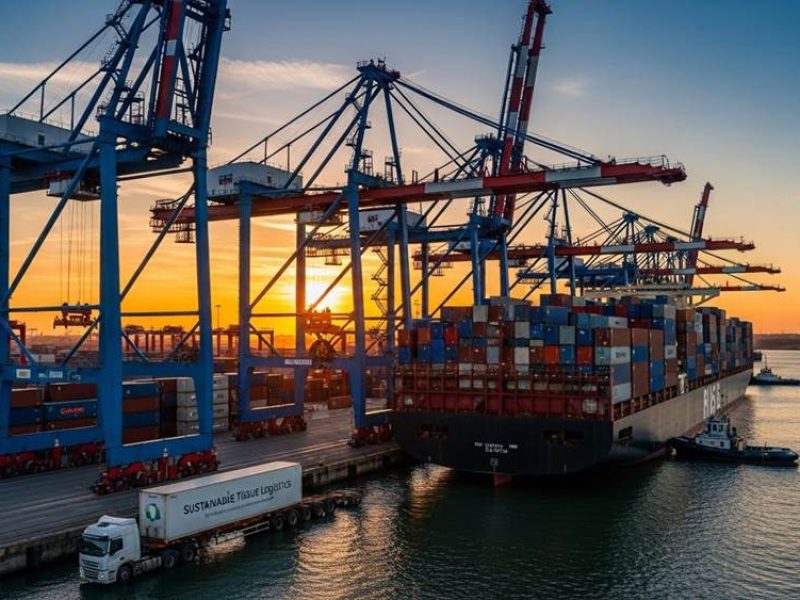
UK tissue logistics center on the Port of Felixstowe and the Port of Southampton, which handle the majority of the 526,000 tons of annual toilet paper imports. Efficient supply chains utilize 40′ High Cube containers to maximize volumetric capacity, coupled with port-centric warehousing and intermodal rail to the Midlands to reduce total landed costs and carbon emissions.
Primary Gateways: Managing Deep-Sea Arrivals at Felixstowe and Southampton
The Port of Felixstowe serves as the primary deep-sea container hub for the UK, processing over 4 million TEU annually. Its infrastructure supports high-volume tissue imports from major manufacturing hubs in China and Indonesia, where vessel scale and crane productivity are essential for maintaining 2026 delivery schedules. Recent trade data indicates a 29% surge in import volumes, making Felixstowe’s yard efficiency a critical factor for FMCG brands requiring consistent shelf availability.
The Port of Southampton, integrated with the DP World network, provides essential Ro-Ro and container services for mills located in Italy, Iberia, and Scandinavia. These shorter-sea routes from Europe account for a significant portion of the UK’s supply, particularly for premium and private-label rolls. Southampton’s location and carrier mix offer a reliable alternative for shippers looking to diversify entry points and avoid localized congestion at other eastern ports.
Optimizing Cargo Volume through FCL and Port-Centric Warehousing
Full Container Load (FCL) shipping using 40′ High Cube containers is the standard for importing lightweight but bulky toilet rolls. These containers provide the extra vertical space needed to maximize the cubic capacity of a shipment, effectively lowering the freight cost per roll. Proper load planning and palletization ensure that containers are filled to their volumetric limit without exceeding weight restrictions, which is a common challenge with tissue products.
Port-centric warehousing at Felixstowe and Southampton reduces the number of inland transport legs, cutting both costs and potential handling damage. By storing bulk inventory near the point of entry, wholesalers can perform case-picking and labeling closer to the final destination. For emerging e-commerce brands, Less than Container Load (LCL) services allow for testing sustainable SKUs or bamboo-based alternatives without the inventory risks associated with full container commitments.
Inland Transit to the Midlands and UK Customs Compliance
Intermodal rail shuttles move containers directly from coastal quays to the Midlands ‘Golden Triangle,’ the center of UK logistics. This transition to rail reduces road congestion on the A14 and M27 corridors while significantly lowering the carbon footprint per tonne-kilometer. Once at inland rail terminals, containers are transferred to HGVs for the final delivery to supermarket regional distribution centers (RDCs) or 3PL warehouses.
Customs compliance for paper products requires accurate HS code classification and the use of the UK Customs Declaration Service (CDS). Importers must manage origin documentation carefully to navigate tariff requirements, especially for shipments arriving from non-EU hubs like Turkey or China. Lead-time modeling typically accounts for 2–6 week windows for European sourcing and 8+ weeks for Asian supply chains to ensure that stock levels remain resilient against global shipping fluctuations.
Compliance: Understanding UK REACH and Quality Standards
Compliance in the UK toilet paper industry requires adherence to the UK REACH framework for chemical safety, ISO 9001 and BRCGS standards for quality and hygiene, and FSC certification for sustainable fiber sourcing. These regulations ensure that products remain safe for consumers while meeting the strict environmental and performance criteria demanded by major retailers.
Chemical Safety and UK REACH Registration
Chemical handlers register substances with the Health and Safety Executive (HSE) whenever volumes exceed one tonne per year. This registration process tracks the safety profile of all materials involved in the production cycle. Adherence to these regulations ensures that the inks, dyes, and adhesives used in toilet paper production remain safe for human health and prevent environmental contamination during disposal.
The UK REACH framework mirrors EU standards for 2026, creating a stable regulatory environment for importers and domestic producers. This system requires detailed documentation for all pulp additives and processing chemicals. Suppliers provide these data sheets to wholesalers and retailers to prove that every roll meets national safety benchmarks for chemical exposure and skin sensitivity.
ISO 9001 and BRCGS Hygiene Standards
ISO 9001 certification provides a framework for consistent product quality by focusing on specific technical metrics. Manufacturers use this standard to monitor paper strength, softness, and absorbency levels throughout the converting process. By maintaining these quality management systems, facilities reduce defects and ensure that bulk shipments meet the technical specifications agreed upon with commercial buyers.
BRCGS Packaging Materials standards manage contamination risks and hygiene protocols. These certifications are mandatory for any supplier providing goods to major UK supermarket chains. The standard governs the entire production environment, ensuring that the handling of raw materials and finished goods prevents the introduction of physical or biological contaminants into the supply chain.
Regular audits confirm that manufacturing facilities maintain strict hygiene controls for both virgin wood pulp and recycled paper products. These inspections verify that the facility operates under clean conditions and that traceability systems can track a specific batch of toilet paper back to its original fiber source. This level of oversight remains essential for maintaining the trust of large-scale retail partners and healthcare distributors.
FSC Certification and Sustainable Sourcing
FSC (Forest Stewardship Council) certification verifies the chain of custody for pulp and bamboo fibers. This process ensures that the raw materials used in tissue production do not contribute to illegal logging or deforestation. By tracking fiber from the forest to the finished roll, manufacturers provide a transparent record of their environmental impact and support global biodiversity goals.
Sustainable sourcing is a primary requirement for UK eco-brands and retailers targeting environmentally conscious consumers in 2026. Market trends show a significant shift toward products that carry recognizable environmental labels. Brands that prioritize FSC-certified or recycled inputs gain a competitive advantage in the retail landscape as consumer demand for plastic-free and responsibly sourced household goods continues to grow.
Wholesalers use FSC documentation to prove that timber-based products meet strict environmental and social responsibility criteria. This documentation allows businesses to participate in public sector tenders and supply corporate clients who have specific ESG (Environmental, Social, and Governance) targets. Maintaining these certifications simplifies the auditing process for distributors and ensures compliance with the UK’s evolving green procurement policies.
Pro Tip: The Massive Growth of Sustainable D2C Brands in the UK
The UK toilet paper market is witnessing a shift as sustainable direct-to-consumer (D2C) brands disrupt the dominance of traditional retail giants. By leveraging subscription models, FSC-certified bamboo, and plastic-free packaging, these challengers have captured a growing segment of the $2.25 billion revenue market, forcing legacy brands like Andrex to adapt their product lines.
Direct-to-Consumer Subscription Models for Bamboo Tissue
Brands like Who Gives A Crap and Bumboo scaled rapidly by offering subscription-led models for 100% bamboo and recycled toilet rolls. These digital-first companies bypassed traditional gatekeepers to build direct relationships with households. Bazoo and other pandemic-era startups leverage FSC certification and plastic-free packaging to compete with traditional tissue giants through targeted digital channels. This shift toward bulk online purchasing and carbon-balanced shipping caters to consumer preferences for convenience and environmental transparency.
Differentiation through Unbleached Fibers and Social Impact
Naked Sprout focuses on minimal processing with unbleached bamboo and recycled rolls, targeting eco-conscious buyers who prefer brown, chemical-free tissue. By avoiding traditional bleaching agents, these brands appeal to users concerned about chemical runoff and industrial processing. Mission-driven initiatives such as Bamboo Bobbi and Serious Tissues use social-impact models, including tree-planting and sanitation project donations, to drive brand loyalty. High B Corp scores and transparent sustainability reporting have become essential benchmarks for D2C challengers to establish trust in the UK market.
Transition from Online Niche to Mainstream Retail Shelves
The Cheeky Panda illustrates a successful evolution from a D2C challenger to a multi-channel brand available in major UK supermarkets and international markets. This expansion proves that sustainable alternatives can move beyond niche e-commerce into high-volume retail environments. Legacy brands, including Andrex and supermarket private labels, are responding to this growth by introducing their own recycled and plastic-free tissue ranges. Current market data indicates that premium and eco-friendly segments are capturing a larger share of the UK’s multi-billion dollar toilet paper revenue as pricing strategies align with consumer values.
Frequently Asked Questions
Which manufacturers dominate the UK toilet paper market?
Essity UK Ltd, Kimberly-Clark Ltd, and Sofidel UK Ltd lead the industry. These three companies generate the bulk of the market revenue, which is estimated to reach $2.25 billion in 2026.
How have trade shifts affected UK toilet paper imports?
The UK relies heavily on non-EU suppliers to meet demand. Recent trade figures show imports exceeding 526,000 tons, with Turkey, Italy, and China serving as the primary sources for paper products.
What is the average toilet paper usage per person in the UK?
UK residents consume approximately 36 kg of tissue products per person annually. This level of consumption results in an average per capita spend of roughly £33.50 on toilet paper alone.
Are UK retailers looking for more sustainable paper suppliers?
Yes, retailers actively prioritize suppliers who offer FSC-certified pulp, recycled fibers, and eco-friendly designs like coreless rolls. Sustainability remains a decisive factor in B2B sourcing and consumer preference.
What are the top tissue brands currently available in the UK?
Andrex, Velvet, and Kleenex are the most recognized brands in the market. Manufacturers like Essity and Kimberly-Clark maintain dominance through these household names alongside large-scale private label production for supermarkets.
Final Thoughts
Success in the UK tissue market now depends on balancing local manufacturing with a resilient import strategy. Retailers and brands that prioritize supply chain transparency and eco-friendly materials are best positioned to capture growing consumer demand. Shifting away from traditional plastic packaging and embracing bamboo or recycled fibers helps businesses stay competitive as buyer habits evolve.
Companies navigating this landscape must manage strict chemical safety standards and logistics costs to maintain shelf presence. Strategic partnerships with high-capacity manufacturers and efficient port-centric warehousing will likely determine who leads the market in the coming years. By focusing on volume, sustainability, and reliable transport routes, suppliers can meet the high consumption rates of the British public while staying resilient against global trade shifts.