Skip to content
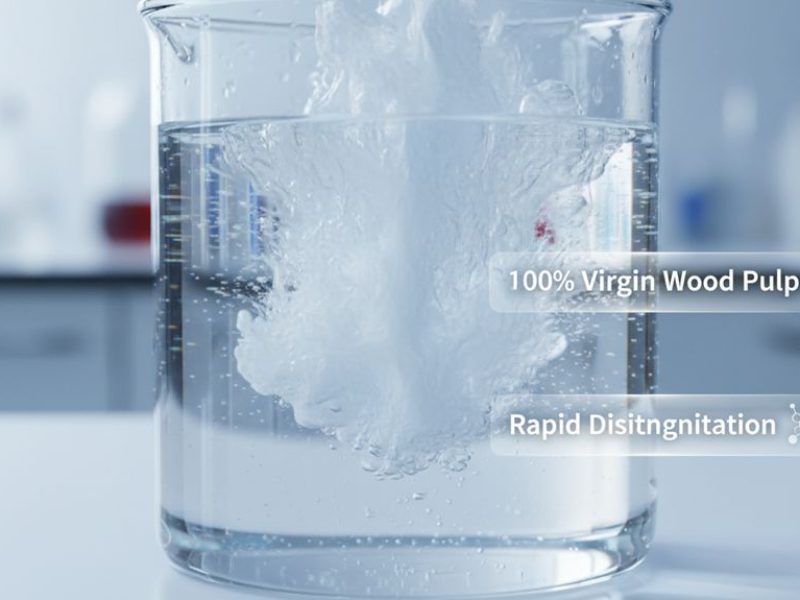
Flushability Tech (Clog-Free) sourcing is the primary defense against the multi-billion dollar sewer crisis caused by fatbergs and non-dispersible solids. While standard tissues provide comfort, products that fail to fragment under hydraulic stress lead to frequent plumbing interventions and pipe blockages that drain municipal maintenance budgets.
Our engineering benchmarks utilize 100% Virgin Wood Pulp products like the TSH-2559, which are verified through FG502 Slosh Box protocols. By strictly controlling ply density between 13–22g/m² and maintaining OBA-free chemical integrity, we ensure rapid fiber separation that protects both septic health and municipal sewage flow.
How Can We Solve the Rising Crisis of “Fatbergs” via Engineering?
Engineers stop fatbergs by combining 98% efficiency grease interceptors with rapid-disintegration paper products. This dual-layer defense prevents solids from bonding with fats in municipal sewer systems.
Innovative Infrastructure and Grease Interception Systems
Current engineering strategies prioritize stopping fats before they reach the main sewer lines. Traditional systems often fail under high temperatures or heavy detergent use, but new mechanical and chemical interventions are changing the success rates of municipal maintenance.
- RMIT-Designed Interceptors: These systems use physical baffles and aluminum sulfate to achieve 98% fat removal, significantly outperforming the 40% efficiency of older models.
- Zinc-Enhanced Polyurethane: Applying this coating to concrete pipes blocks calcium release, which reduces fat, oil, and grease (FOG) buildup by 30%.
- Automated Drain Dosing: These units deliver precise chemical treatments to commercial kitchen drains, breaking down organic matter before it enters the public infrastructure.
- Robotic CCTV Systems: Municipalities use these camera systems for early detection and targeted maintenance of high-risk sewer intersections.
Engineered Rapid Disintegration for Sewer Integrity
Fatbergs require a structural binder to grow, often provided by non-flushable materials. Engineering paper products that dissolve quickly is the primary preventative strategy for 2026. We focus on fiber performance to ensure that even high-ply commercial tissues do not contribute to blockages.
- 100% Virgin Wood Pulp: We use long-fiber wood pulp that balances high wet strength during use with rapid disintegration once fully immersed in the sewage flow.
- Septic-Safe Compliance: Products meet strict North American and European standards, ensuring paper does not act as a reinforced binder for grease.
- Standardized Testing: All materials undergo ISO 9001 and EU hygiene compliance testing to verify structural breakdown rates in municipal systems.
- OBA-Free Composition: We maintain natural brightness without chemical binders or Optical Brightening Agents that can resist water dissolution and harm the environment.
By combining these technical infrastructure upgrades with precision-engineered paper materials, cities can reduce the billions spent on emergency sewer cleaning and infrastructure repair.

What are the FG502 International Standards for Flushability?
FG502 measures disintegration through mechanical agitation. Products must achieve 60% mass passage through a 12.5mm sieve within 60 minutes to meet Edition 4 compliance standards.
FG502 defines the Slosh Box Disintegration Test, a mandatory protocol established by INDA and EDANA. The test evaluates how effectively a nonwoven product or tissue fragments when exposed to the hydraulic forces found in gravity sewer pipes. This standard ensures that “flushable” items do not contribute to fatbergs or infrastructure blockages.
Technical Parameters of the Slosh Box Disintegration Test
The testing process utilizes a specialized oscillating box to simulate pipe turbulence. Unlike chemical solubility tests, FG502 focuses strictly on the physical fragmentation of the material under standardized mechanical stress.
- Oscillation Speed: 26 rpm rotation to mimic wastewater flow.
- Water Volume: 2.0 liters of water per test chamber.
- Test Duration: Exactly 60 minutes for Edition 4 compliance.
- Pass Threshold: 60% or more of the dry mass must pass through a 12.5 mm sieve.
Evaluation involves drying and weighing the material retained on the sieve after the agitation period. If the product leaves behind large, intact pieces that exceed 40% of its original weight, it fails the standard and must carry a “Do Not Flush” warning.

Achieving Septic Safety with 100% Virgin Wood Pulp
Material engineering is the deciding factor in meeting FG502 requirements. At Top Source Hygiene, we prioritize long-fiber virgin wood pulp to ensure our products maintain a balance between dry tensile strength and rapid wet-state disintegration.
- Fiber Strategy: 100% Virgin Wood Pulp for rapid separation upon saturation.
- Density Control: Ply weights are strictly managed between 13–22g/m².
- Chemical Integrity: OBA-free production eliminates binders that inhibit fiber migration.
- Compliance: Manufacturing processes align with ISO 9001 and FDA hygiene standards.
Our Hebei-based factory uses precision perforation and ply-bonding technology to ensure the tissue remains durable during use but breaks down quickly once it enters the plumbing. This engineering approach protects municipal sewer systems and sensitive septic tanks from the accumulation of non-dispersible solids.
Premium OEM Toilet Paper Manufacturing Solutions
How to Implement a “Short Fiber Strategy” for Rapid Disintegration?
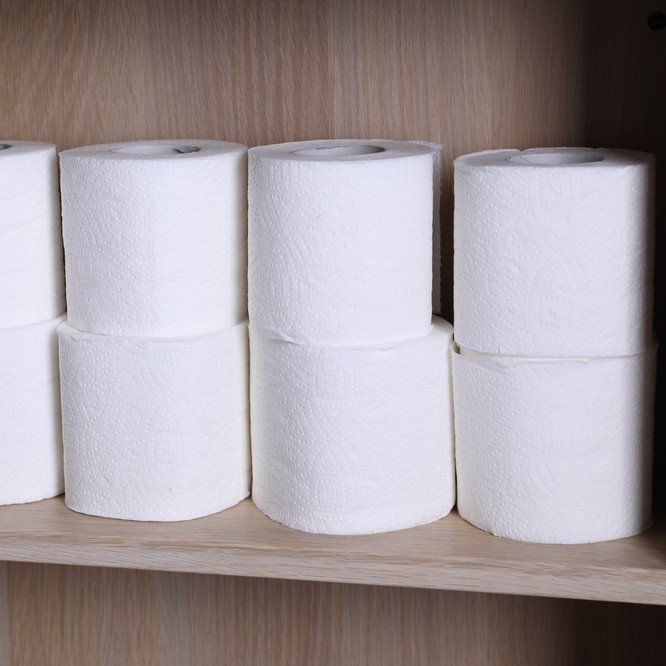
Short fiber strategies utilize 5-30% natural cellulose to create capillary pathways, ensuring 100% virgin wood pulp products lose structural integrity immediately upon contact with water.
| Technical Parameter | Specification Standard | Disintegration Impact |
|---|---|---|
| Natural Fiber Length | 30 – 40 mm | Creates capillary moisture pathways |
| Matrix Loading Level | 5% – 30% by weight | Triggers rapid mechanical weakening |
| Ply Density (GSM) | 13 – 22 g/m² per ply | Balances dry strength and hydrolysis |
| Chemical Treatment | 100% OBA-Free | Preserves natural hydrophilic absorption |
Water Penetration Mechanisms in Short Fiber Matrices
Disintegration performance depends on how fast water reaches the center of the paper matrix. While long fibers provide the structural skeleton for dry use, short plant fibers act as internal capillary conduits. These fibers pull moisture into the material through capillary action, significantly increasing the rate of water infiltration.
- Fiber Dimensioning: Incorporate natural fibers between 30 mm and 40 mm to establish effective moisture pathways without compromising the initial winding tension.
- Loading Precision: Maintain fiber loading between 5% and 30% by weight. This range ensures the material reaches a “saturation threshold” where mechanical bonds fail instantly upon immersion.
- Raw Fiber Utilization: Use untreated fibers. Alkali-treated variants may improve bonding, but they reduce water absorption rates and slow down the disintegration process.
- Uniform Distribution: Calibrate headbox settings to distribute short fibers evenly. This prevents residual clumps that could otherwise survive the flushing process and cause plumbing snags.
Engineering 100% Virgin Wood Pulp for Septic Safety
Protecting septic systems requires paper that breaks down under low-energy biological conditions. In a septic tank, there is no industrial mechanical agitation; disintegration relies entirely on natural bacterial decomposition and rapid hydrolysis. Choosing the right pulp source and density determines whether a product is septic-safe or a clog risk.
- Pulp Selection: Use high-purity 100% Virgin Wood Pulp. This material provides the optimal ratio of long and short fibers to achieve rapid wet-state disintegration while maintaining premium softness.
- Hydrophilic Preservation: Implement 100% OBA-free manufacturing. Removing optical brightening agents keeps the cellulose fibers in their natural hydrophilic state, ensuring they absorb water faster and meet 2026 septic-safe standards.
- Density Calibration: Keep ply density within the 13–22g/m² range. This specific weight ensures the paper is thick enough for commercial use but light enough to undergo rapid hydrolytic degradation in water.
- Benchmark Alignment: Align all production parameters with North American and European flushability protocols. Passing the FG502 Slosh Box test—where 60% of the mass must pass through a 12.5mm sieve in 60 minutes—prevents the accumulation of solids that form fatbergs.
How Does Disintegration Differ in Septic vs. Municipal Systems?
Septic systems rely on slow biological digestion, whereas municipal networks use industrial mechanical and chemical processes. Paper engineered for both ensures rapid breakdown and protects infrastructure.
Septic systems function as passive, on-site treatment centers. They lack the high-velocity pumping and chemical additives found in city infrastructure, making them much more sensitive to material fiber length and chemical residue.
Biological Decomposition in Septic Tank Environments
Waste management in a septic tank depends entirely on a quiet microbial ecosystem. These systems do not use mechanical grinders; they rely on time and bacterial health to reduce solid volume.
- Bacterial Conversion: Anaerobic and aerobic bacteria transform up to 50% of solids into liquids and gases directly inside the tank.
- Layer Separation: Wastewater separates into scum (fats), effluent (liquid), and sludge (solids), requiring slow biological breakdown before the liquid moves to the drain field.
- Microbial Balance: Harsh chemicals or non-biodegradable fibers can kill beneficial bacteria, leading to system backups and expensive pumping fees.
- Passive Filtration: Solids must settle and digest completely to prevent heavy particles from clogging the drain field pipes.
Septic-Safe Engineering for High-Purity Virgin Wood Pulp
Top Source Hygiene manufactures tissue designed to bridge the gap between slow-acting septic tanks and fast-moving municipal lines. We utilize 100% virgin wood pulp to ensure the paper maintains tensile strength during use but fragments immediately upon saturation.
- Rapid Disintegration Tech: We engineer our pulp to dissolve in low-energy environments, meeting 2026 North American and European plumbing standards.
- Fiber Performance: Premium long-fiber wood pulp provides high dry strength while allowing for immediate fiber separation once the paper enters the water stream.
- OBA-Free Composition: Our 100% virgin wood pulp contains no Optical Brightening Agents, protecting the bacterial colonies essential for septic tank health.
- Density Precision: We strictly control ply density between 13–22g/m² to prevent the formation of “fatbergs” in municipal pipes and sludge buildup in private tanks.
By selecting verified models like our TSH-2559, facility managers and distributors ensure compatibility with aging infrastructure. This engineering focus reduces the frequency of maintenance calls and prevents emergency plumbing failures in high-volume commercial environments.
What is a “Slosh Box” Test and How Does it Simulate Plumbing?
The Slosh Box test replicates turbulent sewer hydraulics to verify if paper products disintegrate into particles small enough to pass a 25mm sieve without causing infrastructure blockages.
Simulating Sewer Dynamics and Hydraulic Agitation
Municipal wastewater systems rely on gravity and turbulent flow to move solids. The Slosh Box—officially the FG502 disintegration test—replicates these mechanical forces within a controlled laboratory environment. By mimicking the movement inside a 200 mm diameter sewer pipe, engineers can predict how a product will behave miles downstream from the initial flush.
- Flow Simulation: Generates turbulent flow conditions equivalent to a Reynolds number of 20,000, common in municipal gravity sewers.
- Mechanical Agitation: Subjects samples to a 30-minute continuous cycle in an oscillating chamber moving at 18 rpm.
- Liquid Parameters: Uses 4 liters of water maintained at a standard 20°C to simulate average wastewater temperatures.
- Sieve Analysis: Employs a 25 mm perforated sieve to catch post-test residue; products must break down sufficiently to pass through the mesh to earn a “pass” status.
High-Purity Fiber Engineering for Rapid Disintegration Compliance
Passing the Slosh Box test requires a precise balance between wet-strength during use and rapid breakdown in the pipes. At Top Source Hygiene, we engineer our paper products using specific fiber strategies that align with international flushability protocols, ensuring our 100% Virgin Wood Pulp products do not accumulate in sensitive wastewater pumps.
- Fiber Composition: We utilize premium long-fiber wood pulp which maintains structural integrity when dry but loses strength rapidly upon water saturation.
- OBA-Free Integrity: Our 100% OBA-free (Optical Brightening Agent) material selection prevents chemical bonding that could interfere with natural fiber separation during the 18 rpm agitation cycle.
- Density Calibration: We maintain ply density between 13–22g/m², a range specifically optimized to facilitate water penetration and hydraulic shredding.
- Standards Alignment: Our engineering process meets North American and European septic-safe requirements, ensuring the material disintegrates into manageable particles within the 30-minute test window.
Frequently Asked Questions
What engineering factors determine if toilet paper is truly flushable?
True flushability depends on rapid physical disintegration and fiber composition. Engineered toilet paper uses natural cellulosic fibers that lose 90% of their strength when wet. Standards require the material to break down into small pieces that leave less than 5% solid residue after passing through a 6.0-mm sieve, ensuring it does not obstruct sewage flow.
How does the FG502 slosh box test simulate plumbing conditions?
The FG502 test uses a specialized apparatus to subject tissue samples to controlled water turbulence, typically at 26 rpm. This process mimics the hydraulic forces within wastewater systems. To pass, 95% of the material must disintegrate enough to pass through a 25mm sieve, confirming the product will break apart in municipal sewer lines.
Is 1-ply tissue safer for aging septic systems than luxury multi-ply options?
1-ply toilet paper is safer for older plumbing because its single-layer construction allows water to penetrate and separate fibers faster than multi-ply alternatives. This rapid dissolution prevents material from clinging to pipe joints and reduces the mechanical strain on septic pumps, which can burn out when processing heavy, slow-dissolving papers.
Does bamboo toilet paper take longer to dissolve than virgin wood pulp?
Bamboo toilet paper actually dissolves up to four times faster than virgin wood pulp. Bamboo fibers are shorter and softer, making them highly biodegradable. These products typically lack the chemical additives found in traditional papers, allowing septic tank bacteria to break down the material immediately upon contact.
How can commercial facilities reduce maintenance costs using specific tissue specs?
Facility managers can cut costs by 15% or more by switching to high-capacity, quick-dispersing tissues like the TSH-3396 or TSH-JRT08. Choosing 100% virgin wood pulp options that are OBA-free and septic-safe ensures compliance with plumbing standards, which minimizes emergency service calls and prevents clogs in high-traffic restrooms.