Skip to content
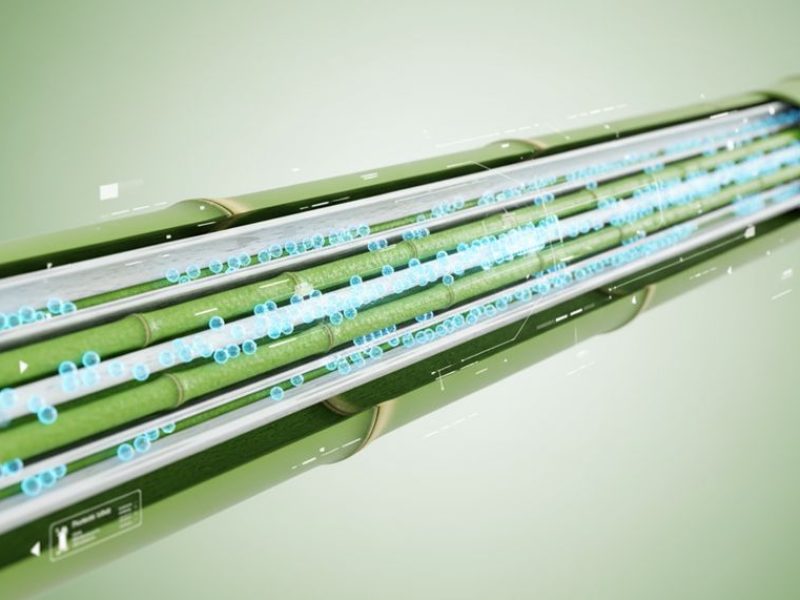
Fiber Cross-Section Analysis identifies why certain tissue brands fail under saturation while others maintain structural integrity. For B2B distributors, ignoring fiber morphology leads to high return rates and lost hospitality contracts due to inconsistent liquid wicking and surface linting.
We benchmark performance using 100% Virgin Wood Pulp and 13–22g/m² ply density standards. This technical approach utilizes CNC-precision embossing to increase absorbency by 30%, providing a reliable metric for wholesalers to secure high-performance 40HQ container payloads.
Why Does Fiber Morphology (Round vs. Ribbon) Matter for Liquid Diffusion?
Fiber geometry dictates wicking speed. Ribbon fibers accelerate initial contact through high surface area, while round fibers build internal porosity to maximize storage capacity.
Surface Area Dynamics and Diffusion Kinetics
The geometric profile of a fiber fundamentally changes how liquid moves through a tissue sheet. We look at cross-sections to predict how fast a product will reach saturation and how much liquid it can actually hold before failing.
- Surface-to-Volume Ratio: Ribbon-shaped fibers provide a significantly higher surface area than round fibers of the same mass. This creates more immediate contact points for liquid, triggering faster initial wicking.
- Diffusion Distances: Flat or ribbon geometries shorten the path liquid must travel to reach the center of the fiber. This allows for near-instantaneous saturation compared to thicker profiles.
- Radial Patterns: Round fibers exhibit radial diffusion, where liquid moves from the surface toward the core. This process often creates internal porosity, which is vital for increasing the total storage capacity of the paper.
- Internal Architecture: Morphology influences how the fiber network develops during drying. Round fibers tend to maintain porous interiors, while ribbon fibers pack more tightly to create a dense, fast-acting wicking surface.
High-Purity Long-Fiber Pulp and Embossing Geometry
At Top Source Hygiene, we select raw materials based on these morphological advantages. Our production process in Hebei focuses on balancing fiber shape with mechanical treatment to hit specific absorbency targets for B2B buyers.
- 100% Virgin Wood Pulp: We use long-fiber wood pulp to ensure high tensile strength. This morphology allows the paper to maintain its structure even when the capillary network is fully saturated.
- Controlled Density: We maintain a ply density of 13–22g/m². This range optimizes the void space between fibers, ensuring the capillary action remains efficient without sacrificing the soft hand-feel.
- Point-to-Point Embossing: Our CNC-precision patterns work with the fiber morphology to create additional reservoirs. This technology increases liquid absorbency by 30% by physically altering the fiber network.
- Lint-Free Performance: High-purity fiber selection ensures that the ribbons and rounds stay bonded. Even at maximum liquid load, the paper does not shed, providing a clean experience for medical or premium hospitality use.
How Do Micro-pores Within Bamboo Fibers Enable Rapid Capillary Action?
Bamboo micro-pores create capillary channels that move liquid via pressure differentials and hydrophilic surfaces. This hierarchical network drives high-speed transport, outperforming standard solid fiber structures.
Hierarchical Pore Networks and Pressure Differentials
Bamboo fibers contain a dense network of inherent micro and nanoporous channels. These internal pathways create a multi-scale system that allows for immediate water ingress. Unlike standard synthetic or solid-core fibers, these channels function as natural pipes that pull liquid deep into the fiber matrix.
The physics of this transport relies on pressure differentials. A specific atmospheric pressure difference between the upper and lower sections of the porous structure facilitates a continuous upward pull. This capillary force is what allows liquids to travel vertically against gravity at high speeds.
Surface chemistry plays an equally important role. High concentrations of oxygenated functional groups on the micro-pore surfaces ensure the environment remains naturally hydrophilic. These groups attract water molecules, reducing resistance as they move through the fiber. Additionally, the oval-shaped microstructures within the bamboo tissue act as efficient inlets and outlets, maximizing evaporation rates and liquid distribution.
Bamboo Pulp Integration for Specialized Project Needs
Top Source Hygiene provides high-purity bamboo pulp options for eco-targeted projects that require superior vertical wicking. We specialize in B2B manufacturing for distributors and hospitality groups who need high-performance alternatives to standard wood pulp. Our technical team integrates these bamboo fibers into specific configurations to maximize their natural capillary benefits.
- Absorbency Boost: We apply point-to-point embossing technology to bamboo fibers, using CNC-precision patterns that increase overall absorbency by an additional 30%.
- Ply Density Control: Technical density is strictly maintained at 13–22g/m² per ply to balance bamboo’s natural tensile strength with cloud-like softness.
- Custom Roll Weights: We offer customizable roll weights from 780g up to 5000g, providing high-capacity solutions for the 2026 industrial and hospitality markets.
- Chemical Safety: All bamboo pulp options remain 100% OBA-Free, ensuring they meet EU and North American safety standards for sensitive skin applications.
For wholesale buyers, these specs ensure that the finished product remains lint-free and highly durable even when wet. By optimizing the fiber structure during the manufacturing phase, we ensure the capillary action translates into measurable performance for high-traffic environments and premium retail brands.
Build Your Brand with Expert OEM Manufacturing
Can Cross-sectional Imaging Accurately Predict Liquid Wicking Rates?
Imaging extracts geometric parameters like porosity to forecast wicking speed. When integrated with analytical models, it enables accurate fluid transport simulations for 2026 manufacturing environments.
| Imaging Parameter | Extracted Data | Wicking Impact |
|---|---|---|
| 3D Tomography | Void fraction & pore radius | Defines capillary rise potential |
| Ply Density Analysis | 13–22g/m² distribution | Regulates absorption consistency |
| Embossing Depth | CNC pattern modification | Boosts total absorbency by 30% |
Geometric Parameter Extraction through 3D Tomography
Computer Tomography (CT) scans reconstruct 3D microstructures to identify void fractions and effective flow channels within the paper matrix. This diagnostic approach moves beyond surface observation, allowing engineers to map the internal architecture of the fiber network.
- Microstructure Reconstruction: Identifies critical flow variables including mean ligament radius and permeability.
- Effective Flow Channels: Locates structural support elements that either facilitate or obstruct fluid movement.
- Bottom-Up Upscaling: Bridges the gap between micro-scale geometry and macro-scale liquid-front height predictions.
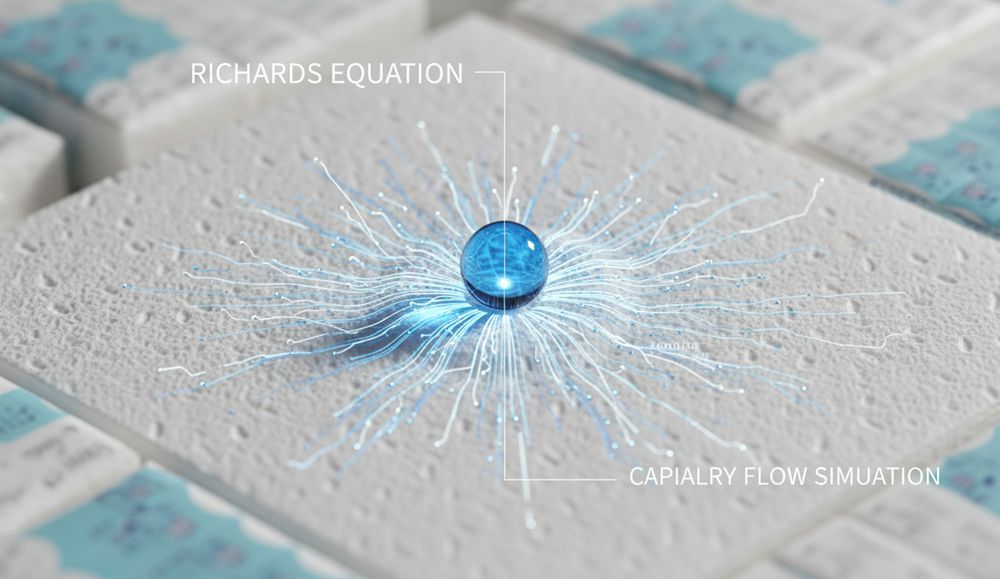
While imaging provides a static snapshot, applying Richards equation-based models to this data enables dynamic simulation. This combination forecasts how liquid penetrates the structure under real-world conditions, providing a powerful tool for optimizing high-speed production lines.
Validating Absorbency Gains in Point-to-Point Embossing
Imaging quantifies how CNC-precision embossing patterns modify the paper structure to increase total liquid absorbency by 30%. By analyzing the void modification within the sheet, we correlate geometric capillary radius to the effective pore size found in multi-ply products.
At Top Source Hygiene, we focus on 100% Virgin Wood Pulp fiber morphology to ensure a consistent baseline for these models. Unlike recycled fibers which vary in integrity, high-purity long fibers provide predictable wicking pathways. We strictly control ply density between 13–22g/m² to balance softness with the structural strength required for rapid liquid transport.
Validating these predictions against mass absorption measurements confirms that sharp-front models work best for high-density wood pulp. This technical precision allows distributors to guarantee performance standards for professional-grade wiping and hospitality applications without relying on guesswork.
How Does Fiber Compression Alter the Strategic Voids (Bulk) in Paper?
Mechanical pressure collapses tubular fibers into ribbons, reducing air voids and bulk to increase density while enhancing strength and surface smoothness in high-volume production.
Mechanisms of Fiber Flattening and Interstitial Void Reduction
Wood fibers naturally exist as hollow, tubular structures. When we apply mechanical pressure during the papermaking process, these tubes collapse into flat, ribbon-like shapes. This physical transformation drastically changes how the fibers interact within the sheet matrix. As fibers flatten, they occupy less vertical space, which directly reduces the overall bulk of the paper.
The flattening process also increases the available surface area for bonding. Because the fibers are no longer round, they can pack more tightly against one another. This increased contact area promotes dense hydrogen bonding, which hardens the paper structure and reduces the internal air pockets. You essentially trade the “fluffiness” of the paper for higher tensile strength and a smoother surface finish.
- Fiber Morphological Shift: Tubular wood fibers transform into flat ribbons, minimizing the 3D void volume.
- Bonding Density: Increased surface contact triggers higher hydrogen bonding, creating a denser matrix.
- Pore Redistribution: Large interstitial voids shift into micro-capillary spaces as the network settles into a low-volume state.
Preserving Texture with Space-Saving Mechanical Compression Technology
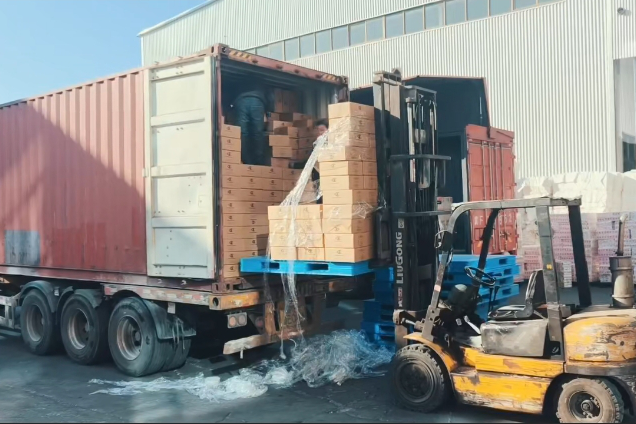
In large-scale B2B manufacturing, we have to balance paper bulk with logistics efficiency. Top Source Hygiene utilizes precision mechanical compression during the bagging stage to optimize container payloads. By compressing the rolls during packaging, we can maximize the 40HQ container payload to reach 7,000kg–9,000kg. This lowers the landed cost for wholesalers without permanently destroying the paper’s internal architecture.
We maintain specific technical standards to ensure the paper recovers its “hand-feel” once the customer unpacks it. The use of premium materials allows the fibers to retain a degree of elasticity. This ensures the paper doesn’t feel like a solid block of wood but remains soft and absorbent for the end-user.
- Ply Density: We maintain a strict range of 13–22g/m² per ply to balance softness with structural durability.
- Material Selection: We utilize 100% Virgin Wood Pulp, which provides the natural resilience needed for fibers to spring back after compression.
- Container Optimization: Our Hebei facility teams use specialized loading techniques to ensure maximum volume in 40HQ shipments while protecting paper fluffiness.
- Integrity Standards: Our OBA-Free and ISO-certified processes ensure that mechanical compression does not compromise the chemical safety or skin-friendliness of the tissue.
Can We Engineer a Custom Fiber Blend for High-Speed Athletic or Industrial Wiping?
Custom fiber blends optimize absorption and strength for high-speed wiping by combining polyester, polyamide, or wood pulp with specialized bonding and embossing techniques.
Hybrid Fiber Construction and Material Ratios
Custom fiber engineering allows manufacturers to manipulate material ratios to hit specific performance targets. The fiber architecture dictates wicking speed and mechanical durability during high-speed use. By adjusting the polymer base, we can control how the wiper interacts with specific chemicals or oils in industrial settings.
- Split Microfiber Technology: Uses 80/20 polyester and polyamide ratios to create “V” shaped fibers that increase surface area by 15 times for dual-action cleaning.
- Polymer Masterbatches: Supports PET, PBT, and nylon blended systems to adjust fiber softness, stretch, and chemical resistance.
- Fiber Morphology: Engineering ribbon-shaped cross-sections instead of round profiles to accelerate liquid diffusion and wicking kinetics.
- Process Repeatability: Formulations optimized for high-speed spinning to ensure batch-to-batch consistency in large-scale B2B orders.
Material Selection and Ply-Bonding for Industrial Standards
Achieving industrial-grade durability requires more than choosing the right fiber. Mechanical bonding of layers ensures the material withstands friction without shedding or separating. We focus on maintaining fiber integrity under mechanical stress to meet aerospace and medical wiping requirements.
- 100% Virgin Wood Pulp: Utilized for lint-free performance in critical environments like cleanrooms and medical labs.
- High-Pressure Ply-Bonding: Lamination technology that secures multi-ply sheets together, preventing delamination during heavy scrubbing.
- Precision Density Control: Maintaining 13–22g/m² per ply to balance tensile strength with maximum liquid absorption capacity.
- CNC-Precision Embossing: Point-to-point floral or dot patterns that increase fluid retention by 30% compared to flat sheets.
Does Refining Intensity Change the Fiber’s Cross-sectional Integrity?
Refining intensity dictates whether fibers collapse or stay intact. Keeping intensity below 0.6 Ws/m preserves cross-sectional area, ensuring high bulk and superior tensile strength.
Mechanical Impact of Specific Edge Load on Fiber Morphology
Refiners must balance mechanical work with structural preservation to avoid destroying the natural properties of the wood pulp. When the force applied to the fiber exceeds specific physical limits, the internal structure fails, leading to a permanent loss of paper quality.
- Refining Intensity: High-intensity refining exceeding 0.6 Ws/m causes significant fiber cutting and generates excessive fines.
- Critical Gap: Refining gaps between 0.33mm and 0.43mm represent the threshold where fiber walls begin to deform.
- External Fibrillation: Low-intensity mechanical action promotes surface area growth without destroying the fiber core.
Preserving 100% Virgin Wood Pulp Strength Through Low-Intensity Processing
Top Source Hygiene utilizes 100% Virgin Wood Pulp to capitalize on the natural tensile strength of long fibers. By controlling the mechanical load during production, the factory ensures the finished tissue maintains a high-performance profile suitable for premium wholesale markets.
- Tensile Strength: Low refining intensity allows 13–22g/m² plies to achieve 9% higher tensile strength while remaining soft.
- Bulk Retention: Preserved fiber integrity ensures production batches maintain 2% more bulk compared to high-intensity methods.
- Absorbency: Higher bulk optimizes the CNC point-to-point embossing process, enabling 30% higher liquid absorbency.
Frequently Asked Questions
Fiber morphology and capillary engineering determine liquid absorption efficiency. Precision testing and specific blend ratios ensure consistent performance across retail and industrial hygiene supply chains.
Why does virgin wood pulp absorb liquid more effectively than bamboo fiber?
100% virgin wood pulp fibers are longer and maintain structural integrity, creating efficient pathways for liquid retention. While bamboo excels at surface wicking, the complex cellular structures of wood pulp provide superior total absorbency and softness, which is why Top Source Hygiene prioritizes virgin pulp for high-performance retail products.
How do paper fibers transport liquid against gravity?
Liquid moves through paper via capillary action within the cellulose structure. Adhesion between water molecules and fiber hydroxyl groups, combined with cohesion between liquid molecules, allows moisture to travel through the narrow pores and gaps between fibers without external force.
What is the standard method for measuring paper porosity in 2026?
The Gurley porosity test (TAPPI T460) remains the industry standard. It measures the time required for a specific volume of air to pass through the sheet. This data helps manufacturers maintain a consistent balance between absorbency, bulk density, and softness across large production batches.
Does a flat fiber profile result in a softer hand-feel for toilet paper?
No. Round or oval fiber cross-sections produce the smoothest tactile experience. Flatter profiles, such as dog-bone shapes, increase surface irregularities and friction, which typically leads to a harsher feel during skin contact compared to round fiber geometry.
Can mechanical compression improve the total liquid absorption capacity of fibers?
Controlled compression can increase absorption capacity by 10-30% depending on environmental humidity. It modifies micro-voids and the density of polar hydroxide groups, though manufacturers must balance this with fiber integrity to ensure the paper remains durable when wet.
What fiber blend ratio maximizes vertical liquid wicking speed?
A blend of 85-90% hydrophobic fiber with 10-15% hydrophilic fiber provides the fastest wicking speed. This ratio ensures that moisture moves rapidly along capillary channels without being trapped by high-affinity hydrophilic groups, making it ideal for high-speed athletic or industrial wiping applications.