Skip to content
Optimizing 3. Tensile & Wet Strength is the only way to eliminate the tearing complaints that trigger wholesale refund requests and damage hospitality reputations. Tissue that shreds instantly when damp creates excessive waste and increases cleaning labor costs for high-traffic commercial facilities.
This report benchmarks factory performance against 100% Virgin Wood Pulp standards and 13–22g/m² ply density specifications. We analyze how balancing MD and CD ratios ensures products withstand tension while meeting septic-safe disintegration standards for global distribution.
Defining MD and CD Tensile Strength in Tissue Paper
MD measures strength along the production flow, while CD measures it across. Balancing both via Geometric Mean Tensile (GMT) ensures tissue resists tearing while remaining flexible during use.
Fibers naturally align with the machine’s movement during production, which creates directional variations in the finished sheet. Understanding these mechanics is vital for distributors who need to guarantee product performance under tension.
The Impact of Fiber Orientation on Directional Strength
Machine Direction (MD) refers to the axis parallel to the paper machine’s path. Because fibers orient themselves this way during the wet-end process, the paper inherently resists pulling more effectively in this direction.
- Machine Direction (MD): Exhibits the highest resistance due to primary fiber alignment.
- Cross Direction (CD): Provides the necessary flexibility to prevent the sheet from failing during sideways pulling or dispensing.
- Geometric Mean Tensile (GMT): Calculated as the square root of MD multiplied by CD to provide a standardized total strength rating.
- Directional Stretch: Properties are generally higher in the cross direction, which improves hand feel and prevents brittle rupture.
Maintaining Tensile Integrity with Long-Fiber Virgin Pulp
Top Source Hygiene uses 100% virgin wood pulp to secure the internal matrix of the paper. Long fibers from virgin pulp provide a superior bond compared to the short, brittle fibers found in recycled materials, ensuring the paper stays intact during use.
- Material Specification: Premium long-fiber wood pulp creates a stronger internal structure and skin-friendly softness.
- Ply Density: Strictly controlled between 13–22g/m² per ply to balance durability with absorbent texture.
- Tensile Ratio: Manufacturing targets an MD/CD ratio of 0.80 to 0.93 to mimic high-end textile performance.
- Ply-Bonding Technology: Uses high-pressure lamination to keep multi-ply sheets together under high tensile stress.
By focusing on these technical ratios, we ensure that high-ply products—ranging from 2-ply to 5-ply—maintain their structural integrity without sacrificing the rapid disintegration required for septic safety.
Why Wet Strength Is Crucial for Hospitality Hygiene
Wet strength ensures tissue holds together when damp to maintain hygiene, while calibrated resins allow rapid disintegration to prevent plumbing clogs in high-traffic hotels.
Preventing Paper Disintegration in High-Moisture Environments
In a hotel bathroom or restaurant, tissue often encounters moisture before it is discarded. Low-quality paper shreds instantly when wet, creating a mess for guests and increasing the workload for cleaning crews. Professional-grade products solve this by maintaining structural integrity during use.
- Strength Retention: Quality tissue retains more than 15% of its original dry strength even when fully soaked.
- Fiber Durability: Long-fiber construction prevents unpleasant shredding or tearing, protecting the luxury reputation of hospitality brands.
- Humidity Protection: In food service areas, wet-strength napkins and packaging resist degrading under high humidity or direct liquid contact.
Balancing 22 GSM Ply Density with Septic Safe Disintegration
Hospitality buyers often worry that higher durability leads to plumbing issues. Engineering the right balance requires precise material selection to satisfy both guest comfort and facility maintenance requirements. We use technical specifications that prioritize both performance and solubility.
- Density Calibration: Using a range of 13–22g/m² per ply provides the necessary thickness for strength without compromising water solubility.
- 100% Virgin Wood Pulp: Long-fiber pulp creates a natural bond that resists tearing while remaining 100% OBA-free and safe for sensitive skin.
- Resin Calibration: Controlled use of wet-strength resins ensures products meet North American and European Septic Safe standards for rapid breakdown in low-flow plumbing.
Build Your Unique Toilet Paper Brand
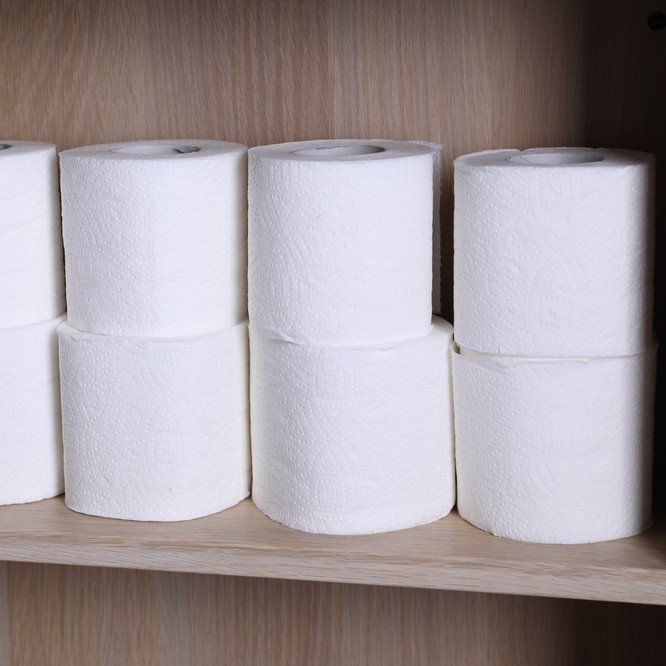
How to Read a Factory Tensile Test Report?
Tensile reports use stress-strain curves to track tissue durability. Key metrics like yield strength and load capacity confirm that materials meet specific industrial softness and strength standards.
| Metric | Technical Definition | Buyer Impact |
|---|---|---|
| Yield Strength | Point where permanent deformation begins. | Ensures the tissue maintains its shape during use. |
| UTS (Ultimate Tensile Strength) | The peak load the material handles before failure. | Determines the maximum force a sheet can withstand. |
| Elongation at Break | The percentage of stretch before tearing. | Indicates flexibility and “give” for user comfort. |
| Modulus of Elasticity | The slope of the initial elastic region. | Measures fiber stiffness and overall paper rigidity. |
Interpreting Stress-Strain Curves and Performance Metrics
Factory reports plot the relationship between applied force and material response. We look at the Modulus of Elasticity to determine the stiffness and rigidity of the paper fibers. Stiffer fibers result in a steeper curve, while more flexible, soft tissues show a gradual slope.
- Yield Strength: Identifies the maximum stress the material handles before it loses its original shape.
- Elongation at Break: Measures ductility and how much the tissue stretches before a complete tear occurs.
- Ultimate Tensile Strength (UTS): Located at the peak of the curve to confirm the maximum load-bearing capacity.
- MD/CD Ratio: Balanced reports show a ratio between 0.80 and 0.93, indicating strength is consistent in both directions.
Verifying Fiber Integrity and Ply-Bonding Quality
We analyze report data to ensure it aligns with Top Source Hygiene manufacturing specifications. This verification process confirms that the raw materials and bonding techniques meet the heavy-duty requirements of B2B distribution.
- Material Check: Results are compared against 100% Virgin Wood Pulp standards to ensure long-fiber tensile performance.
- GSM Range: We verify that Grams per Square Meter (GSM) stays between 13–22g/m² for uniform thickness.
- Ply-Bonding Efficiency: Lamination test data confirms that high-pressure bonding prevents layers from separating during use.
- Septic Safety: Fracture behavior notes confirm the tissue dissolves quickly, meeting plumbing safety standards.
The lab uses an extensometer for these measurements rather than relying on machine crosshead displacement. This technical precision provides an accurate look at how the paper will perform in real-world hospitality or retail environments.
The Role of Fiber Length in Preventing Tissue Tearing
Fiber length determines structural resistance. Long fibers create networks that dissipate energy through rotation and alignment, blunting stress at the tear tip to prevent premature shredding or breaking.
Structural Reorganization and Energy Dissipation
Tissue durability depends on how the internal fiber network reacts to tension. When a sheet faces stress, the fibers do not remain static; they undergo a series of physical shifts to prevent the material from snapping or puncturing.
- Rotation and Alignment: Disordered fibers reorient themselves along the tension axis, strengthening the sheet in real-time as force is applied.
- Straightening Mechanisms: Fiber stretching allows the material to absorb strain without immediate stress increases, effectively “blunting” the tip of potential tears.
- Energy Dissipation: Fiber sliding and delamination enable the network to distribute energy across a wider surface area, stopping small snags from turning into large rips.
- Structural Buffering: Crimped fiber patterns maintain integrity during deformation, providing the elasticity needed for premium hand feel without sacrificing strength.
Utilizing Premium Long-Fiber Virgin Wood Pulp
Top Source Hygiene solves the “strength vs. softness” conflict through strict material selection at our Hebei industrial hub. We focus on fiber geometry to ensure high-capacity rolls maintain their structural integrity from the first sheet to the last.
- 100% Virgin Wood Pulp: We use long-fiber pulp to provide the maximum surface area required for superior ply-bonding and tensile strength.
- Controlled GSM: We maintain a strict density of 13–22g/m² per ply, ensuring the fiber network is dense enough to stop linting and shredding.
- Fiber Wall Integrity: Our selection achieves 85-92% natural brightness. This avoids aggressive chemical bleaching that typically degrades fiber walls and causes premature tearing.
- Network Density: High-purity long fibers facilitate better energy absorption, making the tissue suitable for both high-end hospitality and heavy-duty commercial use.
Balancing Strength vs. Softness: The Manufacturer’s Dilemma
We resolve the strength-softness trade-off by combining long-fiber virgin wood pulp with point-to-point embossing, increasing absorbency by 30% while maintaining high tensile durability for commercial use.
The Technical Conflict Between Fiber Bonding and Tactile Comfort
Increasing tensile strength usually requires tighter fiber bonding. This creates a structural problem: the more the fibers interlock to prevent tearing, the stiffer the surface becomes. For premium retail and hospitality markets, this stiffness ruins the user experience.
Relying heavily on wet-strength agents improves durability but often compromises the “cloud-like” feel consumers expect. We prioritize mechanical softening processes to minimize chemical additives that can irritate sensitive skin. The selection of raw materials determines the baseline; long-fiber wood pulp provides the necessary skeleton for strength without requiring high-density compression.
- Machine Direction (MD) Strength: Fibers align during manufacturing to provide primary structural integrity.
- Cross Direction (CD) Strength: Essential for flexibility and preventing failure during real-world use.
- Chemical Balance: Excessive resin use slows dispersion, risking clogs in low-flow plumbing.
Using Point-to-Point Embossing and 100% Virgin Wood Pulp
Top Source Hygiene uses 100% Virgin Wood Pulp to leverage naturally high tensile strength. By selecting premium long-fiber batches, we ensure the paper holds together under tension without the roughness associated with recycled fibers. This material remains 100% OBA-Free, ensuring no optical brighteners touch the skin.
We use CNC-precision point-to-point embossing to create air pockets between the plies. This mechanical structure increases perceived softness and absorbency by 30% without the stiffness of traditional adhesives. High-pressure lamination bonds 3-ply and 5-ply layers securely, maintaining a quilted texture while ensuring the sheets do not separate during use.
- GSM Control: We maintain 13–22g/m² per ply to balance softness with septic-safe durability.
- Disintegration: Engineered to dissolve quickly, meeting strict North American and European plumbing standards.
- Customization: Roll widths range from 102mm to 132mm to match regional luxury preferences.
Final Thoughts
Choosing tissue based solely on price risks your reputation through constant shredding complaints and costly plumbing failures. Our 100% virgin wood pulp and high-pressure ply-bonding provide the structural integrity required for heavy-duty commercial and hospitality use. High-performance inventory secures long-term distribution contracts and eliminates the hidden costs of low-quality product returns.
Move beyond technical specifications and test our paper performance firsthand with a sample kit or a trial 40HQ container. We offer full OEM customization and private label support to align with your specific regional market standards. Reach out to our sales team today to review our inventory and secure a shipment from our Hebei production hub.
SEO
Title: Strength Standards: Why Your Toilet Paper Shouldn’t Tear Mid-Use
Description: Tissue Paper Tensile Strength benchmarks. We use 100% Virgin Wood Pulp and 13–22g/m² density. Factory direct wholesale only.
URL: tissue-paper-tensile-strength
Keywords: Tissue Paper Tensile Strength