Skip to content

Precision perforation & lamination determines whether a hospitality brand maintains luxury standards or triggers guest complaints about shredded tissue. Poorly bonded plies and ragged edges increase paper waste by thirty percent, directly inflating operating costs and damaging the perceived value of high-end facilities.
This analysis benchmarks manufacturers against the 100% Virgin Wood Pulp and CNC-precision perforation standard. We evaluate suppliers on 13–22g/m² ply density and 40HQ container payload efficiency to help you secure a scalable, low-landed-cost partnership.
Why Perforation Consistency is a Guest Satisfaction Metric
Consistent perforation ensures easy sheet separation without shredding. For hospitality, clean edges signal high maintenance standards and luxury, directly impacting guest feedback while reducing paper waste.
Clean Sheet Separation and Guest Perception
Restroom details heavily influence how guests judge facility standards. Ragged, uneven edges from poor perforation create a disorganized and low-budget appearance, even in upscale environments. When sheets tear predictably, guests find the experience more intuitive and professional.
Predictable tearing also serves a functional purpose by reducing consumption. Guests often pull extra paper to compensate for shredded pieces or ragged edges. Visual uniformity across every roll reinforces a brand’s commitment to detail and ensures the product lives up to its premium positioning.
Precision Perforation and High Tensile Strength
Achieving a clean break every time requires specific mechanical precision and material quality. At Top Source Hygiene, we focus on the fiber length and ply density to ensure the paper stands up to the force of a pull without failing in the wrong places.
- Material: 100% Virgin Wood Pulp provides the long-fiber strength needed for crisp tearing.
- Ply Density: Strictly controlled 13–22g/m² per ply balances softness with structural integrity.
- Manufacturing: Mechanical clean-cut perforation lines utilize CNC precision to prevent shredding.
- Safety: 100% OBA-Free fibers ensure the material is safe for sensitive skin without chemical fillers.
This combination of high-purity wood pulp and exact blade calibration prevents “stringy” tears. By maintaining strict standards at our Hebei factory, we help hospitality groups and wholesalers deliver a product that functions correctly from the first sheet to the last.
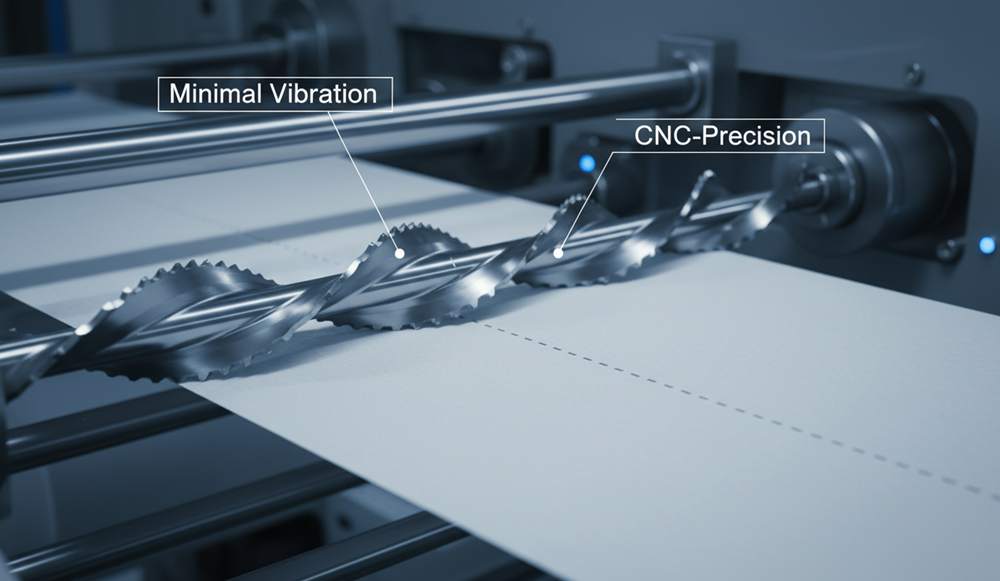
Spiral vs. Straight Blade Perforation: The Technical Pros/Cons
Spiral blades use a shearing motion to reduce vibration at high speeds, while straight blades offer a lower-cost, punch-style cut for slower production lines.
| Feature | Spiral Blade | Straight Blade |
|---|---|---|
| Mechanical Action | Progressive Shearing | Simultaneous Impact |
| Noise & Vibration | Minimal | Significant |
| Ideal Speed | High-Velocity (2026 Standards) | Low-to-Mid Velocity |
| Setup Cost | Higher Initial Investment | Lower Entry Cost |
Comparing Shearing Action and Impact Perforation
Blade geometry dictates the smoothness of the sheet tear and the longevity of the converting equipment. The physical mechanics of how a blade interacts with the paper web determine the final product’s quality and the efficiency of the manufacturing floor.
- Shearing Motion: Spiral blades engage the paper web progressively, creating a shearing effect that minimizes mechanical shock.
- Impact Force: Straight blades strike the entire width of the paper simultaneously, which increases noise and machine vibration.
- Web Stability: Shearing mechanics allow for higher production speeds without risking web breaks or uneven tension.
- Cost Strategy: Manufacturers often select straight blades for easier sharpening and lower initial setup costs.
Maintaining Fiber Integrity with CNC-Precision Blades
At Top Source Hygiene, we focus on technical consistency to protect the material properties of our 100% Virgin Wood Pulp. Precise perforation ensures that bulk orders maintain their integrity from our Hebei facility to the final consumer.
- Clean-Cut Execution: We use CNC-precision perforation to ensure clean-cut lines that prevent the “shredded edges” common in low-tier products.
- Fiber Protection: Precision-calibrated blades protect the long-fiber structure of 100% Virgin Wood Pulp during the cutting process.
- Perforation Depth: Controlled perforation depth ensures sheets remain attached during transport but tear easily during use.
- Automated Consistency: Our Hebei facility utilizes automated blade calibration to maintain consistency across 40HQ container volumes.
Build Your Unique Toilet Paper Brand
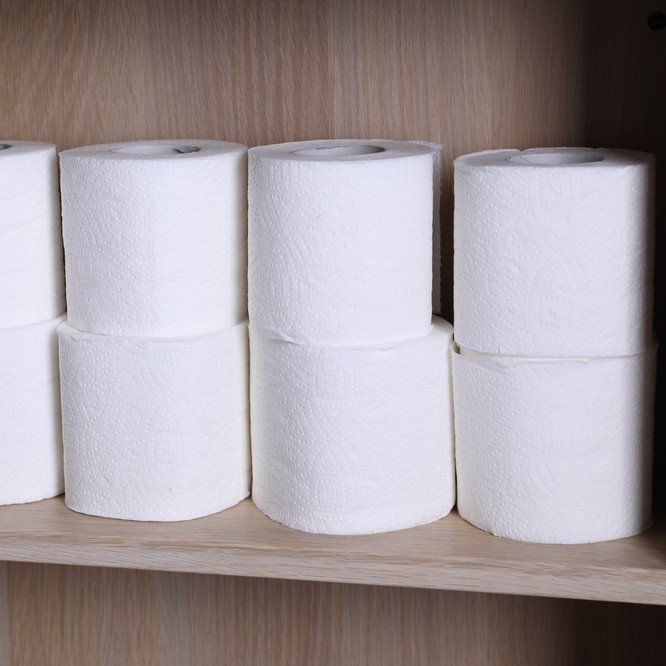
Layer Lamination: Using Mild Adhesives for Ply Integrity
Lamination bonds tissue plies using food-grade adhesives and mechanical pressure, preventing sheet separation in multi-ply products while maintaining softness.
Multi-ply toilet paper often fails when layers drift apart during use. We solve this by combining chemical bonding with physical interlocking. This process creates a unified sheet that feels like a single, thick layer rather than three or four loose pieces of tissue. At Top Source Hygiene, we focus on maintaining this bond without sacrificing the cloud-like texture of our 100% virgin wood pulp.
Technical Variables in Industrial Adhesive Bonding
The success of lamination depends on the surface chemistry of the paper. If the surface energy is too low, the adhesive beads up instead of soaking in. We manage specific environmental and chemical factors to ensure the bond holds through the entire supply chain, from our Hebei factory to the final user.
- Surface Energy: We maintain levels at 36-40 dyne/cm so water-based adhesives wet the fiber surfaces effectively.
- Humidity Control: We monitor ambient moisture to prevent fibers from absorbing water, which stops premature delamination.
- Application Precision: We use precision rollers to apply uniform coverage, which eliminates air pockets and internal bubbling.
High-Pressure Ply-Bonding for OBA-Free Safety
Chemical adhesives alone aren’t enough for premium 3-ply and 4-ply rolls. We integrate mechanical pressure to lock the long fibers of our virgin wood pulp together. This method allows us to reduce chemical usage while meeting strict safety standards for sensitive skin. Our process ensures the finished product remains 100% OBA-free and safe for global markets.
- Nip Pressure: We apply 30-40 psi during lamination to fuse layers with minimal chemical intervention.
- Adhesive Safety: We use strictly 100% OBA-free, food-grade adhesives to prevent skin irritation.
- Mechanical Anchors: We use CNC-precision point-to-point embossing to create structural anchors that reinforce the adhesive bond.
This combination of high-pressure lamination and specific embossing patterns increases absorbency by 30%. By coordinating these technical variables, we produce rolls that handle high-stress use without shredding or separating into individual plies.
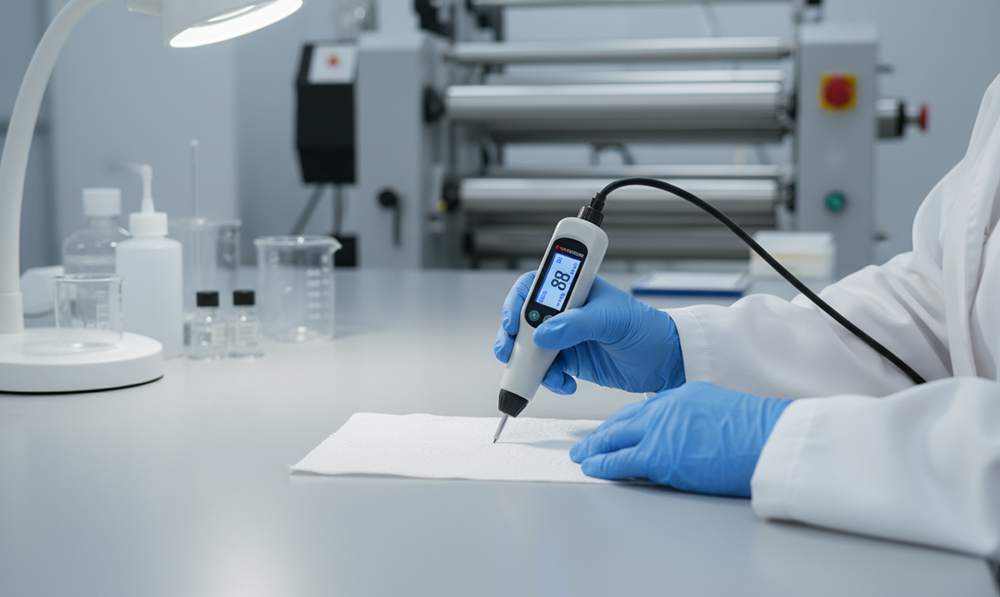
The “Wavy Tear” Innovation: Reducing Pull-Force Friction
Wavy perforations align with natural diagonal pulling angles to prevent uneven shredding. This design ensures clean breaks and reduces paper waste in premium hospitality and retail environments.
The Mechanics of Directional Pull and Perforation Geometry
Traditional straight perforation lines frequently conflict with how people actually use toilet paper. Most users apply a diagonal force when tearing a sheet, but a straight cut only handles vertical tension. This misalignment causes the paper to resist the tear, leading to jagged edges or the “stringy wad” effect that frustrates guests and wastes product.
Wavy or scalloped edges accommodate these multiple pulling angles. The curved geometry distributes physical force more evenly across the paper fibers. This ensures the structural integrity of the roll stays intact while the sheet breaks exactly where intended, regardless of the user’s technique.
Precision Perforation Standards for 100% Virgin Wood Pulp
Effective wavy tears require higher manufacturing precision than standard straight blades. Top Source Hygiene utilizes CNC-precision perforation to create clean, consistent cuts. This accuracy prevents sheets from separating prematurely inside dispensers while ensuring they release easily when pulled.
- High Tensile Strength: We use 100% Virgin Wood Pulp, which provides the long-fiber foundation necessary to support curved perforation patterns without mid-sheet tearing.
- Embossing Coordination: Our teams align perforation spacing with point-to-point embossing patterns to maximize absorbency without weakening the controlled tear line.
- Consistency Standards: We maintain a strict hole-to-land ratio to ensure the wavy cut remains the predictable point of failure, even at different paper weights ranging from 13 to 22 GSM.
By moving away from square-cut designs, distributors can offer a product that significantly improves the user experience. This technical shift has become the benchmark for premium hospitality brands looking to minimize bathroom litter and maintain high satisfaction metrics.
Coordinating Perforation Spacing with Embossing Patterns
Aligning 60° staggered perforations with CNC-precision embossing prevents material warpage and boosts absorbency by 30% while ensuring clean tears for premium wood pulp sheets.
Managing Material Stress through Strategic Pattern Alignment
Structural configuration depends on the precise spatial relationship between hole patterns and surface textures. We utilize 60° staggered triangular patterns because they offer the highest material stability when perforating high-purity long-fiber wood pulp.
- Hole Dimensions: Standard configurations range from .020″ to 3/4″ based on sheet thickness.
- Stress Management: Maintaining specific spacing intervals between perforation clusters and raised designs prevents paper warpage and preserves material thickness.
- Open Area Calibration: Controlling the ratio of hole area to the total panel area concentrates stress away from embossed regions.
- Technical Prototyping: Our Hebei engineering teams run mocks for custom designs to ensure perforation tooling paths do not conflict with complex embossed features.
Precision Point-to-Point Embossing for Enhanced Sheet Integrity
Top Source Hygiene applies CNC-precision point-to-point (PTP) embossing to bond multiple plies without compromising the softness of our 100% virgin wood pulp. This mechanical bonding method secures the layers during use while creating a three-dimensional structure that improves functional performance.
- Absorbency: PTP patterns increase liquid retention capacity by 30% compared to non-embossed alternatives.
- Ply Density: We maintain a strict density of 13–22g/m² per ply to balance cloud-like softness with high-wet-strength durability.
- Tear Precision: Coordination of clean-cut perforation lines with OBA-free fibers ensures a smooth tear without the shredded edges found in lower-grade rolls.
- Compliance Standards: The perforation-to-emboss ratio is optimized to meet North American and European standards for rapid disintegration and septic safety.
Strategic placement of floral or dot patterns supports the structural efficiency of the virgin fibers. This integrated approach allows us to produce high-density rolls that offer both luxury aesthetics and reliable performance for global hospitality and retail distribution.
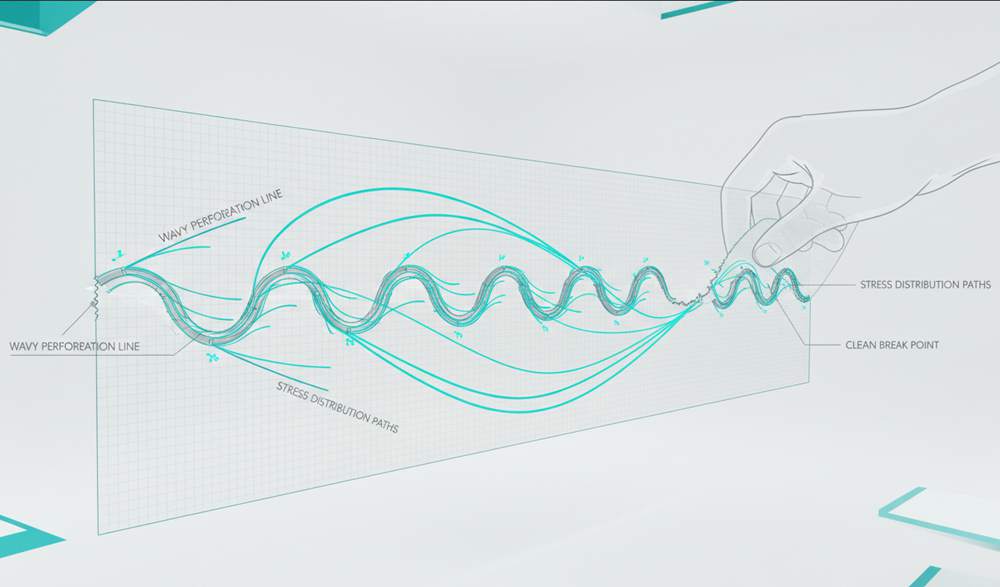
Testing Tear Strength: Ensuring Sheets Don’t Shred Prematurely
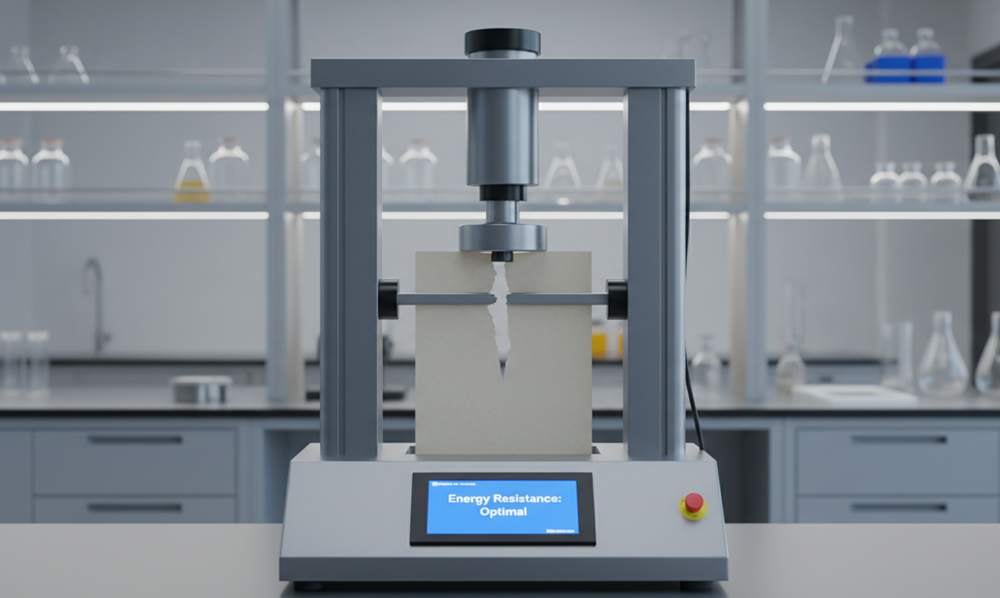
Tear strength testing uses the Elmendorf pendulum to measure energy required to propagate tears, ensuring 100% virgin fiber sheets resist shredding during high-tension dispensing and use.
Standard tensile tests only tell you when paper breaks. Tear strength testing is different. It measures the force required to continue a tear after a cut has already started. For B2B buyers and distributors, this is the most accurate predictor of how a product like the TSH-2559 will perform in a high-traffic dispenser. If the tear resistance is too low, the paper shreds into unusable strips rather than pulling away cleanly.
Elmendorf Methodology and Multi-Directional Resistance
The industrial standard relies on the dynamic pendulum principle. We measure the energy consumed as a pendulum swings through a fixed arc, propagating a tear through stacked plies. This test identifies how well the paper resists rapid crack propagation, which is exactly what happens when a user pulls quickly on a roll.
- Global Standards: Adherence to ASTM D689, ISO 1974, and TAPPI T414 ensures data consistency across international supply chains.
- Directional Analysis: Comparisons between Machine Direction (MD) and Cross Direction (CD) account for fiber orientation.
- Metric Reporting: Results are quantified as average tearing force per ply, typically measured in Newtons or grams-force.
In our Hebei production hub, we focus on the ratio between MD and CD strength. Since fibers naturally align with the machine’s flow, we adjust our manufacturing parameters to ensure the cross-direction remains strong enough to prevent the “stringy wad” effect that plagues lower-quality brands.
Virgin Fiber Integrity and Grammage Precision
Material choice is the single biggest factor in tear performance. Recycled paper contains short, brittle fibers that fail under minimal tension. By using 100% Virgin Wood Pulp, we leverage long-fiber characteristics that provide superior mechanical interlocking. This is why a 3-ply roll like the TSH-4010 feels soft but resists shredding.
- Fiber Source: 100% Virgin Wood Pulp ensures long-fiber integrity for high natural interlocking strength.
- GSM Control: Weights are strictly maintained between 13–22g/m² per ply to balance softness with durability.
- Material Purity: 100% OBA-Free and free of recycled impurities to eliminate structural weak points in the paper web.
Precise grammage control ensures that every sheet across a 40HQ container order performs identically. When the grammage is consistent, the perforation blades can strike with exact pressure, creating a clean tear line that preserves the structural integrity of the next sheet on the roll. This prevents premature shredding and reduces waste for the end-user.
Automation in Blade Replacement and Calibration
Automated systems use 6D robotic correction and NIST-traceable gauges to eliminate manual setup errors, ensuring consistent perforation and minimizing material waste in high-capacity 40HQ production runs.
Multi-Dimensional Calibration and Robotic Precision
Manual tool alignment is a legacy bottleneck that drives up scrap rates and causes production delays. Modern factory floors now utilize robotic calibration platforms, such as the advintec TCP, to manage tool trajectories with extreme accuracy. These systems remove the variable of human error by correcting robot paths across multiple axes simultaneously.
- Correction Dimensions: 6-dimensional trajectory adjustment (X, Y, Z, and rotational axes).
- Measurement Range: Inline gauges handle tolerances between 0.010 mm and 2.000 mm.
- Compliance Standards: Integrated NIST-traceable monitoring for certified dimensional accuracy.
Predictive maintenance analytics play a vital role here. By tracking wear patterns, the system schedules an automated blade replacement before the tear quality of the tissue begins to degrade. This proactive swap maintains the “Clean-Cut” standard required for professional-grade rolls without forcing a full line shutdown for manual inspection.
CNC-Precision Perforation and Blade Synchronization
Achieving a perfect tear line requires the perforation blade to sync perfectly with the embossing pattern. If these two stages drift out of alignment, the finished roll looks sloppy and fails to tear predictably. CNC-precision machinery coordinates these movements to ensure that every perforation line sits exactly where it should relative to the floral or custom logo patterns.
- Ply Density Handling: Calibration adjusts for densities ranging from 13g/m² to 22g/m².
- Pressure Control: Automated blade pressure adjustments maintain tear strength consistency across different GSM weights.
- Production Volume: Real-time feedback loops maintain calibration during full-scale 40HQ container runs.
Real-time sensor feedback is the final safeguard against “shredded edges.” The system monitors the tension and alignment of the web as it moves through the lamination and perforation stages. This ensures that even high-density products, like the TSH-3396 5-ply rolls, maintain high structural integrity from the first sheet to the last on the core.
Frequently Asked Questions
What causes toilet paper to tear unevenly or shred?
Uneven tears happen when straight perforations do not align with the actual angle of pull. When a user pulls a sheet diagonally, the stress deviates from the straight line, causing the paper to rip irregularly. Top Source Hygiene addresses this by maintaining strict blade alignment and tension control to ensure every sheet in a 40HQ order performs consistently.
How are perforation lines applied to high-density rolls?
Perforation occurs after the tissue unwinds from parent rolls. Precision blades cut small slits at intervals of 10 cm to 12 cm. For high-density models like the TSH-3396, we calibrate the blades to ensure the perforation is deep enough for easy separation but strong enough to withstand high-speed mechanical winding.
Are the adhesives used in multi-ply lamination safe for sensitive skin?
All adhesives used in our 3-ply, 4-ply, and 5-ply rolls are formulated for safety and are 100% OBA-Free. We avoid industrial-grade laminates that contain volatile organic compounds. We use bonding agents that meet international hygiene standards for direct skin contact instead.
How does lamination improve the performance of 100% virgin wood pulp?
Lamination uses point-to-point (PTP) technology to bond layers together at specific contact points. This creates air pockets that increase absorbency by 30% and enhances the bulk of the tissue. This process allows 100% virgin wood pulp fibers to maintain softness while gaining the structural strength needed for heavy-duty use.
Can perforation strength be customized for different regional markets?
Yes. We adjust the Teeth Per Inch (TPI) and tie width based on the paper GSM and the specific requirements of the market. North American retail rolls often require a different pull-force than high-capacity jumbo rolls used in commercial GCC facilities to prevent premature tearing.
What is the advantage of wavy perforation over standard straight lines?
Wavy perforation replaces traditional straight lines with a curved pattern. This design accommodates various pulling angles, ensuring a clean tear regardless of how the roll is positioned in the dispenser. This innovation reduces paper waste and prevents the roll from over-unrolling during use.