 Skip to content
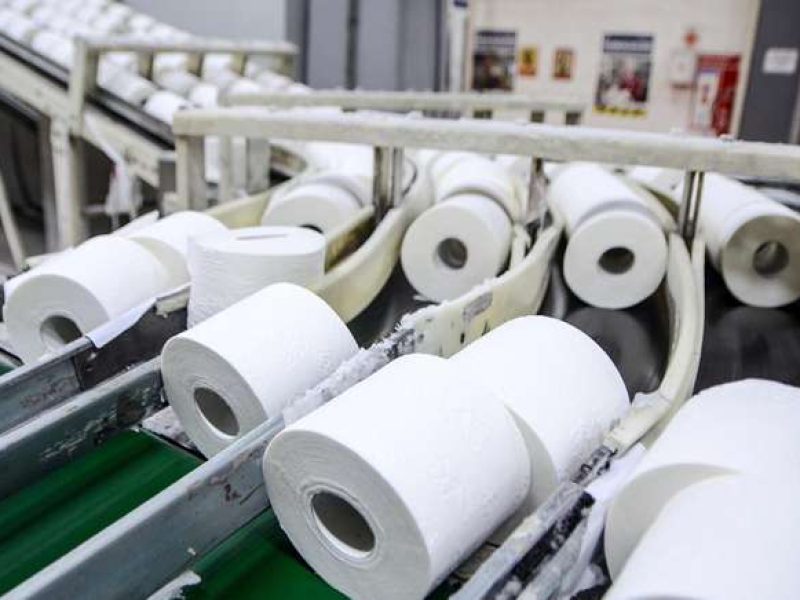
The tissue converting line stability directly impacts 40HQ export margins by preventing the cascading defects that lead to rejected shipments and material waste. Inconsistent mechanical tension during the unwinding phase creates uneven roll densities, which reduces total container payload and increases the landed cost per unit for global distributors.
This technical overview evaluates production standards against the 13–22g/m² ply density benchmark and CNC point-to-point embossing requirements. We analyze how high-speed automation and Hebei hub logistics support 9-ton payload optimization to maintain consistent supply for 100% virgin wood pulp wholesale orders.
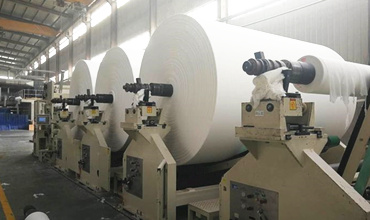
Unwinding Dynamics: Why Managing Jumbo Roll Tension is Critical
Effective tension management prevents paper tears and ensures precise alignment for embossing and perforation. This stabilizes high-speed conversion while protecting the structural integrity of delicate tissue layers.
The unwinding stage acts as the foundation for the entire tissue converting line. Maintaining precise control over the paper web as it leaves the jumbo roll prevents the cascading defects that often plague high-volume manufacturing facilities.
Fundamentals of Constant Web Tension in Tissue Converting
Mechanical defects during high-speed unwinding usually stem from inconsistent pressure. Independent tension control systems resolve this by managing each roll separately as it feeds into the converting line.
- Operational Speeds: Constant pressure regulation protects the web from tearing even when operating at speeds reaching 600 rolls per minute.
- Alignment Control: Automated systems prevent wrinkles and misalignment, ensuring the paper stays centered for the embossing station.
- Perforation Quality: Precise dynamics keep perforation lines clean, which guarantees the final product is easy to tear for the end consumer.
Engineering Stability for 100% Virgin Wood Pulp Mother Rolls
Working with premium 100% Virgin Wood Pulp requires specific tension settings to capitalize on long-fiber strength. While these fibers provide superior softness, they must be handled correctly to avoid over-stretching.
- Tensile Strength Preservation: Regulated web tension maintains the integrity of high-density 13–22g/m² plies, ensuring they survive the 2026 production cycle without losing durability.
- Ply-Bonding Integrity: Proper tension supports ply-bonding technology, keeping multi-layered sheets together before they undergo CNC-precision point-to-point embossing.
- Batch Consistency: Stabilized unwinding dynamics ensure that absorbency and softness remain uniform across massive 40HQ container orders, protecting margins for wholesale distributors.
By focusing on these unwinding dynamics, manufacturers reduce waste and downtime. For B2B buyers, this translates to consistent roll diameter and weight across every pallet delivered from the factory.
The Science of Rewinding: Balancing Softness and Density in Every Roll
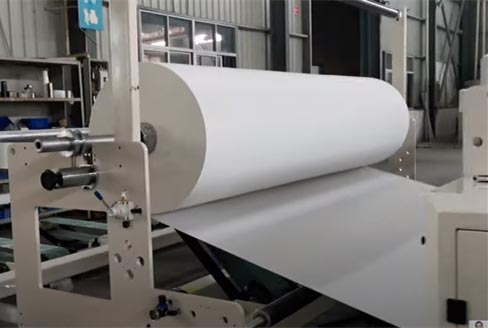
Rewinding manages tension and pressure to keep rolls dense for transport while preserving the air pockets and wood pulp fibers that define premium softness.
The final stage of production determines how a roll feels in a consumer’s hand and how it performs on a distributor’s shelf. At Top Source Hygiene, we treat rewinding as a precision balancing act. If the machine winds the log too tightly, it crushes the delicate fibers and kills the softness. If it is too loose, the roll loses structural integrity and wastes container space. We use automated systems to control three specific mechanical variables that ensure every 100% virgin wood pulp roll meets international standards.
The Mechanics of Tension, Nip, and Torque Control
Mechanical settings during the winding cycle dictate the physical properties of the finished tissue log. Our Hebei-based facility utilizes automated logic to maintain these parameters across every batch, ensuring the same quality from the first roll to the last in a 40HQ container.
- Automated Tension Management: This prevents the paper from stretching, which preserves the original crepe percentage and maintains a skin-friendly feel.
- Precision Nip Pressure: Our systems regulate the air trapped between plies to create a cloud-like texture without increasing the roll’s physical diameter.
- Variable Torque Adjustment: We program the winding cycle to keep the roll tight at the core for stability while leaving the outer layers soft and inviting.
- Edge Trimming and Tail Gluing: These automated systems secure the finished log, ensuring consistent performance in high-speed downstream packaging and professional presentation.
Leveraging Point-to-Point Embossing for Bulky Texture
Texture is more than just an aesthetic choice; it is a functional requirement for liquid absorbency. By combining CNC-precision embossing with high-pressure bonding, we increase the surface area of the tissue without using harmful chemical adhesives.
- CNC Point-to-Point Embossing: This process creates specific air pockets that increase liquid absorbency by 30% and adds significant structural bulk to the roll.
- High-Pressure Ply-Bonding: We laminate 2-ply to 5-ply sheets using mechanical pressure to ensure layers do not separate while remaining 100% OBA-free.
- Strategic Fiber Alignment: The winding phase supports a strictly controlled ply density of 13–22g/m², balancing durability with high-wet-strength performance.
- Precision Perforation: Clean-cut lines are applied during winding to ensure a smooth tear every time, preventing the shredded edges often found in lower-quality bulk products.
For B2B wholesalers, this technical control translates to a more marketable product. Whether we are producing the TSH-2559 for retail or high-capacity JRT08 for commercial use, the science of rewinding ensures the paper remains soft enough for high-end hospitality while being dense enough to optimize freight costs and payload in every shipment.
Build Your Global Toilet Paper Brand

Precision Log Sawing: Achieving Flawless Edge Alignment (±0.5mm Accuracy)
We achieve ±0.5mm accuracy using optical transits and triple-scan lasers to lock the machine centerline. This ensures uniform roll widths and clean edges for high-volume 40HQ container loads.
Optical and Laser Calibration for Centerline Reference
Precision starts with the physical foundation of the converting line. If the sawbox is not perfectly square to the material path, the log drifts. This drift leads to uneven rolls that fail quality checks and waste material. We solve this by establishing a definitive reference point before the first cut occurs.
- Jig Transits: We use these precision optical instruments to establish a stable machine centerline relative to the log delivery chain.
- Triple-Scan Laser Systems: These calibrate feed rolls and spline guides to within thousandths of an inch for repeatable accuracy.
- Surveyor Transits: We level edger systems and sawboxes to stop elevation errors that cause slanted or irregular cuts.
- Laser Line Projectors: These display the exact contact point on the log, allowing operators to verify positioning before the blade engages.
Maintaining Roll Width Consistency and Clean Perforation
Roll width consistency depends on how the PLC handles log density and timing. For products like the TSH-2559, maintaining exact widths between 102mm and 132mm is critical for both consumer comfort and logistics efficiency in 40HQ containers. We sync the hardware and software to ensure every roll in a 9-ton payload meets these specs.
- PLC-Controlled Saw Timing: The system manages saw movements to keep roll widths stable, even as production speeds fluctuate.
- Synchronized Delivery: We align sharp chain delivery with high-pressure ply-bonding units to eliminate shredded edges and maintain sheet integrity.
- Encoder Speed Sync: The PLC automatically adjusts saw speed for the specific fiber density of 100% Virgin Wood Pulp logs to prevent tearing.
- Arbor Squareness Verification: We ensure the saw arbor stays perpendicular to the centerline, protecting the 2-ply to 5-ply embossed textures from compression damage.

Scaling to 2860 Tons: Meeting Infrastructure Requirements for Global Supply
Reaching 2,860 tons monthly requires high-speed lines (450-800 m/min) and optimized 40HQ container logistics from the Hebei industrial hub to ensure consistent supply for global B2B distributors.
| Infrastructure Component | Standard Capability | High-Volume Scaling (2,860 Tons/Mo) |
|---|---|---|
| Converting Speed | 200-400 m/min | 450-800 m/min |
| Daily Production Target | ~25-40 Tons | 95+ Tons |
| Logistics Payload | General Containerization | 40HQ Optimization (7-9 Tons) |
| Process Control | Manual Monitoring | Integrated PLC & OEE Automation |
Industrial Converting Capacity for High-Volume Markets
Achieving a 2,860-ton monthly volume moves beyond basic manufacturing into high-intensity industrial scaling. At this level, converting lines must operate at speeds between 450 and 800 m/min to hit a consistent daily output of 95 tons. This throughput is necessary to support high-demand 100% virgin wood pulp products like the TSH-2559 global retail pack or the TSH-3396 efficiency rolls.
- High-Speed Converting: Utilization of lines reaching 800 m/min to maintain the 95-ton daily target across 2,860-ton monthly cycles.
- 24/7 Production Cycles: Implementation of continuous operation with scheduled maintenance to prevent unexpected downtime in the Hebei hub facility.
- PLC-Controlled Monitoring: Integration of automated systems to maintain GSM density (13–22g/m²) and ply-bonding consistency across multi-ply sheets.
- Raw Material Storage: Facility requirements for massive parent roll handling to ensure the 100% virgin wood pulp supply chain remains uninterrupted.
40HQ Payload Optimization from the Hebei Hub
Logistics at a 2,860-ton scale demand extreme efficiency to protect distributor margins. Our strategic location in the Hebei Paper Industrial Hub provides direct access to Tianjin Xingang Port, cutting inland transit times. We focus on maximizing the cubic capacity of 40HQ containers to lower the landed cost per roll for international wholesalers.
- Strategic Port Access: Proximity to Tianjin Xingang Port streamlines export procedures for large-scale global distribution.
- Container Payload: Optimization of 40HQ containers to hold 7,000kg to 9,000kg, ensuring the lowest freight cost per unit.
- Mechanical Compression: Utilization of bagging technology that compresses paper volume per cubic meter while preserving fiber fluffiness.
- Production Lead Times: Standardized 20-25 day cycles for private label 40HQ orders to support rapid stock rotation in global markets.

Integrating Downstream Packaging Automation: Reducing Labor and Errors
Automated PLC systems replace manual wrapping with high-speed motorized control, using mechanical compression to maximize 40HQ container density while cutting labor costs and human error.
The Role of PLC Control in Continuous Wrapping Operations
Programmable Logic Controllers (PLC) act as the central brain of the packaging line, managing the workflow from the moment the log saw finishes its cut. These systems replace manual labor with precision motorized adjustments that maintain consistent speed and tension. We use this technology to sync the packaging unit with the rest of the converting line, preventing the bottlenecks that often occur when wrapping keeps pace with high-speed rewinders.
- Stored Recipes: Operators use touchscreen interfaces to load specific motorized settings for various roll diameters, allowing for rapid product changeovers without manual recalibration.
- IoT Monitoring: Real-time performance tracking allows our teams to identify potential maintenance issues or throughput drops from a central station.
- Constant Flow Logic: Automated input sensors manage the transition from the cutting stage to the primary wrapper, ensuring the film application is perfectly timed with roll delivery.
Using these smart systems reduces the reliance on manual supervision. By automating the labeling and sealing phases, we remove the “human variable,” which is where most packaging defects originate. This proactive approach ensures that every roll exiting the line meets the same visual and structural standard required for international retail.
Implementing Format A and B Secondary Packaging Strategies
Packaging strategy directly affects your landed cost and product presentation. We utilize two primary formats designed to balance hygiene requirements with logistical efficiency. Each format relies on mechanical compression to ensure the rolls remain compact and stable during the high-stacking conditions found in 40HQ shipping containers.
- Format A (Individual Wrap): This setup provides maximum hygiene for luxury hospitality models like TSH-4010. The machine applies an automated film or paper wrap to each roll before grouping them into a larger PE bag.
- Format B (Direct Bundle Pack): We use this for high-density retail models like TSH-3396 and TSH-3266. Rolls are bundled together directly in a single master pack, optimizing shelf-readiness and reducing plastic waste.
- 9-Ton Payload Capacity: Mechanical compression technology minimizes the air between rolls, allowing our Hebei loading teams to fit up to 9 tons of product into a single 40HQ container.
- Structural Reinforcement: We pack finished bundles into 5-ply export cartons or reinforced poly bundles to prevent crushing and deformation during multi-country transit.
Choosing the right format depends on your distribution model. While Format A serves premium hotel clients who demand individual protection, Format B offers the best freight-to-paper ratio for warehouse clubs and high-volume supermarkets. Both strategies utilize the same PLC-driven precision to ensure the rolls arrive at their destination exactly as they left the factory.

Real-time Production Monitoring: What PLC Systems Mean for Quality Consistency
PLC systems stabilize tissue production by processing real-time sensor data to regulate tension and speed, ensuring uniform quality across high-volume 40HQ export batches.
Programmable Logic Controllers (PLCs) act as the central brain for modern tissue converting lines. These systems pull data from every motor and sensor to manage the delicate balance of speed and tension. In high-volume B2B manufacturing, this automation replaces guesswork with hard data, allowing for immediate mechanical adjustments that prevent waste before it accumulates.
Centralized Automation and Rapid Defect Identification
Centralizing production data into a single touchscreen interface allows operators to monitor the entire workflow from the unwinding stand to the log saw. This visibility is vital for maintaining the high-speed output required for international distribution.
- Real-time Diagnostics: Integrated I/O signals provide instant machine status and performance metrics on a unified HMI screen.
- Labor Efficiency: Automated tracking of machine speeds and material flow reduces the manual oversight needed, lowering operational costs.
- Bottleneck Identification: Sensors flag production flaws immediately, stopping substandard rolls from moving into the packaging phase.
- Workflow Automation: The system manages the transition from jumbo roll unwinding to the final cut, minimizing errors caused by manual handling.
PLC Precision in Achieving Batch Color and Ply Consistency
Top Source Hygiene utilizes PLC-driven logic to ensure that every 40HQ container order meets strict material benchmarks. For wholesalers, this means the first roll in the container is identical to the last, protecting brand reputation and retail margins.
Frequently Asked Questions
What steps are involved in the toilet paper converting process?
The process transforms jumbo parent rolls into consumer products through five stages: unwinding and rewinding for tension management, embossing—at Top Source Hygiene we use CNC-precision patterns—perforation for easy tearing, precision cutting, and automated wrapping.
How do rewinding machines manage roll tightness and density?
Rewinders use load cell sensors to track tension and adjust torque instantly. Systems also use friction drums and rider rolls to apply precise nip pressure, which ensures finished rolls stay stable and wrinkle-free while protecting the core from crushing during high-stacking in 40HQ containers.
Why is maintaining consistent tension essential during tissue production?
Uniform tension keeps the web flat and stable to prevent drifting during slitting. It keeps the 100% virgin wood pulp within its elastic limit to avoid permanent stretching while preventing defects like telescoping or loose edges that compromise retail shelf appeal.
What role does a log saw play in final product quality?
The log saw is the final precision-cutting module. It uses large-diameter circular blades to slice paper logs into individual rolls. Advanced saws achieve accuracy within ±0.5mm, ensuring clean edges and consistent widths for every unit, whether it is a standard household roll or a high-capacity JRT08 jumbo roll.
How can a factory sustain a production capacity of 2,860 tons per month?
Maintaining this volume requires high Overall Equipment Effectiveness (OEE) through fully automated lines and synchronized speed controls. Balancing throughput between rewinding and packaging prevents bottlenecks, which is how we manage high-volume outputs like the TSH-3396 high-density series.
How do PLC systems improve tissue manufacturing consistency?
Programmable Logic Controllers (PLCs) serve as the central brain of the facility, automating the workflow from unwinding to palletizing. By processing sensor data instantly, PLCs make micro-adjustments to motor speeds and blade alignment, guaranteeing batch color consistency and uniform ply thickness.
Final Thoughts
Substandard converting leads to inconsistent roll density and shredded edges that erode retail shelf appeal. Our PLC-driven approach ensures every roll in a 9-ton 40HQ payload maintains the exact softness and GSM density your contracts require. Mastered tension control protects your margins by delivering batch consistency that cheap, manual alternatives cannot replicate.
Review our “Big 10” inventory to identify which high-density models, such as the TSH-2559 or TSH-3396, align with your regional distribution goals. We recommend requesting a sample kit to verify our point-to-point embossing and ±0.5mm cutting accuracy firsthand. Contact our Hebei team today to finalize your private label specifications for the next 40HQ production cycle.
