Skip to content
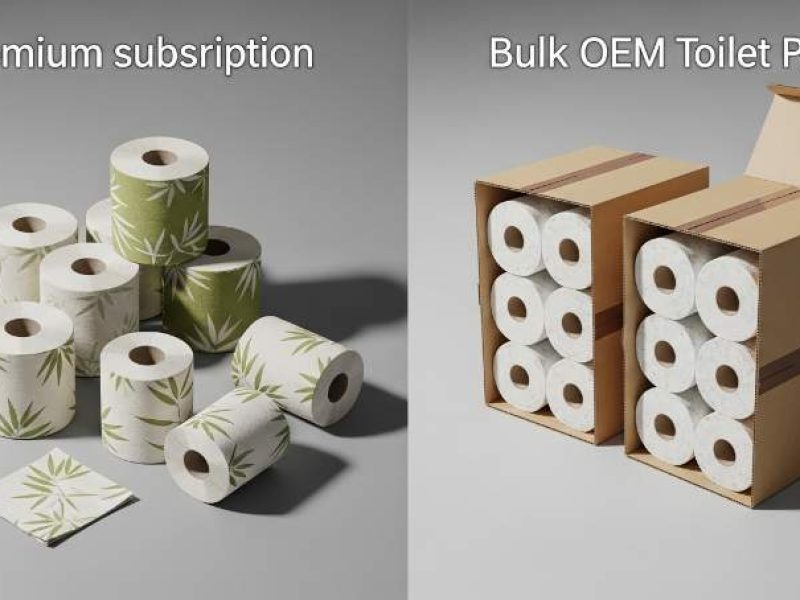
Reel vs. Bulk Sourcing directly affects operational downtime and COGS, turning a single procurement decision into jammed converting lines, failed compliance tests, and higher return rates. Subscription-first products demand tight specs—ply, GSM, embossing, coreless options and single-roll plastic-free wraps—while bulk OEM runs accept wider tolerances and looser packaging. Mix those approaches and you expose fulfillment to chargebacks, inventory write-offs, and brand damage when tactile quality or disintegration performance falls short of DTC and retail promises.
This guide serves as a technical SOP to bridge that gap. Read on for spec sheets and test protocols for 3-ply bamboo (GSM targets, emboss patterns, strength/softness and INDA/EDANA disintegration), a BOM-plus-conversion model to measure whether a wholesaler can achieve Reel-like quality at roughly 30% lower unit cost, sampling and pre-shipment QC gates, factory-audit and MOQ checklists for China-based OEM/ODM, and a sourcing playbook for plastic-free packaging at scale. Use these steps to convert product requirements into factory-ready contracts, lab-verified samples, and a repeatable DTC scaling plan that tracks ROI at the SKU level.
Why Has “Reel” Toilet Paper Disrupted the Sustainable Hygiene Market?
Reel closed the gap between sustainability and performance by pairing verifiable lifecycle gains with premium product metrics and third‑party credentials.
Confirm material credentials and lifecycle impact
Require a supplier declaration that states 100% bamboo and includes FSC chain‑of‑custody details, species, and mill origin. Ask for mill-level COAs that confirm pesticide‑free harvesting and the absence of optical brighteners or other additives; chemical transparency reduces regulatory and reputational risk when you scale into North America and Europe.
Validate lifecycle claims with source data: bamboo typically uses ~30% less water than hardwood, regenerates within one year, and produces about 35% more oxygen than trees. Request biodegradability lab reports that define microbial breakdown timeframes and a “ready biodegradable” certificate. Finally, audit carbon accounting: review any offset partners (One Tree Planted, Carbonfund.org) and demand the methodology used to calculate scope‑3 shipping emissions and offsets.
Benchmark product performance against conventional tissue
Run comparative mechanical testing against your incumbent virgin wood pulp product set: tensile strength, wet‑strength, and tear resistance to quantify durability under normal use. Specify GSM per ply targets (Top Source ranges 13–22 g/m² per ply) and measure sheet thickness and absorbency rate with repeatable lab protocols so labs return comparable numbers across suppliers.
Inspect physical integrity under use cycles: test linting, shredding, perforation clean‑tear, and sensory softness. Perform plumbing compatibility checks — rapid‑disintegration and septic‑safe tests aligned to North American and EU standards — and calculate true cost efficiency as cost‑per‑meter and cost‑per‑use to determine whether a premium delivers acceptable ROI versus conventional rolls.
- Mechanical: tensile strength, wet tensile, elongation
- Functional: absorbency rate, GSM per ply, sheet thickness
- Durability: lint, shredding, perforation quality
- Plumbing: rapid disintegration/septic safety testing to NA/EU standards
- Commercial: cost‑per‑meter and cost‑per‑use analysis
Validate packaging, certification, and commercial traction
Confirm packaging specs that eliminate single‑use plastic: zero‑plastic retail packs, biodegradable tape, and compostable shipping materials. Require material specification sheets and supplier certificates for every packaging component to avoid hidden plastic content and to support retail or hospitality procurement policies that ban plastic wrap.
Verify third‑party credentials: check B Corp registration, FSC certification, and independent biodegradability lab certificates to protect against greenwashing. Evaluate commercial traction using hard metrics — Reel cited roughly $14M venture backing and more than 1M rolls sold — and inspect channel distribution to confirm scalability. Demand documented social impact arrangements (for example, partnerships with SOIL) and evidence of the revenue or unit share tied to those programs. Finally, assess brand placement: design‑forward packaging and merchandising that reposition toilet paper from commodity to lifestyle supports higher ASPs and stronger retail placements.
- Request: packaging material specs, supplier certificates, and compostability test reports
- Verify: FSC cert, B Corp certificate, and biodegradability lab results
- Audit: revenue, units sold, distribution channels, and growth indicators
- Confirm: carbon offset partner details and scope‑3 methodology
- Document: social impact partnerships and the percentage of revenue or units allocated to those programs

Subscription Specs vs. Retail Specs: Analyzing the 3-Ply Bamboo Standard
Specifications drive subscription unit economics, plumbing compatibility and perceived quality—control ply, embossing and packaging to protect margins and brand trust.
Material and sheet construction: 3-ply bamboo vs. virgin-fiber designs
Select fiber to match the customer promise: use 100% bamboo pulp for eco-branded SKUs and 100% virgin long‑fiber wood pulp when tensile strength and luxury hand-feel matter. Set each ply density at 13–22 g/m² so a 3‑ply sheet yields roughly 39–66 g/m² total GSM; that range balances softness with wet strength and meters per roll.
- Fiber choices: 100% bamboo pulp for sustainability positioning; 100% virgin long‑fiber pulp for maximum tensile strength and cloud-like softness.
- Ply density & GSM: 13–22 g/m² per ply → ~39–66 g/m² total for 3‑ply constructions.
- Ply bonding: apply high‑pressure lamination to prevent delamination while preserving quilted texture and perceived softness.
- Embossing: use CNC point‑to‑point patterns to raise absorbency ~30% versus unembossed sheets.
- Chemicals & brightness: maintain 100% OBA‑free processing and target natural brightness of 85–92% through fiber selection rather than fluorescent whitening.
- Plumbing & compliance: engineer rapid disintegration for North American and European plumbing standards and align processes with ISO 9001, FDA and EU hygiene rules.
Roll form factors and dimensional specs for subscription versus retail SKUs
Match roll width, core type and bundle format to channel expectations. For household retail and subscription household SKUs choose widths between 102 mm and 132 mm based on dispenser fit and perceived comfort; wider formats sell as premium. Use coreless solid rolls to maximize meters per roll and lower packaging waste for subscription bulk boxes, and reserve cored rolls for retail display and some legacy dispensers.
- Standard widths: 102, 104, 105 mm; offer up to 132 mm for premium lines.
- Core vs coreless: choose coreless to maximize paper per meter and reduce waste in subscription packs; choose cored for retail shelving and certain dispensers.
- Bundle weights & counts: customize bundles from 780 g up to 5,000 g; common roll counts include 10/12/18/28/32 depending on SKU and pack format.
- Representative SKU callouts: TSH‑2559 — household 10 rolls / 1,800 g; TSH‑3266 — 3‑ply high‑density 4,500 g / 32 rolls for warehouse/club.
- Perforation & finish: laser or rotary precision perforation to ensure clean tear and control edge quality to reduce shredding complaints.
- Sheet geometry tradeoffs: set GSM and emboss pattern to balance softness, wet strength and meters per roll to hit subscription cost targets per meter or per 100 sheets.
Packaging, logistics and supply parameters that shape subscription offerings
Define packaging format and container strategy around landed cost, brand positioning and sustainability targets. Offer Format A (individual paper wrap) for premium subscription boxes and Format B (direct bundle) for value subscription and club packs. Use mechanical compression plus reinforced export cartons to reduce cubic volume while preventing crushing during transit and to maximize 40HQ payloads.
- Packaging formats: Format A — individual wrap for premium hygiene and unboxing; Format B — direct bundle for value and warehouse clubs.
- Sustainability options: provide zero‑plastic, biodegradable wraps and compostable tape for eco brands while retaining compression tech to optimize volume.
- Compression & protection: apply mechanical compression during bagging, then consolidate into reinforced 5‑ply export cartons to avoid crushing on high stacks.
- Container & MOQ: optimize loading for 40HQ with typical payloads of 7–9 tons; set MOQ at 1 x 40HQ for trials and private label runs.
- Lead times & payment: dispatch in‑stock items in 10–15 days; production lead time 20–25 days for a 40HQ; payment T/T 30% deposit, 70% before shipment.
- Pre‑shipment controls: require batch color consistency checks and provide photos/videos of finished goods and container loading to protect margins and avoid disputes.
- Freight economics: choose bundle weight and pack format to maximize 40HQ utilization and minimize landed cost per roll for subscription pricing strategies.
Global OEM Toilet Paper Manufacturing, Customizable

Can a Wholesaler Achieve “Reel-Like” Quality at 30% Lower Unit Costs?
Targeted fiber choice, embossing and pack-density changes let wholesalers approach Reel-level performance while cutting landed unit cost through logistics and tooling optimization.
Material and ply engineering to match Reel’s softness and strength
Start with 100% long-fiber virgin wood pulp as the performance baseline; reserve bamboo pulp as an optional line for eco-positioning where buyers accept minor cost or feel tradeoffs. Control per-ply GSM between 13–22 g/m² and design finished SKUs in 2–5 ply configurations to tune perceived softness versus material cost. Specify tensile and wet-strength targets that match a luxury benchmark and require lab tensile testing reported in N/ply as part of incoming QC.
Lock brightness at 85–92% using fiber selection only and certify OBA-free to support sensitive-skin claims. Use high-pressure ply-bonding plus CNC point-to-point embossing to raise absorbency by roughly 30% without increasing GSM. Set disintegration time targets to meet North American and European septic standards and make those targets pass/fail criteria in every batch’s QC report.
- Material: 100% long-fiber virgin wood pulp (option: bamboo pulp for eco SKUs).
- Ply GSM target: 13–22 g/m² per ply; 2–5 ply final SKUs.
- Strength testing: set N/ply tensile and wet-strength targets; require lab certificates.
- Brightness: 85–92% via fiber selection; certify OBA-free.
- Process: high-pressure ply-bonding and CNC embossing → +~30% absorbency without extra GSM.
- Septic safety: define disintegration time-to-fail thresholds for NA/EU plumbing standards and include in QC acceptance.
Manufacturing process levers and tooling changes to reduce cost per roll
Shift pack formats to high-density solid or coreless rolls (example: 5000 g bundles) to increase meters-per-kilo and lower freight per usable meter. Calibrate lamination pressure and drying temperature and retool emboss patterns to keep perceived softness while cutting ply weight by 5–10%. Standardize precision perforation tooling to eliminate shredded edges, reduce rejects and improve customer tactile consistency.
Add mechanical compression during automated bagging to raise container cube efficiency while preserving sheet loft; run controlled pilot batches and track operational KPIs—yield %, rejects %, tear strength (N), and a blind customer tactile score—to decide which tooling amortizes fastest. Hold lead-time targets pragmatic: in-stock picks 10–15 days, custom production 20–25 days, and include tooling amortization in the premium vs. speed trade analysis.
- Pack format: move to coreless/solid rolls (5000 g examples) to maximize transport efficiency.
- Process tuning: adjust lamination pressure/temperature and emboss design to cut ply weight 5–10% without losing softness.
- Tooling: install precision perforation dies to reduce edge shredding and waste.
- Bagging: use mechanical compression to improve container cube without collapsing sheets.
- Pilot metrics: measure yield %, rejects %, tear strength, and customer tactile score for every pilot run.
- Lead times: in-stock 10–15 days; custom 20–25 days; factor tooling amortization into lead-time premium decisions.
Supply-chain, packaging and pricing model to deliver ~30% lower landed unit cost
Optimize 40HQ loading to a 7,000–9,000 kg payload and favor dense pack formats (for example, 5000 g/28-roll bundles) to lower freight and carton overhead per roll. Consolidate SKUs and standardize pack densities across channels to reduce pallet and carton variety; fewer pack formats cut packing waste and improve container fill rates.
Use a cost-stack benchmark and target reductions to reach roughly −30% landed unit cost: raw pulp 40–55% of cost, conversion/labor 20–30%, packaging 5–10%, freight/duty 10–15%—attack the largest buckets first with density and supplier negotiation. Set MOQ and ordering cadence around single 40HQ trials or private-label commitments, negotiate T/T 30/70 payment terms, and require pre-shipment visual verification plus batch color-consistency reports to avoid rework. Classify shipments under HS code 4818.1000 and hold ISO 9001, FDA and applicable EU hygiene compliance documents ready to smooth customs clearance and reduce surprise fees.
- Container strategy: 40HQ optimization, target 7,000–9,000 kg payload; choose individual wrap vs. direct bundle by channel.
- SKU consolidation: standardize on high-density pack sizes (e.g., 5000 g/28 rolls) to lower freight per roll.
- Cost stack: raw pulp 40–55%; conversion 20–30%; packaging 5–10%; freight/duty 10–15%—prioritize cuts in raw pulp and freight via density.
- Commercial terms: MOQ = single 40HQ for trials/private label; negotiate T/T 30% deposit, 70% balance before shipment.
- Quality protection: require pre-shipment photos/videos and batch color consistency certificates to prevent rework and margin erosion.
- Compliance: ship under HS code 4818.1000 and maintain ISO 9001, FDA, and EU hygiene documentation to reduce clearance delays and fees.

The Plastic-Free Mandate: Sourcing Sustainable Packaging at Scale
Plastic-free packaging reduces waste and regulatory risk while protecting product integrity and landed cost across high-volume 40HQ shipments.
Material specification and compliance for plastic-free wraps
Specify uncoated kraft paper wraps, paper-based multiwall bags, water-activated paper tape and paper labels as the baseline for plastic-free external protection; avoid conventional PE films entirely for consumer-facing and B2B retail packs. When film remains unavoidable for barrier performance, require certified compostable blends (PLA/PBAT) with third-party EN 13432 or ASTM D6400 certification and OK Compost where local regulations demand it. Require supplier Certificates of Analysis (COA) that explicitly state OBA-free status for any paper used in direct roll wraps.
Control tissue-related constraints by specifying fiber brightness of 85–92% to maintain product whiteness without optical brightening agents. Specify target WVTR and machine-direction (MD) tensile ranges for paper wraps so the material survives port humidity and handling; demand lab results for salt-spray and humidity exposure. Request material spec sheets and certificates up front, run a 1–2 week compostability and biodegradation lab test on representative packaging samples, and approve material only after both paperwork and lab verification.
- Required certifications: FSC/PEFC chain-of-custody, ISO 9001, EN 13432 or ASTM D6400, and OK Compost where applicable.
- Tissue spec: brightness 85–92%; supplier COA confirming OBA-free production.
- Lab validations: 1–2 week biodegradation, WVTR, MD tensile, salt-spray and humidity exposure reports.
Packaging engineering and 40HQ load optimization for plastic-free shipments
Design packs and factory loading to hit a 40HQ payload of 7,000–9,000 kg while preserving roll quality. Map SKUs to defined formats: Format A for individually paper-wrapped luxury rolls and Format B for direct bundle packs, and standardize bundle weights between 780 g and 5,000 g to simplify packing, palletization and carton selection. Use reinforced 5-ply export cartons and recycled-cardboard corner protectors, and mandate clear pallet footprints and stacking patterns to prevent shifting during transit.
Reduce volume with mechanical compression during bagging but validate the compression ratio in a pilot packing run and measure paper recovery after decompression to protect feel and appearance. Execute ISTA-style drop, vibration and crush tests on fully loaded export cartons, record acceptable damage thresholds, then revise RSC/BCT and carton thickness to match those thresholds. Produce a pilot 40HQ load plan, run a physical load test, capture pre-shipment photos/videos, and iterate carton specs or compression settings until target payload and damage KPIs meet acceptance criteria.
- Container payload target: 7,000–9,000 kg per 40HQ.
- Bundle weight standardization: 780 g–5,000 g to align with load density goals.
- Carton specs: reinforced 5-ply export cartons; recycled-cardboard corner protection; defined pallet footprint and stacking pattern.
- Validation: pilot load plan → ISTA-style drop/vibration/crush testing → adjust RSC/BCT and compression until damage tolerances acceptable.
- Documentation: capture pre-shipment photos/videos of packing and loading for quality gate and payment release.
Supplier qualification, contractual terms, and scale-up process for plastic-free sourcing
Qualify suppliers on ISO 9001, material traceability, FSC/PEFC documentation, a written QC sampling plan, and social compliance records. Require transparency on raw material origin and chain-of-custody numbers and demand that suppliers commit to carbon accounting or an offset plan for 2026 reporting. Use a staged quality gate: sample approval, then pilot production (single 40HQ equivalent), then full production release with defined acceptance tests including material certificates, tensile/WVTR results, drop-test reports and a visual audit.
Embed contractual clauses that protect scale economics and quality: set MOQ at 1 x 40HQ for private-label and custom packaging, standardize payment terms to T/T 30% deposit with 70% before shipment, and set lead times to in-stock 10–15 days or production 20–25 days. Contract clauses must require pre-shipment visual verification, batch color consistency, independent third-party compostability evidence where applicable, a maximum defect rate (for example ≤1%), and defined remedies for nonconformance. Onboard suppliers with an initial factory audit, sign a two-stage agreement (pilot then scale), schedule recurring QC checks, and mandate pre-shipment photo/video evidence before release of the balance payment.
- Qualification checklist: ISO 9001, FSC/PEFC, traceability records, QC sampling plan, social compliance evidence.
- Contract essentials: pre-shipment visual verification, batch color consistency, third-party compostability reports, ≤1% defect rate, remedies for failure.
- Commercial terms: MOQ 1 x 40HQ; payment T/T 30% deposit, 70% before shipment; lead times — in-stock 10–15 days, production 20–25 days.
- Scale-up gates: sample approval → pilot 40HQ → full production release with signed acceptance tests (certs, tensile/WVTR, drop-test, visual audit).
- Onboarding actions: initial supplier audit, two-stage contract, scheduled QC checks, mandatory pre-shipment photos/videos before balance payment.
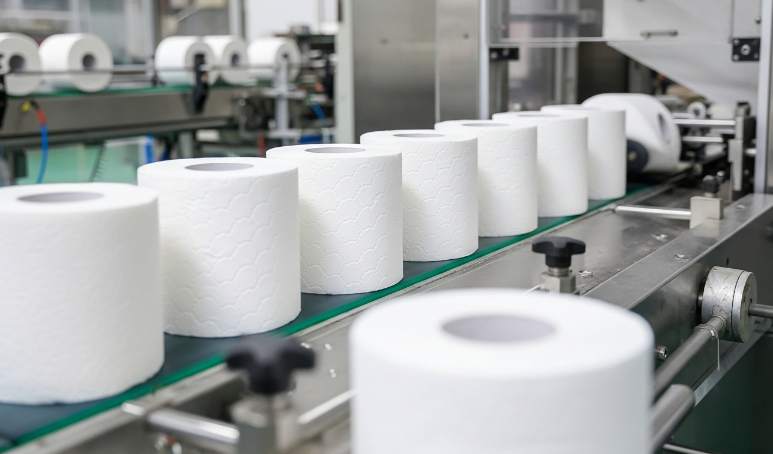
Why Do E-commerce Brands Prioritize Aesthetic Wraps Over Bulk Packs?
Packaging choice directly shifts landed cost, on-page conversion, and container efficiency—get both the numbers and the visual spec right to protect margin and brand equity.
Measure packaging economics: per-roll landed cost, cube impact, and freight planning
Start your cost model with real SKU weights: TSH-2559 ships as 10 rolls at 1,800 g per pack; TSH-3396 ships as 28 rolls at 5,000 g per bundle. Calculate landed cost per roll as (factory unit cost + freight allocation + secondary packaging cost) ÷ total rolls per container. Use a 40HQ baseline payload of 7,000–9,000 kg to convert bundle weight into an expected roll count per container and then into freight allocation per roll.
Reduce cubic consumption at the bagging stage with mechanical compression to raise effective payload without changing roll specs; that directly lowers freight allocation. Run parallel scenarios for packaging formats to quantify margin impact and make decisions based on gross margin per SKU rather than headline unit price.
- Model A — Individual wrap + PE bag: include extra material cost, increased cubic size, and higher perceived retail value.
- Model B — Direct bundle + master poly: lower per-unit packaging cost and better cube efficiency for wholesale or subscription channels.
- Calculate: total container rolls = floor(40HQ payload (kg) ÷ bundle weight (kg)); freight allocation per roll = total ocean freight ÷ total container rolls.
- Compare gross margin per SKU after adding ecommerce-specific costs (labeling, inserts, returns reserve) and choose the format that meets margin targets and channel positioning.
Choose SKU and wrap configuration to drive on-page conversion and perceived hygiene
Match technical specs to market positioning: position TSH-4010 (5-ply) as premium hotel-grade; use TSH-2269 (165 mm wide, 4-ply) for luxury comfort; deploy TSH-3396 and TSH-3082 as high-density value SKUs for subscription or club channels. Offer Format A (individually wrapped rolls inside a PE bag, typical pack counts 10/12/24) where perceived hygiene and unboxing matter; offer Format B (direct bundle packs consolidated into master poly) where price-per-meter and cube efficiency drive purchase decisions.
Call out technical claims that increase conversion on product pages: 100% Virgin Wood Pulp, OBA-Free, rapid disintegration (septic-safe), embossing that raises absorbency ~30%, and brightness 85–92%. Combine those claims with visual cues to reduce friction and lift conversion.
- Premium listing — Individually wrapped 5-ply (TSH-4010): show an emboss close-up, OBA-Free badge, and a lifestyle shot highlighting 165 mm width where relevant.
- Value/subscription — Coreless 28-roll solid (TSH-3396): emphasize meters-per-roll, weight 5,000 g per bundle, and a “lowest cost per meter” callout.
- Hybrid SKU — 3–4 ply compact rolls (TSH-2559 or TSH-1071) for urban/residential: display emboss pattern, septic-safe icon, and a brightness spec (85–92%) in the bullets.
Set supply, MOQ, and packing specs to align e-commerce operations and private-label runs
Lock commercial terms to operational reality: set MOQ and custom-pack minimum at 1 x 40HQ. Use in-stock dispatch windows of 10–15 days for stocked SKUs and production lead times of 20–25 days for private-label runs. Require T/T 30% deposit and 70% balance before shipment, and require the supplier to send pre-shipment photos plus loading videos as a condition for releasing the balance.
Specify packing: pack into reinforced 5-ply export cartons, consolidate bags into master poly bundles, and use mechanical compression during bagging to maximize container density. Define reorder logic to prevent stockouts and to avoid FBA/3PL repacking on receipt.
- Lead-time reorder point = average supplier lead time (use 22 days midpoint) + safety buffer determined by daily sales velocity and transit variability.
- Carton & pallet spec for FBA/3PL: specify cartons per pallet, maximum pallet height, and gross pallet weight to match inbound receiving limits and avoid repack fees.
- Quality gates: require batch photos, roll diameter and weight confirmation, and loading video; hold balance until verification completes.
- Labeling checklist: place scannable SKU barcode on two adjacent carton faces, include pack count and net weight, and mark cartons with “Handle as Paper Rolls” to prevent crushing errors.
Direct-to-Consumer (DTC) ROI: Scaling Your Own Bamboo Brand via OEM
Optimizing DTC bamboo ROI requires precise product specs, freight-aware packaging, and a tested QC & cost model tied to 40HQ economics.
Bamboo pulp product specs and OEM configuration
Specify material at the outset: offer 100% bamboo pulp as the premium option and blended formulations as lower-cost variants, and require the supplier to provide an FSC-equivalent chain-of-custody certificate before production. Target 2–5 ply constructions and control ply GSM at 13–22 g/m² per ply to balance perceived softness with wet-strength; set brightness targets at 85–92% using fiber selection rather than OBAs to meet OBA-free claims and sensitive-skin positioning.
Define roll and SKU geometry up front: standard widths 102–132 mm with a premium wide-format at 165 mm and a coreless option to maximize meters per roll. Offer bundle weights from 780 g up to 5000 g and common SKUs (10/12/18/28/32-roll packs or 5000 g solid bundles). Specify point-to-point embossing (raises absorbency ~30%), and set perforation tolerance and tear-force targets (start with a tear-force spec range, e.g., 2–4 N/cm, and adjust from pilot runs). Capture tensile, wet-strength and septic-safe disintegration metrics in the spec sheet and lock them into the PO for supplier accountability.
Packaging, compression and 40HQ container loading plan
Choose packaging by go-to-market strategy: use Format A (individual paper wrap) for premium DTC presentation and retail differentiation; use Format B (direct bundle) where freight efficiency and lowest unit cost matter. During bagging, apply a mechanical compression rate and record the compression factor (%) so you can model roll volume per m³ and incorporate that factor directly into freight calculations.
Specify reinforced 5-ply export cartons with secondary poly-bundle protection and corner reinforcement to support high-stacking. Plan 40HQ payload at 7,000–9,000 kg and compute units per container = payload (kg) ÷ bundle weight (kg) to create the landed-cost numerator. Require pre-shipment loading video verification and confirm palletization pattern, cartons per layer and max stack height with the factory before loading.
- Container-loading steps: finalize pallet pattern, verify cartons per layer, confirm stack height limits, load, record video, and sign off on weight/dimensions.
- Labeling: include SKU, HS code 4818.1000, net/gross weight, carton dimensions, and batch code for customs and incoming inspection.
- Freight calculation: insert measured compression factor (%) to convert nominal roll volume to cubic meter freight model.
Production workflow, MOQ, lead times and payment milestones
Treat a single 40HQ as the standard trial and private-label MOQ; allow SKU mixes in that container but lock SKU quantities ahead of production. For timing, use in-stock dispatch at 10–15 days to Tianjin Xingang and full-production runs at 20–25 days factory-to-port for a 40HQ; bake these lead times into reorder and launch plans.
Use standard payment terms T/T 30% deposit, 70% balance before shipment and require a written PO, signed artwork approval and pre-production sample sign-off. Sequence production as: raw-material COA → pilot run → client prototype approval → bulk production → inline QC → pre-shipment photos/videos → final payment → loading. For DTC subscription scaling, hold a 6–8 week inventory buffer to absorb lead-time variability in 2026 markets.
Quality assurance, testing protocols and compliance gates
Require raw-material documentation before production: bamboo pulp COA, OBA-free certificate and supplier fiber analysis. Define laboratory tests the supplier must run and share: tensile strength, wet-strength/burst, disintegration time (septic-safe) and residual-chemicals screening; record pass thresholds in contracts and reject batches that miss thresholds.
Institute a factory QC plan with an AQL sampling table for rolls, embossing-consistency checks and perforation tear-force verification. Demand COA and test reports with every shipment and require photographic and video evidence of the loaded container. Target ISO 9001 evidence and aim for FDA/EU hygiene compliance; where feasible pursue ready-biodegradable certification for bamboo SKUs to support marketing claims.
- Mandatory tests: tensile, wet-strength/burst, disintegration time, residual chemicals.
- QC gates: raw-material COA approval, pilot-run signoff, inline QC sampling, pre-shipment COA + photos/videos.
- Certifications to request: ISO 9001 evidence; target FDA/EU hygiene compliance; pursue ready-biodegradable where available.
DTC cost model and ROI calculation template
Build the model around these variables: FOB unit cost, total freight per 40HQ, import duties, customs clearance fees, domestic fulfillment cost per order, packaging/kitting cost, returns rate, CAC and average order value (AOV). Compute landed_cost_per_roll = (FOB_total + freight_total + import_fees) ÷ total_units_in_container and use that as the base for retail pricing and margin calculations.
Price to market using retail_price = landed_cost_per_roll ÷ (1 – target_gross_margin) and run sensitivity scenarios on freight ±10% and CAC variance. For subscription economics calculate CLTV = AOV × average_subscriptions_per_customer × average_lifetime_months and require CLTV > 3× CAC before scaling paid acquisition. Build the spreadsheet with toggles for ply, bundle weight, packaging format and CAC and model time-to-break-even and reorder frequency under 2026 cost assumptions.
- Landed cost formula: (FOB_total + freight_total + import_fees) ÷ total_units_in_container.
- Retail pricing rule: retail_price = landed_cost_per_roll ÷ (1 – target_gross_margin).
- Subscription CLTV rule: CLTV = AOV × avg_subscriptions_per_customer × avg_lifetime_months; require CLTV > 3× CAC.
DTC launch and scaling checklist: fulfillment, operations and KPIs
Before launch finalize SKU specs, approve artwork, secure certifications and on-product claims (biodegradable, OBA-free, FSC-equivalent), and register required import documentation for each target market. Choose fulfillment strategy—3PL or in-house DC—set SLAs for shipping windows, define kitting and bundle processes and map returns handling with clear RMA rules.
Calculate reorder point = demand_during_lead_time + safety_stock and adopt EOQ once demand stabilizes. Track operational KPIs monthly and act on trends: CAC, LTV, churn rate, gross margin per order, days of inventory, fill rate and on-time shipment percentage. Lock scale controls: require batch color-consistency verification and COA on every new shipment, automate reorder alerts at defined thresholds and schedule quarterly supplier audits.
- Pre-launch: SKU specs, artwork approval, certifications, import registration.
- Fulfillment: pick 3PL or DC, set SLAs, define kitting, define RMA flow.
- KPIs to track: CAC, LTV, churn, gross margin/order, days of inventory, fill rate, on-time shipments.
- Scale controls: COA per shipment, automated reorder alerts, quarterly supplier audits.
Conclusion
Documenting precise specs, running sample conversions and enforcing third‑party testing matters because these technical steps protect product performance, regulatory compliance and long-term supply reliability. They reduce failure rates, support septic- and plumbing-safe claims, and keep landed-costs predictable across large 40HQ orders.
Start by auditing your current product specs and ordering a sample run to benchmark against the Reel standard. Contact Top Source Hygiene to request certified spec sheets, lab-test options and production lead times for OEM/ODM projects.
Frequently Asked Questions
What makes Reel toilet paper different from standard bamboo tissue?
Reel combines 100% bamboo pulp with product performance and a comprehensive sustainability stack: softness and strength comparable to conventional tissue, FSC-certified chemical-free bamboo sourcing, zero-plastic packaging (including biodegradable shipping materials and tape), a “ready biodegradable” certification for defined microorganism breakdown, carbon-offset partnerships, and B Corp validation. The brand also uses design-forward packaging and social-impact partnerships, allowing it to deliver premium feel without a price-prohibitive markup.
How can I manufacture high-end bamboo tissue that matches the Reel standard?
Focus first on sourcing: use 100% FSC-certified bamboo harvested without chemicals or pesticides. Ensure your supply chain and mill processes preserve softness and strength so the product performs like conventional tissue. Match Reel’s holistic approach by implementing zero-plastic, biodegradable packaging, securing ready-biodegradable testing/certification, adopting carbon-offset measures, and embedding verifiable social-impact or sanitation partnerships; combine those product and sustainability credentials with design-forward packaging to position the product as a premium lifestyle item.
What is the cost-per-roll difference between subscription brands and bulk OEM?
The gap varies, but subscription and specialty sustainable brands generally carry higher per-roll costs due to smaller runs, premium materials, branded and design-forward packaging, fulfillment and customer-acquisition costs, and investments in sustainability certifications and offsets. Bulk OEM production lowers per-roll cost through scale and simplified packaging. Reel’s case shows it can narrow that premium by scaling (over a million rolls sold) and embedding cost-efficient sustainability practices so the per-roll premium is not necessarily prohibitive.
Why is plastic-free individual wrapping critical for premium bamboo brands?
Plastic-free wrapping is essential to preserve the product’s sustainability claims and avoid greenwashing: consumers expect the packaging to match the eco credentials of premium bamboo tissue. Reel’s zero-plastic approach (including biodegradable shipping materials and tape) reinforces credibility, reduces waste, and supports the brand’s premium lifestyle positioning; it ensures end-to-end environmental integrity that premium buyers value.
Is Reel-quality bamboo paper safe for all septic and plumbing systems?
Reel’s product carries “ready-biodegradable” certification, which indicates breakdown by microorganisms within defined timeframes, and its 100% bamboo composition with performance similar to traditional tissue supports compatibility with septic and plumbing systems. That said, septic system sensitivity varies by age and condition; for older or fragile systems, check the manufacturer’s flushability/septic testing data and run a local compatibility test before widescale use.
How to find a manufacturer in China that can provide Reel-style ODM?
Screen suppliers for the capabilities that underpin Reel’s offering: access to FSC-certified bamboo pulp, proven experience producing 100% bamboo tissue with the required softness/strength, ability to provide plastic-free biodegradable packaging and documentation for ready-biodegradable testing, and capacity to scale to large volumes. Request certifications (FSC, biodegradability reports), product samples and lab test results, evidence of social/environmental audits, references for prior ODM brand work, and factory visits or third-party inspections before contracting.