Skip to content
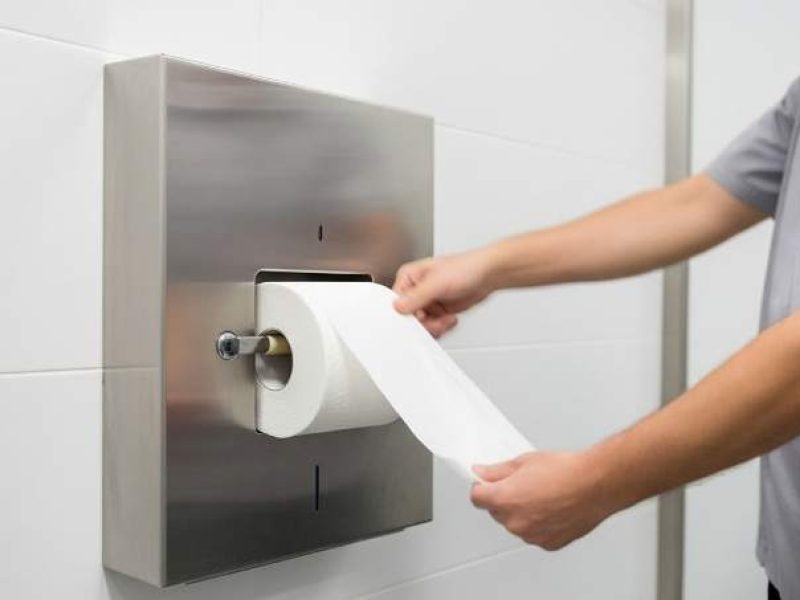
Choosing between 1000-Sheet vs. Ultra-Plush paper determines whether a facility manager prioritizes janitorial labor savings or occupant satisfaction scores. In high-traffic environments, the wrong selection leads to depleted rolls and increased maintenance tickets that drain operational budgets. We look at the trade-off between the high-yield efficiency of single-ply systems and the tactile luxury of multi-ply alternatives that define the standard for premium corporate restrooms.
This guide evaluates the technical specifications of winding tension, sheet density, and the actual total cost of ownership (TCO) associated with each roll type. We analyze how micro-embossing technologies attempt to reconcile softness with yield, and we provide a framework for calculating labor savings based on roll change frequency. By examining the impact of paper thickness on plumbing systems and janitorial cycles, you can establish a procurement strategy that aligns with your facility’s specific traffic patterns and budget constraints.
Why Do Industrial Facilities Still Swear by the 1000-Sheet Roll?
High-capacity 1000-sheet rolls function as a critical operational tool, allowing facilities to drastically reduce maintenance frequencies and reclaim janitorial labor hours for higher-priority sanitation tasks.
Labor Efficiency and Reduced Maintenance Cycles
Restroom servicing labor represents a substantial operational expense that often exceeds the cost of the paper products themselves. In 2026, facility managers prioritize 1000-sheet rolls because they significantly decrease the man-hours required for restocking high-traffic environments. Each restroom intervention costs money in labor time; by doubling or tripling the sheet count per roll compared to standard retail versions, janitorial staff spend less time on refills and more time on sterilization and deep cleaning. Data from high-volume facilities indicates that switching to high-capacity systems can save 7-10 minutes per restroom per shift.
- Reducing the number of daily roll changes directly lowers operational overhead in airports, hospitals, and large-scale office complexes.
- Top Source Hygiene utilizes high-yield manufacturing to help industrial clients maintain consistent stock levels with a leaner, more efficient delivery schedule.
Standardization of Universal Dispensing Systems
The 1000-sheet format survives as the industry benchmark because it aligns with existing commercial infrastructure. Most industrial restrooms utilize jumbo-roll dispensers designed specifically for high-capacity tissue. These systems protect the product from cross-contamination, humidity, and theft while ensuring that the paper remains available to the user at all times. Standardizing on this format eliminates the need for expensive hardware upgrades across diverse facility configurations.
- Top Source Hygiene engineers its jumbo rolls to meet international dispenser specifications, allowing for seamless integration across global hospitality and retail chains.
- Universal sizing ensures that procurement teams can manage stock across multiple locations without worrying about stall-specific compatibility issues.
Waste Management and Sustainability Goals
Optimizing roll density serves environmental targets by reducing the volume of secondary packaging and core waste. A single 1000-sheet roll generates far fewer cardboard cores and uses less plastic wrapping per thousand sheets than standard consumer rolls. This consolidation allows companies to report a lower carbon footprint by shipping more actual product and less air in 40HQ containers. For high-volume users, this reduction in “per-sheet” waste becomes a measurable part of their annual sustainability reporting.
- Using 100% virgin wood pulp ensures that even high-density rolls remain biodegradable and septic-safe for high-traffic plumbing.
- Consolidating product volume into the 1000-sheet format helps facilities meet 2026 environmental benchmarks by optimizing shipping density and reducing packaging disposal fees.
Material Engineering for Rapid Dissolution
Facility engineers favor the 1-ply 1000-sheet configuration for its fast-dissolving properties, which protect aging industrial drainage systems. Modern manufacturing has solved the old problem of thin paper shredding; advanced fiber lamination maintains tensile strength during use while ensuring the paper disintegrates quickly once flushed. This balance prevents the expensive plumbing blockages often caused by thicker, multi-ply plush papers that take longer to break down in water.
- Top Source Hygiene applies rigorous quality control to ensure high-capacity rolls maintain septic-safe performance in buildings with high-volume usage.
- Advanced wood pulp selection provides enough softness for a professional user experience without compromising the rapid dissolution needed for commercial plumbing integrity.
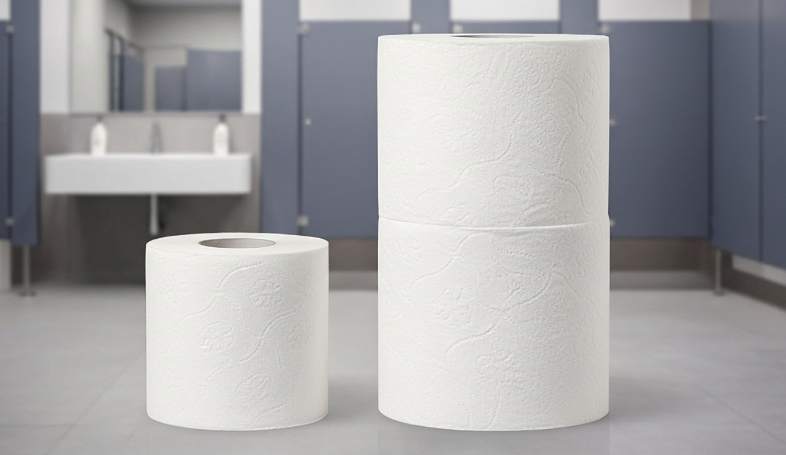
The Density Conflict: Winding Length vs. Tactile Bulkiness
Commercial facilities often sacrifice tactile “bulk” for winding length, yet advancements in fiber selection and adjustable GSM settings allow high-yield 1000-sheet rolls to maintain professional-grade softness without increasing dispenser footprints.
The Trade-off Between Sheet Count and Roll Diameter
Facility managers in 2026 face a persistent challenge: maximizing the number of sheets per roll to reduce labor while providing a product that feels substantial to the user. High-yield rolls, particularly the 1000-sheet variety, prioritize winding length to decrease the frequency of janitorial interventions in high-traffic zones like airports and office towers. To keep these rolls within a standard diameter that fits existing dispensers, manufacturers often use thinner, single-ply paper.
We address this technical limitation by offering adjustable GSM (Grams per Square Meter) settings on our production lines. This flexibility allows distributors to specify the exact balance between paper thickness and total roll length. By optimizing the fiber density, we can produce high-yield rolls that feel less “transparent” than traditional 1-ply products while maintaining the high sheet counts required for operational efficiency.
| Roll Specification | Tactile Bulk Level | Maintenance Priority |
|---|---|---|
| 1-Ply 1000-Sheet High-Yield | Low (Flat/Dense) | Maximum (Lowest refill frequency) |
| 2-Ply Multi-Pack (TSH-2559) | Moderate (Air-bonded) | Balanced (Standard commercial) |
| 5-Ply Luxury (TSH-4010) | High (Plush/Quilted) | Experience-Focused (Hotel/Executive) |
How Paper Ply and GSM Affect Tactile Bulk
Perceived quality stems largely from “bulk,” the thickness felt during use. Multi-ply configurations—ranging from 3-ply to 5-ply—create internal air pockets between layers through point-to-point embossing. This increases the tactile bulkiness without significantly increasing the weight of the product. However, higher GSM ratings signify denser, stronger paper. This density is a double-edged sword: while it provides superior tensile strength and absorbency, it physically limits the total winding length possible on a standard commercial roll.
- 100% virgin wood pulp creates 20-30% more bulk at lower weights compared to recycled fibers, which tend to lay flatter and feel stiffer.
- Ply-bonding technology ensures that multi-ply sheets do not delaminate during use, maintaining the quilted feel even under tension.
- Micro-embossing patterns increase absorbency and perceived thickness by creating microscopic ridges that trap moisture and air.
Customizing Density for Specific Market Demands
Top Source Hygiene utilizes two advanced factories to produce paper that meets specific regional preferences for thickness versus length. North American and European markets typically favor tactile bulkiness and softness. For these regions, we focus on 3-ply and 4-ply products that utilize long-fiber wood pulp to ensure a lint-free, cloud-like experience, even if it results in shorter rolls.
In contrast, public facilities in regions like Africa and parts of Southeast Asia often prioritize winding length to maximize cost-efficiency. Our OEM services enable clients to specify exact ply and material compositions to hit the “sweet spot” for their demographic. We manage this through precision winding tension and nip control, tapering the tension as the roll diameter increases to prevent “cinching” while ensuring the roll remains easy to unwind in high-traffic commercial dispensers.
Build Your Premium Global Paper Brand

Does 1-Ply 1000-Sheet Paper Genuinely Reduce Janitorial Labor Costs?
Labor efficiency in high-traffic facilities is driven by roll architecture and capacity, where reducing refill cycles by 50% captures significant operational savings regardless of the specific ply count.
Restroom Servicing Time and Labor Expenses
Labor costs in industrial facilities often outweigh the price of paper products, making efficiency a primary goal for facility managers in 2026. Janitorial staff spend between 33% and 50% of their total restroom cleaning time simply checking and servicing dispensers. A standard multi-stall restroom requires approximately 20 to 30 minutes of nightly maintenance, largely driven by the manual replacement of rolls and the management of stub-roll waste.
Optimizing the roll capacity directly impacts the bottom line. By switching to high-yield formats, facility teams save 7 to 10 minutes per restroom session. These increments may seem small, but across a large campus or a multi-story office complex, they lower the total operational expenditure and allow staff to focus on higher-priority sanitation tasks.
Refill Frequency Savings through Reduced Core Designs
The true labor savings of 1000-sheet rolls stem from their architectural design rather than the ply count alone. High-capacity rolls utilize a reduced core design that packs 100% more product into the same dispenser footprint compared to standard consumer rolls. This architecture maximizes the payload of every shipping container and every janitorial cart.
| Efficiency Metric | Standard 2-Ply Roll | 1000-Sheet Reduced Core |
|---|---|---|
| Sheets Per Roll | 300 – 500 Sheets | 1,000 Sheets |
| Refill Cycle (High Traffic) | Daily or Twice Daily | Every 2-3 Days |
| Annual Labor Per Stall | Approx. 12-15 Hours | Approx. 6-8 Hours |
Top Source Hygiene leverages 30 years of manufacturing experience to produce these high-density rolls, extending the intervals between staff interventions. Longer usage windows reduce the risk of “run-outs,” which often trigger emergency maintenance calls and increase labor volatility. By standardizing on high-yield specs, managers create a more predictable maintenance schedule.
Balancing Sheet Count with Material Durability
High-yield rolls only reduce costs if the paper quality prevents secondary maintenance issues like shredding or plumbing clogs. Low-quality 1-ply paper often shreds during use, requiring janitors to spend extra time cleaning floor debris. This creates a net loss in productivity that negates the savings from fewer roll changes.
Facility managers report a 15% reduction in total maintenance costs when using durable, high-capacity jumbo rolls that resist tearing. Key advantages of choosing professional-grade materials include:
- 100% Virgin Wood Pulp: Ensures the paper maintains tensile strength even at high sheet counts and thinner plys.
- Rapid Disintegration: Prevents plumbing clogs and back-ups, which are far more expensive to fix than the paper itself.
- Lint-Free Experience: Reduces the dust accumulation on dispenser surfaces and restroom floors, shortening the general cleaning cycle.
Partnering with specialized OEM/ODM manufacturers allows facilities to customize the GSM (grams per square meter) to find the sweet spot between softness and strength. For high-traffic buildings, this data-driven approach to procurement is the only way to ensure that “cost-effective” solutions don’t lead to hidden labor expenses.
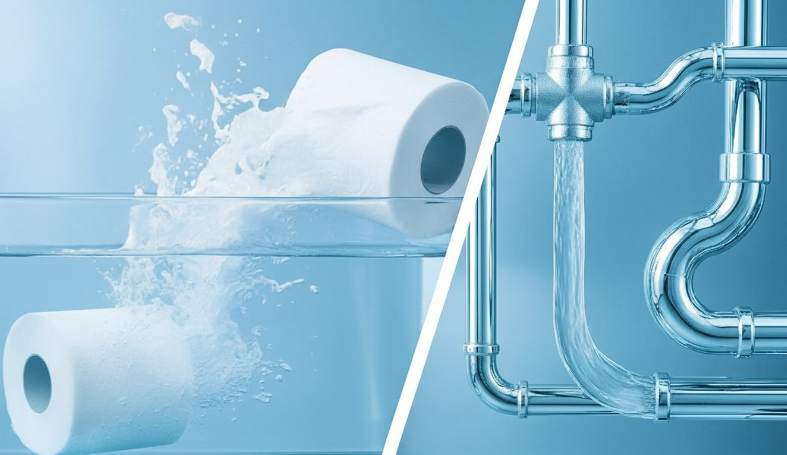
User Satisfaction Scores: Why Plush 2-Ply Wins in Premium Corporate Offices
Premium 2-ply configurations represent the efficiency sweet spot for 2026 facility management, balancing the high tactile expectations of corporate tenants with the technical requirements of high-efficiency plumbing systems.
High-traffic corporate environments demand a delicate balance between luxury and utility. While 1-ply rolls maximize winding length and reduce changeover frequency, they often fail to meet the tactile expectations of modern professionals. Top Source Hygiene utilizes 100% virgin wood pulp to create 2-ply configurations that offer superior absorbency while maintaining rapid dissolution rates. This engineering prevents the frequent clogs associated with traditional “thick” consumer papers while providing the bulkiness and strength that premium office tenants expect.
- Plush 2-ply tissue provides a superior tactile experience that significantly outperforms standard 1-ply options in professional settings.
- Top Source Hygiene 2-ply rolls utilize long-fiber wood pulp to ensure high absorbency and structural integrity during use.
- Modern ply architecture allows the paper to remain compatible with high-efficiency commercial restroom fixtures by ensuring rapid breakdown in water.
Impact of High-Quality Amenities on Professional Brand Perception
Restroom amenities serve as a physical touchpoint for organizational culture and attention to detail. In image-conscious settings, the quality of paper products serves as a direct variable in employee feedback and guest satisfaction. Facilities that prioritize occupant comfort often see a measurable shift in how the organization is perceived. Integrating premium amenities into utility spaces demonstrates a commitment to occupant well-being that transcends basic facility maintenance.
- Internal case studies show that upgrading to custom-branded 2-ply products led to a 20% increase in guest satisfaction scores for North American corporate clients.
- Image-conscious organizations use premium paper softness to drive positive feedback and enhance the overall professional atmosphere.
- Custom-logo options and specialized packaging allow corporate offices to maintain brand cohesion even in utility spaces.
Evaluating Performance Metrics: Absorbency and Dissolution Rates
Procurement teams have moved beyond comparing unit prices per roll and now focus on transparent performance data. High-quality 2-ply tissue often reduces overall waste because its superior absorbency allows users to achieve the same results with fewer sheets. By standardizing on high-yield 2-ply rolls, such as the TSH-2559, facilities can maintain consistent user comfort while optimizing their maintenance cycles.
- Absorbency rates and tensile strength determine actual consumption, with high-quality 2-ply often lowering the total volume of paper used per visit.
- Top Source Hygiene provides FSC-certified and ISO 9001-compliant products to meet rigorous sustainability and durability standards.
- Maintaining a 20-25 day production lead time for bulk restocking ensures that facilities avoid supply disruptions while keeping storage requirements lean.
Can You Achieve a “Plush Feel” on a High-Yield Roll via Micro-Embossing?
Advanced micro-embossing bridges the technical gap between high-capacity winding and premium tactile feedback by mechanically altering surface geometry to simulate bulk without adding material weight.
Achieving a premium hand-feel on high-yield rolls requires a departure from standard production methods. While traditional industrial rolls prioritize quantity, micro-embossing allows manufacturers to manipulate the paper’s physical structure to enhance user perception. This process involves complex machinery that reconfigures the fibers at a microscopic level.
Flat-Bed Stamping Requirements for Tactile Detail
High-precision micro-embossing effects depend almost entirely on flat-bed stamping systems. Unlike rotary methods, which move quickly but struggle with intricate depth, flat-bed systems provide the steady pressure needed for fine tactile detail. These setups allow us to integrate specialized textures, such as brushed metal or gradient patterns, directly onto the paper or its packaging.
- Flat-bed stamping remains the only reliable method for achieving deep, high-precision micro-embossing.
- Rotary foil application methods lack the mechanical capability to produce the same tactile depth as flat-bed systems.
- Manufacturers use these specialized setups to create premium textures like matte-glossy transitions on paper surfaces.
Tactile Enhancements for Bulk Perception
Micro-embossing works by altering the surface area of the 100% virgin wood pulp, creating the illusion of thickness. By adding micro-texturing, we simulate a more substantial feel without the need to increase the actual paper weight (GSM). This technique is vital for high-yield rolls where maintaining a slim winding diameter is necessary for dispenser compatibility.
- The technology creates textured effects that simulate a premium feel without increasing raw material consumption.
- Micro-texturing enables matte and glossy finishes that improve the aesthetic quality of the final roll.
- Designers use these sensory techniques to separate high-yield products from basic industrial-grade paper.
Scalability Challenges in High-Yield Roll Production
While micro-embossing improves quality, it introduces significant bottlenecks in high-volume manufacturing. Flat-bed systems require higher setup costs and result in longer production cycles compared to the high-speed rotary methods used for standard products. Facilities must balance the desire for decorative embossing with the need for massive output capacities.
- Higher setup costs and longer turnaround times make flat-bed systems more expensive than rotary methods.
- Top Source Hygiene maintains a 2,860-ton monthly capacity by strategically applying micro-embossing only to premium lines.
- Detailed embossing remains a premium feature rather than a standard for all commercial high-capacity rolls.
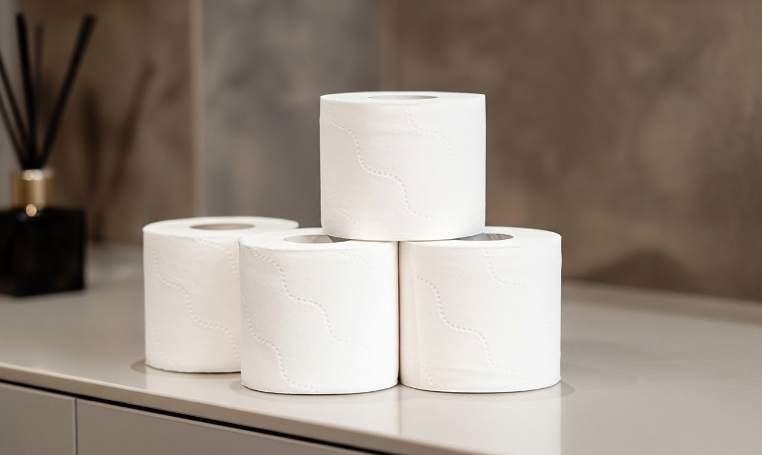
The TCO Calculation: Sheets-per-Roll vs. Cost-per-Maintenance-Cycle
True facility profitability in 2026 relies on quantifying the labor hours saved through reduced refill frequencies rather than chasing the lowest price per individual roll.
Transitioning from Roll Price to Cost-per-Sheet Metrics
Procurement teams now use sheet-level data to normalize comparisons between high-yield industrial rolls and standard retail-sized rolls. This approach provides a transparent view of true expenditure by stripping away the marketing noise of “mega” or “double” roll labeling. Standardizing these metrics allows facility managers to eliminate price distortions caused by varying roll diameters and core sizes, which often mask the actual value delivered per dollar.
Calculations often reveal that rolls with higher upfront costs provide a lower cost-per-use due to specific winding densities and ply configurations. For example, a 1000-sheet roll may carry a premium unit price, yet it consistently delivers a superior return on investment when measured against the rapid depletion rates of lower-density alternatives. Top Source Hygiene maintains strict GSM control across its industrial lineup to ensure that every sheet meets tensile strength requirements, preventing the “multi-sheet pull” behavior that inflates consumption in budget-grade products.
| Performance Metric | Standard 2-Ply Roll (300 Sheets) | TSH Industrial (1000 Sheets) |
|---|---|---|
| Annual Refill Frequency | High (Every 1-2 Days) | Low (Every 5-7 Days) |
| Labor Time per 1000 Sheets | ~15-20 Minutes (3.3 Changes) | ~5 Minutes (1 Change) |
| Storage Efficiency | 3.3x More Warehouse Space | Optimized 40HQ Payload |
Labor Savings through Extended Maintenance Cycles
Labor represents a substantial portion of restroom management budgets, often exceeding the cost of the paper itself. High-capacity rolls, such as the 1000-sheet or jumbo formats, reduce the frequency of janitorial refills. This shift cuts labor expenses by an average of 15% in high-traffic settings. Decreasing the number of maintenance cycles minimizes restroom downtime and allows staff to focus on more intensive cleaning tasks that directly impact hygiene scores and user safety.
- Reduced core designs allow 100% more product per roll compared to standard tissue architecture.
- Synchronized refill schedules using occupancy sensors help facilities reach 95%+ roll depletion before replacement.
- Extended intervals between maintenance checks lower the risk of “run-out” complaints in high-traffic zones.
Analyzing the Inverse Relationship of Ply Quality and Consumption
Total Cost of Ownership includes the volume of paper used, which frequently decreases when facilities switch to higher-quality materials. Users typically pull fewer sheets of absorbent 2-ply or 3-ply paper compared to thin 1-ply alternatives. While the price per roll for premium 100% virgin wood pulp might be higher, the reduction in total sheet consumption balances the budget.
Integrating high-quality fiber options into the TCO model helps achieve both budget efficiency and professional amenity standards. Premium ply options contribute to higher user satisfaction scores and reduce the volume of waste entering the disposal stream. By selecting products with high wet-strength durability, facility managers ensure the paper performs correctly the first time, preventing the excessive usage patterns commonly seen with low-quality recycled tissue.
Conclusion
Balancing roll density with tactile comfort allows facilities to align maintenance budgets with specific user needs. High-capacity 1000-sheet systems minimize labor cycles in high-traffic zones, while premium wood pulp rolls protect the brand experience in executive spaces. These decisions directly influence both long-term plumbing health and overall procurement efficiency.
Facility managers can analyze current consumption rates to decide which roll specification best fits their traffic requirements. We provide full technical data and samples for our entire Big 10 inventory to help streamline your next container order.
Frequently Asked Questions
Is 1-ply 1000-sheet toilet paper more cost-effective than 2-ply plush?
Yes, 1-ply 1000-sheet rolls are significantly more cost-effective. They offer a lower price-per-sheet and reduce the frequency of procurement cycles. In commercial settings, 1-ply formats prevent the excessive consumption typically seen with plush 2-ply options, leading to lower overall waste and substantial long-term savings through economies of scale.
Why do commercial facilities prefer high-sheet-count rolls for high-traffic?
Commercial facilities prioritize high-sheet-count rolls because they dramatically reduce maintenance frequency. In high-traffic environments like hospitals and schools, fewer roll changes translate directly into lower labor costs and operational efficiency. This format also ensures that dispensers remain stocked longer, reducing the risk of “run-out” during peak usage periods.
Does the thickness of ultra-plush paper lead to more frequent plumbing clogs?
Yes, the density of ultra-plush paper often leads to plumbing issues in commercial systems. Unlike 1000-sheet 1-ply options, which utilize fast-dissolving, septic-safe formulations, thicker multi-ply papers take longer to break down. This slow dissolution rate, combined with the higher volume of paper used per flush, frequently results in clogs in low-flow plumbing infrastructure.
How to calculate the labor savings of switching to 1000-sheet roll systems?
To calculate labor savings, subtract the total number of annual roll changes required by the 1000-sheet system from your current baseline. Multiply this difference by the average time required for a custodian to service a dispenser (typically 2-3 minutes) and then by the average hourly labor rate. This formula highlights the direct reduction in maintenance hours and associated costs.
Can 1000-sheet rolls fit in standard home-sized toilet paper holders?
Standard 1000-sheet “single” rolls are designed to fit most residential spindles. However, industrial jumbo-roll formats used in commercial facilities have a much larger diameter and require universal jumbo-roll dispensers. For home use, it is essential to distinguish between “standard-core” 1000-sheet rolls and “jumbo-core” commercial rolls.
What is the impact of winding tension on the softness of high-yield rolls?
Winding tension is a key trade-off between yield and comfort. Higher winding tension increases the number of sheets that can fit on a roll but compresses the paper fibers, making the roll feel firmer and less soft. Manufacturers of high-yield rolls carefully calibrate this tension to maximize the sheets-to-diameter ratio while maintaining acceptable absorbency and tactile softness.