 Skip to content
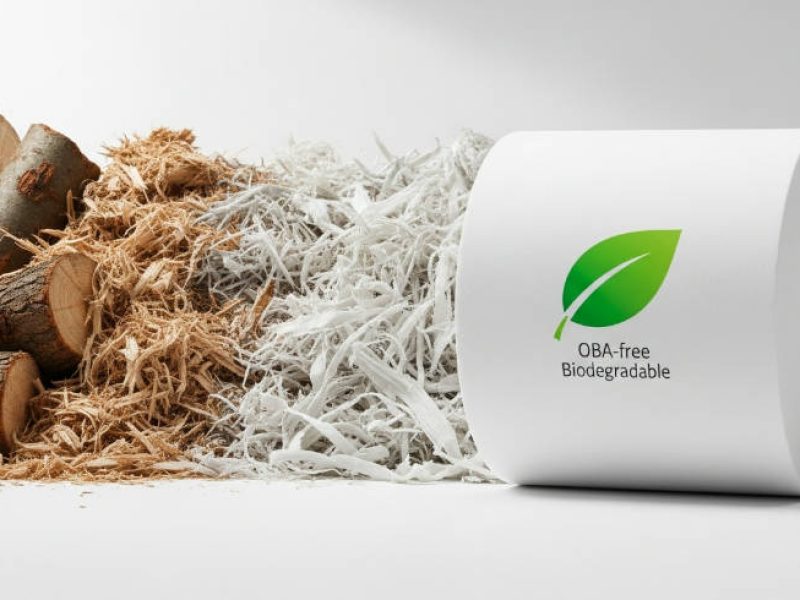
Lamination science directly impacts the operational output of high-speed tissue converting lines, where poor bonding consistency leads to catastrophic material waste and increased product rejection rates. Manufacturers who ignore the physics of ply adhesion risk significant financial losses from machine downtime and the erosion of wholesale contract stability. A failure to control bond strength often results in ply separation, a defect that compromises the utility of the final roll and triggers costly quality control audits.
This analysis details the engineering principles behind ply bonding, comparing the performance of mechanical edge-embossing against traditional water-based adhesives. We evaluate how the creation of inter-ply air pockets influences both tactile softness and total product volume. By establishing clear technical benchmarks for ply structural integrity, this guide provides a framework for optimizing sheet strength and calculating the ROI of multi-ply configurations in commercial manufacturing environments.
How Do Manufacturers Bond Multiple Plies into a Single Sheet?
High-speed tissue conversion achieves multi-ply structural integrity by combining high-pressure mechanical interlocking with targeted water-based adhesive application to prevent delamination without sacrificing 100% virgin wood pulp softness.
Mechanical Edge and Point Embossing
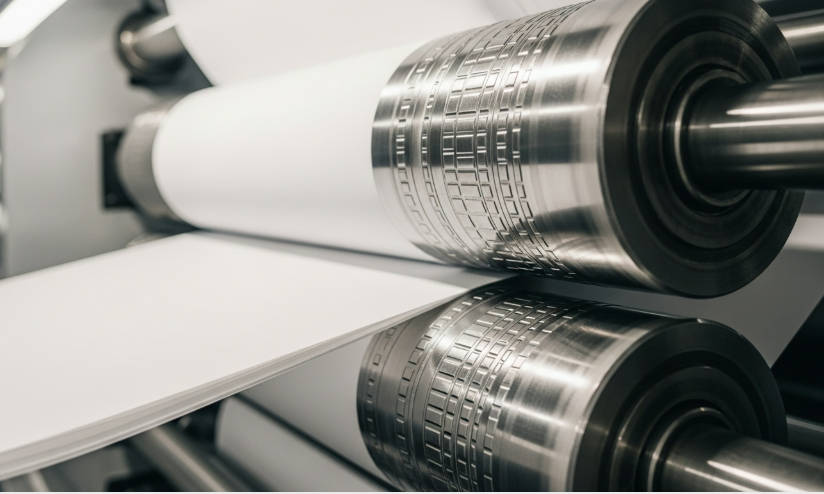
Mechanical bonding removes the need for chemical additives by using high-pressure steel rollers to physically lock paper fibers together. This process creates a structural bond through fiber deformation, where the “peaks” of the embossing pattern on one ply penetrate the surface of the adjacent ply. Manufacturers utilize this method for standard 2-ply and 3-ply rolls because it preserves the natural porosity and bulk of the raw material. This mechanical approach simplifies the production cycle by removing the drying and cleanup steps associated with liquid glues.
Nested or point-to-point embossing configurations increase the surface area of the sheet, allowing for better liquid retention. By aligning the embossing “knobs” so they meet precisely at contact points, the converting line traps small pockets of air between layers. Top Source Hygiene employs this technique to improve absorbency while ensuring the finished product feels cushioned. This method is particularly effective for 100% virgin wood pulp, as the long fibers provide the necessary tensile strength to withstand the mechanical pressure without tearing.
- Steel embossing rollers press the plies at specific intervals to create a physical interlock.
- Nested or point-to-point patterns increase the surface area, which improves paper bulk and absorbency.
- Top Source Hygiene utilizes this method for standard toilet paper to maintain softness while preventing ply separation.
Precision Water-Based Adhesive Application
For high-ply products such as 4-ply or 5-ply toilet paper, mechanical pressure alone often fails to provide sufficient bonding strength against cumulative stress. Advanced converting lines integrate precision nozzle systems that apply microscopic droplets of water-based adhesive to the embossed high points of the paper web. This targeted application ensures the layers remain fused during high-speed rewinding and consumer use, preventing the “shredding” often seen in lower-quality multi-ply products.
Modern 2026 production standards prioritize non-toxic, biodegradable glues that do not affect the septic-safe nature of the tissue. These adhesives create a soft, transparent film that remains undetectable to the touch and safe for sensitive skin. By limiting glue application to specific contact points rather than the entire surface, factories reduce chemical consumption and maintain the OBA-free (Optical Brightening Agent) status of the virgin wood pulp.
- Nozzles apply microscopic droplets of water-based adhesive to the high points of the embossed paper.
- This bonding method is essential for 3-ply and 4-ply facial tissues to prevent the layers from peeling apart during use.
- The 2026 production standards prioritize non-toxic, eco-friendly glues that do not affect the biodegradability of the virgin wood pulp.
Digital Tension Synchronization
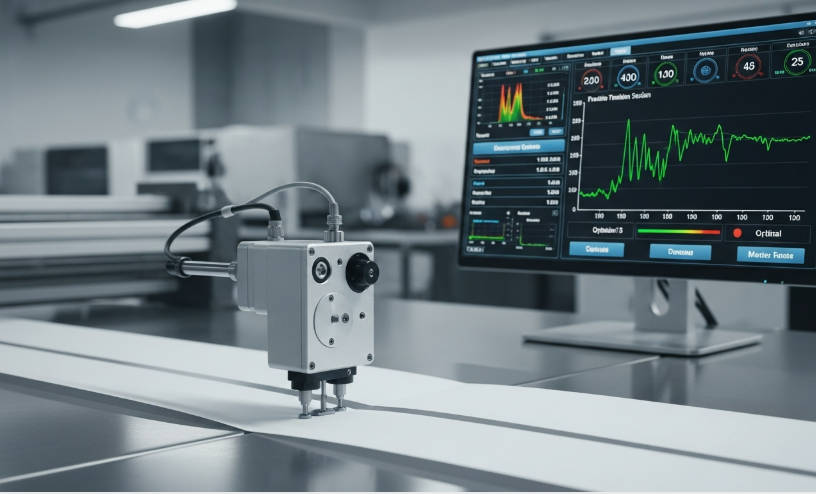
Effective ply bonding depends on maintaining consistent tension across multiple paper webs as they feed from jumbo rolls into the laminating unit. Misalignment occurs if one ply feeds at a different speed than the others, leading to wrinkles or uneven embossing patterns. Automated sensors monitor the tension of each ply in real-time, allowing the system to make micro-adjustments to the motor speeds. This synchronization ensures that perforation lines and embossing patterns align perfectly across all layers for a uniform finish.
This level of digital oversight is critical for large-scale operations. Consistent tension control allows the factory to maintain a production capacity of 2,860 tons per month while ensuring batch-to-batch consistency. For international distributors and private label owners, this technical precision translates to a reliable product that meets strict international hygiene and durability standards, regardless of the order volume.
- Automated sensors monitor the tension of each ply as it feeds from the jumbo rolls into the laminating unit.
- Real-time adjustments ensure that embossing patterns align perfectly across all layers for a uniform finish.
- Consistent tension control allows the factory to maintain a production capacity of 2,860 tons per month without compromising sheet quality.
Why is Mechanical Edge-Embossing Superior to Full-Glue Lamination?
Mechanical edge-embossing secures multiple plies through high-pressure physical bonding, eliminating synthetic adhesives to preserve the natural loft and 100% OBA-free purity of virgin wood pulp.
Eliminating Chemical Adhesives for Better Sustainability
Mechanical bonding utilizes localized physical pressure to interlock paper fibers at the sheet margins, removing the need for polymer-based glues. Top Source Hygiene adopts this adhesive-free approach to help global distributors align with strict 2026 environmental regulations regarding chemical runoff and product recyclability. By stripping synthetic agents from the production process, the final tissue remains entirely biodegradable and safer for sensitive skin applications, particularly in the premium European and North American retail sectors.
- Physical interlocking replaces chemical bonding agents to meet OBA-free safety standards.
- Adhesive-free sheets disintegrate more naturally in septic systems without leaving chemical residues.
- The process reduces the environmental footprint of large-scale OEM orders by simplifying waste management.
Preserving Paper Bulk and Natural Porosity
Full-glue lamination often creates a microscopic film between layers that flattens the paper fibers and seals the natural pores of the wood pulp. In contrast, mechanical edge-embossing applies pressure only to the edges, leaving the central “functional zone” of the sheet untouched. This maintains the high-loft texture of our 13–22g/m² plies, ensuring that 3-ply and 4-ply products like the TSH-2559 series retain their characteristic cloud-like softness and maximum liquid absorbency.
| Performance Metric | Mechanical Edge-Embossing | Full-Glue Lamination |
|---|---|---|
| Chemical Content | 0% (Pure Fiber) | 1-3% Adhesive Weight |
| Hand-Feel / Bulk | High-Loft & Airy | Flattened & Denser |
| Absorbency Rate | Immediate (Porous) | Slower (Adhesive Barrier) |
Increasing Production Efficiency and Speed
Converting lines equipped for mechanical bonding operate at significantly higher velocities because they bypass the drying and curing stages required for liquid adhesives. Top Source Hygiene maintains a reliable production lead time of 20-25 days for 40HQ containers by eliminating the cleaning cycles and machinery downtime caused by glue buildup on embossing rolls. This streamlined workflow allows for faster transitions between high-density solid rolls, such as the TSH-3396, and luxury hospitality SKUs like the TSH-4010.
Lowering Manufacturing Costs Through Simplified Logistics
Removing adhesives from the bill of materials significantly lowers the total cost per unit for high-volume B2B orders. Factories avoid the expenses associated with purchasing, storing, and handling temperature-sensitive glues, which often require specialized climate-controlled environments. We translate these operational savings into factory-direct pricing for our hospitality and wholesale partners, ensuring the lowest landed cost per roll without compromising the structural integrity of the multi-ply sheets.
- Lower material overhead allows for more competitive pricing in price-sensitive markets like Africa and Southeast Asia.
- Simplified machinery requires less frequent technical intervention and fewer specialized replacement parts.
- Mechanical systems provide consistent batch-to-batch bonding strength, reducing the risk of expensive quality claims.
Build Your Unique Toilet Paper Brand
The Role of Water-Based Adhesives in High-Speed Converting Lines
Water-based adhesives in 2026 have surpassed solvent-based counterparts by offering instantaneous tack and zero-VOC compliance, making them the standard for high-velocity multi-ply tissue converting lines.
Fast-Setting Formulations for 2026 Converting Standards
Modern production environments require adhesives that keep pace with line speeds exceeding 800 meters per minute. We utilize specialized water-borne polymers that flash-dry upon contact, preventing ply-shift during the critical winding and rewinding phases. These formulations eliminate the bottleneck of traditional drying sections, allowing factories to reduce the physical equipment footprint while significantly increasing total throughput.
Fast-setting properties ensure that the layers remain perfectly aligned during high-speed lamination. This precision prevents the common “telescoping” effect seen in inferior rolls and ensures that every sheet within a multi-ply configuration, such as our TSH-2559 household rolls, maintains its structural integrity from the core to the outer wrap.
| Bonding Method | Production Velocity | Environmental Impact |
|---|---|---|
| Water-Based Adhesives | Ultra-High (1000m/min+) | Zero VOC / Fully Recyclable |
| Solvent-Based Adhesives | Moderate (Drying Limited) | High VOC / Hazardous Waste |
| Mechanical Embossing | High (Ply Dependent) | Zero Chemicals / Sustainable |
Compatibility with Sustainable and Recyclable Substrates
As the industry pivots toward 100% Virgin Wood Pulp and FSC-certified fibers, adhesive chemistry must adapt. Modern water-based systems provide aggressive adhesion across diverse substrates, including highly porous papers and specialized films. We select formulations that match the performance of legacy solvent technologies without compromising the recyclability of the final product.
- Strong bonding on 100% Virgin Wood Pulp ensures a lint-free user experience.
- Maintains compatibility with global sustainability standards and standard recycling streams.
- Eliminates “strike-through” on lightweight tissue (13-22g/m²).
Improved Green Strength and Initial Tack
High initial tack is vital for maintaining maximum machine speed without risking bond failure during the early stages of converting. Advanced chemical compositions focus on high “green strength,” which refers to the integrity of the bond before it fully cures. This property prevents delamination when the paper web moves through high-tension slitting and perforation stations.
These adhesives perform consistently across a wide temperature range. This thermal stability is essential for manufacturing facilities in diverse climates, from the Middle East to Europe, ensuring the glue viscosity remains within optimal parameters regardless of ambient humidity or heat.
VOC Reduction and Simplified Equipment Maintenance
Transitioning to water-based adhesives significantly reduces the environmental footprint of a converting plant. Low VOC (Volatile Organic Compound) emissions create a safer working environment and help manufacturers comply with the strict air quality regulations enforced in 2026. This move also removes the need for expensive explosion-proof ventilation and specialized solvent storage.
Maintenance efficiency sees a direct improvement. Water-based residues allow for faster cleanup of application rollers, nozzles, and glue pans using simple aqueous solutions. We have observed that this transition cuts machine downtime by up to 15%, directly translating to lower landed costs for distributors and wholesalers sourcing high-volume containers.
Does Ply Separation Indicate a Production Defect or Low GSM?
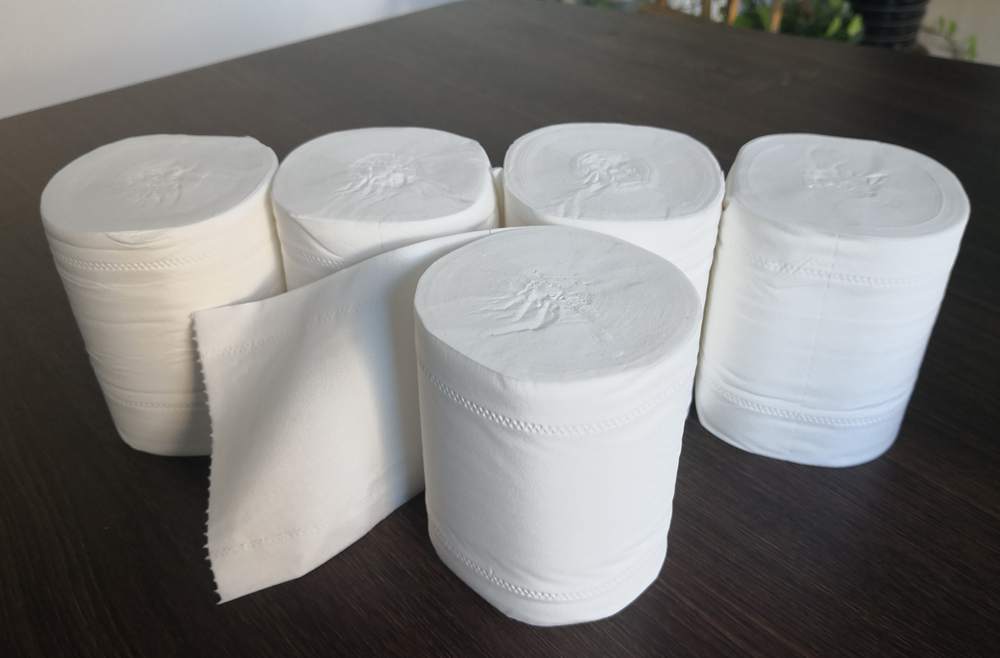
Ply separation is a mechanical failure of the internal bond strength or adhesive application during the converting process, independent of the paper’s Grams per Square Meter (GSM).
Distinguishing Manufacturing Defects from Material Weight
Delamination originates from internal bonding failures rather than the specific material weight or volume of the paper. While GSM influences the thickness and stiffness of the sheet, it does not directly dictate the adhesion quality between plies. We observe that even high-GSM products can separate if the lamination parameters are incorrect. A separation of layers typically signals a breakdown in the laminating process rather than a lack of raw material volume.
- Delamination occurs when the internal bond strength fails to keep layers together during use.
- GSM determines the basis weight but does not guarantee inter-ply integrity.
- Top Source Hygiene utilizes high-precision testing equipment to ensure bond strength meets international standards across all 2-ply to 5-ply products.
- Layer separation confirms a technical error in production, not a material specification issue.
Impact of Glue Application and Pressing Force
Technical errors in the converting line cause layers to peel apart, specifically when adhesive volume or mechanical pressure deviates from set points. Inadequate glue application or insufficient curing time prevents a permanent bond from forming between the wood pulp layers. If the mechanical pressure during the embossing phase is too low, the inter-ply interlocks remain weak, leading to immediate separation when the consumer pulls the sheet.
- Inadequate glue or short curing times stop the formation of a permanent bond between layers.
- Improper pressing force during embossing leads to fragile mechanical interlocks.
- Advanced production lines in our two Hebei factories maintain consistent pressure and adhesive distribution to prevent post-production peeling.
- Incompatible surface treatments on the base paper can repel water-based adhesives, triggering delamination.
Role of Ambient Conditions in Lamination Stability
The factory environment directly affects how plies bond during high-speed manufacturing. Fluctuations in temperature and humidity within the production facility alter the drying rate of adhesives. Excessive moisture in the air often prevents the glue from setting correctly, which results in delamination after the product is packaged and shipped. We mitigate this by maintaining stable ambient conditions, which prevents paper fibers from warping and keeps the plies securely aligned.
- Temperature and humidity fluctuations in the facility change how quickly adhesives dry.
- High humidity prevents water-based glue from setting, causing layers to separate after packaging.
- Top Source Hygiene quality control protocols focus on climate-controlled converting environments for long-term product integrity.
- Stable ambient conditions keep paper fibers straight and ensure the plies remain bonded.
Inter-Ply Air Pockets: The Secret to Perceived Cushion and Softness
Engineered air entrapment between plies shifts the tactile profile from a dense fiber mat to a resilient cushion, significantly increasing bulk and absorbency without the overhead of additional raw material weight.
Creating Bulk Through Embossing Patterns
Modern paper manufacturing in 2026 relies on CNC-precision embossing rollers to create structural gaps between plies. Instead of allowing layers to lay flat—which results in a thin, stiff sheet—manufacturers use these rollers to intentionally push the fibers apart. Top Source Hygiene utilizes these patterns to increase the perceived thickness of our 3-ply and 4-ply rolls. This engineering creates a “high-bulk” product that feels substantial in the hand while maintaining a controlled GSM (grams per square meter) to optimize shipping costs.
- Embossing rollers press intricate patterns into the paper, preventing the layers from sitting flat against each other.
- Nested or point-to-point embossing techniques align the protrusions of one ply with the voids of another to create small internal chambers that trap air.
- This structural design increases the volume of the roll, allowing distributors to offer a “premium” looking product without significantly increasing the weight of the raw 100% Virgin Wood Pulp.
Impact of Air Gaps on Surface Softness
The presence of trapped air acts as a mechanical buffer during use. When the paper is pressed or folded, these air pockets provide a spring-like resistance that users associate with luxury comfort. High-density, single-ply sheets often feel abrasive because they lack this internal mobility. By engineering specific air gaps, the individual plies can move slightly independently, which reduces the overall stiffness of the final sheet.
- Air pockets reduce the overall structural rigidity, allowing the paper to drape and conform more easily.
- This internal “cushion” provides a softer tactile experience compared to high-density alternatives that rely solely on surface chemicals for softness.
- We offer customization for OEM clients to adjust the depth and density of these air pockets to match specific regional preferences for roll “puffiness.”
Enhancing Liquid Absorption with Micro-Chambers
Inter-ply air spaces do more than provide a soft feel; they create a sophisticated capillary network that manages moisture. Instead of liquid simply saturating the surface fibers, these internal gaps act as reservoirs. They pull liquid into the center of the sheet through capillary action, which is why multi-ply papers often outperform single-ply sheets of the same total weight. This design is critical for premium hospitality and commercial settings where performance is just as important as comfort.
- The gaps between plies serve as storage zones, pulling liquid away from the contact surface.
- This architecture allows 3-ply and 4-ply papers to hold 30% more liquid than flat-pressed sheets of the same GSM.
- Top Source Hygiene integrates these micro-chambers into our premium toilet rolls and kitchen towels to ensure high-performance durability in high-traffic environments.
Can 3-Ply Paper Offer Better ROI Than a Heavy-Weight 2-Ply Alternative?
3-ply paper frequently delivers a lower cost-per-use than 2-ply alternatives by reducing per-visit consumption and maintenance labor despite its higher per-unit procurement price.
Comparing Direct Unit Costs with Total Consumption
Procurement data for 2026 indicates that users pull fewer sheets when using 3-ply paper. The structural integrity of a triple-layered sheet provides superior absorbency and a hand-feel that a high-GSM 2-ply simply cannot match. While heavyweight 2-ply attempts to close the gap with increased mass, it lacks the inter-ply air pockets that define premium softness, leading users to compensate by taking more paper. Top Source Hygiene helps clients calculate ROI by analyzing the cost per guest visit rather than the flat cost per roll.
| Performance Metric | Heavy-Weight 2-Ply | Premium 3-Ply |
|---|---|---|
| Avg. Sheets per Use | 4.5 – 5.2 Sheets | 2.8 – 3.1 Sheets |
| Absorbency Capacity | Fiber Saturation Limit | High (Multi-Ply Air Traps) |
| Refill Labor Savings | Standard Maintenance | Estimated 12-18% Reduction |
Documentation Integrity in Regulated Industries
For sectors like banking, freight, and public administration, 3-ply paper provides the essential layers required for multi-party record keeping. This material ensures that printer compatibility remains high and legibility stays sharp across all layers, satisfying legal and administrative compliance. Heavyweight 2-ply often lacks the shear strength required for high-speed dot-matrix or impact printers used in these specialized logistics environments. Top Source Hygiene supplies 3-ply solutions to over 56 countries to meet these specific commercial documentation standards.
- Triple-layer structure prevents smudging during multi-party signing processes.
- Superior tensile strength reduces paper jams in high-volume industrial printers.
- Ensures compliance with international record-keeping durability standards.
Operational Savings Through Reduced Refill Frequency
High-capacity 3-ply rolls lower maintenance labor costs in premium commercial and hospitality venues. Facilities managers report that 3-ply products result in fewer roll changes because users consume less volume per visit. The perceived value of 3-ply paper correlates directly with higher guest satisfaction scores in luxury hotels and private clinics. Our factory-direct model allows businesses to upgrade to 3-ply while maintaining budgets previously set for 2-ply alternatives. We protect dealer margins by exclusively serving B2B clients, ensuring that the operational savings stay within the professional supply chain.
Conclusion
Selecting the right ply-bonding technique and material grade directly impacts the strength, absorbency, and softness of the final product. These technical choices ensure multi-layer tissue meets international safety standards while providing the structural integrity required for high-speed converting. High-quality bonding methods reduce production waste and improve user satisfaction through better durability and hand-feel.
Review your current inventory specifications to see if mechanical embossing or premium virgin pulp can improve your brand’s market positioning. Contact our technical team at Top Source Hygiene to request a sample pack or a detailed product catalog for your next 40HQ order.
Frequently Asked Questions
What are the common methods used to keep toilet paper layers together?
Manufacturers primarily use two methods: mechanical embossing and adhesive lamination. Embossing-based lamination creates mechanical interlocking by pressing the layers together through registered or displaced patterns. Adhesive-based lamination uses pressure-sensitive, hot-melt, or extrusion-applied bonding agents to fuse the plies securely, often combined with automated tension control for uniform results.
Is the glue used in toilet paper lamination safe for sensitive skin?
Yes, the adhesives used in modern multi-ply lamination are formulated to be hypoallergenic, non-toxic, and water-soluble. Industry standards require these glues to be safe for dermal contact, ensuring they do not cause irritation even for consumers with highly sensitive skin. They are typically biodegradable and free from harsh chemicals.
Why does some cheap toilet paper separate or shred during use?
Layer separation typically occurs due to insufficient adhesive application or poor tension control during the manufacturing process. “Cheap” paper often relies on minimal mechanical bonding or low-quality “point-to-flat” embossing which lacks the structural integrity of premium nested patterns. When the bonding points are sparse or the pressure is unevenly applied, the layers fail to move as a single unit, leading to shredding.
Can I customize the lamination pattern to include my brand logo?
Yes, customization is highly common in the industry. By using digital control systems and custom-engraved embossing rollers (cliché rolls), manufacturers can integrate brand logos and specific aesthetic patterns directly into the lamination process. This not only enhances brand identity but can also be designed to improve the functional bulk and softness of the paper.
How does the lamination speed affect the final softness of the roll?
Lamination speed directly influences the “loft” or bulk of the paper. While high speeds increase production output, they require tighter tension control which can inadvertently compress the fibers and flatten the embossing patterns, making the paper feel stiffer. Controlled, optimized speeds allow for better air-pocket formation between layers, resulting in a softer, more luxurious hand-feel.
Is it possible to manufacture 4-ply paper using only mechanical bonding?
While technically possible through heavy embossing and high-pressure mechanical interlocking, it is not recommended for 4-ply production. To maintain the integrity of four distinct layers without making the paper excessively rough or abrasive, a combination of embossing and adhesive bonding is standard. Purely mechanical bonding for 4-ply often results in poor ply-adhesion, causing the inner layers to slide or decouple during use.
