Skip to content

When you’re sourcing a toilet paper manufacturer for a hotel’s private-label amenity line, the real test doesn’t happen in the showroom—it happens in the guest bathroom at 6 AM. A roll that feels fine in your hand can turn rough or disintegrate under real use, and that’s the kind of detail that ends up in a TripAdvisor review. For procurement managers who need to hit a per-occupied-room cost target while keeping housekeeping restock intervals consistent, relying on a supplier’s subjective claims about “softness” or “strength” is a gamble you can’t afford.
The industry’s dirty secret is that most quality failures trace back to a single engineering trade-off: factories often sacrifice wet resilience for a silky dry handfeel. This is especially common with recycled fibers, which shorten during processing and lose up to 40% of ply strength compared to virgin pulp. A savvy buyer doesn’t just ask for a sample—they ask for the ISO 12625-8 absorbency score (target >7.0 g/g) and the TS7 softness index (<8.0 dB V² rms for luxury grade). Knowing these technical standards turns you from a pure price negotiator into a qualified quality auditor.
Why Supplier Claims Fail the Audit Test: ISO 12625 vs. ASTM
A single ISO 12625-8 basket immersion test for absorbency (targeting >7.0 g/g) combined with an ISO 12625-4 dry tensile strength check (>15 N/m for 1-ply) reveals more about real-world guest satisfaction than any subjective touch test. Suppliers who cannot provide these numbers are hiding something.
Every OEM sales deck uses the same generic words: “soft,” “strong,” “premium.” These are marketing terms, not engineering specifications. When you are procuring for a 200-room hotel, a 15-second tactile test at a trade show tells you nothing about how that roll will perform on day 30 of housekeeping rotation. While North American buyers might occasionally reference domestic ASTM D4368 frameworks, global tissue manufacturers export under the strict **ISO 12625 series**, which sets immutable laboratory parameters for the global paper supply chain.
The Three Metrics That Predict Guest Complaints
After auditing over 40 tissue production lines across Asia, three specific engineering metrics consistently correlate with guest satisfaction scores and hotel RevPAR protection. Importers should mandate these numbers on every Certificate of Analysis (CoA) before wire transfers are cleared:
- Water Absorption Capacity (ISO 12625-8): Premium hospitality tissue must achieve 7.0 – 9.0 grams of water per gram of fiber (g/g) via the professional basket-immersion method. Below 7.0, guests pull twice as many sheets to achieve dryness, driving up your per-occupied-room amenity consumption expenses by 18–22% based on cross-hotel data models.
- Wet/Dry Tensile Strength Ratio (ISO 12625-5 / Part 4): Must remain ≥ 0.25 (25%). If the ratio drops to 0.15 under wet stress, the paper shreds instantly mid-use, leaving a messy lint grid and triggering rapid guest dissatisfaction.
- TS7 Softness Index (ISO 12625-9 via Emtec Analyzer): True surface luxury operates at a calibrated acoustic score of < 8.0 dB V² rms. Generic economy bulk rolls spike above 12.0 dB, creating a rough scratchy texture that guests notice immediately.
The Fiber Quality Trap: Why Virgin Pulp Outperforms Recycled
Fiber length is measured per ISO 16065-2. Virgin wood pulp averages 2.3–3.0 mm fiber length. Recycled fibers shorten to below 1.5 mm after the first use and repulping cycle, driving up structural failures.
That 40% reduction in fiber length inside post-consumer recycled pulp directly compromises inter-ply bonding. Consequently, a 3-ply roll made from recycled fiber often exhibits lower wet tensile strength than a well-engineered 2-ply virgin wood pulp roll. You are effectively paying for an extra ply that delivers no functional benefit, destroying your procurement budget at occupancy rates above 60%. Furthermore, under ISO 2758 testing, 100% virgin pulp easily sustains a burst index > 2.0 kPa·m²/g, offering a hygiene safety net that eliminates the “thin paper finger puncture” liability window entirely.
The Softness-Strength Deception & The Hidden Bacteria Blindspot
Many budget tissue mills manipulate handfeel by over-treating low-grade, short recycled fibers with chemical debonders (softeners). While this masks the rough texture on a dry trade-show sample, it completely craters the sheet’s wet burst profile. If the wet/dry burst ratio falls below 0.20, the sheet will collapse under practical bathroom conditions.
Worse yet is the bioburden exposure. Recycled pulp carries 100–1,000x higher bacterial counts than virgin alternatives due to the contamination inherent in post-consumer waste sorting. Standard eco-certifications (like EU Ecolabel or FSC Recycled) only verify chain-of-custody process records—they do not conduct microbial plate counts. For luxury hotel spas, premium boutique properties, or healthcare crossover venues, procurement teams must look past the green sticker and demand an independent EN ISO 11737-2 bioburden screening report per container lot.
The Audit Blindspot: Tissue Dust and the Lint Test
Most technical buying guides ignore tissue dust entirely, but a high-linting product is a nightmare for housekeeping crews managing dark marble countertops, smoked glass shower doors, and premium black towels. A luxury property in Dubai recently faced substantial replacement overhead because a cargo of unverified “premium” rolls shed fine white fibers across every vanity bathroom surface upon dispenser tearing.
Low wet strength directly propagates higher lint levels. To audit this before shipping, enforce the black-fabric rub test: rub a dry pre-production sample sheet firmly against a dark cloth 10 times. Visible white residue flags severe fiber shedding (low TAPPI T 437 dusting indices) and serves as an early warning for impending guest complaints.
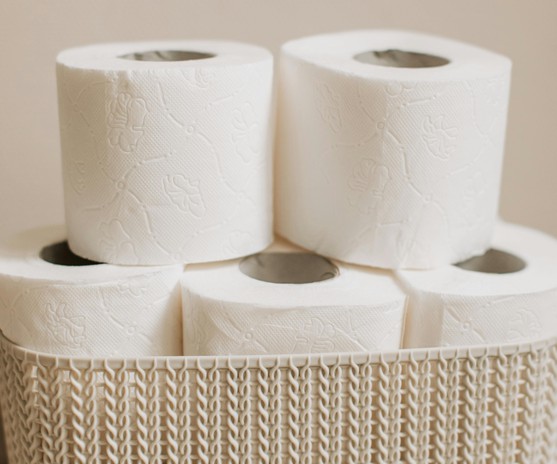
Your Audit Checklist: What to Demand Before You Sign
A supplier that provides verified data points confidently is confident in their engineering process. One who hesitates is asking you to gamble your brand trust on marketing talk.
Use this strict laboratory criteria checklist when evaluating any OEM paper manufacturer before finalizing a container container MOQ commitment:
| Standard Protocol | Target Technical Benchmark | Procurement Safety Objective |
|---|---|---|
| ISO 12625-8 Absorbency | ≥ 7.0 – 9.0 g/g (Water pick-up mass) | Prevents excessive sheet pull and restock spikes. |
| ISO 12625-5 Tensile Ratio | Wet-to-Dry Ratio ≥ 0.25 (25% boundary) | Ensures paper doesn’t rip or collapse mid-use. |
| ISO 12625-9 TS7 Softness | < 8.0 dB V² rms (Premium) / < 10.0 (Standard) | Guarantees certified luxury texture on guest vanities. |
| ISO 2758 Burst Index | > 2.0 kPa·m²/g for multi-ply grades | Eliminates pressure punctures and hygiene liability. |
| ISO 16065-2 Fiber Length | Average fiber size profile 2.3 – 3.0 mm | Rejects short, low-grade recycled filler fibers. |
| EN ISO 11737-2 Bioburden | Microbial screening documentation check | Protects luxury hotel spas from pathogen loads. |
Conclusion
Mastering the ISO 12625 series — from the basket-immersion absorbency test to the acoustic TS7 softness index — transforms a subjective guest amenity decision into an objective, auditable procurement process. These standards directly address the operational risks that keep hospitality buyers awake at night: negative TripAdvisor mentions of “rough tissue”, hidden cost overruns from excessive guest usage, and housekeeping restock inefficiencies. By demanding verification of these metrics, you effectively eliminate the risk of recycled-fiber shortfalls and chemical debonder over-application that sacrifices wet resilience for a false sense of softness. Step away from marketing talk and rely entirely on batch-traceable data assets to anchor your distribution pipeline.
Frequently Asked Questions
How do laboratories accurately test the absorbency of bulk toilet paper?
Accurate laboratory analysis mandates the ISO 12625-8 basket-immersion test. A dry sample grid (100mm x 100mm) is weighed, enclosed within a standard cylindrical wire basket, and submerged in distilled water. Following controlled drainage intervals, the container is reweighed to compute the total water pick-up capacity per gram of fiber (g/g). Premium hotel grades must map a metric between 7.0 and 9.0 g/g to confirm deep absorption structures.
What is the primary global ISO standard governing commercial tissue paper procurement?
The ISO 12625 series is the undisputed universal framework for tissue paper compliance. It comprehensively manages individual structural dimensions including dry tensile profiles (Part 4), wet tensile strength thresholds (Part 5), water retention metrics (Part 8), and mechanical acoustic softness parameters (Part 9). Large factory OEMs export under this unified code to guarantee batch-traceable transparency across international shipping corridors.
Is 2-ply or 3-ply toilet paper objectively softer for hotel guest experiences?
Layer counts do not dictate tactile softness; plies merely adjust the caliper (sheet thickness) and volume density. True surface luxury is evaluated by the Emtec TS7 sensor coefficient under ISO 12625-9. A high-density 2-ply roll engineered with long-fiber virgin softwood and precision blade micro-creping can score an advanced 7.5 dB V² rms, comfortably outperforming a low-grade 3-ply recycled roll that registers above 10.0 dB and feels scratchy to the skin.
How is the mechanical wet strength of hospitality paper certified?
Mechanical sheet strength is calculated by pulling standardized tissue strips until structural rupture occurs under ISO 12625-4 (dry) and ISO 12625-5 (wet) parameters. Technicians divide the wet breakage load by the dry baseline to secure the wet/dry tensile strength ratio. Hospitality assets demand a ratio ≥ 0.25 (25%) alongside a burst index > 2.0 kPa·m²/g to ensure the sheet performs flawlessly under wet user stress.
Are recycled-fiber toilet paper rolls safe and efficient for luxury resorts?
Recycled fiber reduces raw material expenses but carries intense structural and operational penalties. Repulped fibers are severely short (<1.5mm), reducing cross-directional burst capacity and escalating lint dust accumulation on dark vanity marbles. To ensure brand safety, luxury venues using recycled streams must require independent EN ISO 11737-2 bioburden micro-screenings to verify that total plate-count bacteria conform to legal sanitary thresholds.