 Skip to content
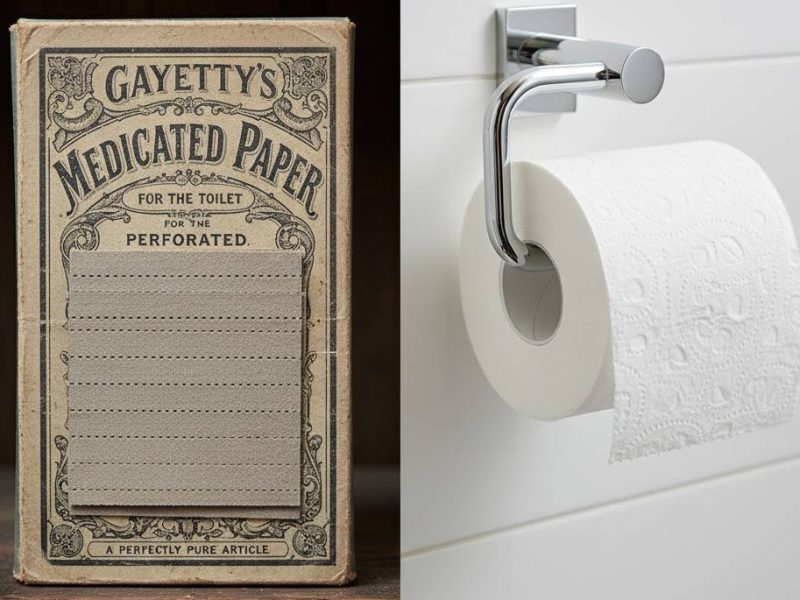
A toilet paper ply comparison for commercial use usually starts with a simple assumption: more layers mean a better product. That assumption costs hospitality buyers real money. A 4-ply roll sounds premium, but if each layer is thin—say, 11 GSM per ply—the total sheet weight is only 44 GSM. That feels flimsy in a guest’s hand. Meanwhile, a properly specified 2-ply at 19 GSM per ply (38 GSM total) delivers a denser, more absorbent sheet with less fiber. The ply count alone tells you almost nothing.
The real spec to watch is total GSM, not the number of layers. GSM—grams per square meter—measures the actual fiber mass in the sheet. A 3-ply roll at 36 GSM (12 GSM per ply) is lighter than a 2-ply at 38 GSM. The 2-ply will feel stronger and more substantial. That’s the density rule every procurement manager needs on their desk before the next RFP goes out.

The Real Cost of a Premium Guest Experience
Ply is a layer count, not a quality score.
The assumption that a 4-ply roll automatically delivers a better guest experience than a 3-ply is the single most expensive mistake in hospitality tissue procurement. Ply count tells you how many layers are glued together — it says nothing about how much fiber is in each layer. GSM (grams per square meter) measures the actual fiber mass. A 2-ply sheet at 19 GSM per ply (total 38 GSM) will feel denser, absorb more, and tear less than a 3-ply sheet at 11 GSM per ply (total 33 GSM). Sourcing teams who benchmark only layer codes end up overpaying for trapped air pockets.
The industry standard for commercial toilet tissue in hotels is 2-ply and 3-ply. 4-ply is a niche product that many buyers reach for when they want a ‘premium’ signal, but the math rarely works in their favor. A typical 4-ply hospitality roll is specced at 11–13 GSM per ply, yielding a total GSM of 44–52. That sounds impressive until you realize the individual plies are so thin they collapse under moisture, forcing guests to use twice as much. The result is higher per-stay consumption, more frequent maintenance rounds, and a fiber budget that bleeds into operational cost.
- The GSM-per-ply trap: A rogue supplier can quote ‘3-ply premium’ and deliver 11 GSM per ply (total 33 GSM). Sourcing leads must specify total sheet mass weight as a contract binding term, not just ply counts.
- Embossing loss limits: Embossing patterns reduce effective density profiles by 5–15%. A deeply embossed 3-ply at 42 GSM may feel significantly softer than a flat-embossed 4-ply at 48 GSM because the lofted geometric air pockets improve structural cushion cleanly.
- Shipping payload penalty: A 40’HC container packs roughly 700 cases of 2-ply, 600 cases of 3-ply, but only 520 cases of 4-ply. This 35% payload drop for 4-ply lines directly spikes per-unit ocean freight allocations at the destination port terminals.
| Cost Factor Spec | 2-Ply (18 GSM/ply) | 3-Ply (14 GSM/ply) | 4-Ply (11 GSM/ply) | Impact on Guest Experience |
|---|---|---|---|---|
| Fiber Mass (GSM) | 36 GSM total | 42 GSM total | 44 GSM total | 2-Ply feels dense & strong; 3-Ply feels plush & premium; 4-Ply feels thin & floppy |
| Container Loading (40’HC) | ~700 cases | ~600 cases | ~520 cases | Higher case count = lower per-unit shipping cost |
| Roll Change Frequency | Moderate (standard) | Lower (fewer changes) | Higher (more changes) | Fewer changes = less maintenance cost & better guest experience |
| Embossing Loss (5-15%) | ~3.6 GSM lost | ~4.2 GSM lost | ~4.4 GSM lost | Deeper embossing = softer feel; lighter loss = firmer sheet |
| Guest Satisfaction ROI | ~+15% (if high-GSM) | ~+20% (industry benchmark) | ~+5% (if thin layers) | 3-Ply at 14+ GSM/ply is the sweet spot for premium hospitality |

Ply vs. GSM: The Density Rule Every Buyer Must Know
A 2-ply at 38 GSM beats a 3-ply at 36 GSM every time across commercial audits.
To separate contract quality matrices cleanly, buyers must audit the tensile raw fibers under a lab scale. Sourcing teams evaluate manufacturing consistency by requesting historical GSM per ply verification sheets directly from the rewinder logs, completely shielding your private label brand from thin translucent runs safely.
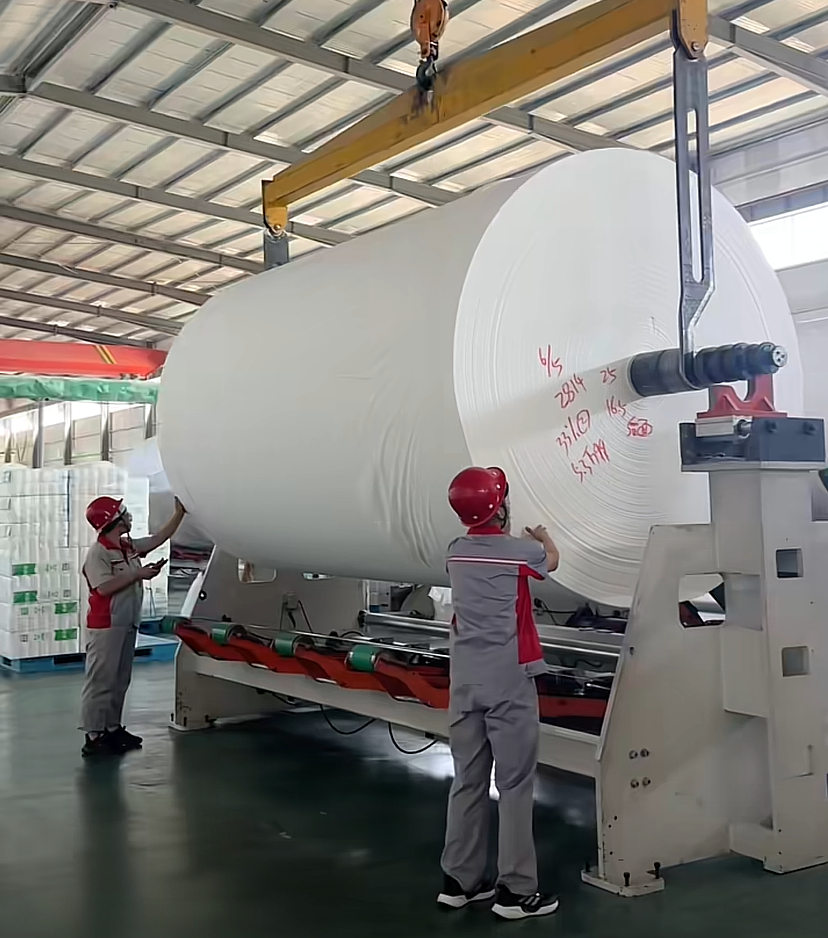
When managing long-term contracts, avoid small converters who purchase untraceable pulp on the open spot market. Low-grade adhesives used in the laminating stage cause the plies to stiffen or delaminate under moisture. Partnering with fully audited mills like Top Source Hygiene ensures that the effective fiber mass meets strict GSM per ply specifications, tracking less than 2% machine-direction tensile variance across high-volume container runs flawlessly.
Conclusion
Ply count is a distraction. GSM per ply, embossing depth, and container loading efficiency are the specs that actually drive guest satisfaction and your bottom line. A 2-ply at 18 GSM per ply with deep cushion embossing will outperform a 3-ply at 12 GSM per ply every time — at a lower fiber cost and with 25% more cases per 40’HC container.
Review your current spec against those three numbers. Then see how custom packaging and branding locks that spec across every property, eliminating the inconsistency that drives down guest scores.
Frequently Asked Questions
What ply toilet paper do most people use?
For home use, most people buy 2-ply toilet paper because it is a good mix of softness, strength, and cost. For business use, 3-ply is often chosen for a better guest feel, but a densified high-GSM 2-ply serves as a superior budgeting alternative. Check your guest profile and budget before choosing ply.
What does Japan use instead of toilet paper?
Japan widely uses washlets (bidets) instead of dry toilet paper. These use water to clean, which is a different system from paper-based cleaning. If supplying international accounts targeting Asian demographics, pairing premium high-absorbency 3-ply tissue with bidet fixtures provides optimal satisfaction loops perfectly.
What toilet paper do plumbers not recommend?
Plumbers often do not recommend thick, multi-ply plush toilet paper that relies on heavy chemical binding agents because they resist fast dispersion. For safe operation across older facility lines, specify fast-disintegrating tissue marked as septic or sewer safe on the packaging logs.
