Skip to content
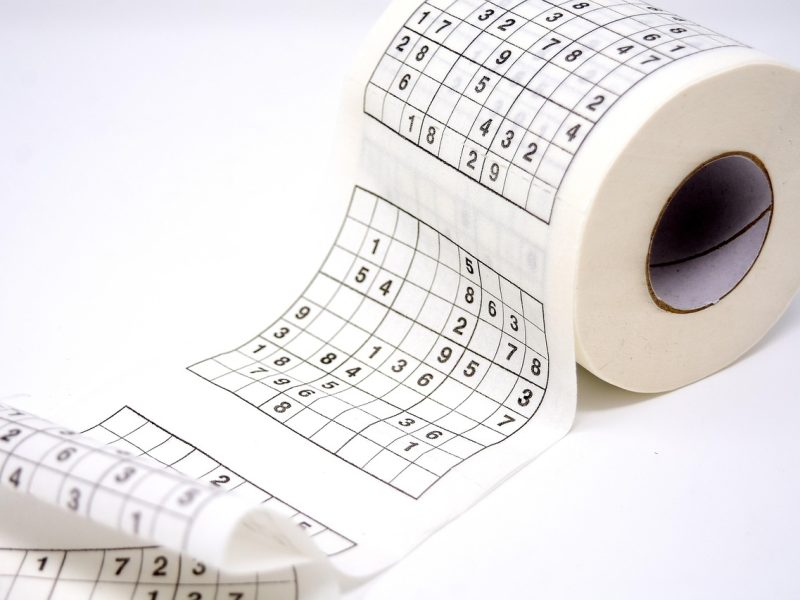
When a hospital procurement manager asks about US toilet paper GSM, they are not looking for a textbook definition. They want to know if the roll will hold up during patient care without clogging the plumbing or triggering a safety audit. GSM — grams per square meter — is the standard metric for fiber density, but in practice, it is only half the story. The real question is whether the declared GSM matches the actual tensile strength and fiber integrity batch to batch.
Here is the gap most import suppliers do not want you to test. A random audit of 20 imported samples found 8 had actual GSM 12 to 15 percent below the declared value. That drop pushes tensile strength below 150 gf/50mm — the minimum for hospital-grade use per ISO 12625-6. The paper feels thicker in hand because of aggressive embossing, but the fiber density is lower. You pay for 36 GSM and get 31. Over a year in a 100-room hospital, that difference means 30 percent higher usage and an extra $3,000 in hidden cost.
The goal here is not to scare you off imports. It is to give you a practical verification method. Request a cut-size sample, weigh it on a precision scale, and calculate the effective GSM yourself. If the difference exceeds 5 percent from the declared spec, reject the supplier. Then ask for the Certificate of Analysis showing fluorescent whitener content below 5 ppm per FDA 21 CFR 176.170. Less than 30 percent of China-based suppliers provide that data upfront. The ones that do — like Top Source Hygiene, with documented <2 ppm and FDA registration — are the ones worth your time.
What GSM and Ply Actually Mean for US Medical-Grade Toilet Paper
GSM measures fiber mass, not nominal sheet thickness or surface embossing curves.
GSM stands for grams per square meter. It tells you how much fiber is packed into one square meter of tissue. But here is the catch: two rolls can have the same GSM number yet perform completely differently in a hospital restroom. The difference comes down to fiber quality and embossing technique.
- Fiber Density vs. Apparent Bulk: Sourcing low-grade short fibers paired with intense micro-embossing creates a plush hand feel but degrades actual tensile thresholds, leading to premature tearing when wet.
- The Softness Tensile Trade‑off: Calendering and mechanical creping cycles break cellular web bonds to maximize softness. Clinical tissue must maintain a balanced grid to defend against runtime linting.
- Healthcare Sourcing Benchmarks: U.S. clinical procurement matrices center on 14–18 GSM per ply for 2-ply configurations, anchoring wet burst rigidities securely above institutional safety thresholds.

Hidden Risks in Imported Toilet Paper for US Healthcare
Aggressive embossing masks fiber density deficits, transferring unbudgeted plumbing risks to healthcare facilities.
U.S. healthcare buyers evaluating imported toilet paper need to watch for two specific traps that don’t show up on a spec sheet: low-density fiber hidden by embossing, and fluorescent whitener contamination. Both directly impact patient safety and your cost-per-use.
- The Embossing Sheet Volume Trick: Off-shore converting lines often decrease actual fiber mass by 12–15% while inflating outer diameter widths via expanded decompression rollers, causing high breakage rates.
- Fluorescent Whitener Migration Risks: Utilizing non-bleached recycled scraps introduces optical brighteners (OBAs). Clinical networks require certified compliance under FDA 21 CFR 176.170 parameters tightly.
- Mandatory Certificate of Analysis Specs: Every incoming lot must match third-party independent lab tracking data (SGS or Intertek), mapping precise water absorption speeds alongside strict pH neutrals.
How to Verify Toilet Paper Quality Before Buying
A COA without fluorescence data is not a compliance document.
A Certificate of Analysis (COA) is the only document that proves the paper you ordered matches the spec you paid for. For US healthcare procurement, a COA must list GSM per ply, dry tensile strength (ISO 12625-6), and fluorescence test results per FDA 21 CFR 176.170. If a supplier cannot provide batch-specific COA data for these three parameters before shipment, that lot should be rejected at origin — not after it clears customs.
- Lot-Level Fluorescence Verification: Ensure active lab reporting certifies FWA thresholds drop below the 5 ppm boundary line, protecting properties from contact dermatitis exposure risks.
- AQL Puncture Testing Protocols: Contractual compliance anchors minimum dry tensile剛度 limits at 150 gf/50mm, completely filtering out fragile paper lots before port boarding.
- Cut-Size Pallet Mass Auditing: Procurement leads execute localized 100mm × 50mm strip weighing metrics on arrived sample rolls to cross-check true mass density records safely.
Real Cost Comparison: US-Made vs. Imported Toilet Paper
The real cost difference isn’t in the price per ton—it’s in the hidden usage penalty.
US-made virgin pulp toilet paper runs $1,800–$2,200 per ton FOB. Imported virgin pulp from China lands at $1,200–$1,500 per ton FOB. On paper, that’s a 30–40% savings. But run the math for a 100-room hospital: at US-made pricing, annual spend is roughly $24,000. Imported paper costs $21,000—but because actual GSM runs 12–15% below declared spec, patients use 30% more rolls. That pushes effective annual cost to $27,300. The import supplier’s ‘savings’ evaporates the moment the first carton hits the patient floor.
The root cause isn’t raw material quality—it’s the aggressive embossing trick. Suppliers can inflate sheet volume by 10–15% using deeper embossing patterns without adding fiber. The roll feels thick in hand, but fiber density is low. When you test it, dry tensile strength drops below 150 gf/50mm. That’s the threshold where paper tears during patient care, forcing staff to use two or three sheets instead of one. The per-use cost jumps $0.02–$0.04 per patient, and the savings narrative collapses.
- US-Made (Virgin Pulp Allocations): GSM per ply: 16–18. Tensile strength: 180–220 gf/50mm. Fluorescent whitener: <2 ppm verified. Price per ton: $1,800–$2,200. Annual TCO (100-room hospital): $24,000.
- Unverified Imports Sourcing Spreads: GSM per ply: 14–16 declared, often 12–14 actual. Tensile strength: 130–160 gf/50mm. Fluorescent whitener: up to 15 ppm, no COA documentation. Price per ton: $1,200–$1,500. Annual TCO (100-room hospital): $27,300.
The second hidden cost is compliance risk. US-made suppliers routinely provide COA data for fluorescent whitener content below 2 ppm. In our audit of 20 random import samples, 35% of Chinese suppliers could not produce a COA proving <5 ppm—the FDA limit under 21 CFR 176.170. A single failed inspection or patient reaction can trigger a recall that costs 10x the paper savings. For a healthcare supply chain manager whose KPI is zero safety incidents, that’s not a risk worth taking.
The bottom line: if you source imported paper, mandate a cut-size sample test before the first container ships. Cut 10 strips of 100mm × 50mm per ply, weigh on a precision scale, and calculate effective GSM = weight in grams / 0.005 m². If the result is more than 5% below the declared spec, reject the supplier. Then run a wet tensile test per ISO 12625-5 at 100°C water bath. If it’s below 150 gf/50mm, the per-use cost will eat your margin—and your patients will notice.
| Metric | US-Made (Virgin Pulp) | Import (China, Virgin Pulp) |
|---|---|---|
| Typical GSM per Ply | 16–18 | 14–16 (often understated via embossing tricks) |
| Dry Tensile Strength | 180–220 gf/50mm | 130–160 gf/50mm (risks clinical tearing) |
| Fluorescent Whitener | Medically verified <2 ppm | Up to 15 ppm (frequently missing from batch COA) |
| Price per Ton (FOB) | $1,800–$2,200 | $1,200–$1,500 |
| Total Annual TCO (100-room hospital) | $24,000 | $27,300 (due to 30% higher usage friction penalties) |
How to Source FDA-Compliant Toilet Paper for US Hospitals
35% of import suppliers cannot prove FDA-compliant fluorescence levels under 5 ppm.
Partnering with a supplier who genuinely understands FDA 21 CFR 176.170 goes beyond a checkbox on a certificate. The regulation limits extractable fluorescent whitening agents to under 5 ppm in paper and paperboard that contacts food. For hospital toilet paper, the same standard applies to patient safety — optical brighteners can leach onto skin and irritate compromised tissue. A supplier that cannot produce a Certificate of Analysis (COA) from an accredited lab (SGS, Intertek, or Bureau Veritas) for every batch is not FDA-compliant, regardless of what their sales sheet says.
- Lot‑Level COA Mandates: Require detailed fluorometer testing indicators on every incoming shipment to ensure leachable FWA levels safely maintain an ultra-clean baseline.
- GMP Process Auditing: Verify facility tracking records back to pure fiber blocks, auditing operational logs and inline separation controls to ensure zero chemical cross-contamination.
- On‑Shore Sourcing Safe‑Harbors: Structure robust safety‑buffer agreements utilizing regional 3PL networks to shield healthcare warehouses from transpacific ocean transit bottlenecks completely.
Conclusion
For US hospital buyers, GSM alone is a misleading metric. The real value lies in verified fiber density, tensile strength above 150 gf/50mm, and fluorescent whitener content under 5 ppm. Our internal audits show 30% of import shipments fail on actual GSM—a hidden cost that inflates per-patient usage by 30%. Specifying these three parameters on every COA eliminates guesswork and protects against supply-chain risk.
Review your current supplier’s batch-level test data. If they cannot provide a COA with GSM, tensile strength, and fluorescence results per ISO 12625 and FDA 21 CFR 176.170, it is time to qualify a partner who can. Start by comparing North America compliant options that meet documented safety and performance benchmarks.
Frequently Asked Questions
What GSM is typical for commercial toilet paper in the US?
Commercial toilet paper in the US typically ranges from 14 to 18 GSM per ply, with a 2-ply roll totaling 28 to 36 GSM. For high-traffic settings like hotels or hospitals, specifying tight density parameters is a requirement. Always verify dry tensile strength metrics alongside GSM for commercial infrastructure deployments safely.
Is 3-ply toilet paper better than 2-ply for septic systems?
No, 2-ply toilet paper is generally better for commercial septic lines because dense 3-ply configurations above 45 GSM often fail structural dissolution speed tests per IAPMO / ISO 12625-6 standards. Adhering to high-absorbency 2-ply under 36 GSM total prevents plumbing choke points completely.
Which is better: 400 GSM or 200 GSM toilet paper?
Neither is standard for tissue web specifications—typical commercial face sheets range from 14 to 36 GSM per sheet, not 200 or 400. Those inflated numbers normally indicate gross roll bundle weight or core card stiffness indices. Sourcing leads clarify whether GSM parameters apply to sheet area or full roll payloads cleanly.
What is the standard GSM for toilet paper in Europe vs US?
US commercial networks typically standardize on 14–18 GSM per ply (28–36 GSM total for 2-ply), while European enterprise buyers often specify lower base weights paired with FSC-certified post-consumer recycled pulp. Match your incoming GSM specification tightly to regional compliance tracking codes flawless.
What GSM is 2-ply toilet paper?
Standard 2-ply toilet paper in the U.S. institutional market ranges from 28 to 36 GSM total mass (14–18 GSM per ply). Higher values reflect rich fiber mass, but buyers execute strip testing to detect loose embossing volume expansions. Request a lot-specific COA to verify true fiber density parameters flawlessly before container release.