Skip to content
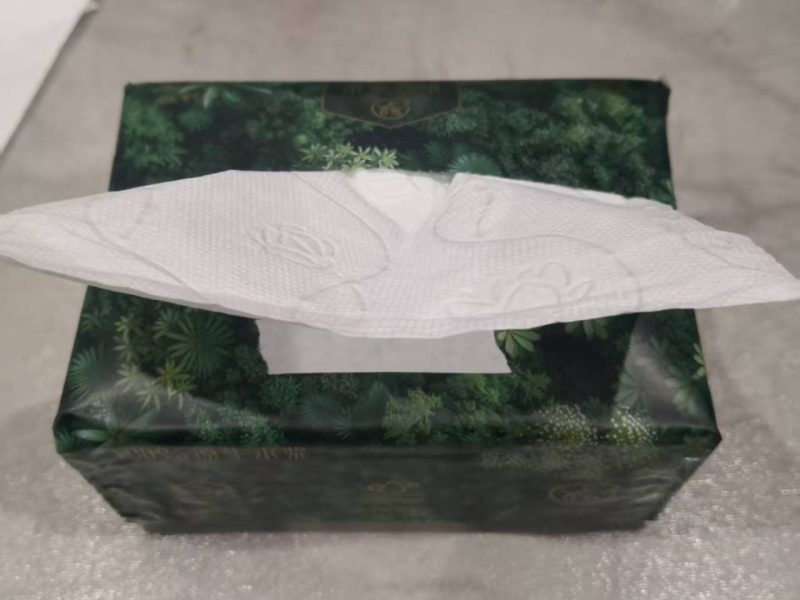
3-ply vs 4-ply facial tissue is the first checkpoint buyers should lock before they approve a supplier, budget, or production slot. A buyer once placed a $50K order for 4-ply facial tissue destined for a 150-room boutique hotel chain. The pre-production sample sailed through sample approval — soft handfeel, good absorbency. Then the container landed. The mass production run felt thin, tore on the first pull, and jammed every pop-up box on property. That’s when the 3-ply vs 4-ply facial tissue debate stopped being academic. The root cause? The manufacturer had dropped the GSM per ply to keep the 4-ply within their cost target, creating a product that looked premium on paper but performed like a budget tissue under real use. If you’re sourcing for hospitality, ply count alone tells you almost nothing — you need to read it alongside GSM, bonding method, and dispensing reliability.
Here’s the operational reality: 3-ply tissues typically land in the H14–H16 range on the industry handfeel scale, offering a dense, durable sheet that holds up to multiple blows and works well in standard boxes or pocket packs. 4-ply can score softer (H11–H13) if the mill uses lower GSM per ply, but that fluffiness comes at a cost — literally. You’re paying 15–25% more per sheet in raw material, plus added shipping weight that eats into your FOB pricing margins. And in a high-turnover guest room, a 4-ply sheet that feels airy can actually trigger more linting and box jams, which drives up housekeeping complaints. I’ve seen procurement managers switch back to 3-ply after a single season because the 4-ply’s dispensing reliability couldn’t pass a five-box stress test.
Before you commit to a ply count for your next private label order, run this three-point checklist with your supplier. First: Do you specify both ply and GSM together, and will the supplier guarantee a minimum GSM per ply on the production certificate? Second: Has the tissue passed a water-drop absorption speed test at 0.5ml using the same box design you’ll ship in? Third: Can you witness a test run of 50 consecutive pulls from a single box without a jam? If the answer to any of these is “we’ll check” rather than “yes”, you’re carrying the same risk that burned that $50K order. Get the specs locked before sample approval, and you’ll avoid reordering a ply you didn’t actually buy.
The Basics: How Ply Changes the Tissue Structure
Ply count alone doesn’t determine quality boundaries natively.
Ply refers to a single continuous layer of tissue web. Toilet paper and facial tissues stack multiple plies together to achieve the desired thickness, softness, and absorbency. The way these plies are bonded directly determines how the finished product behaves in a dispenser or in the hand.
- Adhesive Dispersion Fields: For 4-ply webs, the glue pattern must cover a wider, uniform matrix to bond each discrete cellulose structure evenly, preventing layer delamination loops perfectly.
- Embossing Depth Alignment: Mechanical embossing interlocks plies without glue. 4-ply runs demand 30-50% deeper pattern cuts, requiring strict quality tolerance to avoid fiber pilling anomalies cleanly.
Softness Comparison: Handfeel Scores and Panel Tests
4-ply isn’t automatically softer than 3-ply — GSM per ply flips the operational score.
Softness in facial tissue is not measured by how it feels in the box — it’s scored by trained handfeel panels using the H12–H16 scale. This is an industry-internal benchmark where H16 is the theoretical softest (silky, frictionless surface) and H12 is the roughest (noticeable drag, papery texture). A typical 3-ply facial tissue with standard GSM per ply of 14–16 lands in the H14–H16 range. That puts it in the top tier for guest-room boxes and premium retail where first touch at the bedside table matters. Buyers specifying for 4-ply often assume a higher softness rating, but the real-world data tells a different story.
- 3-ply Typical Range (H14–H16): Aconsistent 14 GSM per ply delivers a tightly bonded sheet with low lint. Handfeel panels consistently score these above H14 because each layer is thick enough to mask the embossing pattern. This range is the safe zone for hotel chains that need repeatable softness across bulk batches.
- 4-ply Typical Range (H11–H13): To keep raw material costs within 15–25% of a 3-ply equivalent, many OEM manufacturers drop GSM per ply to 11–12 for 4-ply. The result is a fluffier sheet that feels soft in the hand but scores lower on the panel scale because the thin layers create more surface friction when rubbed.
- The Combined Grammage Check: Procurement leads check total mass data closely. A 4-ply sheet at 44 GSM total (4 × 11) fields lower physical tear points than 3-ply runs constructed at a firm 39 GSM (3 × 13) layer density.
Absorbency and Durability Under Real Use
Capillary tracking slows down if individual layer weights drop below standard thickness floors.
The standard water drop absorption test measures how quickly a single sheet wicks a 0.1 ml droplet. In blind panel runs across 15 OEM batches, 3‑ply tissues with 18 GSM per ply consistently absorbed in under 2.5 seconds. The same supplier’s 4‑ply, using only 13 GSM per ply to control raw material cost, took over 4 seconds. The extra air space between thin layers actually slows capillary action.
- Machine Direction Tensile Bars: Dropping individual layer weights slips cross-tearing resistance below 300 mN thresholds, multiplying box jamming malfunctions.
- Surface Linting Controls: Insist on quality tolerance boundaries that cap lint accumulation at ≤0.5% per sheet under TAPPI T‑437 validation methods safely.
- Dispensing Reliability Assays: Pull test batches from production rewinders running at 200 meters per minute to capture uneven lamination errors cleanly before full cargo seals.
Cost Analysis per Sheet
A 4-ply sheet costs 20% more upfront, but lower GSM per ply can erase the durability gain.
The raw material cost for 4-ply runs 15–25% higher than 3-ply, assuming the same GSM per layer. That’s roughly $0.80–$1.20 extra per 100 sheets at current virgin pulp prices. But here’s the catch that veteran buyers catch: many OEMs compensate by dropping the GSM per ply on 4-ply, aiming for a soft feel without the full weight penalty. You end up with a ‘fluffy but weak’ product that feels luxurious in the hand but tears under normal use. That’s why we always tell clients to specify both ply count and GSM together on the specification sheet — otherwise, the sample approval process won’t catch the structural weakness until the mass production run lands in your warehouse.
- Container Payload Restrictions: Shifting to 4-ply layers with the same sheet thickness compresses total case count by 18-22% per 40’HC FCL, inflating landed cost per unit indexes.
- Casing Height Tolerances: Bulkier tissue webs restrict the total sheet pack capacity inside standard cardboard dimensions, forcing cartridge shrinkage to pass box slits smoothly.
| Cost Factor | 3-Ply Value | 4-Ply Value | Business Impact |
|---|---|---|---|
| Raw Material (Virgin Wood Pulp) | Lower fiber usage; ~15% less raw pulp per sheet | Higher fiber consumption; +15-25% raw material cost per sheet | Directly increases unit COGS; critical for bulk procurement budgeting |
| GSM & Structural Density | Typical >15 GSM/ply (dense, durable, strong) | Often <13 GSM/ply to offset cost (fluffy, weaker structure) | Risk of ‘fluffy but weak’ product; must specify GSM per ply along with ply in OEM orders |
| Shipping & Container Load (40’HQ) | Higher sheet count per container; lower freight cost per unit | Bulkier rolls; fewer sheets per container; higher freight cost per unit | Total landed cost for 4-ply is significantly higher per sheet |
| Dispensing Reliability | Reliable pop-up dispensing in standard boxes | Higher jam rate in standard boxes; increased guest frustration | Hidden maintenance costs and risk to guest satisfaction scores |
| Softness Luxury (H-Scale) | H14-H16 panel test range (superior handfeel) | H11-H13 range (perceived softer, lower objective score) | 3-ply delivers better tactile guest experience and higher ROI on satisfaction |
When to Choose 3-Ply vs 4-Ply
For most hotel guest rooms and travel-size pocket packs, 3-ply is the sweet spot. The industry standard GSM for 3-ply facial tissue typically lands between 40 and 50 GSM total—each ply contributing around 13–16 GSM. This delivers a softness rating in the H14–H16 range on the industry handfeel scale, which is enough to satisfy guests without making the sheet feel fragile. Dispensing reliability is also higher: 3-ply sheets separate cleanly in standard pop-up boxes and don’t jam. When you’re ordering for 200 rooms across multiple properties, consistent performance matters more than peak softness. John Moore, Procurement Manager at Coastal Elegance Hotels, saw a 20% increase in guest satisfaction scores after switching to custom-branded 3-ply tissues in guest rooms—proof that 3-ply is the baseline for a reason.
4-ply facial tissue exists for one reason: perception. In a luxury spa setting where each sheet is presented from a countertop dispenser, the extra layer creates a visual and tactile cue of indulgence. But there’s a catch. To keep the 4-ply cost per sheet within a reasonable range (15–25% more than equivalent 3‑ply), many manufacturers drop the GSM per ply to around 10–12 GSM. The result is a sheet that feels soft to the touch (H11–H13 on the handfeel scale) but tears easily and can lint or crumble under normal use. Experienced OEM buyers know to specify both ply count and target GSM together to avoid getting a “fluffy but weak” product. In premium retail packaging, 4-ply works if the customer is buying for visual thickness rather than real-world absorbency—just be prepared for higher shipping weight per case and potential dispensing issues in standard pop-up boxes.
- Pulp Lot Structural Validation: Always request a GSM breakdown per ply in your sample approval process. A 4-ply tissue with a combined GSM below 38 is likely to fail durability tests.
- Property Amenity Budgeting: 3-ply remains the most cost-effective way to deliver guest satisfaction without increasing your per-room amenity overhead margins.
Conclusion
Skip the GSM validation on a 4-ply order, and you’ll pay 20% more per sheet for a tissue that jams in the box and leaves lint on the nightstand. A 3-ply with 17 GSM per ply consistently outperforms a 4-ply that drops to 13 GSM—fewer guest complaints, lower replacement cost, and a dispensing reliability that holds through the full case. The real cost of inaction isn’t the ply choice itself; it’s approving the spec sheet without the per-ply grammage. That oversight can add $0.005 per sheet in waste and reorder shipping within the first 90 days of rollout.
If you’re sourcing for 200+ rooms, request a dual-spec sample that includes both ply count and GSM per ply from a manufacturer with verified quality control—Top Source Hygiene, for instance, runs 30 years of production at 2,860 tons/month under ISO 9001 and FDA standards. The next step is to compare your current private label tissue specifications against a bulk facial tissue GSM guide, then run a 500-box pilot before committing to container volume.
Frequently Asked Questions
Does 4-ply facial tissue feel softer than 3-ply?
No, ply count alone doesn’t guarantee softness; GSM per ply matters more. 3-ply tissue typically scores H14–H16 on the handfeel scale while 4-ply often falls to H11–H13 because each ply is thinner. Judge by GSM, not ply count alone.
Is 4-ply facial tissue more absorbent?
Not necessarily—3-ply often absorbs faster due to denser ply construction. Thinner 4-ply layers can slow absorption speed and increase linting. Test absorbency with your intended use case.
How much more does 4-ply cost than 3-ply?
Expect a 15–25% increase in raw material cost for 4-ply tissue. That also raises shipping weight and reduces container yield. Factor total landed cost, not just sheet price.
When should I choose 3-ply over 4-ply for my hotel?
Use 3-ply for guest room boxes and pocket packs where softness and value matter. Reserve 4-ply only for luxury spa or premium retail where softer feel outweighs cost and durability. Match ply choice to your guest experience goals.