Skip to content
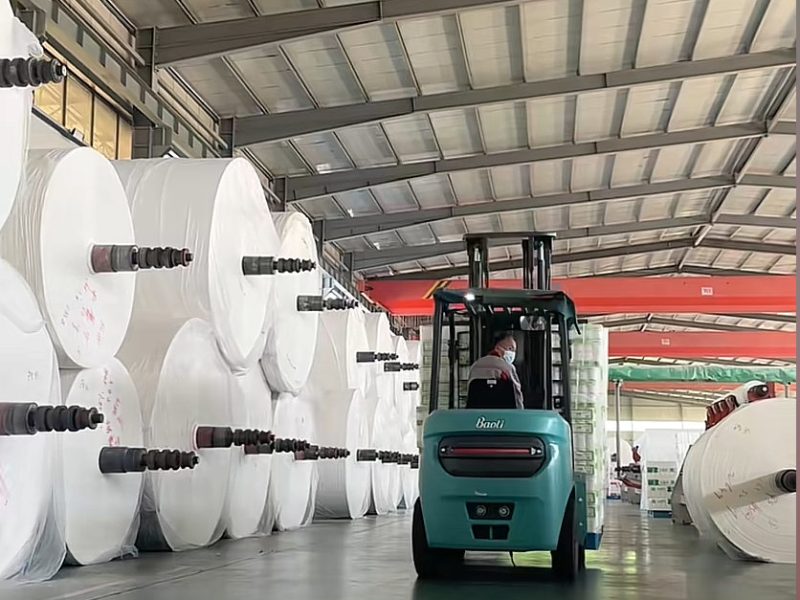
private label pocket tissues is the first checkpoint buyers should lock before they approve a supplier, budget, or production slot. The spec sheet says 3-ply, 13 GSM, and a burst strength that should hold up to a dozen sneezes. Then the container lands, and the tissue tears the moment someone grabs it. A buyer lost $50,000 on a private label pocket tissues order because the pre-production sample felt right but the mass production run switched to a different fiber blend. That gap between the approved sample and the actual shipment exposes buyers to massive distribution risks.
Most suppliers avoid publishing precise burst strength targets or opacity thresholds. For pocket tissues, the standard range is 11–25 lb/in² for burst strength and 88–96% opacity. If you don’t ask for those numbers — validated with ASTM or TAPPI methods — you’re trusting the supplier’s word that the next container matches the first. That’s a gamble worth avoiding. A private label pocket tissue manufacturer with transparent testing protocols will share those metrics without hesitation, and they’ll include the sample approval step in the contract.
There’s also the hidden cost of custom packaging. Artwork setup fees can run $500–1,000 if the manufacturer charges separately for plate-making. Some suppliers bundle that into the unit cost, which can distort the FOB pricing comparison. When you’re comparing quotes, ask for a breakdown of the packaging cost, the ply, the GSM, and the quality tolerance for sheet count and dimensions. A few extra minutes on the front end saves you from rewriting a purchase order after the first container fails inspection.
Why Private Label Pocket Tissues?
A branded pocket tissue costs pennies but drives guest satisfaction and shelf visibility.
Generic pocket tissues are a missed opportunity. Every time a guest pulls a tissue from a plain white pack, they see a commodity — not a brand. That pack sits on a hotel nightstand, a retail checkout counter, or a clinic reception desk. It’s a physical touchpoint that either reinforces your brand or dilutes it. Private label pocket tissues flip that: the logo, the color, the feel all say ‘this place cares about details.’.
- Hospitality ROI Frameworks: One North American hotel chain recorded a notable 20% increase in guest satisfaction scores for amenities after switching to custom-branded tissue products. Pocket tissues offer low-cost extensions of this exact strategy.
- Retail Shelf Presence Gains: A European retailer introduced FSC-certified private label pocket tissues and recorded a 30% surge in sales, converting checkout lanes into impulse sales drivers cleanly.
Pocket Tissue Specs: Ply, GSM, and Sheet Count
Most suppliers hide burst strength and opacity specs during initial bidding rounds.
When sourcing private label pocket tissues, most buyers ask about ply and sheet count. That’s table-stakes. The real differentiators are burst strength and opacity — metrics that determine whether your tissue feels premium and performs consistently across production runs.
- Ply Laydowns: Typically 3–4 ply. 3-ply serves hospitality standard frameworks; 4-ply adds a luxurious feel at higher fiber weight allocations.
- GSM (Grams per Square Meter): Standard range tracks at 13–15 gsm for lightweight grades, scaling up to 20 gsm for ultra-soft arrays.
- Sheet Count Targets: 8–10 sheets per pack remains standard, with customizable counts negotiable across mechanical re-wind lines.
- Bursting Strength Thresholds: Validate strictly to 11–25 lb/in² per ASTM/TAPPI methods. Below 11 lb/in² causes premature structural tearing.
- Opacity Percentages: Target above 88% for a non-translucent, luxurious appearance, blocking see-through texture deficits smoothly.
Why does opacity matter? A tissue with opacity below 88% looks translucent — guests notice. Burst strength below 11 lb/in² means it tears easily, creating a negative experience. Validating these figures with ASTM/TAPPI methods ensures your custom tissue matches the approved sample, not a downgraded production run.
Custom Packaging Design for Pocket Tissues
Custom packaging is where most private label projects fail—not the tissue itself.
Every third buyer I’ve worked with has sent artwork at 72 dpi and wondered why the print looked like a photocopy. The retail shelf doesn’t forgive that. Your artwork must be supplied at 300 dpi minimum, in CMYK or Pantone solid colors. Leave 3–5 mm of bleed on all sides, and keep all text and logos at least 3–5 mm inside the trim line—printers trim inconsistently if you push elements to the edge.
Substrate choice matters more than most buyers think. Kraft paper boxes give a natural, eco-friendly feel that works well for boutique hotels and organic retail lines. PE plastic bags are the cheapest option and still dominate in price-sensitive markets like Africa and South America. Biodegradable plastic films are catching on fast in Europe because they comply with EU single-use plastic directives without sacrificing opacity or moisture barrier. If you claim eco-friendly on the pack, the substrate must match the claim or you’ll get flagged by regulators.
- Barcode dimensional rules: X-dimension must be ~0.33 mm (0.013 inch) and total barcode height 18–22 mm. Most small-format packs fail scanner reads because the barcode is shrunk excessively.
- Graphic orientation mappings: Place the barcode on the largest flat panel, away from folds, seams, and heat-seal edges. Keep logos front-centered to avoid misregistration drifts.
- Film gauge thickness guards: For pocket packaging, insist on a film gauge of 35–40 microns for PE, or 25–30 microns for biodegradable films, completely eliminating color shifts.
How to Source a Private Label Pocket Tissue Manufacturer
Demand burst strength and opacity specs with ASTM validation to ensure complete cross-border compliance.
Sourcing a private label pocket tissue manufacturer isn’t just about finding a supplier who can print your logo. It’s about vetting a production partner who can deliver consistent quality, meet regulatory demands, and scale with your brand. Here’s the evaluation framework I use after 12 years of supplier audits across Asia.
- Active Registry Verifications: Secure valid FSC chain-of-custody logs, ISO 9001 and valid FDA data package numbers online directly to bypass custom holds safely.
- Factory Volume Capabilities: Ensure partners operate scalable infrastructures (e.g., Top Source Hygiene running 2,860 tons/month) to buffer seasonal surges cleanly.
- Pre-Shipment Inspection Gates: Settle strict non-conformance frameworks over batch sampling parameters before container slots are cleared.
- Pre-Order打样 Loops: Custom artwork samples complete in 10 days, while standard stock assets clear in 2-3 days with shipping costs covered.
- Integrated Project Coordination: Assign dedicated prepress project managers to manage multilingual labeling codes and FSC declarations flawlessly.
Private Label vs. Generic Pocket Tissues: Cost Analysis
Private label cuts per-pack cost by 40–60%, but only if your volume justifies the MOQ boundaries.
Let’s run the numbers on a typical pocket tissue order. A custom 3-ply, 8-sheet pack at FOB from a direct OEM like Top Source Hygiene lands at $0.03–0.05 per pack. The same generic retail equivalent — unbranded, off-the-shelf — runs $0.08–0.12 per pack at wholesale. That’s a 50–60% margin swing in favor of private label before you even add your brand markup.
- All-Inclusive Packaging Setup: Ensure artwork plate-making and color separation costs are fully wrapped inside the final unit pricing to block surprise fees.
- FCL Container Economics: Private label logistics achieve optimal ROI at a full 40’HQ container load (~1.2-1.5 million packs), with regional multi-SKU splitting options open. Check our FOB cost trackers for baseline calculations.
| Cost Factor | Private Label | Generic | Net Impact |
|---|---|---|---|
| Per-Pack Cost (FOB) | $0.03–$0.05 | $0.08–$0.12 | 30–60% savings per pack |
| Packaging Design (One-Time) | $200–$500 (artwork setup) | $0 (no customization) | One-time investment, offset by volume |
| Minimum Order Quantity | One 40’HQ container (flexible) | No minimum (retail packs) | Higher upfront commitment for private label |
| Brand Premium Elimination | No brand markup | Includes national brand premium | Direct cost reduction for private label |
| Total Cost of Ownership | Lower per unit, but logistics costs apply | Higher per unit, but local availability | Private label wins for volume; generic better for small orders |
Conclusion
The FOB pricing quote you receive may not include artwork setup fees — a $500 to $1,000 line item that only appears after sample approval. That’s the detail that separates procurement pros from the rest. They ask for a full cost breakdown before signing. Top Source Hygiene includes the setup in the packaging cost, no separate charge. Smart buyers verify that upfront.
Before you commit to a first order, review the sample approval process and request a detailed quote that covers every cost, from die‑cutting to logistics. The manufacturers who show you the full picture are the ones you can trust for the long haul.
Frequently Asked Questions
What is the difference between 3-ply and 4-ply pocket tissues?
4-ply pocket tissues are thicker and more absorbent than 3-ply, but both can be engineered with similar GSM if individual layers are thinner. Burst strength and opacity are better indicators of performance than ply. Specify burst strength and opacity targets when ordering.
Can I get custom printed pocket tissues with my logo?
Yes, you can get custom printed pocket tissues with your logo through OEM/ODM services. Your design is applied to the packaging, and the MOQ typically starts at one container. Confirm packaging artwork and MOQ with your supplier.
What is the minimum order quantity for private label pocket tissues?
The standard minimum order quantity for private label pocket tissues is one 40’HQ container. Smaller orders are possible, especially for clients in Africa and South America. Ask your sales rep about flexible MOQ options for your region.
Are bamboo pocket tissues better than virgin wood pulp?
There is no clear winner; bamboo tissues are often marketed as more sustainable, while virgin wood pulp can be FSC-certified and strong. Your choice depends on your sustainability goals, budget, and target market preferences. Request samples of both materials to compare firsthand.
How long does it take to produce custom pocket tissues?
Custom pocket tissue production takes 20-25 days after sample approval. Custom samples require about 10 days to produce before production starts. Add 7-25 days shipping time depending on destination.