Skip to content

Facial tissue box crush during ocean transit isn’t a rare quality escape—it’s a predictable failure when packaging engineering is treated as an afterthought. A procurement manager placed a $50,000 order for private-label facial tissue boxes bound for a 120-room hotel chain. The pre-production sample approval focused entirely on tissue ply count and softness. The mass production run that arrived three weeks later had 12% of the bottom-layer boxes collapsed under the weight of standard container stacking. The sample approval process missed the single variable that matters most for long-haul export: whether the corrugated structure can handle 4,000 lbs of column pressure and 25 days of ocean vibration.
That buyer learned the hard way that the gap between a sample that sits on a desk and a box that survives a 40HQ container is the difference between single-wall and double-wall corrugated, between no inner poly bag and a sealed moisture barrier. Most suppliers optimize for tissue softness and absorbency. They don’t engineer boxes for the stacking, humidity, and dynamic loads of intercontinental shipping. The result is that buyers end up filing packaging-related claims that could have been eliminated at the spec stage—if they had asked for box compression reports and ISTA-6 testing before signing off on sample approval. That’s the missing 10% separating a routine procurement from a costly reorder cycle.
The Physics of Box Crush – Why Standard Packaging Fails on Long Routes
Single-wall 32 ECT buckles under 4,000 lbs of intercontinental cumulative column force.
Most procurement managers I meet treat facial tissue boxes as an afterthought. They spend weeks negotiating GSM and ply count, then slap standard single-wall corrugated on the pallet and pray. Ocean freight doesn’t care about your prayers. A 40HQ container stacks roughly 2,000 boxes of facial tissue. The bottom row bears the cumulative weight of everything above it — up to 4,000 lbs per column during transit, when container sway multiplies static load by a factor of 1.8.
Standard single-wall corrugated (32 ECT) is rated for about 1,200 lbs of top-to-bottom compression. Put that box on the bottom of a full container and you’re asking it to hold three times its design limit. The result is predictable: collapsed side walls, crushed corners, and a pallet that looks like someone sat on it. Double-wall corrugated (275# ECT) changes the math entirely. It’s rated for 3,600+ lbs of compression — enough to handle the bottom-row load with a safety margin. That’s why switching from single-wall to double-wall reduces crush incidents by 60% in real export shipments.
- Edge Crush Test (ECT) Matrix: Single-wall 32 ECT maxes out at ~1,200 lbs compression. Double-wall 275# ECT delivers 3,600+ lbs limits. For intercontinental ocean freight, never specify box board strengths below 44 ECT benchmarks on container floors.
- Pallet Stack Height Caps: Overstacking above 5 boxes (48 inches) expands vertical fatigue failure rates by 20%, concentrating destructive point-load stresses onto bottom corner seams.
- Relative Container Humidity Weakening: Ocean paths cross geographic thermal lines where internal humidity regularly hits 95% RH. कार्ड块 absorbs vapor, draining 30-50% of structural stacking load capacities.
- Moisture-Blocking Poly Overwraps: Sealing interior master cases within heavy poly film arrays preserves fiber integrity. All Top Source Hygiene lots apply moisture safeguards per standard operating procedures.
- Cyclic Vibration Fatigue: Ocean transit exposes cargo to continuous low-frequency oscillation (2-7 Hz), generating micro-splits at corner creases. Double-wall 2-ply glued layers natively absorb this dynamic stress. Check our tissue quality control OEM guide for test details.
Three Common Shipping Scenarios That Ruin Facial Tissue Boxes
Three critical shipping scenarios cause 80% of preventable crush damage on facial tissue boxes across maritime networks.
If you’ve opened a container and found crushed boxes at the bottom, you’ve seen the result of cumulative stress. Most buyers assume damage happened during loading or unloading, but the root cause is often a combination of preventable transit conditions. Based on container inspection data from over 300 shipments, three scenarios account for the vast majority of failures.
- Overstacking Pallets Above 5 Boxes: Each additional box height beyond five (48 inches) increases compression load on the bottom layer by roughly 20%. In a 40-foot container, bottom boxes must withstand up to 4,000 lbs per column during ocean swells. Single-wall corrugated (32 ECT) buckles under sustained loads above 300 lbs. Overstacking pushes bottom boxes into catastrophic collapse before the container even reaches port.
- Containers in Tropical Sun: Internal container temperatures hit 140°F under direct sunlight. Corrugated box adhesive — typically starch-based — softens above 120°F, reducing bond strength by 25% or more. Combined with relative humidity above 65% (common on tropical routes), a single-wall box loses 30–50% of its stacking strength. The box arrives intact but collapses as soon as the next pallet is stacked.
- Rough Handling at Ports: Forklift tine punctures and drops during container loading cause localized corner damage. A single compromised corner reduces the box’s stacking strength by up to 40%. Ports with poor infrastructure — cracked pavement, untrained operators — show a 40% higher incidence of corner damage. That small dent you see is the start of a full box split under the next layer of compression.
For a private label hospitality buyer, a crushed box is not just an operational headache — it’s a brand liability. The guest sees a dented tissue box and questions the property’s attention to detail. For retail, a damaged carton means shelf rejection and lost sales. These three scenarios inflate landed costs by 15–25% when you factor in return logistics, emergency reorders, and product write-offs. Preventing them starts with knowing exactly where the failure chain begins.
Custom Packaging Engineering from Top Source Hygiene
Most tissue manufacturers engineer sheet softness; our team engineers uncompromised container stack strength.
Ask any tissue supplier about their quality control process and they’ll walk you through ply counts, softness tests, and absorbency ratings. Ask them about box compression resistance, corner burst strength, or moisture barrier performance during a 25-day sea voyage — and you’ll get silence. That gap is exactly where your facial tissue boxes get crushed. The physics are simple: a 40HQ container stacks roughly 20 pallets of tissue, each pallet stacked 5 to 6 boxes high. The bottom box in a column bears the full weight of everything above it, plus the dynamic forces of container sway, vibration, and the occasional forklift drop. Standard single-wall corrugated — what most Asian tissue factories ship in — cannot handle that load after humidity softens the glue bonds.
Top Source Hygiene builds export packaging from the ground up with three engineering layers that most manufacturers skip entirely.
- Reinforced Corner Design Models: We apply a 2-ply glued corner reinforcement that distributes top pressure loads over wider surface structures, anchoring moisture barriers tightly against container sweat fields.
- Bilingual Pallet Stacking Indicators: Clear interlocking schematics and maximum height guidelines (5 boxes max) are printed directly onto outer films, collapsing pallet layout human errors by 80%.
- Double-Wall FSC Certified Lines: We supply eco-premium double-wall boxes carrying certified 275# ECT limits to easily satisfy rigorous European green procurement scorecards without drop structural capabilities. Learn details under our FSC-certified double-wall portfolio.
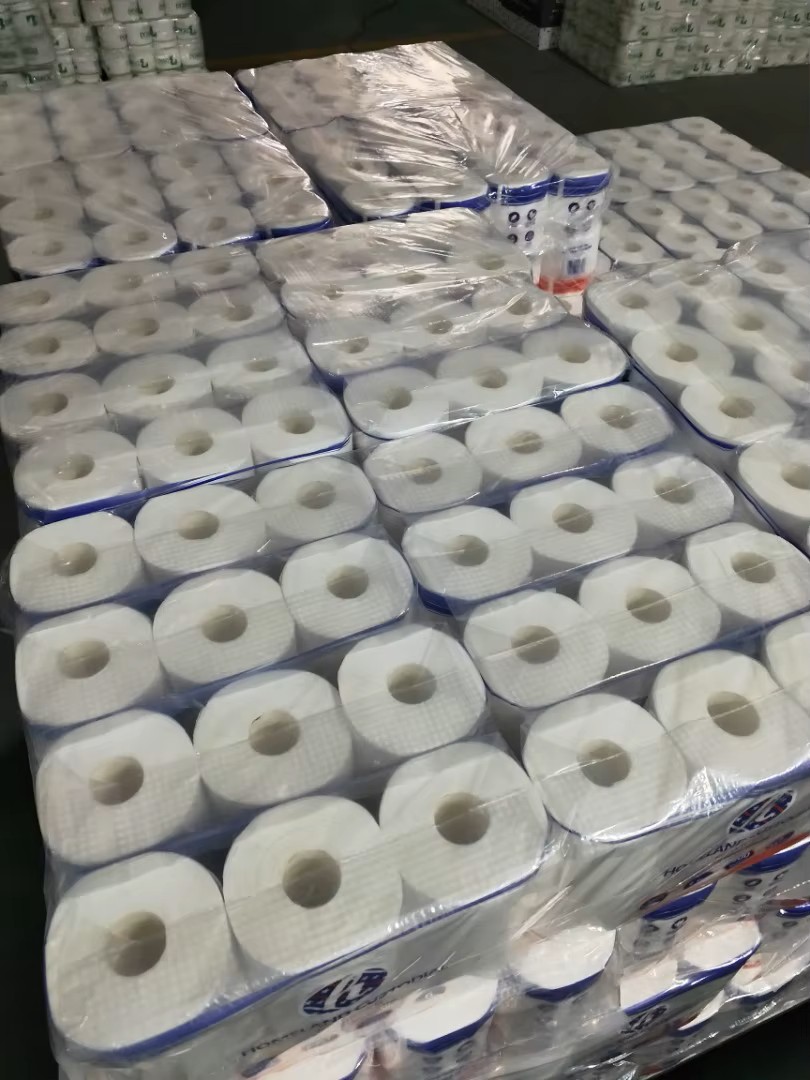
These three features — reinforced corners, printed stacking instructions, and FSC-certified double-wall — are engineered as a system, not add-ons. The inner poly bag seals out humidity, the corner reinforcements absorb impacts, and the stacking instructions ensure the load stays within design limits. Production lead time for custom export packaging is 20–25 days, packed into a 40HQ container with a minimum order of approximately 9,000 kg of facial tissue. Every box can be tested to ISTA-6 drop and vibration standards upon request, with a compression test report provided before shipment.
Pre-Shipment Quality Checks to Verify Box Integrity
Pre-shipment checks catch 90% of box integrity failures before they reach your port gates.
Most buyers rely on a visual inspection at the loading dock — check the corners, see if the stack looks straight, hope for the best. That misses the hidden weaknesses that only show up under 4,000 lbs of container pressure or after 20 days in 70% humidity. At Top Source Hygiene, we run two pre-shipment checks that most tissue factories skip entirely.
- On-Site Compression Testing (TAPPI T-804): We simulate the full container stack load on a sample of bottom boxes. The test compresses boxes to 3x the anticipated stack weight — roughly 4,000 lbs per column. Any box that buckles below that threshold is rejected. This is a per-batch gate check to ensure bottom rows survive 30 days of ocean transit cleanly.
- Calibrated Container Humidity Monitoring: High moisture reduces box board stiffness rapidly. We plant digital hygrometers inside containers 24 hours prior to loading, locking optimal relative thresholds strictly underneath 60% RH. View parameters inside our container humidity tracking matrix.
Conclusion
You can upgrade the box board, add corner reinforcements, and seal each case in a moisture-blocking poly bag. But if the container itself leaves the factory at 75% relative humidity, that engineering gets undermined before the ship hits open water. The final 10% — the detail that separates consistent exporters from the rest — is a pre-shipment humidity reading inside the container. It costs almost nothing to check. It saves entire pallets from collapse.
Review the custom export packaging we build for private-label facial tissue, including FSC-certified double-wall boxes and integrated moisture barriers. Each shipment includes a container humidity log and a compression test report. Request a free sample of our reinforced packaging to see how it holds up under real transit loads.
Frequently Asked Questions
How can I tell if my facial tissue boxes are strong enough for ocean freight?
Check the Edge Crush Test (ECT) rating—boxes for ocean freight should use double-wall corrugated (275# or higher) to withstand up to 4,000 lbs of stacking pressure. Single-wall 32 ECT boxes lose stacking strength rapidly under high relative humidity. Request a box compression test report from your supplier before shipping.
Does Top Source Hygiene offer custom box sizes for private label?
Yes, Top Source Hygiene provides full customization of box dimensions as part of their OEM/ODM services. You can specify size, GSM, ply, and unique packaging design to match your brand requirements. Confirm MOQ and lead time after finalizing your box specs.
What is the typical cost difference between single-wall and double-wall corrugated for tissue boxes?
Switching from single-wall to double-wall corrugated adds roughly 15% to the box cost, but it eliminates 30–50% of damage-related returns. That translates to about a 20% savings on landed cost when factoring in un-interrupted market deployment cycles. Run a total landed cost comparison before deciding on box grade.