

Bleached vs. Natural (Health) sourcing is a frontline defense against skin-sensitivity complaints and regulatory exposure; choosing low-clarity, additive-laden rolls costs retailers through returns, delisting and margin erosion.
This analysis benchmarks top factories against the 100% Virgin Wood Pulp standard. We evaluate suppliers on 100% OBA-Free production, septic-safe rapid disintegration, GSM per ply and MOQ to help you secure scalable, compliant supply.
Is Unbleached Brown Tissue Truly Safer for Sensitive Skin?
Unbleached brown tissue lowers exposure to bleaching residues, but true skin safety requires no fragrances, dyes, lotions, and verified testing.
How unbleached tissue reduces chemical exposure
Unbleached tissue skips chlorine-based whitening and so cuts a common source of skin-reactive residues. That said, product formulation still matters for people with eczema, dermatitis, or similar sensitivities.
- Avoids chlorine byproducts: Skipping chlorine-based bleaching removes a pathway for trace dioxins and related chlorinated organics that can aggravate inflamed skin.
- Fewer routine irritants: Unbleached paper generally lowers contact with bleaching residues compared with heavily whitened grades.
- Watch for additives: Fragrances, dyes, lotions and undisclosed process chemicals in some “natural” products can still trigger reactions.
- “Hypoallergenic” is a marketing tag: The label has no regulated definition, so it doesn’t guarantee safety—look for ingredient transparency and testing instead.
- Clinical sensitivity risk: People with eczema, psoriasis or dermatitis can still react to additives; choose products based on composition, not color alone.
Relevant specs that make unbleached paper safer (Top Source Hygiene examples)
Top Source Hygiene builds unbleached options around concrete specs that reduce irritation risk and support B2B supply consistency. Below are the features to require from a supplier.
- 100% Virgin Wood Pulp: Long-fiber pulp delivers soft, lint-free sheets without relying on chemical whitening—standard across Top Source Hygiene product lines.
- 100% OBA-Free: No optical brightening agents or fluorescent whiteners, removing a known irritant pathway.
- Natural brightness 85–92%: Achieved through fiber selection rather than bleaching, so customers get predictable color without chemical exposure.
- No added fragrances or dyes: Top Source offers fragrance-free production on request—critical for allergy-prone end users.
- Independent standards and testing: Materials and processes meet ISO 9001, FDA and EU hygiene requirements, with options for third-party chemical or allergen screening (e.g., PFAS/BPA checks) when buyers require verification.
- Septic-safe rapid disintegration: Engineered to dissolve quickly without wet-strength additives, protecting plumbing while avoiding extra chemicals that might irritate skin.
- Commercial model alignment: For retailers and hospitality buyers, Top Source models (for example TSH-2559, TSH-4010, TSH-3396) pair these specs with ply and size options to meet regional and channel requirements.
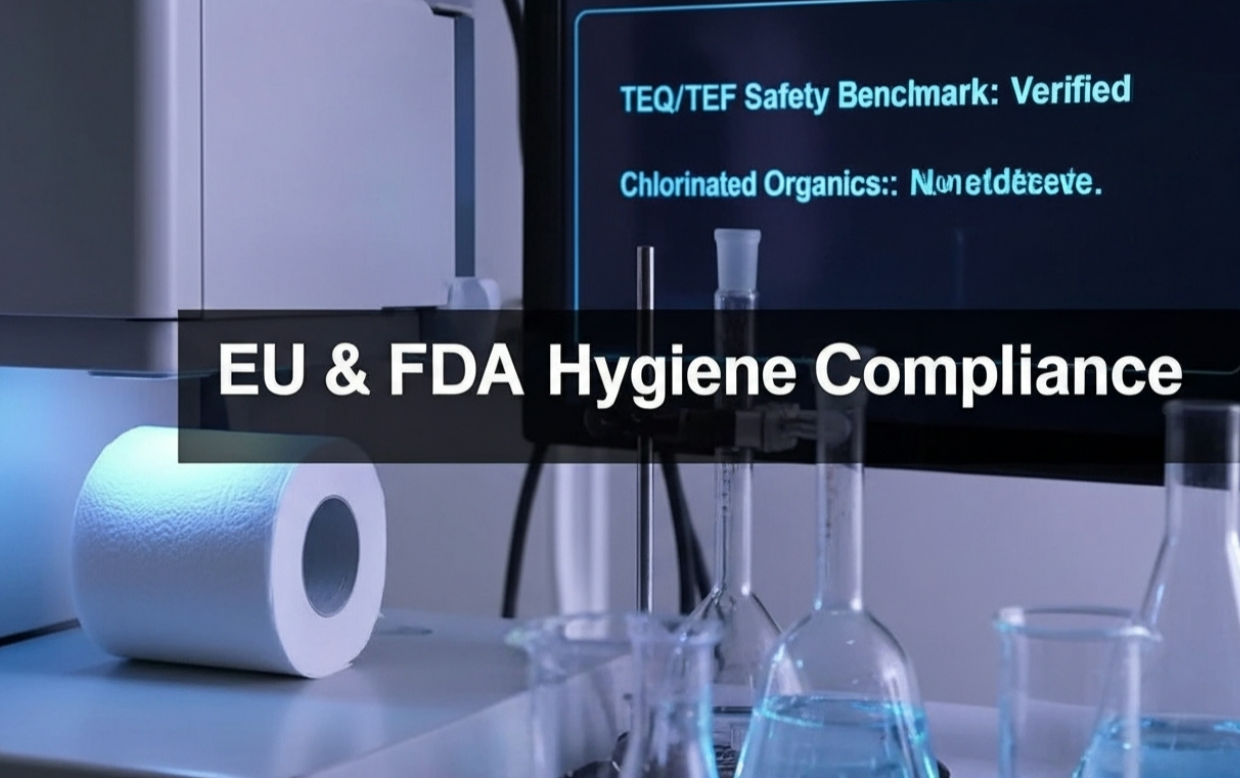
The Chlorine Myth: Understanding ECF vs. TCF Bleaching Standards
ECF uses chlorine dioxide; TCF uses oxygen-based agents. Both make safe paper—trade-offs sit with environmental discharge, brightness, energy use, and fiber yield.
ECF and TCF: core processes and environmental differences
ECF and TCF refer to modern bleaching sequences for wood pulp. ECF (Elemental Chlorine Free) replaces elemental chlorine gas with chlorine dioxide. TCF (Totally Chlorine Free) uses oxygen, ozone, or hydrogen peroxide and avoids chlorine chemistry altogether.
- ECF: uses chlorine dioxide as the primary bleaching agent; eliminates elemental chlorine gas but still generates some chlorinated organic byproducts, including trace dioxins and furans.
- TCF: relies on oxygen-based agents (oxygen, ozone, hydrogen peroxide); produces no chlorine-related byproducts or dioxin formation.
- Environmental trade-off: TCF removes chlorine discharge entirely but usually demands more energy and more raw fiber to match ECF brightness and strength.
- Product-quality trade-off: ECF historically hits higher brightness more easily; modern TCF sequences can approach similar brightness at higher cost and extra processing steps.
- Manufacturing efficiency: ECF offers better fiber yield, lower energy use, and reduced water circulation; TCF tends to raise unit costs and resource use.
- Safety note: scientific reviews rate both methods as producing consumer-safe paper; the debate centers on environmental effluent, not direct product safety.
Top Source Hygiene approach: OBA-free natural brightness and virgin pulp choices
Top Source Hygiene configures product specs to sidestep the usual ECF/TCF trade-offs that matter to B2B buyers: safety, consistent appearance, and regulatory compliance. The focus stays on material selection and process control rather than masking whiteness with additives.
-
100% Virgin Wood Pulp: Premium long-fiber selection for cloud-like texture.
-
100% OBA-Free: Guarantees no chemical whiteners touch the skin.
-
Eucalyptus Fiber Integration: Smooth circular cell structures to minimize friction.
-
Tactile Density: Strictly controlled 13–22g/m² per ply to balance softness and strength.
-
Lint-Free Experience: High-purity wood pulp prevents pilling or residue.
Custom OEM Toilet Paper — Fast Delivery
Why Does Whiteness Remain the Top Metric for Hygiene Perception?
White signals cleanliness because culture and learned cues tie white to purity; brands match that look using fiber selection, OBA‑free processing, and septic‑safe engineering.
Why colour becomes a cleanliness cue: cultural and cognitive drivers
People read color the same way they read other visual shorthand. White has carried symbolic meanings of purity and sterility in many markets, so shoppers treat bright white items as ‘clean’ even when colour says nothing about microbes.
- Psychology: White often symbolizes purity and cleanliness in many cultures, creating a learned expectation that white items are sanitary.
- Research finding: Associations between colour and dirt are symbolic, not evidence that whiteness measures microbiological safety.
- Context matters: Perceptions vary by culture and by product category; technical whiteness indices (CIELAB) used in dentistry don’t translate to microbial safety.
- Risk: Equating colour with hygiene can reinforce misleading stereotypes; product messaging should avoid implying colour equals sterility.
How Top Source Hygiene aligns product specs with perceived cleanliness and real safety
We design products so they look confidently clean while meeting plumbing and health standards buyers expect. That means choosing fibers, finishes, and controls that deliver natural brightness without masking agents and that disintegrate reliably in septic systems.
-
100% OBA-Free: No optical brightening agents, meeting strict EU and FDA hygiene standards.
-
Natural Brightness (85–92%): Achieved via fiber selection, eliminating aggressive bleaching.
-
Chemical Transparency: ECF/TCF compliant processing to avoid dioxin residue risks.
-
Batch Traceability: ISO 9001 certified production logs for every 40HQ container.
-
Documentary Proof: Full compliance records provided for sensitive-skin and medical-grade markets.
For B2B buyers this approach protects margins: products deliver the white look consumers prefer while avoiding misleading claims and meeting technical safety requirements for retail and hospitality channels.
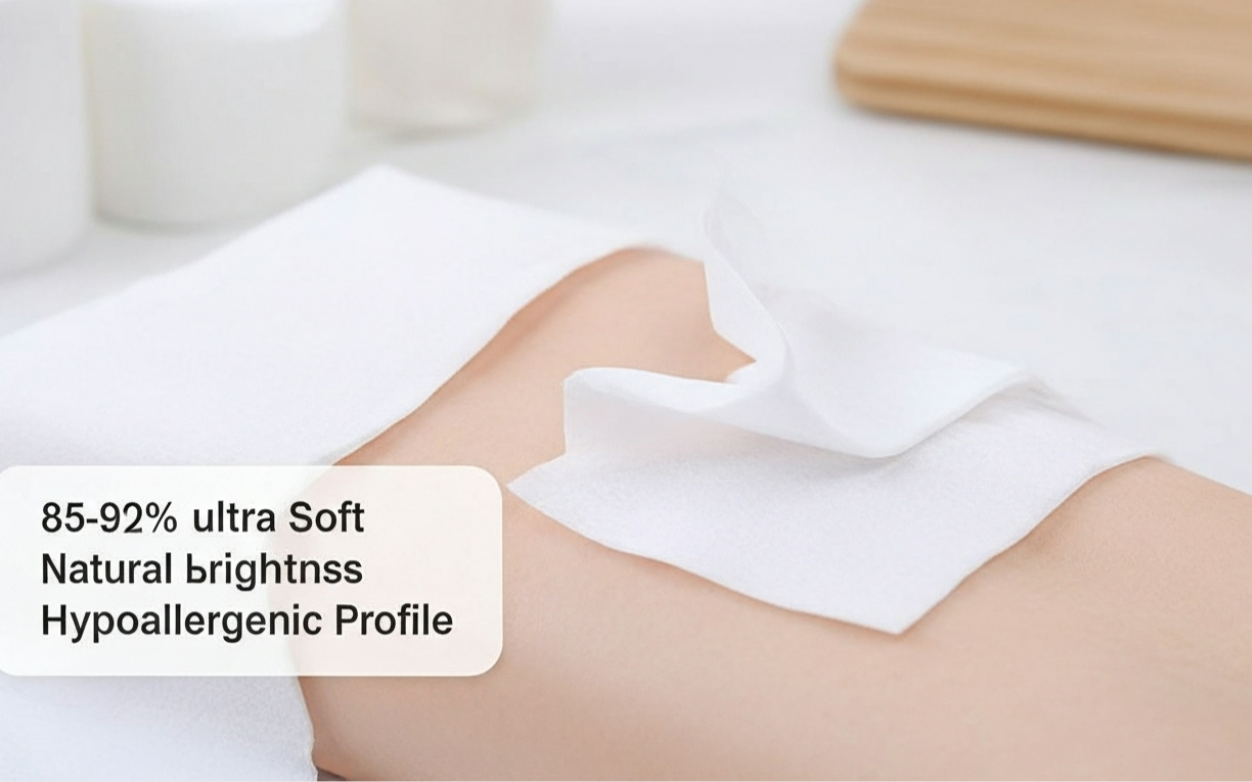
Dioxin and Chemical Residues: A Technical Safety Comparison
Dioxins persist and bioaccumulate; TEFs rank congeners. Product choices like OBA-free, 100% virgin pulp and septic-safe design cut residue and exposure risk.
| Topic | Key technical points |
|---|---|
| Dioxin family | PCDDs, PCDFs and dioxin-like PCBs; 2,3,7,8-TCDD is the reference congener. |
| Mechanism & potency | Aryl hydrocarbon receptor (AhR) mediated effects; congeners vary ~30,000-fold in toxicity, handled via TEF/TEQ system. |
| Persistence | Highly persistent; human half-life for TCDD ≈ 7–9 years and accumulates in adipose tissue. |
| Regulatory benchmark | WHO provisional tolerable intake ~1–4 pg TEQ/kg body weight/day used for risk planning. |
| Sources & trends | Industrial combustion peaked mid‑20th century; emissions fell with regulation. Today nonindustrial burning is a notable ongoing source. |
Dioxin classification, mechanism and human health endpoints
Dioxins refers to a defined set of chlorinated compounds regulators track: polychlorinated dibenzo‑p‑dioxins (PCDDs), polychlorinated dibenzofurans (PCDFs) and dioxin‑like PCBs. Regulators treat them as a class because they share a receptor‑based mode of action.
- Most toxic congener: 2,3,7,8‑TCDD serves as the reference point for toxicity ranking.
- Potency range: Congener toxicity can span roughly 30,000‑fold depending on chlorine pattern; that variance is why the TEF/TEQ system exists.
- Mode of action: These chemicals activate the aryl hydrocarbon receptor (AhR), producing a predictable biochemical response across congeners.
- Persistence and bioaccumulation: TCDD’s human half‑life is about 7–9 years; dioxins partition to fat and biomagnify in food chains.
- Health endpoints regulators monitor: cancer risk, reproductive and developmental effects, immune system impairment and endocrine disruption.
- Regulatory metric: WHO uses a provisional tolerable intake near 1–4 picograms TEQ per kg body weight per day for planning and remediation decisions.
Because of persistence and high potency for some congeners, risk management focuses on source control, monitoring TEQs in food and serum, and applying conservative intake benchmarks.
How product specs and factory controls reduce residue risk: OBA-free, virgin pulp and septic-safe standards
Top Source Hygiene aligns specific product and factory choices to lower the chance of chemical residues appearing in finished tissue. Those choices target two goals: reduce input chemicals and prevent environmental persistence after disposal.
- 100% Virgin Wood Pulp: Using premium long‑fiber virgin pulp avoids reprocessing streams that can concentrate contaminants and enables natural brightness rather than wholesale chemical whitening.
- 100% OBA‑Free: No optical brightening agents or fluorescent whiteners removes a potential source of residual additives on the finished paper; this is a declared specification for sensitive‑skin markets.
- Natural brightness 85–92%: Top Source achieves target whiteness through fiber selection and mill control, not by aggressive chlorine bleaching that can form chlorinated by‑products.
- Rapid disintegration / septic‑safe engineering: Fast break‑up in plumbing reduces paper persistence in septic systems and lowers downstream environmental accumulation risks.
- Certifications & testing: The mill operates under ISO 9001 controls and designs products to meet FDA and EU hygiene requirements; batch testing and compliance checks limit variability.
- Operational verifications: Pre‑shipment visual checks and batch color consistency are routine to catch unintended whitening or additive use before containers leave the factory.
- Material alternatives: For stricter eco‑chemical markets, Top Source offers FSC‑certified options and bamboo pulp variants while keeping the same OBA‑free commitment.
- Regulatory context: Reduced national emissions have cut population dioxin burdens; product‑level source reduction complements those gains by removing potential inputs from the supply chain.
In short, controlling raw materials (virgin pulp), excluding OBAs, applying quality systems and designing for septic compatibility are practical, measurable steps that reduce residue risk and limit consumer exposure in finished tissue products.
Does Unbleached Paper Possess Superior Natural Absorbency?
No — color and bleaching change appearance, not the fiber’s core liquid-handling; material, sheet design, embossing and production do.
What controls paper absorbency (why bleaching is not the key)
Manufacturers and independent studies report no reliable absorbency difference between bleached and unbleached rolls. Bleaching mainly alters whiteness and surface chemistry, not the fundamental liquid uptake of the fibers.
- Fiber type and morphology: Long-fiber virgin wood pulp holds and distributes liquid differently than short recycled fibers; bamboo’s hollow fibers absorb and wick water faster than many wood pulps.
- Sheet architecture (ply & GSM): Ply count and grams-per-square‑metre per ply determine total liquid capacity and how the sheet spreads fluid across layers.
- Surface structure: Embossing, creping and bonding create channels, increase surface area, and change how quickly a sheet takes on and retains liquid.
- Manufacturing processes: Mechanical creping, ply bonding and wet‑strength treatments tune performance; bleaching method affects color and some surface chemistry but not the main liquid‑handling traits.
Top Source Hygiene specs that actually drive absorbency
If you need predictable absorbency for private label or bulk supply, specify the material and sheet engineering. Top Source Hygiene lists the exact controls buyers should use to hit targets.
-
CNC Point-to-Point Embossing: Precision patterns increasing liquid retention by 30%.
-
Capillary Engineering: 13–22g/m² density standards for rapid moisture wicking.
-
High-Pressure Ply-Bonding: Lamination technology preventing layer separation when wet.
-
100% Virgin Wood Pulp: Superior fiber bonds for high-wet-strength durability.
-
Septic-Safe Disintegration: Rapid break-up in water to prevent commercial plumbing clogs.
Use those specs when writing product sheets or sampling. Request embossed prototypes, exact GSM per ply, and lab or field wet‑hold data to validate performance — color choice (bleached versus brown) should be a brand or sustainability decision, not an absorbency assumption.
How Does Balancing “Clean” Image vs. “Eco” Authenticity Affect Market ROI?
Credible balance boosts ROI via trust, premium pricing, and lower regulatory risk; verified credentials close the buy gap while vague green claims erode margin.
Consumer trade-offs: clean appearance versus real sustainability
Buyers use two separate signals: visible hygiene cues for immediate purchase decisions and validated eco-claims for willingness to pay and long-term loyalty. Miss the second signal and you leave revenue on the table.
- Visible hygiene cues: Whiteness, clean packaging, and pristine display drive first impressions and conversion at shelf or online — they still win the initial sale.
- Verified sustainability lifts price: Studies show consumers will pay roughly 9.7% more for sustainability when claims are verifiable — that premium converts directly to margin.
- Intention-to-purchase gap: About 65% of consumers say they want purpose-driven brands but only ~26% actually buy them. The gap represents avoidable lost revenue when claims lack proof.
- Greenwashing penalty: Complaints rose ~21% and audits find ~42% of examined claims problematic. Fines, delisting, and trust erosion hit sales and lifetime value.
- Trust converts to retention: Authentic, evidence-backed claims increase repeat purchase and brand equity; that converts a marketing signal into a measurable financial asset.
Concrete proof points — specs and processes that protect ROI
For B2B buyers, proof means specs, certificates, and repeatable logistics. Use these hard points to defend premium pricing, speed market entry, and reduce compliance risk.
-
9-Ton Payload Optimization: Mechanical compression to maximize 40HQ container capacity.
-
“Big 10” Inventory Strategy: Ready-to-ship models like TSH-2559 to shorten lead times.
-
2,860-Ton Monthly Capacity: Reliable high-volume supply for large-scale B2B contracts.
-
Factory-Direct Pricing: Direct sourcing from Hebei hub to reduce landed cost per roll.
-
20–25 Day Production: Efficient turnaround to maintain stable retail stock levels.
Frequently Asked Questions
Is unbleached toilet paper objectively safer than bleached white?
Evidence indicates unbleached toilet paper lowers exposure to bleaching byproducts such as dioxins and PFAS, so it usually poses less risk for people with sensitive skin or chemical sensitivities. That said, manufacturing quality matters: both bleached and unbleached products can be safe when produced under strict controls, but avoiding bleaching chemicals remains the simplest risk reduction.
What modern bleaching chemicals do manufacturers use today?
Manufacturers now favor oxidative agents like hydrogen peroxide, which balances brightness with lower environmental impact. Other oxidative alternatives include sodium persulfate, sodium percarbonate and peracetic acid. Chlorine-based methods still exist but are less common; producers also use activators and pH controllers (for example TAED and stabilizers) to improve efficiency and reduce residues. ECF and TCF classifications describe whether elemental chlorine or no chlorine is used.
Does bleaching change the softness or strength of toilet paper?
Yes. Bleaching can make fibers softer by removing lignin and increasing flexibility, but over-bleaching weakens cellulose chains and lowers tensile strength. Hydrogen peroxide-based bleaching tends to give the best balance: it improves brightness and softness while retaining more strength when process parameters are controlled.
How can brands credibly market bleached paper as a safe choice?
Focus on transparent process details and third-party proof points: specify modern bleaching methods (ECF/TCF or peroxide-based), list relevant certifications (FSC, FDA, ISO), and show lab test results or compliance statements. For food or medical use, note adherence to hygiene standards and provide batch-level documentation to reassure buyers.
What technical specs should buyers check for sensitive-skin or strict-plumbing markets?
Prioritize 100% Virgin Wood Pulp and OBA-free claims, septic-safe rapid-disintegration performance, and compliance with ISO 9001, FDA or EU hygiene rules. Check ply options (2–5 ply), GSM per ply (13–22 g/m²), embossing and perforation quality, and whether products meet regional needs for septic systems and hotel-grade comfort.
Final Thoughts
While generic suppliers shave cost up front, only a 100% Virgin Wood Pulp + 100% OBA‑Free spec paired with septic‑safe rapid disintegration and ISO 9001 controls truly protects your brand from chemical‑safety complaints, greenwashing audits and costly plumbing failures that eat margins. Top Source Hygiene’s batch color consistency, The Big 10 ready inventory and documented compliance give you predictable shelf appearance and lower cost‑to‑serve across large container orders.
Don’t guess on quality—verify it: start with a Sample Kit and embossed prototypes plus batch test reports, or book a Trial 40HQ to validate landed cost and display consistency. Contact our sourcing team to request a private‑label spec sheet and a firm lead‑time and freight quote.