
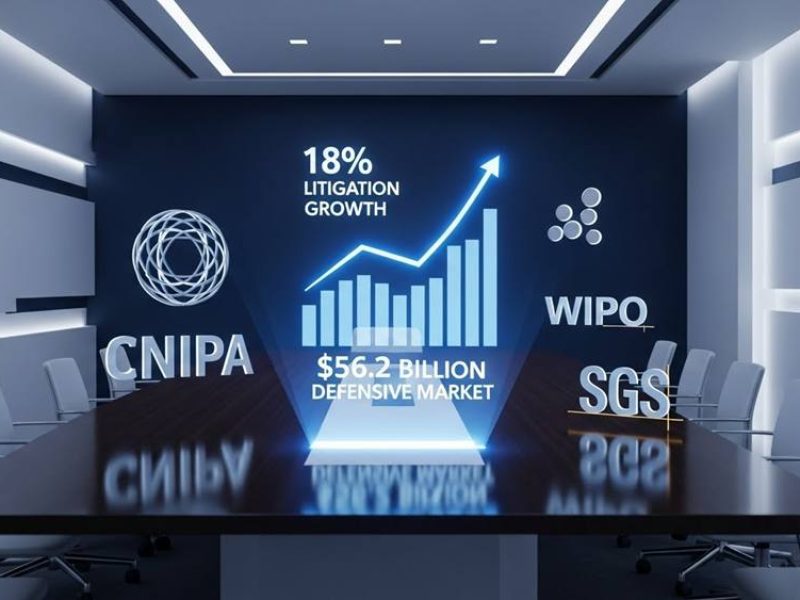
Traditional oversight in high-volume manufacturing is failing as global IP litigation surges 18% and data security costs jump 22% annually. Navigating the $56.2 billion defensive services market now requires a localized strategy, particularly in the Asia-Pacific region, which accounts for 40% of global IP support demand. Relying on Western-style contracts in an ODM environment is an operational liability that leaves proprietary embossing and packaging designs exposed to systematic appropriation by factory partners leveraging first-to-file loopholes.
This analysis details the transition from standard NDAs to China-specific NNN Agreements and CNIPA trademark registrations to prevent squatters from seizing legitimate shipments at the port. We examine enforcement protocols involving the GACC and SAMR, while evaluating how selecting factory partners verified by SGS or TÜV under ISO 9001 standards creates the documented transparency necessary to secure physical tooling and proprietary industrial designs.
The Reality of IP Risk in Global Sourcing
IP litigation rose 18% while data security costs jumped 22%. Managing offshore production now requires a $56.2 billion defensive services market to mitigate jurisdictional vulnerabilities.
Structural Vulnerabilities in Cross-Border Manufacturing
Companies are pouring capital into legal defense as traditional oversight fails in high-volume OEM environments. The IP support services market reached $56,220 million in 2024, driven primarily by the need to secure innovation in offshore hubs.
- Asia-Pacific Demand: 40% of global IP support services are concentrated in China, Japan, and South Korea.
- Litigation Growth: Infringement cases increased by 18% in the last year.
- Corporate Adoption: 65% of multinational corporations now employ specialized cross-border IP services.
These figures indicate that relying on basic contracts is no longer sufficient. Most major firms now use third-party jurisdictional experts to bridge the gap between their home legal team and the factory floor.
The Quantifiable Cost of Infringement and Protection
Protecting a design is an escalating operational expense rather than a one-time filing fee. Beyond the initial registration, businesses face sharp increases in the overhead required to keep digital assets private during the development cycle.
- Patent Filing Costs: $10,000 to $50,000 per case for research and registration.
- Data Security Inflation: Costs for IP-related data protection are rising by 22% annually.
- Projected Growth: The IP services market maintains an 8.2% CAGR through 2032.
Market leaders like Clarivate and Anaqua are shifting the standard toward AI-powered patent searches and blockchain tracking. This tech-heavy approach is becoming the baseline requirement for protecting proprietary embossing and packaging designs in shared manufacturing spaces.
Why a standard NDA is NOT Enough (The NNN Strategy)
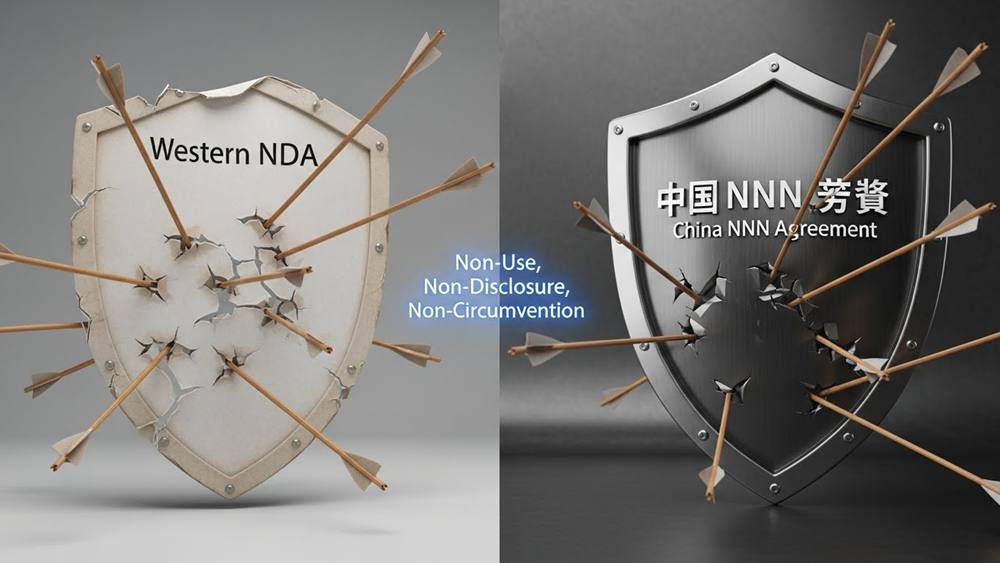
Standard NDAs only prevent talking. NNN agreements legally block Chinese factories from using your designs, bypassing you to sell to your customers, and ignoring local court jurisdictions.
Western NDAs focus almost entirely on preventing the disclosure of secrets. In China, “leaking” the secret is rarely the primary threat. The real danger is the factory owner seeing your design, realizing it sells, and manufacturing it themselves under a different brand. With IP litigation cases up 18% recently, relying on a document that doesn’t account for local manufacturing habits is a high-stakes gamble.
| Protection Layer | Standard Western NDA | China-Specific NNN |
|---|---|---|
| Non-Use | Usually Missing | Prevents factory from using IP for own gain |
| Non-Circumvention | Rarely Included | Stops factory from selling to your clients |
| Jurisdiction | Home Country (Unenforceable) | Chinese Courts (Asset Seizure possible) |
| Language | English Only | Dual Language (Chinese Prevails) |
The Three Pillars of NNN: Non-Use, Non-Disclosure, and Non-Circumvention
A comprehensive NNN agreement creates a three-tier defense. While a standard NDA only covers the “Disclosure” portion, the NNN covers the actual commercial risks inherent in the Asia-Pacific market, which currently drives 40% of global IP support demand.
- Non-Use (NU): This stops the factory from using your proprietary ideas, designs, or prototypes to compete with you. Without this, a factory can legally use your tooling to make “similar” products for other buyers.
- Non-Disclosure (ND): This limits internal information sharing to only essential staff. It makes the factory strictly liable if a subcontractor or a former employee walks away with your trade secrets.
- Non-Circumvention (NC): This prevents the factory from “cutting out the middleman.” It contractually bars them from selling your custom-branded products directly to your customer base at a lower price.
Enforcement Mechanics: Chinese Law and Jurisdiction Requirements
Winning a court case in New York against a factory in Shenzhen is a hollow victory. You cannot easily enforce a foreign judgment in China. To protect your IP, you must make the agreement enforceable where the factory actually operates and holds assets.
- Legal Language: Write agreements in Chinese. This prevents the factory from claiming “translation misunderstandings” in front of a local judge, which can delay cases for years.
- Governing Law: Base the contract on the People’s Republic of China Anti-Unfair Competition Law and the Civil Code. This gives the contract local weight and aligns it with existing trade secret protections.
- Exclusive Jurisdiction: Specify Chinese courts. This allows for the immediate freezing of a factory’s assets or injunctions to stop production. Patent litigation can cost $10,000 to $50,000 per case; a well-drafted NNN is a significantly cheaper deterrent.
- Trade Secret Labeling: Explicitly label all technical data and drawings as “CONFIDENTIAL.” Under Chinese law, you must prove you took reasonable steps to protect the info to claim a trade secret violation.
Data protection costs for IP are rising by 22% annually. Don’t increase your risk profile by using a Western contract in an Eastern jurisdiction. If the factory refuses to sign a China-centric NNN, they likely intend to use your IP for their own purposes.
Registering Your Trademark and Logo in China First
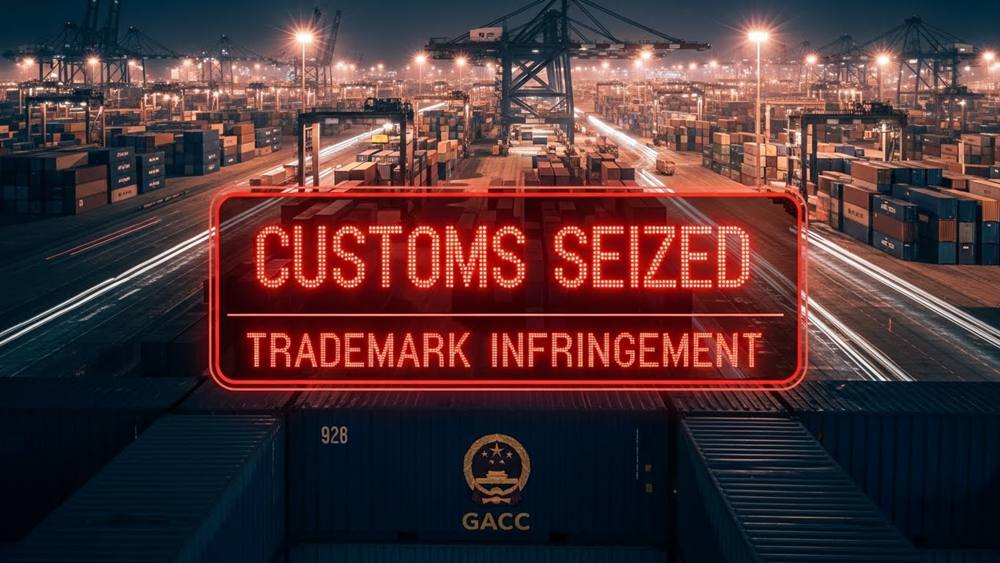
China’s first-to-file system grants ownership to the first registrant. Failure to secure your logo allows squatters to legally seize your goods at the port during export.
| Parameter | Standard / Requirement |
|---|---|
| Legal Principle | First-to-File (Usage history is irrelevant) |
| Regulatory Body | CNIPA (China National Intellectual Property Administration) |
| Target Classification | Class 16 (Paper goods, tissues, towels) |
| Examination Window | 9 Months (Initial); 12–18 Months (Full) |
| Market Cost Reality | $10,000 – $50,000 for comprehensive IP support |
The First-to-File System and the Threat of Trademark Squatting
China ignores “common law” trademark rights. If you have used a brand for twenty years in Europe or North America but haven’t registered it in Beijing, you have zero protection. The first person to file the paperwork owns the brand. This creates a lucrative market for trademark squatters.
Unscrupulous entities, including disgruntled former factory agents, monitor international brands and register them locally. They then wait for you to start production. Once they own the mark, they can sue you for infringement or demand heavy “ransom” payments to release the name back to you.
The biggest risk is at the border. Trademark owners can record their IP with Chinese Customs. If a squatter owns your logo, they can instruct Customs to seize your legitimate factory shipments as “counterfeits.” Your goods never leave the port, and you lose the entire shipment value plus shipping deposits.
CNIPA Application Requirements and the Nice Classification System
Securing your brand requires a formal filing through the China National Intellectual Property Administration (CNIPA). The process is technical and demands strict adherence to local filing protocols. Direct filing is impossible for non-residents; you must hire a government-authorized Chinese trademark agent.
- Classification: Household paper products like toilet paper, tissues, and towels fall under Class 16.
- Timelines: Expect 9 months for the initial examination. Full registration typically takes 12 to 18 months.
- Required Paperwork: You need a high-resolution copy of the logo, a specific list of sub-categories within Class 16, and a notarized Power of Attorney (POA).
- Data Growth: Global IP litigation rose 18% last year, making these filings a mandatory insurance policy rather than an optional cost.
Start this process before you sign an ODM contract. Because Asia-Pacific drives 40% of the world’s IP support demand, the system is crowded. Delays in filing give squatters a larger window to hijack your identity.
Scale Your Brand with World-Class OEM Toilet Paper Solutions
Design Patents for Unique Embossing and Packaging
China design patents protect the visual “look and feel”—shape, pattern, and color—of embossed packaging, preventing competitors from mimicking ODM designs through specific SIPO filing protocols.
Article 2.4 of the Chinese Patent Law protects the shape and patterns of industrial products. It specifically targets packaging bags and containers that move beyond functional utility into visual branding. Unlike the US system, China often protects elements that include functional contouring.
Article 25.6 clarifies the legal boundaries. While it excludes 2D signs or simple indicators, it grants full eligibility to decorative printing paper and embossed packaging. This distinction is vital for ODM owners who want to secure the “tactile” identity of their brand.
Protecting 3D Product Designs under Chinese Patent Law
Companies use specific patents to lock down embossing processes and textures. These filings move the protection from a simple logo to the physical structure of the paper or container itself.
- Multilayer IP: CN103388288A covers base, toner, and embossed layers for paper.
- Industrial Application: CN117656322A protects embossed containers using melamine decorative paper.
- Market Drivers: Asia-Pacific now accounts for 40% of global IP support service demand.
- Litigation Risk: IP infringement cases rose 18% last year, making these filings a defensive necessity.
Filing Requirements and Efficiency for Embossed Designs
SIPO enforces strict visual documentation standards. Missing a single angle can stall your application. If you claim color protection, you must provide specific color drawings and a written explanation or the patent may fail against existing black-and-white designs.
Efficiency comes through consolidation. You can bundle up to 10 similar designs in one application if they belong to the same class. This is the primary strategy for protecting a product line with different surface patterns or fragrance-related graphics.
- View Requirements: 6 orthographic views plus 1 perspective view for 3D products.
- Consolidation Limit: Maximum of 10 similar designs per filing to reduce fees.
- Filing Costs: Comprehensive patent research and filing typically costs $10,000 to $50,000.
- Growth Metrics: Global patent filings grow at 6.5% annually, dominated by MNCs using cross-border services.
Proactive filing prevents the “double-patenting” trap. By designating a main design and listing variations, you create a broader legal perimeter that is harder for competitors to design around.
Clauses for Your Sales Contract: Ownership of Tooling/Plates
Secure tooling via payment-based title vesting, mandatory Tooling Records, and permanent engraving to block “hostage” fees and supplier IP claims during ODM manufacturing.
Establishing Legal Ownership and IP Assignment
Suppliers often claim ownership of molds or dies because they provided the “design logic.” You must use specific language to separate design labor from asset ownership. Contracts should include an Article 2 IP Assignment that transfers all rights for jigs, fixtures, and DFA documentation to your company.
- Title Vesting: Transfer physical title to the buyer immediately upon full payment of fabrication costs.
- IP Prohibition: Explicitly forbid suppliers from registering patents or trademarks on components they develop for your product.
- Future Assets: Assign rights for any tooling or improvements developed during the entire contract term.
Technical Safeguards and Retrieval Protocols
Possession is nine-tenths of the law on a factory floor. Without physical identifiers and a paper trail, reclaiming your molds becomes an expensive negotiation. Chinese suppliers frequently demand a 15-30% surcharge before allowing tool removal, even after full payment.
- Tooling Record (Exhibit 1): Maintain a mandatory inventory listing every item’s cost, technical specifications, and storage location.
- Permanent Engraving: Require the supplier to engrave your asset numbers directly into the metal; stickers or tags are too easily removed.
- 10-Day Retrieval: Mandate the contractor make all tooling available for pickup within 10 working days of your request.
- Maintenance Liability: The supplier is responsible for keeping tooling in good condition and remains liable for damage beyond ordinary wear.
- Fee Mitigation: Include clauses that explicitly override “exit fees” or surcharges pushed by suppliers during a vendor switch.
Enforceable contracts in Chinese prioritize your title at first production. Use these technical requirements to ensure your assets stay movable and your supply chain remains flexible.
Monitoring for Counterfeits and Enforcement in China
Counterfeit protection in China relies on recording trademarks with Customs for border intercepts and using SAMR for domestic raids to seize infringing stock and production equipment.
The Regulatory Framework: GACC and SAMR Oversight
China Customs (GACC) handles border defense. Proactive interdiction activates 11–15 months after you record a trademark in their system. The State Administration for Market Regulation (SAMR) manages domestic enforcement and physical market raids.
The Ministry of Public Security (MPS) and the National Internet Office trace e-commerce listings back to physical production sites. Administrative penalties include confiscating goods, revoking business licenses, and fines totaling 3x the illegal gains.
Enforcement Procedures and Seizure Metrics
Rights holders must respond to Customs notifications within 3 working days to confirm infringement and request a seizure. Missing this window allows the shipment to clear the border. SAMR enforcement metrics from 2024 operations include:
- Industrial Impact: 5 factories and 18 storage “black dens” destroyed.
- Seizure Volume: 75,000 clothing items and 3,470 Rolex watches confiscated.
- Legal Action: 32 suspects arrested with case values exceeding 10 million RMB.
- Tech Hardware: 1,000+ Apple Bluetooth headsets and 5,000+ mobile cases seized.
Market monitoring now focuses on cross-border platforms like AliExpress and Temu. Probes in 2025 identified high counterfeit prevalence in luxury, cosmetics, and household categories on these sites.
Working with Verified Factories (BSCI/ISO) to Lower Risk
BSCI and ISO certifications force operational transparency and lower worker turnover. This creates a stable environment where intellectual property is harder to leak and easier to track.
Partnering with a factory that undergoes rigorous third-party auditing isn’t just about labor rights. It serves as a proxy for intellectual property security. Factories with BSCI (Business Social Compliance Initiative) and ISO certifications operate under standardized, documented workflows that minimize the chaos where IP theft usually thrives.
The Role of BSCI and ISO in Ensuring Operational Security
Ethical governance directly impacts the factory floor. High worker turnover is a primary driver of leaked designs. Stable employees receiving fair wages are less likely to sell trade secrets to competitors or third parties. Documented quality management ensures that design files follow a restricted, traceable path through the ODM process.
- BSCI Code of Conduct: Focuses on 13 core areas, including ethical business behavior, to stabilize the workforce and reduce internal threats.
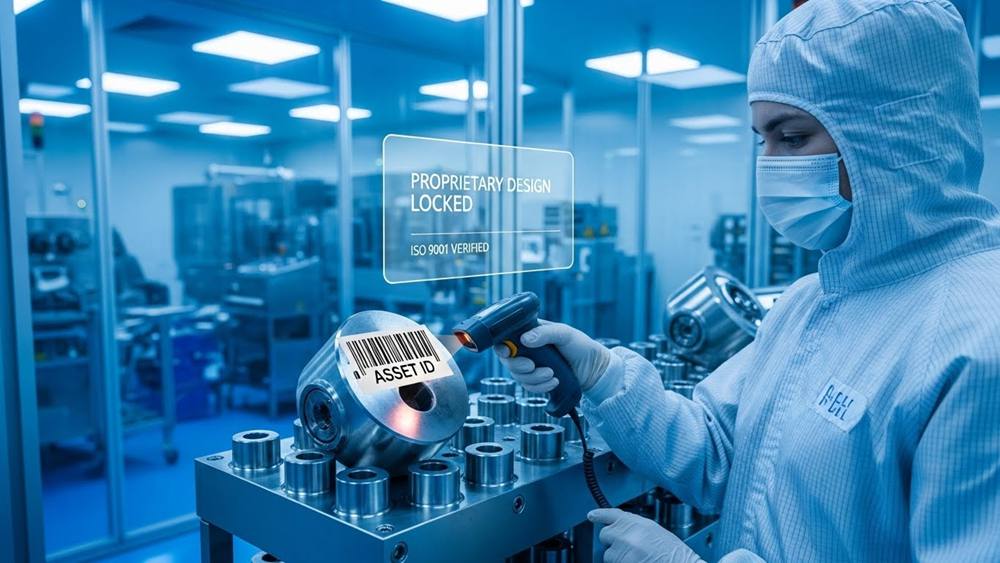
- ISO 9001 Standards: Mandates controlled documentation for every production step, creating an audit trail for all proprietary design data.
- Global Compliance: Adherence to environmental and safety standards (FSC, FDA) signals the long-term reliability required by major retailers like H&M and Lidl.
- Restricted Access: Ethical audits verify that production zones are controlled, limiting unauthorized personnel from accessing sensitive prototype areas.
Verifying Compliance Through Third-Party Audits and Grading
Never take a supplier’s word for their certification status. Verification requires reviewing the actual audit reports generated by accredited global bodies. These documents reveal the granular details of a factory’s management vulnerabilities and their commitment to transparency. With IP litigation cases rising 18% annually, these reports are your first line of defense.
- Grading Scale: Audit reports are scored from A (Very Good) to E (Unacceptable). Non-A grades require corrective action plans and follow-up audits within 6–12 months.
- Accredited Auditors: Valid certifications must be issued by recognized third-party firms such as SGS, TÜV, Intertek, or Bureau Veritas.
- Audit Validity: Reports are typically valid for up to 3 years under related standards like SA8000, provided the factory passes semi-annual surveillance checks.
- Data Security Costs: With IP protection costs rising 22% annually, choosing a factory with existing high-grade audits reduces your overhead for independent monitoring.
Final Thoughts
Western NDAs offer zero protection against Chinese factory “squatting.” Without local filings and NNN agreements, you are essentially gifting your designs to your manufacturer the moment you begin production.
Immediately register your trademark with CNIPA and secure a bilingual NNN agreement. Do not share proprietary files until these documents are legally enforceable in the factory’s local jurisdiction.
Frequently Asked Questions
How do I protect my brand when manufacturing in China?
Register your trademark with the China Trademark Office (CTMO) using the first-to-file system. Cover all relevant subclasses under the Nice Classification. Replace standard NDAs with bilingual NNN Agreements enforceable in Chinese courts. Register trademarks with Chinese Customs for border protection. Hire third-party auditors to monitor for unauthorized production runs.
What is an NNN agreement and why is it essential?
An NNN Agreement (Non-Disclosure, Non-Use, and Non-Circumvention) provides three layers of protection. Non-Use prevents the factory from using your designs to compete against you. Non-Circumvention stops them from bypassing you to sell directly to your customers. These are the legal standard for Chinese OEM partnerships.
Should I register my trademark in China before sourcing?
Yes. China uses a strict first-to-file system. Rights go to the first person to file, regardless of international brand history. Registering before sourcing prevents trademark squatting by suppliers. The process takes 12 to 18 months.
Who owns the custom embossing rollers at the factory?
The buyer owns custom-designed rollers because they are built to proprietary specifications. Standard machine sizing requires a 2-inch (5 cm) strip clearance on each side of the engraved rolls. Your contract must explicitly state these tools are your property and must be returned or destroyed upon request.
How can I prevent the factory from selling my designs to others?
Include a clause in the manufacturing contract prohibiting the factory from selling your designs to third parties. Pair this with NNN agreements and registered design patents. Under ISO 9001 standards, ODM contracts must include documented IP controls to stop unauthorized replication.
What legal recourse do I have if my IP is infringed?
Recourse includes administrative enforcement via local raids and civil litigation in specialized IP courts. Civil cases take 6 to 12 months. Litigation is increasing, with cases up 18% recently. High-value disputes exceeding RMB 5 billion go to the Higher People’s Courts. Be aware that full patent research and filing services can cost between $10,000 and $50,000 per case.