
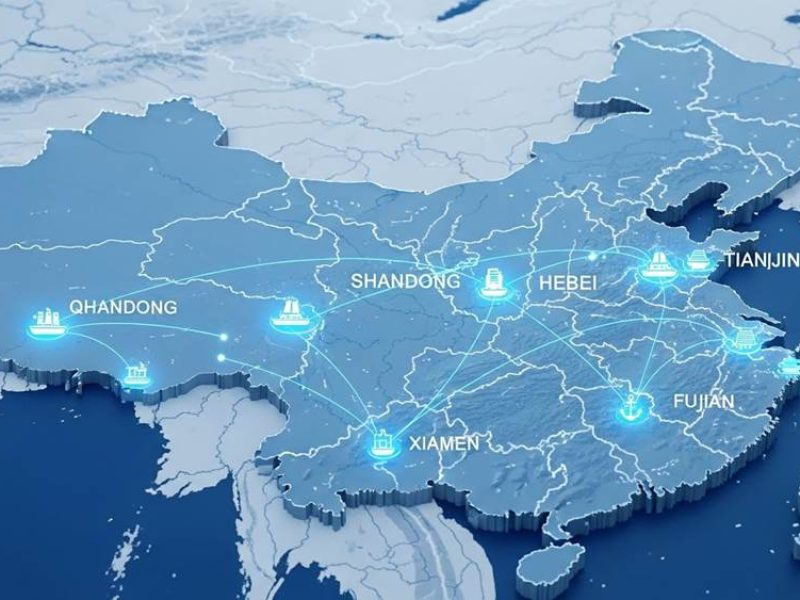
B2B buyers often navigate a complex landscape where a factory’s location swings logistics costs by up to 30%. Selecting a supplier without understanding regional specializations leads to high freight surcharges or lead-time delays that hurt your bottom line. Success in the Chinese tissue market depends on aligning your procurement strategy with the specific industrial strengths of each province.
This analysis breaks down the core manufacturing hubs, from Shandong’s 1.05 trillion yuan export engine to Hebei’s high-volume production of 2,860 tons per month. We compare the logistical reach of the Qingdao and Tianjin port networks and evaluate the rise of bamboo-based production in the south. These insights provide the data necessary to choose between coastal efficiency and inland cost-saving projects.
The Geography of China’s Tissue Industry
China organizes its tissue production into established coastal export clusters and emerging inland growth hubs. Provinces like Guangdong and Shandong anchor the international supply chain, while inland projects in Hubei and Shanxi shorten domestic logistics. Major sites, including the Nantong mega-facility, support a market exceeding 70 billion USD with massive annual output by 2026.
Regional Distribution of Coastal and Inland Manufacturing
Traditional papermaking clusters in Guangdong, Zhejiang, Jiangsu, and Shandong remain the primary sourcing basins for global exporters. These regions leverage deep converting ecosystems and existing infrastructure to maintain a dominant position in the international market. Manufacturers in these coastal provinces focus on high-volume production to feed a domestic market that reached 70.49 billion USD in 2024 while sustaining a robust export pipeline.
Inland provinces like Shanxi, Guangxi, Hubei, and Hebei now host modern, high-efficiency machines to serve domestic population centers. In 2024, thirty companies across eleven provinces installed seventy new tissue machines, with a significant portion of this modern capacity concentrated in these central growth hotspots. This shift toward central China helps manufacturers reduce over-land freight costs and access local wood pulp or bamboo resources more effectively.
Top producers manage multi-province mill footprints to balance international shipping needs with domestic market reach. By placing modern production assets closer to inland consumers, companies like Shandong Sun Paper and Taison Technology Group optimize their supply chains. This geographical diversification ensures that 2024’s capacity addition of 1.648 million tons per year supports both local demand and the growing importance of tissue exports.
Production Scale and Export Logistics Infrastructure
Hengan Group and Vinda International maintain massive operations with 2024 design capacities of 2.142 million and 1.80 million tons per year, respectively. Taison Technology Group follows closely with a capacity of 1.415 million tons. These national players utilize integrated mill clusters along the Yangtze River Delta and Pearl River Delta to combine pulp processing and converting, which maximizes throughput for high-volume orders.
The Nantong mega-site in Jiangsu serves as a critical hub with a total designed tissue capacity of approximately 2.04 million tons per year. Phase 1 delivered 780,000 tons in 2022, and Phase 2 adds 1.26 million tons to the site’s potential. Such large-scale facilities act as anchors for the industry, providing the high-throughput necessary for both domestic distribution and the lower Yangtze corridor’s export activities.
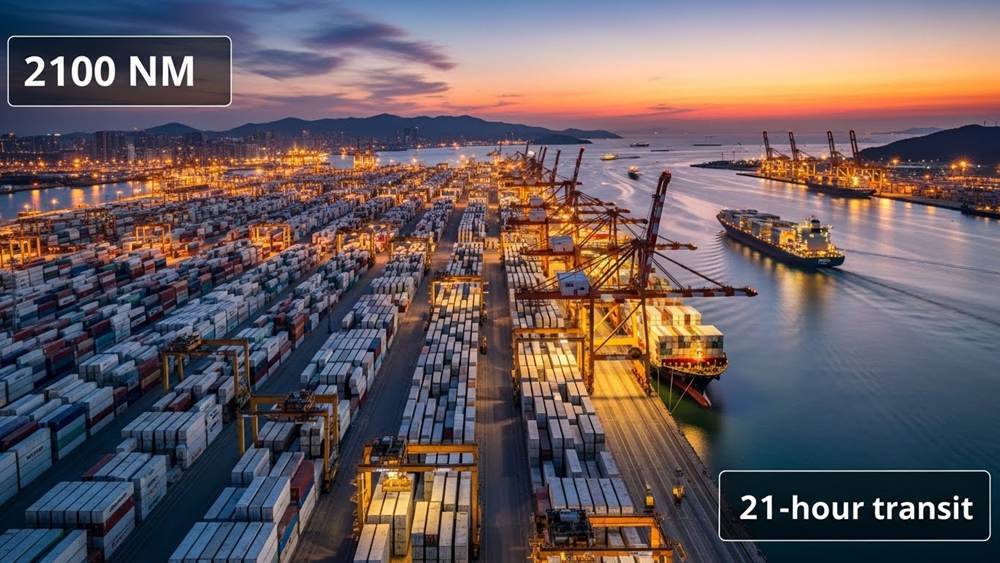
Coastal facilities leverage proximity to major ports like Qingdao, Tianjin, and Xiamen to handle substantial annual tissue exports. Between January and November 2024, China exported 1.234 million tons of tissue valued at 2.19 billion USD. The concentration of papermaking and printing industries in coastal provinces ensures that exporters have immediate access to the logistics infrastructure required for global trade while inland sites focus on rebalancing the domestic supply chain.
Shandong: The Powerhouse of Large-Scale Export
Shandong functions as a high-volume export leader by integrating 23 specialized SME clusters with direct maritime access through Qingdao and Yantai. In 2026, provincial exports reached 1.05 trillion yuan in the first half of the year, driven by automated production lines and deep-water logistics that serve Belt and Road and ASEAN markets.
| Export Metric | Data Point (2026) | Operational Impact |
|---|---|---|
| Total Provincial Exports | 1.05 Trillion Yuan | 6% year-on-year growth in H1 |
| M&E Shipments | 858.37 Billion Yuan | Accounts for 50% of total export value |
| Belt and Road Share | 64.2% of Trade | Primary focus for regional supply chains |
Industrial Clustering and Port Logistics
Shandong maintains its position as a primary export hub through the strategic density of 6 national advanced manufacturing clusters and 23 specialized SME clusters. This concentration reduces inland transit times and simplifies how buyers aggregate suppliers from a single region. Direct factory-to-port hauls via Qingdao, Yantai, and Rizhao support high-frequency container shipping while cutting logistics costs for international trade.
Trade with Belt and Road markets now makes up 64.2% of provincial exports. Regional supply chain integration shows steady growth, particularly with Vietnam. Trade turnover with Vietnam grew by 18.9% in the first eight months of 2026, establishing Shandong as a critical origin for ASEAN-bound goods and multimodal routings.
Export Output and Automation Efficiency
Provincial exports hit 1.05 trillion yuan in the first half of 2026, outperforming national growth averages. Mechanical and electrical shipments reached 858.37 billion yuan, representing half of the total provincial export volume. This output relies on high-tier automation across major manufacturing centers. Facilities in Qingdao produce one electric vehicle every 90 seconds for global markets, demonstrating the region’s capacity for rapid, large-scale fulfillment.
Technical specialization extends to electronic components. In Weifang, Goertek produces 10 micro-sensors per second to supply global electronics and smartphone chains. Electronic component output rose by 20% in 2026 to meet the rising demand for higher-value technical assemblies. These automated production capabilities allow Shandong to support just-in-time component flows for global OEM requirements.
Hebei: Budget-Friendly High-Volume Production
Hebei serves as a central manufacturing corridor, leveraging the massive paper production base in Baoding and heavy industry clusters in Zhangjiakou. The region maintains low unit costs through high-volume capacities, such as 2,860 tons of monthly paper output, and optimized logistics via its proximity to the Tianjin shipping hub.
| Industry Sector | Manufacturing Hub | Capacity / Scale |
|---|---|---|
| Paper & Tissue Production | Baoding (Mancheng) | 2,860 Tons / Month |
| Crude Steel (EAF) | Zhangjiakou | 1,800 ktpa |
| Direct Reduced Iron (DRI) | Zhangjiakou | 1,110 ktpa |
| Automotive & Lithium Battery | BTH Corridor | 91 Key Enterprises |
Industrial Clusters in Baoding and Zhangjiakou
Mancheng, Baoding operates as the largest paper production base in China and specializes in high-volume household tissue products. The Beijing-Tianjin-Hebei industrial corridor hosts 91 key enterprises focused on automotive components and lithium batteries, providing a dense network for technical assembly. In Zhangjiakou, metallurgical centers utilize hydrogen-rich reduction technology for steel production, which enhances efficiency in heavy manufacturing. Proximity to the regional transportation network reduces lead times for inland factory orders and ensures a steady supply of raw materials for bulk processing.
Production Capacity and Logistics Efficiency
Regional paper factories produce 2,860 tons monthly to support global OEM and private label demands. Steel facilities provide 1,110 ktpa of direct reduced iron and 1,800 ktpa of crude steel capacity to sustain high-volume industrial output. Manufacturers maintain standard production cycles for export containers between 15 and 25 days, allowing for predictable inventory planning. Direct logistics routes to Tianjin Port eliminate many intermediary costs and favor budget-sensitive buyers who prioritize high-volume procurement without the added premiums of coastal industrial zones.
Build Your Unique Toilet Paper Brand with Global OEM Experts

Fujian: Premium Innovation and Bamboo Specialization
Fujian serves as the primary technical hub for bamboo innovation and international standardization. By 2026, the region’s focus on high-density manufacturing and strict adherence to global benchmarks like ISO 7567 ensures product reliability. Local manufacturers prioritize structural performance and durability over low-cost commodity production to meet high-end export requirements.
Strategic Standardization and Regulatory Alignment
Fujian manufacturers define international quality rules and ensure export compliance across global markets. Local leaders like Fujian Dasso Industry helped draft the ISO 7567 international standard for structural bamboo. This benchmark governs the entire production chain, including raw material selection, lamination techniques, and mechanical performance testing. This involvement positions regional players at the center of the codified rules governing engineered bamboo.
Alignment with ISO 21625 and ISO 21629-1 provides clear terminology and flooring benchmarks for international buyers. These standards reduce technical risks and ease the approval process in regulated markets. Widespread adoption of FSC certification and EN 335 use-class ratings allows suppliers to meet 2026 environmental and safety regulations in the EU and North America.
Material Engineering and High-Density Performance Metrics
The region specializes in strand-woven construction to reach densities exceeding 1.20 g/cm³. This material engineering provides a surface hardness that exceeds many tropical hardwoods, making it suitable for high-traffic public squares and balconies. Production involves hot-press densification and carbonization to stabilize moisture content between 8% and 12%. This thermal treatment eliminates biological threats like insects and fungi without the need for harmful pesticides.
Manufacturers adhere to quantified performance gates to ensure long-term structural integrity. Testing often confirms a 3.13 kN breaking strength at 400 mm spans per EN 1533 standards. Specialized producers like REBO and ANOS utilize 4-hour boiling expansion tests to verify dimensional stability. These technical specifications support 30-year outdoor warranties, making Fujian the preferred hub for projects requiring documented durability and mechanical reliability.
Proximity to Ports (Tianjin vs. Tianjin vs. Xiamen)
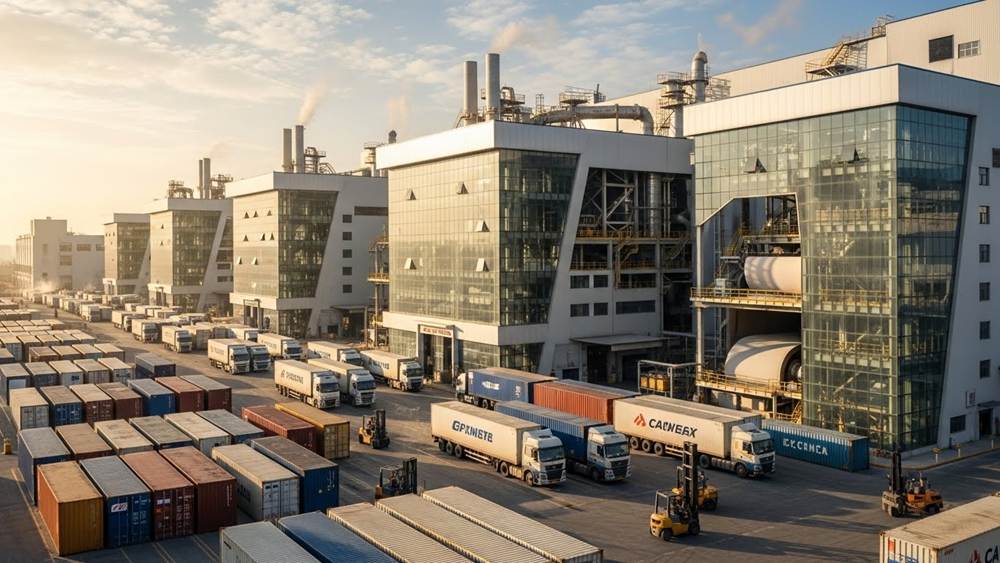
Logistics efficiency in China’s paper industry relies on three major port hubs. Northern mills in Hebei and Shandong use Tianjin and Qingdao to access global routes within 21 hours of sea transit. Southern facilities in Fujian utilize Xiamen, creating a tiered supply chain that balances inland trucking costs against maritime lead times for 2026 shipping schedules.
Northern Logistics Synergy: Tianjin and Qingdao Connectivity
Manufacturing bases in Baoding and Shandong use the 452 nm sea distance between Tianjin Xingang (CNTXG) and Qingdao (CNTAO) to improve coastal shipping efficiency. A typical voyage between these northern hubs lasts 21 hours, which allows for rapid B2B inventory transfers and raw material sourcing. Short-haul trucking routes under 500 km connect inland factories to these deep-water ports, and this proximity reduces fuel surcharges on high-volume 40’HQ container orders.
Southern Export Corridors and Comparative Transit Metrics
Xiamen serves as the primary gateway for the Fujian cluster. Its 706 nm distance from Qingdao necessitates multi-day maritime voyages, making it a distinct logistical zone from the northern hubs. Cross-regional supply chains between Tianjin and Xiamen cover roughly 1,482 km, so managers must use integrated route planning to maintain 15-25 day lead times. Logistics teams use nautical mile metrics and IMO voyage optimization to manage demurrage costs at southern terminals more effectively than at northern ports.
Regional Raw Material Access (Pulp vs. Bamboo)
Regional clusters leverage bamboo for its rapid 2-to-4-year harvest cycle compared to the decades-long growth of timber. While bamboo offers fiber lengths up to 4.0 mm and serves as a viable softwood substitute, its hollow structure and high silica content require specialized logistics and chemical recovery systems within local supply chains.
Comparative Harvest Cycles and Sourcing Stability
Industrial bamboo reaches harvestable maturity in 2 to 4 years. This growth rate significantly outpaces the 15 to 30 years required for traditional pulpwood plantations. Regional belts in Southwestern China utilize this fast rotation to maintain a stable local fiber basket, which reduces the industry’s exposure to the price volatility of imported wood pulp.
Technical applications prove that bamboo pulp effectively replaces 30% to 50% of imported softwood kraft pulp in specific paper grades. Mills achieve this substitution without sacrificing the tensile or tear strength required for high-quality tissue and packaging products.
Fiber Morphology and Chemical Processing Constraints
Bamboo fibers average 1.68 mm after pulping, while individual fibers can reach up to 4.0 mm. This morphology places bamboo between hardwood and softwood in terms of performance. The chemical composition, featuring approximately 52.8% cellulose and 25.2% lignin, supports high pulp yields suitable for dissolving-grade applications.
Logistics play a critical role in the economic viability of bamboo. Hollow culms result in low bulk density, which raises transport costs per tonne. To manage these expenses, mills typically operate within a tight logistics radius of the harvest site. Furthermore, elevated silica levels in many bamboo species require the use of advanced recovery boilers. These specialized systems manage chemical recovery and maintain furnace efficiency despite the unique mineral profile of the raw material.
Comparing Labor Costs and Tech Clusters
Labor expenses in 2026 tech clusters depend on regional wage benchmarks and talent turnover rates. While high-tier hubs like the Bay Area command USD 130,000–140,000 for base salaries, operational labor for cluster management remains a small portion of TCO, often staying below 3% of total infrastructure spending. Talent density determines the hiring speed.
Wage Benchmarks and Regional Talent Velocity
Software engineers in major U.S. hubs like the San Francisco Bay Area and Seattle earn between USD 120,000 and 140,000 annually. These high-density clusters foster high-velocity labor markets where rapid turnover increases the fully-loaded cost of talent. Organizations face higher expenses for recruiting and onboarding even when base salaries remain stable. While dense talent pools reduce the time spent searching for specialists, they also increase the risk of competitors poaching established staff.
Infrastructure Administration and Total Cost of Ownership
Technical labor for managing cluster environments accounts for a small fraction of the total cost of ownership. Enterprise studies price a fully-burdened IT administrator at approximately USD 150,000 per year, which equates to USD 75 per hour. Managing a 6-node hyper-converged infrastructure cluster requires roughly two hours of administration time each week. This results in a three-year labor cost of USD 11,700, which is significantly lower than the projected USD 21,600 spent on power, cooling, and rack space for the same system.
Labor costs for infrastructure management usually total between 2% and 3% of the operational budget. In most mature enterprises, the choice of technology stack does not significantly change the aggregate labor spend. Instead, regional salary levels and the specific team handling the maintenance—such as a service desk versus an engineering group—determine the final cost. For instance, low-intensity academic clusters can operate with less than half a day of effort per week, keeping staffing costs near USD 6,750 per year.
Final Thoughts
Selecting a manufacturing region depends on balancing export volume with logistics proximity. Shandong and Guangdong maintain their lead in global shipping through established port networks, while Hebei serves as a cost-effective hub for high-volume orders near the northern transport corridor. These clusters allow the industry to sustain its massive output by matching regional production strengths to specific geographical advantages.
Producers increasingly look to bamboo-rich regions like Fujian and the Southwest to stabilize fiber costs and meet international environmental standards. This shift toward material innovation, combined with automated facilities in coastal provinces, ensures reliable supply chains through 2026. Buyers who align their sourcing with these specialized regional hubs gain better control over lead times and product durability.
Frequently Asked Questions
Which Chinese province has the highest concentration of tissue paper manufacturing?
Guangdong, Fujian, Zhejiang, and Shandong represent the primary clusters for tissue production. While specific factory counts by province are not tracked by government standards, these regions maintain the highest manufacturing capacity, with total national output exceeding 1.7 million tons annually.
What factors make Shandong a central hub for paper exports?
Shandong hosts major integrated producers like Chenming and Sunpaper, which contribute to an annual pulp and paper capacity of 11 million tonnes. The region utilizes self-sufficient wood pulp production and dedicated logistics infrastructure, including railway links and specialized docks, to lower export costs.
How does factory location impact inland shipping and logistics costs?
Placing production facilities near major port hubs or national transport corridors typically reduces inland freight costs by 10% to 30%. Because transport represents approximately 60% of total logistics expenses, proximity to ports like Qingdao or Tianjin can cut overall shipping costs by up to 20% compared to remote inland sites.
Are there quality differences between Northern and Southern China tissue mills?
Geography does not dictate quality; instead, equipment and process controls determine the final product standard. Export-oriented mills in both regions adhere to ISO 9001 and OEKO-TEX Standard 100. Leading facilities maintain quality within the top 5% to 25% of global Uster Statistics regardless of their latitude.
Which region specializes in bamboo toilet paper production?
Sichuan and neighboring southwestern provinces serve as the primary production base for bamboo-based tissue. These clusters leverage large native bamboo forests to supply raw pulp and finished rolls for the global eco-friendly market.
How do port disruptions or strikes affect supply chain timelines?
Port-specific disruptions can stop up to 100% of throughput at affected clusters, forcing the rerouting of 30% to 50% of normal cargo volumes. Clearing the resulting backlog typically requires four weeks of recovery time for every one week of stoppage.