
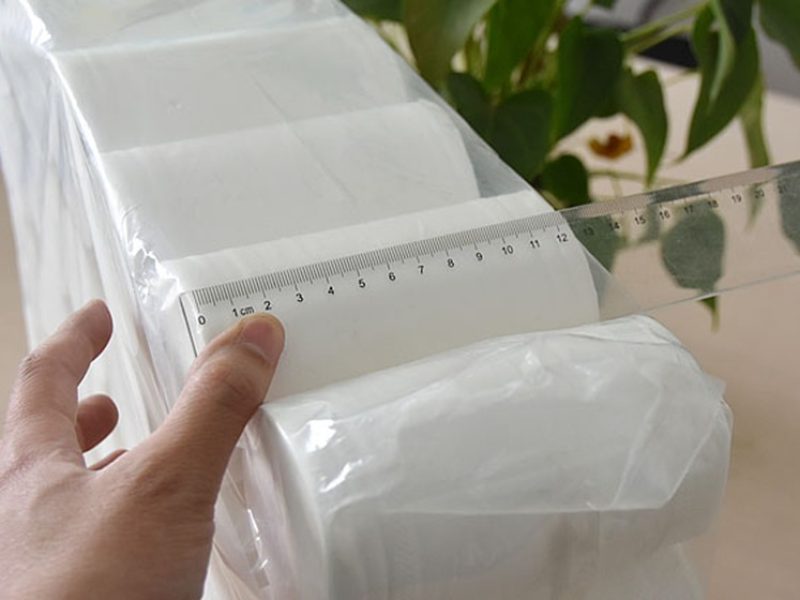
Coreless Roll Technology serves as a primary hedge against the hidden costs of shipping air and managing secondary waste streams. For eco-brands, standard cored rolls increase logistics expenses by wasting 45mm of center space, directly eroding the landed cost per unit in high-volume 40HQ shipments.
This analysis details how high-density models like the TSH-3396 optimize payloads up to 9 tons using 100% virgin wood pulp. We examine how a strict 13–22g/m² density standard and OBA-free engineering allow distributors to capture a 15% volume gain while meeting corporate ESG mandates.
The Engineering of Coreless Tissue Rolls
Coreless engineering replaces cardboard tubes with solid paper centers using high-tension rewinding. This maximizes paper length and optimizes 40HQ container payload for 2026 B2B logistics.
Manufacturing stable tissue rolls without a central tube requires a shift from traditional gravity-fed winding to high-precision tension management. Advanced rewinding units use these tension controls to ensure the roll maintains structural integrity and a circular shape despite having no internal support. This mechanical approach allows for denser rolls that do not collapse during high-speed production or international shipping.
Precision Tension Control and Shaft Stripping Systems
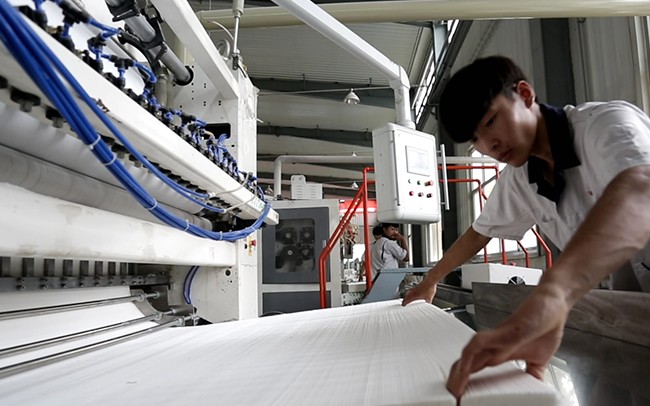
Mechanical stripping stations use shuttle plates to remove finished rolls from winding shafts. This automated step ensures the inner paper layers remain undamaged, maintaining a clean center hole for dispenser compatibility. Precision perforation systems further allow for customizable sheet lengths to meet specific regional dispenser standards.
- Perforation Standards: 90mm to 320mm lengths to suit Southeast Asian and European markets.
- Winding Technology: Combined center and surface winding to maintain roll compactness.
- Structural Integrity: Hydrogen bonding created by moisture replaces the need for cardboard supports.
High-Density Solid Roll Volume and TSH-3396 Specifications
Top Source Hygiene employs PLC-controlled systems to reach production speeds of 200 meters per minute for high-density rolls. Models like the TSH-3396 provide significantly more usable material than cored alternatives by filling the center void with paper. Automated edge trimming and tail sealing with OBA-free adhesives provide a finish that prevents unraveling during long-distance logistics cycles.
- Model TSH-3396: 5000g of 100% usable virgin wood pulp per bundle.
- Ply Density: 5-ply high-density configuration for maximum volume.
- Safety Standards: 100% OBA-Free (No Optical Brightening Agents) and septic-safe engineering.
- Production Speed: 200 meters per minute on automated Hebei production lines.
The elimination of the cardboard core directly improves the landed cost per roll. By removing the air gap in the center of the product, distributors can fit more paper into a 40HQ container, maximizing the payload to 7-9 tons per shipment. This engineering choice serves high-traffic facilities where reducing refill frequency and storage space are primary operational goals.
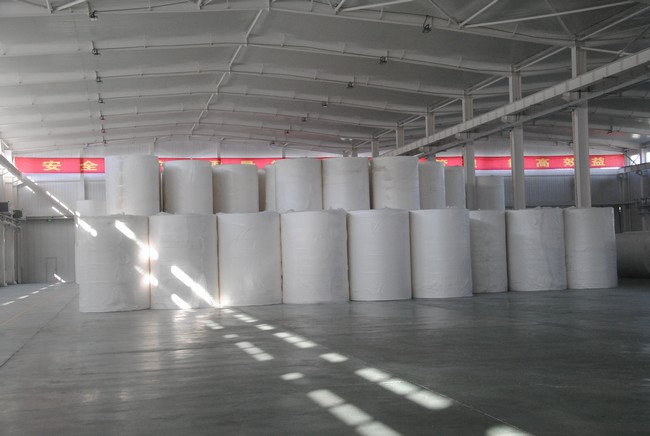
Why Coreless is the Ultimate “Zero-Waste” Statement
Coreless technology hits zero-waste by removing cardboard tubes, allowing 100% material use and maximizing 40HQ container capacity for professional B2B procurement.
Eliminating Secondary Waste in High-Volume Facilities
Standard toilet rolls create a hidden management burden. Once the paper is gone, maintenance staff must collect, store, and recycle thousands of cardboard tubes. Coreless rolls remove this secondary waste stream entirely. Since the center is wound solely with paper, users consume every inch of the product, leaving no debris behind in the dispenser or on the floor.
This shift simplifies recycling protocols. In many regions, mixed-material waste—paper scraps stuck to cardboard cores—can contaminate recycling bins. Coreless designs eliminate this issue. By removing the core, we also cut the energy required for manufacturing and transporting those tubes. For large-scale operations like airports or stadiums, this translates to hundreds of kilograms of avoided waste every month.
- Full Utilization: Every sheet is usable, ensuring zero leftover cardboard disposal.
- Streamlined Recycling: Removes mixed-material contamination in facility waste bins.
- Upstream Savings: Cuts energy and material demand for core manufacturing.
Resource Optimization with TSH-3396 Coreless Specifications
We engineered the TSH-3396 model specifically for high-density requirements. This 5-ply solid roll provides a 5000g bundle of 100% usable virgin wood pulp. By replacing the hollow center with high-density paper, we pack more volume into the same footprint, reducing the frequency of roll changes and the labor costs associated with maintenance.
Logistics play a critical role in the sustainability of the TSH-3396. Our Hebei loading teams use mechanical compression to optimize space in 40HQ containers. Because these rolls lack a hollow core, we fit more actual product per cubic meter, lowering the carbon cost per kilogram. For international buyers, this means more paper and less air in every shipment, significantly improving the landed cost and environmental ROI.
- Model TSH-3396: High-density 5-ply solid rolls with 5000g of 100% virgin wood pulp.
- Labor Efficiency: Maximum paper volume per roll reduces refill frequency and packaging waste.
- Freight Optimization: Maximizes 40HQ payload to reduce transport emissions per unit of product.
Premium Custom Toilet Paper at Factory Prices
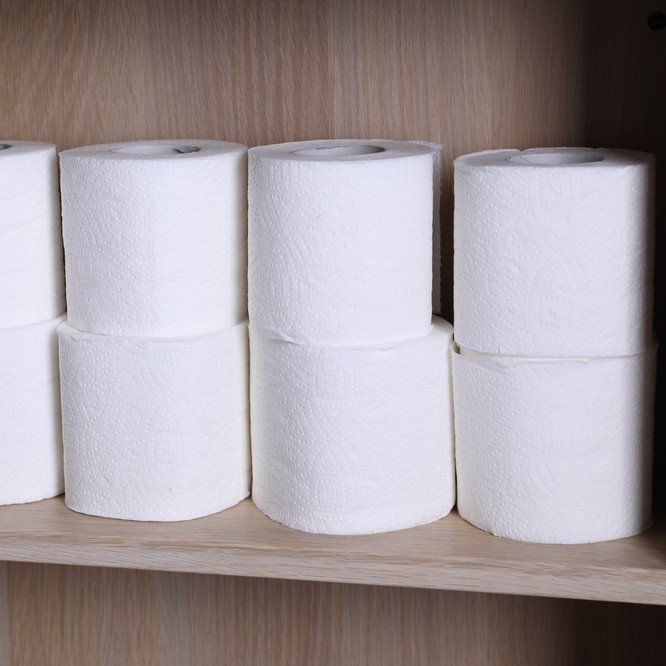
Technical Challenges: Maintaining Roll Shape Without a Tube
Coreless rolls stay stable through high-tension winding and moisture-induced hydrogen bonding. This creates a self-supporting structure that resists crushing and ensures 100% paper utilization.
Tension Calibration and Fiber Hydrogen Bonding
Automated winding systems use dual-bottom rollers to apply specific tension, creating a compact internal structure that mimics the support of a cardboard tube. This mechanical tension prevents the center from collapsing inward during high-speed production and subsequent handling.
- Hydrogen Bonding: Controlled moisture application during winding creates bonds between wood pulp fibers to secure the center passageway.
- Adhesive Sealing: Glue application or adhesive tabs on the innermost layer prevent the roll from unraveling as it reaches the end of consumption.
- Precision Shafts: Ground winding shafts distribute pressure evenly across the roll width to eliminate structural weak points and surface irregularities.
- Tail Sealing: Automated stations secure the outer paper tail with adhesive to maintain roll tightness during transport.
Mechanical Compression in High-Density Solid Rolls
Top Source Hygiene utilizes mechanical compression during the bagging process to minimize bulk for 2026 logistics standards. This technology allows high-density models to maintain their cylindrical shape even when subjected to the weight of 9-ton 40HQ container payloads.
- Ply Density: We maintain a strict 13–22g/m² standard to ensure the paper provides enough resistance to withstand external crushing.
- High-Pressure Lamination: Ply-bonding technology keeps multi-ply layers from separating, which is essential for maintaining integrity without an internal core.
- TSH-3396 Specifications: This solid roll model eliminates empty core space entirely, providing 100% paper utilization for high-traffic environments.
- Load Optimization: Dense winding allows for 7,000kg to 9,000kg payloads per container without damaging the bottom layer of the stack.
Manufacturers who fail to calibrate tension correctly often produce rolls that crush during shipping or jam in dispensers. By combining moisture-based bonding with mechanical compression, we ensure the roll functions as a self-supporting unit from the factory to the end-user.
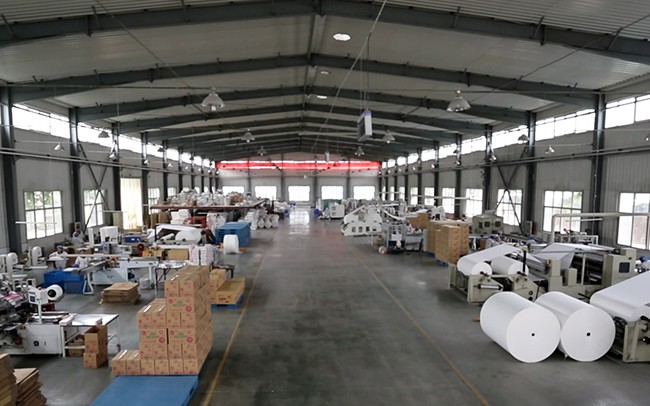
Logistics ROI: Fitting 15% More Paper in a 40HQ
Coreless rolls replace empty tube space with high-density paper. Mechanical compression fits 15% more product into a 40HQ container, reaching a 9-ton payload and slashing landed costs per roll.
| Shipping Metric | Standard Cored Roll | TSH Coreless (Solid) Roll |
|---|---|---|
| Center “Dead” Space | 40mm – 45mm (Air) | 0mm (Solid Paper) |
| 40HQ Payload Capacity | ~6,000kg – 7,000kg | 7,000kg – 9,000kg |
| Space Efficiency | Baseline | +15% Volume Gain |
| HS Code Compliance | 4818.1000 | 4818.1000 |
Volumetric Density and Coreless Roll Logistics
Standard toilet paper rolls ship a significant amount of air. The central cardboard tube creates a void of 40mm to 45mm in every single unit. In a bulk B2B shipment, this “dead space” compounds, forcing distributors to pay for shipping air across the ocean. Coreless rolls solve this by winding the 100% virgin wood pulp directly onto a mandrel, filling that central void with usable product.
- Space Recovery: Eliminating the 45mm diameter tube allows for a 100% paper-to-volume ratio.
- Roll Count Optimization: Higher paper volume per roll means fewer total rolls are needed to reach weight requirements, streamlining palletization.
- Structural Geometry: Solid rolls lack the hollow center that often collapses under pressure, allowing tighter bundle configurations and more stable stacking.
Mechanical Compression and 9-Ton Container Payloads
Our factory in the Hebei industrial hub uses secondary mechanical compression during the primary bagging stage. This process shrinks the outer dimensions of the bundles without damaging the fiber integrity or “fluffiness” of the tissue. For a 40HQ container, this increased density translates directly into higher weight payloads and lower landed costs per kilogram.
- Payload Range: TSH loading teams configure 40HQ containers to reach a total payload between 7,000kg and 9,000kg.
- Model Specifics: High-density models like TSH-3396 and TSH-3082 maximize cubic meter utilization for industrial and retail buyers.
- Economic Impact: Increasing the payload to 9 tons reduces the freight cost per roll, protecting margins for wholesalers in price-sensitive markets like Africa and Southeast Asia.
We strictly use 5-ply export-grade secondary packaging to ensure these high-density bundles do not burst or deform during transit. This strategy ensures the 15% extra paper arrives in retail-ready condition while maximizing your shipping budget.
Dispenser Compatibility and Center-Pull Innovation
Coreless systems eliminate tubes to provide 15% more paper per roll, fitting specialized hardware like T7/T5 formats to ensure 100% utilization in high-traffic zones.
Adapting Coreless Technology to Proprietary Dispenser Systems
Coreless rolls require a specific mechanical interface rather than a standard spindle. Standardized formats like the T7 and T5 allow facility managers to streamline inventory across different restroom sizes while maintaining a unified supply chain from a single factory source.
- System Integration: Fully compatible with T7 and T5 compact architectures for standardized restocking and inventory control.
- Hardware Scaling: Modular designs support configurations ranging from compact 2-roll units to high-capacity 4-roll setups.
- Waste Mitigation: Removes the internal cardboard tube entirely, which reduces total packaging waste by up to 47%.
- Compliance: ADA-compliant hardware compatibility ensures accessibility across all commercial facility management projects.
Maximizing High-Traffic Efficiency with JRT08 and Oversized Formats
For massive venues like airports or malls, standard household rolls fail under the pressure of constant use. We engineered oversized formats and high-density rolls to handle high-frequency traffic without requiring hourly technician intervention.
- Model TSH-JRT08: A heavy-duty Jumbo Roll Tissue designed specifically for the highest-traffic commercial environments.
- Model TSH-3099: A specialized 235mm wide oversized solid roll tailored for wide-format dispenser housings.
- 100% Utilization: The coreless design ensures every inch of the virgin wood pulp is used, leaving no tube waste for cleaning staff to collect and discard.
- Tensile Strength: Precision-controlled ply density of 13–22g/m² ensures the paper feeds reliably through dispensers without tearing or jamming.
Customizing Sheet Density for High-Traffic Facilities
High-traffic facilities use customized GSM (13–22g/m²) to balance strength and softness, reducing waste and maintenance costs in airports and transit hubs through 2026.
Paper performance in high-volume restrooms depends on specific density metrics. Standard institutional tissue often fails because it lacks the structural weight to survive high-speed dispensing. We focus on Grams per Square Meter (GSM) to solve these mechanical failures at the source.
Defining the Impact of GSM on High-Volume Usage
Higher density levels directly improve tensile strength. This prevents paper from breaking mid-dispense, which is a common frustration in high-pressure environments like stadiums or transit hubs. When we optimize density, we achieve three primary operational goals:
- Breakage Prevention: Increased fiber density ensures the sheet withstands the pull force of industrial dispensers.
- Edge Integrity: Precision-engineered density eliminates the “shredded edge” effect common in low-quality institutional rolls.
- Consumption Control: Higher absorbency through density optimization allows users to finish with fewer sheets, lowering total consumption.
Implementing the 13–22g/m² Precision Standard
We maintain a strict technical range for our commercial partners to ensure consistency across large-scale container orders. Our Hebei facility calibrates production lines to meet these specific hardware and user requirements.
- Customizable Density: We offer a ply density range from 13g/m² to 22g/m² to match regional preferences for durability.
- Advanced Embossing: Our point-to-point CNC technology increases surface area absorbency by 30% without increasing the actual roll weight.
- Fiber Selection: We use 100% Virgin Wood Pulp to provide the structural integrity needed for high density while maintaining a lint-free, skin-friendly texture.
- Ply-Bonding: Multi-ply layers are bonded using high-pressure lamination to ensure sheets stay together during heavy use.
By focusing on these technical specifications, facility managers reduce refill frequency and maintenance labor. This approach ensures that even the most demanding environments maintain high hygiene standards without excessive material waste.
Marketing the “Greenest Roll” to Corporate Clients
Marketing coreless rolls centers on merging zero-waste ESG mandates with operational savings. Removing cores cuts maintenance and logistics costs while maximizing payload efficiency for high-traffic corporate environments.
Aligning ESG Goals with Supply Chain Efficiency
Corporate procurement teams today are looking for measurable reductions in their waste footprint. While traditional rolls leave behind millions of cardboard tubes annually, the coreless design allows a facility to move toward a true zero-waste restroom environment. We see this shift most prominently in hospitality and high-traffic retail where waste disposal costs are a significant overhead line item.
- Waste Stream Elimination: Removing the cardboard core eliminates 100% of the internal tube waste, helping clients meet corporate sustainability mandates without changing user behavior.
- Logistics ROI: By packing more paper into every pallet, we optimize 40HQ container payloads up to 9 tons. This reduces the number of deliveries required and lowers the carbon footprint of the entire supply chain.
- Operational Savings: High-density models, such as the TSH-3396, provide significantly more footage per roll. This reduces refill frequency, which cuts labor costs and minimizes maintenance disruptions in busy facilities.
Leveraging FSC-Certified and OBA-Free Material Standards
Trust in the B2B sector is built on certifications and chemical safety. Corporate clients, particularly in North America and Europe, require proof that the products they stock are safe for both the user and the local infrastructure. Our focus remains on the purity of the fiber and the absence of irritants.
- Chemical Safety: We guarantee 100% OBA-Free (No Optical Brightening Agents) materials. Our paper achieves a natural brightness of 85-92% through fiber selection rather than fluorescent whiteners, protecting users with sensitive skin.
- Material Origin: We utilize 100% Virgin Wood Pulp to ensure superior tensile strength and a lint-free experience. This high-purity long-fiber material provides the softness corporate clients expect from premium brands.
- Infrastructure Integrity: Rapid disintegration is a core engineering requirement. Our rolls are designed to dissolve quickly in water, meeting strict septic-safe standards to prevent plumbing clogs and expensive facility downtime.
Frequently Asked Questions
How is toilet paper manufactured without a cardboard center?
Production lines use a specialized winding process where we treat the first layers of tissue with a light aqueous solution. This moisture creates natural hydrogen bonding between the 100% virgin wood pulp fibers. The roll maintains its structural shape around a removable mandrel during the high-speed rewinding phase, eliminating the need for a separate cardboard tube entirely.
Will coreless rolls fit into standard bathroom dispensers?
Coreless rolls require dispensers designed with side-grip mandrels or specialized thin spindles rather than traditional wide-core holders. For commercial facilities, we provide compatible solutions like the TSH-JRT08 jumbo system to ensure smooth rotation. These systems allow for higher capacity in the same footprint compared to cored alternatives.
What are the logistical advantages of coreless tissue for 2026 exports?
Removing the center tube allows us to pack 15% more usable paper into every 40HQ container. This high-density strategy maximizes our 9-ton payload capacity and significantly lowers the landed cost per roll for distributors. By shipping more paper and less air, wholesalers reduce their total number of annual shipments and warehouse space requirements.
How do you prevent coreless rolls from collapsing during transit?
We apply high-pressure ply-bonding and mechanical lamination during the winding phase to increase the structural integrity of the roll. For export orders, we pack the finished goods in 5-ply reinforced cartons with secondary poly-bundle protection. This setup handles the high-stacking pressure inside overseas containers without deforming the rolls.
Can I customize the roll diameter and width for my brand?
We offer customizable widths ranging from 102mm to 132mm. We also adjust the outer diameter based on your weight requirements, such as our high-density 5000g TSH-3396 model. These customizations are available for all private label orders with a 1 x 40HQ container minimum order quantity.
Does removing the cardboard core improve sustainability ratings?
Switching to coreless technology reduces packaging waste by up to 95% and eliminates 100% of the solid waste from discarded tubes. This helps facilities meet 2026 green building standards and aligns with corporate ESG goals. Since every inch of the roll is usable, it removes the material waste often found in high-traffic commercial environments.
Final Thoughts
Cheap rolls with cardboard cores force you to pay for shipping air and create hidden waste management costs for your clients. Adopting the TSH coreless standard eliminates these burdens while securing a 15% volume gain in every 40HQ container. High-density inventory like the TSH-3396 protects your margins and proves your commitment to zero-waste ESG mandates.
Stop paying for empty space and start maximizing your payload with a 40HQ trial order of our solid roll series. Contact our Hebei engineering team today to request a sample kit or discuss custom OEM specifications for your local market. We provide pre-shipment visual verification to ensure your private label order meets the highest professional hygiene standards.