

Fiber Traceability (DNA) serves as a critical legal shield for importers navigating 2026 EUDR mandates and the financial risk of unknown pulp. Relying on paper-based documentation exposes brands to forged certificates, leading to costly shipment seizures and regulatory penalties that destroy B2B margins.
This analysis details how forensic molecular tagging ensures 100% Virgin Wood Pulp integrity at the Hebei Paper Industrial Hub. We benchmark these technical records against 100% OBA-Free standards and 13-22g/m² ply density to guarantee every 40HQ container meets North American and European safety specifications.
Why is Absolute Traceability the Cure for “Unknown” Pulp?
Forensic traceability eliminates “unknown” pulp by creating a biological record of origin, ensuring 100% virgin wood pulp meets 2026 legal standards and prevents illegal timber entering supply chains.
Mitigating Compliance Risks in the Global Fiber Supply Chain
Importing wood pulp involves significant risk when the fiber origin remains opaque. “Unknown” pulp describes fibers that lack verifiable documentation or originate from high-risk deforestation zones, leaving distributors and wholesalers legally vulnerable. Traditional paper trails often fail to detect when recycled waste or uncertified wood is mixed during processing at the mill.
- Forensic Validation: Technologies like DNA testing and Stable Isotope Ratio Analysis (SIRA) establish a permanent biological link between the finished product and the specific forest of origin.
- Regulatory Deadlines: By 2026, global standards like the EUDR require strict data transparency, including polygon-level geospatial data for sourcing areas.
- Liability Protection: Using scientific proof of origin allows importers to bypass the risks of forged compliance documents often found in complex logistics chains.
Securing Material Integrity with 100% Virgin Wood Pulp Specifications
Material integrity starts with the raw fiber. Top Source Hygiene utilizes 100% Virgin Wood Pulp to provide a clean fiber stream, ensuring that rolls remain free from the contaminants often found in recycled materials. Sourcing directly from the Hebei Paper Industrial Hub allows us to monitor raw material quality and maintain batch consistency for every container load.
- OBA-Free Guarantee: Traceable supply chains ensure that no Optical Brightening Agents (fluorescent whiteners) are introduced at any stage of production.
- Technical Performance: Our traceable fiber supports strict ply density standards of 13–22g/m², balancing cloud-like softness with high tensile strength.
- Global Standards: These material specifications ensure that our household and commercial rolls meet the safety and septic-safe requirements of North American and European markets.

How Does Fiber DNA Testing Work in B2B Sourcing?
Fiber DNA testing creates a forensic molecular trail, using PCR technology to verify 100% virgin wood pulp and detect unauthorized blending throughout the global supply chain.
Paper sourcing traditionally relies on paper-based transaction certificates that are prone to forgery. Molecular tagging moves the verification process from the documentation to the fiber itself, ensuring that the physical product matches the technical specifications promised by the factory.
PCR Amplification and Molecular Tagging
This forensic process identifies raw materials at the molecular level. It provides a permanent record that survives high-temperature industrial processing and high-pressure ply-bonding lamination used in professional tissue production.
- Synthetic DNA markers: Microscopic barcodes bind to raw pulp fibers during the early stages of processing at the mill.
- PCR technology: Laboratories use Polymerase Chain Reaction to amplify tiny DNA segments for forensic-grade identification of fiber origin.
- Verification touchpoints: Testing occurs at the mill, during the conversion stage, and again before the final 40HQ container loading.
- Forensic reporting: Importers receive a Certificate of Analysis within five business days to document supply chain transparency.
Verifying 100% Virgin Wood Pulp Integrity
In the Hebei paper industrial hub, DNA testing protects the integrity of premium long-fiber wood pulp. This technology prevents the “unknown pulp” problem where factories might blend cheaper recycled materials into high-purity orders.
- Purity Assurance: Testing confirms that Top Source Hygiene products contain 100% virgin wood pulp with no unapproved recycled waste.
- OBA-Free Verification: Molecular analysis detects the absence of fluorescent brightening agents to guarantee 100% OBA-Free safety for sensitive skin.
- Batch Consistency: DNA analysis maintains color and tensile strength uniformity across large-scale wholesale orders.
- Regulatory Compliance: Forensic auditing provides scientific evidence that materials meet strict FDA and EU hygiene standards for international trade.
Build Your Unique Toilet Paper Brand

Can Isotope Analysis Verify the Geographical Origin of Timber?
Stable Isotope Ratio Analysis (SIRA) identifies wood origins by matching chemical signatures to geographic maps, providing forensic proof of origin for 100% Virgin Wood Pulp shipments.
Identifying Origin through Stable Isotope Ratio Analysis
Wood cellulose acts as a biological record of the environment. Every tree absorbs local water and nutrients, which leave a permanent chemical mark. Scientists use these markers to verify where the timber grew, bypassing easily forged paper trails.
- Chemical Fingerprinting: Labs measure ratios of hydrogen, carbon, and oxygen isotopes within wood cellulose to create a unique profile.
- Isoscapes: Analysts match these signatures against geographic maps defined by local precipitation, temperature, and soil geology.
- Fraud Detection: This process flags discrepancies between the physical timber sample and its shipping documentation.
- Scientific Confidence: Probabilistic modeling assigns timber samples to specific regions with high precision.
Verifying 100% Virgin Wood Pulp for Global Compliance
For international distributors, isotopic verification is a legal shield. It proves that the 100% Virgin Wood Pulp used in products like Top Source Hygiene toilet rolls meets the strictest global standards. This data ensures your supply chain remains transparent and audit-ready.
- Regulatory Alignment: Isotopic testing ensures shipments comply with 2026 EUDR and FSC standards.
- Hebei Hub Validation: We validate the material integrity of pulp sourced from the Hebei Paper Industrial Hub for our global distribution partners.
- Safety Audits: Testing supports our OBA-free guarantee by auditing the biological and chemical history of the raw timber.
- Customs Efficiency: We support the 40HQ container export process with batch-specific verification data to satisfy strict logistics requirements.
Scientific verification replaces trust with data. When a 40HQ container leaves our facility, isotopic analysis confirms the pulp is exactly what the documentation claims: pure, legal, and sustainable.

How to Align with EUDR Using Digital Forest Records?
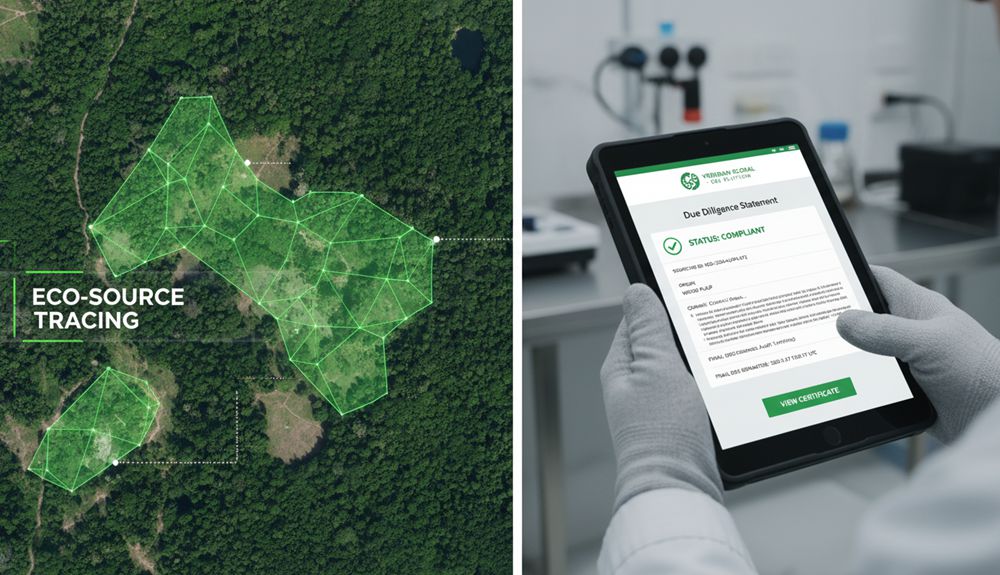
By 2026, EUDR mandates linking every pulp batch to plot-level geospatial polygons with a December 2020 baseline to prove zero deforestation.
| Compliance Pillar | Technical Requirement |
|---|---|
| Geospatial Data | Polygon boundaries for plots > 4 hectares. |
| Cut-off Date | Zero deforestation proof after Dec 31, 2020. |
| Documentation | Mandatory Due Diligence Statement (DDS) per 40HQ container. |
Mandatory Geospatial Mapping and Polygon Boundaries
The European Union Deforestation Regulation (EUDR) shifts the burden of proof from paper certificates to physical land data. We map every sourcing plot to ensure fiber origin remains transparent and verifiable for our European distribution partners.
- Geolocation Precision: We collect and maintain precise GPS coordinates for all production plots used in our pulp sourcing.
- Polygon Boundaries: For land areas exceeding 4 hectares, we provide digital polygon files instead of single GPS points to define exact production area boundaries.
- Satellite Monitoring: Our systems utilize continuous forest monitoring to detect land-clearing anomalies or disturbances in real-time.
- 2020 Baseline: Every record verifies that the sourcing area has remained deforestation-free since the December 31, 2020 cutoff.
Verifying Compliance Through FSC-Certified Virgin Wood Pulp
Top Source Hygiene streamlines European exports by integrating batch-specific origin data directly into our digital record-keeping system. This approach removes the risk of “unknown pulp” that often plagues complex supply chains.
- FSC Traceability: We use 100% Virgin Wood Pulp with full FSC certification to simplify digital audits for private label owners.
- Hebei Hub Integration: Fiber origin data from our Hebei manufacturing facility syncs with digital records to track pulp from the forest to the final toilet roll.
- Automated DDS: Every 40HQ container destined for Europe includes an automated Due Diligence Statement (DDS) containing mandatory geolocation and legality data.
- Standardized Spec Sheets: Our documentation includes common and scientific names for all wood species used in production, ensuring full compliance for models like the TSH-1071.
What is the ROI of a Fraud-Proof Supply Chain for Global Brands?
Supply chain transparency drives a 3-7% net profit increase by cutting recall costs, optimizing bulk buying, and eliminating the financial risks of unverified raw materials.
B2B margins often bleed through invisible inefficiencies and “unknown” variables in the sourcing process. By 2026, international buyers implementing DNA-verified and transparent supply chains expect a measurable shift in their bottom line. This return is not just about avoiding disaster; it is about reclaiming capital lost to supplier inconsistencies and manual compliance checks.
Direct Profit Growth and Operational Efficiency Gains
True transparency allows brands to strip away the “unknown” costs that plague high-volume paper procurement. When the origin of every fiber is verifiable, the supply chain becomes a source of data-driven profit rather than a liability.
- Margin Improvement: Industry data shows that brands can reclaim USD 3-6 billion in annual collective margins by removing sourcing blind spots.
- Efficiency Gains: Traceability systems identify excess ordering patterns and enable bulk buying optimization, resulting in a 3-7% net profit increase for large-scale retailers.
- Earnings Predictability: Accurate forecasting depends on the removal of supplier variables. Verifiable sourcing ensures earnings remain stable by preventing unexpected quality spikes or shortages.
- Regulatory Savings: Automated compliance reduces the administrative labor required to meet 2026 international trade barriers and timber regulations.
Protecting Margins through Pre-Shipment Visual Verification
Operational ROI also depends on the physical integrity of the goods received. Preventing sub-standard material from reaching the port saves thousands in shipping costs and potential dealer disputes. At Top Source Hygiene, we focus on factory-level verification to secure these margins before the container is sealed.
- Material Integrity: Pre-shipment visual verification of 100% Virgin Wood Pulp prevents the financial loss associated with receiving mixed-recycled or sub-standard goods.
- Compliance Safety: Strict 100% OBA-Free guarantees eliminate the risk of total product rejections in North American and European markets due to chemical non-compliance.
- Brand Equity Protection: Batch color consistency and precision perforation reduce consumer returns, directly protecting the margins of B2B distributors and hospitality groups.
- Logistics Optimization: Payload optimization in 40HQ containers—typically reaching 7,000kg to 9,000kg—ensures the lowest landed cost per roll for every shipment.
By focusing on the physical reality of the product through “Pre-Shipment Visual Verification,” brands replace trust with evidence. This approach secures the cash flow of our partners, ensuring that pictures and videos of finished goods are reviewed before any balance payment occurs.

Frequently Asked Questions
What physical evidence proves the origin of wood pulp in tissue products?
Forensic methods like anatomical microscopy identify fiber species, while stable isotope analysis pinpoints regional environmental signatures. Genetic fingerprinting offers a third layer of proof. These parameters stay permanently embedded in the wood structure, making them more reliable and fraud-resistant than external labels or paper documentation.
How does DNA fiber testing improve supply chain transparency?
This technology uses molecular markers, such as synthetic DNA tags or native fiber analysis, to create an invisible fingerprint within the product. It allows brands to verify species composition and track materials back to specific plantations. This ensures raw materials match label claims and prevents adulteration during manufacturing.
Can isotope analysis detect the specific harvest region of bamboo?
Isotope analysis identifies geographical regions by measuring carbon, nitrogen, and strontium ratios that reflect local soil and climate. While effective for broad regional checks, distinguishing between neighboring harvest sites requires a multi-isotope approach to maintain high accuracy.
How does forensic testing support EUDR compliance for B2B importers?
Forensic testing provides scientific verification for the geolocation data required under the EU Deforestation Regulation. By analyzing the physical product independently of digital records, importers can prove their shipments are deforestation-free, which reduces the risk of penalties during regulatory audits.
What are the typical costs and timelines for implementing traceability systems?
Implementation costs range from €10,000 for small brands to over €500,000 annually for global enterprises. Most companies require 6 to 24 months for full deployment, covering everything from technical setup to staff training. Many see a return on investment within 18 months through improved supply chain efficiency.
Are there accredited labs specializing in tissue industry fiber forensics?
Several accredited facilities, such as Intertek and RJ Lee Group, provide fiber analysis using microscopy and chemical testing. Sourcing professionals should look for laboratories with ISO/IEC 17025:2017 accreditation that specifically offer material analysis for manufacturing and supply chain applications.
Final Thoughts
Relying on “unknown” pulp creates unnecessary legal vulnerability and erodes B2B margins through hidden sourcing inconsistencies. Utilizing forensic-verified 100% Virgin Wood Pulp from the Hebei Paper Industrial Hub guarantees 2026 compliance and total batch consistency. This data-driven approach secures your reputation and prevents the costly product rejections common in North American and European markets.
Secure your supply chain before the next regulatory deadline. We suggest requesting a full technical catalog or a sample of our TSH-1071 model to evaluate our ply-bonding and OBA-free standards firsthand. Contact our wholesale team to discuss how we can integrate DNA-verified traceability into your private label 40HQ orders.