
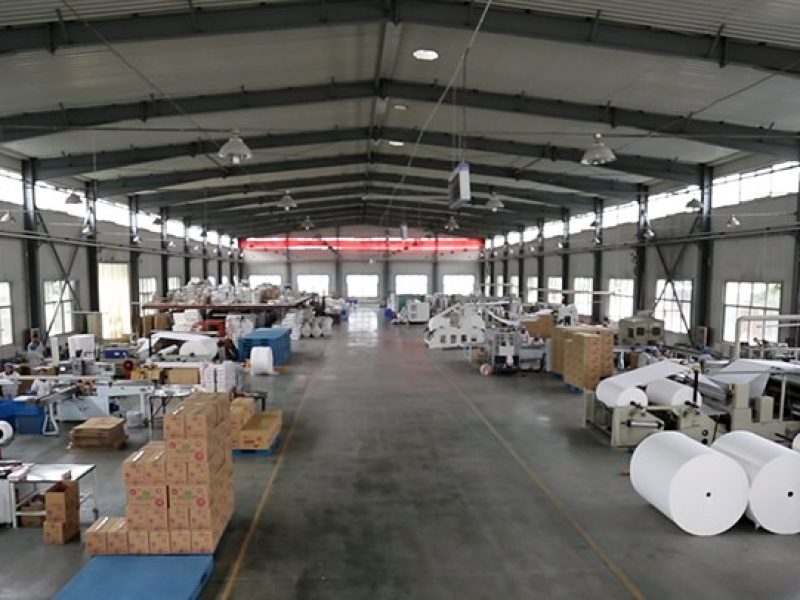
Luxury 4-Ply Tissue sits between premium guest experience and costly operational downtime from plumbing blockages and guest complaints, a single procurement decision that can erode occupancy, spike maintenance overtime, and trigger chargebacks. For luxury retailers and boutique hotels, tissue choice affects more than hand-feel: it ties directly to guest satisfaction scores, service recovery costs, and the gross margin on premium bathroom amenities.
This guide acts as a technical SOP for sourcing and merchandising luxury 4-ply tissue. It evaluates whether 4-ply is the new gold standard for residential luxury, drills into the core commercial question—can 4-ply justify a 30% price premium—with margin modeling and willingness-to-pay evidence, then breaks down cushion engineering, surface finishing on 100% virgin pulp, disintegration behavior for sewer and septic systems, and packaging tactics that protect shelf appeal and margin. You’ll get test protocols, spec thresholds, and practical vendor criteria you can plug straight into RFPs, product trials, and procurement scorecards.
Is 4-Ply Toilet Paper the New Gold Standard for Luxury Residential Markets?
Decide if 4‑ply delivers measurable margin or creates compatibility and logistics costs before you commit to new SKUs or container buys.
Performance metrics: compare ply by GSM, tensile strength and absorbency
Use ply density as your baseline metric: set targets between 13–22 g/m² per ply to balance softness and wet strength. Calculate sheet GSM to compare constructions quickly (example: 3‑ply ≈ 39–66 g/m²; 4‑ply ≈ 52–88 g/m²). Choose long‑fiber 100% virgin wood pulp when you need higher tensile strength and a lint‑free surface; expect bamboo or recycled pulp to lower tensile values and change the hand‑feel.
Combine mechanical finish and embossing to improve performance without raising GSM: use point‑to‑point CNC embossing to boost absorbency by roughly 30% and create perceived softness through controlled air pockets. Aim for natural brightness between 85–92% using fiber selection rather than OBAs to support skin‑sensitive positioning. For plumbing safety, set acceptance criteria around North American and European rapid disintegration tests and verify every batch with a standardized septic test before market release.
- Target ply density: 13–22 g/m² per ply; document total GSM for each SKU.
- Material spec: 100% long‑fiber virgin wood pulp for highest tensile strength and lint control.
- Embossing: CNC point‑to‑point patterns to increase absorbency ~30% without added GSM.
- Finish: natural brightness 85–92%, OBA‑free; require batch color consistency checks.
- Dissolution: mandate third‑party septic/disintegration certification for NA/EU markets.
Residential fit: roll dimensions, dispenser compatibility and core vs coreless trade-offs
Test a range of widths — 102 mm, 104 mm, 105 mm and up to premium 132 mm — to confirm dispenser clearance and user comfort; wider formats improve perceived luxury but may require dispenser upgrades. Review roll weight and packing variants across 780 g–5000 g bundles and choose individual wrap for hospitality hygiene or direct bundle for retail cost efficiency and shelf density.
Consider coreless heavy bundles (for example, 5000 g/28 rolls) to maximize meters per container and lower landed cost per metre, but plan dispenser compatibility tests and change‑handling procedures because legacy mechanical dispensers can jam with thicker plies. Run onsite plumbing flush/disintegration trials in representative residential systems to confirm 4‑ply performs on par with existing 3‑ply septic‑safe products before you scale.
- Measure roll diameter, sheet thickness and feed tension; record maximum allowed diameter for target dispensers.
- Run fit tests on legacy mechanical dispensers to detect feed or jamming issues.
- Compare packaging: individual wrap for hotels versus direct bundles for high‑volume retail logistics.
- Perform a flush/disintegration trial on representative residential plumbing and document clog or slow‑breakage incidents.
Market and cost evaluation for 2026 adoption: pricing premiums, logistics and pilot steps
Read market signals carefully: as of 2026 the premium momentum centers on 3‑ply embossed tissue — hotels report ~42% placement — so 4‑ply remains a niche luxury play rather than an established mainstream standard. Expect premium variants such as lotion‑infused or embossed products to command roughly 30–50% price premiums; model margin impacts before you expand SKUs to avoid diluting net profitability.
Plan logistics around factory MOQ and container economics: require a 1 × 40HQ for private label or custom packs, and optimize payload at 7–9 tons per 40HQ to reduce landed cost per roll. Use standard lead times — 10–15 days for in‑stock dispatch, 20–25 days for full production — and insist on pre‑shipment visual verification plus batch color consistency checks to protect brand quality.
- Run a controlled pilot: one 40HQ trial or smaller matched SKUs to measure sell‑through and returns.
- Track metrics: sell‑through rate, dispenser failure rate, customer complaints, and return volumes.
- Include cost checks: landed cost per roll using 7–9 ton payload scenarios and projected margin at a 30%–50% retail premium.
- Require pre‑shipment photos/videos and batch brightness checks before releasing the final balance payment.
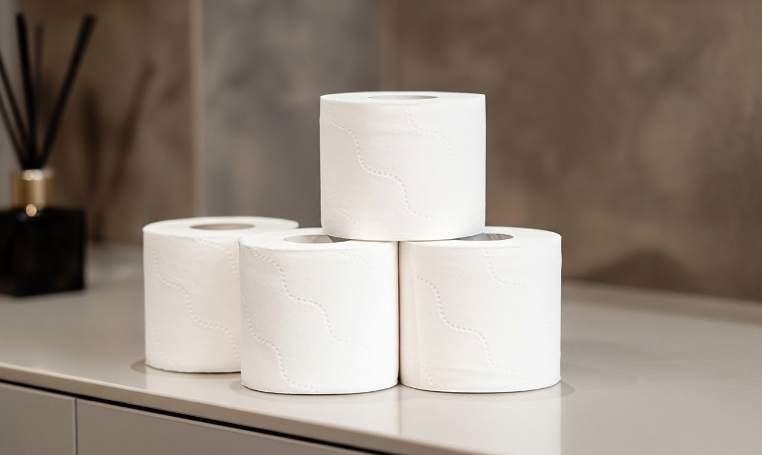
Can 4-Ply Tissue Effectively Justify a 30% Price Premium?
Tie a 30% premium to measurable performance lifts (strength, absorbency, sensory) and verified landed-cost protection for channel partners.
Set measurable product performance targets for 4‑ply premium positioning
Specify target inputs first: aim for 16–20 g/m² per ply (total 64–80 g/m²) while maintaining factory control range 13–22 g/m² per ply. Require 100% virgin wood pulp, OBA-free, and brightness 85–92% as the baseline material specification so buyers can compare like-for-like with competing premium products.
Translate material specs into testable outputs: record dry tensile (N), wet tensile retention (%), absorbency (g water/g paper), caliper change (µm) after embossing, and a trained-panel sensory score. Specify embossing as point-to-point CNC embossing that targets ~30% absorbency gain; document emboss depth, pattern repeat and caliper delta. Set acceptance thresholds that link to the premium claim — for example sensory score ≥8/10, dry tensile ≥X N (benchmarked vs your 3‑ply baseline), and absorbency ≥30% lift over the selected 3‑ply comparator.
- Material: 100% Virgin Wood Pulp, OBA-free, brightness 85–92%
- GSM target: 16–20 g/m² per ply (total 64–80 g/m²)
- Embossing: CNC point-to-point; document depth, repeat, caliper change (µm)
- Lab targets: dry tensile (N), wet tensile retention (%), absorbency (g/g), panel score ≥8/10
Build a unit-cost and landed-cost model to quantify the 30% premium gap
Construct a bottom-up BOM that lists virgin pulp cost (kg), papermaking energy (kWh per tonne), embossing/lamination labor and tooling, perforation tooling, individual-wrap vs bundle packaging, and carton/export costs. Use representative SKUs — for example TSH-2214 (4‑ply 1900g/10 rolls) and TSH-2269 (165mm wide 2800g/12 rolls) — to compute per-roll raw material and processing cost from bundle weights and GSM targets.
Model landed cost per roll using 40HQ payload assumptions (7–9 tonnes). Convert container-level freight, insurance and port fees to a per-roll charge at multiple fill densities. Run sensitivity scenarios (pulp ±10–20%, energy ±15%, packaging +/- X%) to calculate breakeven premium and required channel margin. Produce a margin ladder that maps verified lab + sensory uplifts to price steps (e.g., +10% = measurable absorbency lift; +20% = tensile + user NPS; +30% = full package of lab results, dispenser compatibility and branded packaging).
- Use SKU pack weights to derive per-roll mass and material usage
- Assume 40HQ payload 7–9 tonnes to compute per-roll freight allocation
- Run sensitivity: pulp ±10–20%, energy ±15%, packaging adjustments
- Produce a margin ladder tying specific lab/field uplifts to price increments up to and beyond 30%
Define laboratory test protocols for strength, absorbency, disintegration and chemical safety
Adopt standardized methods for tensile, caliper and basis-weight: report dry tensile (N) and wet tensile retention (%) using ISO/ASTM methods where applicable, and record caliper and basis weight to verify the 13–22 g/m² per‑ply control range. Measure absorbency as grams of water absorbed per gram of sheet and log strike-through time; run paired tests with and without CNC embossing to quantify the expected ~30% absorbency gain.
Include septic and disintegration procedures aligned to North American and European expectations: record time-to-fragment under agitation and residual particle-size after set intervals. Run chemical assays to confirm OBA-free status and absence of fluorescent whiteners and retain certificates for FDA/EU hygiene audits. Define sample sizes and acceptance criteria (e.g., n≥30 sheets per SKU, batch-level pass/fail rules) and log test conditions (23°C, 50% RH) for reproducibility.
- Tensile: report N (dry) and % (wet retention) per ISO/ASTM
- Absorbency: g water / g paper; run emboss vs non-emboss comparison
- Disintegration: time-to-fragment, residual particle-size; document method and bench targets
- Chemical safety: OBA-free assay, retain certificates for FDA/EU
- Sampling: n≥30 sheets per SKU; test at 23°C / 50% RH
Run dispenser and user-handling compatibility trials
Verify roll geometry across the common range: sheet width options 102–132 mm, roll OD, core ID or coreless format, and compressed vs uncompressed diameter to ensure fit in legacy mechanical and hotel dispensers. Measure mechanical performance: perforation tear force (N), sheet separation reliability, and conduct a 1,000-cycle dispense test to record jams and double-sheets.
Test on both legacy machines and modern hotel dispensers and log required capex or retrofit rate that will affect buyer adoption. Evaluate packaging formats (individual wrap vs bundle) for hygiene claims, damage rate in shipping, and pick/pack labor. Capture in-situ user feedback on hand-feel, perceived thickness and perceived value and correlate those scores to lab metrics to build a defensible premium narrative.
- Geometry checklist: width 102–132 mm, OD, core ID/coreless, compressed diameter
- Mechanical tests: perforation tear force, 1,000-cycle dispense, double-sheet rate
- Dispenser matrix: record which dispensers fit without retrofit and estimated retrofit capex
- Packaging trial: hygiene, damage rate, pick/pack labor impact
- User feedback: correlate panel scores to lab tensile/absorbency results
Design field pricing experiments and KPI framework to validate a 30% premium
Plan A/B pilots across two channels: hospitality (target luxury hotels using TSH-2269/TSH-4010) and retail/wholesale (urban retail using TSH-2214). Run the pilot for 8–12 weeks and control placement and promotional activity to isolate price effect. Size each arm for statistical power — aim for several hundred bundles per arm depending on SKU turnover.
Track KPIs: sell-through rate, reorder rate, price elasticity, complaints per 1,000 rolls, return rate, and NPS or guest satisfaction lift. Monitor contribution margin per roll and per container after premium, including freight, packaging and any dispenser retrofit amortization. Set clear go/no-go rules: require minimum uplift in sell-through and reorder rate that offsets incremental cost and demand concurrent passing lab and dispenser compatibility signals before you scale the 30% premium beyond pilot markets.
- Channels: hospitality (TSH-2269/4010) and retail (TSH-2214)
- Pilot length: 8–12 weeks; volume: several hundred bundles per arm
- KPIs: sell-through, reorder, price elasticity, complaints/1,000, NPS lift
- Financial: contribution margin per roll/container after premium and retrofit costs
- Go/no-go: require lab pass + field sell-through uplift that covers incremental landed cost
Build a Profitable Toilet Paper Brand
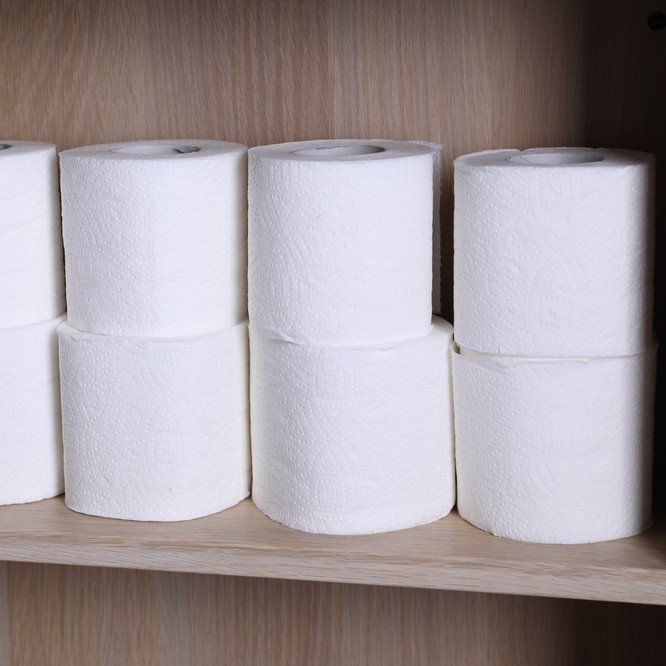
Cushion Engineering: The Role of Multi-Layer Air Pockets in Softness
Controlled emboss geometry and ply specs deliver measurable cushion without sacrificing wet-strength or disintegration — essential for premium, septic-safe product lines.
Air-pocket Geometry: specifying emboss pattern, pocket spacing and bulk targets
Use CNC point-to-point embossing to create discrete air pockets that raise caliper and tactile cushion while keeping the sheet structure intact; Top Source Hygiene data shows point-to-point emboss patterns increase absorbency by roughly 30%. Set ply GSM per layer between 13–22 g/m² so pocket walls hold form without tearing under conversion and usage. Match pattern repeat and pocket diameter to the chosen GSM: finer pockets for lower GSM, larger pockets for heavier plies.
Specify dimensional targets in SKU production specs: target caliper (mm) and porosity (Gurley air-permeability, ISO method) rather than arbitrary emboss depths. Validate caliper with a micrometer and verify porosity with Gurley tests. Optimize pocket spacing to preserve compressibility and tactile cushion while meeting wet tensile strength requirements for the intended end-use (hotel-grade vs. industrial). Document pattern-to-width mapping so emboss patterns scale consistently across standard widths (102–132 mm).
- Emboss method: CNC point-to-point; design for ~30% absorbency gain versus flat sheet.
- Ply GSM: 13–22 g/m² per ply; select pocket diameter to match GSM.
- Tests: micrometer caliper and Gurley air-permeability (ISO series) per SKU.
- Pattern scaling: provide pattern-to-width mapping for 102–132 mm roll widths.
Ply-bonding and structural integrity: preserving pockets while ensuring layer adhesion
Specify high-pressure lamination parameters as controlled process variables: record roller pressure, nip dwell and temperature for each run so operators reproduce bonding without collapsing air pockets. Prefer intermittent bonding lines or zone bonding over full-surface lamination when you need maximum pocket volume; capture bond geometry and spacing in engineering drawings so the converting line repeats the bond pattern reliably.
Require peel and inline tensile tests to confirm ply separation thresholds by product class (hotel-grade vs. industrial). Adjust bonding intensity when you switch fiber types — reduce nip pressure and adhesive load for bamboo or recycled blends, increase for 100% virgin long-fiber pulp to maintain adhesion without over-densifying the cushion. Define acceptance criteria: no visible ply separation under the specified peel load and retention of minimum bulk after simulated handling and packaging.
- Process controls to record: roller pressure, nip dwell time, and lamination temperature.
- Bonding strategy: intermittent/zone bonding; include bond geometry and spacing on drawings.
- QC tests: peel/lamination adhesion, inline tensile, and post-pack handling bulk checks.
- Fiber adjustments: tune bond intensity by fiber type (virgin long-fiber, bamboo, recycled blends).
- Acceptance: no ply separation at specified peel load; caliper above SKU minimum after simulated packaging.
Production controls and QC metrics for consistent softness across batches
Lock raw-material specs: require 100% virgin long-fiber wood pulp, OBA-free, brightness 85–92% to secure consistent handfeel and skin safety. Track core batch metrics per production run: ply GSM (13–22 g/m²), caliper (mm), dry and wet tensile, absorbency rate, Gurley porosity, and septic-disintegration performance. Keep ISO 9001 traceability records for each 40HQ container load so you can trace any deviation to a specific raw-material lot or process run.
Include pre-shipment visual verification and batch color consistency checks in the release protocol. Control downstream packaging compression: define compression settings that preserve target caliper retention and validate those settings with representative sample runs. Define a release test panel combining tactile assessment and instrumented measurements (caliper, tensile, porosity, disintegration) and reject any lot that falls outside established tolerances.
- Raw-material spec: 100% Virgin Wood Pulp, OBA-free, 85–92% brightness.
- Batch QC metrics: ply GSM (13–22 g/m²), caliper (mm), dry/wet tensile, absorbency rate, Gurley porosity, septic disintegration.
- Traceability: ISO 9001 records per 40HQ container load and pre-shipment visual verification.
- Packaging control: define and validate compression settings to protect pocket structure and ensure caliper retention.
- Release panel: tactile panel + instrumented tests; reject on deviations outside tolerance bands.
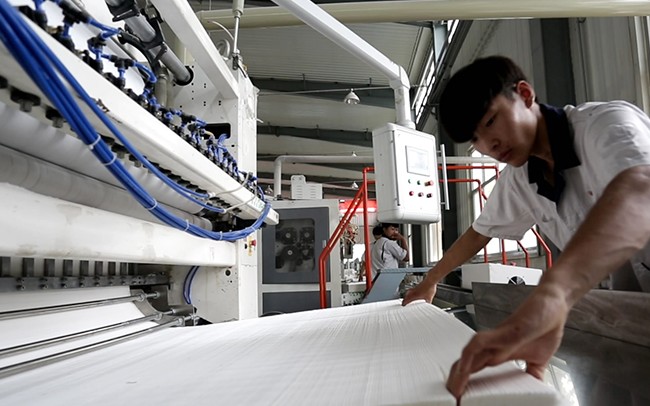
Surface Finishing: Achieving the “Silk-Touch” on 100% Virgin Wood Pulp
Silk-touch finishing raises perceived value and justifies premium pricing while preserving septic-safe disintegration and batch color consistency.
Select and Prepare 100% Virgin Long‑Fiber Pulp for Optimal Hand‑Feel
Start with 100% virgin long‑fiber wood pulp and keep the furnish OBA‑free to secure a lint‑free surface and stable brightness in the 85–92% range. Design incoming furnish to support a final per‑ply GSM of 13–22 g/m² so the finished product balances cushion and wet strength; target this GSM at incoming stock stage rather than after converting to reduce rework. Adjust beating/refining to control fiber collapsibility and bulk, monitor freeness with CSF or SR readings, and tune refining to increase softness without dropping tensile strength below spec.
- Material: 100% virgin long‑fiber pulp; OBA‑free; no recycled blends for premium lots.
- Ply density: design for 13–22 g/m² per ply at final product.
- Refining control: monitor CSF or SR; adjust beating to trade softness vs. tensile.
- Chemical control: keep stock pH ≈6.5–7.5 and limit high‑temperature holds to avoid fiber harshening.
- Operational step: segregate premium lots, tag for dedicated creping and finishing runs to protect color and texture.
Tune Yankee Creping and Soft‑Nip Calendering Parameters to Produce a Silk‑Touch Surface
Sequence creping ahead of soft‑nip calendering: use Yankee dryer creping to form controlled microfolds, then apply a soft‑nip pass to smooth and preserve bulk. Set crepe ratio in the 10–35% window and adjust blade angle and line speed to refine microfold size—higher crepe gives softer hand but reduces tensile, lower crepe preserves strength. Control Yankee adhesive pick‑up and surface temperature; keep peak Yankee temperatures within ranges that prevent fiber hardening while ensuring consistent crepe pick.
Dial calender settings for moderate nip load on soft‑nip equipment so the calender reduces surface roughness without collapsing caliper. After each set change, measure caliper, bulk and density, run surface smoothness tests (Sheffield or Bendtsen), and conduct sensory hand‑feel panels along with tensile and wet strength measurements to verify the silk‑touch objective.
- Crepe ratio: 10–35% — adjust per softness/strength target.
- Blade angle & line speed: tweak to refine microfold geometry and avoid sheet breakage.
- Yankee controls: manage adhesive pick‑up and avoid excessive peak temperature to prevent fiber hardening.
- Calender: use soft‑nip with moderate nip load; monitor caliper, bulk, density after pass.
- Verification metrics: Sheffield/Bendtsen smoothness, hand‑feel panels, tensile and wet strength tests after each change.
Define Embossing, Ply‑Bonding and QC Specifications to Lock in Silk‑Touch Performance
Use CNC point‑to‑point embossing to raise perceived softness and create air pockets that increase absorbency by roughly 30% when correctly patterned; optimize pattern density and emboss depth to balance quilted texture with bulk. Bond plies with high‑pressure lamination for multi‑ply rolls to prevent delamination while retaining the plush hand created by creping and embossing. Define final product targets clearly: per‑ply GSM 13–22 g/m², natural brightness 85–92%, and engineered rapid disintegration for septic safety.
Lock QC to measurable checkpoints: run tensile strength, perforation tear consistency, and disintegration time on representative samples, and perform batch color consistency checks. Require pre‑shipment visual verification on premium lots. Specify packaging and handling limits that protect surface texture—set compression thresholds during bagging to minimize over‑compression while still enabling 40HQ load optimization for B2B shipping.
- Embossing: CNC point‑to‑point patterns; tune density and depth to trade absorbency vs. hand‑feel (~30% absorbency gain achievable).
- Ply bonding: high‑pressure lamination to prevent delamination and preserve quilt texture.
- QC tests: tensile strength, perforation tear consistency, disintegration time, batch color checks, pre‑shipment visual verification.
- Final targets: per‑ply GSM 13–22 g/m²; brightness 85–92%; rapid disintegration for septic safety.
- Packaging: set compression and bagging specs to protect surface texture while enabling full 40HQ load optimization.

Does a Higher Ply Count Always Lead to Slower Disintegration Rates?
Ply count alone doesn’t control disintegration; material, bonding, embossing and validated testing drive plumbing compatibility and product positioning.
Material and construction variables that determine disintegration
You control disintegration by engineering the sheet, not by counting plies. Keep each ply in the 13–22 g/m² range to balance perceived bulk and wet breakup: higher per‑ply GSM raises wet tensile and slows fragmentation. Choose fiber deliberately—100% long‑fiber virgin wood pulp increases wet strength and resists breakup, while bamboo or recycled pulps promote faster fragmentation because shorter fibers and less inter‑fiber bonding break apart in water.
Bonding and surface engineering change outcomes as much as fiber choice. High‑pressure lamination and strong adhesives lock plies together and slow disintegration; swap to lower‑strength or water‑breakable bonds when septic compatibility matters. Use point‑to‑point embossing to increase absorbency (roughly +30% by design) and to create controlled rupture zones that encourage separation on wetting. Finally, optimize perforation and roll format—clean perforations and coreless, high‑precision winding reduce large intact sections that cause blockages. Avoid wet‑strength resins when you must meet septic requirements, and maintain OBA‑free chemistry for microbiome safety and regulatory alignment.
- Target per‑ply GSM: 13–22 g/m².
- Prefer virgin long‑fiber pulp for strength; use bamboo/recycled to speed breakage when needed.
- Select water‑breakable adhesives or lower lamination pressure for septic‑safe SKUs.
- Leverage point‑to‑point embossing to add absorbency and engineered weak points for breakup.
- Design precise perforation and consider coreless rolls to reduce intact masses during flushes.
Practical lab and field tests to quantify disintegration across ply counts
Measure disintegration with repeatable, quantitative protocols. Run agitation/slosh tests: submerge a defined sample area in water, apply controlled agitation energy, then record remaining mass and particle size at fixed intervals. Report fragmentation with clear metrics—for example, percent mass < 6 mm after 2 minutes, or time to 90% fragmentation—so you can compare 2‑, 3‑, 4‑ and 5‑ply prototypes on a common scale.
Complement lab work with mechanical measures: record wet tensile and the wet/dry tensile ratio to correlate mechanical strength with breakup behavior. Validate results against regional plumbing and septic standards for North America and Europe (use 2026 applicable codes) and run full‑scale flush trials in representative fixtures. Document every variable—water temperature, agitation energy, sample size, storage age and humidity—so third parties can reproduce results and you can ship certifiable disintegration reports alongside SKUs.
- Agitation/slosh test: controlled energy, fixed intervals, report remaining mass and particle size.
- Mechanical correlation: wet tensile and wet/dry tensile ratio measurements.
- Fragmentation metrics: percent mass < X mm after Y minutes; time to 90% fragmentation.
- Field validation: full‑scale flush trials in representative plumbing fixtures and compliance checks against 2026 NA/EU septic standards.
- Record conditions: water temperature, agitation energy, sample size, and storage aging (humidity).
Design trade-offs and engineering adjustments to keep higher‑ply products septic‑safe
You can offer higher‑ply comfort without sacrificing septic performance if you rebalance mass and bonding. When you add plies, reduce per‑ply GSM or switch to thinner fiber so total fiber mass stays similar and breakup behavior matches septic targets. Use embossing and air‑through bulking to deliver perceived thickness and softness without increasing inert fiber mass that resists wet fragmentation.
Adjust bonding strategy: cut bonding pressure or adopt water‑soluble adhesives so layers separate on contact with water. Iterate rapidly—test combinations of ply count, per‑ply GSM, emboss pattern and bonding until prototypes meet the disintegration metrics you published. Segment your portfolio: position 2–3 ply for septic‑sensitive markets (example: TSH‑2559 2/3‑ply septic‑safe) and reserve engineered bonding and higher GSM for luxury SKUs (TSH‑4010, TSH‑3396), while shipping full disintegration test reports for each SKU.
- Reduce per‑ply GSM when increasing plies to keep total fiber mass constant.
- Use embossing and air‑through bulk to add perceived thickness without extra fiber mass.
- Lower bonding pressure or switch to water‑breakable adhesives so plies separate on wetting.
- Run prototype matrices and require passing disintegration metrics before scale production.
- Segment SKUs by market: septic‑safe 2/3‑ply for plumbing‑sensitive regions; luxury higher‑ply with documented test reports for hospitality and premium retail.
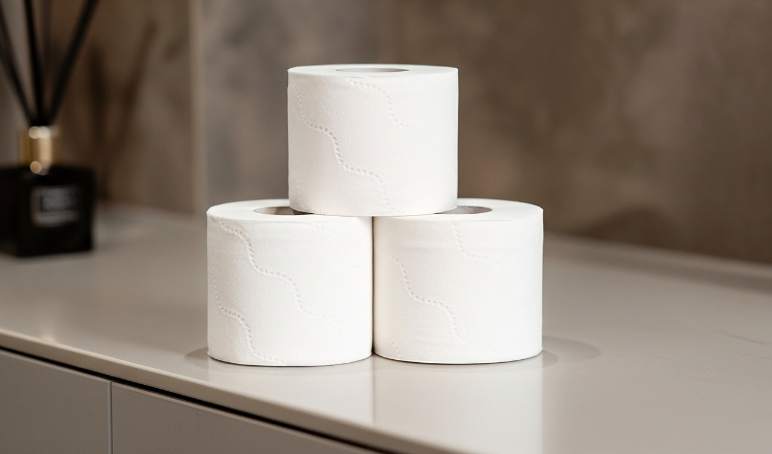
Packaging Design: Enhancing Shelf-Appeal for Premium Multi-Packs
Optimize pack format, construction, and artwork to protect product, maximize 40HQ payload, and secure premium positioning across retail and B2B channels.
Select pack format and roll-count by channel while optimizing 40HQ payload
Choose a pack format that matches the buyer’s channel rules and the container economics. Use individually wrapped hotel-format packs (common counts: 10, 12, 18 rolls) where hygiene and premium presentation matter; use direct-bundle retail formats (10, 12, 28, 32 rolls) where shelf density and price-per-roll drive purchase decisions. Plan container loading to target a 40HQ payload of 7,000–9,000 kg and set net bundle weights between 780 g and 5,000 g to meet freight and MOQ objectives.
- Match pack-count to channel: luxury hospitality → 10–18 individually wrapped rolls; warehouse clubs and SEA wholesalers → 28–32 solid bundles.
- Design bundles to hit per-40HQ payload targets (7,000–9,000 kg); calculate cartons per pallet and pallets per 40HQ during quoting to avoid freight surprises.
- Limit mechanical compression to ≤10% volumetric reduction to preserve roll loft while maximizing CUFT; record the compression target on the PO.
- Action: include exact roll-count, net bundle weight, compression target, and supplier packing-plan sketches in the PO; require signed supplier packing-plan approval before production runs.
Engineer pack construction for premium tactile feel and transport protection
Specify raw materials and sheet engineering to deliver a premium hand-feel and consistent performance. Require 100% Virgin Wood Pulp, OBA-free, and pick ply constructions aligned to market positioning: 3-ply embossed for premium residential and hotel segments, with 2–5 ply options available for specialized offers. Control per-ply density at 13–22 g/m² GSM and hold embossing pattern tolerance to ±0.5 mm; CNC point-to-point embossing raises absorbency by roughly 30% and gives repeatable texture across batches.
- Roll dimensions and perforation: standard widths 102–132 mm; set perforation strength and tear-line tolerance to ±0.2 mm to prevent shredded edges at point-of-use.
- Secondary protection: pack bags into reinforced 5-ply export cartons plus PE master poly bundles to resist corner crush and high-stack export handling; specify carton construction and required corner-crush resistance in the PO.
- Testing and sign-off: require sample-roll verification for GSM, emboss depth, and perforation tests, plus certified drop and crush test reports before mass production.
- Action: mandate engineering sign-off on physical samples and attach test-report acceptance criteria (GSM, emboss tolerance ±0.5 mm, perforation ±0.2 mm, compression ≤10%) to the purchase order.
Define graphics, labeling and compliance to differentiate on shelf for B2B/private-label
Specify artwork and labeling to communicate premium material claims and meet customs and retail requirements. Use CMYK plus spot white on light wood-fiber palettes, require print resolution ≥300 dpi, and define varnish type (matte or soft-touch) in the PO. Insist on the material claim text exactly as: “100% Virgin Wood Pulp — OBA-Free” and include ply count and net weight per bundle on every pack.
- Mandatory labeling: HS code 4818.1000, net bundle weight, ply count, and batch color-consistency claim; print these fields on the carton and master pallet label.
- Regulatory flags: require copies of ISO 9001 and relevant hygiene certificates (FDA and EU hygiene where applicable) before packaging approval; place certification logos on supplier-proof dielines only after verification.
- Retail ergonomics: deliver dielines with 3 mm bleed, and place barcodes for both top and side facings; recommend 3–6 shelf facings per carton and provide pallet patterns for retail-ready displays.
- Action: include final artwork dielines, language/localization list, and a pre-shipment visual verification clause (photos/videos tied to final balance payment). Require supplier to supply print proofs and pre-shipment images for acceptance.
Conclusion
Proper installation protects people and property, ensures compliance with OSHA and local electrical codes, and extends equipment service life. Adhering to recommended wiring and mounting procedures reduces downtime, warranty exposure, and long-term maintenance costs. Clear, documented installs also simplify audits and insurer reviews.
Next, review your fleet’s current installations against the certified specification checklist, or contact us to request a certified lighting catalog and physical sample for evaluation. We can also offer on-site verification or tailored procurement guidance to accelerate your rollout.
Frequently Asked Questions
Is 4-ply toilet paper really the most luxurious option?
According to the provided market data, 4‑ply is not identified as the luxury benchmark. Current evidence shows 3‑ply embossed tissue is the emerging luxury standard (widely adopted in upscale hotels, growing at an ~8.4% CAGR and capturing 30–50% price premiums for lotion‑infused or embossed variants). While tissue ranges from 2‑ to 4‑ply, the research does not support 4‑ply as the market gold standard — it remains a niche positioning rather than the primary luxury option.
How does the manufacturing process ensure that 4 layers stay bonded together?
The research content does not provide technical details on layer‑bonding processes for 4‑ply tissue. Sources reference embossing and premium surface treatments (lotion, antimicrobial coatings) but do not describe lamination or bonding methods. For manufacturing specifics, consult product technical datasheets or manufacturer production literature.
Does 4-ply paper use more chemicals or softeners to achieve its hand-feel?
The research notes lotion‑infused and antimicrobial coated premium variants and that recycled fiber can support premium performance, but it does not state that 4‑ply inherently uses more chemicals or softeners than other ply counts. Premium hand‑feel is commonly achieved via embossing, lotion infusion or surface coatings, and sustainability approaches (e.g., recycled fiber) can be used alongside these treatments.
Does 4-ply toilet paper increase shipping volume and freight cost?
The provided research does not include quantitative CBM or shipping‑volume data for 4‑ply products. It does highlight dispenser compatibility and handling as adoption constraints (which implies thicker products are bulkier), but no specific volumetric figures are given. For accurate logistics impact, calculate CBM from actual roll and pack dimensions or request supplier volumetrics and units‑per‑pallet data.
How to market 4-ply luxury tissue to high-income consumer demographics?
Based on the research drivers for premium tissue, position 4‑ply as ultra‑premium by emphasizing tactile cues (embossing, lotion infusion), sustainability (use of recycled fiber where possible), and value‑adds (antimicrobial or specialty coatings). Target affluent consumers and premium hospitality channels, communicate clear quality differentials and justify a premium price, and solve adoption barriers (e.g., dispenser compatibility) for institutional buyers. Note that 3‑ply currently holds stronger market momentum as the luxury benchmark, so differentiation must be explicit.
Is 4-ply toilet paper safe for modern, high-efficiency home septic systems?
The research does not address septic‑system compatibility. Septic safety depends on dissolution characteristics and fiber composition, which are not covered in the provided materials. To confirm compatibility with high‑efficiency septic systems, review manufacturer technical data sheets, look for septic‑safe certifications, or conduct compatibility testing.
SEO
Title: The Peak of Comfort: Sourcing Ultra-Soft 4-Ply Toilet Paper for Premium Brands
Description: Luxury 4-Ply Tissue — 100% Virgin Wood Pulp, OBA-Free; Factory OEM, MOQ 1×40HQ, 7–9t 40HQ payload. Pre-shipment photos, ISO9001. Wholesale.
URL: luxury-4-ply-tissue
Keywords: Luxury 4-Ply Tissue