
Selecting the correct packaging microns determines whether a bulk shipment arrives intact or ends up as a total loss due to moisture ingress and puncture damage. Small errors in film specifications lead to massive waste and expensive product returns during high-volume distribution. Logistics managers often struggle to find the balance between material cost-cutting and the physical protection required for long-haul transit.
This guide breaks down the technical variables of film thickness, from puncture resistance benchmarks to the moisture-barrier capabilities of heat-shrink wrapping. We compare the tensile strength of eco-friendly alternatives against standard LDPE to help you build a reliable packaging strategy. Use these specifications to evaluate your current suppliers and ensure your outer wraps withstand the stresses of international shipping.
Why Is Packaging Micron Thickness Your First Line of Defense Against Mold?
Packaging micron thickness serves as the primary physical regulator of Water Vapor Transmission Rates (WVTR), creating a dense molecular barrier that shields hygroscopic paper fibers from ambient humidity.
Preventing Moisture Infiltration Through Material Density
High-density polyethylene (PE) wraps provide a tighter molecular structure than standard thin films, effectively slowing the penetration of atmospheric moisture. When packaging 100% virgin wood pulp products, maintaining this density is vital because the long-fiber structure of premium paper naturally attracts water molecules. A higher micron gauge ensures the material remains non-porous even during the friction and stress of loading, keeping the internal micro-environment dry.
- High-density PE wraps create a tighter molecular structure that slows the penetration of ambient humidity into paper fibers.
- Optimal thickness prevents the outer packaging from becoming porous during handling, which keeps the internal micro-environment dry.
- Top Source Hygiene utilizes calibrated micron levels to ensure toilet paper and facial tissues remain pristine even in high-humidity regions like Southeast Asia or South America.
Mitigating Condensation During Global Transit
Temperature fluctuations in shipping containers often trigger “container rain,” where moisture evaporates from the cargo and condenses on the ceiling and walls. Heavier gauge films act as a thermal buffer, reducing the speed of temperature transfer between the outside air and the product. This stabilization lowers the risk of internal condensation forming directly on the paper rolls. For long-haul routes exceeding 20 days, consistent micron thickness across the entire wrap eliminates the thin spots where moisture typically pools and seeps.
- Heavier gauge films act as a thermal buffer, reducing the speed of temperature transfer and lowering the risk of internal condensation.
- Ensuring consistent micron thickness across the entire wrap eliminates weak spots where moisture typically pools.
- Supplying 56+ countries requires packaging that withstands the 15-25 day shipping windows common in 2026 global trade routes.
Integrating Material Gauge with Multi-Layered Defense
The 2026 industry standard has moved beyond relying solely on material thickness. Modern mold prevention strategies now combine optimal gauges with active technologies, such as antimicrobial coatings and humidity-activated desiccants. At Top Source Hygiene, we integrate specific film thicknesses with antimicrobial PE sheets to neutralize fungal spores on contact. Standardizing these thickness levels across our 2,860-ton monthly capacity ensures that structural integrity and moisture protection remain uniform throughout the entire warehousing and distribution cycle.
- Top Source Hygiene integrates specific film thicknesses with antimicrobial PE sheets to neutralize fungal spores on contact.
- The 2026 industry standard shifts from relying solely on thickness to using a multi-layered approach involving humidity-activated desiccants.
- Maintaining a 2,860-ton monthly capacity requires standardized packaging thickness to ensure structural integrity throughout the warehousing and distribution cycle.
How to Balance Poly-Bag Durability with Environmental Plastic Reduction?
Effective plastic reduction in 2026 relies on material engineering rather than simply thinning the gauge, focusing on high-tensile resins and structural design to maintain barrier integrity with lower raw material volume.
Optimizing Thickness through Downgauging and Material Selection
Strategic material choices allow for thinner packaging films that maintain the same performance levels as traditional, heavier alternatives. By selecting high-performance resins, we reduce the total volume of plastic required to protect bulk toilet paper shipments while ensuring the outer wrap survives the rigors of the global supply chain.
- Downgauging techniques reduce material consumption by replacing thicker films with high-strength alternatives, such as substituting 30-micron film with 23-micron stretch film without loss of load stability.
- High-Density Polyethylene (HDPE) provides superior tensile strength at lower thicknesses, while Low-Density Polyethylene (LDPE) offers the necessary flexibility for irregularly shaped paper bundles and multi-roll packs.
- Top Source Hygiene utilizes high-quality polyethylene to increase resilience to tearing, allowing for a reduction in total plastic volume without risking product exposure during transit from our Hebei production hub.
Structural Reinforcements and Load Distribution
Design modifications improve the physical integrity of poly-bags, preventing failure during high-volume distribution and handling. Instead of increasing the thickness of the entire bag, we focus on engineering the bag’s geometry to handle weight and friction more efficiently.
- Gusseted designs add internal space and distribute product weight more evenly to prevent stress-related tears in the plastic when stacking 40HQ containers.
- Reinforcing specific stress points, such as heat seals and handles, improves durability more effectively than increasing the thickness of the entire bag.
- Proper sizing of the outer wrap prevents overstretching, a primary cause of puncture and thinning during high-pressure loading and automated conveyor transit.
Integrating Post-Consumer Recycled Resins into Production
Incorporating recycled content helps distributors meet 2026 sustainability mandates while maintaining the functional properties of virgin plastic. Our manufacturing process blends post-consumer recycled (PCR) resins to support circular economy goals without compromising the moisture barrier required for 100% Virgin Wood Pulp products.
- Post-consumer recycled (PCR) resins offer performance levels nearly identical to virgin materials, reducing the need for new plastic production in bulk wholesale operations.
- Polyethylene bags containing recycled content lower the overall carbon footprint of the packaging lifecycle and align with regional regulations in Europe and North America.
- Monomaterial designs ensure the packaging remains easy to process in existing recycling streams, as using only one type of plastic avoids the contamination issues of multi-layer hybrid films.
Reusability and Consumer Behavior Requirements
The environmental benefit of durable plastic packaging depends largely on the frequency of reuse compared to single-use alternatives. We design multi-pack outer bags with enough durability to encourage end-users to repurpose them, extending the material’s utility before it enters the waste stream.
- Durable Polypropylene (PP) bags require 10 to 20 reuses to offset their initial environmental impact compared to standard single-use bags.
- Thinner Polyethylene (PE) bags reach an environmental break-even point after 5 to 10 uses, making them a balanced choice for retail distribution and home storage.
- Clear labeling and functional design, such as resealable openings or reinforced handles, encourage end-users to repurpose the packaging for secondary domestic uses.
Build Your Unique Toilet Paper Brand
The Puncture Test: Ensuring Outer Wraps Survive High-Volume Distribution
Reliable puncture resistance metrics provide the only empirical safeguard against the mechanical stressors inherent in high-density container loading and multi-leg international transit.
Modern quality assurance relies on established benchmarks to evaluate how packaging materials resist sharp objects during handling. Facilities implement ASTM F1306 and ISO 3036 methodologies to assess outer wrap durability against mechanical penetration. These standardized protocols allow engineers to calculate the exact force required to rupture films, ensuring that bulk paper products remain protected even when subjected to the aggressive shifting of cargo in high-density shipping containers.
| Test Methodology | Technical Focus | Supply Chain Impact |
|---|---|---|
| ASTM F1306 | Slow-rate penetration resistance of flexible barrier films. | Prevents tears from corner-stacking and pallet friction. |
| ISO 3036 | Pendulum-based energy absorption measurement. | Simulates high-velocity impact during automated sorting. |
| Integrated Simulation | Combined thermal cycling and puncture stress. | Ensures integrity across differing global climate zones. |
Environmental Stressors in Integrated Distribution Simulations
Packaging failure often results from a combination of physical impact and environmental degradation rather than isolated incidents. Advanced simulation protocols now combine puncture testing with thermal cycling, humidity fluctuations, and altitude pressure changes. These integrated assessments reveal failure patterns that standard laboratory tests miss, such as how moisture absorption in high-traffic commercial environments weakens the tensile strength of outer wraps. By identifying these vulnerabilities early, we can reinforce specific stress points to maintain consistency across global supply chains in over 56 countries.
High-Precision Measurement Tools for Penetration Energy
Newer technological applications provide deeper insights into the specific energy required to compromise seal integrity. Technicians utilize pendulum-based testers to measure the exact kinetic energy absorbed by the wrap before a puncture occurs. To further validate protection, we employ helium leak detection alongside physical testing to verify that microscopic penetrations do not compromise the moisture barrier. Real-time data analytics allow the production line to adjust GSM and material ply instantaneously based on feedback from the quality lab.
Automation and Speed Optimization in Quality Labs
Streamlining the testing process ensures that high-volume production remains on schedule without sacrificing safety standards. Automated testing systems reduce turnaround times by 30%, allowing for a faster transition from the factory floor to the shipping vessel at Tianjin Xingang Port. Key operational benefits include:
- Robotic handling in the lab ensures repeatable precision and removes human error from film evaluations.
- Simplified protocols enable a 2,860-ton monthly capacity to meet rigorous ISO 9001 and FDA requirements without bottlenecks.
- Continuous monitoring allows for rapid downgauging and material optimization without risking transit durability.
Does Heat-Shrink Wrapping Provide Better Moisture Barriers Than Loose Packs?
Heat-shrink technology creates a pressurized, hermetic seal that fundamentally shifts the moisture defense profile of paper products from passive containment to active isolation.
Hermetic Sealing and Airtight Barriers
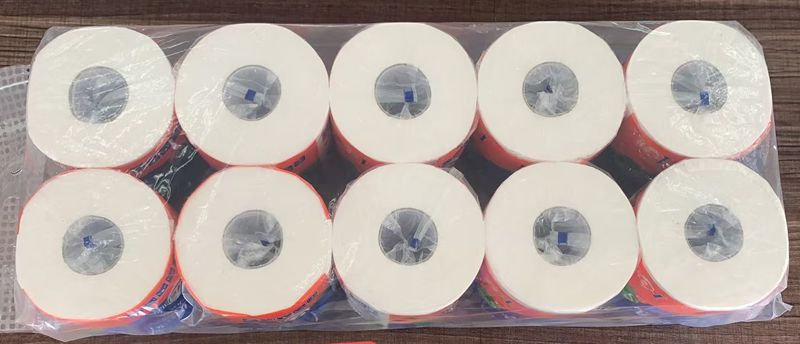
Shrink film forms a continuous, airtight barrier that prevents water vapor from penetrating the tissue layers during transit. Unlike standard bags, the heat-sealing process fuses the edges into a singular, impenetrable skin. Top Source Hygiene utilizes this method to ensure 100% virgin wood pulp remains dry and absorbent during 15-25 day maritime shipping routes, where temperature fluctuations often trigger interior container condensation. The heat-sealed edges eliminate the gaps found in traditional packing, maintaining product integrity in 2026 global logistics environments.
| Barrier Type | Moisture Ingress Risk | Long-Haul Performance |
|---|---|---|
| Standard Loose Poly-Bag | High (Air gaps permit vapor flow) | Prone to fiber softening and mold |
| Heat-Shrink Wrap (TSH) | Near-Zero (Hermetic isolation) | Maintains 13–22g/m² GSM integrity |
| Desiccant-Enabled Pack | Moderate (Active adsorption) | Effective but adds secondary costs |
Comparative Risks of Loose-Fit Containment
Standard loose packing lacks a bonded seal, making products vulnerable to ambient moisture and airflow. When humid air circulates around the product, it leads to fiber softening or structural degradation, particularly in high-volume distribution centers located in tropical regions. These environments face significant spoilage risks when using loose packing without secondary barriers. Transitioning to shrink-wrapped jumbo rolls and toilet paper reduces moisture-related waste in hospitality and retail sectors by preventing the “hygroscopic effect” where paper pulls moisture directly from the warehouse atmosphere.
Environmental Shielding and Contaminant Protection
Beyond moisture, heat-shrink wrapping offers total encapsulation that loose packs cannot provide. The tight wrap prevents dust and particulates from settling on products in industrial warehouses or high-traffic commercial venues. This sealed surface also acts as a tamper-evident layer, which is a critical requirement for hygiene products in medical and airport facilities. Top Source Hygiene maintains strict quality control by using 2026-compliant films that protect the GSM and softness of facial tissues from the factory to the end user, ensuring that premium 100% virgin pulp arrives in the exact condition it left the Hebei manufacturing hub.
- Shrink-wrapping eliminates “void space” where condensation typically forms inside poly-bundles.
- Hermetic seals provide a 99% reduction in particulate contamination compared to loose-folded bags.
- Tight compression improves pallet stability during high-stacking in 40HQ containers.
Branding Impact: How Film Clarity and Gloss Influence Shelf Appearance
Optical transparency and surface reflectivity in packaging serve as immediate quality indicators, allowing consumers to verify fiber purity while establishing a premium brand position through tactile finish variations.
Modern retail competition requires more than just a container; it demands a window. We utilize advanced BOPP (Biaxially Oriented Polypropylene) and PET films to ensure maximum light transmission. This optical clarity allows distributors to showcase the intricate embossing and fiber density of Top Source Hygiene rolls, building immediate consumer trust. High-gloss finishes further distinguish products by increasing light reflection, a critical factor for shelf standout in high-traffic supermarkets across the Middle East and North America.
Transparency and Product Authenticity in Household Paper
Transparency serves as a proxy for hygiene. By using “no-label” design philosophies, we highlight the natural 85-92% brightness of our 100% Virgin Wood Pulp without the need for chemical descriptors. Visual confirmation of the roll count and the lint-free surface reduces friction during the buying process. This strategy effectively communicates the OBA-free (Optical Brightening Agent) nature of our tissues, aligning with the 2026 market shift toward health-conscious and hypoallergenic paper products.
Dual-Finish Strategies for Premium Market Differentiation
Sophisticated brands often deploy a hybrid approach to capture both visual and tactile attention. Gloss surfaces excel at attracting eyes from a distance, while matte finishes provide a sophisticated, velvet-like feel that signals premium quality upon contact.
- Selective coating techniques allow us to highlight specific brand logos or technical certifications like ISO 9001 against a muted background.
- Regional data indicates a strong preference for high-gloss retail packs in Southeast Asia, whereas European healthcare segments favor matte finishes for their clinical, clean aesthetic.
- Customization options for Top Source Hygiene clients include high-build spot UV to create a multi-sensory experience that justifies higher price points in the hospitality sector.
Technical Compatibility with Automated Packaging Systems
Aesthetic choices must remain functional within high-speed production environments. The surface treatments applied to our clear films maintain specific friction coefficients, preventing jams in 40HQ-optimized automated lines. Our 2026 production protocols ensure that vibrant brand colors stay sharp on clear substrates without sacrificing the thermal bonding integrity of the seal.
This technical balance prevents the degradation of gloss levels during the heat-sealing process. By optimizing heat-sealability, the final bundle arrives at the distribution center with its visual appeal intact, ensuring that the packaging’s defensive role does not compromise its marketing potential.
Can Biodegradable Film Match the Tensile Strength of Standard LDPE?
2026 data indicates that biopolymer blends have narrowed the mechanical gap, with chitosan and starch-modified films reaching tensile strengths up to 36 MPa, though standard LDPE maintains a slight lead in high-stress elongation.
Tensile Strength Comparison Between Biopolymers and LDPE
Standard Low-Density Polyethylene (LDPE) remains the industry benchmark for flexibility and high elongation, particularly for heavy-duty bulk toilet paper packaging. However, the performance gap is closing rapidly. Current chitosan-based and starch-modified films achieve a tensile strength range of 10-36 MPa. This level of mechanical resistance supports the weight and stacking requirements of bulk paper shipments without the risk of premature tearing during transit.
| Material Type (2026 Data) | Tensile Strength (MPa) | Mechanical Advantage |
|---|---|---|
| Standard LDPE | 40 – 55 | Maximum elongation and puncture resistance. |
| Chitosan-Based Film | 25 – 36 | Superior stiffness for bundle security. |
| Starch-Modified Blends | 10 – 22 | Cost-effective biodegradation; ideal for light rolls. |
Optimized additive incorporation ensures these eco-friendly films withstand the high tension of automated wrapping machines. We have seen that biopolymer blends now offer the structural reliability needed for stacking jumbo rolls in 40HQ containers, protecting the product from external contaminants while meeting strict environmental standards.
Impact of Chitosan and Starch-Modified Blends on Film Reliability
Manufacturers combine different biopolymer components to enhance the structural reliability of outer wraps. Chitosan-based formulations provide necessary stiffness to keep bundles of facial tissue or toilet rolls secure during high-volume distribution. This prevents the “shifting roll” effect common in lower-quality packaging.
- Starch-modified materials improve film durability while ensuring the material remains biodegradable.
- Blending techniques prevent the material from becoming brittle, which is critical for long-term storage in fluctuating warehouse temperatures.
- Specific biopolymers maintain clear transparency, allowing for the branding impact required on retail shelves.
Addressing Performance Trade-offs in Sustainable Packaging
Engineering biodegradable films requires a precise balance between mechanical strength for shelf life and rapid end-of-life degradation. High biodegradability can sometimes compromise the moisture barrier, a critical factor for hygienic paper products like virgin wood pulp tissue that must stay dry.
Calibration of the elongation at break ensures the film withstands the pressure of compressed jumbo rolls without losing its protective shape. Modern 2026 formulations allow for structural reliability during transport while ensuring the film breaks down effectively after disposal. For distributors targeting eco-conscious markets in Europe and North America, these biopolymers provide a viable alternative to traditional plastics without sacrificing the integrity of the 40HQ container payload.
Conclusion
Selecting the right micron thickness ensures bulk toilet paper shipments survive the physical rigors of 40HQ container loading and international distribution. This balance between film durability and plastic reduction directly impacts your bottom line by preventing moisture damage and packaging failure. Matching your packaging specs to your specific logistics route safeguards product quality from the factory floor to the retail shelf.
You should review your current packaging failure rates to determine if a micron adjustment could improve your shipping efficiency. Our team can provide detailed technical specifications and sample bundles to help you optimize your next private label order.
Frequently Asked Questions
What is the recommended micron thickness for bulk toilet paper packaging?
For industrial bulk bundles, the industry standard is 50 to 60 microns (LDPE/LLDPE). For retail-level secondary packaging (multi-roll packs), a thickness of 35 to 45 microns is typically recommended to balance cost-efficiency with the necessary puncture resistance required for palletization and shelf handling.
How does the thickness of the plastic wrap impact the shelf life of paper?
Thickness directly correlates with the Water Vapor Transmission Rate (WVTR). A thicker film provides a more robust moisture barrier, preventing the paper from absorbing ambient humidity which leads to softening, loss of “bulk,” and potential mold growth. Integrating appropriate thickness with antimicrobial coatings or desiccants ensures the paper remains dry and structurally sound throughout its intended shelf life.
What are the common failure points of thin packaging in international transit?
Thin packaging is prone to three primary failure points: corner punctures from pallet friction, seam bursting due to the compression forces of high-stacking in shipping containers, and “pinholing” caused by vibration during transit. Furthermore, thinner films offer less thermal insulation, making the contents more vulnerable to condensation cycles caused by rapid temperature shifts in marine environments.
Can I get eco-friendly packaging that is as strong as traditional poly-bags?
Yes. Modern Bio-PE (derived from renewable plant sources) and PCR (Post-Consumer Recycled) polyethylene can match the tensile strength and tear resistance of virgin plastics. While fully compostable films (like PBAT/PLA) are available, they often require a 10-15% increase in micron thickness to achieve the same mechanical durability and moisture barrier performance as traditional poly-bags.
Does a matte finish or a glossy finish provide better protection for the rolls?
A glossy finish typically provides a slightly superior moisture barrier because the surface is smoother, which reduces the surface area where condensation can settle and cling. Matte finishes, while aesthetically premium, can have a micro-textured surface that is more susceptible to scuffing. However, for maximum protection, the choice of multi-layered barrier materials and the total micron gauge is significantly more impactful than the visual finish.
How to verify the actual thickness of the packaging film in a sample shipment?
The most accurate method is using a calibrated digital micrometer specifically designed for plastic films to measure thickness at multiple points (center and edges) for uniformity. Alternatively, you can use the gravimetric method: cut a precise 10cm x 10cm sample, weigh it on a precision scale, and divide the weight by the material’s density (approx. 0.92 g/cm³ for LDPE) to calculate the average micron thickness across the sheet.