
The transition to 100% plastic-free hygiene packaging is now a legal mandate, with the EU PPWR enforcement beginning August 12, 2026, and US federal procurement rules impacting $45B in government spend through single-use plastic-free (SUP-free) defaults. Brands that fail to eliminate PFAS below the 25 ppb threshold or transition to fiber-based recyclability by 2030 risk immediate market exclusion and the loss of high-margin retail contracts.
We provide a technical audit of the zero-plastic supply chain, analyzing the moisture vapor transmission of PLA/PBAT blends during 30-day ocean transit and the performance of PFAS-free aqueous coatings. By evaluating FSC-certified recycled core tubes and ASTM-tested shipping cartons, this report outlines how to achieve the 100% recyclability standards required to meet California SB 270 updates and upcoming EU sustainability frameworks.
The Global Shift Toward 100% Plastic-Free Hygiene Packaging
The hygiene industry faces a mandatory shift to 100% plastic-free packaging by 2030, driven by EU PPWR mandates and US federal procurement rules targeting PFAS elimination and fiber-based recyclability.
Regulatory Drivers: EU PPWR and Global SUP-Free Mandates
The hygiene sector must align with the EU Packaging and Packaging Waste Regulation (PPWR) starting August 12, 2026. This legal framework dictates full recyclability by 2030 and requires operational recycling at scale by 2035. Non-compliance risks total market exclusion as enforcement begins.
- Single PFAS Limit: 25 ppb
- Total PFAS Limit: 250 ppb
- Total Fluorine Limit: 50 ppm
- US GSA Impact: Affects $45B in federal procurement via single-use plastic-free (SUP-free) defaults.
The US GSA finalized rule encourages plastic-free packaging via Federal Supply Schedules, using specific icons to identify compliant products. These measures remove non-essential additives like BPA and fluorinated coatings to meet circular economy goals. Manufacturers should conduct early SKU audits to replace prohibited materials before the 2026 implementation year.
Material Innovation: PFAS-Free Barriers and Fiber-Based Alternatives
Engineers are moving away from PET/PE laminates, adopting aqueous, plant-based, or mineral dispersion coatings instead. These barriers provide grease and moisture resistance on sustainable substrates without environmental toxicity. This transition requires a fundamental redesign of existing packaging structures.
- Substrates: Bagasse, kraft paper, and FSC-certified fiber.
- Construction: Mono-material structures such as all-PP lids and bodies.
- Design Features: Snap-fit lids and simplified nesting for automated sorting.
- Traceability: QR-coded digital labeling for consumer disposal guidance.
Adopting Design for Recyclability (DfR) standards ensures packaging is compatible with standard paper recycling systems. Mono-material constructions prevent the sorting failures common with multi-layer films. Strategic use of PFAS-free dispersion boards allows hygiene brands to meet strict chemical limits while maintaining the barrier performance needed for takeaway and medical applications.
Paper Wrapping vs. Poly-bags: A Performance and Cost Comparison
Poly-bags offer 2–4x lower costs and moisture resistance. Multiwall paper provides superior stacking strength but requires expensive liners or coatings to match plastic’s durability and meet 2026 regulatory standards.
Structural Integrity and Protective Performance
Polyethylene bags provide superior tensile strength and puncture resistance compared to standard paper. While paper provides structural rigidity, it lacks the flexibility needed for dynamic shipping environments without significant reinforcement or multi-ply layering.
- Material Thickness: Multiwall paper typically requires 2 to 5 plies of kraft paper to match the durability of a single poly film.
- Moisture Protection: Polyethylene is naturally waterproof; paper requires internal plastic or foil liners to prevent saturation.
- Stacking Strength: Paper wrapping offers higher compression resistance for heavy bulk loads compared to flexible plastic films.
- Chemical Safety: New standards limit PFAS in paper liners to 25 ppb, forcing a shift to aqueous or plant-based coatings.
Unit Cost and Logistical Efficiency
Regulations like the EU PPWR and US GSA rules force a pivot toward plastic-free options, but the financial hurdle remains high. Poly mailers and bags are lighter and cheaper to manufacture at scale. Paper production costs scale sharply as you add the thickness required for heavy-duty hygiene products.
- Cost Ratio: Polyethylene bags cost 2 to 4 times less than paper equivalents.
- Freight Impact: Lightweight poly construction reduces shipping weight, lowering carbon emissions and total freight expenses.
- Regulatory Deadlines: The EU PPWR mandates full recyclability by 2030, favoring mono-material structures like PP-only lids and bodies.
- Recyclability Issues: Adding reinforced liners to paper for moisture protection often complicates the recycling process and increases processing fees.
Can Bio-degradable (PLA/PBAT) Bags Withstand 30-Day Sea Freight Humidity?
PLA/PBAT bags survive 30-day ocean transit if temperatures stay below 60°C. High humidity alone won’t trigger breakdown without extreme heat and microbial activity.
| Technical Metric | Value / Threshold | Transit Impact |
|---|---|---|
| PLA Glass Transition (Tg) | 60°C – 65°C | Risk of softening and film fusing |
| PBAT Melting Point | 100°C – 120°C | Maintains bag ductility and flex |
| Composting Trigger | ~58°C + High Microbes | Breakdown unlikely in clean cargo |
| Short-term Humidity Test | 24 – 48 Hours | Zero loss in material integrity |
Material Science: Hydrolysis and Thermal Thresholds of PLA/PBAT Blends
Polylactic Acid (PLA) provides the necessary rigidity for shipping mailers but contains ester linkages prone to hydrolysis. When exposed to high moisture and heat, these linkages undergo chain scission. This process reduces molecular weight and can eventually compromise the bag’s structural integrity.
PBAT is blended with PLA to solve the brittleness issue. This component adds ductility and mimics the behavior of LDPE, allowing the film to stretch and resist punctures during rough maritime handling. The stability of this blend relies heavily on temperature management rather than humidity levels alone.
- PLA Glass Transition: 60-65°C (The point where the polymer begins to soften).
- PBAT Function: Enhances puncture resistance and flexibility.
- Degradation Catalysts: Requires ~58°C, high humidity, and active microbial presence.
Transit Performance: Moisture Vapor Transmission and Durability Metrics
Short-term exposure tests at 95% relative humidity confirm that PLA/PBAT films maintain seal strength and barrier properties for at least 48 hours. For 30-day ocean voyages, the primary risk is gradual moisture migration. While these blends are moisture-resistant, they are not absolute vapor barriers.
Shipping containers on tropical routes can exceed 60°C if stored on the top deck. Exceeding the PLA glass transition temperature causes the bags to soften and potentially fuse together under the pressure of stacked cargo. If temperatures remain stable, the lack of microbial activity in a clean container prevents premature biodegradation.
- Certifications: ASTM D6400 and EN 13432 (validate end-of-life, not transit failure).
- WVTR: Provides moderate protection; sensitive goods may need additional desiccants.
- Protection Strategy: Use climate-controlled containers for routes through high-heat zones.
Standard logistics protocols generally suffice for these materials. However, if your supply chain involves extended storage in unventilated, high-heat docks, perform a puncture and seal test post-transit. This ensures the 30-day moisture exposure hasn’t initiated the hydrolysis process prematurely.
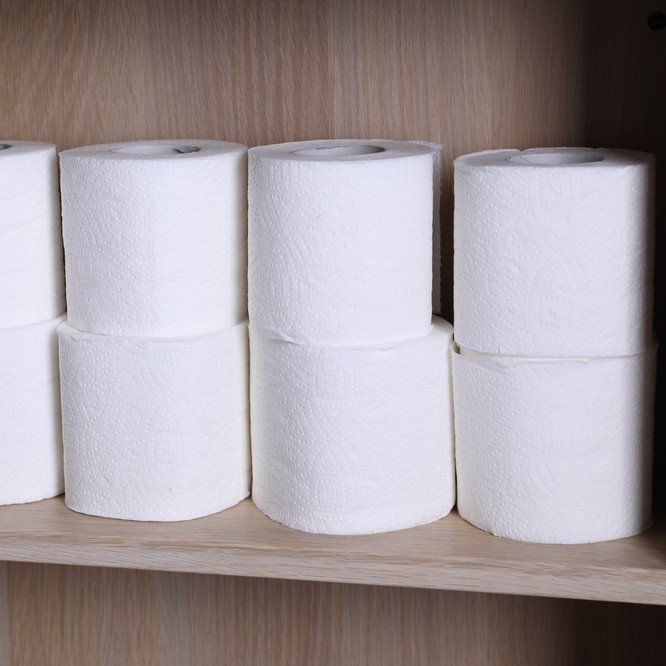
Build Your Unique Toilet Paper Brand with Expert OEM Manufacturing
Soy-Based Inks and Eco-Friendly Printing Techniques for Premium Retail
Soy-based inks replace petroleum resins with renewable polymers, delivering VOC-free, food-grade packaging with professional color fidelity (ΔE <1.0) and stable 25-28 mPa·s viscosity for high-speed printing.
Sustainable Formulation: Transitioning from Petroleum Resins to Soy Polymers
Flexographic printing for high-end retail is shifting away from petroleum-derived acrylic emulsion resins. By utilizing renewable soy protein polymers like ProSoy 7475, manufacturers eliminate Volatile Organic Compounds (VOCs) entirely. This transition ensures the packaging meets strict safety standards for the food and cosmetic industries while maintaining the structural integrity of the ink vehicle.
- Polymer Base: Replacement of petroleum acrylics with ProSoy 7475 protein powder.
- VOC Profile: Zero-VOC formulation for safer manufacturing and food-grade compliance.
- Substitution Range: Flexible replacement levels from 20% to 100% based on substrate requirements.
- Pigment Loading: Optimized dispersion of Phthalocyanine Blue (PB15-44) for brand-critical color vibrancy.
Technical Performance Metrics: Rheology, Color Fidelity, and Stability
Technical parity with traditional inks is achieved through precise thermal control during the formulation process. Cooking the soy vehicle at temperatures between 60°C and 76°C at 20% solids ensures the rheology matches petroleum standards. This results in a stable viscosity that allows for drop-in replacement in existing high-speed printing lines without mechanical adjustments.
- Viscosity: 25-28 mPa·s (Zahn #2 cup), identical to high-speed acrylic ink profiles.
- Color Accuracy: ΔE (CMC2:1) under 1.5 with optical densities between 1.24 and 1.27.
- Chemical Stability: Maintained pH levels of 8.9-9.2 over a six-month shelf life.
- Processing Temps: Controlled vehicle cooking at 60-76°C for consistent flow characteristics.
These metrics confirm that soy-based systems provide the rub resistance, gloss, and adhesion required for premium paperboard and linerboard. Retailers can adopt these eco-friendly alternatives without sacrificing the sharp aesthetic or the high-speed production efficiency of traditional chemistry.
Sourcing FSC-Certified Recycled Core Tubes and Shipping Cartons
Procure 100% recycled paperboard components with FSC certification and ASTM-tested compression strength to ensure supply chain durability while meeting upcoming EU and US plastic-free mandates.
Sustainability Standards and Material Composition
Industrial packaging must now align with the EU PPWR effective date of August 12, 2026. This regulation forces a shift toward 100% plastic-free packaging and establishes strict PFAS limits in fiber-based materials.
- Recycled Content: 100% recycled paperboard utilizing up to 90% post-consumer fiber.
- Certifications: FSC or PEFC (PEFC/30-32-1330) and ISO 14001 environmental management systems.
- Chemical Safety: PFAS-free dispersion boards that meet the 25 ppb single PFAS limit for food-contact safety.
Minimalist design principles allow for lower fiber consumption without compromising core integrity. Sourcing teams should audit FSC numbers to verify claims before the 2030 Design for Recyclability (DfR) standards take full effect.
Technical Specifications and Industrial Durability
Standardized dimensions ensure compatibility with existing industrial machinery for textiles and paper manufacturing. Manufacturers use spiral or convolute wrapping to achieve specific load-bearing capacities.
- Internal Diameter: 70mm to 700mm (0.380″ to 12″).
- Wall Thickness: 1.5mm to 25mm (0.030″ to 0.500″).
- Durability Standards: ASTM testing for compression strength and thickness to prevent stacking collapse.
- Specialty Protection: Moisture-resistant ‘Aquatube’ variants and outer finishes including foil, matte, or silicone.
Aquatube formulations solve the moisture problems common in high-humidity freight. Using these fiber-only solutions removes plastic waste from the supply chain while meeting the US GSA’s push for SUP-free federal procurement.
How to Leverage a “Zero-Plastic” Supply Chain to Command Premium Retail Prices?
Zero-plastic supply chains drive 30% sales growth and premium pricing by leveraging FSC/RMS certifications and meeting mandatory 2026 regulatory deadlines like California’s plastic ban.
| Regulatory Standard | Implementation Date | Technical Requirement |
|---|---|---|
| EU PPWR | August 12, 2026 | 100% recyclable packaging; PFAS limits < 25 ppb. |
| CA SB 270 Update | January 1, 2026 | Full ban on plastic carryout bags. |
| GSA SUP-Free | Immediate | Elimination of single-use plastics in federal procurement. |
| Dole 2025 Goal | December 2025 | Fossil-fuel-free packaging across global SKUs. |
Value Extraction: Aligning Zero-Plastic Initiatives with Consumer Price Elasticity
Retailers no longer view sustainability as a cost center. It is a tool for margin protection. By removing plastics, brands access eco-conscious consumer segments willing to pay a premium for verified certifications. Data from European retail groups shows that replacing standard packaging with FSC-certified, plastic-free alternatives directly correlates with revenue growth.
- Revenue Growth: European retail groups reported a 30% sales surge after switching to FSC-certified, plastic-free facial tissues.
- Hospitality Premiums: High-end hotels saw guest satisfaction scores rise 20% by using custom-branded, eco-friendly hygiene products.
- Digital Incentives: Brands use Amazon’s “Frustration-Free Packaging” to lower shipping costs and improve organic search rankings.
Operational Compliance: Standards and Frameworks for Scalable Premium Sourcing
Legitimate zero-plastic claims require rigorous technical audits. Vague marketing terms will trigger regulatory penalties under new EU and US laws. Brands must move toward mono-material structures and aqueous coatings to ensure recyclability at scale by 2035.
- PFAS Thresholds: Food-contact packaging must meet limits of 25 ppb for single PFAS and 50 ppm for total fluorine.
- Material Substitutions: Replace fossil-fuel plastics with bio-based alternatives like corn starch, sugarcane, and bagasse.
- Chain of Custody: Use the Recycled Material Standard (RMS) for tracking materials throughout the supply chain.
- 6-Step Transition: Implementation follows a sequence: Technical Audit -> Material Selection -> Pilot Testing -> Measuring Performance -> Optimization -> Full Scale.
The transition to zero-plastic is not optional for brands serving the EU or California markets. Federal procurement via the GSA now prioritizes SUP-free packaging, effectively making plastic-free status a requirement for government contractors. Companies that audit their SKUs now avoid market exclusion and secure long-term retail shelf space.
Final Thoughts
Plastic is cheaper, but 2026 regulatory mandates turn it into a terminal liability. Absorb the 4x cost increase of fiber-based packaging by targeting eco-conscious retail segments willing to pay premium margins for verified sustainability.
Audit your SKUs today for PFAS-contaminated coatings. Secure production lines with FSC-certified China factories for aqueous-coated alternatives now, before the 2026 compliance rush creates a global supply bottleneck.
Frequently Asked Questions
Can a Chinese factory provide 100% plastic-free packaging?
Yes. China banned non-degradable plastics in courier packaging in 2020. Regulations mandate plant fiber fillers and standardized boxes (450mm–2500mm) to eliminate plastic bags and tape by 2025. Clothing factories use “bounding box” rules to limit packaging to two layers without secondary plastic wrappers.
Is paper wrapping more expensive than plastic film?
Yes. Poly mailers cost 2–4 times less than equivalent paper mailers. While raw fiber pulp costs significantly less than plastic polymers ($50–$150 vs. $800–$1,200 per ton), the processing and weight of finished paper increase the unit price for retail applications.
How do biodegradable (PLA/PBAT) bags withstand 30-day sea freight humidity?
They perform poorly. Compostable cellulose materials have low water vapor barrier properties and lack a moisture seal. Because they break down in humid environments, they are unsuitable for long-term sea freight of moisture-sensitive goods. These items still require conventional anti-humidity bags with desiccants.
What are the MOQ requirements for custom eco-friendly packaging?
MOQs vary by material. Standard custom paper boxes or mailers typically start at 500 units. More complex compostable pouches and custom-branded flexible films often require 5,000 to 25,000 units to maintain production efficiency.
Does soy-based ink fade during long-term storage?
No. Soy ink maintains excellent color stability. Testing shows negligible fading over 90 days, with color strength (K/S values) remaining nearly constant (21.68 fresh vs. 21.33 after 3 months). It is ideal for premium retail goods requiring shelf longevity.
How can the recycled content of shipping cartons be audited?
Verify content through third-party schemes like SGS Green Mark or RecyClass. These audits require mass balance documentation, chain-of-custody records (invoices and shipping logs), and onsite facility inspections to verify ISO 14021 standards or the 30% recycled content threshold.
SEO
Title: Zero Plastic: Sourcing Eco-Friendly Packaging from China Factories
Description: Plastic-free hygiene packaging meets EU PPWR and US GSA rules. Audit your supply chain for PFAS-free, fiber-based recyclability.
URL: plastic-free-hygiene-packaging
Keywords: Plastic-Free Hygiene Packaging