
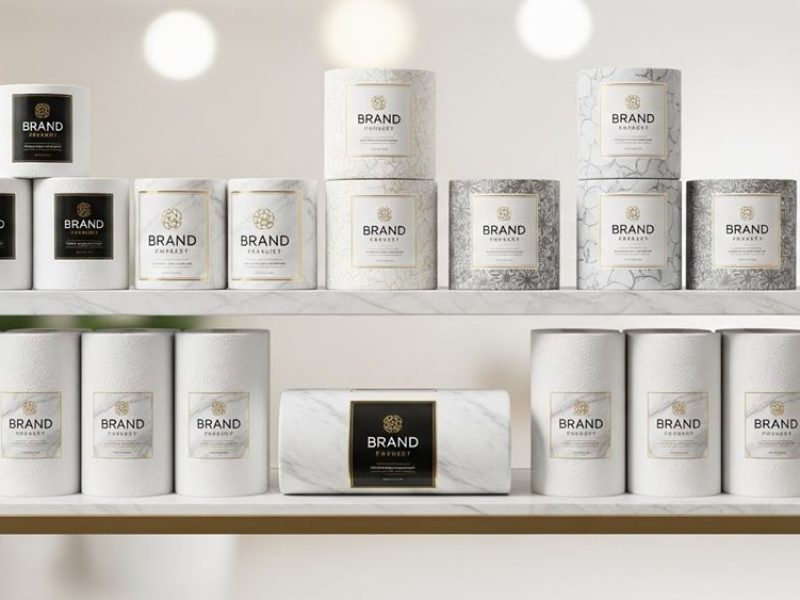
Private label hygiene sales reached $271 billion in 2024, with a 3.9% growth rate that tripled the performance of national brands. As inflation drives consumers toward premium store brands, private label products have secured a record 23.2% unit market share, and the tissue segment alone is projected to expand into a $796 billion market by 2035.
This private label branding guide provides the technical and financial framework required to scale in this sector, analyzing high-capacity manufacturing through partners like Top Source Hygiene. We break down the requirements for ISO 9001 and FSC certifications, the engineering of 40’HQ container logistics, and the material science behind virgin and bamboo fibers to ensure your brand meets international retail standards.
The Growth of Private Label in the Hygiene Sector
Private label hygiene sales hit $271 billion in 2024. Growth (3.9%) tripled national brands, with the tissue segment projected to reach $796 billion by 2035.
Market Drivers: The Shift from National Brands to Retailer Labels
Retailer labels have moved past being “budget” alternatives. In the first half of 2025, private label hygiene products secured an all-time high market share of 21.2% in dollars and 23.2% in units. Inflation-weary consumers now prioritize store brands that offer premium quality without the marketing markup of national names.
This growth is particularly aggressive in the health and beauty aisles. While overall consumer spending tightened, private label unit sales in these categories rose 0.4%. High-capacity manufacturers like Top Source Hygiene facilitate this transition by providing 2,860 tons of monthly OEM output, allowing retailers to scale quickly and match national brand specifications.
- Market Share: 21.2% dollar share and 23.2% unit share (H1 2025).
- Comparative Growth: 3.9% for private labels vs. 1.0% for national brands.
- Production Capacity: 2,860 tons/month to support premiumization strategies.
Sector Projections: Tissue, Personal Care, and Regional CAGRs
The long-term economic outlook for hygiene manufacturing is massive. The global private label market will climb from $915.1 billion in 2024 to $1.62 trillion by 2034. Within this, the Tissue & Hygiene segment is the primary outlier, showing a projected 23.5% CAGR between 2025 and 2035.
Regional growth varies based on infrastructure and post-pandemic standards. Asia-Pacific leads the personal hygiene category, while European markets focus on specialized hygiene standards. Retailers entering this space must now treat certifications as a baseline rather than an upgrade to compete for the 22.5% revenue share held by specialty health and beauty stores.
- Global Market Projection: $1.62 trillion by 2034 (5.9% CAGR).
- Tissue & Hygiene Segment: Projected to reach $796.1 billion at a 23.5% CAGR.
- Regional Growth: 4.3% CAGR in Asia-Pacific; 2.8% CAGR in Europe.
- Mandatory Compliance: ISO 9001 and FSC certifications for specialty retail placement.
Selecting Your Base Fiber (Bamboo, Virgin, Recycled)
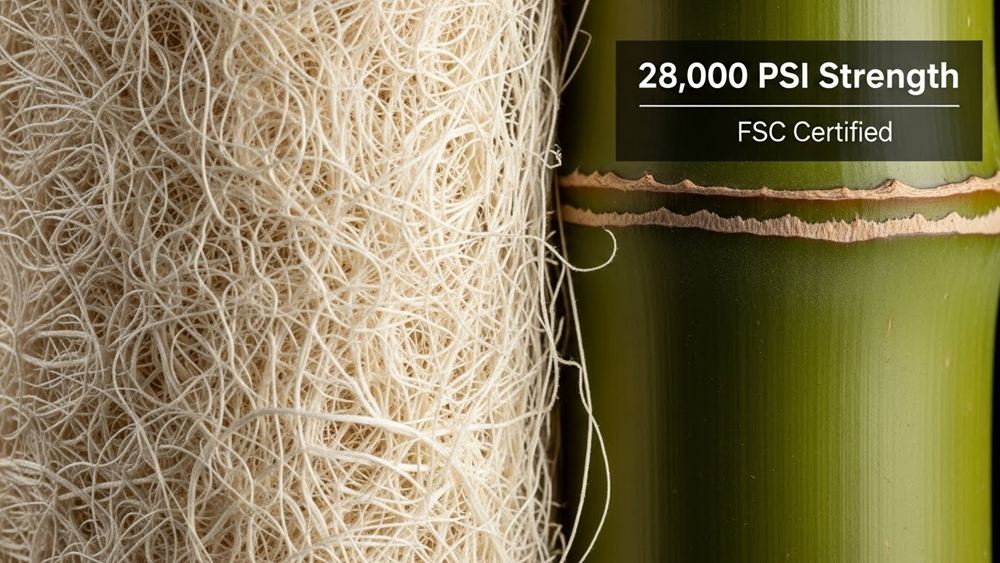
Choose virgin pulp for premium softness, bamboo for 28,000 PSI strength and rapid renewal, or recycled fibers to reduce water and energy consumption by 50%.
Material Properties and Brand Positioning
Base fiber selection defines a product’s market tier and tactile performance. While virgin fibers dominate the luxury retail space through superior softness, bamboo and recycled alternatives cater to the growing demand for technical durability and resource efficiency.
- Bamboo Fiber: Delivers tensile strength up to 28,000 PSI. This biodegradable, septic-safe material regenerates without replanting.
- Virgin Wood Pulp: Uses long, unbroken fibers to achieve maximum softness and durability. It remains the standard for premium 2-ply to 5-ply retail products.
- Recycled Fiber: Utilizes post-consumer waste. Shorter fibers make this a cost-effective, eco-conscious choice for high-traffic commercial environments.
Technical Specs: Resource Efficiency and Compliance
Manufacturing data highlights a clear trade-off between purity and environmental footprint. Virgin pulp meets the most stringent global safety standards for direct contact, while recycled pulp drastically lowers the utility overhead per ton of finished product.
- Virgin Fiber Impact: Production requires 10,000 gallons of water and generates 1.5 tons of CO2 per ton of product.
- Recycled Fiber Efficiency: Consumes 5,000 gallons of water and 30,000 BTUs of energy per ton, representing a 50% reduction in manufacturing impact.
- Regulatory Compliance: Virgin pulp naturally meets FDA and EU 10/2011 food contact standards. FSC (Forest Stewardship Council) certification is required to verify responsible sourcing for all wood-based inputs.
Customizing the Specification (Ply, GSM, Sheets)
Balance GSM for density and Ply for thickness to meet brand tiers. Use ISO 216 for weight verification and 100% virgin pulp to ensure strength across all plies.
| Category | Standard GSM | Thickness/Caliper | Primary Use |
|---|---|---|---|
| Office/Tissue | 75–90 GSM | ~100 Microns | Daily retail/utility |
| Premium Branded | 130–250 GSM | ~150+ Microns | Leaflets & Covers |
| Heavy Cardstock | 250–450 GSM | Varies by Ply | Business cards/Packaging |
| Rigid Converting | 400–600 GSM | Coupled Ply | Premium gift boxes |
Defining Product Quality via Ply and Material Density
Ply counts directly influence the perceived value of your product. While 2-ply serves the high-volume retail market, 5-ply configurations define the ultra-premium institutional tier. Higher GSM (Grams per Square Meter) increases opacity, which is vital if your brand uses heavy ink coverage or detailed logos that must not “show-through” to the other side.
Material choice determines performance at lower weights. Using 100% virgin wood pulp allows a lower-ply product to retain higher tensile strength and absorbency than recycled alternatives. Many brands use strategic blending—high GSM for outer packaging and lower GSM for internal sheets—to maximize margins without sacrificing the user’s first impression.
- 2-Ply to 5-Ply: Options ranging from standard retail to luxury institutional grades.
- GSM Control: Higher density improves opacity and tactile durability.
- Fiber Integrity: Virgin wood pulp maintains strength in low-GSM specifications.
Technical Metrics: GSM Ranges, Caliper, and Verification
Precision in paper specification prevents production errors like printer jams or structural failure in packaging. Caliper, or thickness, correlates with GSM; for example, 80 GSM paper typically measures 107 microns. When designing rigid boxes, engineers often couple two 250 GSM sheets to create a 500 GSM equivalent, as this aligns fibers to provide better bending resistance than a single heavy sheet.
Auditing your supplier requires basic weight math under ISO 216 standards. An 80 GSM A4 sheet weighs exactly 5g. To verify a bulk shipment, weigh 16 A4 sheets; the total should equal 1 square meter’s weight. If 16 sheets weigh 1280g, you have verified a 80 GSM specification. This transparency prevents “spec-creep” where suppliers might substitute thinner materials to save on pulp costs.
- 80 GSM Baseline: Standard A4 sheet weighs 5g; 500-sheet ream weighs 2.5 kg.
- Caliper Mapping: 75 GSM averages 99 microns, while 80 GSM hits roughly 107 microns.
- Multi-Ply Coupling: Bonding layers improves structural rigidity for premium gift and wine boxes.
- ISO 216 Auditing: Use 16-sheet weight tests to confirm GSM accuracy during QC.
Build Your Unique Toilet Paper Brand with Global OEM Experts
Branding the Core and Inner Roll
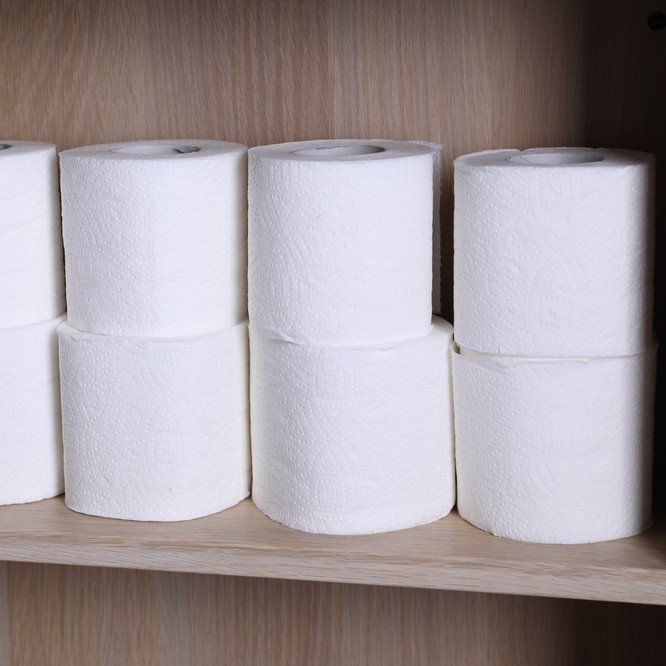
Customizing cores with logos and specific dimensions (25–101.6 mm) ensures dispenser compatibility while turning a technical component into a brand reinforcement tool.
The inner roll serves as the final touchpoint for a brand. With private labels achieving record-high unit shares of 23.2%, professional core branding helps these products compete directly with national brands by maintaining a high-quality appearance until the roll is empty.
Customization Techniques for Brand Reinforcement
Manufacturers use the internal surface of the cardboard or plastic core to display logos and brand colors. This ensures the brand identity remains visible even as the product is consumed in high-traffic commercial environments.
- Spiral-Wound Printing: Logos and brand colors are printed directly onto the inner cardboard web before winding.
- Core Materials: Options include spirally wound cardboard (butt-to-butt or overlapped) or moisture-resistant plastic.
- Plastic Color Tiers: Available in white, black, green, or blue to align with premium brand positioning.
- Precision Finishing: Smooth core surfaces ensure even paper feed and reflect manufacturing standards required for high-speed dispensing.
Technical Specifications and Dispenser Compatibility
Engineering the core requires balancing radial breaking strength with physical dispenser constraints. The core must withstand high-speed rewinding and the compression forces of global shipping without deforming.
- Standard Diameters: 76 mm (3″) for industrial use; 40 mm, 26 mm, or 25 mm (1″) for desktop and retail applications.
- Wall Thickness: Ranges from 3 mm to 15 mm to provide necessary vibration resistance (E-modulus) and structural integrity.
- Winding Configurations: Adjustable winding directions (inner/outer) and outer diameter (OD) limits to match specific printer or dispenser models.
- Stability Standards: Moisture content and dimensional stability are managed to ensure cores remain functional across different climates during international export.
As the personal hygiene market grows toward a projected $808 billion by 2033, technical reliability in these components becomes a prerequisite for maintaining retail shelf space and commercial contracts.
Cost Analysis: Setup Fees vs. Long-term ROI
Launching a private label brand costs $1,000–$15,000 upfront. You recoup this through 30% higher margins on branded goods and 15% lower maintenance costs in commercial sectors.
| Expense Category | Estimated Cost | Frequency |
|---|---|---|
| Product Line Setup | $1,000–$15,000 | One-time |
| Design & Branding | $500–$2,000 | One-time |
| Ongoing Manufacturing | $500–$1,500 | Per Order |
| Marketing Allocation | 7–10% of Revenue | Monthly |
Initial Investment: Breakdown of One-Time Setup Fees
Entering the private label space requires shifting capital from simple procurement to brand infrastructure. These upfront fees secure custom formulations and the manufacturing tooling necessary for consistent quality. While the initial check is larger than buying generics, it eliminates the “middleman tax” long-term.
- Product Setup: $1,000–$15,000 for custom formulations and line configuration.
- Visual Identity: $500–$2,000 for logo creation, packaging design, and labeling guidelines.
- Marketing Assets: $175–$500 for professional product photography and $30–$135 for physical samples.
- Inventory Minimums: 200–500 units for smaller startups or one 40’HQ container for global distributors.
Projected ROI: Amortization, Scale, and Brand Equity
Profitability in hygiene products scales with volume and perceived value. FSC-certified and custom-branded items command higher price points than generic rolls, directly impacting the bottom line. Manufacturers like Top Source Hygiene help clients amortize setup costs quickly through improved market performance.
- Margin Growth: Branded pricing captures a 30% sales surge compared to unbranded alternatives.
- Operational Impact: High-capacity jumbo rolls reduce maintenance labor costs by 15% in commercial facilities.
- Customer Retention: Custom branding correlates with a 20% increase in guest satisfaction scores.
- Production Stability: Ongoing manufacturing costs stabilize between $500–$1,500 per product type after initial setup.
Smart operators view the $1,000–$15,000 setup fee as a barrier to entry that protects their market share. Once the brand establishes its identity, the higher margins on every unit sold pay for the initial investment within the first few production cycles.
Sourcing Certifications (FSC, ISO) for Brand Trust
FSC and ISO certifications validate supply chain integrity and quality consistency, providing the verifiable proof required to enter regulated markets and secure consumer trust.
Certifications strip away supply chain ambiguity. By implementing FSC and ISO standards, retailers move sustainability from a vague marketing claim to a documented reality. This level of transparency satisfies both regional regulators and increasingly skeptical consumers.
FSC Chain of Custody: Ensuring Traceable Sustainability
Every entity in the supply chain—from the forest floor to the final label application—must hold a Chain of Custody (CoC) certification. This system prevents certified materials from mixing with unverified sources during production and processing.
- FSC-STD-40-004: The primary standard governing material eligibility, rigorous documentation, and the removal of segregation marks before sale.
- On-Product Labels: ‘FSC Mix’ and ‘FSC Recycled’ marks prove paper face stock and liners originate from responsibly managed forests.
- Compliance Audits: Certificate holders must pass annual on-site inspections and potential short-notice audits to maintain their status.
Technical Compliance: ISO 9001 and Trademark Standards
ISO 9001 provides the engineering-grade framework for manufacturing consistency. It dictates quality control protocols covering everything from raw material absorbency and softness tests to final packaging durability.
- FSC-STD-50-001 V2: Strictly regulates trademark usage. All artwork must include the certificate holder’s license code and receive pre-approval via the FSC portal.
- Promotional Licenses: Uncertified retailers may promote FSC-labeled products using a 1-year license but are prohibited from relabeling or altering markings.
- Regulatory Alignment: These standards ensure products meet FDA regulations for North America and EU environmental directives for the green consumer sector.
Scaling from 1st Container to Global Distribution
Scale requires mastering 40’HQ payloads, strict 60/50 weight distribution, and ISO stacking standards to manage global lead times ranging from 7 to 25 days.
Transitioning from small-batch testing to a global footprint shifts the focus from simple procurement to engineering and logistics. The 40-foot high-cube (40’HQ) becomes the primary logistics unit, dictating cost structures and production cycles.
Initial Logistics: Optimizing the 40’HQ Container Unit
The 40’HQ container offers the best volume-to-cost ratio for lightweight, high-volume goods like paper products. Managing this unit requires precise timing for production and transit to avoid stockouts during regional expansion.
- Minimum Order Quantity: One 40’HQ container serves as the standard baseline for cost-efficient OEM production.
- Production Lead Times: Average 20–25 days for full containers, with an additional 10 days for custom sample verification.
- Floor Load Capacity: 40’ containers handle a maximum line load of 3.0 t/m distributed via bottom side rails.
- Shipping Estimates: North American and European ports range from 7–14 days; Africa and South America require 15–25 days.
Global Engineering: Weight Distribution and Stacking Standards
Scaling to multi-container shipments introduces physical risks. Improperly loaded units can fail under the pressure of ship movement or stacking. Adhering to international codes prevents structural damage and maritime accidents.
- CTU Code 60/50 Rule: No more than 60% of total cargo weight may rest on 50% of the container’s length.
- ISO Stacking Standards: Vessels stack containers up to 9 high, provided corner posts align and bottom payloads stay under 30,480 kg.
- CSC Plate Specifications: Container side walls must handle 0.6 g (60% payload) and end walls 0.4 g (40% payload) during transit.
- Center of Gravity: Must remain within 0.90m from the lengthwise center in 40’ units to maintain handling stability.
- Axle Load Limit: Internal floor loading must respect the 5,460 kg maximum axle load for forklifts during stuffing.
Success at scale depends on these technical variables. Ignoring the physics of a 30,000 kg payload leads to rejected shipments at the port or damaged inventory upon arrival.

Final Thoughts
High setup fees and 90-day lead times are the mandatory entry price for 30% higher margins. Trading short-term liquidity for brand equity is the only way to outcompete national brands.
Secure your FSC certifications today and commit to a 40’HQ container of bamboo or virgin pulp. Premium material selection is your primary defense against generic budget competition.
Frequently Asked Questions
What is the standard MOQ for private label toilet paper?
MOQs depend on your level of customization. While basic unbranded orders might start at a single case, custom branding and personalized packaging require 30,000 rolls (one 40’HQ container) to offset printing plate costs and production waste.
How much does it cost to start a private label hygiene brand?
Startup costs range from $1,000 to $15,000. This covers inventory, samples, and professional design. Most brands budget between $5,000 and $15,000 for a full-scale launch to ensure viable profit margins and professional logistics.
Can I customize the materials and specifications for my brand?
Yes. You control all product specs, including raw materials (virgin pulp, bamboo, or recycled fibers), ply count (2-ply to 5-ply), GSM thickness, roll dimensions, and specialized embossing patterns or scents.
How do I select a reliable private label manufacturer in China?
Match the supplier to your scale: use ODMs for simple branding and OEMs for custom specs. Verify ISO 9001 and FSC certifications, request custom samples (10-day turnaround), and secure a binding contract to protect your intellectual property.
What are the legal requirements for product labeling?
Under the U.S. Fair Packaging and Labeling Act (FPLA), you must state the product identity, net quantity (sheet count or roll weight), and manufacturer/distributor details. Labels must remain legible for 30 days under standard distribution conditions.
How long does it take to launch a private label product?
A typical launch takes 90 days. This includes 10 days for sampling, 25 days for container production, and 7 to 25 days for international shipping, alongside time for brand design and legal compliance.
