
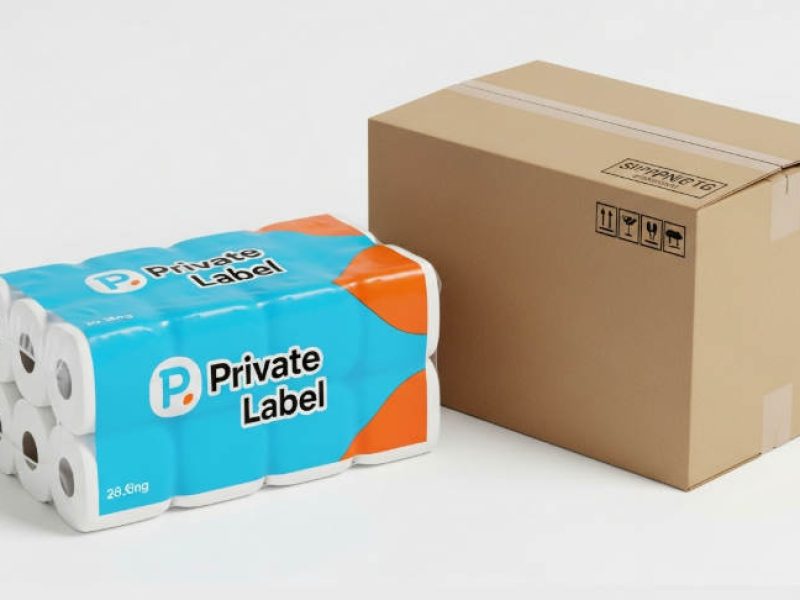
Launching a Private Label Toilet Paper line requires more than just a logo; it demands a supply chain capable of absorbing raw material price swings and meeting strict retail shelf requirements. Many distributors face significant setbacks when they overlook the technical variances in paper GSM and tensile strength, leading to high return rates and lost contracts. Securing a manufacturing partner with consistent quality control is the only way to protect your profit margins and ensure long-term shelf space.
This guide breaks down the essential components of toilet paper OEM, from selecting between 100% virgin pulp and sustainable bamboo fibers to the mechanics of custom embossing for brand recognition. We cover production timelines, retail-ready packaging standards, and the importance of high-volume factory capacity for scaling operations. These technical insights serve as a standard operating procedure for brands looking to move from initial concept to high-volume distribution.
How to Start Your Own Private Label Toilet Paper Brand?
Launching a successful private label brand in 2026 requires balancing high-purity raw material selection with a manufacturing partner capable of sustaining 2,860-ton monthly yields.
Define Product Specifications and Material Choice
Market winners begin by anchoring their product in technical specs that match their target demographic. For the premium segment, 100% virgin wood pulp remains the industry standard due to its superior long-fiber strength and natural softness. Brands targeting eco-conscious consumers often pivot to bamboo fiber or recycled pulp. We maintain strict control over the GSM (grams per square meter), typically ranging from 13g to 22g per ply. This precision ensures the final roll achieves the necessary balance between tactile softness and wet-strength durability.
- Select 3-ply to 5-ply configurations for luxury retail or 2-ply for high-volume commercial contracts.
- Ensure all materials are 100% OBA-Free to meet modern safety standards for sensitive skin.
- Verify fiber purity to prevent linting, a common failure point in lower-tier tissue products.
Partner with a High-Capacity OEM Manufacturer
Reliability in the supply chain dictates your brand’s ability to scale. Partnering with a source factory like Top Source Hygiene provides access to 30 years of manufacturing expertise and a massive production floor in the Hebei industrial hub. With a capacity of 2,860 tons per month, we eliminate the risk of stockouts during peak market demand. New brands should prioritize manufacturers that offer 40HQ container optimization to lower the landed cost per unit.
| Startup Model | Estimated Capital | Key Advantage |
|---|---|---|
| Small-Scale Operation | $80,000 – $250,000 | Lower entry barrier for local niche markets. |
| Full Private Label (OEM) | $650,000+ | Maximum margin and total supply chain control. |
| Asset-Light Distribution | Variable (1x 40HQ MOQ) | Fastest time-to-market using factory stock designs. |
Develop Custom Branding and Retail Packaging
Visual differentiation is the primary driver for shelf movement. Beyond standard plastic wraps, successful brands utilize point-to-point embossing to add tactile value and improve absorbency by up to 30%. We offer CNC-precision embossing patterns, including custom logos, which act as a silent salesman. Retail-ready packaging must also account for logistics efficiency, utilizing compression technology to maximize the number of rolls per bag without compromising the paper’s fluffiness.
- Use multi-pack bundles (10, 12, or 24 rolls) to meet retail club requirements.
- Implement high-resolution printing for brand logos and mandatory barcodes.
- Leverage 5-ply export cartons for secondary protection during international shipping.
Ensure Regulatory Compliance and Logistics Setup
The final phase involves navigating international trade standards. Using the HS code 4818.1000 ensures proper customs clearance for toilet paper. We recommend 40HQ container loads to optimize freight costs, typically yielding 7 to 9 tons of product per shipment. For markets in North America and Europe, certifying that the product is septic-safe and rapidly disintegrates is a non-negotiable requirement for consumer trust.
- Verify ISO 9001 and FDA compliance to ensure hygiene and safety.
- Plan for a 20-25 day production lead time for customized container orders.
- Coordinate with freight forwarders for dispatch from Tianjin Xingang Port, China.

What Are the Key Customization Options for OEM Toilet Paper?
Technical customization determines the balance between unit cost and perceived luxury, allowing brands to capture specific market tiers from budget wholesale to ultra-premium hospitality.
Material Composition and Fiber Selection
Selecting the base fiber is the most critical decision for any private label brand as it dictates both the tactile experience and the environmental narrative. Top Source Hygiene utilizes premium long-fiber 100% virgin wood pulp as the primary standard for high-end retail, providing a lint-free, high-tensile strength product that meets strict OBA-free (No Optical Brightening Agents) safety standards. For brands targeting the sustainability sector in North America or Europe, bamboo fiber serves as a high-growth alternative that offers comparable softness with a lower water-use footprint.
| Customization Tier | Technical Specifications | Strategic Impact |
|---|---|---|
| Fiber Source | 100% Virgin Pulp, Bamboo, or Recycled | Defines skin-safety and eco-certification (FSC/FDA) |
| Ply Configuration | 2-Ply, 3-Ply, 4-Ply, up to 5-Ply | Targets specific markets (Retail vs. Luxury Hotel) |
| Embossing Type | Point-to-Point, Flower, or Custom Logo | Increases liquid absorbency by 30% and brand recall |
| Roll Density | 13–22g/m² (GSM) per ply | Balances durability with cloud-like softness |
Ply Configurations and Paper Density
Adjusting the ply count and GSM (grams per square meter) allows a brand to position its product within specific price brackets. While 2-ply remains the standard for high-volume retail, 4-ply and 5-ply configurations (such as model TSH-4010) are preferred for the luxury hospitality sector in the Middle East and Asia. We control the density strictly between 13–22g/m² to ensure that even high-ply products remain septic-safe and disintegrate rapidly in standard plumbing systems. High-density solid rolls (coreless) further maximize transport efficiency, allowing for 5000g bundles that offer the lowest landed cost per meter for distributors.
Surface Texture and Custom Embossing
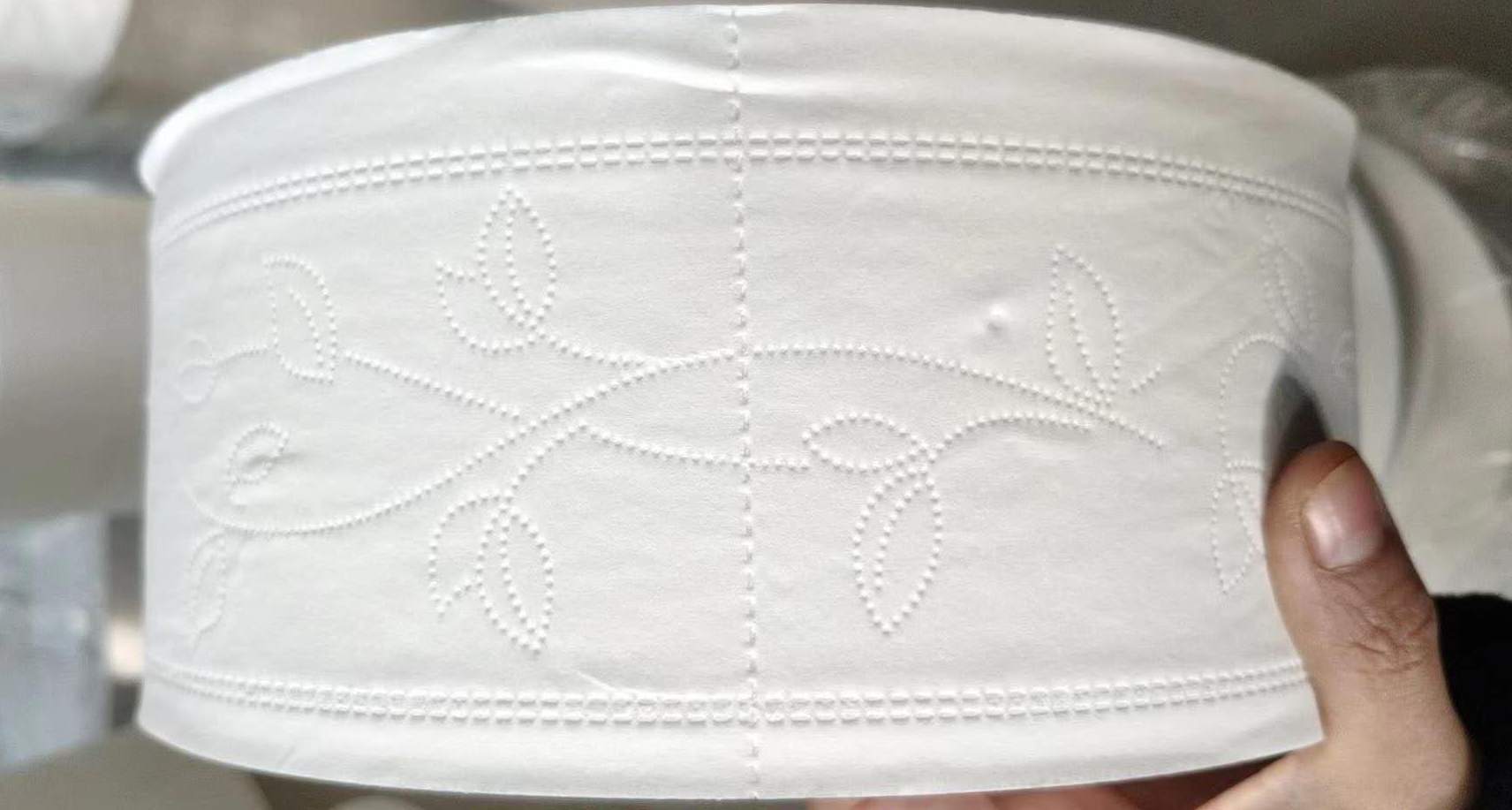
Embossing is no longer just a visual preference; it is a functional requirement for high-performance tissue. Point-to-point embossing creates air pockets between plies, which significantly enhances the paper’s bulk and improves liquid absorption rates by up to 30%. Brands can select from existing patterns like the plum blossom, daisy, or geometric waves, or implement custom CNC-machined rollers to emboss their logo directly into the paper fiber. This tactile branding creates a sensory connection with the consumer that is difficult to replicate with standard untextured rolls.
Retail-Ready Packaging and Private Labeling
Final packaging transforms raw paper rolls into a marketable commodity. For hotel and hospitality clients, individual paper or plastic wraps provide the highest hygiene standard and a premium presentation. Retail brands typically opt for multi-roll bundles (packs of 10, 12, or 32) using high-clarity PE film with full-color, multilingual printing. Our design team supports the development of artwork that meets regional FDA or EU labeling requirements, ensuring that every 40HQ container shipped from our Hebei facility is ready for immediate shelf placement upon arrival at the destination port.
Build Your Custom Toilet Paper Brand
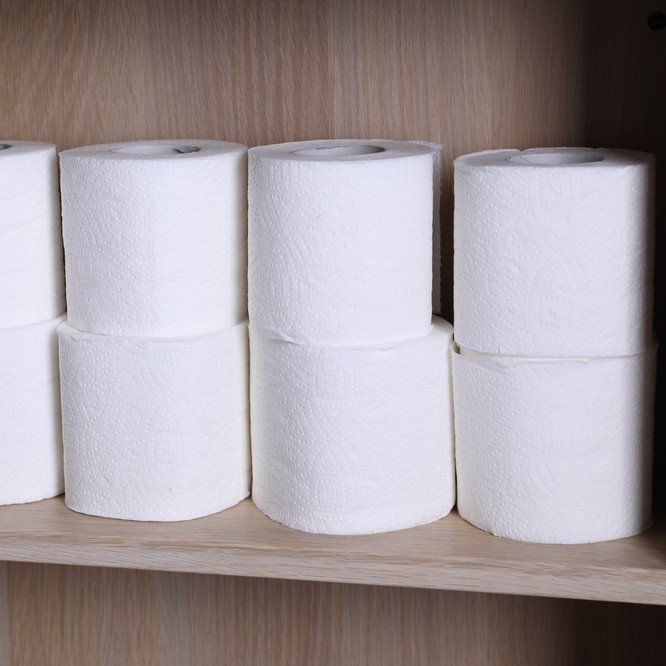
Why is Custom Embossing the Secret to Brand Differentiation?
Custom embossing serves as a technical signal of quality, transforming a commodity paper product into a high-margin specialty item through tactile feedback and functional performance.
Creating a Premium Tactile Experience
In the 2026 market, consumers identify quality through physical touch before any other metric. Standard paper products often feel smooth and generic, but custom embossing adds a three-dimensional depth that indicates craftsmanship. We utilize CNC-precision embossing technology to create textures like the “Double Weave” or “Plumblossom,” which provide a sensory experience that generic alternatives lack. This tactile feedback is a primary indicator of luxury, making the product feel thicker and more substantial in the hand.
Beyond the feel, embossing provides measurable functional benefits. Our point-to-point embossing patterns, such as dot or floral motifs, increase absorbency by up to 30%. By bonding 3-ply or 4-ply layers with high-pressure lamination, we ensure the sheets do not separate during use. This combination of structural integrity and sensory appeal convinces users that the product is superior to basic retail options.
Elevating Perceived Value and Pricing Potential
Brands use refined finishes to move their products into the luxury segment, which supports higher pricing strategies. Visual sophistication through embossing helps justify the cost of premium supplies for the hospitality and high-end retail sectors. When a guest in a luxury hotel uses a roll with a sophisticated pattern, they associate that detail with the brand’s overall attention to detail. This allows distributors to target high-margin accounts rather than competing solely on price in the commodity market.
- Decorative patterns increase shelf appeal, helping products stand out in a crowded retail environment.
- Functional patterns improve the “loft” or fluffiness of the roll, making it appear larger and more valuable to the consumer.
- High-density embossing on 100% virgin wood pulp creates a cloud-like softness that justifies a 10-15% price premium.
Strengthening Brand Identity and Exclusivity
Distinctive embossing acts as a subtle but effective branding tool. Proprietary designs or integrated logo embossing prevent a product from appearing as a generic stock item, fostering better brand recognition. We offer logo-specific embossing where your company’s identity is pressed directly into the tissue. This creates an exclusive product that customers cannot easily find elsewhere, strengthening the emotional connection between the user and the brand.
Custom textures also allow for consistency across a brand’s entire range of paper products, from standard toilet rolls to facial tissues. This uniformity ensures that guest amenities align with the broader brand aesthetic. For private label owners, this exclusivity is a form of profit protection; by offering a unique texture and visual identity, you make it harder for competitors to swap your product for a cheaper, generic substitute without the customer noticing the drop in quality.
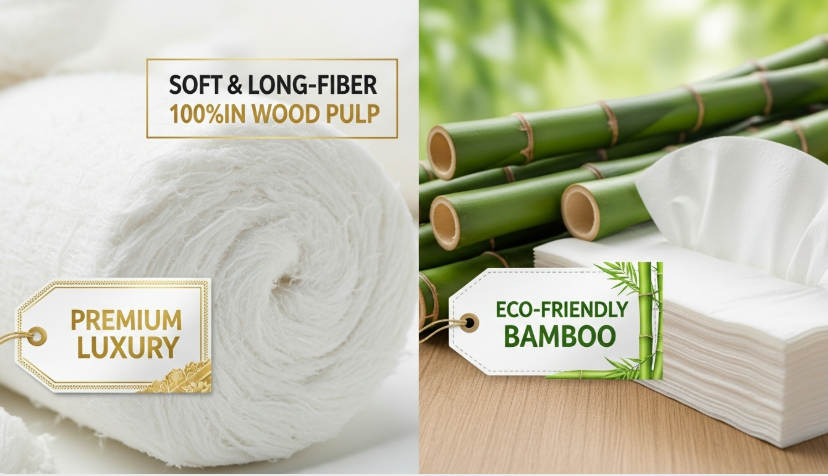
How to Choose Between 100% Virgin Pulp and Bamboo Fiber?
Material selection in 2026 dictates both the tactile luxury of the end product and the brand’s alignment with global sustainability mandates like FSC and EU hygiene standards.
Performance Standards for Softness and Strength
Virgin wood pulp remains the benchmark for the premium luxury segment. We utilize long-fiber wood pulp sourced from the Hebei industrial hub to deliver exceptional tensile strength and a lint-free finish. This material achieves a natural brightness level between 85% and 92% without relying on chemical bleaching or fluorescent whiteners. For brands serving the hospitality or high-end retail sectors, the “cloud-like” softness of virgin pulp provides a significant competitive advantage in guest satisfaction scores.
Recent advancements in bamboo processing have effectively closed the performance gap. Modern bamboo fibers now offer absorbency and strength that rival high-end wood pulp products. While the texture differs slightly, bamboo provides a “silky” feel that many modern consumers associate with premium eco-products. Top Source Hygiene ensures all bamboo variants remain 100% OBA-free, maintaining the same safety standards as our virgin pulp lines.
| Material Source | Performance Profile | Primary Target Market |
|---|---|---|
| 100% Virgin Wood Pulp | Maximum softness; long-fiber strength; 92% natural brightness. | Luxury Hospitality, Healthcare, Premium Retail. |
| Bamboo Fiber | High absorbency; sustainable growth; silky texture. | Eco-Retail Brands, Sustainability-Driven Markets. |
| Recycled Pulp | Functional durability; lowest cost-per-roll; industrial grade. | Industrial Bulk, Budget Wholesale, Institutional Use. |
Environmental Impact and Resource Efficiency
Resource management defines the ecological footprint of each material. Traditional virgin pulp production typically requires approximately 37 gallons of water per roll. To mitigate this, our manufacturing process focuses on high-pressure lamination and efficient water recycling to maintain scalability without excessive waste. Brands must weigh the high quality of virgin wood against the intensive land use required for timber forests.
Bamboo serves as a rapidly renewable resource, growing significantly faster than timber without the need for replanting. This efficiency makes it the preferred choice for brands prioritizing low water usage and minimal chemical processing. In 2026, we see a distinct shift toward bamboo in the European and North American retail markets where consumers actively track the environmental metrics of their household purchases.
Carbon Footprint and Sustainability Compliance
Carbon sequestration capabilities differ greatly between the two materials. Bamboo fiber naturally captures more carbon during its growth cycle, offering a lower net emission profile. This characteristic helps eco-conscious brands meet strict regional environmental regulations. We provide full documentation for bamboo-based lines to support global partners in their green marketing initiatives.
For wood pulp, compliance relies on certified sourcing. Top Source Hygiene provides FSC-certified wood pulp to ensure products meet the stringent requirements of North American and European importers. By sourcing from managed forests, we help distributors avoid the legal and reputational risks associated with unverified timber products.
Strategic Material Selection for Target Markets
Market demographics dictate the ideal material choice:
- Middle East & North America: High demand for 100% Virgin Wood Pulp due to a preference for thickness, softness, and septic-safe rapid disintegration.
- European Retail: Increasing adoption of Bamboo Fiber to align with ESG (Environmental, Social, and Governance) goals and plastic-free packaging trends.
- Southeast Asia & Africa: A balanced mix of virgin pulp for luxury tiers and recycled or high-density coreless rolls for high-volume wholesale.
Our factory’s 2,860-ton monthly capacity allows for the flexible sourcing of both materials. This scalability ensures we can accommodate 40HQ container orders for diverse global regions while maintaining batch color consistency and the high tensile strength required for modern high-ply configurations.
What Are the Lead Times and Production Schedules for New Brands?
New brand launches rely on a synchronized 35-to-45-day window that covers everything from prototype approval to final container loading at our Hebei manufacturing facility.
Initial Sampling and Prototype Development
The pre-production phase sets the foundation for product quality. We ship stock samples within 2 to 3 days so procurement managers can immediately verify the texture, strength, and brightness of our 100% virgin wood pulp. For brands requiring specific specifications—such as custom roll widths or unique ply configurations—we develop custom prototypes in approximately 10 days.
- Stock samples ship in 2–3 days for immediate quality benchmarking.
- Custom prototypes tailored to your brand identity require 10 days for precision development.
- Top Source Hygiene covers sample shipping costs to expedite the approval process for new B2B partners.
- Early 2026 planning helps you account for the critical window where material sourcing and design finalization occur.
Production Cycles for Full Container Loads
Once you approve the samples, we move into mass manufacturing. Producing a standard 40-foot high-cube (40’HQ) container typically takes between 15 and 25 days. Our factory capacity of 2,860 tons per month ensures that even high-volume orders move through the facility without bottlenecks or delays.
- Manufacturing a 40’HQ container generally completes within a 15-to-25-day cycle.
- High-speed machinery enables rapid changeovers between 2-ply and 5-ply specifications without losing efficiency.
- We offer expedited production options for urgent market entries to help you capture retail opportunities.
- Batch consistency is maintained through rigorous CNC-monitored quality control during every production run.
Global Logistics and Regional Shipping Timelines
Total lead time must account for the transit duration from our base in Mancheng, Baoding, to your destination port. We manage the 2026 supply chain using integrated tracking and dedicated support teams to minimize delays during international transit.
- Shipments to North America and Europe typically arrive within 7–14 days after factory dispatch via established routes.
- Asian and Oceanian markets benefit from high-frequency shipping schedules with transit times between 10 and 20 days.
- Logistics for Africa and South America generally require 15–25 days depending on the specific port of entry.
- Our loading teams in Hebei maximize container payload (7–9 tons) to reduce your landed cost per roll.
Scalability and Supply Chain Stability
Long-term growth requires a stable production calendar. By eliminating middleman delays and sourcing materials directly from the Mancheng paper industrial hub, we provide a predictable schedule that resists global pulp price fluctuations. This stability allows you to scale operations as demand increases in your local market.
- Flexible Minimum Order Quantities (MOQ) allow you to test new markets with a single 40HQ before scaling.
- Direct factory sales provide a more transparent and reliable production timeline compared to trading companies.
- Strategic sourcing in Hebei protects your supply chain against volatility in the 2026 global pulp market.
- We provide regular production updates so inventory levels align with your seasonal demand spikes.
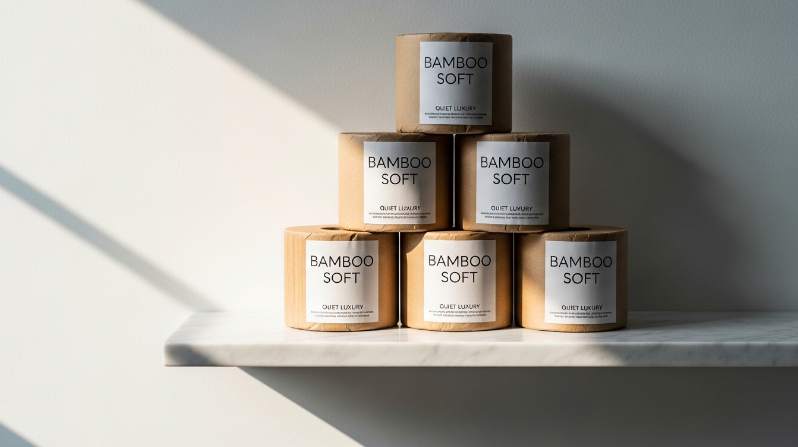
How to Design Retail-Ready Packaging that Sells?
Effective retail-ready packaging (RRP) bridges the gap between logistical protection and front-end conversion by integrating high-definition branding with functional, labor-saving features.
Retail-ready packaging design is no longer an afterthought; it is a core component of the product strategy. In the current market, manufacturers prioritize the early integration of packaging into the development cycle to balance visual differentiation with practical functionality. This approach ensures that the product survives the journey from the factory to the shelf while maintaining its premium appeal.
Visual Brand Identity on Custom Packaging
Top Source Hygiene utilizes advanced graphics and high-definition printing technology on corrugated and paperboard materials to ensure products dominate competitive retail environments. Maintaining color consistency across all branded paper products—from 5-ply luxury toilet rolls to facial tissues—is essential for building consumer trust and brand recognition.
- High-definition printing prevents color drift, ensuring that your brand’s palette remains identical across every production batch.
- Minimalist design strategies reduce visual clutter, helping shoppers identify key specifications like ply count and material composition (such as 100% Virgin Wood Pulp) within seconds.
Functional Features for Retail Staff Efficiency
Modern packaging design focuses heavily on reducing labor costs for retailers. Intuitive opening mechanisms and strategically placed perforations assist retail staff during the high-speed restocking process. By designing for “easy-open,” brands gain favor with major warehouse clubs and supermarkets that prioritize operational speed.
- Precision perforations allow employees to open bulk cases quickly without the use of blades, which prevents accidental damage to the internal tissue products.
- Case designs are optimized for 2026 supply chain standards, ensuring full compatibility with automated sorting and packaging equipment used in global distribution centers.
Space Optimization and Structural Stackability
Effective RRP must balance structural integrity with shelf-space efficiency to maximize visibility and lower logistics costs. Since toilet paper is a high-volume, low-density product, optimizing the dimensions of the outer carton is critical for maintaining profitability during long-distance transit.
- Engineered outer cartons provide the high tensile strength required for high-density stacking, protecting soft paper rolls from being crushed during 40HQ container shipping.
- Custom dimensions ensure that packaging fits standard retail shelf depths perfectly, maximizing the number of units displayed per linear foot and reducing the frequency of restocks.
Retail Shelf Validation and Compliance Testing
Validating packaging on actual retail shelves helps identify potential issues before large-scale production begins. This data-driven approach to design ensures that the product looks as good on the shelf as it did on the digital mock-up.
- Mock-shelf testing verifies that branding remains visible and packaging remains intact even after repeated customer interactions and “picking.”
- Design teams ensure all packaging meets regional compliance standards, including OBA-Free labeling for eco-conscious markets and FDA requirements for North America.
Why is Factory Capacity (2860 Tons/Month) Critical for Scalability?
High-volume output acts as a hedge against raw material volatility and serves as the essential foundation for price competitiveness in global B2B contract negotiations.
Achieving Economies of Scale for Improved Profit Margins
Operating at a 2,860-ton monthly threshold transforms the cost structure for private label partners. High-volume manufacturing directly lowers the per-unit cost by distributing fixed overheads across a massive output. Large-scale procurement of 100% virgin wood pulp from the Mancheng industrial base significantly reduces raw material expenses compared to smaller-scale regional converters. This efficiency allows Top Source Hygiene to provide partners with profit margin improvements between 10% and 15% relative to industry averages.
- Automated production lines in 2026 facilities drastically reduce the labor-to-output ratio.
- Running multiple lines simultaneously optimizes energy consumption per metric ton of finished paper.
- Bulk handling of wood pulp minimizes shipping and storage surcharges during the initial pulping phase.
Supporting Rapid Expansion Across Global Markets
Scalability requires the ability to absorb sudden spikes in market demand without extending lead times. With a monthly capacity exceeding 2,800 tons, our facilities produce hundreds of thousands of rolls daily, matching the 4.4% CAGR projected for the 2026 global tissue market. This massive output ensures that as a brand gains traction in new territories, the manufacturing back-end can scale inventory instantly without facing production bottlenecks.
- The facility supports the concurrent fulfillment of diverse orders, from jumbo rolls for airports to retail-ready 5-ply luxury packs.
- Ample capacity maintains a reliable 15–25 day production lead time for 40-foot high-cube containers.
- Dedicated lines for coreless high-density rolls (like TSH-3396) ensure specialized SKUs remain in stock.
Ensuring Supply Chain Stability for Institutional Clients
Institutional clients in the hospitality and healthcare sectors demand absolute supply continuity to avoid service disruptions. Our infrastructure, centered in the Hebei paper industrial hub, provides a stabilized supply chain for clients in over 56 countries. The high-capacity setup allows the factory to prioritize urgent replenishment orders for major hotel chains or airport groups without disrupting existing production schedules for long-term contract partners.
- Two advanced factories provide infrastructure redundancy to secure steady supply regardless of local logistics shifts.
- Strategic inventory management at the Baoding facility ensures product quality remains uniform across millions of units.
- High-speed conversion lines allow for rapid transitions between different ply densities and embossing patterns.
Conclusion
Launching a successful private label brand depends on balancing high-quality 100% virgin wood pulp with scalable production capacity. Our factory in Hebei supports this growth through precise customization options and a consistent monthly output of 2860 tons. These technical standards ensure your retail-ready products meet international hygiene and durability requirements.
Reach out to our team to discuss custom embossing patterns or to request a technical specification sheet for your first 40HQ container. We can help you finalize your packaging design and production schedule to ensure a smooth market entry.
Frequently Asked Questions
How to find a private label toilet paper manufacturer?
Finding a reliable manufacturer involves auditing global B2B marketplaces such as Alibaba, Thomasnet, or Global Sources, and attending industry-specific trade shows like ISSA or PulPaper. Look for facilities that hold FSC (Forest Stewardship Council) and ISO 9001 certifications to ensure sustainable sourcing and high-quality production standards.
What is the MOQ for custom toilet paper packaging?
For custom-printed private label packaging, the Minimum Order Quantity (MOQ) typically starts at one 20ft container, which equates to approximately 15,000 to 20,000 rolls depending on the roll diameter and ply. Some manufacturers may offer smaller runs of 5,000 units if using standard outer packaging with custom labeling.
Can I get custom embossing on my rolls?
Yes, custom embossing is a core customization capability. Manufacturers utilize specialized steel or rubber rollers to stamp your brand logo or a unique pattern directly onto the paper. This process typically requires a one-time tooling fee for the custom-engraved rollers, which enhances both the aesthetic appeal and the structural thickness of the sheets.
How much does it cost to start a toilet paper brand?
To launch a private label brand, initial costs generally range from $15,000 to $40,000. This includes the first production run, custom packaging plate charges (usually $300-$500 per color), shipping/logistics costs, and brand identity development. Utilizing existing manufacturer templates can help reduce these initial overheads.
What are the packaging options for OEM?
OEM packaging options include individual paper wraps (popular for eco-friendly bamboo brands), LDPE plastic multi-packs (4, 6, 12, or 24-roll configurations), and bulk-packed recycled cardboard boxes. You can also specify matte or glossy finishes and request biodegradable plastic alternatives to align with sustainability goals.
What is the average lead time for private label orders?
The average lead time for a first-time private label order is between 30 and 45 days, allowing for artwork approval and packaging plate production. For repeat orders, lead times are typically reduced to 15 to 25 days, depending on the manufacturer’s current production queue and raw material availability.
