
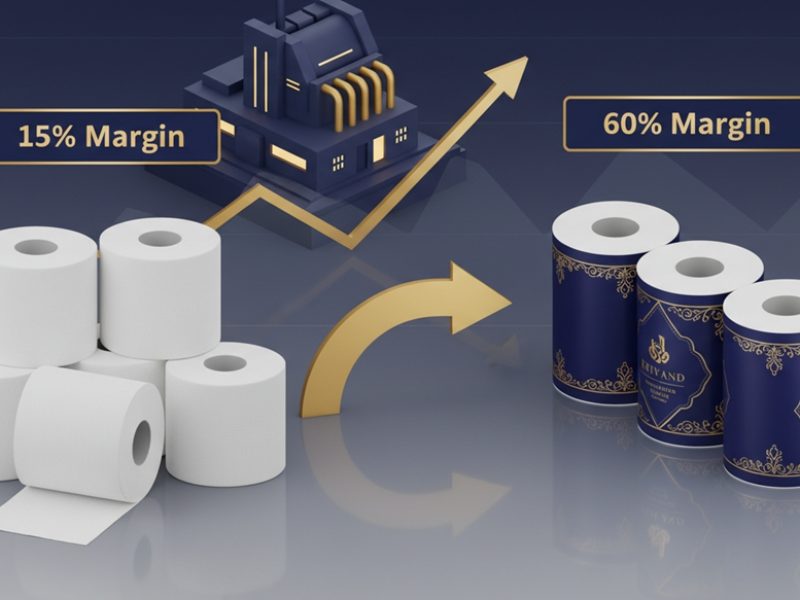
Scaling from White to Private Label is the definitive strategy for wholesalers trapped in the price wars that decimate commodity margins. Without proprietary brand equity, your business remains a price-taker, forced to absorb pulp market volatility that threatens operational survival.
This roadmap outlines a three-phase transition using 100% Virgin Wood Pulp and CNC-precision embossing to build product moats. We evaluate how 40HQ payload optimization and Profit Protection policies secure the 40-60% margins necessary for sustainable eight-figure growth.
The SME Dilemma: Cash Flow vs. Brand Identity
Treating branding as a strategic investment allows firms to align high-volume logistics with exclusive B2B protections, securing market position while maintaining the liquidity needed for daily operations.
Navigating the Tension Between Operating Margins and Brand Equity
Many SME owners fall into a trap where they cut prices to chase immediate cash flow. This cycle is dangerous because it destroys long-term pricing power. Once you train customers to wait for a discount, your brand value evaporates, leaving you stuck in a race to the bottom.
A strong brand identity is not a luxury; it is a cost-saving tool. In the competitive 2026 market, high brand recognition slashes customer acquisition costs and boosts the lifetime value of every buyer. It turns a one-time transaction into a recurring relationship.
Success requires moving away from gut-feeling decisions. Modern firms use data-driven brand systems to gain visibility into their operations. This clarity helps founders manage cash more effectively while ensuring that brand growth stays synchronized with financial reality.
Securing Capital through Profit Protection and 40HQ Payload Optimization
Protecting your margin starts at the source. Top Source Hygiene utilizes a “Profit Protection” strategy by exclusively serving B2B distributors and wholesalers. We never sell direct-to-consumer, ensuring that our factory does not compete against our own clients in the retail market.
Freight efficiency is another way to preserve working capital. By optimizing logistics, we maximize the financial health of your brand:
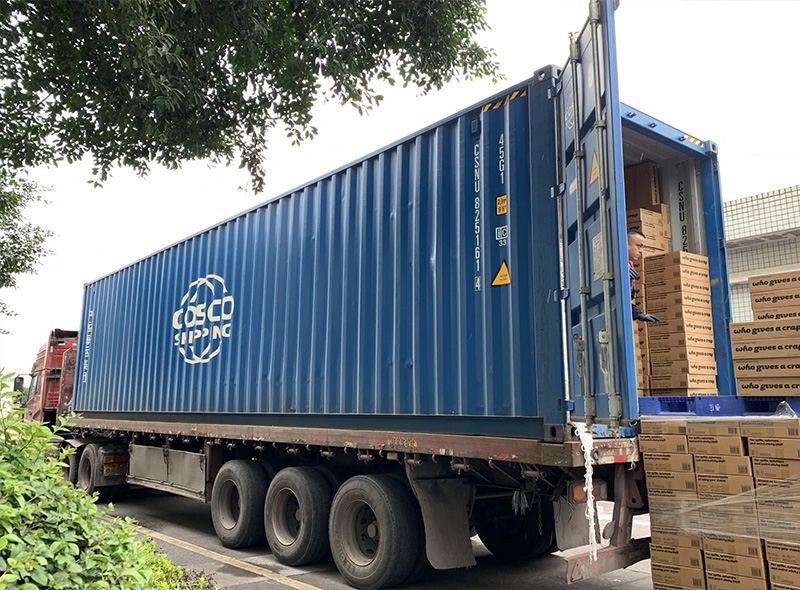
- Payload Maximums: We load 40HQ containers up to 9,000kg (9 tons) to ensure the lowest possible landed cost per roll.
- Visual Verification: We provide Pre-Shipment Visual Verification, including photos and videos of the loading process, to guarantee batch color consistency.
- Risk Mitigation: Strict quality checks prevent unsellable inventory from tying up your capital, ensuring every cent spent on stock is recoverable.
By reducing shipping overhead and preventing direct manufacturer competition, SMEs can divert saved capital into marketing and brand building without jeopardizing their daily operational survival.

The 3-Phase Roadmap for Transitioning to Private Label
Transition through packaging-led identity, technical spec customization, and ODM development. This phased approach builds brand equity while protecting cash flow and inventory risk during market scaling.
| Transition Phase | Focus Area | Primary Objective |
|---|---|---|
| Phase 1 | Visual Identity | Custom packaging and brand recognition |
| Phase 2 | Technical Specs | Custom GSM, ply density, and embossing |
| Phase 3 | ODM Innovation | Proprietary products and market moats |
Strategic Validation Gates for Brand Scaling
Scaling a brand is a series of calculated steps, not a blind pivot. We use quantitative validation gates at every transition point to monitor ROI and prevent overextension. By testing new branding through pilot orders, you gauge market reception before committing to a full 40HQ container of custom-printed inventory.
Reliability in the supply chain centers on the “Golden Sample.” This reference point ensures that the factory maintains your quality-first positioning throughout the contract. To protect your capital, we recommend a balanced inventory strategy: keep standard stock items like the TSH-2559 moving while gradually introducing custom private label SKUs to manage cash flow risks.
- ROI Monitoring: Use quantitative gates to track the performance of each branding phase.
- Pilot Testing: Run small-batch branding tests to confirm market demand before bulk ordering.
- Golden Samples: Establish a physical quality benchmark to validate supply chain consistency.
- Inventory Balance: Mitigate risk by mixing proven stock models with new private label launches.
Technical Performance Standards with Virgin Wood Pulp
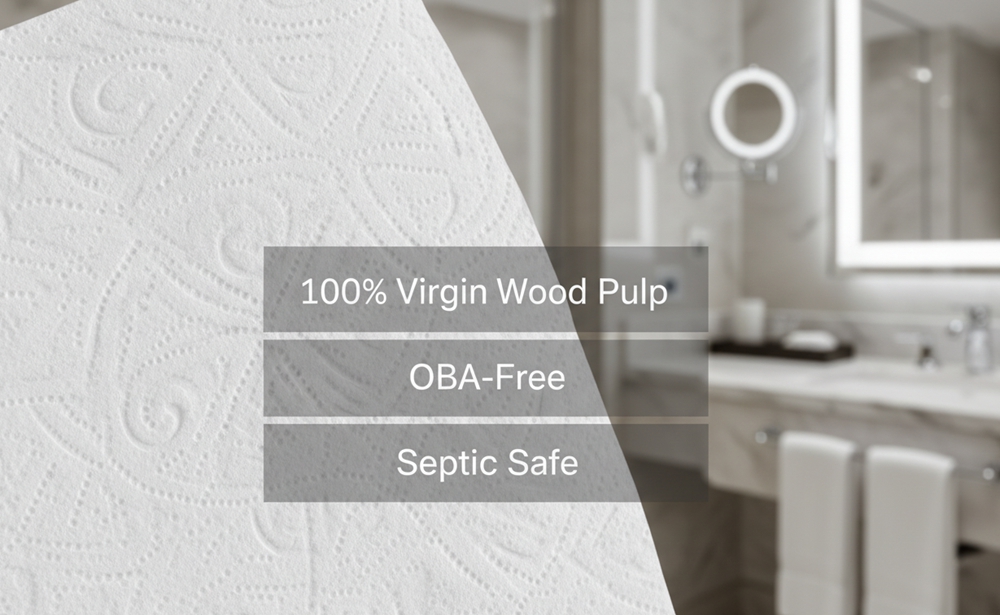
Your private label survives on product integrity. We utilize 100% Virgin Wood Pulp to differentiate your brand with superior tensile strength and cloud-like softness. This choice is critical for B2B buyers in North America and Europe who demand a lint-free experience and high-purity materials.
Safety standards for 2026 require strict adherence to hygiene protocols. Our production in the Hebei paper hub ensures all rolls meet these global benchmarks through precision engineering and material safety.
- Material Purity: 100% OBA-Free (No Optical Brightening Agents) to ensure skin safety.
- Natural Aesthetics: 85-92% natural brightness levels achieved without chemical bleaching.
- Septic Safety: High-wet-strength technology guarantees rapid disintegration and plumbing compatibility.
- Density Control: Ply density is strictly maintained between 13–22g/m² to balance softness and durability.
- Absorption: CNC-precision point-to-point embossing increases surface area absorbency by 30%.
Whether you are deploying the TSH-3396 for high-volume retail or the TSH-4010 for luxury hospitality, maintaining batch consistency is the only way to build long-term brand equity. We provide pre-shipment visual verification for every 40HQ container to ensure your technical specs never drift during the transition.
Build Your Brand With Expert OEM Manufacturing
Managing MOQ Increases During the Transition
Brands manage MOQ hikes by using staged rollouts for core SKUs and maximizing 40HQ payloads through mechanical compression to keep landed costs low while protecting cash flow.
Staged Rollouts and Demand Validation
Moving from white-label stock to custom private-label production inevitably raises the minimum order bar. Factories set these higher limits to offset the setup costs of custom printing plates and specialized production runs. To bridge this gap without overextending your warehouse, focus on a phased approach that prioritizes high-turnover inventory.
- Core SKU Focus: Start with high-volume models like the TSH-2559 Global Retail Favorite to validate market demand before adding niche 4-ply or 5-ply variants.
- Forecasting: Present 3–6 month demand forecasts to the Hebei production team to secure more flexible production windows and favorable terms.
- Micro-Batching: Use micro-batch strategies to align initial inventory with actual retail consumption, preventing capital from sitting in slow-moving stock during the rebrand.
- Packaging Evolution: Simplify initial packaging for the first few containers to keep entry MOQs manageable before investing in premium, multi-color master bags.
40HQ Container Payload Optimization
The most effective way to handle higher MOQs is to ensure every roll in that container carries the lowest possible freight cost. Since Top Source Hygiene operates exclusively with 40HQ containers, maximizing the payload is the key to maintaining your margins during the transition to custom branding.
- Mechanical Compression: We use compression technology during the bagging process to increase the number of rolls per cubic meter while preserving 100% Virgin Wood Pulp fluffiness.
- Payload Targets: Aim for a total weight of 7,000kg to 9,000kg per 40HQ to distribute international shipping costs across more units.
- SKU Bundling: Meet factory volume requirements by combining multiple models, such as the high-efficiency TSH-3396 and luxury TSH-4010, within a single production run.
- Loading Verification: Use pre-shipment visual verification via photos and videos to confirm our Hebei loading team utilized every inch of the container space.
By focusing on freight efficiency and starting with proven models, you can scale into a private label brand without the common cash flow bottlenecks associated with bulk manufacturing.
ROI Comparison: Commodity Margins vs. Brand Margins
Branded hygiene goods yield 40-60% margins, far outpacing 15% commodity rates. High-density specs like TSH-3396 insulate B2B distributors from pulp market volatility and price erosion.
The Economics of Pricing Power and Variable Cost Structures
Commodity paper products suffer from extreme price transparency. This environment forces a race to the bottom where gross margins often stall at 15%. When you sell a product based solely on the lowest price per ton, you lose control over your bottom line the moment raw material costs shift.
Transitioning to a branded model changes the math entirely. Data shows that a mere 1% price increase in a branded category can generate a 22% increase in EBITDA margins for a distributor. Brands create a psychological buffer; customers pay for the perceived value of the label and consistent quality rather than just the underlying fiber cost.
Specialty brands also enjoy pricing stability. While commodity traders must adjust prices weekly to survive pulp fluctuations, branded goods maintain steady retail points. This insulation allows wholesalers to capture the “spread” when raw material costs dip, rather than immediately passing those savings to the end-user.
Protecting Distributor Margins with High-Density 5-Ply Specifications
The technical configuration of the product directly dictates the return on investment. By moving from generic white-labeling to a high-spec private label, wholesalers can capture an additional 15-25% in margin. We focus on specific technical advantages to justify these premium price points:
- Fiber Purity: 100% Virgin Wood Pulp supports “lint-free” and OBA-free marketing claims, catering to sensitive skin and luxury standards.
- Model TSH-3396: This high-density solid roll maximizes the actual volume of paper shipped per 40HQ container, drastically lowering the landed cost per roll.
- Ply Density: Utilizing 5-ply construction creates a “thick” hand-feel that differentiates the brand from thin, 2-ply supermarket commodities.
- B2B Protection: Our factory exclusively serves wholesalers and hospitality groups, ensuring your private brand doesn’t compete with direct-to-consumer factory listings.
Hebei-based manufacturing provides a strategic advantage for this transition. By optimizing 40HQ payloads to 9 tons of finished product, we ensure that the logistics cost does not eat into the brand premium. This structural efficiency allows the distributor to maintain higher net profits even as they invest in their own label’s growth.
Case Study: A Wholesaler Who Built a $10M Private Brand
Wholesalers reach $10M by shifting from generic trading to brand ownership, securing margins through factory-direct protections and high-volume models like the TSH-2559 series.
Moving from Price Competition to Value Chain Control
Wholesalers often trap themselves in a race to the bottom by fighting over pennies per roll. Scaling to a $10M brand requires a pivot from commodity trading to market identity. This transition works when the wholesaler stops buying whatever is available and starts dictating the physical specifications of their own label.
Top Source Hygiene supports this through a strict Profit Protection policy. We exclusively serve B2B distributors and avoid D2C channels entirely. This structure ensures that the factory never competes with the wholesaler, allowing the brand owner to capture the full 20-30% margin advantage over competitors who rely on standard trading companies.
Control over the value chain also solves the problem of “batch drift.” By working directly with our Hebei manufacturing hub, wholesalers secure consistent color brightness and fiber texture across every 40HQ container. This reliability builds the consumer trust necessary for recurring retail contracts and large-scale hospitality supply.
Scaling with the Big 10 Inventory Strategy
Operational efficiency at the $10M level relies on moving massive volumes of high-demand inventory. Successful brands focus their capital on the “Big 10” models that dominate global retail rather than diversifying into slow-moving niche SKUs. This concentrates buying power and simplifies logistics.
- Model TSH-2559: This global retail favorite serves as the backbone for household supply, offering 2-ply and 3-ply configurations that meet 90% of residential demand.
- 40HQ Payload Optimization: Our Hebei loading teams pack 7,000kg to 9,000kg per container. Maximizing this payload reduces the landed cost per unit, which is the single most important factor for scaling to eight-figure revenue.
- Certified Safety: Utilizing 100% OBA-Free materials and Septic Safe engineering allows wholesalers to enter strict North American and European markets without regulatory friction.
- 100% Virgin Wood Pulp: Premium fiber selection ensures high tensile strength and a lint-free experience, positioning the private brand as a luxury alternative to generic recycled options.
By leveraging the TSH-2559 and TSH-3396 models, wholesalers maintain a “Ready to Ship” inventory status. This speed to market, combined with factory-direct visual verification before balance payments, protects cash flow and allows for the aggressive reinvestment needed to hit the $10M milestone.
Frequently Asked Questions
When is the right time to transition from white label to private label?
You should move to private label once you validate market demand and secure capital for 40HQ minimum orders. While white label allows quick entry, private labeling provides the brand control and differentiation needed to scale. At Top Source Hygiene, we require a 1 x 40HQ container for private label projects to ensure production efficiency and cost-effectiveness.
What are the capital requirements for launching a private paper brand?
Small-scale launches often range from $1,500 to $50,000. Professional B2B operations must budget for at least one 40HQ container. We maximize container payloads to between 7 and 9 tons, ensuring you get the lowest possible landed cost per roll for your 100% Virgin Wood Pulp inventory.
How can I handle the higher MOQs required for custom branded products?
Manage higher MOQs by focusing on high-volume best-sellers like the TSH-2559 retail favorite or TSH-3396 efficiency rolls. You can mitigate risk by using pre-orders to validate demand or by committing to a single 40HQ container for your most popular SKU to keep logistics costs manageable.
Does the factory provide design support for my private label packaging?
We provide full support for packaging and visual identity customization. You control the logo placement, packaging format (Format A for individual wraps or Format B for bundle packs), and brand messaging. We maintain the physical integrity of the 100% Virgin Wood Pulp while ensuring the exterior meets your market standards.
Can I keep selling white label SKUs while building my own brand?
A hybrid model works well. You can use white label SKUs to test new categories or fill inventory gaps while focusing your capital on premium, custom-branded 4-ply or 5-ply wood pulp rolls. This allows you to protect cash flow while gradually establishing your primary brand identity.
What are the most common branding mistakes for paper wholesalers?
Common errors include inconsistent brand identity across different plies and failing to meet regional technical requirements, such as OBA-Free standards for North America. Successful brands ensure batch color consistency and use precise technical specs—like 100% Virgin Wood Pulp—to build trust with professional buyers.