
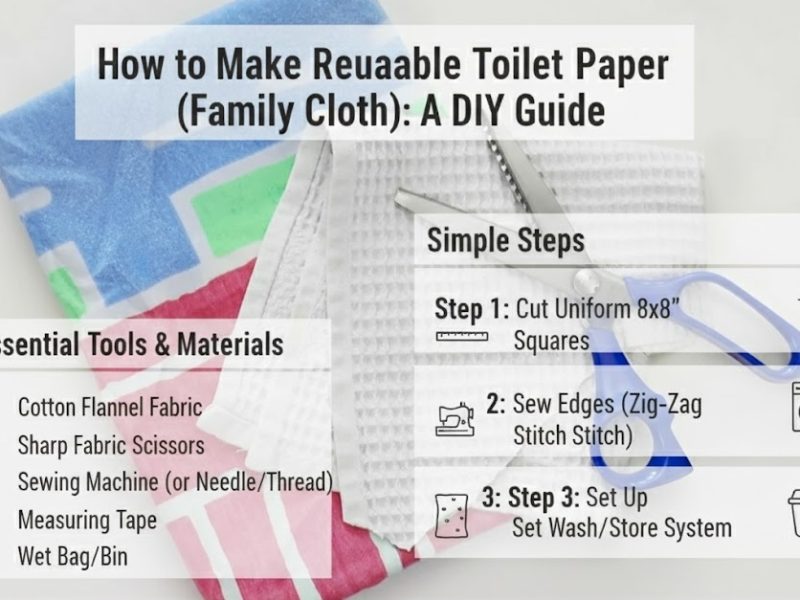
For households determined to cut costs and reduce waste, balancing daily hygiene with practicality can be challenging. Reusable cloth toilet paper—often referred to as family cloth—offers a long‑term solution that addresses both goals while safeguarding against supply disruptions. With the right fabric selection, precise cutting, and a streamlined cleaning process, the switch becomes straightforward and comfortable. This guide outlines exactly how to create a dependable, sustainable system that maintains hygiene without compromising convenience.
Why Making Your Own Reusable Toilet Paper Matters
Adopting reusable toilet paper goes far beyond saving money—it’s about creating a dependable, sustainable hygiene system that fits everyday life. Over time, cotton flannel cloths can replace hundreds of rolls from premium disposable brands, helping you cut costs and avoid supply chain interruptions. Reducing paper waste also minimizes landfill impact and supports eco-goals valued by households and institutions alike. The essential piece is process discipline: keep a clean stack ready, store used cloths in a sealed wet bag, and launder on a consistent schedule. During off-grid situations or supply disruptions, this approach keeps hygiene standards high and operations fully independent.
Essential Tools and Materials for Making Family Cloth
Select a high‑quality fabric as your foundation. Opt for 100% cotton flannel for softness and absorbency, or repurpose tightly woven, durable materials such as old t‑shirts, jersey fabric, or baby blankets. These fabrics are gentle on skin and withstand repeated hot washes. Equip yourself with sharp scissors, a sewing machine or needle and thread, and a measuring tape to ensure precision. Cut each piece to approximately 8×8 inches for uniform folding, efficient storage, and streamlined handling. Have a dedicated bin or wet bag ready for used pieces to keep your system organized and hygienic from the outset.
Custom Reusable Toilet Paper Solutions for Your Market
For brands developing washable toilet paper, selecting an experienced supplier is critical. We provide guidance on fabric selection, from pure cotton flannel to no‑fray finishes, as well as packaging formats engineered to fit standard holders for seamless adoption. Whether serving households, boutique hotels, or eco‑focused retailers, we help you align product durability with efficient logistics, producing a solution that is comfortable, hygienic, and easily incorporated into everyday use.
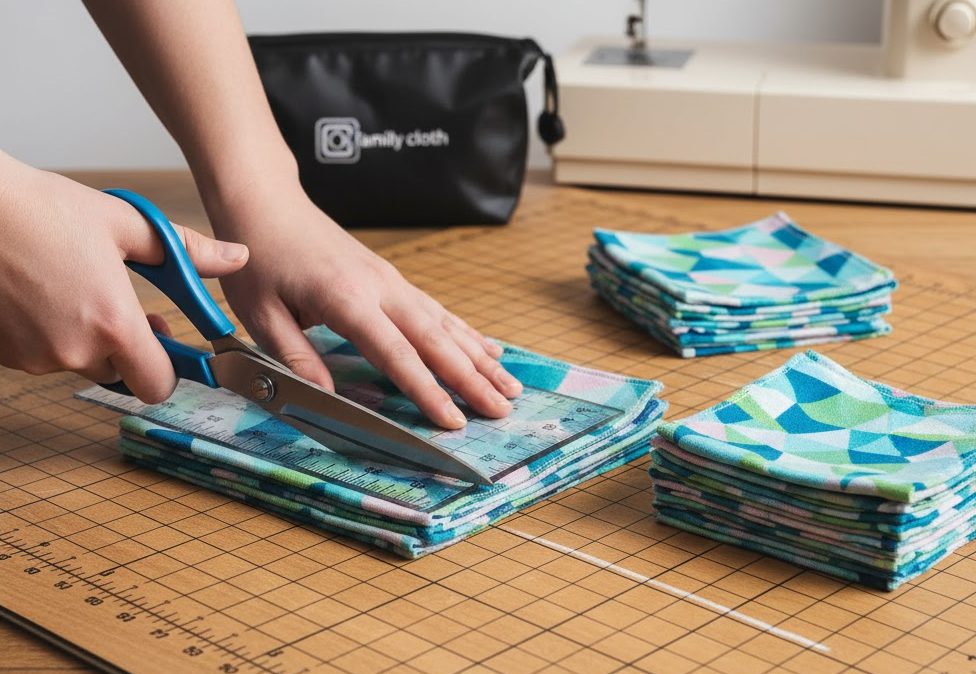
Step 1: Cut Fabric into Uniform Squares
Measure and mark each fabric piece at 8×8 inches—this size offers effective coverage while remaining compact for storage, whether rolled onto a dispenser core or stacked in a bin. Cut using sharp fabric scissors to achieve clean edges that slow fraying and extend durability. Consistent sizing streamlines laundering, simplifies inventory management for households or facilities, and makes folding and stacking quicker, keeping your system organized and efficient over the long term.
Step 2: Sew Edges for Long‑Term Durability
Securing fabric edges is more than a cosmetic finish—it directly affects lifespan, hygiene, and comfort. Use a sewing machine with a zig‑zag stitch to reinforce all sides so they withstand repeated hot washes without fraying. For small batches or bespoke orders, a tight whip stitch by hand is equally effective. Jersey fabric is worth evaluating, as its natural resistance to fraying can reduce or eliminate the need for edge stitching, streamlining production. Omitting reinforcement often leads to unraveling threads, premature wear, and rough edges that compromise user experience and drive up replacement costs.
Step 3: Set Up a Cleaning and Storage System
Position a sealed, washable container—such as a wet bag—next to the toilet to collect used cloths. This limits odor, contains bacteria, and allows for easy transport to the laundry. Commit to a hot-water washing routine, adding bleach if preferred, and ensure each piece is thoroughly dried before reuse. Maintain a clearly separated, accessible stack of clean cloths so users can transition smoothly from disposables. A disciplined system safeguards hygiene, extends product life, and ensures your sustainability goals stay on track.
Common Mistakes and Expert Tips
Adopting family cloth successfully requires a well-planned system and avoidance of common pitfalls that can compromise hygiene or create unnecessary inconvenience. Below is a list of frequent issues encountered over time, along with proven strategies to prevent them. These insights support long-term comfort, cleanliness, and operational efficiency, whether implementing at home or scaling for an eco-conscious enterprise.
| Common Mistake | How to Avoid / Solution |
|---|---|
| Selecting rough or low‑absorbency fabrics | Opt for soft, absorbent natural fibers such as cotton flannel or high‑quality jersey to ensure comfort and effective moisture control. |
| Neglecting edge reinforcement on fray‑prone fabrics | Finish all edges with a zig‑zag stitch or choose no‑fray textiles to extend lifespan and protect stock quality. |
| Using open containers for soiled cloths | Store in a sealed wet bag or airtight bin to contain odor, maintain sanitation, and streamline laundry handling. |
| Relying solely on cold‑water washes | Wash in hot water on a regular schedule to eliminate bacteria and meet hygiene standards consistently. |
| Starting with insufficient inventory | Maintain a stock of at least two dozen pieces to enable smooth rotation between washes and avoid reverting to disposables. |
Frequently Asked Questions
What is the best fabric for reusable toilet paper?
Cotton flannel is the top choice for most suppliers because it is soft, highly absorbent, and resilient through years of hot washes. Jersey fabric is a secondary option, but flannel’s durability makes it better for maintaining product standards and reducing replacement frequency.
How many cloth wipes are needed?
A practical starting point is about two dozen wipes. This quantity supports a full rotation—one clean set ready while the other is in the laundry—preventing shortages and avoiding excessive stock that takes up storage space.
How should used family cloth be washed and stored?
Store used wipes in a sealed wet bag or lidded bin to contain odor and prevent cross‑contamination. Launder them in hot water with detergent, then dry completely before reuse to ensure consistent hygiene and comfort.
Is reusable cloth toilet paper sanitary?
Yes—provided it is washed in hot water with detergent and dried thoroughly. Organizations and households that implement a strict cleaning routine achieve reliable sanitation with minimal risk.
Can reusable toilet paper be made without a sewing machine?
It can. Simply cut fabric to size with sharp scissors and use as‑is, though edges may fray over time. Regularly inspect and trim worn edges until you invest in stitched finishes for greater durability.
Key Takeaways
Reusable toilet paper is more than a cost-saving measure—it’s a long-term, eco-conscious solution that cuts waste while ensuring supply reliability. A disciplined process for cutting, finishing, and maintaining cloths safeguards both hygiene and user comfort, giving households and small organizations a dependable system that works year-round.
Selecting durable fabrics such as cotton flannel and adhering to a defined cleaning and storage routine keeps the approach practical for daily use. This commitment strengthens sustainability goals and reduces dependence on external supply chains.
You can further optimize by experimenting with fabric patterns, adjusting sizes to suit different users, or implementing advanced DIY refinements. Even minor improvements can elevate efficiency, durability, and user experience—helping your reusable system perform at its best.