
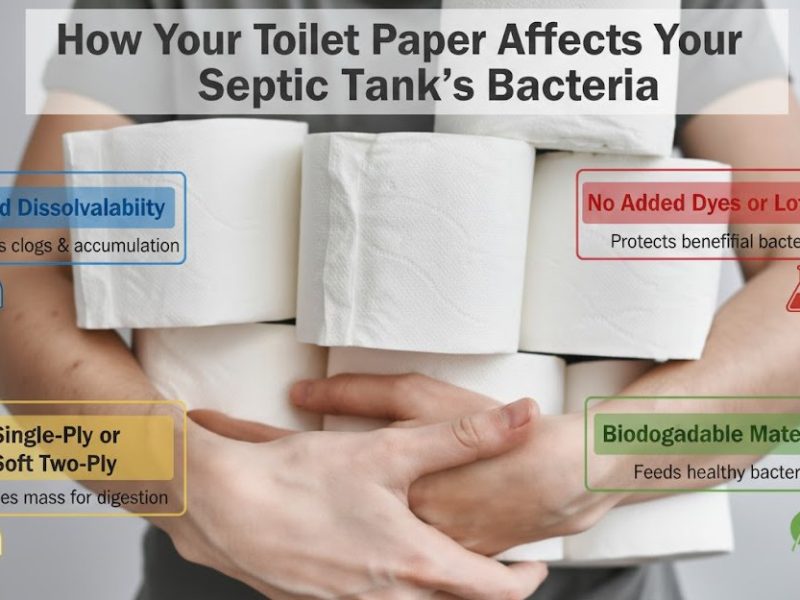
For homeowners with septic systems, the type of toilet paper used directly affects how efficiently their tanks operate. Septic-safe options break down rapidly and maintain the healthy bacterial balance that keeps waste digestion smooth. This article outlines how different toilet paper compositions influence septic bacteria and provides clear guidance to help you select products that protect your system and minimize maintenance costs.
Septic-Safe vs. Standard Toilet Paper: Key Differences at a Glance
This table highlights the practical differences between septic-safe and standard toilet paper—showing how each performs in terms of breakdown, additives, bacterial impact, and environmental responsibility.
| Feature | Septic-Safe Toilet Paper | Standard Toilet Paper |
|---|---|---|
| Breakdown Rate | Disintegrates quickly in water, minimizing the risk of clogs | Decomposes slowly, increasing the chance of buildup and blockages |
| Chemical Additives | Formulated without chlorine, dyes, or synthetic fragrances | Often contains bleach, dyes, or fragrance compounds that harm bacteria |
| Impact on Septic Bacteria | Maintains a stable bacterial environment for effective waste digestion | May disrupt or reduce beneficial bacterial activity |
| Typical Usage | Recommended for properties using septic tanks or small-scale systems | Common in municipal sewer networks, less ideal for septic setups |
| Environmental Considerations | Typically biodegradable and produced with eco-friendly practices | Sustainability varies; some formulas include non-biodegradable elements |
What Is Septic-Safe Toilet Paper?
Design and Breakdown in Septic Tanks
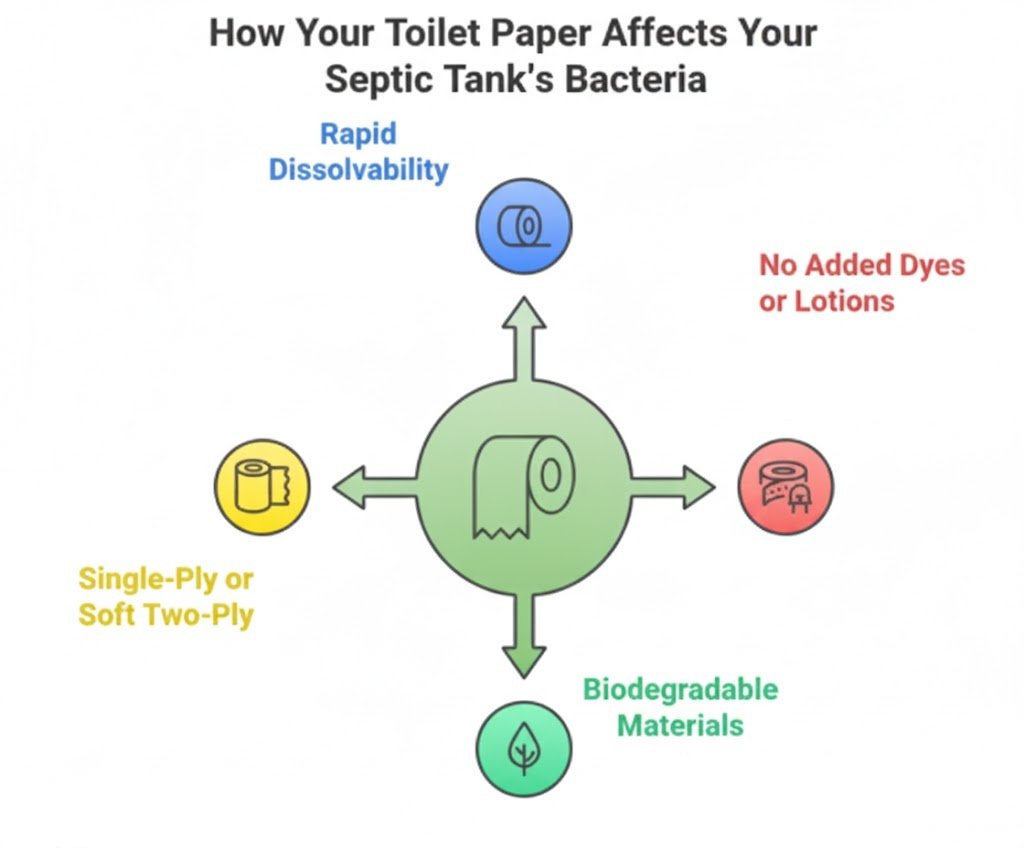
Septic-safe toilet paper is engineered to disintegrate quickly upon contact with water, preventing buildup and maintaining efficient wastewater flow. Its lightweight fibers separate easily under gentle agitation, keeping filters and pipes clear while supporting the natural bacterial processes inside the tank.
Manufacturers avoid chlorine, fragrances, dyes, and lotions that can disrupt the microorganisms responsible for waste digestion. Similar to composting microbes, these bacteria require a stable environment to function effectively. Septic-safe paper preserves that balance, reducing the risk of odors, clogs, and bacterial loss.
What Is Standard Toilet Paper?
Chemical Additives and Their Effect on Septic Bacteria
Standard toilet paper is designed for comfort and visual appeal rather than for septic compatibility. Many brands rely on chlorine-based bleaching to create a bright white finish. Although trace amounts may appear harmless, continuous exposure can gradually weaken the bacterial colonies that break down waste inside the tank.
Lotions, fragrances, and dyes enhance the user experience but often contain compounds that disrupt anaerobic bacteria. Thicker or multi-ply papers also take longer to dissolve, allowing fibers to accumulate in the septic tank and accelerating the need for pumping. Over time, this buildup contributes to inefficient waste digestion and diminished system performance.
Custom Toilet Paper Solutions Tailored for Your Brand
With over three decades of experience, Top Source Hygiene manufactures premium OEM/ODM toilet paper with flexible customization options, responsibly sourced materials, and reliable global logistics. Develop products that meet your customers’ expectations for softness, strength, and sustainability—all with standout packaging that strengthens your brand.
Head-to-Head Showdown: Breakdown Rate, Chemicals & Bacterial Impact
Breakdown Rate in Septic Systems
Toilet paper breakdown speed plays a key role in maintaining septic system efficiency. Septic-safe paper typically dissolves within seconds of flushing, minimizing solid buildup and allowing bacteria to focus on decomposing organic waste. This rapid disintegration reduces pumping frequency and lowers long-term maintenance costs.
In contrast, multi-ply or quilted papers take longer to break apart, particularly in cooler or less-agitated tanks. When solids linger, they raise the biochemical oxygen demand, making the environment less efficient and more susceptible to clogs or sluggish drainage.
Chemical Additives and Bacterial Health
Bleach, synthetic fragrances, and color agents in standard paper act as mild disinfectants. While they create a clean scent, they can disrupt the bacterial balance essential for breaking down waste. As these microbial populations decline, digestion slows, and overall enzyme activity drops.
Septic-safe paper avoids such additives, preserving a stable microbial ecosystem inside the tank. This balance supports continuous waste recycling without the need for intensive mechanical intervention.
System Maintenance and Longevity
When waste decomposes efficiently, septic tanks require less frequent servicing. Septic-safe paper minimizes solid accumulation, keeping operations stable and extending system lifespan. A consistent bacterial community also promotes balanced gas generation and clear effluent.
Conversely, standard paper contributes to residue buildup that accelerates pumping cycles and may lead to early system wear. Choosing a fast-dissolving, septic-safe option is a simple measure that significantly enhances the durability of both the tank and the drain field.
Choosing Toilet Paper for Septic Systems and Sanitation Sustainability
Eco-Friendly Materials and Biodegradability
Toilet paper made from virgin pulp or bamboo fibers breaks down quickly and reduces environmental impact. These natural fibers hold together just long enough for use, then disintegrate efficiently once flushed. Because they’re free from heavy chemical processing, they help maintain healthy septic bacteria and prevent clogs.
By contrast, synthetic blends and heavily processed papers degrade slowly and place unnecessary strain on wastewater systems. FSC-certified and responsibly sourced options strike an effective balance between user comfort, biodegradability, and sustainable sanitation performance.
Supporting Septage Management and Wastewater Treatment
Rapidly degrading toilet paper reduces the volume of solids entering septic and sludge treatment systems. When households send fewer persistent materials down the line, treatment facilities and on-site digesters can process waste more efficiently, using less energy and fewer additives.
This chain reaction minimizes emergency maintenance, eases the workload on sanitation teams, and helps safeguard groundwater quality. Choosing septic-safe, biodegradable paper contributes directly to cleaner water cycles and more resilient waste management infrastructure.
Frequently Asked Questions About Toilet Paper and Septic Bacteria
Can the chemicals in toilet paper harm my septic tank?
Yes. Harsh chemicals such as bleach or synthetic fragrances can weaken or kill the bacteria essential for breaking down waste. Prolonged exposure diminishes bacterial activity, reducing system efficiency and increasing maintenance requirements.
Is toilet paper with lotion or fragrance safe for septic systems?
No. Lotions and fragrances often contain oils or compounds that inhibit bacterial activity. Occasional use may be harmless, but consistent use can slow waste digestion and contribute to sludge buildup.
Does bleached toilet paper affect septic bacteria?
Yes. Bleached paper releases trace chlorine, which acts as a disinfectant. Over time, these residues can disrupt bacterial colonies and slow down the natural decomposition process inside the tank.
What type of toilet paper best supports septic bacteria?
Choose single-ply or fast-dissolving toilet paper labeled “septic-safe” and free from dyes or perfumes. These formulations balance user comfort with optimal bacterial performance and help maintain efficient waste digestion.
How can I maintain a healthy balance of bacteria in my septic system?
Use enzyme-based cleaners, avoid flushing antibacterial or chemical-heavy products, and moderate paper use. These practices sustain bacterial health and keep your septic system running efficiently.
Final Thoughts
Septic-safe toilet paper works in harmony with your tank’s natural bacteria. By selecting paper that dissolves quickly and is free from chemical additives, you ensure consistent system performance and reduce the need for costly maintenance.
This small change also enhances community sanitation efficiency and supports environmental sustainability. Choosing biodegradable, septic-safe paper is a simple yet effective step toward keeping your onsite wastewater system dependable for years to come.