
Septic safe and flushability standards represent the primary defense against catastrophic plumbing failures in high-traffic facilities. Using tissue that resists mechanical breakdown leads to emergency repairs and structural sediment traps, draining maintenance budgets and impacting tenant productivity.
This analysis evaluates 100% virgin wood pulp against aging infrastructure requirements. We benchmark fiber performance using the 13–22g/m² ply density standard and OBA-free composition to ensure rapid disintegration under 20 minutes for stable 40HQ supply chains.
Why Fast Disintegration is the #1 Risk Mitigation Metric for Facilities
Facility managers use fast-disintegrating tissue to prevent clogs and backups. In 2026, rapid dissolution is the benchmark for septic safety and maintaining operational high-traffic restrooms.
Plumbing Failures and the Financial Impact of Slow Dissolution
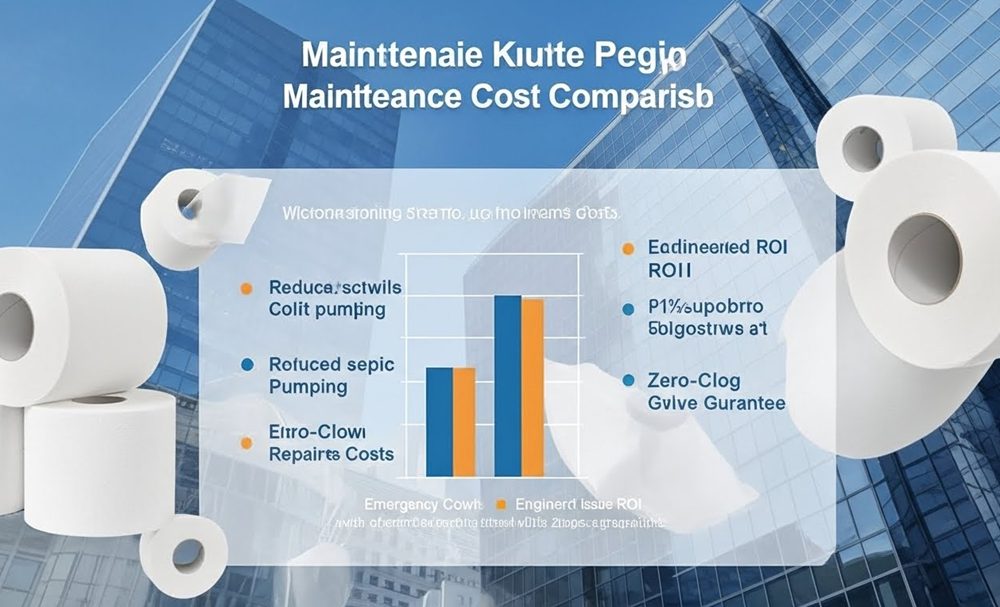
High-traffic commercial buildings face significant financial risks when restroom infrastructure fails due to slow-dissolving paper. Even temporary closures impact productivity and tenant satisfaction while draining maintenance budgets.
- Immediate Cost: Clogged pipes lead to expensive emergency plumbing repairs and restroom downtime.
- Long-Term Damage: Slow-dissolving fibers accumulate in aging pipe networks and septic tanks, causing structural blockages.
- Overhead Reduction: Rapid disintegration lowers the frequency of septic tank pumping, directly cutting facility costs.
Septic-Safe Engineering with 100% Virgin Wood Pulp
Top Source Hygiene solves the disintegration problem through advanced fiber technology. By selecting specific wood pulp grades, we ensure tissue breaks down effectively before it reaches sensitive septic components.
- Fiber Optimization: 100% virgin wood pulp with precise fiber lengths ensures rapid separation upon water contact.
- International Standards: Product performance meets North American and European septic-safe benchmarks for drainage systems.
- Safe Composition: 100% OBA-Free materials protect pipe integrity and maintain the bacterial balance required for septic health.
Relying on fiber performance instead of chemical additives allows these products to maintain high wet strength during use while guaranteeing immediate dissolution after flushing.
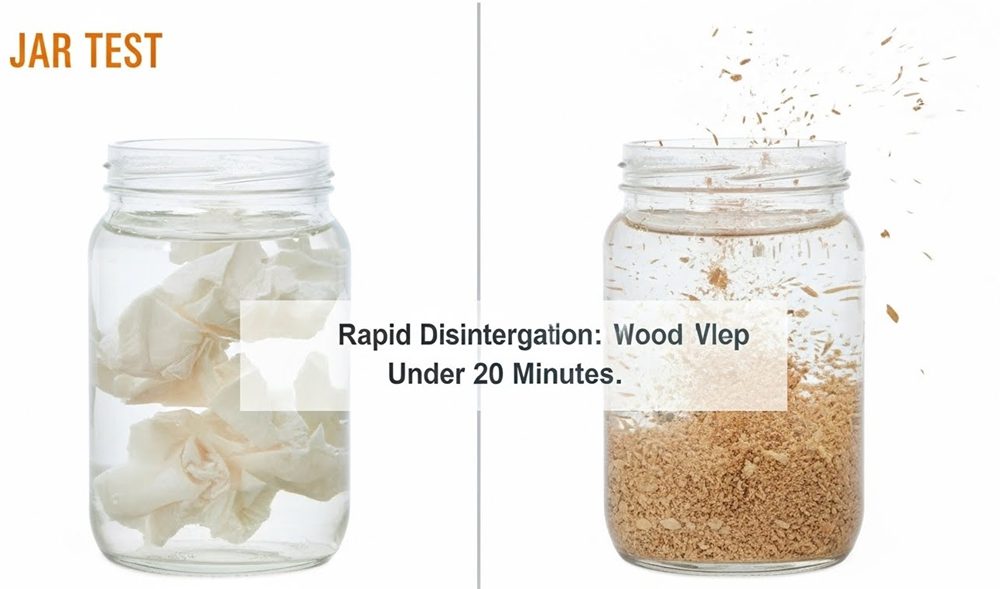
Jar Test Benchmarks: Contrasting Wood Pulp and Bamboo Dissolution Speeds
Recycled paper breaks down in 8–12 minutes, while bamboo takes 15–25. Maintaining disintegration under 20 minutes ensures septic compatibility in high-traffic plumbing networks.
| Material Type | Average Dissolution Time | Septic Safety Rating |
|---|---|---|
| Standard Recycled Paper | 8–12 Minutes | High |
| Premium Bamboo Pulp | 15–25 Minutes | Moderate to High |
| Top Source 100% Virgin Wood Pulp | Under 20 Minutes | High (Septic Engineered) |
Analyzing Material Fragmentation via Jar Test Methodology
Facility managers use the jar test to simulate how paper reacts to water agitation inside plumbing lines. The process involves placing 4–5 sheets in a clear jar, filling it halfway with room-temperature water, and shaking vigorously for 10 seconds. We then observe the particle size and how quickly the material fragments into a pulp that can navigate aging pipe networks.
The National Onsite Wastewater Recycling Association (NOWRA) sets a clear safety benchmark: total disintegration must occur within 20 minutes. Many bamboo products struggle with this limit. Their high tensile fiber strength often causes them to exceed 25 minutes in low-flow conditions, increasing the risk of accumulation in septic tanks.
Recycled wood pulp typically fragments the fastest because its fiber matrix is already weakened from previous processing cycles. This makes it a reliable choice for older buildings with narrow drainage pipes, though it lacks the softness and hygiene purity of virgin materials. For modern facilities, the goal is balancing this rapid fragmentation with the user experience of premium tissue.
Top Source Hygiene Rapid Disintegration Standards for 2026 Systems
At Top Source Hygiene, we engineer our 100% Virgin Wood Pulp to bridge the gap between high wet-strength and rapid dissolution. By sourcing premium long-fiber pulp from our Hebei manufacturing hub, we create a tissue that remains lint-free during use but fragments immediately upon flushing. This specifically protects North American and European septic systems from the clogs associated with traditional “thick” papers.
We maintain strict technical control over our production parameters to ensure global compliance:
- Ply Density: We calibrate density between 13–22g/m² per ply to ensure rapid water penetration and breakdown.
- Chemical Profile: Our 100% OBA-Free process eliminates chemical binders and whiteners that can slow natural degradation.
- Fiber Selection: We utilize a strategic long-fiber matrix that provides softness without creating the dense, indestructible “plugs” found in low-tier bamboo alternatives.
- Standards Compliance: Every batch meets ISO 9001 and EU hygiene requirements for rapid room-temperature water dissolution.
By removing artificial softening agents and formaldehyde, we ensure the paper breaks down naturally and maintains the bacterial balance of septic tanks. This engineering focus allows B2B distributors to provide a high-end, 5-ply luxury feel while guaranteeing the plumbing safety of a much thinner recycled sheet.
Build Your Unique Premium Toilet Paper Brand
Is Long-Fiber Bamboo More Likely to Obstruct Aging Pipe Networks?
Long-fiber bamboo increases snagging risks in degraded pipes due to high tensile strength. Engineered wood pulp offers faster disintegration for infrastructure preservation.
Fiber Morphology and Internal Pipe Snagging
Bamboo fibers possess an inherent tensile strength that makes them excellent for structural products but problematic for aging drainage. Unlike the short-fiber matrix found in high-quality wood pulp, bamboo vascular bundles resist mechanical breakdown. In a plumbing environment, this means the paper stays intact longer, increasing the likelihood of physical obstruction when it encounters internal pipe irregularities.
Aging 2026 urban infrastructure often suffers from internal scaling, rust blisters, and root intrusions. These protrusions act as “hooks” for long-fiber materials. While recycled paper typically breaks down in 8 to 12 minutes, bamboo products can take up to 25 minutes to fragment. This delay allows fibers to accumulate at snag points, eventually forming sediment traps that catch solid waste and lead to full-scale blockages.
- Tensile Strength: Bamboo vascular bundles maintain integrity under hydraulic pressure, whereas wood pulp fibers separate rapidly.
- Low-Flow Risks: Modern high-efficiency toilets (1.28 gpf) lack the water volume needed to push long, intact fibers through corroded horizontal runs.
- Septic Accumulation: In older septic inlets, bamboo fibers often settle before fully disintegrating, contributing to faster sludge buildup.
Rapid Disintegration Engineering for Septic Safety
Protecting facility infrastructure requires a shift toward engineered disintegration. At Top Source Hygiene, we focus on 100% Virgin Wood Pulp because it balances immediate wet strength with rapid post-flush breakdown. We utilize premium long-fiber wood pulp to provide softness, but we calibrate the fiber density (13–22g/m² per ply) specifically to ensure the material dissolves quickly once submerged in the septic environment.
Our manufacturing process employs high-pressure ply-bonding technology. This lamination keeps the 2-ply to 5-ply sheets together during use without relying on heavy chemical adhesives that inhibit water penetration. When the paper hits the drain line, the layers separate almost instantly. This rapid separation is the most effective way to prevent the formation of “plugs” in low-flow plumbing systems.
- OBA-Free Composition: Eliminating Optical Brightening Agents protects the bacterial balance of septic tanks, facilitating natural biological breakdown.
- Standard Compliance: Our products meet North American and European septic-safe standards, ensuring they clear drainage lines in under 20 minutes.
- Mechanical Agitation: Engineered wood pulp fibers respond better to the low-flow turbulence of modern plumbing than raw bamboo alternatives.
Wholesalers and facility managers in high-traffic zones should prioritize 100% Virgin Wood Pulp options, such as our TSH-2559 or TSH-JRT08 series. These products are specifically designed to meet the rigorous flushability guidelines of the IWSFG and INDA/EDANA, reducing maintenance costs related to pipe clearing and septic pumping.
The Science of “Septic Safe” Labels: Verifying Disintegration Data
Verification hinges on slosh box tests simulating pipe agitation. True safety requires physical breakdown within seconds to prevent tank obstruction, not just long-term biodegradability.
Validation Protocols and Standardized Flushability Testing
Facility managers often mistake “flushable” for “septic safe.” These are not the same. Standardized testing identifies how a product behaves under the mechanical stress of a drain line versus a static environment. We evaluate these products based on their ability to clear the line and disintegrate before reaching the tank.
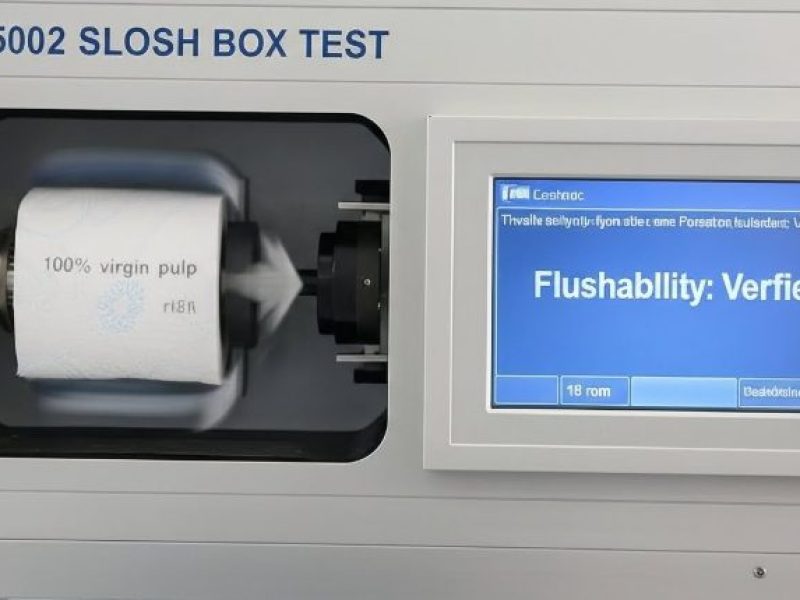
- FG502 Slosh Box Test: This apparatus uses an oscillating box with 2.0 to 4.0 liters of water, moving at 16–18 rpm for 30 to 60 minutes to mimic pipe agitation.
- INDA/EDANA Guidelines: These industry standards require the product to clear the toilet and drain line and become unrecognizable in a short period.
- IWSFG PAS Standards: This international framework assesses environmental impact, settling behavior, and disintegration to ensure compatibility with 2026-grade utility infrastructure.
- Mechanical Agitation vs. Biodegradability: While biodegradability describes eventual decay over weeks, septic systems require physical disintegration in seconds to prevent blockages.
Lab results show a performance gap when products are tested in low-flow environments. While many wipes fail to break up after 30 minutes in a slosh box, high-quality toilet paper typically dissolves in seconds under the same agitation levels.
Technical Integration of Septic-Safe Fiber Engineering
At Top Source Hygiene, we engineer our TSH-2559 model to facilitate fast fiber separation in water. We utilize 100% Virgin Wood Pulp because the long-fiber structure provides high dry strength but loses integrity quickly once saturated in a septic environment.
- Ply Density: We strictly control density between 13–22g/m² per ply. This balance provides structural comfort without the bulk that causes plugs in low-flush toilets.
- 100% OBA-Free: By excluding Optical Brightening Agents, we protect the tank’s bacterial ecosystem and maintain a neutral pH level.
- North American & European Compliance: Our engineering process matches the strict plumbing requirements of major global markets, ensuring smooth transit through aging pipe networks.
- Fiber Dispersion: Unlike “ultra-plush” wood products that use chemical binders to resist moisture, our virgin pulp separates naturally upon impact with water.
B2B buyers should look for specific fiber specifications rather than marketing buzzwords. Managing the ply-to-weight ratio and ensuring chemical purity protects both the facility’s plumbing and the distributor’s reputation for quality.
Does High-Ply Bamboo Increase the Risk of Clogs in High-Traffic Zones?
Material composition matters more than ply count; short bamboo fibers disperse faster in water than the long fibers found in ultra-plush wood pulp products.
Fiber Length and Natural Dispersal Mechanics
The risk of blockages in high-traffic commercial plumbing usually stems from fiber length rather than the number of layers in a roll. Bamboo contains naturally shorter fibers that separate and disperse almost immediately upon water contact. Unlike virgin wood pulp, which uses long fibers to create strength, bamboo relies on a dense but brittle fiber matrix that fragments easily when agitated in a toilet trap or drain line.
This rapid fragmentation also addresses long-term facility maintenance. We observe significantly lower lint production in bamboo products compared to recycled or luxury wood pulp. High lint volume often contributes to sludge buildup in commercial septic tanks and grease traps. By using bamboo, facilities reduce the solid waste accumulation that leads to back-ups and expensive hydro-jetting requirements.
- Fiber Structure: Short fibers facilitate quick separation and dispersal in low-flow systems.
- Lint Reduction: Minimal particle shedding prevents heavy sludge layers in septic environments.
- Biodegradability: Natural plant-based composition ensures breakdown without disrupting tank bacterial balances.
Engineering Rapid Disintegration for 2026 Plumbing Standards
Top Source Hygiene maintains strict technical specifications to ensure high-ply rolls remain compatible with aging pipe networks. We control ply density between 13 and 22g/m² to strike a balance between high-wet-strength durability for the user and dissolution speed for the plumbing. This engineering ensures that even a 4-ply or 5-ply roll behaves like a single-ply product once it hits the main sewer line.
Our manufacturing process utilizes precision ply-bonding technology. This high-pressure lamination holds the layers together during use but allows them to delaminate instantly during the flush cycle. This prevents the formation of “plugs”—the compressed mass of paper often seen when using ultra-plush wood pulp in low-flush toilets. Our products comply with North American and European rapid disintegration benchmarks, making them a safe choice for high-volume commercial procurement.
- Density Balance: 13–22g/m² per ply ensures the paper holds during use but dissolves in the pipe.
- Ply-Bonding Tech: Layers separate under mechanical water agitation to prevent drain line plugs.
- Standard Compliance: Engineering meets IWSFG and INDA/EDANA flushability guidelines for facility safety.
FAQ
Is bamboo toilet paper compatible with aging septic systems?
Yes. Bamboo breaks down faster than traditional hardwood or recycled alternatives. This rapid disintegration reduces strain on the microbial ecosystem of older tanks. Additionally, bamboo produces less lint, preventing sludge accumulation that often leads to blockages in aging pipe networks.
Why does bamboo fiber dissolve more efficiently than wood pulp?
Scientific testing shows bamboo pulp fiber maintains higher dissolubility than wood pulp cellulose. While wood pulp reaches a point of insolubility in water-based solutions, bamboo continues to dissolve. This natural fiber composition allows for cleaner passage through plumbing and septic systems.
Which technical specification is most critical for low-flow plumbing?
Wet tensile strength is the primary metric for compatibility. There is an inverse correlation between tensile strength and drainline transport. Products with lower wet tensile strength values, such as specific 100% Virgin Wood Pulp rolls, prevent the formation of large plugs in high-efficiency 1.28 gpf toilets.
How do facility managers conduct an in-house disintegration test?
Managers use a slosh box apparatus oscillating at 16–18 rpm for 30 minutes. Before testing, specimens are pre-conditioned via a toilet flush or bucket swirl method. A pass is confirmed if 95% of the material passes through a 25 mm sieve after the mechanical agitation cycle.
Does a higher ply count increase the risk of toilet clogs?
Material type matters more than the number of layers. A 4-ply bamboo roll often poses a lower risk than a 3-ply wood pulp roll because bamboo fibers are naturally shorter and softer. These fibers break down during the flush, whereas premium long-fiber wood products resist disintegration.
Can the FG502 Slosh Box test certify a product as flushable?
No. The FG502 test only measures mechanical disintegration. A comprehensive flushability certification requires passing seven different standards, including toilet clearance (FG501), household pump compatibility (FG503), and aerobic biodisintegration (FG505) to ensure the product does not obstruct municipal sewage systems
Are Top Source Hygiene products safe for sensitive skin and septic tanks?
All rolls are 100% OBA-Free, meaning we use no optical brightening agents or fluorescent whiteners. The use of 100% Virgin Wood Pulp ensures high-wet-strength durability for use while maintaining rapid disintegration properties that meet 2026 septic-safe standards.
Final Thoughts
Selecting 100% Virgin Wood Pulp eliminates the hidden costs of plumbing emergencies and restroom downtime caused by slow-dissolving fiber alternatives. Our TSH-2559 series provides a luxury user experience while ensuring disintegration speeds that meet strict North American and European septic standards. Investing in engineered fiber performance protects both your facility’s infrastructure and your long-term maintenance budget.
Verify our fiber integrity firsthand by requesting a sample kit for your next procurement review. Contact our Hebei manufacturing hub to discuss 40HQ trial orders or custom private label specifications tailored to your regional market. We safeguard your profit margins by dealing exclusively with B2B wholesalers and professional facility distributors.