

In facilities management, sourcing the right commercial toilet paper is a decision that shapes both user experience and operational efficiency—ply count in toilet paper is a prime example. This single specification influences comfort, plumbing reliability, and long‑term costs. Choosing the right option minimizes maintenance risks while meeting customer expectations and budget goals. This guide outlines each ply type so you can align performance, cost control, and quality with your facility’s requirements.
Why Ply Count Matters in the Coming Year
Comfort and Softness Trade-offs
For both high-end hospitality and everyday retail, comfort is often the deciding factor shaping user perception. Adding layers enhances softness because each ply creates a fine cushion of air between fibers, reducing friction against the skin. However, advances in embossing technology mean that a well-designed 2‑ply can closely replicate the plush feel of thicker paper. A precise emboss pattern on 2-ply allows teams to achieve procurement cost savings by meeting comfort expectations without needing a third ply. In hotels and offices, this balance can directly influence satisfaction scores and perceived brand quality, turning a small specification into measurable business value.
Understanding Toilet Paper Tensile Strength and Tear Resistance
Bonding multiple layers increases tensile strength, making sheets less likely to tear during use. The bonding method matters—point‑to‑point lamination enhances durability without creating stiffness. Fiber quality is equally important: long softwood fibers deliver strength, while shorter hardwood fibers add smoothness. In practice, a premium 2‑ply with quality pulp can outperform a low‑grade 3‑ply made from recycled fibers or poorly executed lamination. Choosing based on fiber blend and bonding technique, rather than ply count alone, helps maintain product consistency and reduces complaints about tearing or residue.
Plumbing and Break‑Down Speed
Within the category of facility management supplies, ply count directly influences how quickly toilet paper disperses in water, affecting plumbing health. Thicker, multi‑ply sheets break down more slowly, which can challenge older plumbing or compact septic tanks. This is why high‑traffic public restrooms, RVs, and off‑grid facilities often use 1‑ply—it clears easily and lowers the risk of clogs. That said, modern recycled and bamboo‑fiber products have improved dissolution rates, even in higher plies. Matching ply selection to your plumbing infrastructure ensures operational reliability and minimizes maintenance downtime while still meeting comfort standards.

Tools and Information for Smarter Purchasing
Verify Ply Count and Fiber Composition
Begin with the packaging. Ply count—clearly marked on the front or side—shows how many layers each sheet contains. Assess fiber composition: virgin pulp typically yields a softer, stronger tissue, while recycled fibers attract environmentally conscious buyers. Look for certifications such as FSC or other credible eco‑labels to confirm sourcing integrity. Details about embossing or lamination give clues to texture and performance, helping you avoid costly mismatches between product claims and actual user experience.
Check Dispenser and Roll Format Compatibility
Ply count influences roll length, which affects replacement frequency. Higher‑ply rolls are shorter, requiring more frequent refills in busy settings. Jumbo formats—common in single‑ or double‑ply—are efficient for high‑traffic areas but must match dispenser specifications. Confirm core size and mounting compatibility on the product sheet before ordering to avoid installation issues, downtime, and waste from unsuitable inventory.
Custom Toilet Paper Solutions Built on Decades of Expertise
When ply count, fiber quality, and embossing precision align, every roll leaves a positive impression. Partner with Top Source Hygiene for OEM manufacturing tailored to your market—whether you need cost‑efficient 1‑ply for high‑volume use or premium 3‑ply with bespoke embossing for luxury properties. We offer eco‑friendly and virgin pulp options, manage branding in‑house, and provide dependable global shipping to keep your supply chain stable and margins protected.

Step-by-Step: Choosing the Right Ply
Step 1: Define the Usage Environment
Begin by assessing restroom traffic and user expectations. In airports, stadiums, or other high-traffic environments, 1‑ply or economical 2‑ply rolls minimize refills and control spending. For homes or small offices, comfort takes priority, making a soft 2‑ply a balanced choice. Premium destinations such as executive suites or boutique hotels can justify 3‑ply options, where tactile quality supports brand positioning as much as functionality.
Step 2: Align Ply Choice with Plumbing Systems
Choose an option that safeguards your facility’s plumbing. Heavier multi‑ply tissue can stress older pipes, while lighter or high‑grade 2‑ply provides a safer balance of performance and breakdown speed. Septic systems work best with 1‑ply or select 2‑ply made from long fibers that disperse efficiently, reducing the risk of costly blockages. Municipal sewage networks are more forgiving but still benefit from tissue engineered for quick dissolution. Matching ply count with fiber quality minimizes maintenance and protects infrastructure.
Step 3: Balance Comfort, Cost, and Supply Stability
Project annual consumption and compare total cost by ply type, factoring in roll length and replacement frequency. Always test samples from multiple manufacturers—two papers with the same ply can vary dramatically due to pulp composition and embossing quality. When demand is stable, bulk ordering streamlines your supply chain and reduces per‑roll expense. Define what your users value most—softness, endurance, or sustainability—to ensure every purchase aligns with both budget targets and brand standards.
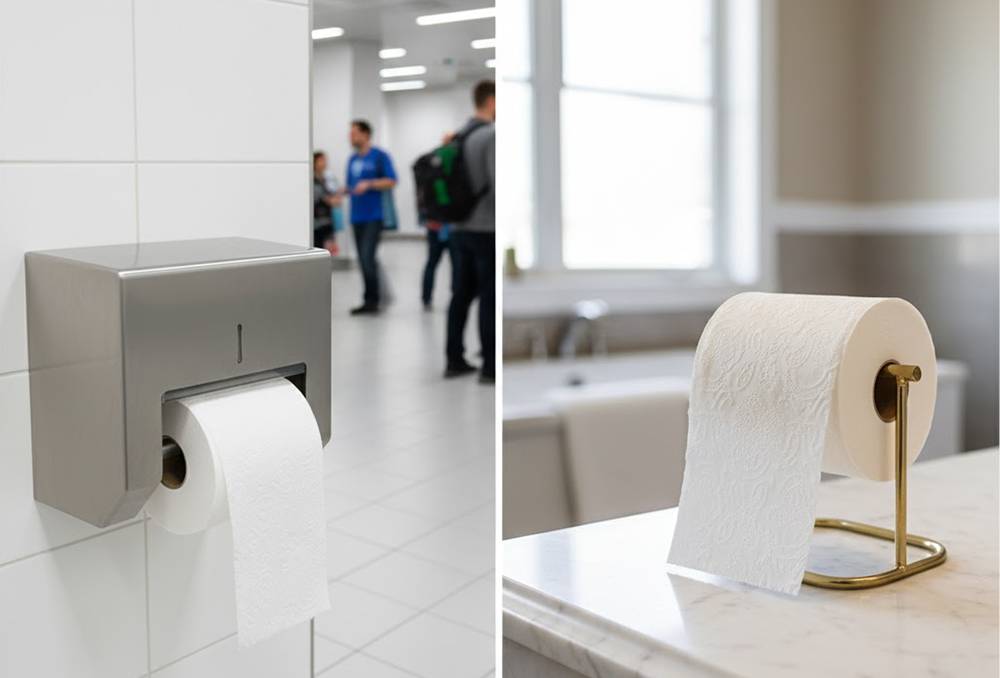
1-Ply Toilet Paper: Pros and Cons
Ideal Use Cases
Opt for 1‑ply when maximizing efficiency and controlling costs outweighs the need for premium comfort. In high‑traffic public restrooms, its thinner sheets extend roll life and reduce refill frequency, cutting both labor and supply expenses. On RVs, boats, or portable systems, its rapid disintegration minimizes clog risk and simplifies waste maintenance. Older plumbing systems also benefit from its quick breakdown, helping prevent blockages and expensive repairs while maintaining essential functionality.
Performance Characteristics
On its own, 1‑ply typically feels less soft than multi‑ply unless upgraded with quality embossing. The reduced bulk may lead users to take additional sheets per use, potentially affecting consumption rates. However, the increased roll length is a notable advantage in busy settings, as it lowers replacement frequency and minimizes staff handling time. This balance of longevity, easy breakdown, and cost control makes 1‑ply a practical choice where reliability and throughput take precedence over a luxury feel.
2-Ply Toilet Paper: The Balanced Choice
Strength and Softness
For most buyers, 2‑ply delivers the ideal mix of comfort and strength. Its two bonded layers increase absorbency, improving efficiency per use and reducing waste. Advanced embossing techniques can create noticeable softness without adding extra fiber, keeping material costs low. This balance gives procurement teams the ability to enhance user experience while controlling operating expenses—bridging the gap between the economy of 1‑ply and the premium feel of 3‑ply.
Best-Fit Environments
Many consider a high-quality 2-ply to be the best toilet paper for office environments. Mid-size offices with consistent restroom traffic rely on it for a polished, reliable experience that minimizes restocking. Hotels use it in standard rooms to maintain comfort without inflating supply budgets. In family households, it offers daily softness with dependable strength, appealing to brands that serve a wide range of users. Across these settings, 2‑ply’s dependable performance and cost efficiency make it the practical default for both commercial and retail buyers.
3-Ply Toilet Paper: Premium Performance
Luxury Applications
3‑ply toilet paper offers elevated comfort and durability, making it ideal for spaces where guest perception directly impacts brand value. Boutique hotels use it to reinforce an image of exclusivity, while executive suites benefit from its plush feel as a mark of attention to senior stakeholders. High‑end restaurants and special event venues incorporate 3‑ply to ensure every interaction supports a premium experience. In these contexts, the higher cost is offset by stronger client satisfaction and a clear reflection of brand quality.
Evaluating Premium vs. Low-Grade 3-Ply
When conducting a 2 ply vs 3 ply toilet paper comparison, it’s crucial to know that quality variations in 3-ply can be substantial. Products made from high‑grade virgin pulp deliver consistent softness and strength that users notice immediately. Advanced embossing techniques add plushness without excessive bulk, preserving durability. Conversely, poor lamination can cause layers to separate, diminishing both performance and perceived value. When sourcing, weigh fiber quality and bonding method as carefully as ply count—premium production standards ensure the product justifies its price and upholds your brand’s commitment to excellence.
Expert Tips and Common Mistakes
Tips for Maximizing Value
Request product samples before committing to a bulk order so you can assess softness, tensile strength, and dispenser performance under real conditions. Calculate costs on a per-sheet basis rather than per roll for a truer comparison when ply count and roll length differ. Confirm lead times and production capacity early in supplier discussions to safeguard against stockouts during peak demand, keeping your supply chain stable and predictable.
Common Mistakes to Avoid
Choosing ply count without factoring in plumbing limitations can lead to expensive maintenance, particularly in buildings with sensitive septic systems. Ignoring dispenser specifications may cause delays or require unplanned retrofits. Overlooking fiber sourcing and sustainability certifications can undermine environmental goals or marketing claims, risking brand credibility in markets where responsible procurement is a key differentiator.
Frequently Asked Questions
What does “ply” mean on a toilet paper package?
Ply indicates the number of paper layers in each sheet—1‑ply has one layer, 2‑ply has two bonded layers, and 3‑ply has three. More layers generally enhance softness, strength, and absorbency, but the fiber quality and manufacturing process often have an equal or greater impact on overall performance and feel.
Is 3-ply toilet paper always superior to 2-ply?
No. A premium 2‑ply made with high‑grade pulp and precise embossing can feel softer and perform better than a lower‑quality 3‑ply. The best choice depends on your market segment, budget, and brand positioning—many professional environments choose top‑tier 2‑ply to balance comfort, durability, and cost efficiency.
Why do public restrooms typically use 1-ply toilet paper?
High‑traffic facilities often use 1‑ply to control costs, extend roll life, and reduce labor for refills. Its faster breakdown also helps protect plumbing systems in busy public locations and prevents clogs, making it a functional choice where throughput outweighs luxury comfort.
Does a higher ply increase clogging risk?
Higher‑ply sheets can take longer to dissolve, posing a higher clog risk in older or sensitive plumbing and septic systems. If blockages are a concern, select lower‑ply products made with fast‑dissolving fibers or ones certified as septic‑safe. Fiber composition often influences breakdown speed more than ply count alone.
What is 4-ply toilet paper, and do most buyers need it?
4‑ply products appear mainly in niche luxury markets, offering extra bulk and softness. For most commercial or retail applications, it adds expense and shortens roll length without a proportional performance benefit. A high‑quality 3‑ply usually meets premium comfort needs effectively while maintaining better supply efficiency.
Final Thoughts
When selecting toilet paper for business use, ply count is a key factor influencing comfort, durability, and plumbing compatibility, but it’s only one factor. Fiber quality and the precision of embossing or lamination often have a greater effect on how well the product feels and functions.
The most reliable way to make the right choice is to test multiple ply options from different manufacturers, comparing softness, strength, and real impact on supply cost and dispenser performance. A data-driven trial approach helps balance user satisfaction with budget control.
Partner with suppliers that align ply selection with consistent fiber standards and production quality. Doing so ensures reliable results roll after roll—supporting both user experience and system integrity where it matters most.