
Mastering the technical trade-off of softness vs. strength directly impacts a manufacturer’s bottom line by reducing material waste and preventing the brand damage associated with product failure. When a tissue sheet lacks sufficient tensile integrity, it shreds or tears during use, leading to hygiene failures and lost repeat business. Conversely, an over-engineered sheet that prioritizes durability often feels abrasive, failing the tactile expectations that drive premium market positioning. Sourcing teams must navigate this physical contradiction to maintain high production speeds and market competitiveness.
This guide analyzes the mechanical and chemical variables that define the relationship between fiber bonding and hand-feel. We examine how chemical debonders modify structural integrity, the role of fiber fibrillation during refining, and the impact of 4-ply construction on the final product. By applying tensile index data and understanding consumer quality perception, production managers can establish a technical framework for hitting specific performance targets without sacrificing the softness consumers demand.
Why Are Softness and Tensile Strength Traditionally Contradictory Specs?
The inverse relationship between fiber bonding and pliability creates a technical ceiling where durability and comfort must be balanced through precise engineering rather than brute-force production.
The Inverse Relationship Between Fiber Bonding and Pliability
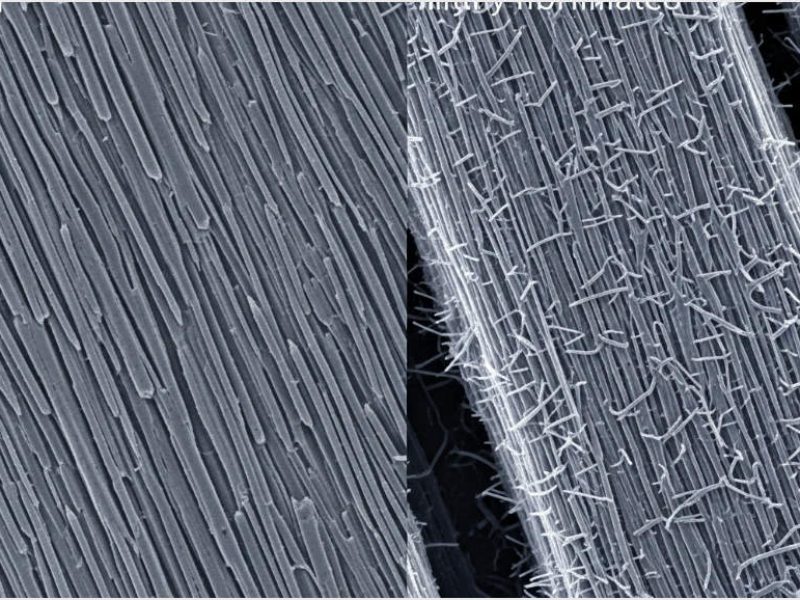
Standard paper manufacturing relies on hydrogen bonds to lock wood pulp fibers together. While these bonds create the structural integrity required for durability, they naturally stiffen the material. Increasing the contact points between fibers improves resistance to tearing, yet this process reduces the sheet’s bulk and cushioning. Traditional material science often views this as a zero-sum game because enhancing one metric usually degrades the other.
- Strong fiber-to-fiber bonds provide the tensile strength required for durability but create a rigid network that feels harsh to the touch.
- Increasing the surface area of fiber contact points improves resistance to tearing but reduces the overall bulk and cushioning of the sheet.
- Traditional material science treats this as a zero-sum game where enhancing one metric inevitably degrades the performance of the other.
Tension-Compression Asymmetry in Soft Material Networks
The way paper behaves under physical stress reveals why some products feel plush but fail during use. Tension and compression forces affect fiber networks in distinct ways, dictating whether fibers slide past each other or snap when stretched. Manufacturers now model these deformation modes to design layouts that withstand high pressure without sacrificing the delicate feel required for hotel-grade or premium retail brands.
- Deformation-mode-dependent behavior dictates how tissue fibers slide or break when subjected to stretching versus squeezing.
- Research shows that tension and compression affect fiber networks differently, requiring manufacturers to model these forces to prevent premature failure.
- Engineers in 2026 use these insights to design fiber layouts that accommodate high-pressure usage without sacrificing the delicate hand-feel required for premium brands.
Physics-Based Modeling to Bridge the Performance Gap
Modern characterization techniques allow producers to navigate historical trade-offs. We use physics-based modeling to identify the threshold where fiber de-bonding maximizes softness while maintaining a stable tensile index. These constitutive frameworks predict how 100% virgin wood pulp reacts to varied environmental conditions, ensuring products meet 2026 global standards for both strength and skin-friendly comfort.
- Sophisticated constitutive frameworks now allow for the prediction of tissue behavior under varied environmental conditions.
- Physics-based modeling helps identify the exact point where fiber de-bonding improves softness without causing the product to disintegrate.
- Modern characterization techniques ensure that virgin wood pulp products meet 2026 global standards for both high tensile index and superior tactile comfort.

How Do Chemical Debonders Increase Softness at the Cost of Integrity?
Chemical debonders navigate the fundamental trade-off between softness and strength by strategically disrupting the hydrogen bonds that bind cellulose fibers together.
Mechanism of Hydrogen Bond Disruption
Chemical debonders function by physically interfering with the natural attraction between wood pulp fibers during the drying process. These agents wedge themselves between cellulose chains, preventing the formation of dense hydrogen bond networks. While this disruption decreases the overall density of the sheet and increases bulk—creating the “fluffy” feel consumers demand—it directly undermines the material’s structural framework. Weaker fiber-to-fiber networks result in a noticeably softer surface but inherently lower the tensile strength of the paper.
- Debonding agents block hydrogen bond sites on cellulose during the critical drying phase.
- Reduced bonding density increases the specific volume (bulk) of the tissue roll.
- Manufacturers accept lower tensile indexes to achieve premium hand-feel metrics.
Transition to Sustainable Chemical Formulations
The hygiene industry in 2026 has largely moved away from traditional quaternary amines in favor of eco-friendly compositions that satisfy both performance and environmental regulations. Modern formulations frequently combine nonionic surfactants with cationic polymers to target fiber coating more effectively. This shift allows us to maintain the desired bulk and softness in 100% Virgin Wood Pulp products without the biodegradability issues associated with legacy chemicals.
| Chemical Generation | Primary Composition | Impact on Tensile Strength |
|---|---|---|
| Legacy Debonders | Quaternary Amines | High loss (15-25% reduction) |
| Modern Standards | Nonionic / Cationic Blends | Moderate (8-12% reduction) |
| Eco-Innovative | Enzymatic / Bio-based | Low (Customizable integrity) |
Precision Application and Yankee Coating Strategies
The delivery method of the debonder determines whether softness is added throughout the entire sheet or localized on the surface. Wet-end additions provide a uniform feel but often trigger a significant drop in web integrity, which can slow down production. Conversely, precision spraying and optimized Yankee dryer chemistry allow for surface-level application. This approach preserves the core strength of the paper while enhancing the creping process to produce a smoother, quilted finish that meets premium B2B standards.
Optimizing Dosage for Balanced Performance
Controlling the exact volume of chemical additives is the only way to maintain consistent production efficiency. We analyze dosage levels to find the specific threshold where softness gains meet the minimum strength requirements for high-speed converting lines. Refined control systems help maintain this quality across large-scale manufacturing batches, ensuring that every container of Top Source Hygiene product provides the necessary durability for the end-user without sacrificing the “pure quality” feel.
- Precise dosage prevents excessive linting and dust formation during packaging.
- Real-time monitoring identifies when chemical levels threaten web stability.
- Strategic management ensures 4-ply and 5-ply products remain soft but resilient.
Build Your Brand With Expert OEM Solutions

The Refining Factor: Managing Fiber Fibrillation for Balanced Performance
Controlling the mechanical delta between internal and external fiber fibrillation allows us to hit specific hand-feel targets without compromising the structural integrity of high-GSM tissue layers.
We manipulate the physical structure of virgin wood pulp to dictate the final texture of the paper. Internal fibrillation delaminates the secondary cell wall, making fibers more flexible and significantly increasing bulk softness. This process ensures the paper yields under low pressure, providing that “cloud-like” sensation required for premium retail markets. External fibrillation creates a hairy surface that improves inter-fiber bonding, which is necessary to prevent the linting issues common in lower-grade products.
- Internal fibrillation increases fiber flexibility for a softer tactile response and higher bulk.
- External fibrillation enhances surface bonding but requires calibration to maintain drainage speed on the paper machine.
- Top Source Hygiene utilizes decades of operational data to hit precise 2026 market requirements for premium hygiene products.
| Refining Strategy | Physical Impact | End-Product Application |
|---|---|---|
| Low-Intensity (Internal Focus) | Preserves fiber length, increases flexibility | Premium facial tissues, ultra-soft household rolls |
| High-Intensity (External Focus) | Maximizes fines, strengthens bonding | Commercial JRT, high-wet-strength towels |
| Precision Force (Balanced) | Optimizes tension and shear for virgin pulp | TSH-2559 (Global Retail Standard) |
Adjusting Refining Intensity to Maintain Consistent Tensile Strength
Refining teams manage the intensity and consistency of the pulp to ensure mechanical targets stay within spec for every 40HQ container. High-intensity refining generates fines that strengthen the paper web, which is vital for high-density models like our TSH-3396. We stop the refining process once the required tensile and bursting strengths are achieved to prevent over-processing, which would otherwise result in a stiff, non-absorbent finish.
- Low-intensity refining protects fiber length to maintain the natural fluffiness of 100% virgin wood pulp.
- Higher intensity increases the tensile index but can decrease liquid absorbency if not balanced correctly.
- Hebei production facilities optimize these settings to hit ISO 9001 standards for all wholesale batches.
Implementing Precise Force-Type Methods for Energy Efficiency
Modern systems in 2026 use specialized compression and shear forces to modify fiber properties without wasting power. Moving away from generic high-energy grinding, we apply targeted mechanical stress to the virgin wood pulp. This precision processing maintains the integrity of the long-fiber pulp while lowering production overhead, supporting a more competitive factory-direct pricing model for our B2B partners.
- Refining technology shifts toward precision processing to selectively enhance target fiber properties.
- We apply specific tension and shear forces to improve the performance of virgin wood pulp without fiber damage.
- This approach lowers costs and ensures that large-scale orders maintain a stable price point in fluctuating markets.
Can 4-Ply Construction Solve the Softness-Strength Conflict?
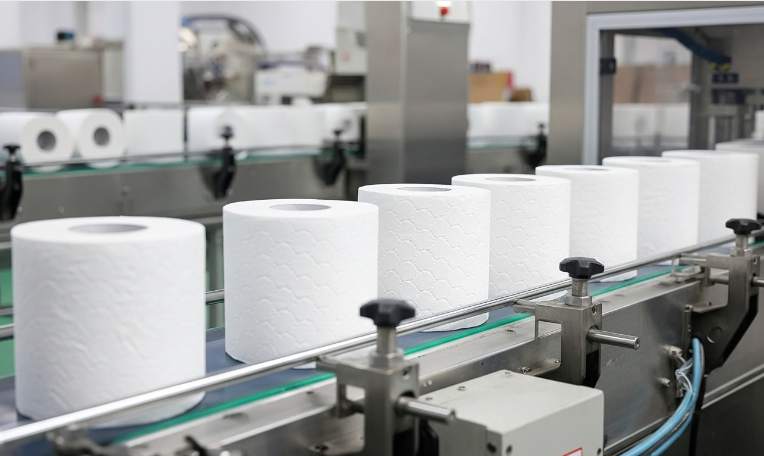
4-ply construction leverages mechanical lamination and trapped air to decouple tactile softness from tensile integrity, effectively circumventing the traditional physical limits of single-sheet fiber density.
Structural Reinforcement through Multi-Layer Bonding
Stacking four distinct plies creates a physical fiber matrix that distributes mechanical stress more efficiently than thinner 2-ply or 3-ply alternatives. Each layer adds a strategic buffer of air and fiber, which increases the total tensile strength required to meet 2026 hospitality benchmarks. Top Source Hygiene applies 100% virgin wood pulp throughout this multi-layer process to ensure that the increased thickness stays flexible rather than becoming brittle or stiff. High-pressure lamination secures these plies together, preventing sheet separation during heavy-duty commercial use.
- Each additional ply introduces a layer of air and fiber, raising mechanical durability for luxury standards.
- Virgin wood pulp selection ensures the increased mass maintains a cloud-like texture without the linting typical of recycled blends.
- The bonding process locks the matrix together, providing high wet-strength performance.
Balancing Surface Tactility with Internal Fiber Density
Advanced embossing patterns create micro-pockets of air that heighten perceived softness without weakening the internal fiber bonds. We maintain a lower GSM per individual ply, which allows for a 4-ply total weight that feels premium and substantial yet remains easy to fold and manipulate. Strategic fiber orientation during the North China manufacturing process ensures the paper resists directional tearing while staying gentle on sensitive skin. This configuration allows the inner plies to handle the structural load while the outer plies provide the consumer-facing comfort.
- CNC-precision embossing increases the quilted surface area for a softer hand-feel.
- Controlling ply density at 13–22g/m² balances the substantial feel with essential flex.
- Virgin long-fiber pulp creates a lint-free finish that appeals to high-end hospitality sectors.
Optimizing Absorbency for High-Traffic Environments
The capillary action generated between four distinct layers retains more fluid than standard 2-ply or 3-ply options, which lowers total paper consumption in public facilities. High-capacity jumbo rolls benefit from this construction by providing a luxury experience in malls and airports without requiring frequent restocking. Top Source Hygiene provides customizable ply weights, helping brands meet specific fluid retention benchmarks for the North American and European sectors. This structural approach ensures that fewer sheets are needed per use, driving down the landed cost for B2B importers.
- Multi-ply voids hold moisture more effectively, preventing the paper from shredding when wet.
- Solid coreless rolls in 4-ply formats maximize paper length per cubic meter of shipping space.
- Customizable absorbency specs help distributors align products with regional plumbing and septic-safe standards.
Consumer Psychology: When Does “Too Soft” Lead to Perceived Poor Quality?
Product success hinges on aligning tactile softness with the functional expectations of the user, as excessive pliability in high-durability categories often signals structural failure to the professional buyer.
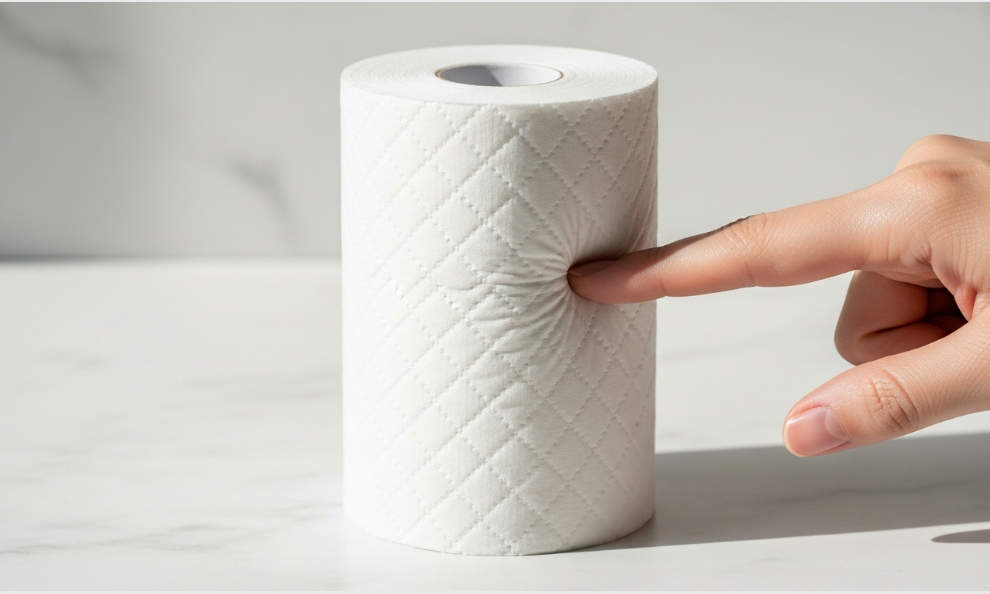
Consumer perception of softness depends on the specific demographic segment and product category. Tactile attributes interact with consumer expectations to define quality. High-end hospitality clients in the Middle East prioritize 5-ply thickness and substantial “hand feel,” whereas European retail markets often value the intersection of softness and sustainable fiber source transparency. Demographic segments prioritize different sensory signals in 2026 markets, and a one-size-fits-all approach to softness often results in market misalignment.
Sensory Perception and Demographic Variance
We observe that tactile signals do not exist in a vacuum. Instead, they interact with visual and psychological cues to form a holistic assessment of value. In high-volume B2B distribution, a roll that feels too compressible can be perceived as having less paper mass, even if the GSM is identical to a firmer alternative. This variance requires manufacturers to calibrate embossing depth and ply-bonding tension to match regional standards.
- North American consumers link softness with high-absorption capacity.
- Industrial buyers in Africa prioritize the “bulk” of the roll, viewing firmness as a proxy for value-per-dollar.
- South East Asian urban markets prefer high-density solid rolls that balance space-saving dimensions with soft-touch finishing.
Tactile Cues for Warmth versus Competence
Physical product attributes like shape and texture signal specific personality traits to the user. Rounded and soft aesthetics convey warmth and friendliness, which works well for household retail products. But angular designs and firmer textures suggest competence and structural strength, traits essential for commercial-grade JRT (Jumbo Roll Tissue) used in high-traffic airports or malls.
Misalignment between these cues and product goals reduces consumer trust. If a brand promises “industrial strength” but provides a ultra-low-tensile, cloud-soft sheet, the user experiences a cognitive dissonance that leads to poor quality ratings. We ensure that Top Source Hygiene products utilize specific embossing patterns—like dot or custom logos—to bridge the gap between perceived softness and the visual evidence of structural integrity.
Functional Misalignment and Durability Concerns
Quality perception drops when softness conflicts with the intended use of the product. Users associate excessive softness with a lack of integrity in heavy-duty paper products. This is particularly true in wet-strength applications. If the paper disintegrates too quickly during use due to over-application of chemical debonders, the “soft” feel becomes a liability rather than an asset.
Top Source Hygiene balances these traits to meet commercial performance standards. By using 100% Virgin Wood Pulp and point-to-point embossing, we maintain a lint-free experience that provides the necessary surface smoothness without sacrificing the tensile index. This approach ensures that high-capacity models like the TSH-3396 remain functional even in demanding commercial environments.
Psychology-Driven Sensory Marketing Strategies
Marketing success relies on matching sensory attributes with the values of the target audience. We align product textures with the psychological states of specific users. A hotel guest expects a 5-ply luxury roll to signal care and hospitality, while a procurement officer for an office building looks for a consistent, non-shredding 2-ply sheet that minimizes waste.
Moving away from universal softness preferences allows for better market segmentation. The 2026 strategy focuses on the functional value of tactile signals. By adjusting the fiber refining intensity—specifically managing internal fibrillation—we produce tissue that signals “quality” through its performance and tactile consistency, protecting dealer margins by delivering exactly what the end-user perceives as valuable.
How to Use Tensile Index Data to Predict Real-World Usage Failure?
We utilize non-linear algorithmic modeling to bridge the gap between laboratory tensile indices and the mechanical realities of high-capacity hygiene distribution.
Transitioning from Statistical Methods to Machine Learning Models
Traditional linear analysis often fails to account for the complex asymmetry in tissue deformation during consumer use. In 2026, industrial paper testing has moved beyond simple averages. We now employ algorithmic models to interpret mechanical data, specifically focusing on how virgin wood pulp fibers react to stress under varied environmental conditions. These models capture the non-linear relationship between fiber strength and usage stress, allowing us to identify failure points that older statistical frameworks overlooked.
| Analysis Method | Data Application | Failure Prediction Accuracy |
|---|---|---|
| Linear Statistical Analysis | Historical Lab Averages | 65% – 70% |
| Support Vector Machines (SVM) | Mechanical Boundary Mapping | 88% – 92% |
| Neural Networks (ANN) | Multi-Ply Interaction Simulation | 95%+ |
Utilizing Support Vector Machines for Mechanical Forecasting
We use support vector machines (SVM) to map tensile index variables against expected failure points in daily paper usage. By analyzing how specific processing parameters—such as refining intensity and ply-bonding pressure—influence the final tensile index of wood pulp products, we can categorize materials based on their risk of tearing. This predictive capability reduces product waste at our Hebei facilities by flagging batches that do not meet the mechanical threshold required for retail stability.
Applying Neural Networks to Fiber Interaction Data
Artificial neural networks (ANN) allow us to simulate how different paper plies react to moisture and physical tension. This is particularly relevant for high-density configurations like our TSH-3396 model. We assess performance variations in 2-ply and 5-ply toilet paper under real-world conditions, ensuring that the structural integrity of the roll remains consistent across our 2,860-ton monthly production capacity. These simulations help us maintain the balance between the quilted texture and the tensile strength required to prevent premature disintegration.
Predictive Analysis for 2026 Global Quality Standards
Aligning predictive failure data with international compliance requirements is a necessity for the North American and European markets. We verify that our 100% virgin wood pulp maintains its integrity during transcontinental logistics. Failure forecasting helps us guarantee product reliability for hospitality and commercial clients, confirming that the rolls will withstand high-stacking pressure in 40HQ containers without losing the softness consumers expect.
- Automated stress-testing protocols identify structural weaknesses before the manufacturing phase ends.
- OBA-Free material selection ensures that chemical additives do not interfere with the natural tensile strength of the long-fiber pulp.
- Rapid disintegration tests are modeled to predict septic safety across different plumbing infrastructures.

Conclusion
Achieving the ideal balance between softness and tensile strength relies on precise fiber refining and the strategic use of chemical debonders to prevent usage failure. Selecting high-purity virgin wood pulp and appropriate ply construction allows manufacturers to meet premium comfort standards while maintaining the structural integrity required for high-traffic environments. These technical decisions directly impact consumer satisfaction and reduce waste by ensuring every roll performs reliably under real-world conditions.
Evaluate your current product specifications to determine if a shift in fiber density or embossing patterns could better serve your specific market needs. Reach out to our technical team to request a detailed catalog or samples of our global best-sellers to verify these performance metrics firsthand.
Frequently Asked Questions
Why is it so difficult to make toilet paper both extremely soft and very strong?
This represents a fundamental challenge in material science due to the inverse relationship between fiber bonding and flexibility. Strength is traditionally derived from dense hydrogen bonding between fibers, which creates a rigid network. Softness requires reducing these bonds to allow for deformation. However, modern constitutive frameworks and physics-based modeling are now enabling engineers to navigate this trade-off by modeling tension-compression asymmetry, proving that the two traits are not inherently incompatible.
Do chemical softening agents reduce the liquid absorbency of the paper?
Yes, many traditional chemical softening agents, such as debonders or surfactants, can reduce liquid absorbency. These chemicals are often hydrophobic and work by coating the fibers to reduce surface friction. This coating creates a moisture barrier that can slow down the rate of water intake and reduce the total vertical wick capacity of the tissue product.
What is the impact of fiber refining on the final strength-to-softness ratio?
Fiber refining, or beating, increases the surface area and fibrillation of the pulp, which significantly enhances inter-fiber bonding and tensile strength. However, this process also increases the density and stiffness of the paper web. Consequently, heavy refining improves the strength-to-weight ratio but negatively impacts the softness-to-strength ratio by making the final product feel harsher and less flexible.
How can a manufacturer increase softness without using chemical additives?
Manufacturers can increase softness through mechanical and structural innovations such as Through-Air Drying (TAD) technology, which adds bulk without compacting fibers. Additionally, adjusting the creping process—the mechanical micro-folding of the paper—and utilizing a higher percentage of short, premium virgin fibers like Eucalyptus can provide significant surface “fuzziness” and hand-feel without relying on chemical debonders.
Does bamboo fiber offer a better balance of strength and softness than wood?
Bamboo fiber offers a unique balance; its fibers are typically longer than those found in traditional hardwoods, providing superior natural tensile strength. While it may require more precise mechanical processing to achieve the same velvet-like surface softness as premium wood pulps (like Eucalyptus), bamboo provides a more robust structure that maintains its integrity when wet, often outperforming recycled wood pulp in both categories.
How do I read a laboratory report comparing softness and tensile strength?
To accurately interpret a laboratory report, you should focus on the Tensile Energy Absorption (TEA) for strength and the TS7 or TSV (Tissue Softness Value) measured by an EMTEC-style analyzer. Compare these values against a “Pareto Front” or trade-off curve; a superior product will sit closer to the upper-right of the graph, indicating a higher softness value for a given tensile strength threshold compared to industry benchmarks.