
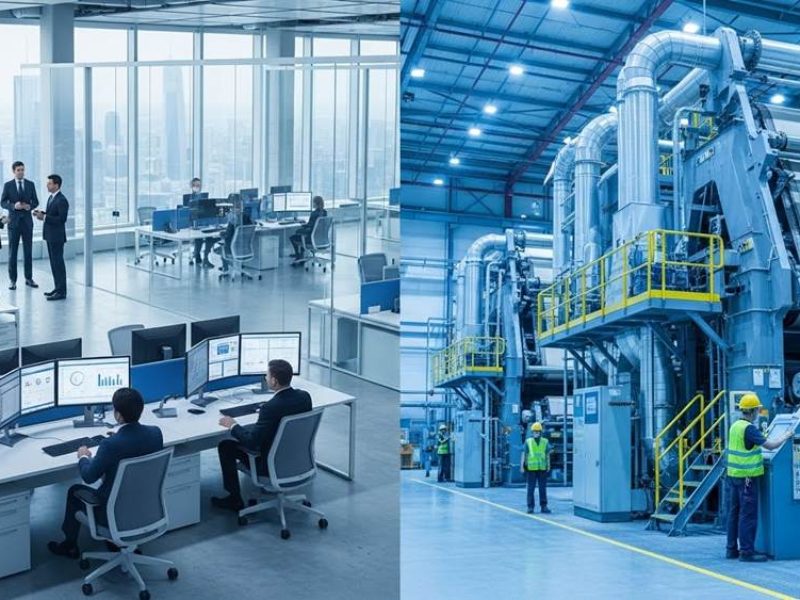
Sourcing paper products from China often leads procurement teams into a costly trap where 70% of online listings are actually middlemen posing as factories. These intermediaries hide behind polished office photos while lacking the heavy machinery required for stable output, which results in hidden markups of up to 50% and critical gaps in technical transparency. For high-volume buyers, the difference between a direct mill and a trading firm is not just about price, but about controlling the engineering data behind every ton of tissue produced.
This guide provides a technical framework for vetting China manufacturers by analyzing business license classifications and verifying physical assets. We examine how to use IATF 16949 standards to confirm a 2,860-ton monthly capacity via remote video audits and why specific energy benchmarks, like the 1,750 kWh/ADt fuel standard, serve as the ultimate proof of factory ownership. By following these verification protocols, you can bypass agent margins and secure a direct, transparent supply chain for your 2026 production cycles.
The Trading Company Illusion in the Tissue Industry
Many suppliers in the tissue industry present themselves as manufacturers by showcasing high production volumes, yet they often lack ownership of heavy machinery or direct control over energy benchmarks like the 1750 kWh/ADt fuel standard. Identifying these intermediaries is vital for securing factory-direct pricing and technical transparency.
Identifying Intermediaries Through Generic Production Claims
Traders often list generic capacities such as 50,000 packs per day for 2-ply virgin wood pulp without providing specific machine model data. Real factories define their output through specific hardware capabilities, such as the Valmet hybrid or Baotuo TAD units used in 2026 hubs. When a supplier cannot name the specific Paper Machine (PM) number or the year the line was commissioned, they are likely brokering external stock.
Middlemen frequently fail to provide entity-specific technical data such as Yankee dryer chemistry settings. Genuine manufacturers manage precise adhesives used for crepe structure and softness, whereas traders rely on finished product descriptions. They often struggle to verify exact case volumes, such as the 0.044 m³ standard for 30-pack facial tissue cases, leading to discrepancies in logistics quotes and pallet efficiency.
Technical Benchmarks for Verifying Direct Mill Ownership
Requesting energy efficiency scores is an effective way to filter out non-manufacturing entities. Legitimate mills monitor benchmarks like 900 kWh/ADt for electricity to maintain Nordic Swan Ecolabel compliance. A trading company will not have access to these real-time utility consumption logs or the total points score required for environmental certification.
Demanding precise basis weight conversions also tests a supplier’s engineering depth. Direct factories easily convert imperial pounds per 3000 sq ft to metric gsm by dividing by 0.6. Intermediaries often struggle with these technical calculations, relying instead on rounded marketing figures that do not account for the physics of the paper web.
Direct factories provide full raw material transparency, ensuring the use of 100% virgin wood pulp free from fluorescent whiteners. This is backed by ISO 9001 and FSC certifications tied specifically to their production site. For procurement leads, auditing the monthly output capacity against the 2,860-ton benchmark seen in established manufacturing hubs like Baoding helps confirm if the supplier actually controls the assets they claim to operate.
Signs You’re Dealing with a Middleman
Sourcing data reveals that roughly 70% of B2B platform listings are middlemen. Key identifiers include office-based registrations, an overly broad product catalog, and an inability to provide specific manufacturing licenses or production site access, which heightens risks for quality control and IP safety.
Registration Location and Catalog Breadth
Business registrations located in commercial office buildings in cities like Shenzhen or Guangzhou often indicate middlemen. In contrast, true factories typically reside in dedicated industrial zones such as Mancheng, Baoding. These geographical markers serve as the first technical filter when vetting a supplier’s physical infrastructure.
Middlemen frequently offer a massive variety of unrelated SKUs across multiple categories to maximize sales volume. Authentic tissue factories specialize in specific paper family lines and maintain narrow material expertise. A lack of specialized tooling or machinery documentation in the company profile suggests an aggregator role rather than a producer.
Documentation Barriers and IP Risks
We identified that an inability to provide factory-level certifications like ISO 9001, FSC, or FDA licenses in the seller’s own name serves as a significant red flag. Trading companies often use certificates belonging to their subcontractors, which masks the actual origin of the goods and complicates regulatory compliance.
Refusal to disclose the physical production site prevents necessary on-site process audits and creates intellectual property (IPR) security vulnerabilities. Trading companies lack direct control over technical process capabilities and quality systems. This disconnect makes it difficult for buyers to maintain stable 2026 production specifications or verify that proprietary designs remain protected from unauthorized distribution.
Analyzing Business Licenses: “Scope of Business” Matters
A Chinese business license defines the legal boundaries of a company’s operations. For tissue procurement in 2026, buyers must ensure the ‘Scope of Business’ explicitly includes ‘manufacturing’ or ‘production’ rather than just ‘wholesale’ or ‘trading’ to avoid middleman markups and legal non-compliance.
Deciphering the Authority for Market Regulation (AMR) Classifications
The State Administration for Market Regulation (SAMR) oversees the registration of all corporate entities in China. Local branches, known as the Authority for Market Regulation (AMR), approve the specific categories listed on a business license. These categories dictate what a company can and cannot do. For procurement teams, the presence of specific keywords determines whether the entity is the actual source of the goods or a secondary reseller.
Legitimate manufacturers must have terms like “production” (生产) or “processing” (加工) explicitly listed in their business scope. These terms signify that the company has received environmental and safety approvals to operate machinery and transform raw materials into finished paper products. Without these designations, an entity cannot legally run a factory floor, even if they claim to own one.
Trading companies typically show “sales” (销售) or “wholesale” (批发) in their scope. While these firms are legal for distribution, they lack the authority to manufacture. Engaging a firm that operates outside its registered scope carries significant risks. The company may face sudden shutdowns or heavy penalties from the AMR. Most importantly for international buyers, a company operating outside its scope cannot issue valid tax invoices (fapiao), which can stall the entire export process and disrupt the supply chain.
Verification Protocols and Special Permit Requirements
Verifying a supplier starts with the business license QR code. Scanning this code links directly to the National Enterprise Credit Information Publicity System. This database provides real-time data on the company’s establishment date, registered capital, and current legal status. High-risk deals often involve companies where the registered capital is disproportionately low compared to the scale of production they claim to manage.
If a supplier needs to update their business scope to include new activities, the process typically takes 4 to 6 weeks. This timeline involves redrafting the company’s Articles of Association (AOA) to align with provincial requirements. Buyers should be wary of suppliers who claim to have “just added” manufacturing capabilities without providing an updated license verified through the national database.
Shipping tissue products internationally adds layers of regulatory necessity. Exporters must maintain a foreign trade recordation with China Customs to clear goods for North America or Europe. Beyond the standard license, specific categories like wet wipes or medical-grade tissues require additional oversight. These products often demand secondary permits from the Commission of Commerce (COC) or regional health bureaus. Confirming these permits ensures the supplier meets hygiene and safety standards required for consumer-facing paper goods.
Scale Your Brand with Global OEM Experts in Premium Toilet Paper

Using Video Audits to Confirm 2860-Ton Capacity
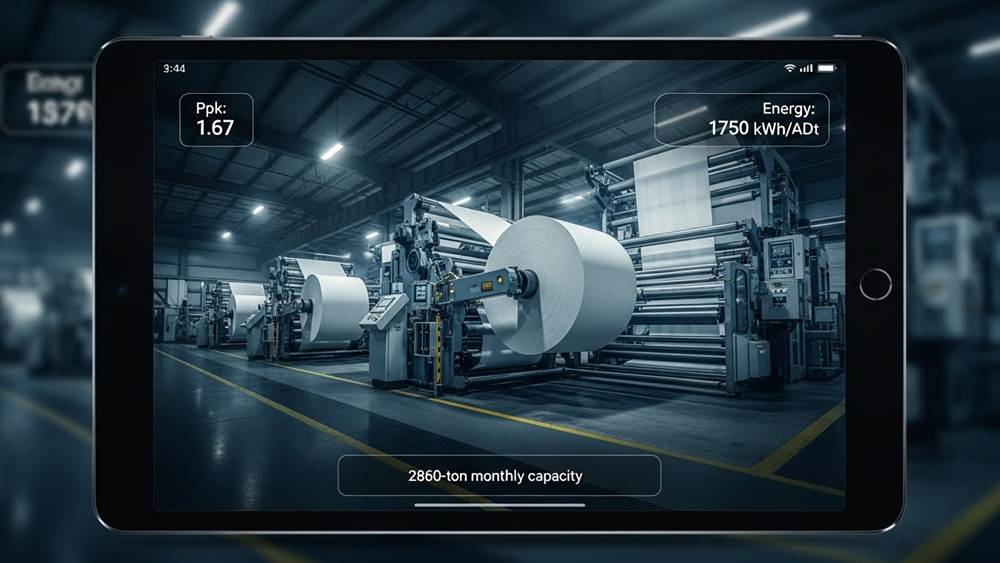
Buyers can verify a factory’s 2,860-ton monthly capacity by using video audits to trace IATF 16949 records. This involves checking Ppk and Cpk indices for process stability and conducting layered process audits (CQI-8) to confirm that machine output matches the manufacturer’s claims without a physical site visit.
Verifying Process Capability and Volume via IATF 16949 Standards
Statistical process control provides a window into a factory’s true manufacturing limits. During a live video audit, request a screen share or direct camera feed of the statistical software to verify a minimum Ppk of 1.67. This index confirms long-term process stability and ensures the facility can maintain a 2,860-ton monthly volume without frequent downtime or quality failures.
Comparing measured Cpk values of 1.85 against the equipment nameplates helps validate that the machinery isn’t being pushed past its engineered limits. High-volume tissue production requires consistent short-term capability to meet delivery targets. Auditors should also witness job set-ups via video under IATF Clause 8.5.1.3, checking first-off part validation to confirm that assembly lines remain consistent from the first ton to the last.
Material integrity plays a vital role in capacity claims. Traceability audits must link 100% virgin wood pulp batch records to the specific 316 stainless steel equipment used on the shop floor. Verifying these connections through real-time document inspection ensures the raw material flow matches the stated machine output.
Applying CQI-8 Layered Process Audits for Remote Output Validation
CQI-8 Layered Process Audits (LPA) allow buyers to inspect shop floor discipline and detect risks from a distance. By observing these audits in real-time, you can confirm that standard work instructions are followed, which is essential for hitting a 2,860-ton target. Any breakdown in discipline at the operator level will immediately impact the monthly tonnage and lead times.
The audit trail should extend from the PFMEA (Process Failure Mode and Effects Analysis) to the Control Plan. This ensures that the entire 2,860-ton output meets ISO 9001 and FDA compliance standards. Checking supplier qualification records under IATF clauses 8.3.4.4 and 8.6.4 provides further assurance that the supply chain is prepared for 2026 production cycles and that raw material shortages won’t throttle capacity.
Observing operator competency during live shifts confirms if the facility can realistically meet a 15-25 day lead time for a 40-foot container. High-capacity claims are only valid if the workforce can manage the machinery effectively under peak load. Through these specific IATF-backed verification steps, buyers gain a transparent view of factory performance and capacity without needing to travel to the site.
Location Analysis: Why Proximity to Port Matters
Proximity to top-tier ports like Ningbo-Zhoushan and Shanghai reduces transloading delays and logistics overhead. Factories in coastal clusters like the River Delta leverage superior infrastructure, including berths exceeding 10,000 tons, to ensure faster export cycles compared to inland manufacturers facing multi-day transit lags.
Infrastructure Advantage of Coastal Manufacturing Clusters
Ningbo-Zhoushan Port currently operates 196 berths capable of handling vessels of 10,000 tons or more. This scale allows paper manufacturers to move bulk shipments without the delays common at smaller facilities. High operation capacity ensures that even large-volume orders for paper products find immediate vessel availability, keeping the supply chain moving toward global destinations.
Shanghai Port holds the top rank for comprehensive competitiveness, supported by 185 large-scale berths. Its infrastructure facilitates high-volume container throughput and connects directly to major global shipping lanes. Meanwhile, the Pearl River Delta cluster generates 7.1% of China’s GDP within a tiny fraction of its land mass. This concentration places paper suppliers right next to Guangzhou and Shenzhen ports, minimizing the distance between the factory floor and the cargo ship.
Impact of Transloading and Lead Times on Global Logistics
Moving goods from inland hubs like Chongqing or Wuhan to the coast adds several days to the total lead time. These shipments require transloading from river barges or rail to ocean-going vessels at coastal ports. When a 40-foot container has a production lead time of 15 to 25 days, inland transit bottlenecks can push the final delivery date past critical deadlines.
Remote factories often depend on smaller ports like Shantou or Haikou. These locations lag in infrastructure and scale, which increases the risk of logistics delays. By contrast, coastal proximity reduces these risks. Sourcing from factories near major maritime hubs supports rapid fulfillment and meets the high transparency standards expected in modern supply chain management.
Verifying Ownership of Heavy Machinery (Rewinders/Slitters)
Ownership verification in 2026 relies on cross-referencing physical machine identifiers like serial numbers and PINs with financial records, maintenance logs, and lien registries. Buyers should match nameplate data against original bills of sale and manufacturer certificates of origin to ensure the seller holds a clear title.
| Verification Pillar | Required Documentation | Technical Action |
|---|---|---|
| Asset Identity | Bill of Sale, Manufacturer Certificate of Origin | Match physical serial numbers/PINs on the frame to invoices. |
| Financial Status | UCC-1 Filings, No-Lien Letters | Search public registries to ensure the machine is not collateral. |
| Operational Control | OEM Maintenance Logs, Service History | Audit operating hours and inspection reports for long-term use. |
Documentation Chain and Asset Identification
Establishing a clear link between physical hardware and legal documentation prevents procurement risks associated with unauthorized intermediaries. We verify machine identity by aligning the nameplate data, specifically the serial number or Product Identification Number (PIN) found on the slitter/rewinder frame, with the original invoices and shipping documents. This physical-to-digital bridge ensures the equipment being inspected is the same asset described in the transaction records.
Buyers should require a formal Bill of Sale and a manufacturer’s certificate of origin to confirm the chain of custody from the OEM to the current operator. The legal name on the commercial invoice must match the titled owner recorded in the equipment’s procurement history. Any signs of tampering on the serial plate or VIN plate serve as immediate indicators of potential theft, unauthorized resale, or equipment misidentification, necessitating a stop in the transaction process.
Financial Liens and Operational History Audit
A comprehensive audit extends beyond simple possession to include financial and operational history. We search UCC-1 filings or local equivalent registry extracts to confirm that the slitter is not pledged as collateral for bank loans or other financing agreements. While specific registry names vary by jurisdiction, the requirement remains to secure a “no-lien” status before funds transfer. This step protects the buyer from future claims by third-party creditors.
We also analyze maintenance logs and operating hour records to validate that the manufacturer has maintained active, long-term control over the machinery. Cross-checking PINs against OEM or authorized dealer databases confirms the original sale records and rules out reported theft. Reviewing ANSI-aligned inspection reports and multi-year service histories, ideally stamped by an OEM agent, provides technical evidence that the seller has functioned as the primary operator rather than a temporary holder of the asset.
Case Study: Cost Difference of Going Direct
Sourcing directly from a manufacturer like Top Source Hygiene eliminates intermediary markups, which typically range from 15% to 50%. While going direct introduces internal overhead of 8–12%, high-volume buyers (over $5 million annually) achieve net landed cost reductions of 10–25% through transparent pricing and process optimization.
| Cost Factor | Indirect (Intermediary) | Direct (Factory-Direct) |
|---|---|---|
| Typical Markup/Overhead | 15% – 50% Agent Margin | 8% – 12% Internal Ops |
| Price Transparency | Hidden BOM / Risk Premium | Full Cost Breakdown |
| Net Savings Potential | 0% (Baseline) | 10% – 25% Reduction |
Intermediary Markups and the 2026 Profit Gap
Trading companies and importers apply a standard markup of 15–30% on Chinese factory gate prices for consumer paper goods. Complex or highly customized private label projects often see markups exceeding 30–50% when the buyer lacks direct visibility into the Bill of Materials. These layers add significant cost without necessarily increasing product value.
Top Source Hygiene’s factory-direct model removes these layers, allowing the 2026 procurement budget to focus on product quality rather than agent commissions. Middlemen often embed a risk premium into the unit price. Direct audits and transparent quality control protocols can mitigate these risks more effectively and at a lower cost than paying an intermediary’s margin.
Net Savings Analysis and Scaling Thresholds
Landed unit cost reductions of 10–25% are reported by brands shifting to direct relationships with Chinese OEM/ODM facilities. Internal overhead for managing direct sourcing, including quality assurance and audit budgets, typically accounts for 8–12% of total operating costs. This investment replaces the larger margins taken by third-party agents.
Direct sourcing becomes economically viable once annual import volume reaches approximately $5 million. This volume offsets the cost of a dedicated 2–3 person sourcing team. At a production capacity of 2,860 tons per month, the scale of Top Source Hygiene allows large-scale buyers to amortize fixed logistics and inspection costs more effectively than through a trading partner.
Final Thoughts
Distinguishing between a genuine mill and a middleman requires looking past surface-level marketing at technical and legal data. Real factory partners demonstrate their ownership through specific machine serial numbers, energy consumption logs, and business licenses that explicitly permit manufacturing and processing. These verification steps protect procurement teams from the hidden markups and quality inconsistencies often found in the trading company model.
Securing a direct relationship with a high-capacity facility like Top Source Hygiene ensures price transparency and reliable production cycles for the 2026 market. By focusing on coastal infrastructure and verified equipment ownership, buyers can reduce net landed costs by 10% to 25%. Moving beyond intermediaries allows for tighter control over raw material integrity and intellectual property, creating a stable foundation for large-scale tissue supply chains.
Frequently Asked Questions
Is it better to buy from a factory or a trading company in 2026?
Direct factories provide the lowest unit prices and better engineering control for high-volume programs. Trading companies work well for low MOQs and multi-category tests, though they typically add a 15–25% markup over factory costs.
How can I tell if a supplier is a middleman on Alibaba?
Check the 18-digit Chinese business registration number on databases like qixin.com. If the registered scope focuses on ‘trading’ or ‘import-export’ rather than manufacturing, the entity is a middleman. You should also verify if the product catalog is scattered across unrelated industries.
What documents prove a manufacturer has a valid export license?
The official China Export License contains an 18-digit registration number, entity type, and a QR code linked to the National Enterprise Credit Information System. Verification through this system confirms the company’s legal right to ship goods internationally.
Why are some self-proclaimed factories actually small converting shops?
Many facilities in the textile and paper sectors only perform downstream operations like cutting, packing, and labeling. These shops buy jumbo rolls or greige fabric from upstream mills because they lacks the capital for heavy machinery used in primary production.
How do I verify a China factory’s tax record and legal status?
Use the Unified Social Credit Code (USCC) to check the National Enterprise Credit Information Publicity System. For orders exceeding $10,000, we recommend a third-party audit to confirm VAT compliance and actual production capacity.
Does factory location in Shandong vs. Fujian influence the final price?
Labor costs in Shandong are generally 5–15% lower than in Fujian. While this wage gap usually results in only a 2–5% difference in ex-works pricing, regional specialization often dictates the best supply chain fit for specific paper products.
