Skip to content
Building a Private Label JRT (OEM) line is the most effective way to secure high-volume contracts while shielding your business from the razor-thin margins and supply chain instability of generic resale. Distributors often face the risk of losing major accounts when they rely on third-party brands that competitors can easily undercut or replace. Controlling your own inventory through direct manufacturing turns a standard commodity into a proprietary asset, ensuring your business remains the sole provider for your client base and protecting your long-term revenue.
This guide details the logistics of jumbo roll production, including technical specifications for core sizes, embossing textures, and packaging requirements. We break down the realities of minimum order quantities and lead times while providing a framework for designing retail-ready cases that meet wholesale distribution standards. Use this as a manual for navigating factory-direct sourcing and optimizing your overhead to maintain a competitive edge in the commercial hygiene market.
What Are the Key Customization Options for Private Label JRT?
Customizing Jumbo Roll Tissue (JRT) allows distributors to align product performance with specific dispenser hardware and regional cost requirements while building brand equity through tailored visual identities.
Material Grade and Ply Configurations
Selecting the right raw material is the foundation of product positioning. Most premium commercial brands utilize 100% virgin wood pulp to ensure maximum softness and tensile strength without the need for fluorescent whiteners. This long-fiber material provides a lint-free experience that is essential for high-end hospitality and healthcare environments.
- Ply options ranging from 2-ply to 5-ply allow brands to target different market segments, from cost-effective public facilities to premium luxury venues.
- 100% Virgin wood pulp options guarantee an OBA-free (Optical Brightening Agent) product, making it safe for sensitive skin and meeting 2026 hygiene standards.
- Eco-friendly material choices, including FSC-certified bamboo pulp and recycled fibers, meet the growing global demand for sustainable hygiene products.
GSM and Technical Specifications
Technical adjustments to the paper weight and density ensure the product meets specific absorbency standards and durability requirements. By controlling the Grams per Square Meter (GSM), we help distributors balance the “hand feel” of the tissue with the actual manufacturing cost.
| Customization Feature | Specification Range | Target Application |
|---|---|---|
| Paper Weight (GSM) | 13g/m² – 22g/m² per ply | Balancing absorbency with cost-per-roll |
| Embossing Patterns | Dot, Floral, or Custom CNC | Increasing thickness and brand recognition |
| Disintegration Speed | Septic-Safe / Rapid Dissolve | North American and European plumbing standards |
Private Label Branding and Visual Identity
Comprehensive branding services transform generic tissue rolls into a cohesive part of a company’s marketing strategy. For wholesale distribution, the packaging must be “retail-ready,” even if the primary destination is a commercial restroom. We utilize high-pressure lamination and multi-ply bonding technology to ensure the paper looks as good as it performs.
- Full-color custom packaging designs for individual rolls or bulk bundles enhance shelf presence in B2B warehouse settings.
- Private label printing options place logos and specific brand colors directly on the outer heat-shrink wrap or poly bag.
- Custom core printing allows for professional branding that remains visible even after the paper is depleted.
Roll Capacity and Core Sizing
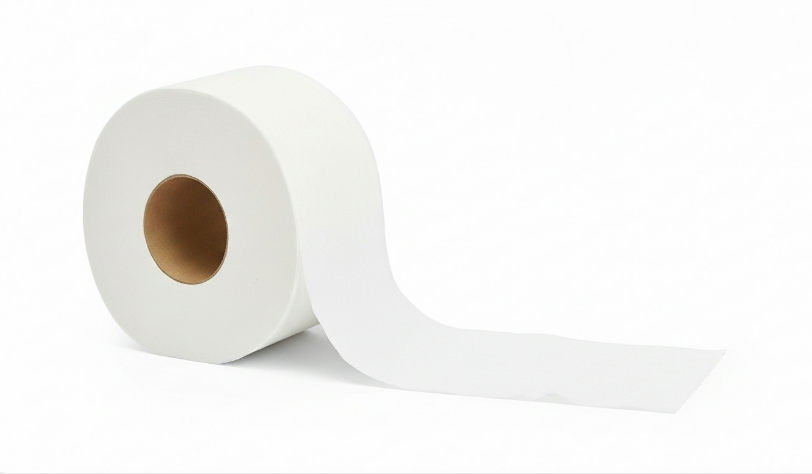
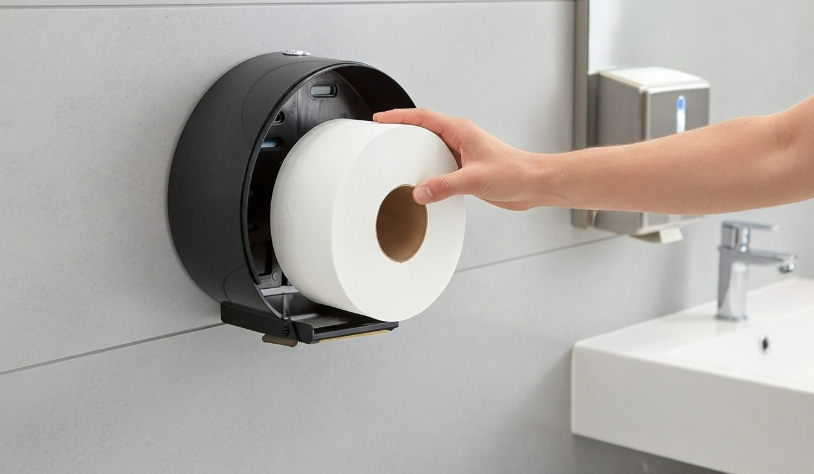
Engineering the physical footprint of the roll is critical for optimizing maintenance schedules and ensuring dispenser compatibility. In the commercial sector, dispenser mismatch is the leading cause of product returns. We provide variable core diameters to accommodate both universal and proprietary dispensing systems used globally.
- Variable core diameters, such as the standard 3.25″ and 3.375″ options, ensure a perfect fit in high-traffic commercial dispensers.
- High-capacity roll lengths (up to 5000g bundles) reduce the frequency of refills, lowering labor costs for facility managers in airports or shopping malls.
- Customized roll diameters can be set to meet the specific space constraints of existing wall-mounted hardware.
How to Choose the Right Embossing and Packaging for Your Brand?
Technical differentiation in the 2026 tissue market depends on matching specific embossing depths with ply density to maximize absorbency while utilizing reinforced packaging to secure product integrity during global 40HQ transit.
Selecting Embossing Patterns for Functional and Aesthetic Appeal
Brands now utilize CNC-precision embossing patterns to influence both tactile perception and technical performance. Deep embossing on products like the TSH-JRT08 doesn’t just improve the visual profile; it increases liquid absorption by up to 30% by expanding the surface area of the 100% virgin wood pulp fibers. We use point-to-point lamination to ensure that 3-ply and 4-ply rolls maintain structural integrity, preventing layer separation during high-speed commercial dispensing.
- Evaluate sculpted and laser embossing for high-definition patterns on luxury lines.
- Choose deeper embossing depths for kitchen towels to improve liquid retention.
- Match embossing complexity with ply count to ensure bonded layers stay intact.
- Utilize our 2,860-ton monthly capacity to ensure pattern consistency across large-scale orders.
| Packaging Format | Target Market | Strategic Advantage |
|---|---|---|
| Individual Paper Wrap | Luxury Hospitality | Maximum hygiene and premium guest perception. |
| Direct Bundle Pack | Supermarkets / Retail | High-volume shelf velocity and reduced waste. |
| Reinforced 5-Ply Carton | Wholesale Distribution | Prevents roll crushing during high-stacking in 40HQ. |
Material Optimization for Retail and Commercial Packaging
Bulk distribution requires specific packaging substrates to withstand global logistics. We utilize mechanical compression technology during bagging to minimize roll bulk, which allows more product per cubic meter while maintaining the paper’s natural fluffiness. For retail-ready toilet paper, moisture-resistant poly-wrapping is essential to maintain hygiene standards in high-humidity climates like Southeast Asia or the Middle East.
- Select reinforced corrugated cases for jumbo rolls to endure long-distance global shipping.
- Design high-gloss branded boxes for hotels to enhance room aesthetics.
- Use moisture-resistant wrapping to protect products in high-humidity regions.
- Ensure all materials comply with regional standards like FDA or EU hygiene requirements.
Balancing Specialty Finishes with Production Costs
Specialty finishes such as spot UV coating or foil stamping add significant perceived value but require strategic cost analysis. We recommend reserving these premium treatments for limited-edition or high-end retail lines where the price point justifies the additional expense. By sourcing directly from our Hebei factory, you can offset these design costs through the elimination of middleman markups, keeping your total project within a 20-25 day production window.
- Apply specialty finishes only to high-margin retail lines to protect overall profitability.
- Leverage factory-direct sourcing to absorb the costs of custom packaging designs.
- Monitor how complex designs affect lead times, aiming for the 15-25 day standard.
- Consult with our technical teams to optimize layouts and reduce material waste.
Integrating Sustainability into Brand Identity
Global markets in 2026 prioritize eco-friendly choices. Our 100% OBA-free (No Optical Brightening Agents) virgin wood pulp ensures that the product is safe for sensitive skin and septic systems. By eliminating fluorescent whiteners and using FSC-certified materials, brands can communicate environmental responsibility through clear labeling, meeting the rising demand for “green” products in North American and European markets.
- Prioritize FSC-certified paper and recycled materials for European market compliance.
- Eliminate OBA chemicals to simplify the recycling process and improve skin safety.
- Adopt minimalist packaging to reduce the carbon footprint during ocean transport.
- Highlight 100% virgin wood pulp usage on packaging to signal premium purity.
Scale Your Business With Custom Jumbo Rolls
What Is the MOQ and Lead Time for Custom JRT Orders?
Profitability in Jumbo Roll Tissue (JRT) procurement relies on matching order volumes with 40HQ container payloads to minimize the landed cost per roll.
Minimum Order Quantities for Global Shipments
Top Source Hygiene maintains a standard minimum order quantity (MOQ) of one 40-foot high-cube (40’HQ) container for custom Jumbo Roll Tissue. This requirement ensures that international logistics remain cost-effective, as shipping partial loads often erodes the margins of high-volume distributors. Our factory-direct sourcing model eliminates intermediaries, allowing us to pass significant savings directly to wholesalers who commit to full container volumes.
We understand that market entry requirements vary. While the 40’HQ remains the standard, we offer volume flexibility for growing markets in regions like Africa and South America. Our massive production capacity of 2,860 tons per month at our Hebei industrial hub means we can scale from a single trial container to multi-container monthly contracts without compromising on fiber performance or sheet consistency.
- Standard MOQ: 1 x 40’HQ container for all custom private label specifications.
- Regional Flexibility: Support for smaller initial volumes in emerging markets to facilitate brand growth.
- Capacity Support: 2,860 tons of monthly output ensures rapid fulfillment for bulk commercial orders.
Standard Production and Sample Lead Times
Efficiency in our two advanced Baoding factories allows for a predictable turnaround from the design phase to the final packaged product. Once you approve the technical specifications—including ply density, core diameter, and embossing patterns—production for a full 40-foot container typically takes 20–25 days. We use modern automation to maintain these timelines, ensuring that even complex orders with custom-branded packaging stay on schedule.
Quality verification precedes every mass production run. We ship stock samples within 2–3 days for immediate evaluation of our 100% Virgin Wood Pulp quality. If your project requires fully customized JRT prototypes, our team prepares these in approximately 10 days. We provide these samples for free to global clients, covering the shipping costs to ensure the texture, strength, and disintegration rates meet your local standards before you finalize the order.
Regional Shipping and Delivery Timelines
Strategic proximity to Tianjin Xingang Port allows us to dispatch finished goods quickly onto global shipping routes. Deliveries to North America and Europe usually arrive within 7–14 days after leaving the factory. These shipments comply with all regional standards, including FDA regulations for the US market and FSC certifications for European buyers, preventing delays during the customs clearance process.
For markets in Asia and Oceania, transit times range between 10–20 days depending on the specific port of entry. Logistics for Africa and South America require slightly longer durations, typically 15–25 days for standard transit. Our Hebei loading teams specialize in payload optimization, ensuring 40’HQ containers carry between 7,000kg and 9,000kg of product to maximize your freight value.
- North America & Europe: 7–14 days transit with full FDA/FSC compliance.
- Asia & Oceania: 10–20 days delivery window to major regional ports.
- Africa & South America: 15–25 days, optimized for maximum container payload.
Flexibility for Urgent and Expedited Orders
We maintain specialized protocols for clients facing immediate inventory shortages or tight contract deadlines. Our production team can prioritize urgent orders through expedited manufacturing slots, significantly reducing standard 2026 wait times. We provide personalized updates and pre-shipment visual verification, including photos and videos of the loading process, to ensure 100% transparency while the goods are in transit.
Our flexible payment terms further streamline the logistical hand-off. We typically operate on a 30% deposit and 70% balance structure, with the final payment due before shipment. Even under fast-tracked schedules, every roll undergoes rigorous quality control to meet ISO 9001 and international hygiene requirements, guaranteeing that “speed” never comes at the expense of “Pure Quality.”
How to Design Retail-Ready JRT Cases for Wholesale Distribution?
Designing retail-ready jumbo roll tissue (JRT) cases requires a balance between structural durability for high-stacking 40HQ containers and high-visibility branding for warehouse club environments.
Optimizing Case Dimensions for Pallet and Container Efficiency
Our engineering team maximizes our 2,860-ton monthly capacity by eliminating wasted space during international transit. We calculate case dimensions to fit standard 40-foot high-cube containers precisely, ensuring no gaps remain that could cause product shifting or friction damage. By aligning case weights with 2026 regional manual handling limits, we ensure safety for warehouse staff while maintaining the highest possible payload. We utilize interlocking stacking patterns in the case design to prevent pallet collapse during long-haul shipping, which is essential for maintaining the integrity of bulk JRT orders.
Integrating Private Label Branding and High-Visibility Graphics
Retail-ready packaging serves as the primary marketing tool for wholesale clubs and commercial distributors. Through our ODM services, we apply custom-branded logos and color schemes that match your corporate identity with high-fidelity printing. We print bold product specifications, including ply count and roll length, on all sides of the case to allow for immediate identification in dark or high-density warehouses. To streamline 2026 logistics, every case includes scannable barcodes and QR codes that integrate seamlessly with modern inventory management systems used by global retailers.
Selecting Durable Materials for Structural Integrity
Heavy jumbo roll tissues require high-strength corrugated cardboard to prevent product crushing during vertical stacking. We specify double-walled corrugated board for cases containing high-capacity 2-ply or 3-ply jumbo rolls to provide the necessary rigidity. Our factory conducts rigorous vertical compression strength tests to ensure bottom-tier cases withstand the weight of full pallet stacks in a 40HQ container. For shipments destined for humid climates in South America or Southeast Asia, we apply moisture-resistant coatings to the cardboard to prevent softening and structural failure.
Meeting International Compliance and Labeling Standards
Packaging must adhere to strict regulatory requirements across different global markets to avoid costly customs delays. We ensure all cases display FSC-certified or eco-friendly symbols to satisfy 2026 European green procurement standards. Our design team includes multi-language instructions and safety warnings required for the North American and Oceania markets. We place batch numbers and manufacturing dates clearly on the exterior of the case, which facilitates efficient quality control, product tracking, and inventory rotation for our wholesale partners.
Why Is Factory Direct Sourcing the Secret to High Margins?
Sourcing Jumbo Roll Tissue directly from the manufacturer eliminates the 20-30% markup typically claimed by trading companies while providing full control over technical specifications and material integrity.
Eliminating Middlemen to Capture Lost Profits
Traditional distribution models force brands to absorb the overhead of wholesalers and third-party agents, which inflates the final landed cost per unit. Establishing a direct relationship with Top Source Hygiene ensures your capital funds product value—specifically premium 100% virgin wood pulp—rather than administrative commissions. This transparency in the supply chain allows businesses to retain significant margins that would otherwise be lost to intermediaries, providing the flexibility needed for competitive retail pricing.
| Efficiency Metric | Traditional Wholesaler | Top Source Hygiene (Direct) |
|---|---|---|
| Pricing Markup | 15% – 30% Layered Margin | Direct Factory Price |
| Production Lead Time | 45 – 60 Days | 15 – 25 Days |
| QC Accountability | Third-Party Limited Access | On-Site ISO 9001 Controls |
Economies of Scale and Operational Efficiency
High-capacity facilities in the Hebei paper industrial hub leverage massive buying power for raw materials, processing nearly 3,000 tons of wood pulp every month. We pass these material savings directly to the client, ensuring the lowest possible per-sheet price for high-volume orders. Automated production lines further reduce labor costs and minimize material waste during the conversion of jumbo rolls, while our loading teams maximize 40HQ container payload to 7-9 tons to optimize international freight value.
Direct Quality Control and Brand Integrity
Sourcing from the factory floor ensures your product meets exact brand standards without the risk of quality dilution common in secondary sourcing. We maintain 100% OBA-free (No Optical Brightening Agents) standards and provide direct oversight for GSM and ply density adjustments. This level of control allows brands to request specific point-to-point embossing patterns that increase absorbency by 30%, guaranteeing a consistent customer experience that protects brand reputation and reduces churn.
Shortened Supply Chains and Faster Decision Cycles
A direct line to the manufacturing team accelerates the path from design to shelf. Communicating directly with our Hebei facility slashes the lead time for new private label launches, with standard production cycles ranging from 15 to 25 days. Faster decision cycles and localized shipping through the Tianjin Xingang Port enable leaner inventory management, which improves cash flow and allows brands to react quickly to shifting consumer demands in 2026.
- Direct T/T terms and pre-shipment visual verification protect your capital investment.
- Factory-direct sourcing provides access to the “Big 10” best-selling inventory models for immediate market entry.
- Custom packaging and barcoding are integrated into the primary production run to reduce secondary handling costs.
Conclusion
Building a private label brand depends on balancing premium material selection with factory-direct sourcing to secure high profit margins. Selecting specific embossing and retail-ready packaging allows your jumbo rolls to meet regional market standards while keeping logistics costs low. These steps create a stable supply chain that supports long-term growth for wholesalers and distributors.
Evaluate your current distribution requirements or contact our team to request a sample of our 100% virgin wood pulp JRT models. We offer full transparency through pre-shipment visual verification to ensure every container meets your brand specifications.
Frequently Asked Questions
How to start a toilet paper brand?
Starting a toilet paper brand begins with defining your target market (commercial vs. retail) and selecting a reliable OEM/Private Label manufacturer. You must specify product parameters such as ply (1-ply, 2-ply, or 3-ply), GSM (grams per square meter), roll length, and sheet count. Once specifications are set, focus on professional packaging design and securing distribution channels to ensure consistent sales volume.
What is the MOQ for private label JRT?
For Private Label Jumbo Roll Tissue (JRT), the Minimum Order Quantity (MOQ) typically aligns with standard shipping containers to maximize cost-efficiency. Most manufacturers require a minimum of one 20GP container, which equates to approximately 500 to 1,000 cases depending on the roll diameter and case packing configuration. Some high-capacity factories may require a 40HQ container for custom-branded packaging.
Can I customize JRT core size?
Yes, JRT core sizes are fully customizable to ensure compatibility with various industrial dispensers. Standard industry sizes include 2-inch, 2.25-inch, and 3-inch diameters. Manufacturers can adjust the winding mandrels to your specific requirements, though it is critical to ensure the core size matches the intended dispenser hardware to avoid fitment issues in the field.
How to find a reliable JRT manufacturer?
To find a reliable manufacturer, prioritize facilities with ISO9001 and FSC (Forest Stewardship Council) certifications to ensure quality management and sustainable sourcing. Request technical datasheets and physical samples to verify tensile strength, absorption rates, and perforation quality. Additionally, vet the manufacturer’s export history and production capacity to ensure they can scale with your brand’s growth.
What is the cost of custom embossing?
Custom embossing requires a one-time tooling investment for the steel or rubber embossing rollers. This initial cost generally ranges from $1,500 to $3,500 per roller, depending on the pattern complexity and roll width. Once the tooling is complete, there is typically no additional per-unit surcharge, making it a cost-effective way to differentiate your brand over long-term production runs.
How long is the OEM production cycle?
The initial OEM production cycle usually takes 25 to 35 days. This timeframe includes the design approval process, plate making for custom packaging, and the actual manufacturing run. For repeat orders where the branding and specifications remain unchanged, the production cycle is significantly reduced to 15 to 20 days, plus transit time.