Skip to content
Packaging design and compliance errors frequently result in rejected shipments and significant financial penalties when distributing private label tissue to major retail chains. Retailers maintain strict intake protocols, and even a minor deviation in label layout or material durability can halt a supply chain, forcing brands to absorb the cost of rework. Missing these technical marks doesn’t just delay sales; it erodes the trust necessary to maintain high-volume distribution contracts.
This guide provides the technical framework for navigating global labeling requirements and selecting the right materials for plastic, paper, or cardboard formats. We examine the logistics of barcode accuracy, the impact of packaging on shelf-life integrity, and the execution of multi-language designs for cross-border expansion. By standardizing your retail-ready master cartons and primary packaging, you create a streamlined process that speeds up unloading and gets your tissue products onto shelves faster.
What Are the Global Requirements for Toilet Paper Labeling?
Labeling compliance in 2026 mandates a precise integration of chemical safety certifications, regional durability standards, and mandatory origin disclosures to prevent costly logistics delays and customs rejections.
Regional Regulatory Compliance and Safety Marks
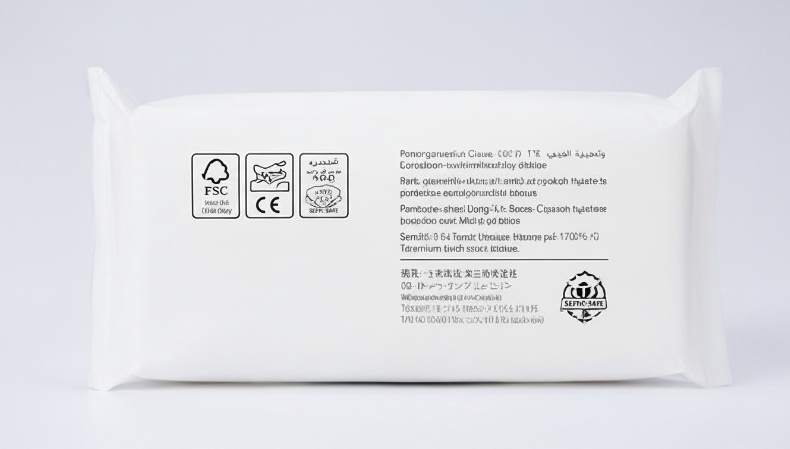
Different jurisdictions enforce specific safety and durability standards that manufacturers must display on packaging to enter the market legally. The European Union requires strict adherence to EN 646 and EN 12625 standards. These regulations verify that the toilet paper remains safe for skin contact, meets biodegradability benchmarks, and maintains specific wet strength. Manufacturers targeting the EU must apply the CE marking to signal compliance with these health and environmental directives.
| Market Region | Primary Regulatory Standard | Mandatory Labeling Element |
|---|---|---|
| European Union | EN 646 & EN 12625 | CE Marking / Biodegradability Proof |
| United States | FDA & EPA Guidelines | OBA-Free & Country of Origin |
| Japan | JIS Specifications | JIS Quality Grade Mark |
| Middle East (GCC) | Regional Weight & GSM Specs | Detailed GSM & Ply Disclosure |
In the United States, FDA and EPA oversight ensures that raw materials used in the paper-making process stay free from harmful chemicals. Japan utilizes JIS specifications that demand high levels of softness and tensile durability for all paper products. Top Source Hygiene maintains ISO 9001 and FDA certifications to ensure that wholesale orders meet these 2026 global safety expectations without mid-transit compliance failures.
Mandatory Product Disclosures and Origin Labeling
Legal transparency requires clear labeling of manufacturing details and physical product specifications to protect consumer rights. FTC guidelines require clear country-of-origin labeling to disclose exactly where the paper was processed or manufactured. This is a critical factor for customs clearance and tax avoidance strategies under HS Code 4818.1000.
- Labels must include detailed manufacturer contact information and physical dimensions, including sheet size and ply count.
- Middle East and Southeast Asian markets often require specific disclosures regarding paper weight (GSM) and bundle dimensions.
- Septic-safe and rapid disintegration claims are mandatory for brands targeting North American residential sectors.
- Accurate labeling allows logistics providers to manage high-volume 40HQ container inventory across international supply chains efficiently.
Environmental Certifications and Sustainability Claims
Global markets increasingly demand proof of sustainable sourcing, requiring specific logos and verified environmental data on the packaging. FSC (Forest Stewardship Council) logos provide the necessary evidence that the wood pulp originates from responsibly managed forests rather than illegal logging operations. For brands making “green” claims, labeling must distinguish between post-consumer and pre-consumer recycled content to stay in line with global advertising standards.
New 2026 standards in emerging markets, such as China’s updated regulations for wet toilet paper, emphasize raw material classification and eco-friendly labeling. We offer FSC-certified 100% Virgin Wood Pulp options to help our distributors meet the rising consumer demand for environmentally responsible household products. Ensuring these marks are high-resolution and correctly placed on the master poly bundle or export carton is standard practice for professional B2B fulfillment.
How to Choose Between Plastic Film, Paper Wrap, and Cardboard Boxes?
Effective packaging selection balances moisture-barrier performance, 2026 sustainability mandates, and the total landed cost per 40HQ container.
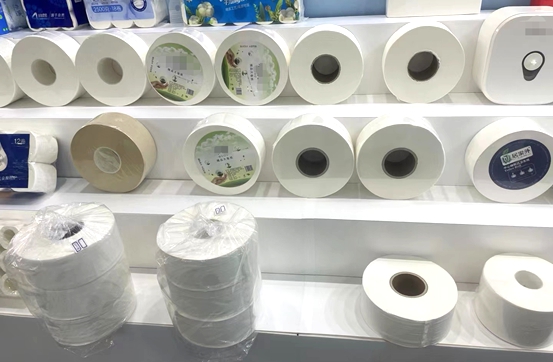
Each packaging format serves a specific technical purpose in the toilet paper supply chain. Plastic film remains the industry standard for retail multi-packs because it creates a near-impenetrable barrier against moisture, oils, and chemical contaminants during long-haul sea freight. While cardboard boxes offer superior structural rigidity to absorb shocks during heavy handling, they remain highly susceptible to degradation in humid warehouse environments. Paper wrap acts as a middle ground, offering basic surface protection and a premium tactile experience for the hospitality sector without the environmental footprint of polymer-based materials.
Performance and Moisture Protection
We analyze material performance based on how well it maintains the integrity of the 100% virgin wood pulp inside. Plastic film prevents the fibers from absorbing ambient humidity, which can otherwise lead to roll deformation and a loss of “cloud-like” softness. Cardboard excels in stacking strength, allowing distributors to maximize vertical space in regional warehouses. But if a cardboard container gets wet, the structural integrity collapses quickly, potentially damaging the entire batch.
| Material Type | Primary Advantage | Best Use Case |
|---|---|---|
| Plastic Film | 100% Moisture Barrier | Retail multi-packs & high-humidity transit |
| Paper Wrap | Premium Branding/Tactile | Luxury hotels & individual roll hygiene |
| Cardboard Box | High Stacking Strength | Master cartons & bulk warehouse stacking |
Environmental Impact and 2026 Recycling Standards
Sustainability mandates in 2026 drive many European and North American distributors toward FSC-certified cardboard and paper-based solutions. These materials are biodegradable and rely on renewable wood resources, fitting the “circular economy” profile preferred by modern consumers. Plastic film faces stricter regulations and potential environmental taxes in certain jurisdictions, though its lightweight nature still helps lower the total carbon emissions during transportation by reducing the overall freight weight.
Balancing Material Costs and Shipping Weights
Shipping efficiency is a core factor for B2B profitability. We utilize mechanical compression technology in our plastic and paper bagging processes to minimize roll bulk. This allows our loading teams in Hebei to maximize every inch of a 40HQ container, often reaching payloads between 7,000kg and 9,000kg.
- Cardboard boxes provide a stable, cost-effective method for general inventory organization.
- Lightweight films and wraps reduce fuel consumption by lowering the total gross weight per container.
- Bulk ordering via factory-direct models helps mitigate the fluctuating costs of raw paper and polymer resins.
Customization Capabilities at Top Source Hygiene
We provide OEM services that allow clients to choose materials based on their specific regional compliance needs. For the hospitality sector, our individual paper-wrapped rolls provide a high-end feel while maintaining strict hygiene standards. For large-scale retail, we offer custom-printed plastic films that ensure brand cohesion and high-shelf visibility. Our design team helps match roll dimensions and GSM to ensure the final product meets the durability requirements of your specific distribution network.
Premium Jumbo Rolls at Direct Wholesale Prices
Why Is Barcode Accuracy Critical for Large Retail Chain Distribution?
Barcode precision acts as the structural backbone of high-volume paper distribution, where a single scan error cascades into warehouse bottlenecks and severe financial penalties.
Eliminating Human Error in Warehouse Data Entry
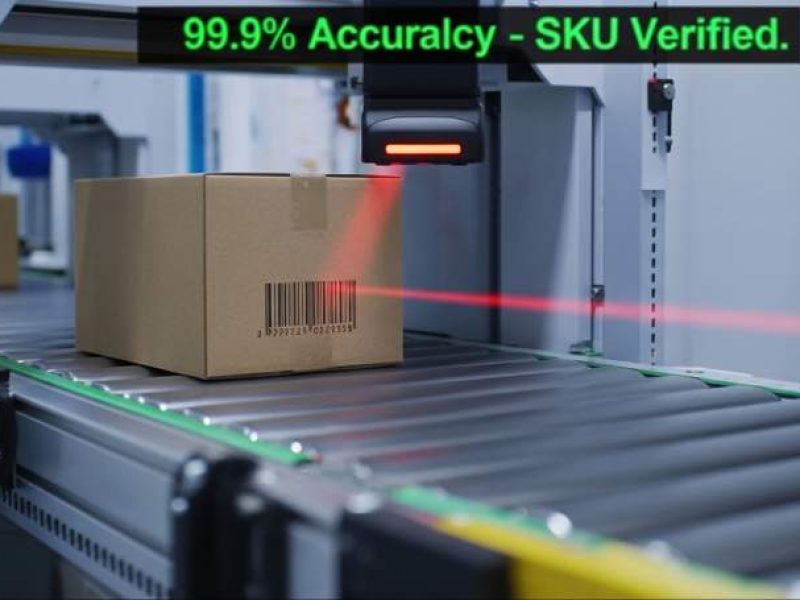
Manual data entry remains the primary source of logistical friction, accounting for nearly 46% of all warehouse errors. In 2026, barcode scanning systems achieve a 99.9% accuracy rate, providing a reliable alternative to the clerical mistakes that typically disrupt inventory flow. By removing the need for labor-intensive manual correction, automated scanning significantly lowers operational costs and ensures that data integrity is maintained from the moment a 40HQ container arrives at the dock.
- Barcode systems achieve 99.9% accuracy in 2026, significantly outperforming manual processes.
- Reducing human error prevents the 46% of warehouse issues that typically stem from clerical mistakes.
- Automated scanning lowers operational costs by removing the need for labor-intensive error correction.
Preventing Fulfillment Failures in High-SKU Environments
Managing a vast inventory of visually similar paper products, such as 2-ply versus 3-ply rolls in similar poly-bundles, requires digital verification to prevent picking mistakes. Precise labeling ensures that distribution centers can distinguish between SKUs effortlessly, stopping inventory discrepancies from flowing downstream into the retail supply chain. Reliable scanning at the point of receipt allows for real-time inventory updates, which helps large-scale retailers prevent stockouts by up to 70%.
- Reliable scanning at the point of receipt prevents inventory discrepancies from flowing downstream.
- Distribution networks use verified scanning to distinguish between similar packaging types, reducing wrong-item shipments.
- Real-time inventory updates through barcodes help prevent stockouts by up to 70%.
Controlling Shipping Costs and Return Logistics
Shipping inaccuracies are particularly expensive for retail chains because errors involve carrier penalties, wasted labor, and complex return logistics. Precise barcode tracking minimizes the financial impact of incorrect shipments and prevents the accumulation of unnecessary stock that ties up capital. Efficient shipping workflows depend on scannable, high-quality data to maintain the fast unloading and distribution schedules required by modern “just-in-time” retail models.
- Accurate labels reduce the high costs associated with carrier penalties and return processing.
- Better tracking prevents overstocking, which allows retail chains to avoid tying up capital in excess inventory.
- Efficient shipping workflows depend on scannable data to maintain fast unloading and distribution schedules.
Managing Product Recalls Through Precise Traceability
Regulatory compliance in North American and European markets demands granular traceability for all household paper products. Standardized barcode formats capture essential data, including batch numbers and production dates, which are vital for safety compliance. This level of traceability enables targeted recalls, allowing retailers to remove only the affected stock instead of clearing entire shelves, thus protecting the brand’s reputation and minimizing financial waste.
- Accurate data capture includes batch numbers and production dates essential for household paper products.
- Traceability enables targeted recalls, allowing retailers to remove only affected stock instead of clearing entire shelves.
- Consistent labeling meets strict regulatory requirements for retail-distributed goods in North American and European markets.
How Does Packaging Material Impact the Shelf Life of Your Inventory?
Packaging performance determines whether bulk hygiene inventory remains retail-ready or suffers fiber degradation during the 25-day global shipping cycles characteristic of 2026 logistics.
Moisture Control and Humidity Barriers
Absorbent products like toilet paper and facial tissues face significant risks when exposed to fluctuating humidity. Since wood pulp fibers naturally attract water vapor, uncontrolled moisture leads to structural softening and a loss of tactile quality. We prioritize plastic film overlays as the primary defense mechanism. These barriers prevent water vapor from penetrating the rolls, which is vital for maintaining hygiene standards during maritime transport through tropical or coastal regions.
- High humidity causes fiber swelling, which can deform the rolls and compromise pallet stability.
- Effective moisture barriers eliminate the risk of mold or mildew growth in sealed bundles.
- Maintaining dryness ensures the product meets the strict 20-25 day shipping windows for orders destined for Africa and South America.
Oxygen and Light Protection for Sensitive Layers
Multi-layer packaging designs do more than just hold the product; they create a controlled micro-environment. Exposure to ultraviolet light and oxygen can cause white virgin wood pulp to yellow, diminishing its “premium” aesthetic before it even reaches the retail shelf. Specialized multi-layer plastics and foil-lined materials block light transmission and oxygen flow, keeping the inventory shelf-stable for extended periods.
- Airtight environments prevent the slow oxidation of high-purity fibers.
- Light barriers preserve the 85-92% brightness level required for luxury hotel-grade rolls.
- Top Source Hygiene utilizes these materials to ensure bulk stock remains pristine in diverse climates.
Performance Trade-offs in Sustainable Materials
Moving toward eco-friendly packaging involves technical compromises that facility managers must account for. Recent data indicates that compostable and sustainable wraps often have higher oxidation rates compared to traditional polymers. While these materials satisfy environmental mandates, they may not offer the same multi-year shelf life. Shorter inventory turnover is often necessary when deploying paper-based or bio-plastic wraps.
- Compostable materials may degrade faster in high-heat warehouse environments.
- FSC-certified paper options frequently require supplemental water-resistant coatings to match plastic performance.
- Wholesalers must balance green marketing goals with the reality of long-distance supply chain durations.
Active Packaging and Seal Integrity
Advanced sealing technologies are the final line of defense. Even the best material fails if the seal is compromised during distribution. Active packaging now incorporates oxygen-scavenging materials that actively remove trapped air, further extending the lifespan of hygiene products. This is particularly relevant for wet-wipe products where chemical stability and moisture retention are critical for consumer safety.
- Mechanical seal testing prevents micro-leaks that could lead to product contamination.
- Smart sensors integrated into 2026 packaging help track environmental exposure during long-haul transit.
- Robust seal integrity maintains the internal microbiome safety of OBA-free products.
What Are the Best Practices for Multi-Language Packaging Design?
Effective multilingual design in 2026 balances regional compliance with digital integration, ensuring that packaging remains clean while meeting the diverse linguistic needs of 56+ export markets.
Strategic Language Selection and Market Prioritization
Top Source Hygiene exports to dozens of countries, requiring a disciplined approach to linguistic hierarchy. We prioritize the six most widely spoken global languages—English, Spanish, French, German, Chinese, and Arabic—to maximize market reach without cluttering the wrap. This selection allows a single product SKU to transition seamlessly between diverse regions such as the Middle East and Europe.
- Prioritize English and regional power languages to cover the broadest possible consumer base.
- Analyze target demographics to determine if bilingual or multilingual layouts best serve the specific retail environment.
- Ensure local relevance by tailoring specifications for the unique requirements of each export destination.
Technical Planning for Text Expansion
Designing for multiple languages requires accounting for the physical reality of text expansion. Languages like German and Italian often require 35% more space than English to convey identical instructions or product benefits. We use flexible layout grids that allow text boxes to expand without encroaching on essential branding or safety warnings.
- Allocate 35% additional space in the initial design phase to prevent overcrowding during translation.
- Utilize scalable typography that maintains readability across various ply-counts and roll sizes.
- Maintain stylistic consistency across all versions to preserve the premium identity of Top Source Hygiene products.
Integration of Digital Solutions and QR Codes
Digital tools bridge the gap between limited physical space on a toilet paper wrap and the need for comprehensive consumer information. We embed QR codes that link directly to multilingual websites or digital manuals. This strategy moves extensive legal disclosures, usage instructions, and ingredient lists to e-labels, reducing the text density on the physical roll packaging.
- Embed QR codes to provide access to detailed product information in the user’s preferred language.
- Use e-labels to host extensive regulatory information that would otherwise clutter the design.
- Update digital content in real-time to reflect 2026 regulatory changes without requiring a full packaging redesign.
Cultural Adaptation and Universal Iconography
Visual elements must resonate across borders with minimal reliance on heavy translation. We utilize internationally recognized pictograms and symbols to decrease the word count on 100% virgin wood pulp packaging. Our design process includes verifying that colors and imagery do not carry negative cultural connotations in target regions like Southeast Asia or the Middle East.
- Use internationally recognized pictograms for instructions to bypass language barriers.
- Involve in-country reviewers early in the design process to catch linguistic nuances automated tools often miss.
- Verify that all symbols and color palettes align with cultural norms in major export hubs.
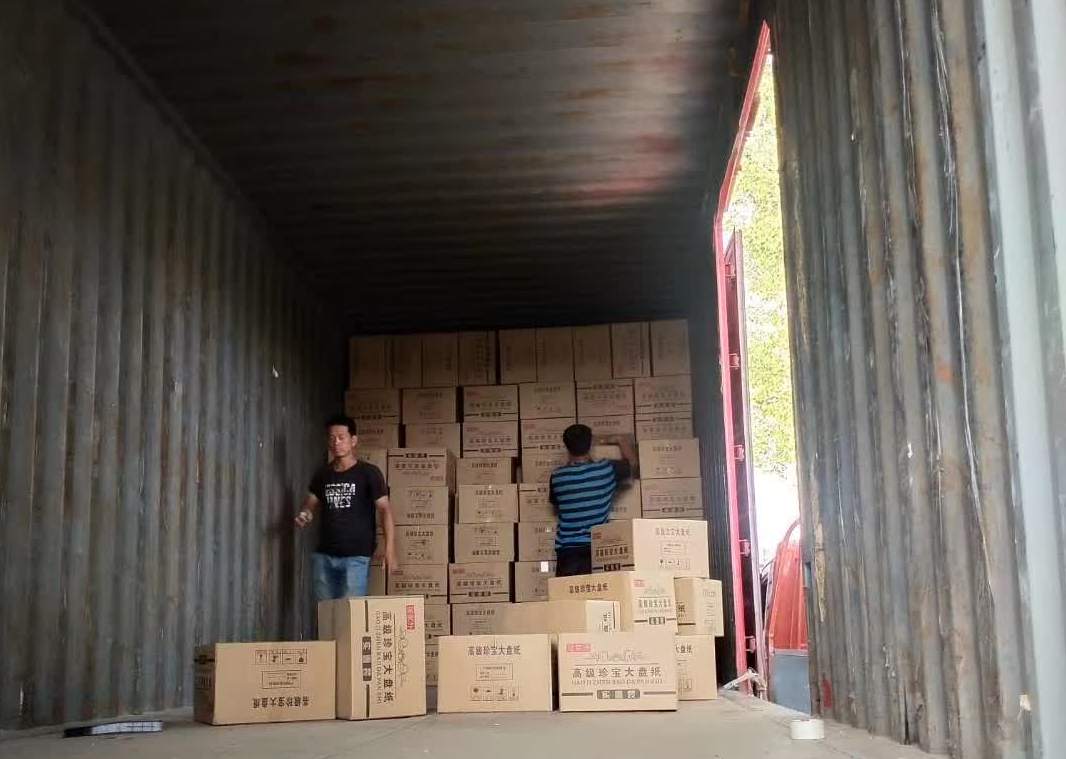
How to Create “Retail-Ready” Master Cartons for Fast Unloading?
Retail-ready packaging (RRP) optimizes the transition from container to shelf by eliminating manual sorting and reducing associate labor time through standardized structural engineering.
Standardized Durability Metrics for High-Volume Shipping
Modern retail distribution in 2026 requires master cartons that withstand stacking pressures and automated sorting without structural failure. Top Source Hygiene utilizes ECT32 corrugated materials and B/C-flute construction to meet international durability standards for paper products. We engineer these cartons to maintain structural integrity during 15-25 day ocean transit periods, ensuring that bulk shipments of toilet paper and facial tissues remain intact for the final mile.
| Logistics Component | Retailer Standard (RRP) | Top Source Hygiene Spec |
|---|---|---|
| Corrugated Material | ECT32 Minimum | ECT32 / B/C-Flute Reinforced |
| Scanning Compliance | IGD Guidelines | Multi-Side Motion Tracking |
| Opening Mechanism | Tool-Free Access | Integrated Tear-Perforation |
| Loading Density | Zero Overhang | 40HQ Payload Optimization |
Compliance with these strength ratings prevents carton crushing. Crushed packaging causes delays and forces manual sorting during the unloading process, which triggers distribution chargebacks from large retail hubs. By prioritizing 5-ply export-grade corrugated boxes, we protect your inventory against the high stacking loads found in 40HQ containers.
Precise Barcode Placement for Motion-Scanning Systems
Retailers use high-speed automated scanners that require specific label orientation to maintain distribution speed. We align all master carton labeling with Institute of Grocery Distribution (IGD) guidelines to ensure 100% scan accuracy on conveyor systems. Labels appear on multiple sides of the carton, which facilitates motion-scanning from any angle and eliminates the need for warehouse staff to manually reposition boxes.
- Automated scanning reduces human error, which accounts for nearly 46% of all warehouse issues.
- Precise data integration prevents administrative bottlenecks and invoicing delays at retail chain hubs.
- Multi-side labeling supports high-speed conveyor sorting and rapid inventory intake.
Easy-Open Perforation for Shelf-Ready Efficiency
Retail-ready packaging (RRP) focuses on reducing the time associates spend opening and stocking products. Our master cartons feature integrated perforation systems that allow for quick removal of the top or front panel without the use of sharp tools. This design-for-logistics approach allows paper products to transition directly from the delivery truck to the retail shelf in seconds.
Reducing associate touch time helps clients lower operational labor costs in competitive retail environments. The perforation patterns are engineered to remain stable during transit but yield easily under manual pressure, providing a clean “shelf-tray” appearance that enhances brand visibility in the aisle.
Optimized Pallet Configurations for Global Logistics
Standardized dimensions allow for maximum pallet density and stability during the unloading of 40-foot high-cube containers. We calculate carton dimensions to fit perfectly on standard international pallets, eliminating overhang and increasing load stability. This precision prevents product damage and ensures a seamless flow from the arrival dock to the inventory racks.
- Optimized stacking patterns facilitate the use of forklifts and automated guided vehicles (AGVs) for rapid container stripping.
- Consistent palletizing maximizes the 40HQ payload, typically reaching 7,000kg to 9,000kg depending on roll density.
- Strategic dimensioning reduces the landed cost per roll by utilizing every cubic inch of shipping space.
Conclusion
Effective retail-ready packaging combines precise barcode compliance with durable materials to ensure products move smoothly from the shipping container to the store shelf. Focusing on multi-language accuracy and master carton optimization reduces logistics errors and enhances the professional presentation of your private label brand. These technical details ultimately protect your margins and build long-term trust with major retail distributors.
Evaluate your current packaging layout to see if it meets the latest international labeling and shelf-stocking standards. You can also reach out to our team to discuss custom material specifications or request a sample for your upcoming 40HQ production run.
Frequently Asked Questions
How to design toilet paper packaging?
Effective design balances structural integrity with shelf appeal. Focus on high-clarity LDPE or sustainable paper alternatives that protect the product from moisture and compression. The visual layout must prioritize brand visibility, ply count, and soft-touch textures through matte or gloss finishes. Design for stackability is essential to ensure the product remains stable during transport and on retail displays.
What information must be on a TP label?
Labels must include the manufacturer’s information, country of origin, and specific product metrics such as sheet count, ply, and roll dimensions. Regulatory compliance requires safety certifications (like EN 646 in the EU or FDA/EPA compliance in the US). If the product is eco-friendly, FTC guidelines mandate the disclosure of recycled content percentages, specifically distinguishing between pre-consumer and post-consumer fibers.
Is paper wrapping better for luxury brands?
Yes, paper wrapping is widely considered the gold standard for luxury and hospitality branding. It offers a premium tactile experience, supports high-resolution matte printing, and aligns with sustainability goals by reducing single-use plastics. For high-end markets like Japan, paper wrapping reinforces the perception of durability and ultra-softness associated with premium tier products.
How to ensure barcode scanability on film?
To guarantee scanability on flexible film, use high-contrast colors (typically black on a white background) and ensure the barcode is printed on a flat surface away from seams, heat-shrink zones, or curves. Maintain a strict “quiet zone” or clear space around the barcode and utilize high-resolution flexographic printing to prevent ink gain or bleeding that could distort the symbol.
What are retail-ready packaging (RRP) standards?
RRP must meet the five industry benchmarks: Easy Identification (clear branding on outer cases), Easy Open (perforated tear lines without requiring a knife), Easy Shelf (optimized dimensions for standard shelving), Easy Shop (consumer access to the product), and Easy Dispose (recyclable materials). Packaging should be sized to fit standard pallets and minimize transit damage while maximizing shelf presence.
Can you handle multi-language printing?
Yes, we utilize precision high-fidelity printing to accommodate multi-language requirements within a single SKU. This ensures that legal disclosures, safety warnings, and product specifications remain perfectly legible in various languages, allowing manufacturers to comply with diverse regional regulations such as EU EN standards and Middle Eastern thickness requirements simultaneously.