Skip to content
Selecting the correct embossing tech determines whether a facility manager maintains high-traffic restrooms efficiently or faces constant maintenance calls due to dispenser jams and ply separation. When 2-ply rolls fail to hold their bond, they de-ply during use, leading to excessive waste and increased consumption costs that erode bottom-line margins in commercial contracts. Using the wrong bonding method often results in a subpar user experience that reflects poorly on facility hygiene standards and operational oversight.
This guide analyzes the mechanical differences between edge embossing and point-to-point configurations to help procurement officers specify the right product for their specific needs. We examine the trade-offs between manufacturing costs and sheet softness, the drawbacks of using chemical adhesives, and the technical reasons why certain patterns prevent sheets from splitting in high-capacity jumbo dispensers. Use these specifications as a standard operating procedure for evaluating wholesale tissue quality and ensuring long-term product performance.
How Do Manufacturers Bond Two Plies of Tissue Together?
Modern multi-ply tissue production utilizes high-pressure mechanical deformation and targeted adhesive application to ensure structural integrity without compromising fiber softness.
Mechanical Embossing and Ply Bonding
Production lines press two or more plies between a hard steel embossed roll and a matching rubber roll to create deep mechanical interlocks. This physical deformation creates air pockets between the layers, which improves the 2026 standard for high-absorbency tissue products. This method avoids the use of extra chemicals, keeping the 100% virgin wood pulp base pure and safe for skin contact.
- Steel rollers create permanent fiber interlocks through high-pressure deformation.
- Air pockets generated during embossing significantly increase the liquid capacity of the roll.
- Mechanical bonding ensures a chemical-free finish for premium hygiene products.
Ultrasonic and Abrasive Bonding Techniques
Advanced manufacturing setups deploy ultrasonic horns to generate localized heat at specific points, welding fibers together in milliseconds. Other technical lines use abrasive surface pressing where rolls with irregular textures snag and intertwine fibers between adjacent layers. These applications allow Top Source Hygiene to maintain high production speeds while ensuring the plies do not separate during use.
- Ultrasonic welding provides precise weld points that stabilize the tissue web at high speeds.
- Abrasive pressing creates physical entanglement without the need for added thermal energy.
- High-speed stabilization prevents ply separation in jumbo rolls and commercial dispensers.
Adhesive Lamination for Industrial Strength
For luxury 3-ply and 4-ply toilet paper, technicians apply water-based adhesives to the tips of embossed points before marriage rolls join the plies. This point-to-point bonding ensures the tissue stays soft and flexible while preventing the layers from sliding against each other. This method is essential for global retail markets that demand a consistent, premium feel and superior tear strength.
- Water-based adhesives create a secure bond without adding stiffness to the tissue.
- Marriage rolls ensure precise registration between embossed patterns for a quilted effect.
- Strategic lamination is key for maintaining the structural integrity of high-GSM luxury products.
The Disadvantage of Using Adhesives (Stiffness and Cost)
Adhesives provide high-strength bonding but often introduce structural rigidity and moisture-related defects that compromise the premium hand-feel of 100% virgin wood pulp tissue.
Impact on Paper Softness and Tactile Texture
Adhesives create a rigid internal layer that directly conflicts with the physical objectives of tissue manufacturing. When liquid glue enters the web, it forms a structural bond that increases web stiffness. This rigidity negates the softening effects achieved during the creping process, where a doctor blade creates microscopic wrinkles to ensure a plush feel. Instead of a flexible, cloud-like texture, the adhesive-bonded sheets can feel stiff or “paper-like” to the end user.
The application process itself introduces mechanical risks to product quality. Roller pressure applied during glue distribution frequently flattens the fine embossed details. This loss of definition ruins the intended quilted texture and aesthetic appeal of premium rolls. Furthermore, uneven moisture absorption within the adhesive layers can trigger surface bubbling and irregularities, particularly in high-humidity storage environments common in global wholesale logistics.
- Roller pressure during glue application can flatten embossed details, reducing the intended quilted texture.
- Adhesive layers may lead to surface irregularities or bubbling if moisture is absorbed unevenly.
- Glue creates a structural bond that increases stiffness, which may diminish the ‘premium’ soft feel expected in facial tissues.
Production Complexity and Operational Costs
Integrating adhesive systems into a high-speed converting line adds significant technical overhead and capital expenditure. Maintaining ply definition after glue application requires specialized high-pressure machinery, which increases the initial investment for factory setups. These systems demand precise calibration to ensure that the glue does not bleed through the thin 13–22g/m² plies, a common defect that causes rolls to stick together and tear during dispensing.
Operational costs rise due to both material consumption and maintenance requirements. High-purity adhesives add a per-unit cost that must be passed down to the wholesaler. Additionally, glue systems require frequent cleaning and nozzle maintenance to prevent production downtime. For bulk distributors, these complexities translate to higher price points and potential variability in batch consistency compared to mechanical bonding methods like edge embossing.
- Post-glue embossing requires high-pressure machinery to maintain definition, increasing initial capital expenditure.
- Careful sequencing of material selection and glue application is necessary to prevent production defects.
- Increased processing complexity and material costs for adhesives can raise the overall price per unit for wholesale buyers.
Premium Jumbo Tissue Rolls at Wholesale Prices
Edge Embossing: Crimping the Margins for a Soft Center
Edge embossing utilizes high-pressure mechanical bonding along tissue perimeters to ensure ply integrity without the stiffening effects or chemical costs of industrial adhesives.
Mechanical Ply Bonding Without Adhesives
Manufacturers apply intense pressure to the edges of the tissue web using specialized steel rollers to knit paper layers together. These rollers feature convex patterns that create localized compression zones, effectively interlocking the fibers of 2-ply or 3-ply sheets. This mechanical bond replaces the need for glue, which often adds unnecessary weight and rigidity to the finished product. By focusing the bonding force strictly on the margins, the process preserves the natural loft and bulk of the virgin wood pulp in the center of the sheet.
| Feature | Edge Embossing (Mechanical) | Adhesive Bonding (Glue) |
|---|---|---|
| Primary Benefit | Maintains center softness and loft | High-strength structural bond |
| Material Impact | 100% Chemical-free; OBA-free | Potential for stiffness and “bubbling” |
| Production Speed | Up to 250 m/min | Requires curing/drying time |
Preserving Texture and Hand-Feel
Restricting the crimping process to the perimeter allows the primary surface area to remain gentle on the skin. This edge-only processing prevents the stiffening effect commonly associated with full-surface adhesive applications, which can make tissue feel abrasive. For premium hospitality and retail clients, this balance provides structural integrity while ensuring the “cloud-like” tactile experience expected from 100% virgin wood pulp. Top Source Hygiene employs this method specifically for multi-ply products to maintain high absorbency rates without chemical interference.
Operational Benefits for Bulk Production
Removing adhesives from the production line reduces raw material costs and simplifies machine maintenance. The absence of glue prevents residue buildup on rollers, which can cause tearing or sheet breaks during high-speed conversion. Facilities with high output, such as the 2,860-ton monthly capacity at our Hebei hub, benefit from the efficiency of mechanical bonding. This technique ensures that rolls remain perfectly aligned during the slitting and packaging phases, minimizing waste and maximizing the payload of a 40HQ container.
- Mechanical bonding eliminates adhesive procurement and storage costs.
- Precision edge alignment prevents ply separation in high-traffic commercial dispensers.
- OBA-free processes remain 100% intact by avoiding synthetic glues.
Point-to-Point Embossing: Creating the “Quilted” Feel
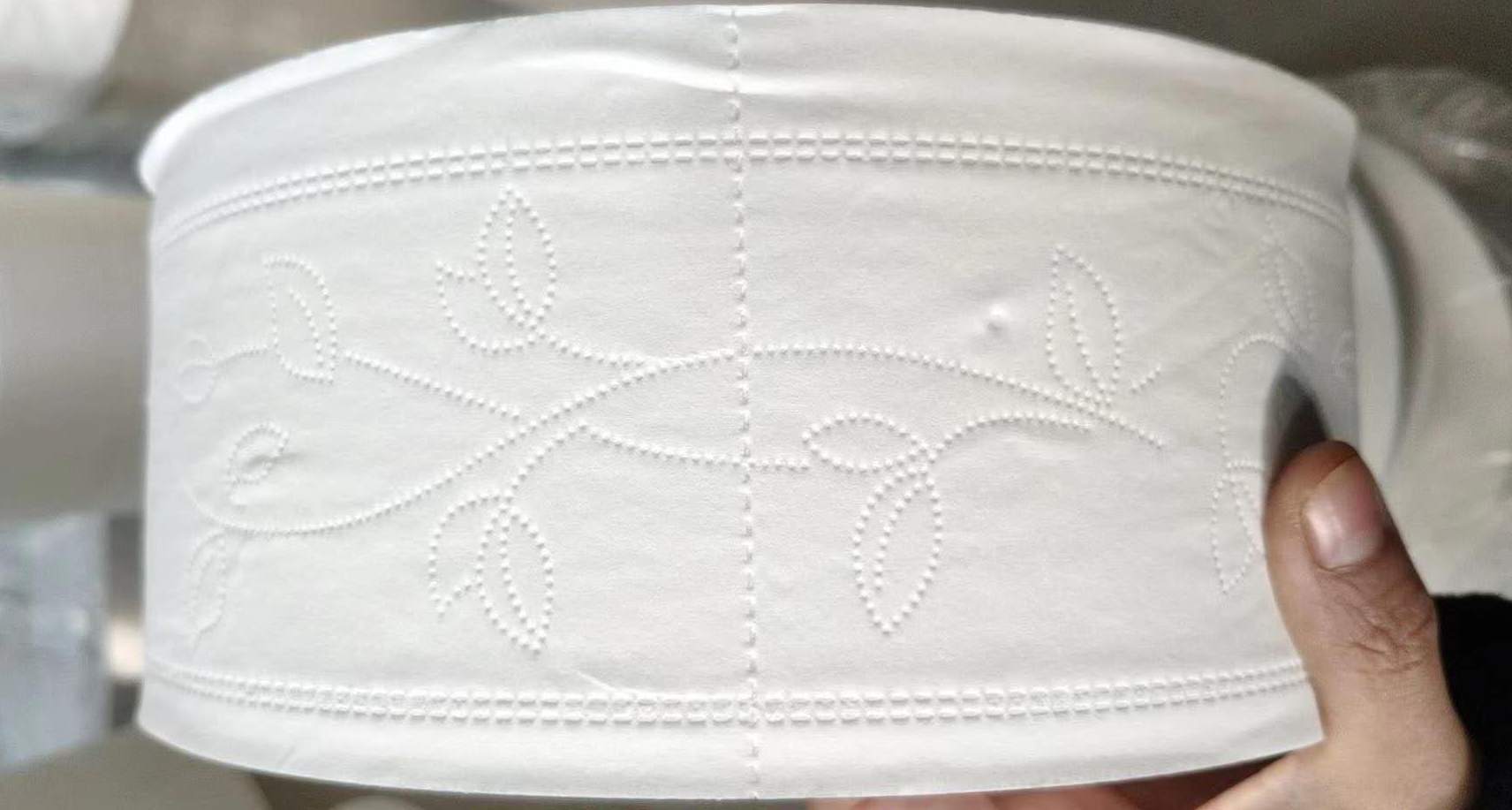
Point-to-point embossing utilizes CNC-synchronized steel rollers to bond plies at precise contact peaks, increasing product absorbency by 30% while maintaining the structural integrity of premium multi-ply tissue.
Precision Alignment of Plies
This manufacturing method relies on the exact registration of two patterned rollers. Unlike nested embossing where protrusions fit into valleys, point-to-point systems ensure the raised “points” of the top ply meet the “points” of the bottom ply. This alignment creates internal air pockets between the layers, which significantly increases the bulk and thickness of the finished roll. At Top Source Hygiene, we use this technique to deliver the high-end “quilted” aesthetic that retail consumers and luxury hospitality groups demand.
Advanced machinery maintains this synchronization even as production speeds scale. By preventing the plies from shifting or sliding during the bonding phase, we eliminate the “ghosting” effect seen in lower-quality products. This precision ensures that every sheet of a TSH-2559 or TSH-4010 roll remains perfectly aligned from the first wrap to the core.
| Feature | Point-to-Point Embossing | Standard Edge Embossing |
|---|---|---|
| Absorbency Boost | Up to 30% increase | Minimal (Edge only) |
| Tactile Texture | Plush, quilted feel | Flat center, firm edges |
| Ply Adhesion | High-pressure lamination | Mechanical crimping |
Enhancing Absorbency and Softness
By bonding plies only at specific contact points, the majority of the tissue surface remains uncompressed. This preservation of fiber loft allows the paper to retain its natural softness and functionality. The “quilted” structure provides a greater effective surface area to trap liquids, which is why premium kitchen towels and multi-ply toilet tissues outperform single-ply or flat-bonded alternatives in lab tests.
- The finished product maintains a plush hand-feel instead of becoming stiff from excessive adhesive or compression.
- Strategic air pockets improve the “caliper” or perceived thickness of the roll without adding unnecessary weight.
- We offer this technique across our 3-ply and 4-ply ranges to maximize comfort for international hospitality clients.
Technological Evolution in 2026
New production standards have effectively resolved the speed limitations historically associated with point-to-point systems. While older lines often capped out at 400 m/min due to synchronization lag, modern wet embossing systems now reach 600 m/min. These efficiency gains allow us to offer premium quilted textures at competitive wholesale prices.
Automation plays a key role in reducing material waste. Sensors monitor ply adhesion in real-time, ensuring that the bond remains consistent throughout the entire 40HQ container order. This level of control prevents common issues like de-plying or jamming in high-traffic dispensers, providing a reliable experience for the end-user.
Would you like me to provide a cost-benefit analysis comparing point-to-point embossing with standard glue lamination for your next wholesale order?
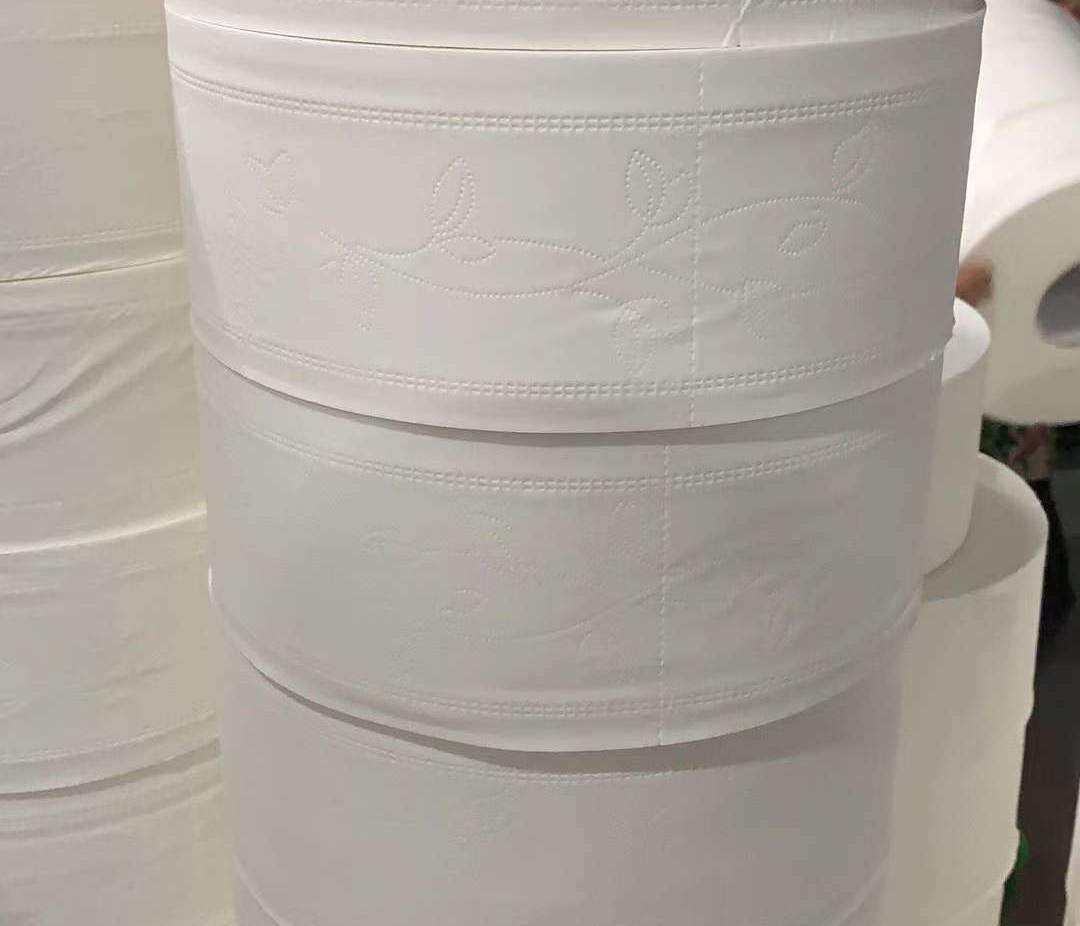
How Poor Embossing Causes Jumbo Rolls to De-Ply in the Dispenser
Inadequate ply-bonding in high-capacity jumbo rolls creates a cascading failure point where mechanical drag in commercial dispensers forces sheet delamination, leading to significant maintenance overhead and product waste.
Moisture Control and Ply Bond Strength
Success in multi-ply tissue production depends on maintaining a precise moisture window between 2.5% and 4.5%. This specific range facilitates the hydrogen bonding necessary for individual 100% Virgin Wood Pulp fibers to interlock. When moisture levels drop below these standards, the fibers become too brittle and dry to maintain a cohesive bond. As the roll leaves the embossing unit, the lack of internal moisture prevents the layers from sticking, resulting in immediate ply separation before the product even reaches the packaging stage.
Dispenser Jamming and Mechanical Separation
High-traffic commercial environments place extreme physical stress on Jumbo Roll Tissue (JRT). Large, heavy rolls create significant rotational drag within the dispenser. If the embossing pattern lacks sufficient mechanical depth, the tension required to pull the paper through the narrow dispenser opening exceeds the bond strength between the plies. This causes the layers to “de-ply,” where one layer continues to unroll while the other bunches up or shreds inside the housing. This failure frequently results in dispenser jams that require manual intervention and increase facility labor costs.
Limitations of Traditional Embossing Techniques
Older rubber-to-steel embossing units often fail to provide the crimp depth needed for the high-density formats used in 2026. These traditional methods rely purely on mechanical pressure, which rarely survives the high-tension winding and international shipping processes associated with bulk wholesale orders. To combat this, we utilize high-pressure lamination and CNC-precision point-to-point embossing. These advanced methods ensure that multi-ply configurations, such as our TSH-JRT08 models, maintain their structural integrity from the Hebei factory floor to the end-user’s hands.
Would you like me to draft a technical comparison between mechanical crimping and high-pressure lamination for your procurement specifications?
Specifying the Right Embossing Pattern for Wholesale Orders
Precision in embossing depth and pattern selection directly dictates the balance between roll bulk, ply-bond strength, and the tactile premium expected by regional B2B markets.
Aligning Pattern Designs with Brand Identity
Effective wholesale procurement starts with matching the visual language of the tissue to the end-user environment. Geometric designs and micro-patterns create a crisp, professional aesthetic suited for corporate offices and high-traffic commercial hubs. These patterns often prioritize functional uniformity and a clean look that signals hygiene and efficiency. For luxury hospitality and premium retail brands, we implement delicate floral motifs or custom CNC-engraved logos. These intricate designs increase the perceived value of the product by adding “loft” and a quilted feel that mirrors high-end home tissue.
| Embossing Type | Technical Depth | Primary Benefit |
|---|---|---|
| Point-to-Point (PTP) | 0.8mm – 1.5mm | 30% increase in absorbency; high-end quilted feel. |
| Edge Embossing | 1.0mm – 1.2mm | Superior ply bonding; prevents layer separation in dispensers. |
| Micro-Embossing | 0.5mm – 0.7mm | High-density roll winding; professional/minimalist look. |
Selecting Embossing Techniques for Material Compatibility
Material choice determines how well a pattern holds its definition over time. We utilize 100% Virgin Wood Pulp for our TSH-4010 and TSH-2269 models because the long fibers accept deep embossing (up to 1.5mm) without tearing or losing tensile strength. When specifying for 2-ply or 5-ply ultra-soft rolls, the pressure of the embossing rollers must be calibrated to create air pockets—this enhances “bulk” without increasing the weight of the paper. Standard blind embossing works well for most high-volume orders, but for clients requiring maximum softness, we balance pattern density to ensure the paper remains flexible and lint-free.
Managing Technical Specifications and Lead Times
Large-scale production requires strict adherence to technical parameters to avoid material waste. For custom wholesale orders, setting up new molds and synchronizing CNC rollers typically takes between 7 to 14 days. During this phase, we lock in specifications such as GSM (usually 13-22g/m² per ply) and moisture targets (2.5–4.5%) to ensure the embossing bonds correctly. Precise alignment between the edge embossing and the main decorative pattern prevents the “ribbing” effect on finished rolls, ensuring they fit perfectly in standard commercial dispensers across North America and Europe.
Would you like me to draft the technical specifications for a 40HQ container of the TSH-4010 Luxury Hospitality model?
Conclusion
Choosing between edge embossing and point-to-point patterns determines the final balance of softness, ply-bonding strength, and cost-efficiency for your tissue brand. Proper embossing execution ensures that 2-ply jumbo rolls remain intact during dispensing while providing the quilted texture or functional durability required for commercial environments. These technical specifications directly impact end-user satisfaction and reduce product waste in high-traffic facilities.
You can review your current inventory requirements or request a technical sample of our 100% virgin wood pulp patterns to see these bonding methods in person. Our team is available to help you specify the exact embossing depth and GSM for your next wholesale container order.
Frequently Asked Questions
What is edge embossing on commercial toilet paper?
Edge embossing is a specialized bonding technique used primarily for multi-ply tissue products like napkins and commercial toilet paper. It involves pressing a decorative or functional pattern strictly along the outer edges of the roll or sheet to fuse the layers together. This prevents the plies from separating during dispensing while leaving the center of the sheet smoother and more flexible for use.
Point to point vs edge embossing toilet tissue?
Point-to-point embossing involves aligning the raised “probes” of two embossed plies so they meet directly, often using micro-dots of adhesive at these contact points to maintain high bulk and absorbency. In contrast, edge embossing only bonds the perimeter of the tissue. Point-to-point is superior for high-quality, high-absorbency household rolls, whereas edge embossing is a cost-effective method typically seen in high-traffic commercial settings.
How are 2-ply toilet paper sheets stuck together?
Manufacturers use several mechanical and chemical methods to bond plies. Common techniques include mechanical embossing, where pressure creates inter-fiber bonds; point-to-point adhesive bonding, which uses selective glue application; and ultrasonic bonding, which employs high-frequency vibrations to fuse fibers. Some advanced processes also use abrasive surface pressing or nested embossing to lock the layers together without making the tissue stiff.
Why does cheap toilet paper separate into two layers?
Layer separation, or “ply splitting,” occurs when the mechanical bonding—usually simple edge embossing—is insufficient to hold the layers under the tension of being pulled from a dispenser. In budget manufacturing, less adhesive is used, and the embossing rollers may be worn or applied with lower pressure to increase production speed, resulting in a weak physical bond between the plies.
Does embossing make commercial toilet paper softer?
Yes, embossing enhances the “perceived softness” and bulk of the paper. By pressing patterns into the tissue, manufacturers create air pockets between the layers, which makes the roll feel thicker and more cushioned. While the fibers themselves don’t change, the increased surface area and reduced stiffness from the broken fiber networks result in a product that feels gentler against the skin.
Specifying wholesale toilet paper manufacturing details?
When specifying wholesale orders, it is critical to define the bonding method (e.g., glue-laminated vs. mechanically embossed), ply count, and GSM (grams per square meter). For commercial applications, specify “edge-embossed” for maximum cost-efficiency or “point-to-point adhesive bonded” for premium hospitality environments where ply separation must be avoided.