Skip to content
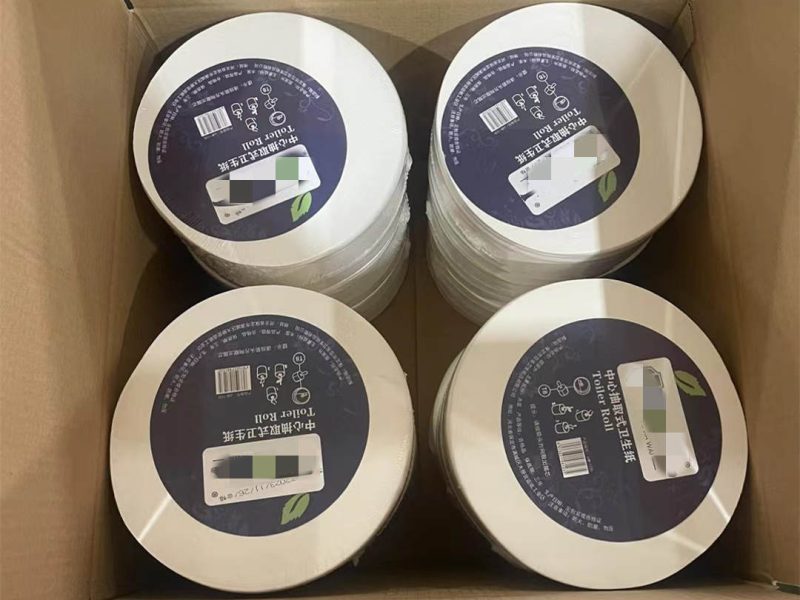
Inconsistent perforation quality directly impacts facility overhead by increasing paper waste and maintenance labor in high-traffic commercial restrooms. When a roll fails to tear cleanly, users pull excessive amounts of tissue or leave ragged tails hanging, which creates a mess that requires constant janitorial attention. This mechanical failure might seem minor per stall, but across a large-scale operation, it leads to thousands of dollars in avoidable procurement costs and decreased operational efficiency.
We examine the technical causes behind poor tears, focusing on how dull blades and high-speed winding at the paper mill compromise the integrity of each sheet. You will find a breakdown of how to conduct snap quality tests for wholesale samples and understand the physics between dispenser teeth and perforation lines. This guide serves as a technical standard for evaluating tissue suppliers to ensure your facility investments do not end up unraveled on the floor.
The Frustration of Ragged, Uneven Toilet Paper Tears
Technical failures in perforation alignment do more than frustrate users; they drive up operational costs by increasing product waste and maintenance calls.
Misalignment and Diagonal Tearing Challenges
High-speed winding processes often suffer from micro-misalignments that force sheets to tear at awkward, diagonal angles. These deviations occur when the paper web shifts during high-velocity conversion, rendering the intended perforation line ineffective. In hospitality and corporate sectors, this results in visible product waste as guests pull more sheets than necessary to find a clean break, often leaving long tails of shredded paper hanging from dispensers.
Top Source Hygiene addresses these mechanical inconsistencies by integrating advanced optical sensing technology. These sensors detect and correct web deviations in real-time, ensuring every sheet separates along a clean, horizontal line. By 2026 standards, precise sheet separation serves as a primary metric for guest satisfaction in the premium B2B market, directly impacting brand perception and restroom aesthetics.
Adherence to Global Perforation Strength Standards
Quantifying the “snap” quality of tissue requires rigorous protocols like ISO 12625-12. This standard measures the exact force needed to separate sheets, ensuring a balance between structural integrity and ease of use. If the perforation is too strong, the paper resists separation and leads to dispenser jamming; if too weak, the sheets tear prematurely during the loading process or while being pulled from high-capacity JRT dispensers.
- Force Verification: Quality control teams verify that 2-ply to 5-ply products provide a consistent tactile experience across different market regions.
- Structural Integrity: Standardized testing confirms that perforation lines remain intact during bulk shipping and high-pressure 40HQ container stacking.
- Waste Reduction: Consistent perforation strength prevents the “shredding” effect that forces users to discard the first several inches of a roll.
Precision Engineering in High-Speed Production Lines
Clean tears require perfect synchronization between embossing patterns and perforation depth. If the embossing is too aggressive, it can weaken the surrounding fibers and cause the paper to tear randomly. Modern manufacturing facilities coordinate CNC-precision embossing with perforation blade timing, ensuring the tear line remains the definitive weakest point of the sheet without compromising the cloud-like softness of the virgin wood pulp.
Automated dimensional verification systems now monitor blade penetration depth 24/7 to prevent dull edges from creating ragged “fuzz” lines. We manage a monthly capacity of 2,860 tons by adhering to strict maintenance schedules, replacing cutting equipment before any degradation in tear quality occurs. This engineering-first approach ensures that even high-density rolls, such as the TSH-3396 series, maintain perfect sheet separation from the first wrap to the core.
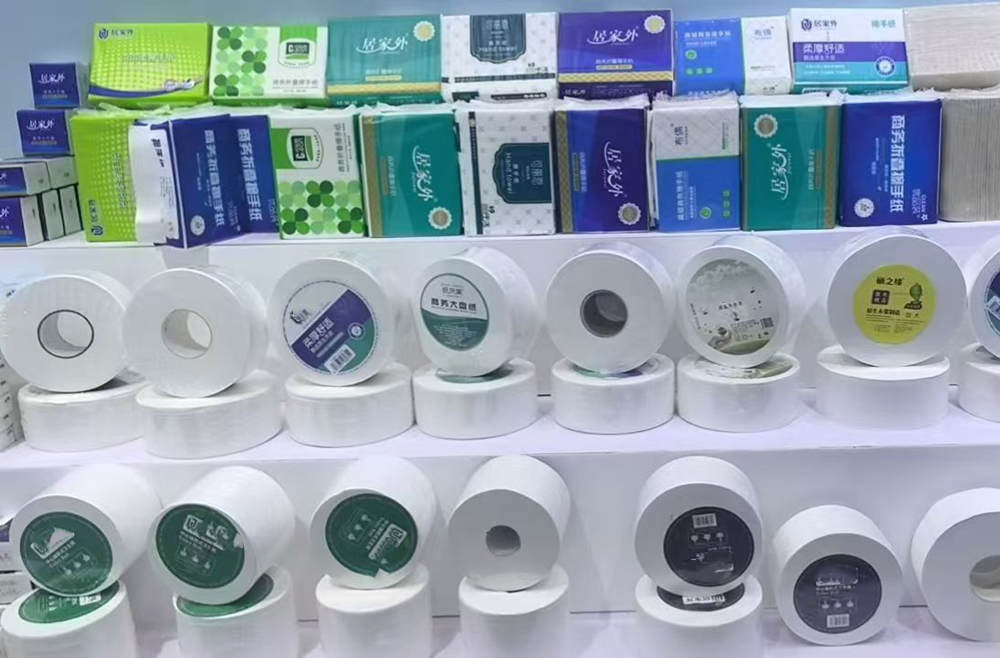
How Bad Perforations Lead to Massive Restroom Waste
Inconsistent perforation depth transforms controlled dispensing into a primary driver of facility overhead and structural plumbing failure.
Poorly defined perforation lines prevent clean separation, which forces users to pull significantly more paper than they actually need. When the tissue fails to snap at the intended interval, it creates a “tailing” effect where the jumbo roll continues to unwind uncontrollably. This mechanical failure leads to a psychological response: users typically grab a second or third handful when the first attempt results in a ragged, unusable scrap. This behavior effectively doubles the rate of consumption in high-traffic environments.
Top Source Hygiene addresses this inefficiency by utilizing precision-sharpened blades in our 2026 production lines. By maintaining a strict cut-to-tie ratio, we ensure every sheet separates cleanly at the designated point, regardless of the pull speed. This technical precision eliminates the “shredded edge” syndrome common in lower-tier wholesale products and ensures that a single pull delivers exactly what the user requires.
Plumbing Obstructions and Structural System Risks
Uneven tearing creates bulky, unrolled clumps of tissue that do not break down efficiently in standard drainage systems. When a perforation line fails, users often “wad” the resulting stringy mess rather than folding it neatly. This wadding increases the density of the waste entering the pipes, making it significantly harder for the paper to disintegrate upon flushing. Facility managers frequently report that these ragged clumps are the primary cause of minor restroom clogs, which lead to expensive plumber call-out fees and avoidable maintenance downtime.
- Precision-cut fibers at the perforation line ensure the paper remains flushable even if the user pulls larger sections.
- Our 100% Virgin Wood Pulp construction is engineered to dissolve rapidly in water, meeting strict North American and European septic-safe standards.
- High-wet-strength durability is localized to the sheet surface, not the perforation bond, allowing for a clean snap without compromising the integrity of the roll.
The Economic Toll on Facility Maintenance Cycles
Inefficient paper separation directly accelerates the depletion of jumbo rolls, necessitating more frequent janitorial intervention. Internal audits of commercial restrooms indicate that bad perforations can increase monthly paper costs by up to 15% due to discarded ragged ends and over-pulling. Beyond the material cost, maintenance staff spend valuable time clearing dispenser jams caused by shredded paper bits that accumulate within the housing. These micro-scraps can eventually interfere with the dispenser’s internal gears or sensors.
Strategic sourcing of tissue with consistent tear-strength helps procurement officers stabilize budgets for high-traffic environments like airports, malls, and luxury hotel chains. By utilizing Top Source Hygiene’s precision-perforated JRT08 jumbo rolls, facilities reduce the frequency of roll replacements and minimize the volume of wasted paper left on the restroom floor. This operational efficiency protects the bottom line while maintaining the “Pure Quality, Professional Care” standard expected in premium B2B environments.
Scale Your Brand With Custom Jumbo Rolls
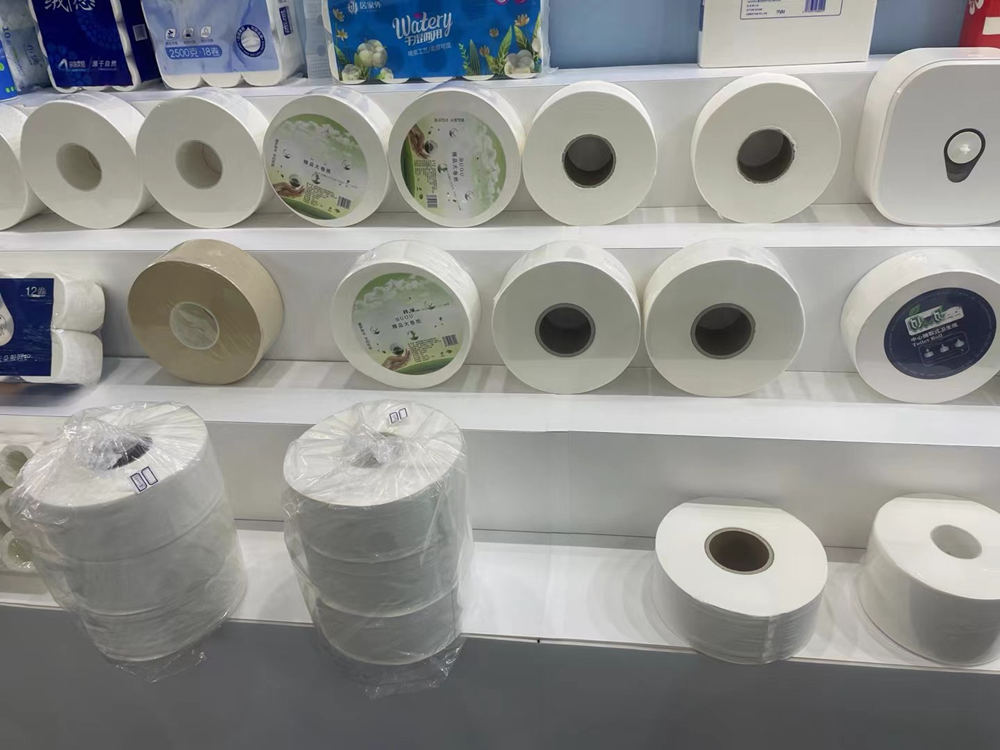
The Manufacturing Process: Dull Blades and High-Speed Winding
Precision in perforation is a mechanical byproduct of blade maintenance and tension synchronization, directly impacting facility waste and user satisfaction.
Impact of Blade Sharpness on Perforation Integrity
The mechanical precision of a perforation line depends entirely on the condition of the blades used during the conversion process. When blades lose their edge, they fail to fully penetrate the paper web, resulting in “hanging chads” or sheets that tear outside the intended line. We address this at our Mancheng facilities by utilizing hardened steel alloy blades, specifically engineered to maintain a clean cutting edge throughout high-volume 2026 production cycles. This ensures that users can detach a single sheet with one hand, a critical metric for guest satisfaction in hospitality environments.
Tension Management During High-Speed Log Winding
Converting large parent rolls into finished logs requires machinery that balances high velocity with delicate tension control. Our winding machines operate at speeds necessary to meet a monthly 2,860-ton capacity, which necessitates automated tension adjustments. Inconsistent winding tension causes perforation lines to stretch or shift, leading to uneven sheet lengths. Real-time monitoring systems ensure that 2-ply and 3-ply products remain uniform, preventing the overlapping layers that frequently cause dispenser jams in commercial restrooms.
| Manufacturing Metric | Standard Industry Issue | Top Source Hygiene Spec |
|---|---|---|
| Blade Material | Standard Carbon Steel | Hardened Steel Alloy (Tungsten-Coated) |
| Tension Control | Manual/Mechanical Clutch | Automated Real-Time PLC Monitoring |
| Perforation Quality | Diagonal Tears/Shredding | Clean-Cut “Snap” (ISO 12625-12 compliant) |
| Production Capacity | Variable/Batch-Based | Consistent 2,860 Tons Monthly |
Preventative Maintenance and Quality Consistency
Regular equipment calibration and strict blade replacement schedules prevent manufacturing defects from reaching the packaging stage. Our engineers follow a rigorous sharpening protocol to ensure every production run meets ISO 9001 standards. Maintaining equipment integrity reduces material waste and guarantees that bulk orders for retail or commercial use exhibit identical performance characteristics across every roll. This consistency is vital for distributors who manage high-volume contracts where even a 1% defect rate can result in significant financial loss.
- Automated inspection systems identify dulling blades before they impact the tear quality of the tissue.
- Synchronized embossing-perforation coordination enhances user experience while maintaining structural durability.
- Pre-shipment visual verification includes checking perforation depth to ensure “snap” quality meets global export standards.
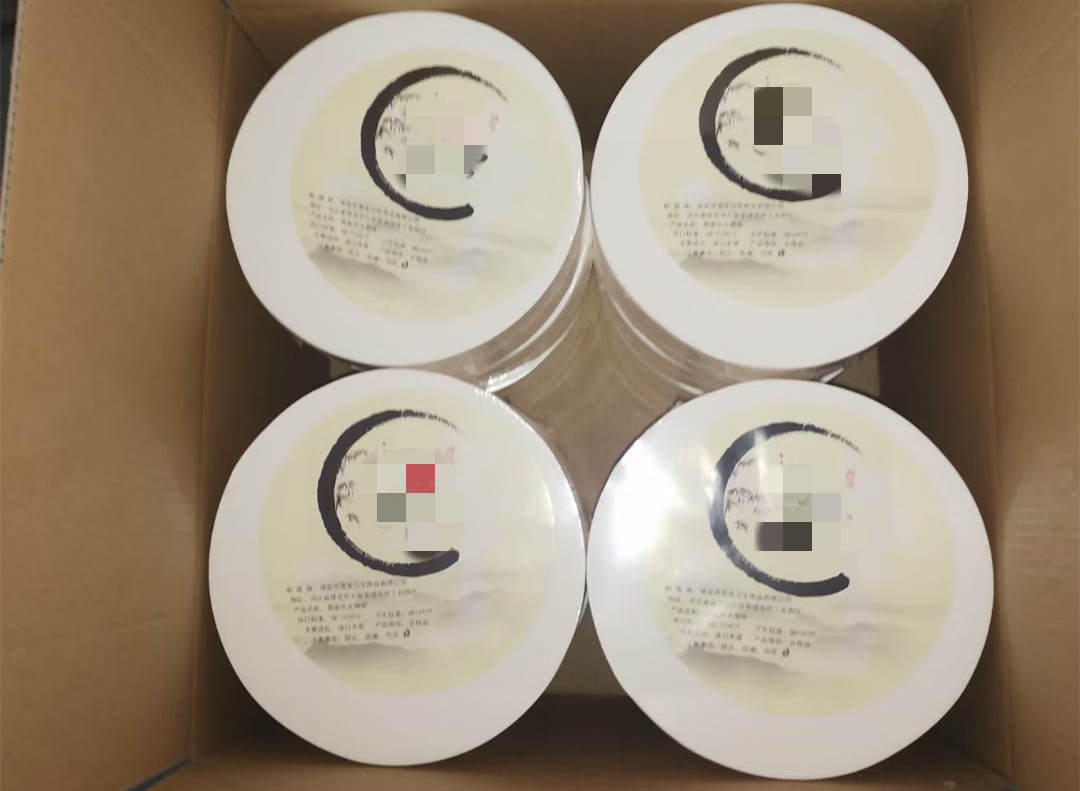
Testing the “Snap” Quality of Wholesale Tissue Samples
The “snap” of a tissue sheet serves as the primary empirical indicator of fiber length and perforation precision, directly dictating both user satisfaction and dispenser efficiency in high-traffic commercial environments.
Tensile Strength and Longitudinal Resistance
Top Source Hygiene utilizes digital tensile testers to define the “snap” threshold for all 100% Virgin Wood Pulp products. We measure the exact force required to reach the break point—the moment paper fibers finally fail—to ensure our monthly 2,860-ton output maintains structural integrity. This testing prevents the tissue from shredding or tearing prematurely when a user pulls it quickly from a high-tension commercial dispenser.
| Testing Metric | Industry Standard | TSH Factory Specification |
|---|---|---|
| Tensile Strength (Dry) | ISO 12625-12 Compliance | Exceeds standard by 15% (Long-fiber pulp) |
| Cut-to-Tie Ratio | 0.8mm to 12mm variations | Precision 0.5–2mm gaps for clean break |
| Ply Bonding Strength | Manual inspection | High-pressure mechanical lamination |
- We verify resistance across both 2-ply retail rolls and 5-ply luxury variants.
- Standardized pull tests simulate real-world restroom usage to predict failure rates.
- Testing confirms fiber performance across 13–22g/m² density ranges.
Perforation Integrity and Clean Break Analysis
Clean sheet detachment relies entirely on the technical ratio of “ties” to “cuts” along the perforation line. Our 2026 maintenance protocols at the Hebei manufacturing hub prioritize daily CNC blade calibration to avoid the ragged edges caused by dull equipment. By maintaining a crisp snap, we reduce the diagonal tearing that typically leads to excessive paper waste in hospitality and commercial sectors.
- Optical sensing technology detects perforation misalignment in real-time.
- Uniform snap quality is maintained across TSH-JRT08 jumbo rolls and TSH-2559 household rolls.
- Shearing action mechanics create precise tear lines without removing base material.
Ply Bonding and Multi-Layer Cohesion
Multi-ply tissues must behave as a cohesive unit to prevent “ghosting,” where one layer snaps while the others stretch or delaminate. We apply pressure-based bonding tests to our high-density models, such as the TSH-4010 luxury series, ensuring that 5-ply sheets do not separate during use. Advanced embossing patterns further reinforce this bond while providing the softness required for the North American and European markets.
- Mechanical lamination ensures 3-ply and 4-ply products resist separation in humid conditions.
- Point-to-point embossing increases absorbency by 30% while acting as a structural anchor.
- Cohesion analysis prevents the “shredded edge” effect common in low-tier recycled products.
Standardized Sample Verification for Global Shipments
To protect procurement margins, we offer free samples within a 10-day window, allowing wholesalers in 56+ countries to perform manual snap tests before committing to 40HQ container orders. Our on-site laboratory simulates various environmental humidity levels to predict how the tissue will perform once it reaches regional hubs in the Middle East, Southeast Asia, or Africa.
- Verification of custom GSM adjustments for private label brand owners.
- Benchmarking of 100% Virgin Wood Pulp against bamboo and recycled alternatives.
- Visual verification of parent reels ensures consistency across high-volume shipments.
The Interaction Between Dispenser Teeth and Perforation Lines
High-efficiency restroom operations depend on the mechanical synergy between dispenser tooth geometry and tissue perforation ratios to eliminate tailing and structural waste.
Precision Geometry in Dispenser Teeth
Modern dispenser engineering in 2026 moves away from blunt, straight teeth toward precision-angled side-wall geometries. These non-zero angular walls ensure a clean release by reducing the surface area where tissue fibers can snag during a rapid pull. Facilities select tooth sizes between 0.8 mm and 12 mm based on the expected traffic and the specific tensile strength of the paper stock. Precision geometry prevents material entanglement, which often plagues high-speed commercial dispensers in high-traffic environments like airports or stadiums.
Optimal Cut-to-Tie Ratios for Controlled Separation
The “cut-to-tie” ratio defines the mechanical bond between individual sheets. To achieve a balance between roll integrity and ease of use, current industry standards prioritize gaps of 0.5–2 mm. This technical precision prevents “tailing”—a failure where the paper shreds into long, unusable strips instead of detaching cleanly at the perforation line. Matching TPI (Teeth Per Inch) classifications to the mechanical requirements of the specific dispenser hardware maintains consistent sheet counts and reduces floor litter.
| Technical Parameter | Standard Specification | Operational Impact |
|---|---|---|
| Cut-to-Tie Gap | 0.5 mm – 2.0 mm | Prevents sheet “tailing” and diagonal shredding. |
| Tooth Size Range | 0.8 mm – 12 mm | Accommodates various substrate weights (13-22 GSM). |
| Side-Wall Geometry | Non-zero angular walls | Minimizes fiber snagging and dispenser jams. |
Substrate Compatibility and Snag Prevention
Heavier substrates, particularly the 4-ply and 5-ply 100% virgin wood pulp products from Top Source Hygiene, require specialized perforation spacing to function in standard dispensers. Expanding the tooth geometry allows for these thicker materials to pass through without causing jams. Optimized perforation spacing ensures consistent performance across different global hygiene compliance standards. Substrate-specific blades reduce the force required for separation, which directly protects the dispenser mechanism and reduces long-term maintenance costs.
- Advanced tooth design utilizes non-zero angular side walls to eliminate fiber entanglement.
- Precision ratios prevent “tailing” where paper fails to tear completely along the line.
- Optimized spacing handles 4-ply and 5-ply luxury tissues without causing dispenser jams.
Why Quality Assurance in the Paper Mill Matters to Your Bottom Line
High-precision quality assurance in the paper mill transforms perforation from a minor technical detail into a critical driver of operational uptime and cost control for global distributors.
Automated Defect Detection and Real-Time Monitoring
Modern paper mills integrate automated systems to replace manual inspections, which ensures immediate identification of production errors before they reach the shipping container. These systems utilize advanced optical sensing technology to monitor the entire web of paper as it moves through high-speed conversion lines.
- Real-time monitoring systems track perforation quality across high-speed winding lines to catch issues instantly.
- Automated sensors detect irregularities in hole geometry and porosity that human eyes might miss during rapid production.
- Transitioning to automated detection by 2026 allows mills to maintain a 2,860-ton monthly capacity without sacrificing individual product integrity.
Precision Testing for Perforation Strength and Consistency
Rigorous testing protocols ensure that every roll meets specific standards for tensile strength and tear accuracy. By quantifying the force required to separate sheets, manufacturers guarantee that the paper remains intact during transport but detaches effortlessly when used in a dispenser.
- Technical teams measure the ‘snap’ quality of tissue samples to prevent premature tearing or difficult detachment.
- Accurate testing of perforation geometry ensures that sheets separate cleanly along the intended lines every time.
- Consistent paper strength prevents equipment jams in industrial dispensers, reducing maintenance calls for end-users.
Minimizing Operational Waste and Product Rejection Rates
Quality control processes directly impact the cost-effectiveness of paper manufacturing by reducing material loss and preventing the shipment of substandard goods. Efficient monitoring helps maintain a lean production cycle that benefits the factory and the bulk buyer.
- Data analytics help identify when perforation blades require sharpening, preventing the production of large batches of unsellable stock.
- Strict adherence to ISO 9001 standards minimizes the volume of rejected rolls, protecting the mill’s profit margins.
- Efficient quality assurance reduces energy and raw material waste, contributing to lower factory-direct pricing for global clients.
Market Competitiveness and Global Compliance
Maintaining high quality standards enables manufacturers to enter strictly regulated markets and retain high-value clients who prioritize reliability. Consistency in production builds a brand reputation that supports long-term growth for wholesalers and distributors.
- Adhering to FDA and FSC standards allows paper products to compete in North American and European retail sectors.
- Reliable quality control leads to higher guest satisfaction scores in hospitality settings, encouraging long-term contract renewals.
- Meeting specific regional hygiene compliance standards in 2026 builds trust with international distributors across 56+ countries.
Conclusion
Reliable perforation directly impacts facility overhead by minimizing unnecessary paper waste and maintenance labor. Selecting rolls manufactured with 100% virgin wood pulp and precise blade alignment ensures every sheet tears cleanly without shredding. These technical details translate into a more efficient restroom environment and significant long-term savings for high-traffic operations.
Audit your current inventory to identify whether uneven tears are contributing to hidden procurement costs. Reach out to our specialists to discuss custom specifications or to secure high-capacity samples for your next quality assessment.
Frequently Asked Questions
Why does my commercial toilet paper tear unevenly?
Uneven tearing is typically caused by misalignment in the perforation blades or a lack of synchronization between the embossing and perforation units during the manufacturing process. When these systems are not perfectly calibrated, it creates diagonal or incomplete separations. High-quality production facilities use advanced optical sensing technology to detect and correct these misalignments in real-time, ensuring a clean break every time.
How is commercial toilet paper perforated?
Commercial toilet paper is perforated using high-speed rotary blades that strike a stationary anvil or secondary blade. Modern manufacturing utilizes automated dimensional verification systems to achieve consistent spacing and penetration depth. This process is often synchronized with embossing to maintain the product’s structural integrity while ensuring that the perforation line is the weakest point for easy sheet separation.
Does bad perforation cause toilet paper waste?
Yes, poor perforation is a leading cause of product waste in commercial facilities. If the sheets do not separate cleanly, users often pull more paper than intended, leading to “streaming” or tattered remnants that are discarded without use. Consistent perforation ensures that users only take the required amount, which significantly lowers the total cost of ownership for facility managers.
How to test the quality of wholesale jumbo rolls?
Quality can be quantified using industry standards such as ISO 12625-12, which measures perforation strength to ensure sheets separate without premature tearing. You should also test the roll’s tensile strength, grammage (GSM) for thickness, and winding tension. A well-manufactured jumbo roll should have uniform sheet spacing and a sturdy core that prevents collapsing during high-volume dispensing.
Why does jumbo toilet paper unravel on the floor?
Unraveling usually occurs due to “over-spin,” where the roll continues to rotate after the user has stopped pulling. This is often caused by a roll that is wound too loosely or a core that is incompatible with the dispenser’s braking mechanism. High-quality manufacturers use automated tension controls during the rewinding process to ensure the roll maintains its integrity until the very end.
What makes a good commercial toilet paper manufacturer?
A superior manufacturer is defined by their investment in precision technology and quality control. This includes the use of optical sensors for misalignment detection, adherence to international ISO standards, and the ability to synchronize embossing and perforation for optimal durability. They must provide consistent product dimensions and maintain high tensile strength across all production runs to ensure reliability in high-traffic environments.