 Skip to content

Crushed cores represent a critical failure in the wholesale supply chain that turns functional jumbo toilet paper into dead stock. If the inner tube loses its structural shape during transit, it will not fit on commercial dispenser spindles, leading to expensive returns and broken service contracts. This damage typically happens when manufacturers overlook core density or pallet stability, which directly impacts the bottom line for distributors and facility managers.
This guide details the technical specifications and loading strategies needed to protect roll integrity across international shipping routes. We cover the necessary cardboard GSM thickness, proper pallet stacking for ocean freight, and the use of reinforced corner protectors to withstand high-pressure environments. These standard operating procedures provide a blueprint for delivering high-volume paper products without the risk of core deformation.
The Financial Loss of Unusable Crushed Jumbo Rolls
Structural defects in jumbo roll cores translate directly into downstream conversion waste and equipment downtime, eroding margins in high-volume tissue manufacturing.
Modern paper manufacturing operates at extreme speeds, often exceeding 1 mile of paper per minute. At these velocities, even a minor structural compromise in the core creates tension imbalances that ripple through the entire roll. High-speed production lines generate immense centrifugal force; if the core fails to maintain its perfect circularity, the resulting vibration causes wrinkles and edge distortions. These defects make the tissue unsalable for commercial use, as the paper cannot meet the strict tactile and visual standards required for B2B distribution.
Yield Reductions in High-Speed Conversion
Converting massive 5-ton parent rolls into consumer-ready units requires precise unwinding and rewinding. Improper tension during this transition leads to surface defects and tearing. When a core is crushed, the unwind stand cannot maintain a consistent “grab” on the roll, leading to “web breaks” that stop the entire line. For a facility like Top Source Hygiene, which manages high-capacity output, these breaks represent a direct hit to the 2,860 tons of monthly salable capacity.
Operational Costs of Structural Deformity
Deformed jumbo rolls create a cascading effect of mechanical inefficiency. A crushed roll typically fails to fit onto standard dispenser spindles, rendering the individual unit a 100% loss before it even reaches the end-user. Furthermore, precision cutting errors occur when the roll is not perfectly concentric. If the roll wobbles during the log-saw process, the resulting sheets are uneven, leading to entire batches being rejected. Clearing jams caused by these misshapen rolls requires frequent machinery downtime, which lowers the overall factory OEE (Overall Equipment Effectiveness).
Impact on Global Supply Chain Margins in 2026
In the 2026 market, where the Away-From-Home tissue sector is valued at over $47 billion, financial quantification of scrap is a primary driver for quality control. Manufacturers now utilize advanced sensor systems to monitor real-time tension and prevent core collapse during the winding phase. Strategic investments in heavy-duty cardboard cores and reinforced packaging are no longer optional; they are essential to mitigate financial risks during long-haul ocean freight. By ensuring 100% core integrity, suppliers protect the thin margins characteristic of high-volume wholesale contracts.
Would you like me to analyze the specific GSM requirements for high-strength cores to prevent these financial losses?
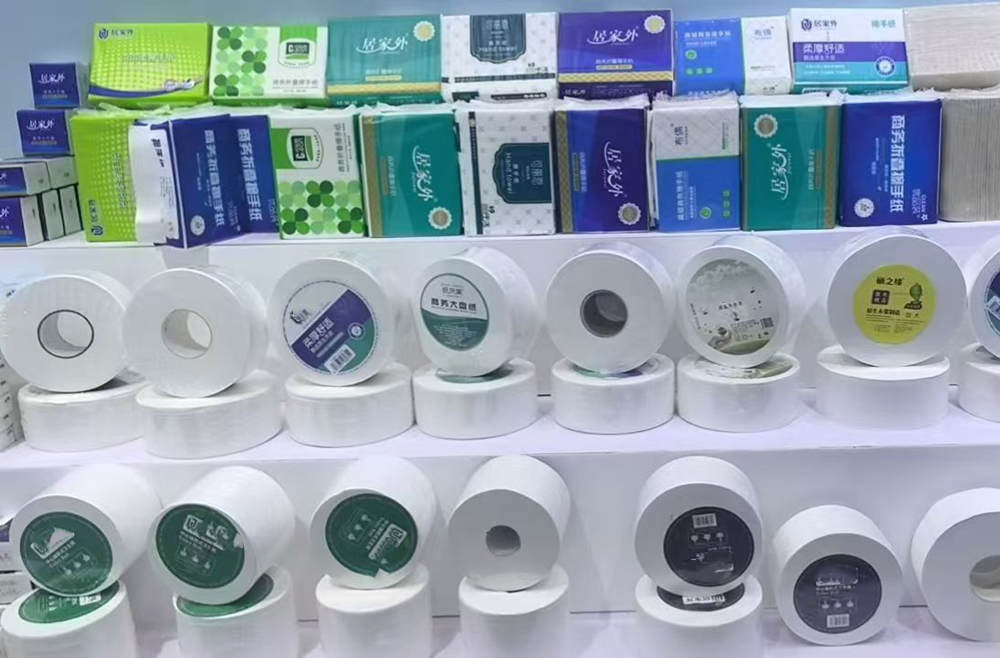
Why Dispenser Spindles Reject Deformed Cardboard Cores
Structural deformation in the cardboard core directly correlates to dispenser downtime, as even a 3mm axial shift can trigger rotational resistance in high-traffic commercial spindles.
Rotational Displacement and Axial Deformation
Axial deformation represents a critical failure point in commercial tissue logistics. When external pressure during ocean freight or improper pallet stacking crushes a core’s circular profile into an oval shape, the dispenser spindle cannot seat correctly. This geometric compromise creates localized friction points. Instead of the roll spinning freely, the flattened core segments “grab” the spindle, leading to paper tearing and user frustration. Modern high-speed manufacturing requires precision tension control to ensure the core maintains its 3-inch (76mm) diameter throughout the entire lifecycle of the roll.
| Core Defect Type | Mechanical Impact | Dispenser Consequence |
|---|---|---|
| Axial Flattening | Geometric shift from 76mm circle to oval | Spindle jam / Rotational resistance |
| Loose Winding | Internal ply-slippage at the core interface | Telescoping / Unraveling |
| Core Offset | Lateral misalignment during rewinding | Housing collision / Uneven pull |
Mechanical Obstruction from Crushed and Loose Cores
Loose winding allows the inner layers of 100% virgin wood pulp to slide inward, creating physical blockages that narrow the core’s effective diameter. In high-traffic environments like airports or malls, facility managers rely on standard commercial spindles that offer very little clearance. If the cardboard tube loses its structural “spring,” it collapses under the 1000-sheet weight of a jumbo roll. We mitigate this risk by standardizing nip pressure during the conversion process, ensuring the cardboard-to-paper bond remains rigid enough to withstand heavy-duty use without mid-rotation jamming.
Impact on High-Speed Dispensing Operations
Touchless and automated dispensers in 2026 demand perfect core alignment to function. Inconsistent core caliper or thickness often causes a “wobble” effect during high-speed rotation. This vibration can trigger sensor errors or mechanical stalls in battery-operated units. To prevent these maintenance headaches, Top Source Hygiene utilizes reinforced inner tubes with high Wound-In Tension (WIT). This technical approach ensures 100% compatibility with global spindle standards, protecting the distributor’s reputation and reducing the need for manual intervention at the end-user site.
- Precision-engineered cores prevent the common “oval” defect seen in low-tier wholesale products.
- Standardized 3-inch (76mm) diameters ensure universal fit for Tork, Kimberly-Clark, and generic dispensers.
- High-density cardboard resists the vertical crushing forces typical of 40HQ container stacking.
Premium OEM Jumbo Rolls at Wholesale Prices
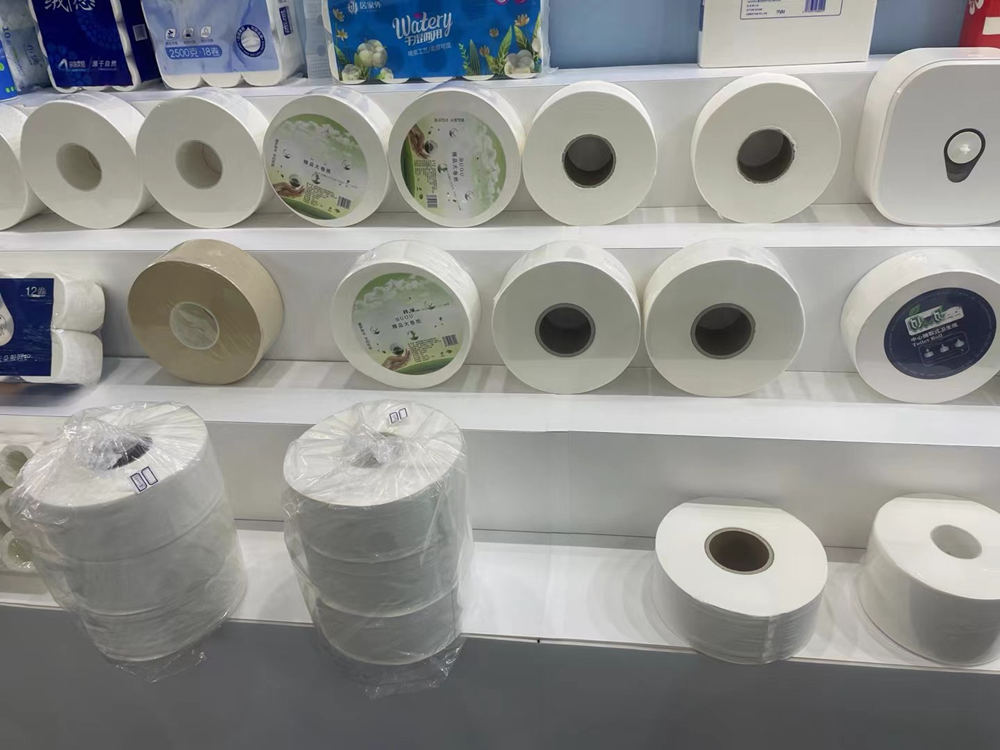
Analyzing the GSM and Thickness of the Inner Tube
Technical failure in jumbo roll dispensing usually traces back to core deformation, making high-density GSM and ultrasonic thickness verification the primary benchmarks for industrial-grade structural integrity.
Standard GSM Specifications for Industrial Paper Cores
We calibrate Grams per Square Meter (GSM) settings based on the specific mechanical demands of the product, ranging from lightweight household rolls to high-capacity jumbo tissue. Top Source Hygiene utilizes high-density paperboard that prevents core collapse during 2026 global transit cycles, where temperature and humidity fluctuations often weaken standard cardboard. Higher GSM values correlate directly with the tube’s resistance to side-pressure, ensuring the core maintains its shape under the weight of a 40HQ container’s bottom-tier load.
| Core Specification | Market Average | TSH Reinforced Grade |
|---|---|---|
| GSM Density | 350 – 450 GSM | 500 – 650 GSM |
| Wall Thickness Tolerance | ±0.5 mm | ±0.1 mm (Ultrasonic) |
| Vertical Crush Resistance | Moderate (Stacking limits apply) | High (Bottom-tier optimized) |
Precision Thickness Measurement and Tolerances
Our Hebei manufacturing facility applies ultrasonic thickness gauging to achieve precision tolerances of ±0.1 mm. This non-destructive testing monitors both inner and outer wall dimensions in real-time, eliminating the variations common in high-speed production lines. Consistent wall thickness prevents the “oval” deformation that causes dispenser rejection in commercial settings. By maintaining strict gauging, we ensure every roll fits standard global spindles without friction or jamming, protecting the user experience in high-traffic facilities.
Material Density and Vertical Load Resistance
We analyze the fiber density of the 100% virgin wood pulp board to optimize the strength-to-weight ratio of each inner tube. Testing protocols simulate the pressure of 2,860-ton monthly production outputs to verify core durability before shipment. Reinforced core thickness supports eco-friendly initiatives by reducing the need for excessive plastic corner protectors or heavy-duty shrink wrapping, as the tube itself provides the necessary structural support for vertical stacking in ocean freight.
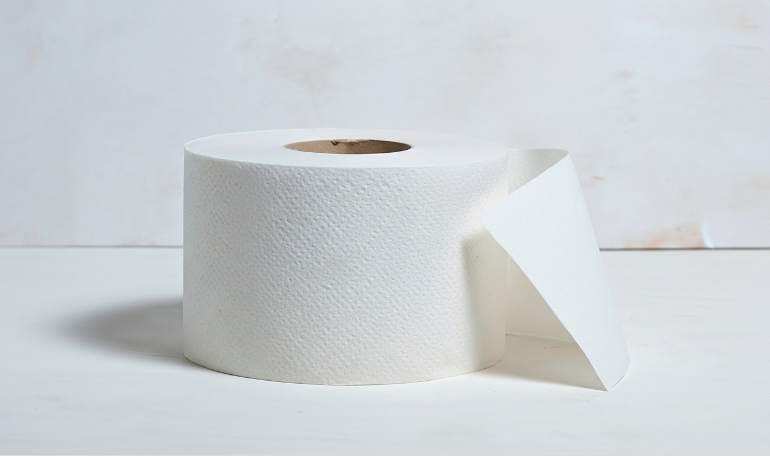
Proper Pallet Stacking Configurations for Ocean Freight
Logistics teams must prioritize structural physics over simple volume to prevent the 32% loss in compression strength caused by improper alignment during long-haul maritime transit.
Interlocking vs. Column Stacking Patterns
Shipping experts in 2026 prioritize stacking arrangements that balance load stability with the structural strength of paper products. Column stacking maximizes the vertical compression strength of jumbo roll cores during long-haul transit by aligning the weight directly over the cardboard tubes. This method ensures the strongest part of the packaging bears the load. Conversely, interlocking patterns provide better lateral stability to prevent pallet shifting in heavy sea conditions. We use simulation software to determine the best pattern based on the specific weight and dimensions of the cargo, ensuring each shipment survives the rigors of ocean freight.
| Stacking Method | Compression Strength | Stability Profile |
|---|---|---|
| Column Stacking | 100% (Maximum vertical support) | Low (Requires heavy shrink wrap) |
| Interlocking | Approx. 50% reduction in support | High (Self-locking layers) |
| Overhang Stacking | 32% Strength Loss | Critical Failure Risk |
Height Limits and Weight Distribution Standards
Strict height management protects the integrity of bottom layers and ensures safe container loading. Adhering to a 60-inch height limit maintains stability and complies with standard maritime container dimensions. We place heavier jumbo rolls at the base of the pallet to lower the center of gravity and reduce tipping risks. Uniform height across all pallets allows for safer handling and efficient space utilization within the vessel. This disciplined approach prevents the bottom-tier cores from collapsing under the weight of the upper layers.
Eliminating Pallet Overhang to Maintain Strength
Precise alignment of boxes or rolls with the pallet edge prevents structural failure during transit. Aligning edges perfectly avoids overhang, which reduces overall compression strength by up to 32 percent. When products hang over the edge, the pallet frame no longer supports the load; instead, the packaging material itself bears the weight. Flush stacking ensures the wood pallet frame remains the primary load-bearing component. Consistent alignment also facilitates the effective application of heavy shrink-wrapping and corner protectors, creating a unified, rigid block of cargo.
Ti-Hi Calculations for Maritime Efficiency
Calculating the units per layer (Ti) and number of layers per pallet (Hi) optimizes container space for Top Source Hygiene shipments. Ti-Hi metrics standardize pallet builds across different manufacturing batches to ensure predictable loading. Computational tools balance the need for cost-effective shipping with the necessity of cargo security. These accurate calculations prevent financial losses associated with deformed cardboard cores and crushed tissue products. By maximizing the payload in every 40HQ container—typically 7 to 9 tons—we reduce the landed cost for global distributors without compromising product shape.
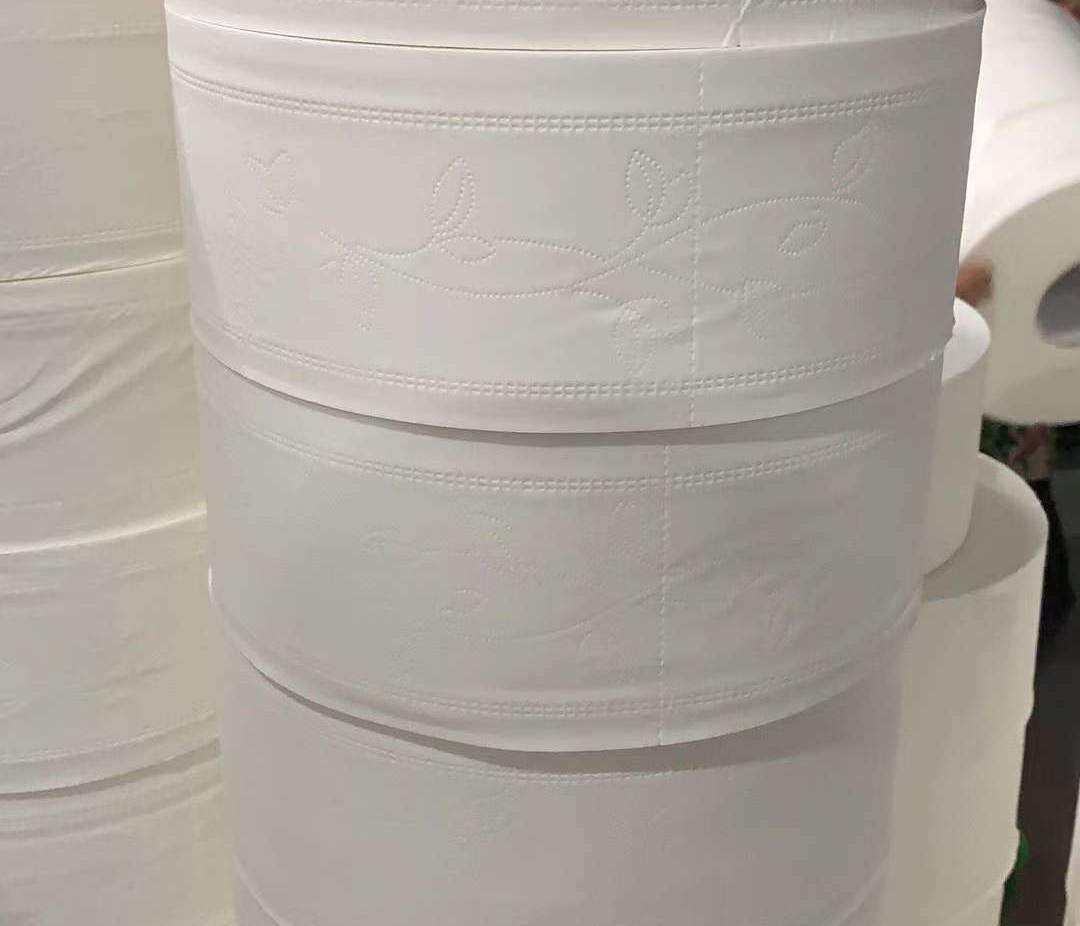
The Role of Corner Protectors and Heavy Shrink Wrapping
Integrated packaging systems combining high-density edge boards and high-tension industrial wrap eliminate the mechanical stress that leads to core deformation and moisture contamination during long-haul maritime transport.
Reinforcing Vertical Stability with Corner Protectors
Corner protectors act as a structural skeletal system for palletized jumbo rolls, distributing downward pressure and preventing localized crushing during 2026 logistical operations. We use high-density edge boards to reinforce the 90° angles of stacked paper products, which prevents the weight of top layers from deforming the bottom rolls. This reinforcement is essential when maximizing 40’HQ container space, as it allows for higher stacking without compromising the integrity of the bottom tier.
- These protectors create a physical buffer between the cardboard cores and external forces, ensuring that the vertical alignment remains intact throughout ocean transit.
- By providing a flat, rigid surface for the shrink wrap to grip, protectors eliminate the “rounding” effect that often leads to pallet shifts and unstable loads.
- Strategic placement of edge boards increases the overall compression strength of the pallet, protecting against the vibrations typical of intermodal transport.
Applying Heavy-Duty Shrink Wrap for Multi-Layered Protection
Heavy shrink wrapping serves as a moisture barrier and a tension-based securing method that keeps individual rolls from sliding or vibrating during transit. Our team applies high-gauge industrial wrap that maintains high puncture resistance against sharp edges or handling equipment. This level of protection ensures that the 100% virgin wood pulp remains in a controlled environment from the factory to the final destination.
- The wrap creates a tamper-evident seal that protects hygiene products from humidity, dust, and industrial contaminants in various international climates.
- Uniform tension across the load prevents “necking” of the wrap—a common failure point where the film thins and snaps at the corners without proper edge protection.
- We utilize mechanical compression during the wrapping process to minimize air pockets, which further stabilizes the stack for overseas shipping.
Preventing Material Stress and Punctures
The synergy between protectors and heavy wrapping prevents holes and material stress, ensuring the product arrives in pristine condition for immediate retail or commercial use. When wrap is applied directly to soft paper edges, it often digs into the product. Corner protectors allow the film to curve smoothly, reducing the likelihood of tears under high-tension applications.
- Our analysis of stress points on 40’HQ container loads confirmed that this combination significantly reduces “wrap cutting” incidents at the pallet corners.
- This integrated packaging approach ensures that even the most fragile facial tissues and jumbo rolls stay secure without losing their shape or hygiene integrity.
- Standardized protection protocols mean every shipment, regardless of the destination, meets the same high-tier export durability requirements.
How Top Source Hygiene Guarantees 100% Core Integrity
Maintaining 100% core integrity requires a synergy between high-density material selection and automated tension control to withstand the vertical compression forces inherent in transoceanic shipping.
We utilize premium, high-density cardboard for all inner tubes to prevent structural collapse during transit. By focusing on the structural foundation of the jumbo roll, we ensure that the product arrives at the destination ready for immediate use in commercial dispensers.
- Heavier cardboard weights provide the necessary vertical strength for stacking jumbo rolls in 40’HQ containers.
- Specific GSM targets ensure the core remains perfectly circular for high-traffic commercial dispensers.
- Rigid inner tubes resist the humidity shifts common in 2026 global shipping routes.
Automated Precision Winding
Our two advanced factories use computer-controlled winding equipment to maintain uniform tension across every layer. Automation removes the human error typically associated with loose or uneven winding, which often leads to deformed rolls and dispensing failures.
- Automated systems eliminate loose winding that leads to oval-shaped or deformed rolls.
- Uniform pressure across the 2,860-ton monthly output ensures every roll meets brand specifications.
- Precision bonding prevents the core from separating from the wood pulp layers.
Strict ISO 9001 Quality Testing
We implement rigorous compression tests to verify the load-bearing capacity of every production batch. Our technical team monitors these benchmarks to ensure that our 100% virgin wood pulp rolls maintain their shape under the weight of a full export payload.
- Quality control teams test sample cores for crush resistance before they leave the facility.
- Our 30 years of experience allows us to identify and reject rolls with structural vulnerabilities.
- We document the integrity of products for all 56+ export countries to maintain global standards.
Reinforced Export Palletization
We apply specialized packaging techniques to protect jumbo rolls from vertical and lateral pressure during long-haul logistics. Our Hebei loading teams focus on maximizing 40’HQ container space while ensuring the bottom layers of the stack remain protected from crushing.
- Heavy-duty shrink wrapping and corner protectors shield the rolls from impacts during loading.
- Optimized pallet stacking configurations prevent the bottom layers from crushing under weight.
- Moisture-resistant barriers keep the cardboard cores rigid during the 15-25 day shipping window to South America and Africa.
Conclusion
Protecting the structural integrity of cardboard cores through proper GSM selection and pallet configuration prevents inventory loss and dispenser malfunctions. These technical standards ensure every jumbo roll remains functional from the factory floor to the end-user facility. Maintaining these logistics protocols minimizes waste and stabilizes the distribution process for high-volume toilet paper shipments.
Review your current port-to-warehouse damage rates to see where reinforced tube specifications could improve your bottom line. Reach out to our logistics team to request technical samples or a 40HQ loading plan tailored to your regional requirements.
Frequently Asked Questions
Why is my jumbo toilet paper roll crushed?
Jumbo rolls are typically crushed due to tension instability during the high-speed conversion process or improper core insertion during manufacturing. In the supply chain, crushing occurs when pallets are over-stacked or when transport straps are tightened beyond the structural load capacity of the cardboard cores.
Can you fix a crushed toilet paper core?
Yes, a crushed core can be restored by inserting a core-restoration tool or a heavy-duty PVC pipe of the same diameter to force the cardboard back into a circular shape. For minor deformities, you can manually reshape the core using a tapered wooden plug or pliers to ensure it fits back onto the dispenser spindle.
How should pallets of commercial toilet paper be stacked?
Pallets should be stacked using a column-stacking method, where boxes are aligned directly on top of one another to maximize vertical compression strength. To prevent damage, use corner protectors, apply industrial stretch wrap for stabilization, and avoid double-stacking pallets unless the total weight is within the “crush test” rating of the bottom layer of cases.
Why does my commercial toilet paper not spin?
A roll fails to spin when a crushed or oval-shaped core creates excessive friction against the dispenser spindle. Other common causes include the roll being wound too tightly (causing the paper to swell) or the roll diameter being slightly too large for the dispenser housing, which binds the outer layers against the cover.
How to import wholesale toilet paper safely?
Safe importation requires specifying high-crush-strength cores and using 5-ply double-walled corrugated outer packaging. You must ensure the shipping container is equipped with desiccant packs to prevent humidity from softening the paper fibers and use heat-treated ISPM 15 pallets secured with reinforced edge guards to prevent transit damage.
What is the core size of a jumbo roll?
The standard industry core size for a jumbo toilet paper roll is 3.3 inches (84mm) or 2.25 inches (57mm). These sizes are engineered to fit universal industrial dispensers found in commercial and high-traffic facilities.
