Skip to content
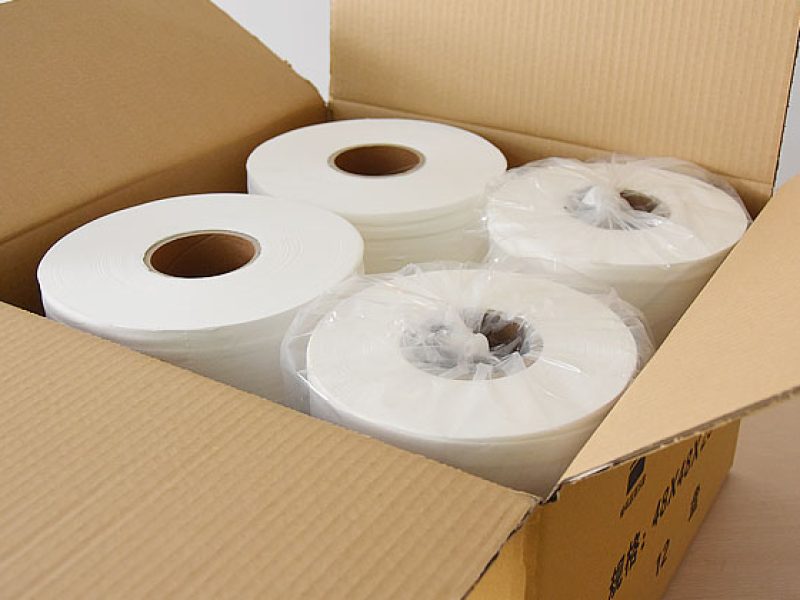
Understanding how it’s made determines whether your facility maintains consistent hygiene standards or faces frequent stockouts and spiraling procurement costs. For facility managers and procurement officers, the difference between a high-yield jumbo roll and an inferior alternative lies in the manufacturing precision that prevents dispenser jams and minimizes labor-intensive refills. Selecting paper based on poor manufacturing specs leads to increased maintenance overhead and unnecessary waste, directly impacting the operational bottom line.
This technical breakdown tracks the industrial transition from raw fiber to finished jumbo rolls. We examine the pulping of virgin and recycled fibers, the high-speed moisture extraction in the Yankee Dryer, and the mechanical creping process that dictates final tissue softness and stretch. By detailing the final conversion stages of rewinding and slitting, this guide serves as a technical reference for assessing the quality and durability of large-scale commercial paper products.
The Raw Materials: Virgin Wood Pulp vs Recycled Bales
Selecting the correct fiber base determines the mechanical limits of the tissue, balancing the high tensile strength of virgin long-fibers against the cost-efficiencies of recycled pulp.
Virgin Wood Pulp: Superior Fiber Integrity and Hygiene Standards
Virgin wood pulp remains the gold standard for high-performance tissue manufacturing, particularly for the medical and luxury hospitality sectors. At Top Source Hygiene, we prioritize 100% virgin wood pulp sourced from North China’s industrial hubs to ensure maximum fiber length. These long fibers create a robust internal matrix, allowing for ultra-soft 4-ply and 5-ply configurations that do not pill or shed lint during use.
| Material Attribute | 100% Virgin Wood Pulp | Recycled Fiber Bales |
|---|---|---|
| Fiber Length & Strength | Long fibers; High tensile strength | Shortened fibers; Lower durability |
| Hygiene & Safety | 100% OBA-Free; Naturally sterile | Requires de-inking and chemical wash |
| Tactile Texture | Cloud-like softness; Premium feel | Textured; Functional utility feel |
- Maintains strict OBA-free compliance for sensitive skin and clinical environments.
- Provides the necessary structural integrity to support CNC-precision embossing patterns.
- Enables rapid disintegration in septic systems while maintaining high wet-strength during use.
Recycled Bales: Resource Efficiency and Environmental Impact
Recycled fiber bales offer a pragmatic solution for high-traffic commercial environments where cost-per-meter is the primary KPI. Processing recycled pulp consumes roughly 70% less energy and 35% less water than virgin alternatives. While the fibers are shorter due to previous mechanical processing, advanced froth flotation de-inking and enzymatic treatments now produce secondary pulp with brightness levels exceeding 85%.
- Reduces overall carbon footprint for corporate sustainability mandates.
- Optimizes freight value in 40HQ containers for price-sensitive African and Southeast Asian markets.
- Utilizes centrifugal cleaning to remove “stickies” and fine contaminants, ensuring a safe commercial-grade product.
The Shift Toward Blended Fiber Coexistence Models
Current manufacturing trends in 2026 emphasize a blended model. We combine virgin pulp for the outer layers to provide a premium tactile experience while utilizing recycled or bamboo pulp for the inner plies to enhance bulk and absorbency. This hybrid approach allows distributors to offer eco-friendly products without sacrificing the “hand-feel” expected by end-users.
Advanced refining techniques help narrow the quality gap between material types. By adjusting the refining intensity, we can manipulate the bonding potential of recycled fibers, making them nearly as soft as mid-tier virgin alternatives. This versatility ensures that brands can meet evolving market demands for sustainable yet high-performing tissue solutions.
The Pulping and De-Inking Process Explained
High-purity fiber suspension begins with the precision breakdown of virgin wood pulp and the aggressive removal of microscopic contaminants to ensure OBA-free brightness and structural integrity.
Mechanical and Chemical Fiber Separation
Top Source Hygiene operates two specialized factories that transform raw virgin wood pulp into a high-consistency slurry. We feed 100% long-fiber wood pulp into high-speed industrial pulpers, mixing the raw material with water and specific chemical agents to dissolve lignin. This digestion process, typically lasting about three hours, effectively separates individual cellulose fibers without compromising their inherent tensile strength.
Our North China facilities manage a monthly output of 2,860 tons, requiring intense mechanical agitation to maintain fiber suspension. Because we prioritize 100% virgin wood pulp, we bypass the heavy chemical bleaching required for lower-grade materials. This preserves the natural 85-92% brightness of the fiber and guarantees a product entirely free of fluorescent whiteners (OBA-free), which is a critical safety standard for global B2B distribution.
Froth Flotation and Ink Removal
Industry standards for recycled or blended lines rely heavily on froth flotation to achieve high-tier hygiene specs. We inject air into the pulp within flotation cells; hydrophobic ink particles attach to these bubbles and migrate to the surface as foam. Advanced centrifugal cleaners then spin the slurry at high velocities to extract “stickies,” sand, and fine debris that would otherwise cause surface defects or linting in the final tissue web.
In 2026, enzymatic de-inking has replaced older chemical-heavy methods. This approach yields higher brightness and significantly reduces sludge output, aligning with EU and North American environmental compliance. Multi-stage flotation configurations maximize ink detachment efficiency while minimizing water consumption, ensuring that even eco-targeted projects meet premium aesthetic standards.
Refining and Contaminant Screening
Before the pulp reaches the headbox, it undergoes mechanical refining to optimize fiber bonding. Metal disks beat the fibers, increasing their surface area and “fibrillating” the ends. This mechanical treatment is what gives our jumbo rolls and kitchen towels their high absorbency and “cloud-like” softness. Properly refined fibers create a tighter, more resilient network that holds moisture without disintegrating.
The final screening stage utilizes pressure systems to catch any remaining contaminants before the slurry hits the Fourdrinier wire. This transition from liquid pulp to a solid paper web is the foundation of our high-wet-strength durability. By controlling fiber density at 13–22g/m² per ply, we ensure the material remains soft enough for skin contact but strong enough for professional-grade commercial use.
Would you like me to detail the technical specifications for our 100% Virgin Wood Pulp jumbo rolls (TSH-JRT08) for your next procurement comparison?
Premium OEM Jumbo Rolls at Wholesale Prices
The Yankee Dryer: Flashing Water Out of the Tissue Web
The Yankee dryer acts as the primary thermal engine in tissue production, leveraging high-velocity impingement and pressurized steam to flash-evaporate water from a 40% solids web to over 89% dryness in milliseconds.
Thermal Evaporation and Impingement Hood Technology
Effective water removal at the Yankee dryer requires a dual-action thermal strategy. First, the internal steam-heated cylinder transfers conductive heat through the shell to the wet paper web. Simultaneously, high-velocity impingement hoods blast hot air directly onto the surface. This turbulent air breaks the boundary layer of moisture, accelerating evaporation far beyond what a simple heated roller could achieve. This technology allows Top Source Hygiene to maintain a massive monthly production capacity of 2,860 tons as of 2026, ensuring we meet global wholesale demands without bottlenecking.
| Drying Parameter | Standard Industry Spec | Top Source 2026 Standard |
|---|---|---|
| Inlet Dryness | 35% – 40% | 40% – 45% (Optimized Pressing) |
| Outlet Dryness | 85% – 88% | 89% – 94% (Enhanced Stability) |
| Cylinder Material | Cast Iron | Advanced Steel (Higher Conductivity) |
Steel Cylinder Construction and Heat Transfer Efficiency
We have shifted away from traditional cast iron toward modern steel Yankee cylinders. Steel construction enables thinner shell walls, which significantly improves heat transfer rates while reducing the steam pressure necessary for operation. This transition directly supports our 2026 sustainability targets by lowering energy consumption per ton. Furthermore, we apply specialized coating chemistry to the cylinder surface. This “Yankee coating” serves a dual purpose: it protects the metal from wear and provides the specific adhesion required for the creping blade to strike the paper correctly in the next stage.
Speed Optimization and Process Chemistry
High-speed production frequently triggers “chatter”—mechanical vibrations that can cause microscopic defects in the paper or damage the dryer surface. To prevent this, our engineers refine the process chemistry, balancing organic adhesives and release agents to ensure the paper web remains stable at speeds exceeding one mile per minute. By strategically positioning our impingement hoods and optimizing the blade design, we maintain high production rates. This rigorous control ensures every roll of 100% Virgin Wood Pulp tissue meets ISO 9001 standards for uniformity, brightness, and tensile strength before it leaves our Hebei industrial hub.
- Steel Yankee dryers offer 25-30% better heat conductivity compared to legacy cast iron models.
- Automated sensor systems detect “stickies” and surface contaminants in real-time to prevent paper breaks.
- Precise temperature management prevents fiber degradation, preserving the cloud-like softness of the virgin wood pulp.
Would you like me to detail the Creping the Paper process next to explain how we achieve the specific stretch and softness in our TSH-4010 luxury rolls?
Creping the Paper: How Manufacturers Add Stretch and Softness
The creping process represents the definitive mechanical transformation in tissue production, where disrupting hydrogen bonds at micro-speeds dictates the final equilibrium between bulk, absorbency, and tensile strength.
The Mechanics of Dry Creping and Blade Precision
Modern manufacturing at Top Source Hygiene utilizes high-velocity dry creping to maintain production speeds exceeding 200 meters per minute. This process involves a stationary, precision-engineered doctor blade that physically scrapes the paper web from the rotating Yankee dryer cylinder. As the sheet impacts the blade, the energy transfer causes the fibers to buckle and fold into microscopic waves. This mechanical “interference” is what transforms a flat, stiff sheet of paper into the voluminous, soft tissue required for commercial applications.
| Performance Metric | Pre-Creping (Base Sheet) | Post-Creping (Tissue Web) |
|---|---|---|
| Material Bulk/Thickness | Low / Compressed | Increased +200% to +350% |
| Absorbency Capacity | Minimal Surface Area | Increased +200% |
| Tensile Stretch | Brittle / Low Elasticity | High / Controlled Stretch |
Precision engineering of the blade angle—specifically the crepe pocket geometry—determines the density and frequency of these folds. By eliminating the excessive steam and chemical adhesives common in traditional wet-creping methods, dry-process alternatives significantly improve energy efficiency while producing a cleaner, lint-free finish. This allows for tighter control over the GSM (grams per square meter), ensuring each ply maintains a consistent density between 13g/m² and 22g/m².
Enhancing Texture through Fiber Crinkling
The creping process fundamentally alters the internal architecture of the paper. When the sheet hits the blade, the impact breaks specific hydrogen bonds between fibers, a process often referred to as “crinkling.” This structural disruption is intentional; it increases the material’s flexibility and creates the “cloud-like” softness associated with 100% virgin wood pulp. Engineers manage this by adjusting the “crepe ratio”—the speed differential between the Yankee dryer and the take-up reel. A higher ratio results in more pronounced folds and greater stretch, which is essential for premium multi-ply rolls.
Operational Efficiency and Sustainability in Creping
- High-Durability Tooling: Investment in advanced blade materials reduces machine downtime and prevents “chatter” marks, which can lead to material waste and inconsistent texture across 40HQ container batches.
- Energy Optimization: Optimized creping configurations contribute to a 15% reduction in total energy consumption per ton produced by maximizing the mechanical efficiency of the fiber disruption.
- Regional Compliance: By balancing stretch and comfort, manufacturers help global clients meet specific regional demands, such as the high-thickness standards of the Middle East or the rapid disintegration requirements for North American septic systems.
Would you like me to detail the specific chemical coating formulas used on the Yankee dryer to optimize blade life?
The Rewinder: Converting Massive Paper Logs into Jumbo Rolls
High-speed rewinding serves as the critical bridge between raw tissue production and market-ready jumbo rolls, where precision tension control determines the final product’s structural integrity.
We operate high-speed rewinders to convert raw tissue webs into standardized jumbo rolls. These machines handle both 100% virgin wood pulp and recycled fibers, maintaining the high output required to meet 2026 global hygiene demands. The technology allows us to produce varied ply options, ranging from 2-ply utility grades to 5-ply luxury versions, ensuring consistent winding density throughout the entire paper log.
High-Speed Rewinding Technology
Modern tissue manufacturing relies on high-tech machinery to transform raw tissue webs into standardized formats for the commercial sector. By utilizing advanced rewinding technology, factories can process high volumes of material while maintaining the fiber integrity of the 100% virgin wood pulp sourced from our Hebei industrial hub. This stage is vital for creating the semi-finished jumbo rolls that eventually serve as the foundation for various retail and industrial hygiene products.
- High-speed rewinders process virgin or recycled materials into consistent, high-density rolls.
- Machinery maintains peak output levels to satisfy international wholesale requirements.
- Advanced controls facilitate the production of diverse ply options, including specialized 4-ply and 5-ply configurations.
Precision Slitting and Tension Management
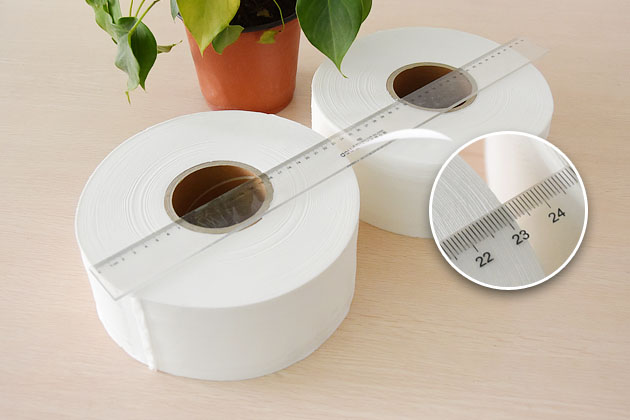
Converting massive paper logs into usable rolls requires accurate tension management. We integrate automated systems that prevent web breakage during high-speed transitions, which is essential for maintaining the 13–22 GSM density required by professional B2B buyers. Precision slitting tools cut the tissue into specific widths—ranging from the standard 102mm to the premium 132mm format—designed to fit commercial jumbo roll dispensers in high-traffic hubs like airports and shopping malls.
- Integrated tension management systems prevent paper breakage and ensure roll uniformity.
- Precision slitting tools provide clean edges for commercial-grade dispensers (JRT).
- Adjustable settings allow for custom GSM and thickness variations to meet specific brand requirements.
Automated Quality and Defect Detection
Modern manufacturing eliminates manual inspection risks by implementing sensor-based defect detection. These integrated sensors scan the tissue web in real-time during the rewinding phase, identifying imperfections or weak spots that could lead to tearing in the final product. This automation ensures every roll leaving the facility meets ISO 9001 and FDA requirements, providing a lint-free and durable experience for the end-user.
- Integrated sensors detect imperfections instantly to guarantee roll durability.
- Automation reduces human error and enhances safety within the high-speed production environment.
- Real-time monitoring confirms compliance with international hygiene and safety standards.
Operational Efficiency and Scalability
Optimizing the rewinder stage allows us to scale production while controlling the energy footprint of the facility. Top Source Hygiene manages a monthly capacity of 2,860 tons by maximizing machine uptime and minimizing changeover delays between different product specifications. This operational efficiency supports a reliable production lead time of 20-25 days for 40HQ container shipments, ensuring a stable supply chain for global distributors and wholesalers.
- Technological updates focused on lowering energy footprints for large-scale operations.
- Maximum machine uptime allows for high-volume 2,860-ton monthly outputs.
- Efficient converting processes enable reliable production lead times of 15-25 days.
Slitting, Perforating, and Gluing the Cardboard Core
The structural integrity of the cardboard core determines the stability of the entire tissue log, making precision slitting and adhesive management critical for high-speed conversion and damage-free global export.
Automated Slitting and Multi-Axis Cutting Systems
Modern manufacturing facilities utilize multi-axis automation to manage the primary cutting phase for cardboard cores. These systems maintain tight tolerances and eliminate edge defects that often occur during high-speed production. By using precision-machined blades, we ensure clean cuts across the cardboard surface, which minimizes material waste and provides a smooth surface for the initial paper attachment phase.
Customized machining options allow us to adjust diameters and lengths to fit various tissue roll types, from standard household rolls to industrial jumbo tissue. This flexibility ensures that every core matches the specific tension requirements of the rewinder, preventing core-slip or displacement while winding large-diameter logs.
Precision Perforation and Structural Integrity
Perforation standards focus on maintaining the strength of the core while allowing for specific mechanical functions in the dispenser. Sophisticated perforation patterns are tailored to specific flute profiles to ensure the core does not collapse under the immense tension generated by heavy 5-ply paper logs. This structural engineering is vital for high-density products like the TSH-3396, where roll weight can exceed standard household limits.
- Engineered tear-lines integrate into the core without compromising the overall support of the paper log.
- Real-time monitoring equipment tracks perforation depth, catching inconsistencies before they reach the final batch.
- Structural reinforcement prevents “oval” deformation during the high-stacking process inside 40HQ containers.
Advanced Adhesive Management and Bonding
The gluing process relies on optimized adhesive application to secure the cardboard layers. Top Source Hygiene uses advanced metering systems to control the exact volume of glue applied. This prevents oversaturation, which can weaken the cardboard fibers, or weak bonds that lead to delamination during dispensing. Proper adhesive management ensures the core remains rigid throughout its lifecycle.
Controlled heat and pressure settings on our production lines in Hebei ensure rapid curing and long-term durability. This bonding technique keeps the cores rigid during global shipping and handling. By maintaining core stiffness, we protect dealer margins by reducing the rate of crushed or unsellable stock, even when rolls are subjected to the high-pressure mechanical compression used to maximize container payload.
Conclusion
Understanding the manufacturing cycle from virgin wood pulp to precision creping ensures your facility receives paper that balances tensile strength with skin-friendly softness. These technical processes determine the final product’s absorbency and septic safety, which are critical for maintaining high-traffic commercial restrooms. Standardized production helps distributors provide consistent, lint-free rolls that meet international hygiene requirements.
We invite you to review your current bulk procurement specifications to see how 100% virgin wood pulp rolls can improve your supply chain efficiency. Contact our team to request a technical catalog or a sample 40HQ quote tailored to your regional market needs.
Frequently Asked Questions
How is commercial toilet paper made?
Commercial toilet paper is manufactured through a large-scale industrial process starting with the creation of a fiber slurry. Raw pulp is mixed with water, refined, and then spread onto a fast-moving mesh screen to form a thin sheet. This sheet is pressed to remove water, dried on a massive heated “Yankee” dryer, and then “creped” off the cylinder with a metal blade to create softness and stretch. Finally, the large parent rolls are converted by embossing, perforating, and winding onto cores before being cut into individual rolls.
What raw materials are used in jumbo toilet paper?
Jumbo toilet paper typically utilizes a blend of virgin wood pulp and recycled fiber. Virgin pulp, sourced from certified sustainable forests, provides essential fiber integrity and hygiene standards, while recycled pulp is often incorporated to improve sustainability, using 70% less energy and 35% less water during production. Premium jumbo rolls lean toward higher virgin fiber content for strength, while high-traffic commercial versions increasingly use cost-competitive recycled blends to meet environmental goals.
How does toilet paper get its embossed pattern?
The embossed pattern is applied during the converting stage after the paper has been dried. The tissue web passes between two rollers: a steel roll engraved with the desired design and a matching rubber or paper-covered “backup” roll. This process uses high pressure to deform the fibers into the specific pattern, which serves functional purposes like increasing the roll’s bulk, improving absorbency by creating air pockets, and bonding multiple plies together without excessive adhesive.
Why is commercial toilet paper so thin?
Commercial toilet paper is engineered for high-traffic environments where dispenser compatibility and plumbing safety are priorities. Thinner sheets allow for much higher footages on a single “jumbo” roll, reducing the frequency of maintenance refills. Additionally, the thin, highly-creped fibers are designed to break down rapidly in water, preventing clogs in the complex or high-volume plumbing systems typically found in office buildings, airports, and stadiums.
How long does it take to manufacture a jumbo roll?
Modern high-speed tissue machines produce paper at incredible velocities, often exceeding 2,000 meters per minute. While the preparation of the pulp slurry takes longer, the actual formation and drying of the paper web onto a “parent” roll takes only minutes. Once the parent roll is moved to the converting line, it can be wound into hundreds of individual jumbo commercial rolls in a matter of seconds per unit, reflecting a highly optimized and continuous 24/7 manufacturing cycle.
What is the creping process in tissue manufacturing?
Creping is the critical step that transforms a stiff, flat sheet of paper into soft, flexible tissue. As the paper dries on the heated Yankee cylinder, a sharp metal “doctor blade” scrapes the sheet off the surface. This mechanical action causes the paper to micro-fold or “crinkle,” which reduces its strength slightly but significantly increases its thickness (bulk), softness, and ability to stretch. The “crepe ratio” determines the final texture and feel of the commercial product.