Skip to content

Roll Width Specs determine how many usable sheets you actually buy and can create sudden restroom outages that undermine service-level targets and drive costly operational downtime for facilities teams and procurement budgets.
This guide acts as a technical SOP for reading, testing, and enforcing roll width specs with suppliers: we trace the old 4.5-inch commercial standard, explain how shrinkflation pushed many jumbo rolls to 3.5 inches, show why widths under 3.3 inches cause dispenser rattling and failure, and walk you through the math to calculate true square footage loss per jumbo roll. You’ll get a step-by-step checklist for auditing supplier dimensional spec sheets, simple measurement methods for the warehouse, and the practical FAQs procurement teams need to lock in reliable supply contracts.
The Historical Standard: The 4.5-Inch Wide Toilet Paper Roll
A 4.5-inch (≈114 mm) roll became the industry norm because it maximized converting yield and dispenser compatibility while delivering a perceptible product value without costly retooling.
Origins of the 4.5-inch Dimension
Converters set blade spacing and rewinder tooling to simple, repeatable measurements; a 4.5-inch finished width matched common cutter setups and allowed an efficient number of rolls across a standard parent reel. That alignment reduced trim waste and kept line speeds stable, so mills could run longer production campaigns without frequent tooling changes.
Roll sizing also reflected end-use constraints: household dispensers and cabinet clearances required a moderate width that balanced coverage with easy handling. Manufacturers aimed to make rolls feel substantial without inflating material or freight costs, and widespread adoption by converters, packers, and retailers turned 4.5 inches into a de facto standard rather than a regulated requirement.
Manufacturing and machine constraints
Parent reel width and the number of finished cuts per web drive the economics of converting. Choosing a 4.5-inch finished width often optimized yield per reel and minimized edge trim; changing that width demands retooling cutter heads and reprogramming rewinds, which creates downtime and tangible cost. Converters prefer repeatable widths they can lock into long runs to protect throughput and OEE.
Finished width also ties to core diameter, sheet count, and final roll diameter—variables that cascade into packaging dielines, carton dimensions, and palletization patterns. Standardizing on one width simplifies inventory and quality control across multiple SKUs, lowering handling errors and compressing storage planning for both suppliers and distributors.
Compatibility with dispensers and consumer expectations
Designers of residential and many commercial dispensers assumed a conservative margin for roll width; a 4.5-inch roll fits most standard holders without rubbing the housing or increasing jam rates. Commercial facility fixtures historically mirrored those dimensions, which reduced service calls and returned-product incidents.
Users link sheet width to coverage and comfort, so a noticeably narrower roll reads as lower value even when ply or softness stays constant. Retail shelving and merchandising also reflect those expectations: planograms and pack formats accommodate predictable roll sizes, making shelf layout and cartoning simpler for retailers and distributors.
How the standard persisted and what prompted later changes
Consistency across supply chains reinforced the 4.5-inch norm: converters, packers, and retail buyers all benefited from predictable dimensions. When raw material costs rise, manufacturers test modest width reductions to save fiber per roll, but they balance that against the cost of retooling, potential dispenser incompatibility, and negative customer perception.
When suppliers push narrower formats, procurement and facilities teams must validate downstream impact—dispenser fit, packaging dielines, and retailer planograms change. For B2B buyers, specify finished width in contracts, require dimensional pre-shipment photos, and compare usable sheet area (width × length) rather than roll count to detect hidden downsizing.
Shrinkflation in B2B: How Rolls Narrowed to 3.5 Inches
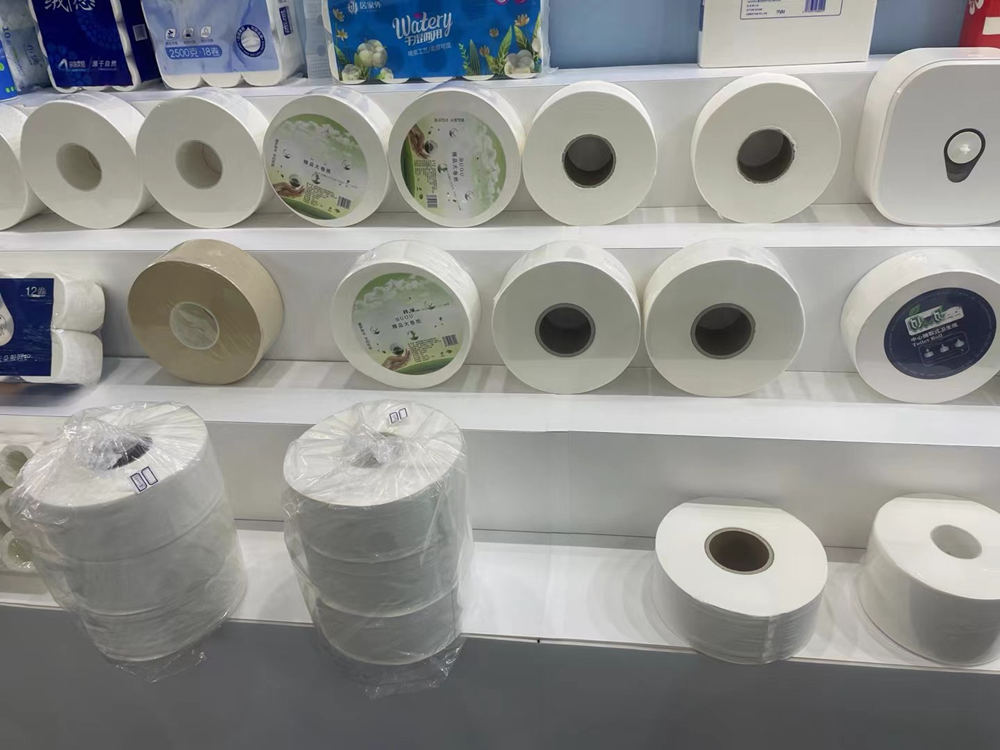
Suppliers moved finished roll widths from historic 4.5″ footprints toward 3.3–3.5″ to cut pulp and freight costs while preserving price-per-roll, creating a silent loss of usable square footage that buyers must detect through dimensional contracting and sampling.
Market and cost drivers behind the shift to 3.5-inch rolls
Manufacturers responded to rising raw-material, energy, and freight costs by trimming finished roll width. Narrower rolls lower per-roll paper usage and let converters fit more units per pallet and container, which reduces landed cost without an obvious retail price increase. Procurement teams that focus on price-per-roll instead of price-per-square-foot created a commercial incentive for stealth downsizing.
- Rising pulp, energy, and freight costs push converters to cut paper width to lower per-roll material usage.
- Narrower rolls fit more units per pallet and container, improving shipping density and lowering per-roll freight.
- Procurement teams that evaluate price per roll, not square footage, create an incentive for stealth downsizing.
- Competitive pressure and thin margins lead manufacturers to implement subtle spec changes instead of raising nominal prices.
- Regional supply constraints or parent-reel sizes can force converters to standardize at narrower finished widths.
Production and converting changes that enabled narrower widths
Converters adjusted slitter settings, winding tension, and core choices so plants could produce consistent 3.5″ finished rolls without large capital projects. The changes alter roll geometry and can affect sheet count, ply distribution, and perceived bulk—issues facilities notice if they compare old and new deliveries side-by-side.
- Rewinder and slitter setups shift to narrower cut widths and tighter tension control to maintain roll integrity.
- Converters may increase winding layers or alter ply bonding and perforation spacing to preserve sheet feel after narrowing.
- Changing core inner diameter or core wall thickness helps preserve outer diameter so rolls still fit dispensers.
- Quality controls add checks for sheet count, outer diameter, and edge squareness to avoid defects from new setups.
- Some plants accept slight GSM or ply distribution changes to offset lost surface area per roll.
Operational effects on dispensers, maintenance, and end-user perception
Narrower rolls behave differently in existing dispenser hardware. When finished width shrinks but core and outer-diameter targets remain similar, lateral clearance on spindles increases. That creates audible rattling, feed errors, and a perception of lower value that can trigger more service calls and reputational complaints in customer-facing sites.
- Wider dispenser spindles allow lateral play with narrower rolls, causing rattling and premature misfeeds.
- If providers keep the same core or outer-diameter target, narrower width reduces square footage, which users notice as lower value.
- Maintenance schedules can change: some narrower rolls run out faster per visit, while others require different stocking patterns.
- Staff and guests may perceive a downgrade even when tissue strength and softness remain similar, affecting brand impression.
- Testing dispenser compatibility (core fit, roll stability, and feed reliability) avoids service issues after a supplier change.
Buyer checklist: auditing supplier dimensional specs to detect shrinkflation
Buyers stop stealth downsizing by contracting on measurable dimensions and validating physical samples before scale purchases. Require complete dimensional spec sheets, set tight acceptance tolerances, and insist on square-footage or meters-per-carton guarantees when cost-per-area matters more than price-per-roll.
- Require a dimensional spec sheet that lists roll width, sheet width, sheets per roll, outer diameter, core ID, GSM, and ply.
- Set acceptance tolerances (example: width ±2 mm; outer diameter ±5 mm) and include remedies for out-of-spec deliveries.
- Request free physical samples and measure total square footage and sheet count across several samples before approval.
- Contract on square footage or total meters per carton when cost-per-area matters, not just price per roll.
- Include audit rights or third-party testing clauses to verify long-term supplier compliance with dimensional and material specs.
Scale Your Brand with OEM Toilet Paper
The Impact of Narrow Rolls on Dispenser Spindles (Rattling)
Narrower roll widths introduce lateral clearance at the core-spindle interface that turns dispensing motion into detectable rattle and accelerates wear on contact points.
How Narrow Roll Widths Change Spindle Contact
Narrower rolls reduce the lateral contact area between the roll core and a fixed-length spindle, creating side-to-side free space. That free space lets the core shift during a pull, convert linear dispensing forces into oscillation, and produce audible rattling or inconsistent feed. In practice a loose core will move even if the outer roll diameter looks large; core-to-spindle interference matters more for noise control than face width alone.
- Reduced roll width increases lateral play inside fixed-length spindles; even millimetre-scale gaps let the roll oscillate during dispense.
- Gaps concentrate load on small contact patches, which wear faster and amplify noise over time.
- Core-to-spindle interference (fit) matters more than outer roll diameter for rattle: a loose core will move even if the roll diameter is large.
- Narrow rolls often expose mismatches between dispenser design assumptions and current supplier specs, revealing weak tolerances in older dispensers.
Common Causes of Rattling in Dispensers
Rattle rarely stems from a single issue. Dispensers show noise when dimensional mismatch, worn parts, or design limitations combine. Identifying the dominant cause at a site helps select the least disruptive corrective action—soft adapters for a small fleet, or component replacement when multiple units show wear.
- Dimensional mismatch: roll width or core ID smaller than the spindle span or sleeve ID, leaving lateral clearance.
- Worn components: aged spindles, cracked hubs, or lost rubber bushings reduce damping and allow metal-on-plastic contact.
- Oversized spindle diameter variation across models: some dispensers use thinner axles that don’t center modern narrow cores.
- Design gaps: single-arm or loosely spring-loaded dispensers give more freedom to shift than rigid, guided designs.
Measuring and Specifying Tolerances for Reliable Fit
Define dimensional specs and acceptance limits before you receive shipment. Record roll face width, core ID/OD, spindle span, and spindle diameter on the PO and the incoming inspection checklist. Specify maximum allowable lateral clearance so receiving teams can reject batches that will rattle in existing dispensers.
- Key measurements to record: roll face width, core inner diameter (ID), core outer diameter (OD), spindle length between supports, and spindle diameter.
- Recommended maximum lateral clearance: aim for under 1.0 mm for quiet operation; accept up to 2.0 mm only when paired with dampers or spring centering.
- Specify core ID tolerances (for example, 38 mm ±0.5 mm) or require adapters when dispenser spindles differ across sites.
- Include a fit-check in QA: insert sample rolls into representative dispensers, apply lateral force, and listen for rattle at normal dispense speed.
Practical Fixes: Adapters, Dampers, and Supplier Controls
Match fixes to scale and longevity. For a handful of locations add foam sleeves or split rubber adapters on spindles and you stop most rattle at low cost. For larger estates, require tighter core tolerances from suppliers and replace worn spindles with spring-loaded or guided models. Track recurring failures so procurement can standardize the right adapter or spec change.
- On-site fixes: add soft foam sleeves, rubber bushings, or thin split adapters on the spindle to reduce clearance and damp vibration.
- Mechanical upgrades: swap to spring-loaded or guided spindles, or install small centering pins to prevent lateral travel.
- Supplier controls: require core ID/OD and roll width tolerances in purchase specs; request sample-fit runs before full orders.
- Maintenance practices: inspect and replace worn bushings periodically; log dispenser models with repeat issues and standardize adapters.
Calculating the True Square Footage Loss per Jumbo Roll
Narrowing a jumbo roll from 4.5″ to 3.3″ cuts usable square footage by roughly 26.7%, which directly increases cost per square foot and compounds across monthly and annual volumes.
Measurement and key definitions
Define three primary dimensions before any calculation: nominal width (W), usable linear length (L), and dead-core allowance. Nominal width (W) equals the usable paper width across the roll, in inches — historically 4.5″, with common narrow sizes at 3.5″ and 3.3″. Usable length (L) equals the total linear length of paper on the roll, expressed in feet or inches; you can take the manufacturer’s length spec or derive L from outer and core diameters and sheet thickness. Dead-core allowance subtracts the inner core band that never becomes usable paper; if the core reduces usable length by lc inches, use Lusable = Ltotal − lc.
Treat effective area (A) as the product of width and usable linear length. Ply count and perforation layout do not change raw usable area — two rolls of identical W and L but different plies deliver the same square footage.
Core calculation formula and step-by-step method
Use a direct area formula: Area (sq ft) = (W in inches × L in inches) ÷ 144. If L comes in feet, use Area = (W × Lfeet) ÷ 12. To compute absolute square footage loss when comparing a standard width (Wstd) to an actual width (Wact), apply Loss (sq ft) = ((Wstd − Wact) × Linches) ÷ 144. Isolate width impact with Percent loss = (Wstd − Wact) ÷ Wstd × 100%.
Translate area into cost: if price per roll = P, compute cost per sq ft = P ÷ Area. Work flow: (1) confirm usable L; (2) convert units to inches; (3) compute areas for Wstd and Wact; (4) compute absolute and percent loss; (5) convert to cost impact and scale to monthly/annual volumes for procurement decisions.
| Specification | Typical Value | Top Source Hygiene Example |
|---|---|---|
| Finished roll width (inches) | 3.3″ — 4.5″ (commercial range) | 102–132 mm (4.02″–5.20″) customizable per SKU |
Concrete examples: typical lengths and common widths
Use L = 1,000 feet (12,000 inches) as a representative example. Calculate areas directly: 4.5″ roll area = (4.5 × 12,000) ÷ 144 = 375.00 sq ft. A 3.5″ roll area = (3.5 × 12,000) ÷ 144 = 291.67 sq ft, an absolute loss of 83.33 sq ft and a 22.22% reduction versus 4.5″. A 3.3″ roll area = (3.3 × 12,000) ÷ 144 = 275.00 sq ft, an absolute loss of 100.00 sq ft and a 26.67% reduction versus 4.5″.
Price impact example: if a roll costs $10, cost per sq ft at 4.5″ = $10 ÷ 375 = $0.0267. At 3.3″ cost per sq ft = $10 ÷ 275 = $0.0364, about 36% higher on a per-square-foot basis. Scale this to pallet or annual purchases to quantify procurement exposure.
Practical implications for procurement and operations
Buyers must quote and compare price per square foot, not price per roll. Specify usable width and usable length on purchase orders and demand supplier spec sheets that list both; when possible, require sample verification by measurement. Narrower rolls can feel cheaper to end users and raise complaint rates even when per-roll pricing looks similar.
Include dispenser compatibility and maintenance in total-cost calculations. Narrow rolls may reduce refill intervals in some dispenser models but increase unit cost and inventory turnover. Track dead-core waste and manufacturing tolerances; multiply per-roll square footage loss by shipment quantities to convert a small dimensional change into a budget line item you can negotiate on.
Why 3.3-Inch Widths are the Absolute Minimum Tolerable Size
At roughly 3.3 inches (≈84 mm) a roll crosses a mechanical and human-factors threshold: dispenser instability, measurable square-footage loss, and higher operational costs outweigh the small material savings.
Mechanical Compatibility with Dispensers and Spindles
Roll width determines how the roll seats and moves on common commercial spindles. Most public and hotel dispensers expect roll widths between about 3.5 and 4.5 inches; at ~3.3 inches the roll loses lateral contact with the hub and gains axial play. That increased play produces rattling, intermittent catches when users pull sheets, and concentrated loading on spindle bearings and plastic hubs, which accelerates wear and raises maintenance frequency.
Mitigations work but add cost: use adapter rings or redesigned hubs to restore lateral support, demand a minimum internal core support dimension in the spec, or specify dispenser retrofit kits as part of a rollout. For procurement, require dispenser-fit testing as part of acceptance criteria when approving any SKU at or below 3.3 inches.
User Experience: Grip, Tear Control, and Perceived Value
Width affects how users grip and tear sheets. At or below 3.3 inches users lose hand contact area, making clean single-handed dispensing harder and increasing the chance of over-pulls. Over-pulling raises waste and forces more frequent roll replacements in high-traffic locations, which increases labor costs for staff.
Beyond function, perception matters in hospitality and premium venues: narrow rolls read as cost-cutting. Preserve perceived value by maintaining consistent embossing, clear perforation lines, and by validating tear performance with 3.3-inch mockups before deployment.
| Parameter | Typical Commercial (≈4.0–4.5 in) | 3.3 in (Minimum Tolerable) |
|---|---|---|
| Functional Impact | Stronger lateral hub contact; Predictable dispensing; Lower spindle wear. | Reduced lateral contact leads to axial play and rattling; Higher hub/bearing load. |
| Dispenser Alignment | Aligns with many dispenser specs and Top Source standard widths (102–132 mm). | Requires adapter rings or hub redesign; Stricter core support tolerances needed. |
Material, Core Diameter and Actual Usable Surface Area
Usable area per roll equals width × total sheet length. If sheet length stays constant, cutting width from 4.5 in to 3.3 in reduces per-roll paper area by about 26.7%. That represents a direct reduction in delivered square footage per SKU and shifts your cost-per-use math unfavorably despite lower grams-per-roll.
A narrower finished roll on the same core diameter changes winding dynamics: expect tighter stresses at the core and looser winding at the edges, which increases the risk of telescoping or collapse. Require suppliers to publish core ID, rewind tension, finished roll diameter tolerances, and recommended ply/GSM balance for any 3.3-inch SKU so you can verify mechanical stability before acceptance.
Packaging, Cost Trade-offs, and Supply-Chain Effects
Material savings per roll at 3.3 inches may look attractive, but total cost of ownership often rises. Narrower rolls raise replacement frequency in busy sites, increase labor touchpoints, and can force dispenser retrofit—each of which offsets raw material savings. Carton and pallet patterns change too: fewer square feet per roll means you either ship more rolls to maintain service intervals or accept shorter fill rates.
Manage risk by running controlled pilots: ship a limited number of 3.3-inch cartons to representative sites, track fill rates, dispenser compatibility failures, returns, and customer complaints for 60–90 days. Use those metrics—service intervals, maintenance events per 1,000 visits, and measured square-feet-per-container—to decide whether to add a narrow-width SKU to your permanent lineup.
Auditing Your Wholesale Supplier’s Dimensional Spec Sheets
Treat the supplier spec sheet as a technical contract: verify nominal dimensions, explicit tolerances, measurement methods, and packaging data before accepting product or confirming tooling.
Key Dimensions to Verify
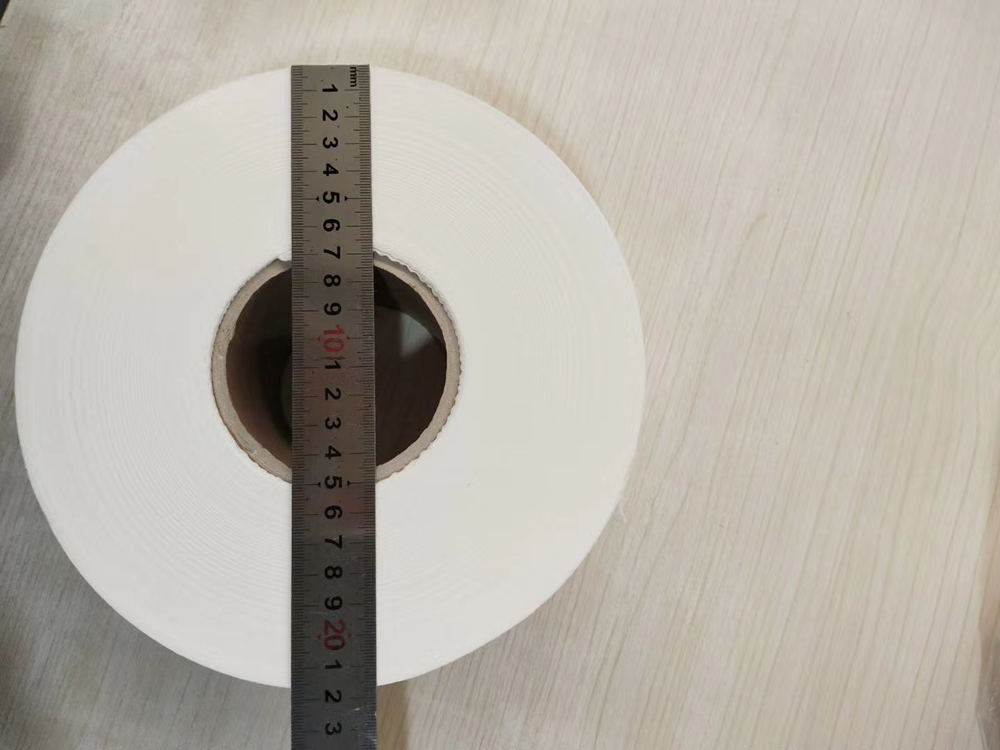
Confirm the physical fields that determine dispenser fit, conversion yield, shipping efficiency, and end-user expectations. At minimum the spec sheet must list roll width (with a defined measurement reference point), core inner diameter and wall thickness, outer roll diameter (both full and compressed where relevant), sheet length and sheets per roll, ply count with GSM per ply, carton dimensions and units per carton, and both unit and carton weights.
Ask the supplier to clarify whether widths are nominal or finished, where the width was measured (edge-to-edge, crease-to-crease), and whether outer diameters represent unloaded or compressed states used for carton packing. That context determines dispenser compatibility and container stacking plans.
| Dimension | Typical B2B Range / Notes | Top Source Hygiene (TSH) Reference |
|---|---|---|
| Roll Width | 84–132 mm (3.3–5.2″) depending on market. | TSH Widths: 102–132 mm typical. |
| Core I.D. / Type | 38–46 mm common inner diameter. | Options for coreless solid rolls available. |
| Outer Diameter (Ø) | 80–250 mm depending on roll type (Standard/Jumbo). | Optimized for commercial dispenser compatibility. |
| Ply & GSM Density | 13–22 g/m² per ply. | Ply density 13–22 g/m²; Supports multi-ply strength. |
| Weight & Packaging | Carton L×W×H per unit count; Stated net/gross. | Bundle weights 780g–5000g; 40HQ optimized loading. |
Tolerance and Acceptable Ranges
Require nominal values with explicit tolerances for each critical dimension (example: Width 102 mm ±1.5 mm). Use tighter tolerances for dispenser-critical features—width and core inner diameter—and allow wider tolerances for non-critical items such as outer cosmetic finish. If the supplier omits tolerances, add buyer-defined limits into the purchase order or quality agreement.
Request manufacturing capability data (process variation, typical sigma, or Cpk/Cp figures) so you can justify acceptable tolerances. Ask for the measurement method the supplier used to derive tolerances (caliper, laser, micrometer) and the sample size used to generate those statistics; that makes tolerances defensible during disputes.
Inspection Methods and Tools
Standardize inspection procedures so incoming checks and field verifications reproduce supplier measurements. Use calibrated digital calipers for core and width, a tape or laser gauge for outer diameter, and a micrometer for ply thickness or core wall. Define the measurement orientation and datum points in the procedure (for example: width measured at roll face, core I.D. measured at two orthogonal axes).
- Tools: calibrated digital calipers (±0.01 mm), laser distance meter for large diameters, bench micrometer for ply/caliper checks.
- Sampling: define lot size, random selection method, and acceptance criteria—use AQL tables or agreed SPC limits. Specify sample n and acceptance number in the contract.
- Conditions: measure at controlled temperature and humidity, use the same roll orientation, take repeated readings at defined points, and log all raw measurements.
- Controls: record a step-by-step measurement procedure so third parties can replicate results; perform periodic Gauge R&R to validate measurement system reliability.
Common Spec Gaps and Red Flags
Use this checklist during your first spec review. If you find any of these gaps, require the supplier to update the document before you place production or shipment orders. Unspecified items create contractual risk and hide potential downstream failures.
- Missing numeric tolerances or vague terms like “approximate” instead of ± values.
- No reference datum or drawing that shows exactly where each dimension is measured.
- Inconsistent units without conversions (mm vs inches) on the same sheet.
- No revision history, approval signatures, or issue date—treat unsigned specs as provisional.
- Absent production capability data, sample photos, or test reports when tolerances are tight.
- Packaging dims that conflict with palletization or container loading plans, or supplier resistance to third-party verification.
Conclusion
Verifying roll width and supplier dimension specs protects plumbing and dispenser compatibility, preserves building hygiene standards, and prevents hidden cost-per-square-foot losses. Proper dimensional auditing also supports workplace safety, regulatory compliance (OSHA), and extends dispenser lifespan.
Start by auditing a sample pallet or checking your dispenser fleet’s current setup; measure roll widths and compare them to your supplier’s spec sheets. Contact Top Source Hygiene for certified spec sheets and free samples to validate width, paper yield, and dispenser fit before your next wholesale order.
Frequently Asked Questions
What is the standard width of commercial toilet paper?
The commonly referenced historical retail standard is 4.5 inches (114 mm) wide, but commercial tissue widths are not universally fixed and commonly range from about 3.5 inches (89 mm) up to 4.5 inches (114 mm) depending on dispenser type and manufacturer.
Why is commercial toilet paper getting narrower?
Manufacturers narrow rolls primarily due to cost pressures and shrinkflation (reducing width, sheet count, ply, or basis weight), dispenser compatibility and global supply-chain and material cost optimization, plus intentional product differentiation and sustainability or packaging goals that can change finished roll dimensions.
Does shrinkflation affect wholesale jumbo rolls?
Yes — shrinkflation can affect wholesale and jumbo rolls, but less commonly than retail because large buyers often contract specific dimensions and performance. Suppliers may instead reduce sheet count, roll diameter, ply or basis weight. Always verify contract specs, change-notice clauses and perform incoming QC to detect changes.
How to measure the width of a toilet paper roll?
Unroll a small section and use a ruler or caliper to measure perpendicular to the roll axis from one paper edge to the other; record the result in millimetres and inches. For in-place checks measure a sample sheet while still on the core or remove one sheet and measure its full edge-to-edge width. Also record core inner diameter, roll outer diameter and sheets per roll for full specification.
Will a narrow toilet paper roll rattle in the dispenser?
Possibly — if the roll width is substantially smaller than the dispenser’s guides or designed roll width it can rattle or shift and cause tearing or waste. Check the dispenser internal width and spindle/core fit; a difference greater than about 3–5 mm is often noticeable. Use adapters, liner rings or a dispenser designed for narrower cores to eliminate rattle.
How to verify wholesale commercial tissue specifications?
Request a formal spec sheet and certificates and run incoming QC. Minimum checklist: sheet width, sheets per roll, sheet length, ply count, GSM or basis weight, roll OD, core ID and type, perforation pitch, packaging unit, lot code and sustainability certificates. Verify by sampling: measure width, weigh rolls, count sheets, test tensile and absorbency, inspect perforations and require supplier change-notice and acceptance testing terms in contracts.