Skip to content
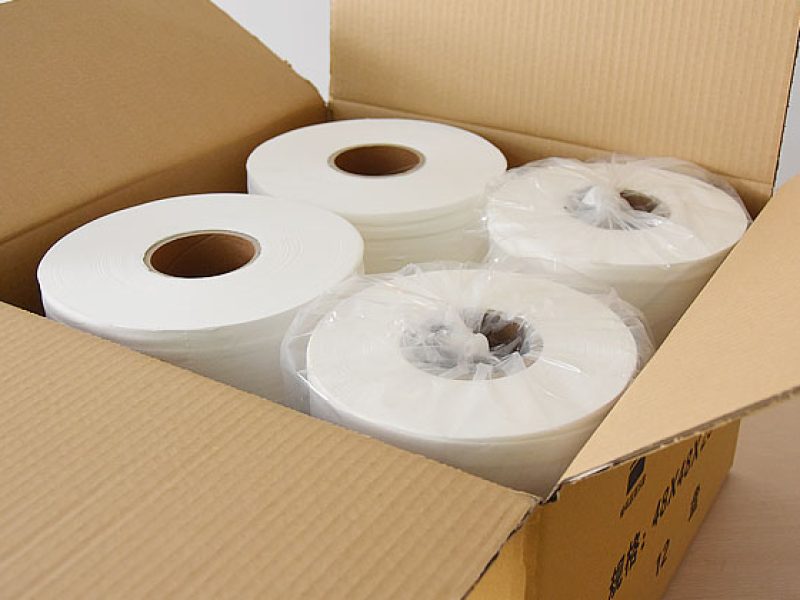
Tight vs Loose Wind determines whether jumbo toilet paper survives LTL shipping or arrives crushed, creating returns, delivery delays, and higher per-unit freight charges. In the B2B paper market many buyers still equate a big-looking roll with more feet, but that illusion masks a real operational cost: loose winding combined with heavy embossing inflates diameter while cutting packing density, which raises pallet counts, increases damage claims, and drives unexpected handling fees for distributors and facilities teams.
This guide acts as a technical SOP for procurement, quality, and operations: we walk through how winding tension machines dictate roll density, how the “puffy” roll trap forms, why loosely wound rolls crush in transit, and the packing strategies that squeeze 1,000 true feet into a 9-inch diameter. You’ll get the squeeze-the-roll physical density audit test, clear acceptance criteria, and pragmatic checks procurement can run on samples so suppliers, carriers, and warehouse teams align on specs and cut downtime, claims, and freight waste.
The Illusion of Roll Diameter in the B2B Paper Market
Visible roll diameter misleads buyers: winding tension and core design set real density and true linear footage, not the outer size you see on a pallet.
How Winding Tension Machines Dictate Roll Density
Winding tension compresses the paper web and controls how layers pack. When you raise tension (measured in N or kgf) the web compacts, increasing mass per unit volume and delivering more true linear feet for the same outer diameter. That relationship lets two rolls of identical diameter contain materially different usable footage.
Key machine parameters influence density and yield: surface speed ratio, torque control, nip pressure, and roll-torque compensation during tail-up and tail-down sequences. Core diameter and flange geometry also change winding angle; smaller cores typically increase radial compaction and linear footage for a given outer diameter. Specify target tension ranges in product specs so procurement teams compare yield instead of trusting outer-diameter marketing.
- Surface speed ratio — mismatches create spiraling or loose wraps that reduce density.
- Torque and nip control — stabilizes layer tension through start/stop and tail-handling phases.
- Core diameter & flange design — smaller cores increase pack density for identical OD.
- Operational setpoints — capture and publish N/kgf target bands in specs for consistent supplier comparisons.
The “Puffy” Roll Trap: High Embossing + Loose Winding
Embossing raises caliper and loft to create perceived softness. If manufacturers pair heavy emboss patterns with low winding tension, rolls look larger while containing less linear footage. A 9-inch embossed roll can have fewer true feet than a tighter 8-inch roll made without heavy embossing.
Procurement and QC must measure both caliper and linear feet. Track weight-per-roll and feet-per-roll on incoming lots to quantify the comfort-versus-yield trade-off. Contract clauses should require minimum feet-per-roll or a minimum gsm-per-diameter metric to stop suppliers from using diameter as a sales proxy.
- High-emboss patterns increase apparent bulk without adding usable length.
- Loose winding preserves emboss texture but cuts density and yield.
- Require feet-per-roll and roll weight on COAs to compare offers objectively.
- Add caliper and unwind tests into incoming inspection for tactile vs. yield decisions.
Why Loosely Wound Rolls Crush Easily During LTL Shipping
Loosely wound rolls lack the radial stiffness that resists stacking pressure and micro-impacts typical in less-than-truckload (LTL) freight. Under repeated vibration and pallet shifts, loose rolls deform, which reduces usable footage and generates customer complaints.
Design packing and handling to protect low-density rolls: use full-boxing when possible, ship rolls vertically if carton design supports it, add edge protectors, and limit stack height. Require suppliers to pass a shipping trial or provide crush-resistance metrics before large orders.
- Loose rolls collapse faster under stacked loads and absorb impact energy from vibration.
- Packing orientation and interleaving change how load stress transmits through a pallet.
- Protect low-density product with reinforced cartons, vertical packing, and edge boards.
- Run a documented LTL trial to validate that feet-per-roll survives transit.
Freight Efficiency: Packing 1000 True Feet into a 9-Inch Diameter
Calculate true feet-per-roll from roll weight, gsm, ply count, and core/winding specs instead of using outer diameter as a proxy. Use basis-weight formulas to convert roll mass to linear footage, then model cartons-per-pallet and pallet cubic meters to derive freight cost per 1,000 feet.
Tighter winding raises feet-per-roll and reduces cartons required for a footage target, lowering landed cost and storage footprint. Balance those gains against market preferences: some end-users accept firmer rolls, others demand loft. Add packaging-density targets into KPIs so suppliers optimize winding and cartonization for the lowest cost per usable unit.
- Derive linear footage from roll mass and ply gsm (typical ply gsm: 13–22 g/m² per ply).
- Model pallets and cubic meters to compute freight per 1,000 feet for pricing comparisons.
- Optimize winding to reduce cartons-per-foot; document acceptable firmness ranges for target markets.
- Include packaging-density KPIs in contracts to align supplier behavior with freight efficiency goals.
Squeezing the Roll: The Physical Density Audit Test
Run a repeatable audit combining field checks and lab measures to validate supplier claims. Field checks should capture outer diameter, core diameter, and roll weight to compute theoretical linear footage. Use unwind verification to confirm actual footage against declarations.
In the lab, perform caliper mapping, static crush (compressive strength) tests, and a controlled compression protocol that records permanent deflection under specified platen pressure. Feed audit results into pass/fail procurement specs: minimum feet-per-roll, maximum caliper for a given diameter, and shipping-trial criteria.
- Field protocol — measure OD, core ID, and gross roll weight; calculate theoretical feet using known gsm and ply.
- Unwind test — fully unwind sample rolls and record actual linear footage versus labeled value.
- Compression test — apply defined platen pressure, measure permanent deflection, and rank crush vulnerability.
- Audit outputs — set minimum feet-per-roll, maximum caliper-to-diameter ratios, and required passing results from shipping trials.
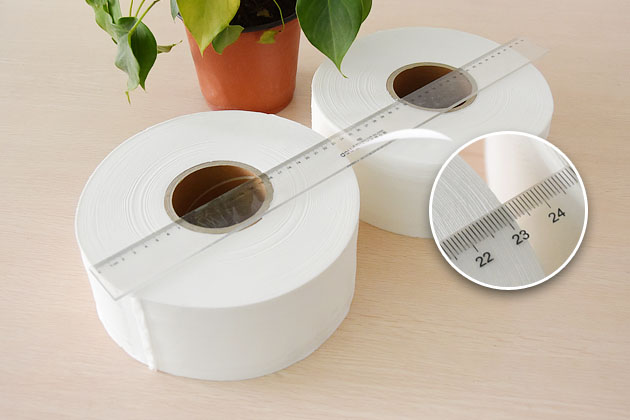
How Winding Tension Machines Dictate Roll Density
Consistent, zoned winding tension and matched torque control set layer compaction directly — they determine roll density, freight efficiency, and crush resistance.
Winding tension fundamentals: tension, torque, and layer compaction
Tension is the axial force in the web as it travels onto the core. Machines set that force with brakes, servo motors, magnetic clutches or dancer systems; that setting controls how tightly fibers pack against the previous turns. Higher steady tension pulls fibers closer, reducing roll volume for the same mass and raising apparent density — which increases freight value per cubic metre and improves resistance to compression during handling.
Surface speed changes as diameter grows. If the controller does not adjust torque or unwind speed, surface tension drifts and produces radial density gradients. Too much tension stretches or thins the web, alters sheet properties, and risks core damage or telescoping. Too little tension yields loosely wound rolls that deform or collapse under load.
| Open-loop torque | Closed-loop (load-cell) | Dancer-based (buffer) |
|---|---|---|
| Sets motor or brake torque without feedback — simple and low-cost, but density varies as roll diameter, friction or web properties change. | Measures actual web tension and adjusts drive torque in real time — delivers consistent target tension, repeatable roll density and fewer rejects. | Uses an accumulator to smooth short spikes and maintain average tension — prevents local loose wraps and improves uniformity, though slower to correct long-term drift. |
Common tension control architectures and their influence on density
Open-loop torque control works where process conditions stay stable, but it cannot compensate for changing roll diameter, drum friction or variable paper basis weight. Manufacturers using it see higher roll-to-roll density variability. Closed-loop systems with load cells or tension transducers read actual tension and correct drive torque; operators get tighter tolerance on final density and improved repeatability across shifts. Dancer systems act as mechanical filters: they remove short-term disturbances and reduce local loose wraps that create weak spots in the roll.
Advanced lines add zone control or adaptive PID so the machine holds a consistent tension profile from the core outward. That layering produces uniform radial density and predictable freight performance — important when you target long-haul LTL shipments or automated dispenser compatibility.
How winding patterns and nip mechanics shape density distribution
Winding geometry defines how layers interlock. Linear wraps produce predictable seams; spiral overlap and controlled seam alignment increase local compaction and reduce air gaps. Nip pressure between the winding drum and the roll determines how firmly each turn seats into the previous layers — higher nip pressure densifies the outer turns and raises overall roll firmness.
Contact angle and wrap length set how effectively tension transmits across the web. Insufficient wrap causes slip and inconsistent density. Expect lower density at the core transition and edges unless the machine applies taper tension or stepping for the first turns to pre-compress those zones.
Measuring, specifying, and controlling target roll density in production
Specify target density as mass divided by volume (g/cm³) for lab precision, or use linear mass per true foot/metre for packing and freight calculations. Implement recipe controls so each product grade carries preset tension zones, nip pressures and winding patterns; operators then reproduce target density across shifts and lines.
- Real-time controls: combine in-line tension sensors, diameter feedback and weight checks to estimate density and trigger automatic adjustments or alarms.
- Off-line verification: perform roll mass, caliper under defined compressive load, and compression-recovery tests to quantify crush resistance and validate shipping specs.
- Production recipes: lock tension profiles, nip settings and winding patterns to product SKUs so packaging and freight teams know the expected cubic usage per SKU.
- Downstream alignment: tighten winding for long-haul LTL or high-stack container loading; allow slightly looser winding when bulk softness or dispenser compatibility demands higher perceived bulk.
OEM Jumbo Rolls — Reliable Factory Supply
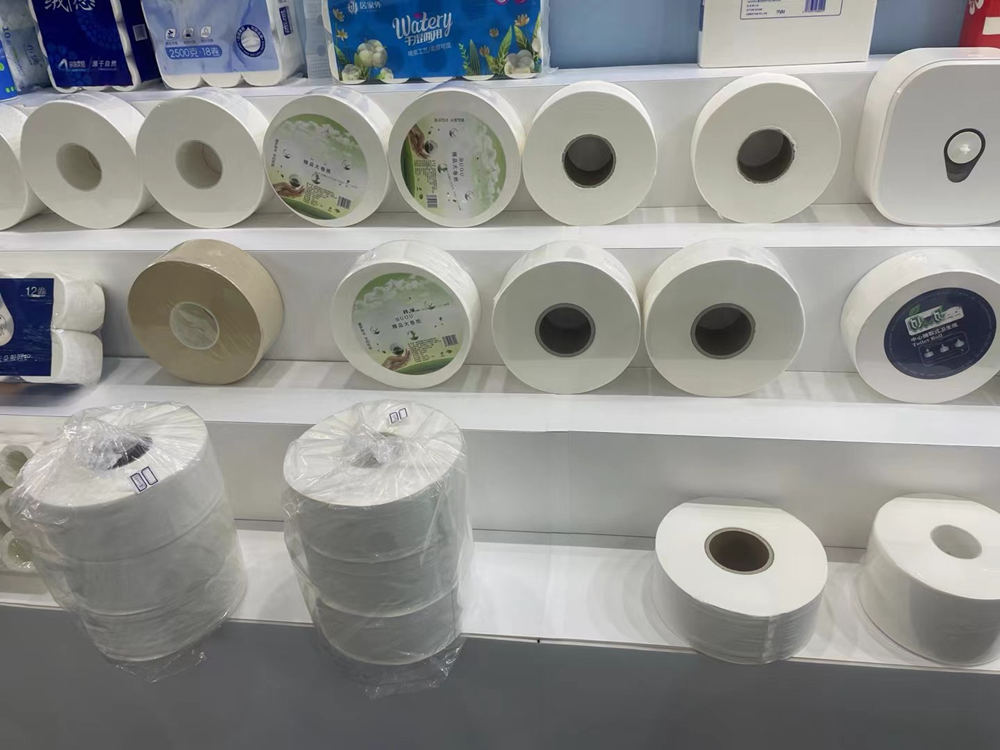
Deep emboss patterns plus low winding tension create visual bulk while lowering internal packing density, which raises crush risk and returns during handling and LTL shipping.
How High Embossing Creates a ‘Puffy’ Appearance
Embossing displaces fibers and raises the paper surface, increasing apparent caliper without adding mass per unit area. Deep, point-to-point patterns produce visible height and a softer hand, so rolls look thicker even when the actual packed fiber volume is lower.
Pattern geometry and impression depth determine the trade-off between perceived softness and real packing density. Strong impressions reduce inter-layer contact and friction, which can worsen winding stability and create larger voids between wraps.
Loose Winding: Causes and Manufacturing Sources
Loose winding originates from insufficient or inconsistent tension control during winding and from mechanical issues at the nip. Operators see it when dancer arms, brakes, or nip rollers run out of spec, or when PLC tension setpoints lack closed-loop feedback.
Materials and process variables also contribute: embossed surfaces reduce layer-to-layer friction and let plies slip; variable moisture content and GSM change compressibility; and worn or misaligned rollers fail to maintain uniform nip pressure.
- Insufficient winding tension or inconsistent closed-loop control across the reel.
- Nip roller wear, misalignment, or improperly tuned dancer arms and brakes.
- Embossed surfaces reduce contact friction, enabling layer slip during winding.
- Variations in paper moisture and GSM change how tightly the roll forms.
Packing and Shipping Risks for Puffy, Loosely Wound Rolls
Puffy, loosely wound rolls compress under static pallet loads and dynamic LTL forces. Outer embossed plies flatten, edges smear, and cores can collapse—customers see shortened usable length and damaged appearance, and operations see increased rework and returns.
Transit exposes rolls to vibration, side impacts, and occasional moisture. Those factors magnify the structural weakness created by low internal packing, producing abrasion, edge damage, and higher rejection rates at receiving facilities.
- Pallet stacking compresses outer layers and shortens usable roll length.
- LTL vibration and side impacts loosen outer plies, increasing abrasion and edge damage.
- Moisture exposure softens embossed zones and worsens collapse risk.
- Damaged appearance drives higher customer rejects and returns.
Inspection Tests: Physical Density and Compression Checks
Catch puffy rolls early with routine, low-complexity tests: weigh a representative roll and calculate bulk density using the cylindrical volume between outer diameter and core diameter. Use that density against your acceptance threshold to flag underwound product.
Run a compression/squeeze cycle to measure permanent set and collapse risk, and track core-to-diameter versus expected feet-per-roll metrics to identify underwinding. Use caliper scans across the roll face to find local inconsistencies in winding.
- Weigh a sample roll and calculate bulk density: mass ÷ cylindrical volume (use outer and core diameters and roll width).
- Perform a controlled compression cycle and measure permanent set to quantify collapse risk.
- Record core-to-diameter vs. expected feet-per-roll to reveal underwinding or material shortfall.
- Use caliper and thickness gauges across the roll face to locate inconsistent winding and edge voids.
Mitigation Strategies: Design and Process Controls
Balance emboss design with winding reliability: reduce impression depth or change pattern geometry where necessary to increase inter-layer contact without sacrificing perceived softness. Tune emboss tooling to maintain enough surface friction for stable winding.
Tighten process controls and packaging: increase and actively control winding tension using closed-loop systems, consider vacuum-assisted or surface-driven rollers for embossed grades, specify minimum bulk density and compression acceptance in QC, and strengthen secondary packaging and pallet stabilization to protect during LTL moves. Train operators and set routine calibration intervals for tension hardware.
- Adjust emboss depth and pattern to improve friction while preserving feel.
- Increase and control winding tension; evaluate vacuum or surface-driven rollers for embossed paper.
- Specify minimum bulk density and include compression acceptance criteria in QC protocols.
- Improve packaging: inner sleeves, tray orientation, reinforced cartons, and better pallet stabilization for LTL.
- Train operators on tension setup and perform routine calibration and sampling of tension control systems.
Why Loosely Wound Rolls Crush Easily During LTL Shipping
Loose winding lowers radial stiffness and creates internal voids, so typical LTL stacking and handling forces concentrate at weak points and drive core collapse.
Winding Tension and Roll Structural Integrity
Tension at the winder sets roll density and radial stiffness. When manufacturers run low winding tension to preserve softness or speed throughput, they leave measurable air gaps between layers and reduce layer-to-layer contact area. That combination makes rolls compressible under even modest external pressure and transfers load into the core.
- Loose winding leaves air gaps between layers, so the roll compresses more easily under external pressure.
- Lower radial stiffness increases deflection when rolls bear weight from stacking or pallet loads.
- Weakly braced cores or thin cardboard tubes collapse faster when radial load transmits to the center.
- High embossing or decorative textures can exaggerate the problem by creating additional voids and reducing contact area between layers.
How LTL Handling and Load Stacking Apply Crush Forces
LTL moves many shippers’ pallets together, and carriers handle those pallets repeatedly. Each handling cycle and every re-stack adds static and dynamic compressive stress. Loose rolls don’t distribute that stress uniformly, so shocks and point loads create local failures that propagate across a roll bundle.
- LTL freight consolidates many shippers, so carriers stack and re-stack pallets, increasing cumulative compressive stress.
- Forklift impacts, pallet shifts, and sudden stops create concentrated loads and shock that exploit weak spots in loosely wound rolls.
- Overhanging items or uneven pallet patterns focus weight onto individual rolls instead of distributing it across the pallet.
- Temperature and humidity swings during transit can soften paper fibers, reducing stiffness and raising crush risk.
Packaging Gaps and Palletization Issues That Amplify Crushing
Packaging and pallet patterns determine how the pallet transmits compressive loads to individual rolls. Omitting inner supports or using weak cartons creates direct load paths to the roll center. Once one roll collapses, adjacent rolls take redistributed load and fail in sequence.
- Skipping inner supports (cores, sleeves, end caps) gives loads a direct path to compress the roll center.
- Insufficient carton strength or single-layer packing allows cartons to cave when carriers apply stacking pressure.
- Gaps between cartons or stacked layers cause telescoping and allow outer cartons to collapse into inner rolls.
- Weak or inconsistent stretch-wrap and missing corner boards let pallets shift and allow concentrated pressure on a few rolls.
Practical Mitigations: Design and Shipping Controls to Prevent Crush
Combine product-side controls and shipping best practices to remove the failure modes. Tighten winding specs where LTL or heavy stacking applies, add internal bracing, and enforce palletization rules so loads distribute evenly. Treat these as measurable spec changes: target roll density, require core reinforcement, and validate with compression tests.
- Specify higher winding tension or a target roll density to raise radial stiffness for export or LTL routes.
- Fit reinforced cores, cardboard tubes, or plastic sleeves for applications that face heavy stacking.
- Use end caps, full-over cartons, or corrugated layer pads to spread loads and prevent point compression.
- Adopt pallet best practices: full-column stacking, no overhang, corner boards, and heavy-duty stretch-wrap with top sheets.
- Label pallets with stacking limits and handling instructions, and include minimum carton compression ratings in vendor specs.
- Validate packaging with compression and vibration testing (e.g., ISTA-style tests) and adjust specs based on test outcomes.
- When possible, route high-risk shipments as less-handled options (dedicated shipments or higher freight classes) to lower stacking exposure.
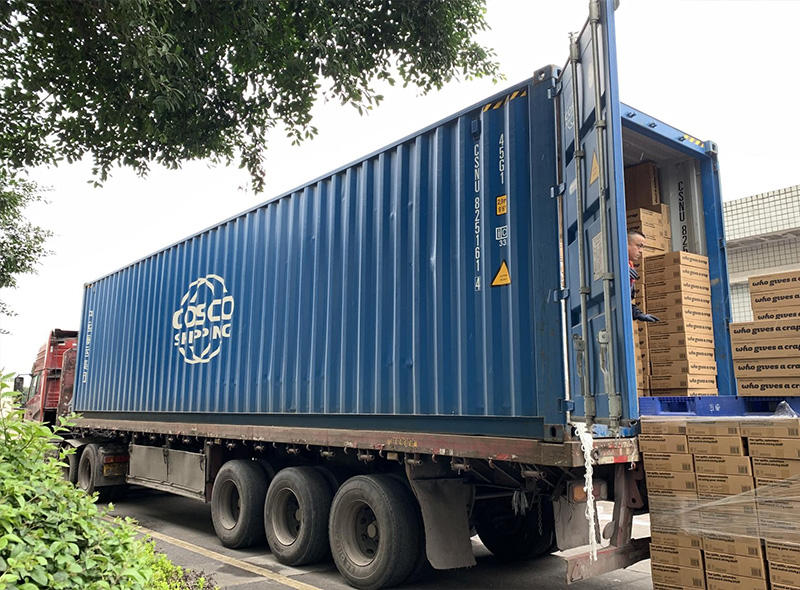
Freight Efficiency: Packing 1000 True Feet into a 9-Inch Diameter
A 0.0005–0.0010 in change in effective wrap caliper shifts outer diameter enough to make or break a 1,000‑ft / 9‑inch freight spec — control t, winding torque and core practice to hit both density and transit durability targets.
Tight vs loose winding: how tension changes roll density
Winding tension sets layer-to-layer contact and therefore the effective caliper (t) per wrap. Increase tension and you compress paper, lower effective t, raise layers-per-inch and pack more linear feet into a fixed outer diameter. Reduce tension and you trap more air, increase effective t and drop linear-feet capacity for the same OD while making the roll far more vulnerable to crushing during LTL handling.
Specify and log winding torque, nip-roller pressure and braking settings as part of the roll spec. Tight winding raises linear-feet-per-roll but increases the risk of telescoping or rebound unless you match core strength and ply-join/adhesive practices to the higher torque.
| Parameter | Industry Typical | Top Source Hygiene (TSH) Spec |
|---|---|---|
| Example: 1,000 true ft into 9″ OD (core 1.50″) | Assumes effective t ≈ 0.0045 in → N ≈ 770 wraps → D ≈ 8.43 in | TSH target: record winding torque & t for each batch |
| Caliper vs Diameter Impact | small t increases push D beyond 9 in | maintain t ≤ 0.0048 in for 9″ OD target with 1.50″ core |
| Labeling Standard | Standard Industry labels (Generic) | label rolls with true feet and effective caliper |
Calculating layers and diameter: formula and a worked example
Treat the roll as concentric annular wraps. With consistent units, let L = total length (inches), d = core diameter, t = effective wrap thickness (inches) and r_core = d/2. The layer count N satisfies: π t N^2 + 2π r_core N = L. Solve for N using the closed form below to test fit before production.
Closed form: N = [ -r_core + sqrt(r_core^2 + (t L)/π ) ] / t. Outer diameter D = d + 2 t N. Worked example: L = 1,000 ft = 12,000 in; d = 1.50 in (r_core = 0.75 in); t = 0.0045 in → N ≈ 770 layers → D ≈ 1.50 + 2·0.0045·770 ≈ 8.43 in. A sensitivity check: raising t to 0.0055 in pushes D to ≈ 9.29 in, so small caliper shifts matter.
Embossing, ply count and effective thickness: practical impacts
Embossing patterns, ply bonding and trapped air change effective t far more than nominal GSM or the word “2‑ply” implies. Engineers must specify the final wound caliper — not just sheet specs — because emboss patterns and ply joins alter compressibility and layer contact during winding.
- Aggressive embossing raises local thickness and traps air; expect a 5–25% reduction in linear feet per diameter depending on pattern density.
- Higher ply counts increase wrapped caliper proportionally; always measure effective t on finished, bonded stacks before winding trials.
- Softeners, wetness and coatings change compressibility; validate winding behavior after finishing steps rather than relying on pre-finish caliper.
- Control the complete winding recipe (tension + embossing + ply join) to meet both length-per-roll and transit durability targets.
Freight packing and transit risk: handling, testing and pallet strategies
Maximizing freight density increases profit per container but raises damage risk if you ignore roll crush behavior. Run a physical density audit and mimic LTL handling to set packing rules that balance cost and claims exposure.
- Physical Density Audit Test: measure true feet per roll, outer diameter and mass on samples. Perform compression (static and dynamic) and drop tests that replicate LTL pallet handling.
- Packaging limits: set max pallet layers, banding tension, corner protectors and dunnage to prevent side pressure that flattens outer wraps.
- Stacking patterns: orient cores and use staggered stacking to minimize telescoping and edge extrusion; distribute vertical load to avoid concentrated edge pressure.
- Segregate batches by winding spec. Ship tighter-wound rolls together when density matters; send looser-wound rolls with extra cushioning and lower pallet heights.
- Production marking: place winding tension, effective caliper and true feet on roll labels so warehouse and freight teams select correct palletization and protection for each batch.
Squeezing the Roll: The Physical Density Audit Test
A reproducible squeeze test turns subjective softness into objective density metrics so manufacturers and buyers can detect loose winding, verify true footage, and prevent crush damage in transit.
Purpose and Scope of the Physical Density Audit
Run the audit to confirm that roll bulk matches declared specs and to catch loose-wound or over-embossed rolls that inflate perceived thickness while reducing usable length. Focus this audit on commercial and jumbo rolls where density drives dispenser performance, freight efficiency, and damage risk during LTL and high-stack storage.
- Confirm roll bulk matches spec for diameter, weight, and true feet per roll.
- Detect loose winding that inflates perceived softness or thickness but reduces usable length.
- Align production output with freight and warehouse planning by measuring real density.
- Identify batches at risk of crushing during LTL shipping or in high-stack storage.
- Provide a quality gate for OEM/ODM private-label orders before shipment.
Test Equipment and Calibration Protocols
Use precise instruments and a documented calibration cadence so results remain comparable across shifts and sites. Keep ambient conditions consistent and log equipment IDs on each audit sheet to maintain traceability.
- Required tools: digital scale (0.1 g resolution), caliper (0.1 mm), compression tester with a known force range, and sample mandrel for core fit checks.
- Calibrate scale and caliper daily; verify compression tester using certified weights or a force gauge monthly.
- Use a consistent ambient condition (temperature and humidity) for comparable results.
- Label and log equipment ID and calibration date on each audit sheet.
- Train auditors on safe, repeatable handling to avoid pre-compression bias.
| Equipment | Key Specs | Calibration & Frequency |
|---|---|---|
| Digital Scale & Caliper | Scale: 0.1 g precision; Caliper: 0.1 mm precision. | Daily verification; Log all IDs and dates. |
| Compression Tester | Force range: adjustable (10–500 N). | Monthly verification with certified weights. |
| Sample Mandrel | Matched to core Outer Diameter (OD). | Pre-use visual inspection for surface integrity. |
Step-by-Step Squeezing Procedure and Measurements
Follow a fixed sequence so one operator’s data matches another’s. Record identification and ambient conditions first, then move through mass, geometry, controlled compression, and rebound measurement. Photograph anomalies to speed root-cause work.
- Record roll identification, ambient conditions, and nominal spec (GSM, ply, true feet).
- Weigh the roll on a calibrated scale to get mass in grams.
- Measure outer diameter and core inner diameter with calipers before compression.
- Apply a defined force (typical range 10–50 N depending on roll size) for a set dwell time (example: 10 seconds).
- Measure compressed thickness and note immediate rebound after force removal.
- Document any visible unwind, embossing separation, or ply delamination during the squeeze and capture photos when results deviate from expected ranges.
Interpreting Results: Density Calculations and Acceptance Criteria
Convert raw measurements into actionable metrics: apparent bulk, linear feet per roll, and compression ratio. Use these metrics to accept or reject lots and to trigger corrective actions on the production line.
- Calculate roll volume from outer and core diameters and roll length; derive apparent density as mass/volume (g/cm³).
- Estimate true feet by comparing mass per foot to lab-derived mass-per-foot references from controlled samples.
- Set acceptance bands per product family (example thresholds: apparent density >0.035 g/cm³; compression under test force <15%). Use company-specific targets rather than these examples for final decisions.
- Flag rolls with high embossing but low density as ‘puffy’—they risk crushing and waste freight space.
- Deploy statistical control charts to track density trends and trigger corrective action when the process drifts beyond control limits.
Operational Impacts and Recommended Actions
Translate audit findings into immediate production and logistics adjustments. Use the audit as a feedback mechanism to change winding settings, embossing depth, packing counts, and shipping configuration so product arrives undamaged and freight space stays efficient.
- If density is low, tighten winding tension or reduce embossing depth to recover usable length and improve transit resilience.
- For high compression during transit, add interior bracing, reduce stack height, or increase carton board strength.
- Adjust pack quantity per carton to balance freight cubic efficiency with crush protection.
- Feed audit data directly into process control to reduce variability between shifts and across factories.
- Include density checks in incoming inspection for private-label orders to prevent customer complaints and costly returns.
Conclusion
Correct winding tension, embossing, and packing choices lock in true roll density, protect paper integrity, and reduce freight cost and crush damage by making roll length and stacking behavior predictable. Proper machine setup also keeps operators safe, supports OSHA compliance, and extends equipment life.
Start by auditing a sample batch with the squeeze-density test and verifying your winding-tension settings against supplier specs. Contact Top Source Hygiene for certified density-audit templates, pre-shipment visual verification, or sample rolls to validate your packing and shipping plan.
Frequently Asked Questions
Why is some jumbo toilet paper wound loosely?
Manufacturers sometimes wind jumbo rolls loosely to preserve bulk and perceived softness, to avoid web breaks on delicate or embossed sheets, and to meet a specified linear length without exceeding a diameter limit. Loose winding also eases dispensing on some dispenser types and can create a marketing perception of a larger roll; however it lowers radial stiffness and resistance to handling damage.
Does roll diameter equal toilet paper length?
No. Outer diameter is a function of core diameter, sheet thickness (caliper), and winding density — not a direct measure of linear length. You can calculate length from diameters and sheet thickness using: Length = π*(D^2 – d^2)/(4*t) (consistent units), where D is outer diameter, d is core diameter, and t is sheet thickness per layer.
How to check the density of commercial toilet paper?
Measure outer diameter (D), core diameter (d), roll width (w) and roll mass (m; subtract core mass). Compute roll tissue volume V = π*(D^2 – d^2)/4 * w. Density = m / V (use consistent SI units for kg and m^3 to get kg/m^3). Alternatively for sheet bulk, measure basis weight (gsm) and caliper (mm) and calculate apparent density = gsm / caliper (convert units appropriately).
Why do loosely wound toilet paper rolls crush in transit?
Loose winding reduces interlayer friction and radial stiffness, so layers shift and compress under stacking loads, vibrations and point impacts during transport. Low apparent density means less structural support, so rolls flatten or go out of round when stacked or dropped. Poor packaging and high pallet stacking heights make the problem worse.
How many feet are in a tightly wound jumbo roll?
It varies by outer diameter, core size, ply and caliper, but tightly wound commercial jumbo rolls commonly contain roughly 800 to 2,000 linear feet; many typical units are about 1,000–1,500 ft. For an exact value use the diameter-to-length formula from above and convert to feet: Length(ft) = π*(D^2 – d^2)/(4*t) ÷ 12 when D, d and t are in inches.
How winding tension affects wholesale tissue shipping?
Winding tension controls roll density, outer diameter, and mechanical strength — all of which drive packing efficiency, pallet yield and damage rates. Higher controlled tension reduces diameter and increases crush resistance and shipping efficiency but can reduce perceived softness or cause web breaks if excessive. Low tension increases shipping damage and wasted volume. Optimize with closed-loop tension controls, acceptance criteria for OD and crush resistance, and complementary packaging or palletization changes.