 Skip to content
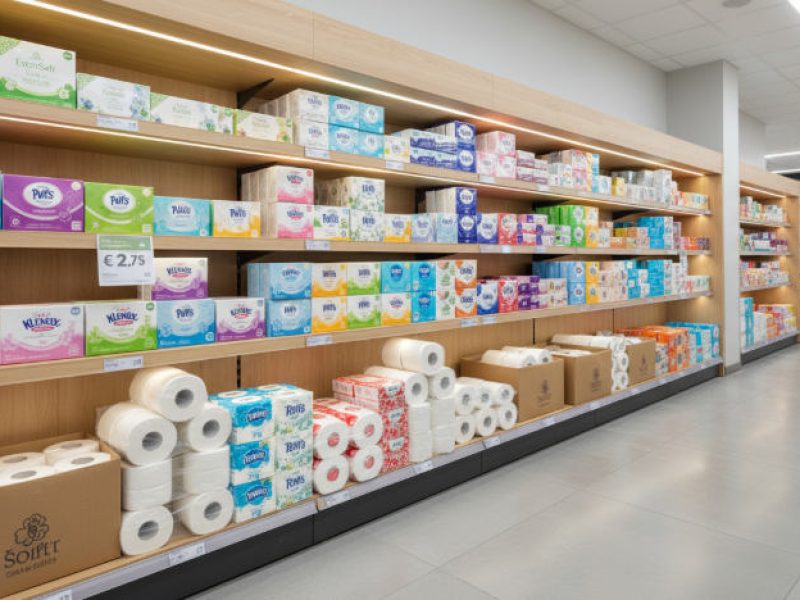
The procurement choice between a soft pack vs carton directly affects shipping overhead and storage density for high-volume sectors like healthcare and commercial aviation. Choosing the wrong packaging format leads to wasted cargo space and increased fuel burn, creating significant financial friction in lean supply chain operations.
This guide evaluates the structural performance of cardboard versus polyethylene film alternatives. We examine the engineering constraints of airline lavatories where space is a premium and the sanitation requirements that make moisture-resistant soft packs the standard for clinical environments. This analysis covers weight-to-volume ratios, waterproof barrier properties, and technical specifications for high-resolution printing on flexible packaging.
The Weight and Volume of Cardboard Cartons
Optimizing the weight-to-volume ratio of export cartons is the primary lever for reducing landed costs in high-volume tissue paper distribution across global trade routes.
Measuring Carton Weight in Global Logistics
Top Source Hygiene calculates the specific weight contribution of cardboard packaging to ensure strict compliance with international shipping limits. We prioritize high-strength, low-weight materials to reduce the overall mass of the 2,860 tons produced monthly at our Baoding facility. This focus on material engineering prevents excess weight from eating into the 40HQ container’s 7,000kg to 9,000kg payload capacity.
Our technical team conducts rigorous testing to determine the optimal balance between carton thickness and the protection of delicate facial tissues. Using 100% virgin wood pulp requires stable external packaging to prevent compression damage, yet we maintain a lightweight profile to protect distributor margins. These weight metrics are finalized before dispatch to Tianjin Xingang Port, providing buyers with precise data for their logistics calculations.
Optimizing Volume for Container Capacity
Logistics teams design carton dimensions to eliminate dead space within 40-foot high-cube containers. Engineers adjust carton sizing to remove internal voids, allowing more units to fit into a single shipment and lowering the per-unit freight cost. We utilize advanced stacking algorithms to improve the volume utilization rate for global clients in 56 countries, ensuring that every cubic meter of shipping space is profitable.
Precise volume measurements help clients estimate warehouse requirements and landing costs with high accuracy. By maximizing the pack count per carton, we reduce the total number of cartons needed for large-scale orders, which streamlines the unloading process at the destination. This systematic approach to volume management is a core component of our cost-reduction engineering for B2B partners.
Material Weight Comparisons
Data shows that transitioning from rigid cartons to soft packs reduces total shipping volume by a significant percentage, providing a clear alternative for price-sensitive markets. Production lines adjust the Grams per Square Meter (GSM) of packaging materials to meet specific regional weight regulations in Africa and North America. This flexibility allows us to customize the structural integrity of the packaging based on the anticipated transport conditions and stacking height.
We evaluate the structural integrity of cardboard cartons when subjected to high-density stacking in long-haul sea freight. Our 5-ply reinforced export cartons are specifically engineered to withstand the vertical pressure of a fully loaded 40HQ without collapsing. Comparing these material weights against modern film alternatives helps wholesalers choose the right balance between premium brand presentation and maximum freight efficiency.
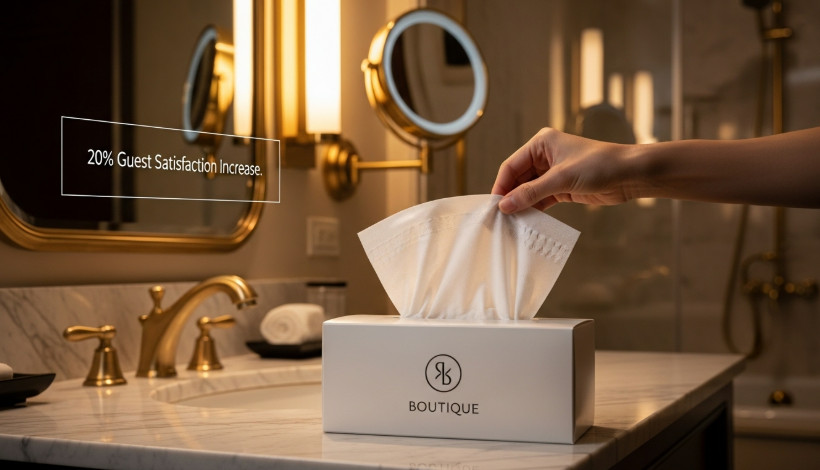
Soft Pack Facial Tissues: The Plastic Film Alternative
Flexible plastic film packaging reduces total logistics volume and provides a superior moisture barrier compared to traditional rigid cardboard cartons.
Material Quality and Tissue Softness
Top Source Hygiene manufactures soft pack tissues using 100% virgin wood pulp to ensure high tensile strength and a lint-free finish. These products meet international hygiene standards for market, focusing on a “cloth-tough” texture that remains gentle for facial applications. Using long-fiber wood pulp prevents paper scraps from remaining on the skin, a critical requirement for cosmetic and infant care sectors.
- 2-ply to 5-ply configurations address specific absorbency and durability needs across diverse climates.
- FSC-certified pulp ensures compliance with sustainability mandates in North American and European retail sectors.
| Performance Metric | Soft Pack (Plastic Film) | Cardboard Carton |
|---|---|---|
| Moisture Protection | High (Waterproof barrier) | Low (Absorbent material) |
| Storage Volume | Variable (Compressible) | Fixed (Rigid structure) |
| Unit Cost Factor | Lower (Material efficiency) | Higher (Structural weight) |
Custom Private Label Packaging
Brands select specific paper weights and dimensions to create unique soft pack products. Our ODM services transform brand concepts into finished goods ready for retail or commercial use. By adjusting the GSM (grams per square meter), importers can target specific price points without compromising the structural integrity of the tissue layers.
- Direct control over GSM and packaging design strengthens retail visibility and brand positioning.
- Custom-designed plastic film provides specialized solutions for the hospitality and healthcare sectors where water resistance is mandatory.
Production Capacity and Global Lead Times
Two factories produce 2,860 tons of paper monthly to maintain a steady supply for global partners. Efficient manufacturing ensures timely delivery across six continents through the Tianjin Xingang Port. We utilize 40HQ container loading strategies to maximize payload and reduce the landed cost per unit for international distributors.
- Standard production for 40-foot containers takes 20 to 25 days, aiding effective inventory management.
- Shipping routes to North America and Europe typically require 7 to 14 days for arrival after dispatch.
Scale Your Brand with Premium OEM Tissue
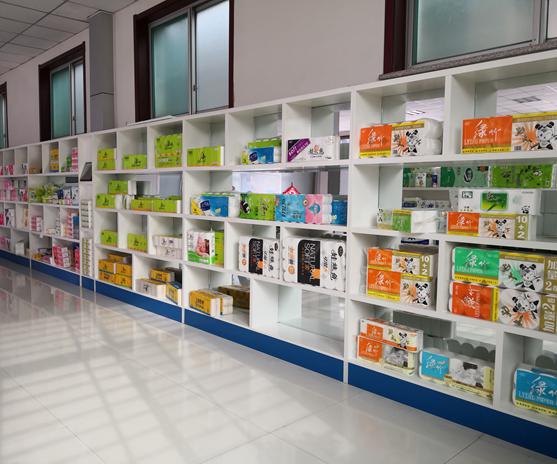
Water Resistance: Why Hospitals Prefer Soft Packs
Soft pack facial tissues utilize non-porous poly-film to eliminate capillary action and moisture absorption, ensuring tissue integrity in fluid-intensive clinical environments.
Protection Against Liquid Spills and Moisture
Clinical settings present constant risks of fluid exposure that compromise standard paper-based packaging. Plastic film creates a reliable waterproof shield against accidental splashes and spills common in medical wards. Unlike cardboard cartons that wick moisture and eventually collapse, this non-porous barrier protects the 100% virgin wood pulp tissues from absorbing ambient humidity in high-moisture hospital zones.
| Performance Metric | Soft Pack (PE Film) | Standard Cardboard |
|---|---|---|
| Liquid Barrier | Waterproof / Non-porous | Absorbent / Wicks liquids |
| Surface Disinfection | Chemical wipe compatible | Degrades / Sogginess |
| Fiber Control | Zero edge shedding | Perforated dust accumulation |
Medical staff frequently handle packaging with wet hands or gloves. Soft pack materials maintain their structural integrity under these conditions, preventing the contamination of the inner sheets. We engineer these packs to perform as a sterile-ready container that remains functional from the first pull to the last.
Hygiene Compliance and Surface Disinfection
Strict sanitation protocols in require surfaces near patient beds to withstand frequent chemical cleaning. Hospital personnel apply surface disinfectants directly to the exterior film of soft packs to maintain a sterile environment. Traditional cardboard boxes trap dust and fibers along their edges, which conflicts with modern healthcare hygiene goals.
- Soft pack designs eliminate the accumulation of particulate matter often associated with rigid paper edges.
- Manufacturing under ISO 9001 and FDA standards ensures the contents remain uncontaminated by liquid seepage.
- The OBA-free virgin pulp stays protected behind a chemical-resistant outer layer.
Durability in High-Volume Healthcare Settings
Flexible packaging maintains its shape better than rigid cardboard when exposed to the physical rigors of hospital logistics. Soft packs resist tearing and crushing in crowded supply carts or high-traffic nursing stations. This resilience during transport and storage prevents the product loss typically associated with soggy or collapsed cardboard.
Healthcare facilities reduce maintenance waste by utilizing moisture-resistant packaging that stays intact throughout its usage cycle. By adopting these high-durability formats, hospitals ensure their tissue inventory remains ready for use even in the most demanding environments, optimizing their procurement budget and hygiene safety.
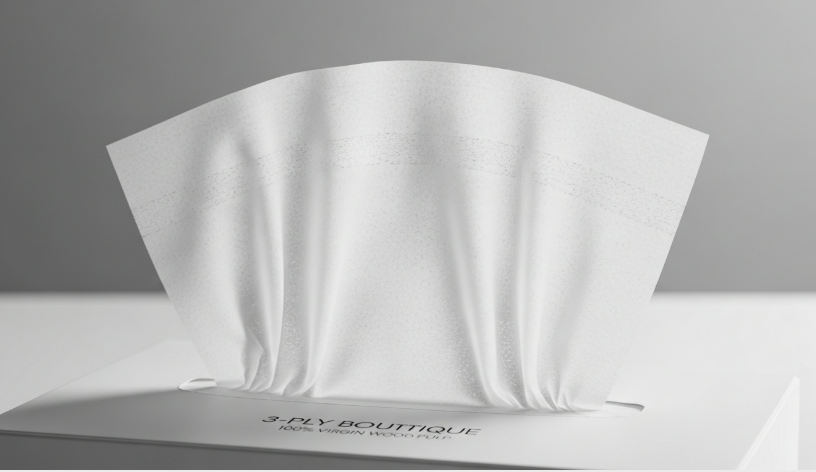
Airline Lavatories: Fitting Tissues into Tight Spaces
Aircraft lavatory constraints in demand packaging that yields to physical storage limits without sacrificing sheet count or hygiene integrity.
Spatial Optimization with Flexible Packaging
Modern cabin designs prioritize seat pitch and galley space, often leaving lavatory storage with irregular or shallow cabinet depths. Rigid cardboard cartons fail in these environments because their fixed dimensions cannot adapt to tight dispenser geometries. Soft pack films provide the necessary malleability to conform to narrow slots, ensuring ground crews fully stock every station regardless of aircraft model.
| Performance Metric | Traditional Rigid Carton | TSH Soft Pack (TSH-5968) |
|---|---|---|
| Spatial Adaptability | Low (Fixed Dimensions) | High (Malleable Film) |
| Payload Weight | Higher (Fiberboard Mass) | Minimal (Thin-Polymer) |
| Dispenser Compatibility | Requires Specific Sizes | Universal/Adjustable |
- Soft pack film conforms to irregular dispenser shapes more effectively than rigid cartons.
- Top Source Hygiene provides custom dimensions to match specific narrow-body aircraft configurations.
- Flexible materials allow for higher sheet counts within the same physical footprint to reduce refill frequency.
Weight Reduction for Aviation Compliance
Minimizing secondary packaging weight helps airlines meet strict fuel efficiency and carbon emission targets. Heavy fiberboard boxes add unnecessary mass to the total payload, especially on long-haul routes where every kilogram impacts the bottom line. Replacing these boxes with high-performance thin film reduces weight without sacrificing product protection.
- Replacing cardboard boxes with thin plastic film reduces the total payload per flight.
- Top Source Hygiene utilizes 100% virgin wood pulp to maintain high absorbency while using less material bulk.
- Lighter packaging profiles lower logistical costs across global hygiene supply chains.
Efficiency in High-Traffic Restocking
Fast-paced flight schedules require hygiene products that cabin crews replace rapidly during short turnarounds. Time lost struggling with jammed cardboard dispensers or complex openings directly impacts ground handling efficiency. Standardized soft pack formats simplify the inventory process and ensure consistent availability across diverse fleet models.
- Easy-tear film openings simplify the replenishment process for staff under time constraints.
- Standardized tissue sizes ensure compatibility across diverse aircraft models within a commercial fleet.
- Top Source Hygiene’s reliable 15-25 day production lead time supports consistent inventory management for major international hubs.
Printing High-Res Graphics on Soft Pack Film
Modern flexographic systems in provide the high-velocity precision required to render retail-grade visual fidelity on flexible, recyclable plastic substrates.
Flexographic Printing for Film Substrates
High-speed production facilities utilize precision flexographic plates to maintain sharp detail on the thin-gauge films used for soft pack tissues. These systems integrate automated tension controls to prevent substrate stretching, ensuring logos and branding remain distortion-free during the rapid winding and packaging process.
- Precision printing plates capture fine text and intricate logo details for global brands.
- Fast-drying ink systems prevent smudging during high-speed production in facilities.
- Automated tension controls keep the film stable to ensure perfect image alignment during the run.
Color Management for Private Labels
Maintaining brand integrity across diverse global markets requires rigorous digital color-matching protocols. Top Source Hygiene utilizes CMYK printing processes to achieve photographic quality on film, allowing private label clients to elevate their retail presence with high-resolution graphics that mirror premium household paper products.
- Digital color profiles keep logos uniform across markets in North America, Europe, and Asia.
- High-resolution graphics elevate the shelf presence of household paper products in retail environments.
- CMYK printing processes allow for photographic quality imagery on soft pack packaging.
Sustainable Ink Systems for Standards
Current manufacturing standards prioritize soy-based and water-based ink chemistries to meet international environmental regulations and reduce VOC emissions. These modern formulas bond effectively with 100% recyclable soft pack materials, while specialized coatings defend the graphics against moisture without compromising the recyclability of the film.
- Soy-based and water-based inks reduce chemical emissions during the manufacturing process.
- Specialized coatings protect graphics from moisture without hindering the recyclability of the film.
- Modern ink formulas bond effectively with 100% recyclable soft pack materials.
Conclusion
Airline and hospital procurement teams must balance space constraints with specific hygiene needs when selecting tissue formats. Soft packs provide the moisture resistance required for clinical environments and the compact flexibility needed for aircraft lavatories. Selecting the appropriate packaging ensures that your facility maintains high service standards while optimizing storage and logistics costs.
Review your current fleet or facility inventory to determine which tissue specifications best support your operational goals. Reach out to our team for technical data sheets or a bulk sourcing quote tailored to your region.
Frequently Asked Questions
What is a soft pack facial tissue?
A soft pack facial tissue refers to tissues packaged in a flexible, poly-film plastic wrap rather than a rigid cardboard box. This format is designed for high portability and space efficiency, allowing the packaging to collapse as tissues are consumed. Soft packs are widely used in the hospitality, automotive, and travel industries due to their durability and lower shipping volume compared to traditional cartons.
Carton vs plastic wrap tissue packaging?
The choice between carton and plastic wrap packaging depends on the application environment. Carton packaging offers a premium aesthetic and structural rigidity, making it ideal for office desks and luxury hotel rooms. Plastic wrap (soft pack) packaging is superior for moisture resistance and weight reduction. In B2B logistics, plastic wrap is often preferred as it significantly reduces “dead air” in shipping containers, leading to lower freight costs and a smaller carbon footprint.
Best facial tissue for airline lavatories?
Soft pack tissues are the industry standard for airline lavatories. The flexible plastic film protects the tissues from the high-humidity environment and potential water splashes common in compact aircraft restrooms. Additionally, the lightweight nature of soft packs contributes to aircraft weight reduction strategies, while the collapsible design ensures they fit perfectly into specialized, narrow on-board dispensers.
Waterproof facial tissue packaging?
Waterproof facial tissue packaging is achieved through the use of high-density polyethylene (HDPE) or low-density polyethylene (LDPE) soft packs. Unlike cardboard cartons, which absorb moisture and lose structural integrity when wet, these plastic-wrapped packs provide a complete moisture barrier. This makes them the optimal choice for high-moisture environments such as bathrooms, kitchens, and outdoor industrial settings.
Custom printed soft pack tissues?
Custom printed soft pack tissues serve as a highly effective B2B promotional tool. Using advanced flexographic or digital printing, the entire surface of the plastic film can be branded with full-color logos, contact information, and corporate designs. This is a popular choice for airline amenities, hotel guest kits, and corporate giveaways because it combines high daily utility with persistent brand visibility at a very low cost per unit.
