Skip to content
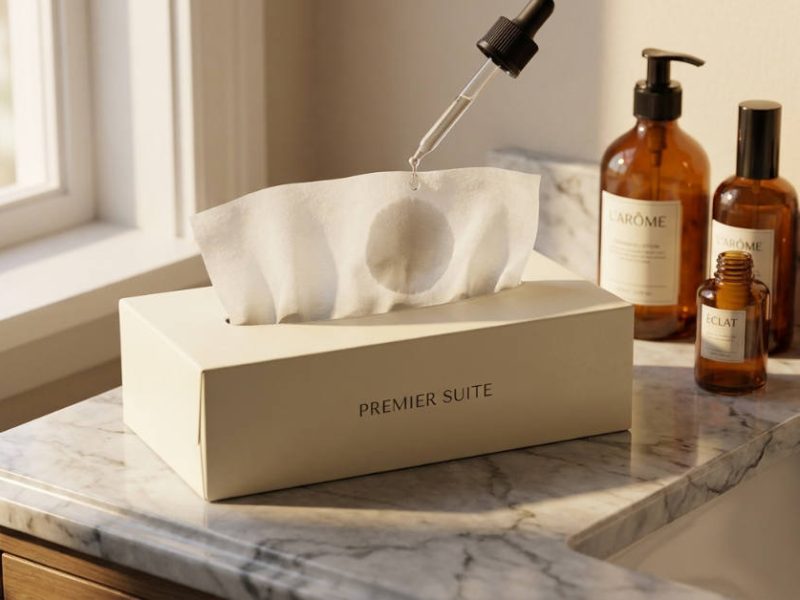
Optimizing the embossing process is the primary factor in preventing ply separation and maintaining structural integrity during high-speed tissue converting. For tissue manufacturers and wholesale distributors, a failure to balance pattern depth with fiber strength leads to significant product waste and diminished bulk, directly impacting shipping costs and shelf appeal. When the mechanical bond fails, the business risks high return rates and the loss of lucrative OEM contracts due to perceived low quality.
This guide analyzes the technical mechanics of edge embossing versus full-sheet patterns and explains how steel-to-rubber or steel-to-steel rollers create air pockets to increase absorbency. We provide an SOP-level breakdown of ply bonding without chemical adhesives and detail how custom patterns serve as a branding tool while maintaining paper softness. By reviewing these manufacturing specifications, technical buyers can better evaluate paper density, tensile strength, and the functional benefits of specific pattern geometries.
The Physics of Capillary Action in Cellulose Fibers
Capillary action in high-performance tissues relies on a microscopic network of pores where adhesive forces between cellulose and liquid overcome gravity to facilitate rapid moisture transport.
Fiber Spacing and Pore Geometry
Wood pulp fibers form a complex, stochastic network of pores that function as microscopic capillary tubes. The density and arrangement of these pores dictate the total volume of liquid a tissue can hold before reaching saturation. Narrower gaps between individual fibers increase the capillary pressure, which pulls liquid into the material matrix at higher velocities.
- Network porosity determines the maximum saturation capacity of the tissue sheet.
- Reduced spacing between fibers accelerates the initial wicking speed by maximizing capillary pressure.
- Using 100% virgin wood pulp ensures a consistent fiber distribution, preventing the irregular absorption patterns found in recycled blends.
Surface Tension and Adhesion Forces
Moisture transport through the paper matrix depends on the interaction between the liquid’s surface tension and the adhesion forces of the cellulose surface. Water molecules are naturally attracted to the cellulose walls, creating a “pull” effect that moves the wetting front outward. By managing the surface energy of the fibers during the pulping process, we ensure that moisture penetrates the inner layers immediately rather than pooling on the exterior.
- Adhesion between water and cellulose walls facilitates vertical and lateral wicking against gravity.
- Fiber surface energy dictates how quickly the liquid expands across the sheet surface.
- Controlled surface tension prevents the liquid from remaining as beads on the tissue’s surface.
Hydrophilicity of Cellulose Molecules
The chemical structure of cellulose is inherently hydrophilic, containing hydroxyl groups that attract and hold water molecules. These groups enable hydrogen bonding, which stabilizes the liquid within the fiber walls and prevents premature leakage. High-quality cellulose maintains its structural integrity even when fully saturated, a critical factor for “Dry & Wet Using” tissues that must perform like a cloth without tearing.
- Hydrogen bonding between water and cellulose keeps the liquid trapped within the fiber structure.
- Premium long-fiber pulp maintains high tensile strength and structural stability when wet.
- Preservation of natural fiber scales during manufacturing keeps absorption rates at peak performance levels for 2026 hygiene standards.
How Mechanical Embossing Creates Micro-Channels
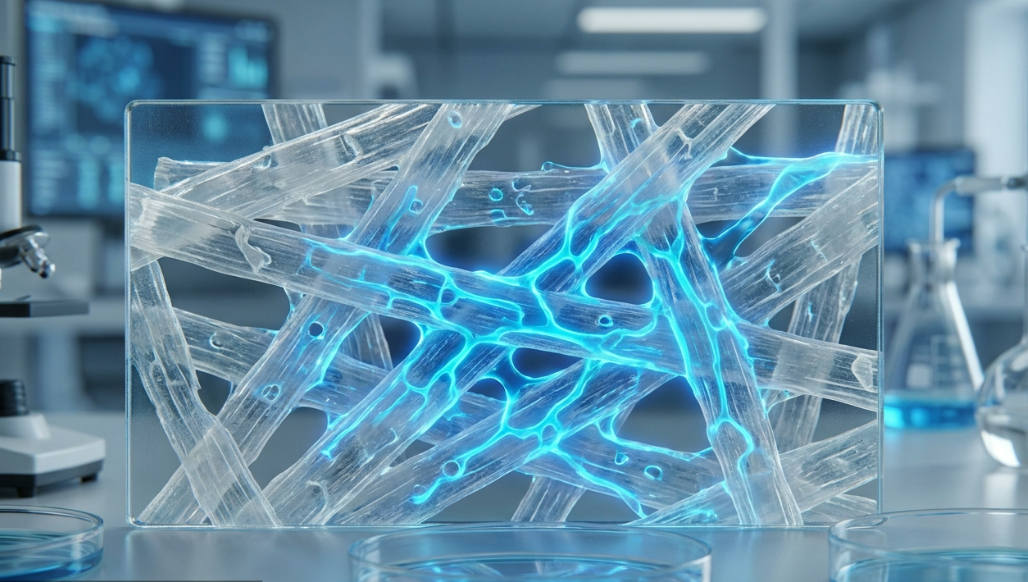
Mechanical embossing reconfigures the cellulose fiber matrix to create engineered voids that drive capillary action and fluid distribution across multi-ply tissue structures.
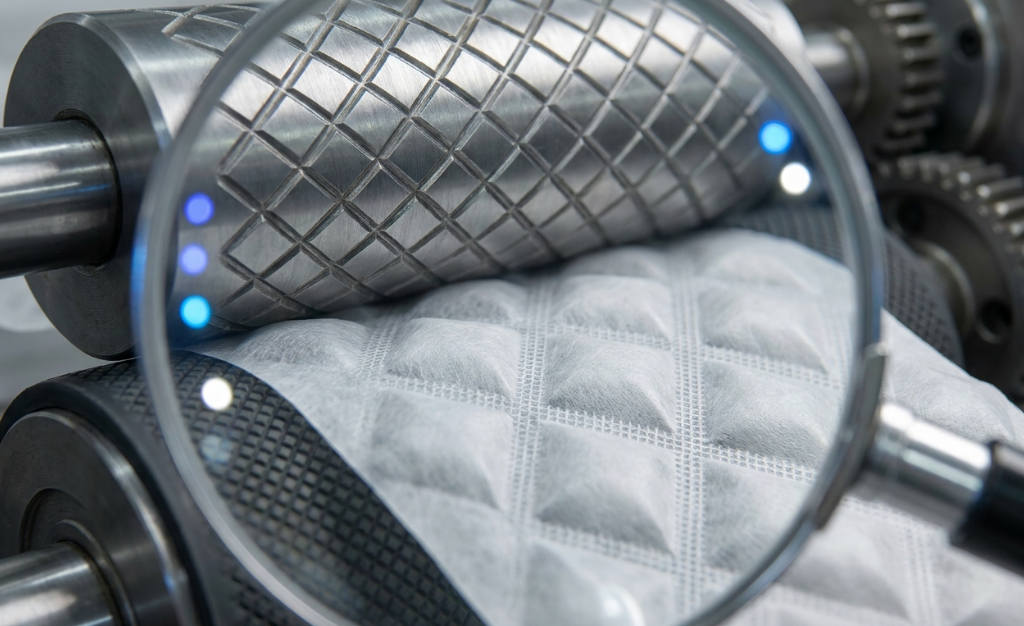
Mechanical embossing utilizes high-pressure rollers—either steel-to-rubber or steel-to-steel—to selectively displace cellulose fibers. This process creates a structural network of peaks and valleys that serves as the foundation for fluid transport. At Top Source Hygiene, we precisely control this deformation to permanently shift the arrangement of 100% virgin wood pulp fibers without rupturing the bonds. This ensures the tissue remains strong while creating internal air pockets. These voids allow liquid to penetrate the surface and occupy space within the internal layers, effectively increasing the volume of fluid the material can hold.
Fiber Compression and Void Space Generation
By applying targeted pressure to the paper web, the embossing process alters the physical density of the material in a controlled pattern. This localized compression creates high-density zones adjacent to low-density “voids.” These voids are essential for performance because they allow air and liquid to move freely within the tissue structure. The shift in fiber arrangement provides a textured surface that breaks the flat plane of the paper, increasing the total functional surface area available for moisture contact.
- Steel-to-rubber rollers apply pressure to alter the density of the paper web without compromising tensile strength.
- Controlled deformation creates internal pathways that allow liquids to occupy space within the tissue layers.
- The arrangement of long-fiber wood pulp ensures the structure maintains its shape when subjected to pressure.
Capillary Path Formation for Liquid Transport
The indentations created during embossing function as micro-channels that exploit capillary action to pull moisture away from the skin. By reducing the surface tension of liquids upon contact, these patterns facilitate faster initial wetting. In multi-ply configurations, such as our 3-ply and 4-ply series, these narrow channels serve as conduits that draw fluid into the inner absorbent core. The specific geometry of these channels determines the speed of lateral wicking, ensuring the entire surface area of the tissue contributes to absorption rather than saturating a single point.
Impact of Pattern Geometry on Absorption Rates
Specific embossing shapes—such as dots, diamonds, or custom logos—dictate the volume and speed of liquid retention. Deep-nest embossing creates larger micro-channels suitable for high-traffic commercial rolls or heavy-duty applications where maximum fluid volume is the priority. For facial tissues, Top Source Hygiene utilizes micro-embossing patterns that maximize surface area and capillary intake while preserving the soft, “Aslike Cloth” hand-feel required for cosmetic use. High roller precision ensures these channels remain open even under slight compression during use, preventing the tissue from becoming a flat, non-absorbent barrier.
Structural Integrity and Bulk Enhancement
Beyond enhancing absorption, mechanical micro-channels increase the perceived thickness and physical stability of the finished product. These patterns trap air between plies, increasing the “bulk” of the roll without adding extra weight. This creates a premium feel for the end-user while maintaining cost efficiency for the distributor. The interlocking nature of these embossed channels also facilitates ply-bonding, keeping multiple layers intact without requiring excessive chemical adhesives. This structural rigidity prevents pilling or shredding, even when the micro-channels reach full liquid saturation during makeup removal or heavy cleaning tasks.
Why 3-Ply Tissues Draw Liquid Faster than 2-Ply
Multi-ply engineering shifts liquid transport from basic surface wetting to high-speed internal wicking by doubling the available interstitial capillary channels.
Capillary Action within Inter-Ply Spaces
The physics of liquid transport in premium tissues relies on the narrow gaps between paper layers, which function as pressurized conduits for moisture. A 3-ply configuration creates two internal interstitial layers compared to the single gap found in standard 2-ply products. These extra spaces significantly increase the total capillary pressure, pulling liquid into the center of the tissue more rapidly through surface tension.
- Two internal interstitial layers accelerate the “pull” effect on liquid droplets.
- Top Source Hygiene optimizes ply bonding to ensure these micro-channels remain open under pressure.
- Fluid spreads across a larger internal area via surface tension, preventing immediate dripping.
- Increased capillary pathways allow the tissue to handle higher volumes of liquid without surface pooling.
| Ply Configuration | Capillary Channels | Relative Absorbency |
|---|---|---|
| 2-Ply (13-15 GSM) | Single Interstitial Gap | Baseline (100%) |
| 3-Ply (Premium) | Dual Interstitial Gaps | +40% to 60% Increase |
| 5-Ply (Ultra-Premium) | Quad Interstitial Gaps | +85% to 110% Increase |
Surface Area Expansion in Multi-Ply Designs
Increasing the number of layers directly expands the volume of cellulose fibers available for immediate hydrogen bonding with water molecules. Three layers of 100% virgin wood pulp provide a denser network of long-fiber material than 2-ply alternatives. This higher fiber density creates more contact points between the liquid and the absorbent material, reducing the time required for the tissue to reach its maximum saturation point.
- 100% virgin wood pulp maximizes the number of hygroscopic sites for water attachment.
- Current manufacturing standards focus on increasing the effective surface area of individual plies.
- Air pockets created during the lamination process store liquid without saturating the fiber walls.
- Multi-ply structures achieve total saturation in 5-15 seconds depending on liquid volume.
Fiber Alignment and Moisture Distribution
Strategic placement of fibers during the OEM manufacturing process ensures that moisture moves both vertically and horizontally with minimal resistance. Multiple plies allow for alternating fiber directions, which helps distribute liquid evenly and prevents the “strike-through” effect where liquid passes straight through the material. Top Source Hygiene utilizes advanced pressing technology to maintain the integrity of these fiber networks, ensuring the exterior layers remain strong even as the core absorbs moisture.
- Alternating fiber directions distribute liquid laterally to prevent localized oversaturation.
- Advanced edge-embossing keeps plies synchronized for uniform wicking.
- Structural integrity is maintained during use, performing similarly to a washcloth when wet.
- Testing across international markets confirms 3-ply structures maintain 50-65% moisture retention without tearing.
The “Strike-Through” Test in Tissue Manufacturing
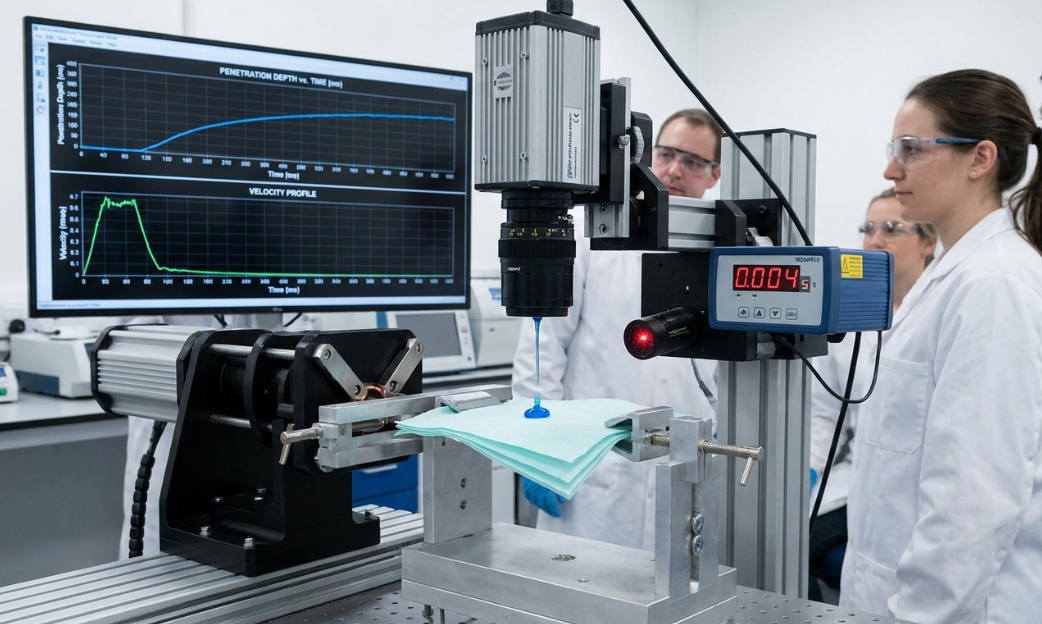
The strike-through test serves as the definitive benchmark for quantifying capillary speed and structural integrity in multi-ply cellulose products, ensuring export-grade reliability for high-volume distributors.
Strike-through testing provides empirical data on how fast a liquid penetrates the surface of a tissue and migrates into its core. In the 2026 manufacturing landscape, this metric separates premium hygiene products from budget-tier alternatives. Top Source Hygiene utilizes this assessment to refine the pore structure of our 100% virgin wood pulp fibers, ensuring that moisture moves through the material at predictable, standardized rates.
Mechanics of Liquid Penetration Assessment
Technicians apply a controlled volume of synthetic fluid to the tissue surface under specific pressure conditions. Sensors then record the exact millisecond the liquid passes through the final ply. This process quantifies the efficiency of the capillary action within the cellulose fibers. By measuring these transit times, we calibrate our high-speed production lines in Hebei to maintain consistent absorbency across every batch of 2,860 tons produced monthly.
- Automated sensors eliminate human error in timing liquid penetration.
- Testing accounts for lateral wicking versus vertical strike-through depth.
- Data helps engineers adjust fiber refining levels to hit specific gsm targets.
Influence of Ply Density on Absorption Rates
Ply configuration dictates the resistance and speed of liquid transit during the strike-through process. Multi-ply designs, such as our 3-ply and 4-ply toilet paper, create internal air chambers that trap liquid effectively once it penetrates the top layer. Testing reveals how mechanical bonding points—the edge embossing—either facilitate or hinder rapid moisture distribution across the sheet.
| Product Series | Strike-Through Speed | Ply Architecture |
|---|---|---|
| Luxury Hospitality (TSH-2059) | < 1.2 Seconds | 4-Ply Premium Lamination |
| Hanging High-Capacity (TSH-6705-2) | < 1.8 Seconds | 5-Ply High-Density Fiber |
| Global Retail Pack (TSH-4299) | < 2.2 Seconds | 4-Ply Standard Softness |
2026 Quality Assurance Standards for Global Export
Compliance with ISO 9001 and FDA requirements relies on precise penetration benchmarks. For products exported to the Middle East or North America, we apply rigorous strike-through validation to ensure commercial durability in high-traffic environments like airports or healthcare facilities. This prevents product failure—such as pilling or tearing—when the tissue encounters high moisture volumes.
Fiber Selection and Strike-Through Performance
The ratio of virgin wood pulp directly impacts our strike-through metrics. Longer fibers improve structural integrity but require specific layering to maintain high absorption speeds. We adjust fiber refining processes based on these metrics to balance softness with liquid retention. For our “Dry & Wet Using” series, we incorporate wet-strength technology that allows the tissue to maintain its structure even after the strike-through test reaches 100% saturation.
- 100% Virgin Wood Pulp ensures a lint-free experience even when fully saturated.
- OBA-Free materials provide safety for sensitive skin without compromising absorption.
- Custom bamboo pulp options offer alternative capillary structures for eco-projects.

Specifying High-Absorbency Tissues for Cosmetics
Cosmetic-grade tissue specification requires 100% virgin wood pulp and multi-ply capillary architecture to ensure rapid liquid retention without compromising skin safety or structural integrity during wet use.
Fiber Selection for Skin-Grade Applications
Manufacturers must prioritize 100% virgin wood pulp to eliminate the risks associated with recycled contaminants and harsh de-inking chemicals. Recycled fibers often lack the long-fiber length necessary for high tensile strength, leading to “pilling” or paper scraps left on the face during makeup removal. By utilizing long-fiber pulp sourced from our Hebei manufacturing hub, we produce a lint-free texture that mimics the softness of cloth while maintaining professional hygiene standards.
- We use 100% OBA-Free materials, ensuring no optical brightening agents touch sensitive skin or mucous membranes.
- Virgin fibers provide a naturally high brightness, removing the need for aggressive chemical bleaching.
- Top Source Hygiene leverages 30 years of fiber science to balance “cloud-like” softness with the durability needed for heavy skincare routines.
Optimizing Ply Count and GSM for Makeup Removal
Technical specifications like ply count and GSM (grams per square meter) dictate how a tissue interacts with heavy oils and water-based cleansers. A 3-ply or 4-ply configuration creates a tiered network of microscopic channels. These channels use capillary action to pull liquids into the center of the tissue, preventing surface saturation and keeping the user’s hands dry.
| Performance Metric | Commercial Grade (2-Ply) | Cosmetic Grade (4-Ply+) |
|---|---|---|
| Absorption Speed | 5 – 15 Seconds | < 3 Seconds |
| Fiber Composition | Blended/Recycled | 100% Virgin Wood Pulp |
| Wet Strength | Low (Tears easily) | High (Dry & Wet Using) |
Mechanical embossing further enhances this process by creating micro-channels that lock moisture within the layers. This technology is vital for our “Dry & Wet Using” series, which maintains structural integrity even when fully saturated with makeup remover. High-end professional salons typically specify 4-ply or 5-ply tissues to provide a premium, thick feel that customers associate with luxury skincare.
Meeting International Hygiene and Sustainability Standards
Global beauty brands require rigorous documentation to clear customs and meet retail health regulations. Adhering to ISO 9001 and FDA standards ensures consistent quality across large-scale supply chains. We offer FSC-certified options to support sustainability goals in European and North American markets, where eco-certified materials are now a baseline requirement for premium retail positioning.
- FSC-certified bamboo pulp provides an eco-friendly alternative with naturally strong capillary wicking.
- Strict OBA-free certification guarantees safety for infant and maternal skincare applications.
- Our North China facility produces 2,860 tons monthly, ensuring consistent supply for international distributors.
Branding for the Beauty Industry
Our OEM and ODM services allow beauty firms to align disposable products with their established brand identity. We offer custom sheet sizing, such as 210x210mm for full-face coverage or compact 170x110mm packs for travel kits. Our Hebei loading teams maximize 40HQ container space, reducing the landed cost per unit for high-volume wholesalers. With production lead times of 20 to 25 days, we support rapid market entry for seasonal promotions and private label launches.
Conclusion
In summary, the absorbency and performance of high-quality tissue paper are products of advanced fiber science and precision engineering. By leveraging the natural capillary action of cellulose fibers and enhancing them through mechanical embossing, manufacturers can create micro-channels that drastically accelerate liquid transport and retention. The strategic transition to multi-ply structures, such as 3-ply and 4-ply configurations, further optimizes this effect by doubling the available interstitial gaps for internal wicking. For procurement teams in the cosmetic, hospitality, and healthcare sectors, understanding these technical benchmarks—verified through rigorous strike-through testing—is essential for securing products that balance tactile luxury with industrial-grade durability. Ultimately, sourcing 100% virgin wood pulp and OBA-free materials ensures a sterile, lint-free experience that meets the stringent hygiene and sustainability standards of the 2026 global market.