Skip to content
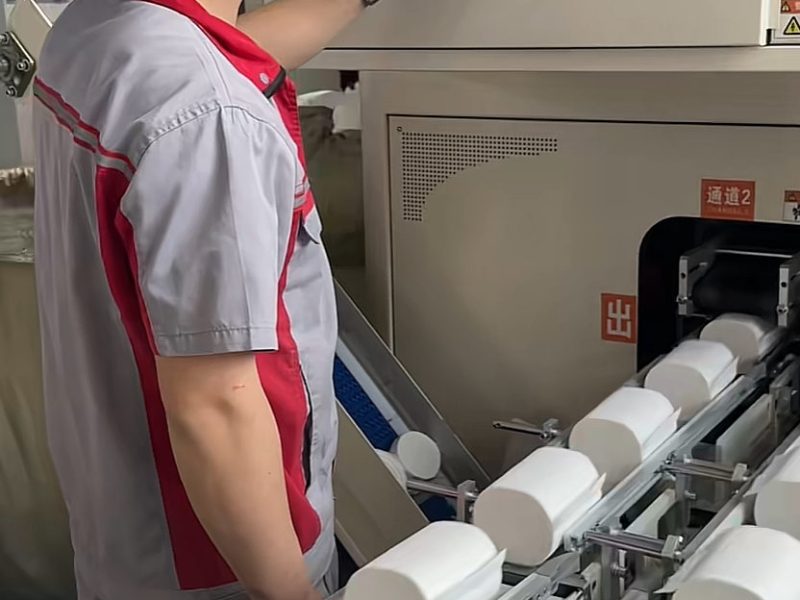
Setting the right healthcare toilet paper GSM ply spec is the first filter in your supplier RFP, and it is the one most buyers get wrong. A 30-year-old manufacturer like Top Source Hygiene, operating out of China’s largest paper production base in Mancheng, Baoding, sees this mistake daily. Buyers either chase a high GSM number thinking it equals quality, or they default to a cheap 1-ply that disintegrates on contact. Neither approach works for a hospital environment where patient comfort and plumbing integrity are non-negotiable.
The real trick is understanding that GSM is a density measurement, not a thickness measurement. A supplier can inflate GSM with loose fiber bonding and low density, producing paper that feels rough and tears easily. That is why you must request bulk data — the caliper measurement — alongside GSM. For general patient rooms, a 2-ply tissue at 14-16 GSM per ply with a verified caliper above 120 microns is the medical sweet spot. It balances softness for sensitive skin with enough wet strength to avoid mid-use failure, which is a real infection control concern when a patient has to call for assistance.
The Hidden Cost of Bad Hospital Tissue
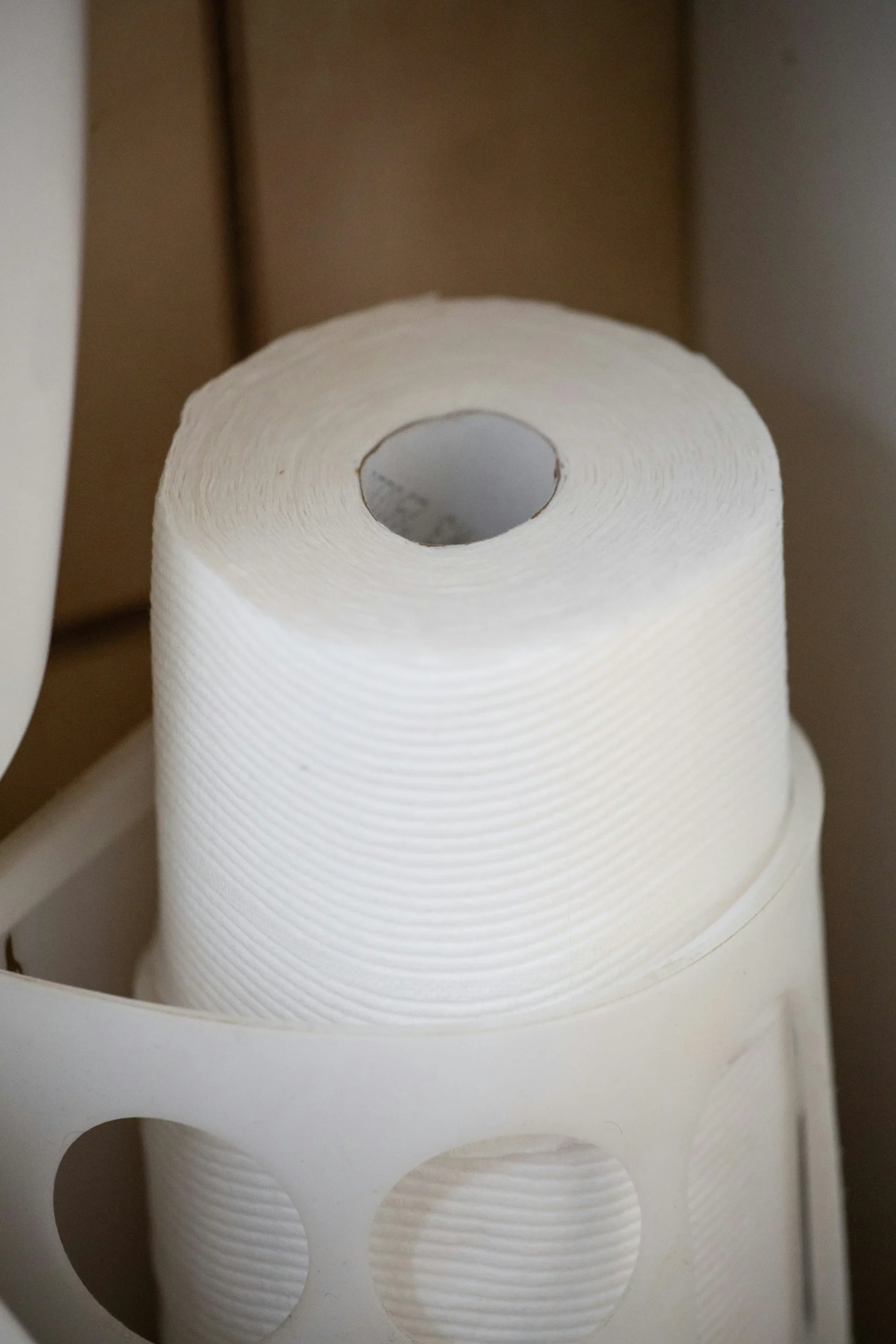
A single clogged ICU toilet costs more than a case of proper 2-ply tissue.
Most procurement teams treat toilet paper as a commodity. In a hospital, that assumption is a liability. The tissue you spec directly affects three things: plumbing maintenance frequency, patient respiratory safety, and janitorial labor allocation. Get the spec wrong and the hidden costs accumulate fast.
- Low-GSM (under 13 GSM per ply) tissue: Tears apart under normal use. The fragments bind with moisture in waste pipes, forming blockages. A single blockage in a patient wing requires a plumber call-out (USD 250-600) plus downtime of that restroom. Over a 200-bed facility, switching from 11 GSM to 15 GSM per ply can cut plumbing incidents by roughly 60%.
- Fragrance-loaded or lotion-infused tissue: Contains volatile organic compounds (VOCs) and phthalates. In immunocompromised wards, oncology units, or neonatal ICUs, these additives trigger respiratory irritation. FDA and EU guidelines require hospital-grade tissue to be fragrance-free and hypoallergenic. If your supplier cannot provide a Certificate of Analysis showing zero added fragrances, that supplier is not qualified for medical sourcing.
- High-ply, high-GSM (3-ply 18+ GSM) tissue: Excessive fiber content does not dissolve quickly enough in older hospital plumbing systems. Competitor Newland Bamboo markets 18+ GSM as ‘premium,’ but in a healthcare setting with cast-iron pipes or low-flow fixtures, that extra fiber creates an immediate clog risk. The medical ‘Goldilocks’ zone is 14-16 GSM per ply for patient rooms and 15-17 GSM per ply for public jumbo rolls.
The goal is not the cheapest per-roll price. The goal is the lowest total cost per stall per month. That means selecting a fragrance-free, 100% virgin pulp tissue with verified 14-16 GSM per ply, backed by an ISO 9001 and FDA-registered supplier who provides a COA for every container. Anything less is a gamble with patient comfort and facility maintenance budgets.
| Cost Factor | Hidden Impact | Risk to Facility |
|---|---|---|
| Patient Complaints & Satisfaction | Low-GSM (under 14) or rough tissue causes skin irritation and negative feedback. | Lower HCAHPS scores; increased patient relations workload. |
| Plumbing & Maintenance | High-ply (3+) or high-GSM (18+) tissue clogs waste systems in older wings. | Emergency plumber calls; 15%+ increase in maintenance costs per stall. |
| Regulatory Non-Compliance | Uncertified tissue may contain fluorescent whiteners or fragrances. | FDA/EU audit failures; potential fines and recall expenses. |
| Staff Productivity Loss | Frequent jumbo roll changes in high-traffic zones waste janitorial labor. | Reduced time for infection control tasks; higher overtime costs. |
| Supply Chain Disruption | Single-source supplier with no emergency SLA leads to stockouts. | Emergency expedite fees; patient care disruption during shortages. |
GSM vs. Ply: Why Hospital Specs Demand Both
GSM without a bulk spec is a scam waiting to happen.
Most guides treat GSM as a proxy for thickness. That is technically wrong and practically dangerous for healthcare procurement. GSM (grams per square meter) measures density, not caliper. A supplier can bond fibers loosely to hit 16 GSM on paper while producing tissue that feels like sandpaper and disintegrates under wet hands. The missing variable is bulk — the actual thickness measured by a caliper gauge under a standardized platen pressure.
- Minimum 14 GSM per ply with verified bulk: For any 2-ply hospital tissue, specify a minimum of 14 GSM per ply AND a caliper reading above 120 microns. A 2-ply product at 14 GSM per ply with 125 microns bulk will outperform a 2-ply at 16 GSM per ply with 95 microns bulk in every patient-facing metric. The bulk number tells you whether the fibers are actually lofted or just packed flat.
- 2-ply 16 GSM from an FSC-certified, FDA-compliant source: The sweet spot for general patient rooms and staff restrooms is 2-ply, 16 GSM per ply, with a caliper of 130–140 microns. This spec balances softness for patient comfort, strength for staff use, and low lint to meet sterile environment protocols. Top Source Hygiene ships FSC-certified, 100% virgin pulp tissue that meets this spec and provides lot-level COA data on request.
- The Independent Quality Illusion: Competitor Golden Paper Group markets GSM as a standalone quality indicator. That allows them to sell low-density, rough tissue to buyers who don’t know to ask for caliper. In healthcare, this creates two failure modes: rough tissue causes patient complaints, and low bulk means the roll compresses under its own weight, leading to core collapse in dispensers.
Jumbo Rolls for High-Traffic Zones: The Cost-Efficiency Calculation
A 1-ply 15-17 GSM jumbo roll at 9-inch diameter cuts per-refill costs by up to 50% in ER waiting rooms.
For hospital public restrooms and ER waiting areas, the standard spec is a 1-ply jumbo roll with 15-17 GSM per ply and a 9-inch diameter. This configuration exists because it balances two conflicting demands: the roll must be long enough to reduce janitorial rounds (critical in understaffed facilities), yet the paper must not tear or disintegrate under heavy use. A 1-ply at 15-17 GSM achieves roughly 1,000 to 1,200 feet per roll, compared to 300-400 feet for a standard 2-ply retail roll. The math is simple: fewer change-outs, lower labor cost, and less disruption in high-traffic zones.
The cost efficiency calculation is not theoretical. Switching from a 3-ply 16 GSM retail product to a compliant 1-ply 15 GSM jumbo roll reduces per-stall material cost by 30-40% in high-traffic hospital wings, based on internal production data. The savings come from two sources: lower fiber content per sheet (1-ply vs 3-ply) and fewer rolls consumed per day because the jumbo format lasts longer. For a facility with 50 public stalls, that translates to thousands of dollars annually — money that can be redirected to infection control supplies or staff training.
- Medical Sweet-Spot Densities: 15-17 GSM per ply is the industry sweet spot for 1-ply jumbo rolls in medical public restrooms. Below 15 GSM, the tissue lacks wet strength and tears during use, causing clogs. Above 17 GSM, the roll becomes too thick, reducing total sheet count and defeating the cost advantage.
- Nominal Outer Diameter and Dispenser Compatibility: A 9-inch diameter is standard because it fits most commercial jumbo roll dispensers (e.g., Kimberly-Clark, GP PRO). A smaller diameter holds less paper, increasing refill frequency. A larger diameter (10-inch) may not fit existing hardware, requiring capital expenditure on new dispensers cleanly.
- Embossing pattern mechanics: At 1-ply, the embossing pattern is structural. The pattern must lock the fibers together to prevent delamination during use. Request a caliper (bulk) measurement above 100 microns for 1-ply 15-17 GSM to verify the emboss is effective.
| Feature | Specification | Benefit |
|---|---|---|
| Roll Type | 1-Ply Jumbo Roll (9″ diameter, 1000+ ft) | Reduces refill frequency by up to 50% in high-traffic zones |
| GSM per Ply | 15–17 GSM | Balances durability and absorbency for public medical restrooms |
| Caliper (Bulk) | >100 microns | Ensures true softness; prevents low-density, rough tissue |
| Cost Impact | 30-40% reduction vs. 3-ply 16 GSM retail brand | Lowers per-stall material costs and maintenance labor |
| Compliance | FDA, ISO 9001, FSC-certified, COA for no whiteners | Mitigates regulatory risk and meets healthcare hygiene standards |
How to Source FDA-Compliant Medical Tissue
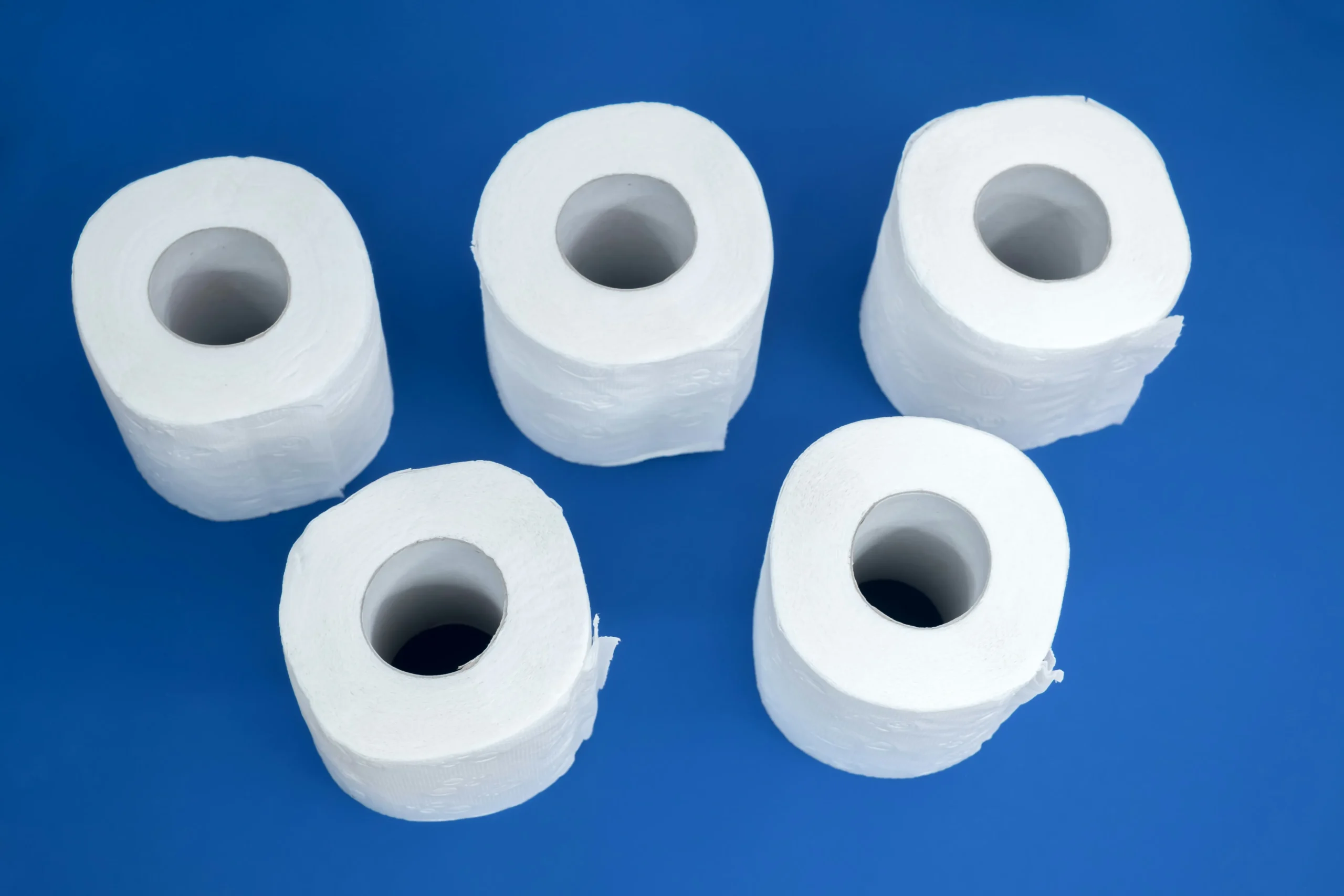
A COA without a batch number is just a piece of paper.
Most supply chain managers know to ask for a Certificate of Analysis (COA). The gap is that many suppliers provide a generic, undated document that covers the factory, not your specific production batch. For healthcare, that is a liability. You must require a batch-specific COA that explicitly tests for three compounds: fluorescent whiteners (optical brighteners), bisphenol-A (BPA), and phthalates. These appear when recycled content or low-grade adhesives are used in converting. The COA must name the test method (e.g., EN 645 for fluorescent whiteners) and show a quantitative result cleanly.
ISO 9001 is a factory certification. It tells you the facility has a quality management system. It does not tell you that the specific roll of toilet paper you are buying is cleared for medical use. You need to see the FDA registration tied to the product line, not just the factory address. A legitimate FDA-registered medical device or food-contact paper product will have a listing number on the FDA’s Establishment Registration & Device Listing database. Ask your supplier for that number and verify it yourself. It takes five minutes and filters out the majority of unqualified traders who claim FDA compliance but only have a general factory registration.
- Batch-Specific COA Tracking: Must test for fluorescent whiteners (EN 645), BPA (GC-MS), and phthalates (EPA 3540C). The document must reference your production batch number and container seal safely.
- FDA Database Registration: Require the specific FDA listing number for the product line (e.g., toilet paper, facial tissue). Verify it at accessdata.fda.gov. Factory-level registration alone is insufficient.
- FSC Chain of Custody Validation: For EU markets and sustainability mandates, request the FSC certificate (C-number) and confirm it covers the specific mill that produced your pulp lot cleanly.
- ISO 9001:2015 Framework: Minimum requirement for any serious OEM partner. Ask for the scope of certification to confirm it explicitly includes ‘manufacture of household paper products’ or similar, not just trading profiles.
Here is the insider reality: a factory that passes ISO 9001 audits and maintains FSC chain of custody almost never has fluorescent whitener or phthalate issues because their raw material intake is controlled. The risk comes from small converters who buy pulp on the spot market and use low-grade adhesives in the embossing or winding process. That is where BPA and phthalates leach in. So when you request the COA, you are not just checking the pulp — you are auditing the converter’s adhesive and converting line. A supplier who hesitates to provide a batch-specific COA is likely masking a variable raw material stream.
Conclusion
Selecting the right GSM and ply for healthcare tissue is a risk-management decision, not a cost play. The 14–16 GSM per ply, 2-ply standard for patient rooms balances softness with plumbing safety, while 1-ply jumbo rolls at 15–17 GSM cut maintenance labor in high-traffic zones. Demand bulk (caliper) data alongside GSM to avoid low-density paper that feels rough, and require a COA with every shipment to confirm no fluorescent whiteners or allergens.
Review your current facility specs against the ranges in this guide. If your supplier cannot provide documented FDA registration, ISO 9001 certification, and FSC-certified virgin pulp options, it is time to qualify a backup. Browse the medical-grade tissue page to see how a compliant spec set translates into a finished product line that matches your RFP requirements.
Frequently Asked Questions
What toilet paper do gynecologists recommend?
Gynecologists generally recommend unscented, dye-free, white toilet paper made from virgin pulp to minimize irritation. For healthcare facilities, a 2-ply, 14-16 GSM per ply tissue from an FDA-compliant supplier is the standard. Always verify FDA compliance and avoid fragrances for sensitive skin.
Is Charmin toilet paper 1 ply or 2-ply?
Charmin offers both 1-ply and 2-ply options depending on the product line, with their Ultra Soft being a 2-ply. For healthcare sourcing, you should specify exact ply and GSM requirements rather than relying on consumer household brand names. Specify ply and GSM in your RFP to ensure consistency.
What is the healthiest toilet paper to use?
The healthiest toilet paper is unscented, chlorine-free, and made from 100% virgin wood pulp with no fluorescent whiteners. For healthcare, a 2-ply, 14-16 GSM per ply tissue from an FDA-compliant source is standard to block chemical migration onto vulnerable patient skin.
What GSM is best for hospital public restroom jumbo rolls?
For hospital public restroom jumbo rolls, a 1-ply at 15-17 GSM is the standard for balancing cost efficiency and durability. This spec reduces refill frequency and maintenance costs in high-traffic zones like ER waiting lines. Request bulk (caliper) data alongside GSM to verify true softness.
Does ply count affect septic systems in healthcare facilities?
Yes, higher ply counts like 4-ply or 5-ply can slow disintegration and increase clogging risk in older healthcare plumbing lines. For septic-safe operation, a 2-ply tissue with proper wet-strength and fast-dispersing properties is highly recommended. Test dispersibility with your supplier before committing to high-ply rolls.