Skip to content
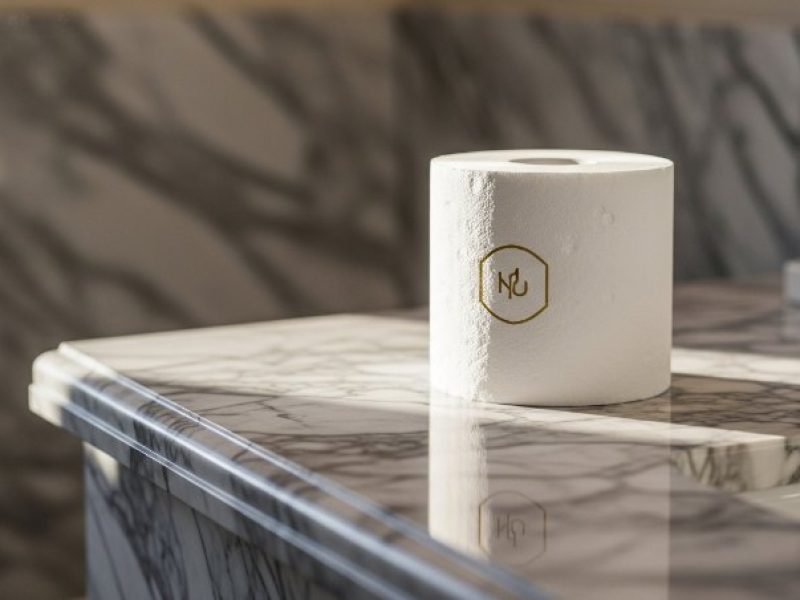
free toilet paper samples china is the first checkpoint buyers should lock before they approve a supplier, budget, or production slot. Getting free toilet paper samples from China manufacturers is the standard first step for any hotel procurement manager who needs to verify quality before committing to a container-sized order. The process is straightforward, but the details matter more than most buyers realize. A sample that feels great in your hand might not match the bulk production spec, and that gap costs hotels real money in guest experience.
Top Source Hygiene, a manufacturer operating out of China’s largest paper production base in Mancheng, Baoding since 1995, ships stock samples in 2-3 days and custom branded samples in about 10 days. The sample itself is free, though new clients typically cover courier costs — roughly $30 to $80 depending on destination. That small upfront investment saves you from committing to a 20-ton container of toilet paper that doesn’t meet your property’s softness or absorbency standards. China produces roughly 30% of the world’s toilet paper, so understanding how to navigate this process gives you a significant sourcing advantage.
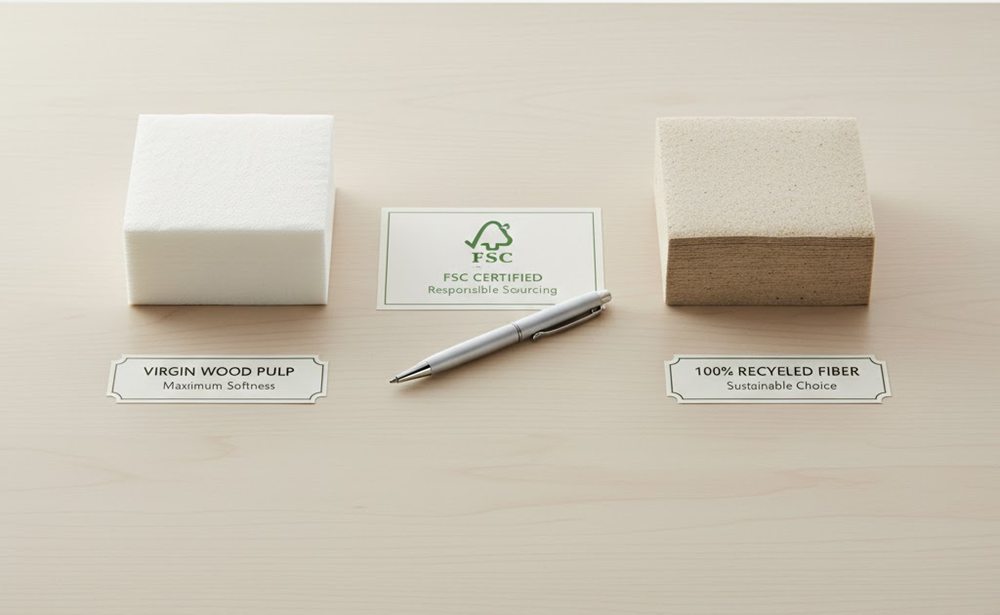
Why Free Samples Matter for Hotel Branding
A bad sample means a bad brand experience across your entire multi-property portfolio.
Hotel procurement managers don’t order toilet paper by the case. They order by the container — one 40’HQ holds roughly 20 tons. That’s a six-figure commitment based on spec sheets and a few sheets of paper. The only way to de-risk that bet is to hold the actual product in your hands before the container sails.
The problem is that ‘free sample’ doesn’t mean ‘identical to bulk order.’ Some suppliers send a premium-grade sample to win the deal, then ship a lower-GSM product for the production run. If you’re a three-property boutique chain, that inconsistency hits every guest bathroom. If you’re a 50-property group, it hits your brand reputation across an entire region.
- Verify the GSM: Grams per square meter directly controls thickness and perceived softness. A 2-ply 18 GSM sample feels noticeably thinner than a 2-ply 22 GSM production roll. Always request a sample that matches your exact GSM spec — not a ‘similar’ stock item.
- Check the ply count: 3-ply and 4-ply behave differently in high-humidity bathrooms. A 3-ply roll may disintegrate faster under heavy use, while a 4-ply holds up but costs more. The sample must match the ply you intend to order, not just the ply you asked about.
- Inspect the packaging print: Custom-branded toilet paper is a brand touchpoint. If the logo is misaligned by 2mm or the color is off, guests notice. Request a pre-production sample with your exact packaging design — paper wrap, polybag, or paper bag — before approving the full run.
- Test absorbency and dissolvability: Drop a sample sheet in a glass of water. Time how long it takes to break down. A quality 100% virgin wood pulp roll should disintegrate in under 10 seconds. If it takes longer, your plumbing system may clog.
The Hidden Cost of ‘Free’ Samples
Courier fees serve as a standard industry filter, separating opportunistic tire-kickers from serious bulk buyers.
Every supplier says ‘free samples.’ What they don’t say is that the courier bill lands on you. For a 5-kg box of toilet paper from China to a hotel in Chicago, expect $40 to $100 via DHL or FedEx. That’s not a fee — that’s a filter. It filters out tire-kickers from serious buyers.
- Stock sample: Existing product, existing packaging. Ships in 2-3 days. Lowest courier cost ($30-$50). Good for a quick softness check, but zero use for branding.
- Custom sample: Your spec: GSM, ply, emboss, print. Takes ~10 days. Courier $50-$100. This is the only sample that tells you if the bulk run will match. If the supplier won’t run this, run away.
- Pre-production mock-up: Full packaging mock-up with your logo, your design, your polybag. Rare for first orders. Courier $80-$120. Use only when packaging is the deal-maker or deal-breaker.
Here’s the negotiation lever most buyers miss: ‘I’m ready to sign a 40’HQ container. Waive the courier on the sample and I’ll send the PO this week.’ That works. The factory knows a $60 courier is nothing against a $20,000 container. If they still say no, the buyer has just learned how tight their margins really are — and that’s useful information too.
| Cost Factor | Typical Industry Practice | Top Source Hygiene Policy | Why It Matters to You |
|---|---|---|---|
| Sample Price | Often hidden in product cost or charged upfront | Free for all global B2B clients | Zero financial risk to verify quality before bulk order |
| Courier Fee (New Client) | Not disclosed; can be $50–$100+ | Transparent: $30–$80, negotiable on first order | No surprise costs; budget-friendly trial process |
| Sample vs. Bulk Spec Match | Commonly send lower-GSM samples than ordered | We ship samples matching your exact GSM, ply, and emboss spec | Ensures your quality check is accurate and reliable |
| Sample Lead Time | Varies widely, often 2–4 weeks | Stock samples: 2–3 days; Custom samples: ~10 days | Fast turnaround keeps your procurement timeline on track |
| Sample Customization | Limited or no customization for free samples | Full customization: size, ply, GSM, packaging, private label | Test your exact brand vision before committing to container MOQ |
How to Request Samples: Step-by-Step Process
Locking down a precise technical spec sheet prevents communication alignment failures completely.
Before you send a single email, write down your exact product spec. Most procurement managers skip this step and end up testing a sample that doesn’t match what ships in bulk. Nail down these four variables: ply (2 to 5), GSM (grams per square meter — typically 15–40 for toilet paper), roll diameter, and core size. If you need custom packaging, have your artwork dimensions ready. Without a written spec, the factory can’t build a sample that reflects your final order.
- Step 1: Lock your spec sheet: Write down ply, GSM, roll width, core size, emboss pattern, and packaging type (paper wrap, polybag, or paper bag). Share this with the manufacturer before requesting a sample.
- Step 2: Contact the sales team: Send your spec sheet along with your target MOQ. At Top Source Hygiene, standard MOQ is one 40’HQ container (~20 tons), but they offer flexibility for smaller trial orders, especially for new clients in Africa and South America.
- Step 3: Specify sample type: Stock samples ship in 2–3 days. Custom samples (matching your ply, GSM, emboss, and branding) take roughly 10 days. Both are free — you only cover the courier fee, typically $30–$80 for new clients.
- Step 4: Pay courier (if new): Established buyers often negotiate free courier on the first order. For new clients, the courier cost is standard industry practice. Confirm the shipping method and tracking number before payment.
- Step 5: Receive and test: When the sample arrives, verify it matches your spec: measure GSM with a scale and ruler, count the plies, check the emboss pattern, and run a quick absorbency test. If anything deviates, flag it before approving the bulk run.
One trap that catches first-time buyers: some suppliers send a higher-quality sample than the bulk production run. Always request a pre-production sample (also called a ‘golden sample’) after you place the order. That sample becomes the benchmark for the entire container. Top Source Hygiene follows this process as standard practice — they ship free stock samples in 2–3 days and custom samples in ~10 days, with courier costs covered for serious inquiries.
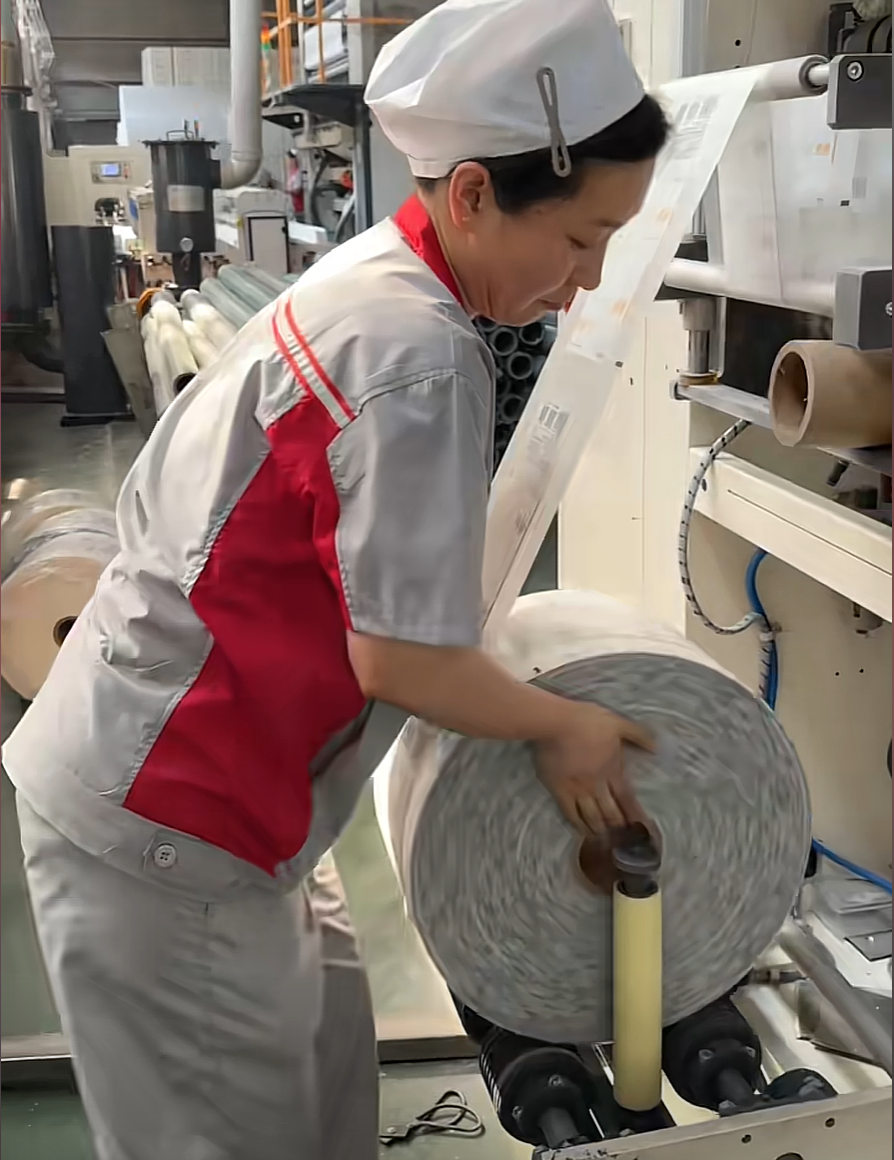
What to Check When Your Sample Arrives
A sample that passes visual inspection can still fail in bulk if mechanical consistency parameters drift across shifts.
When your sample box lands on your desk, the first instinct is to feel the softness and glance at the packaging. That’s a mistake. Every hospitality procurement manager I’ve worked with who skipped the checklist ended up with a container of product that didn’t match the approved sample. Here’s the exact sequence to run, in order of importance.
- GSM (Grams per Square Meter): This is your most common failure point. Take a sample sheet and weigh it against the spec on your order form. Competitors often ship samples at 18 GSM but produce bulk at 15 GSM to save cost. Top Source Hygiene’s approved internal standard is to match sample GSM to bulk production within ±1 GSM. If your order says 20 GSM and the sample reads 17, reject it immediately.
- Ply Count Validation: Peel the layers apart manually. A 3-ply roll should have three distinct, bonded sheets. Samples have been seen where the plies are fused so tightly they feel like 2-ply, or worse, the bulk run uses a completely unmatched layer thickness configuration. Count each ply manually. If it doesn’t match the spec, the roll’s absorbency and strength are compromised.
- Emboss Pattern: Run your finger across the surface. The emboss should be uniform — no flat spots, no tearing at the pattern edges. For hotel branding, the emboss pattern is part of the guest experience. A shallow or inconsistent emboss makes the paper feel cheap. Compare the sample side-by-side with your approved artwork or reference roll.
- Packaging Print Quality: Check the wrapper or box under natural light. Look for color shift, misaligned logos, or ink smudges. For private-label hospitality, the packaging is your brand’s first touchpoint. If the logo is off-center or the color is faded, the sample fails. Take a photo and compare it to your brand guidelines PDF.
- Softness: This is subjective but measurable. Rub the paper between your thumb and forefinger. Does it feel rough or silky? For 4-ply or 5-ply hotel rolls, the surface should be smooth without pilling. A rough sample indicates low-quality pulp or insufficient calendering. If the sample feels abrasive, the bulk run will feel worse — paper softness degrades slightly during shipping compression.
- Absorbency: Drop a teaspoon of water on a flat sheet. Count the seconds until the water is fully absorbed. For a 3-ply 20 GSM sheet, absorbency under 5 seconds is good for commercial use. Anything over 8 seconds means the sheet is too dense or the pulp is over-refined. This directly affects guest satisfaction — slow-absorbing paper leads to double-wiping and complaints.
- Dissolvability: Fill a glass jar with water, drop in a full sheet, and shake for 10 seconds. The paper should break apart into small fibers within 30 seconds. If it holds together in clumps, it will clog plumbing in high-traffic bathrooms. This is non-negotiable for hotels and commercial facilities. Request the dissolvability test data from your supplier — Top Source Hygiene includes this in their QC report for every sample.
Conclusion
Free samples let you verify the feel, the GSM, the ply count, and the packaging alignment before a single container leaves the factory floor. That is the cornerstone of risk mitigation. Sourcing leaders who deploy a disciplined pre-shipment audit checklist ensure that guest satisfaction metrics remain consistent from the first trial pilot to multi-year program renewals. Review the custom tissue options on the product table below to lock your brand’s targeted engineering parameters cleanly today.
Frequently Asked Questions
How to get free toilet paper by mail?
Contact an audited B2B manufacturer like Top Source Hygiene directly and request stock samples, which ship in 2-3 days with ex-factory material charges waived for verified corporate procurement leads. Specify your required sheet ply and GSM metrics to target the right profile smoothly.
Does the United States get toilet paper from China?
Yes, US buyers source toilet paper from China for OEM and private label programs, especially for hospitality and retail brands. Top Source Hygiene supplies FDA-compliant products to North America with pre-cleared customs billing. Always verify FDA facility registration and logistics lead times before locking container slots.
What toilet paper comes from China?
Chinese manufacturers produce OEM and ODM toilet paper in 2 to 5-ply, jumbo rolls, kitchen towels, and facial tissues for global commercial buyers. Top Source Hygiene utilizes 100% sulfate virgin pulp processes to eliminate lint issues. Request an active custom sample run to verify fiber density specs before formal container purchases.
How do I receive free samples?
Contact the manufacturer’s sales team with your required ply, GSM, and size, then request stock or custom samples. Stock samples ship free in 2-3 days, while custom brand configurations take about 10 days to process. Always confirm international courier terms before the sample lot is dispatched.
How to get sample products for free online?
Visit a B2B manufacturer’s website, fill out the inquiry form with your product spec and MOQ, and request free stock samples for quality verification. Custom private label mockups are free but require technical drawing validation. Be ready to provide your corporate express shipping account details for rapid border transit routing.