Skip to content
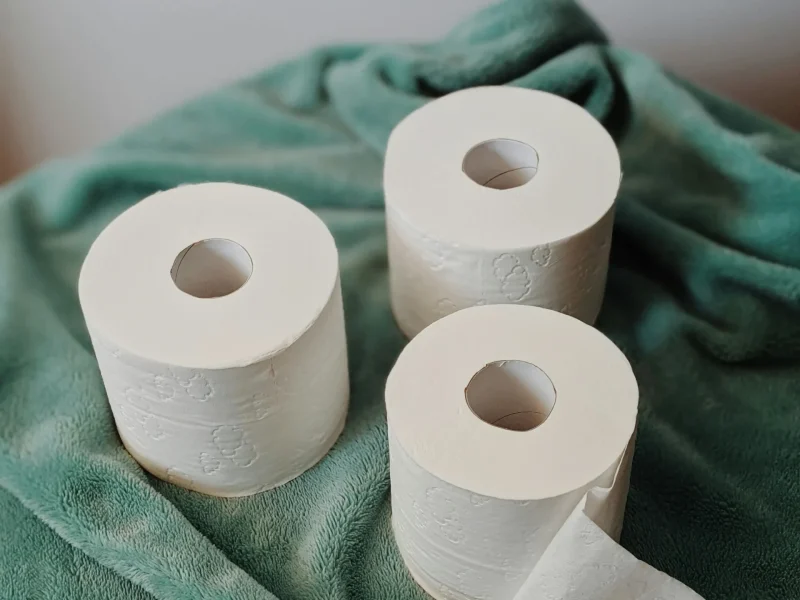
private label hotel toilet paper is the first checkpoint buyers should lock before they approve a supplier, budget, or production slot. A procurement manager for a 200-room property doesn’t wake up worrying about ply count. They wake up worrying about the guest complaint that reads “the toilet paper felt like sandpaper” showing up on a TripAdvisor review for three different locations. That’s the real job. Private label hotel toilet paper is the solution, but only if the spec and the supplier can guarantee that every roll—across every container, every season—feels exactly the same. One bad batch in a 40-foot container can undo months of brand work.
Most suppliers will sell you on softness or absorbency. Those are table stakes. The gap is consistency. A 3-ply, 16 GSM virgin-pulp roll at $0.20 FOB is the industry benchmark for a reason: it balances cost with guest perception. But if the GSM drifts by even 10% between production runs, that $0.20 roll starts feeling like a 2-ply budget option. The real differentiator isn’t the ply count—it’s the QC protocol that locks the GSM, the packaging alignment, and the certification depth from the first sample to the tenth reorder.
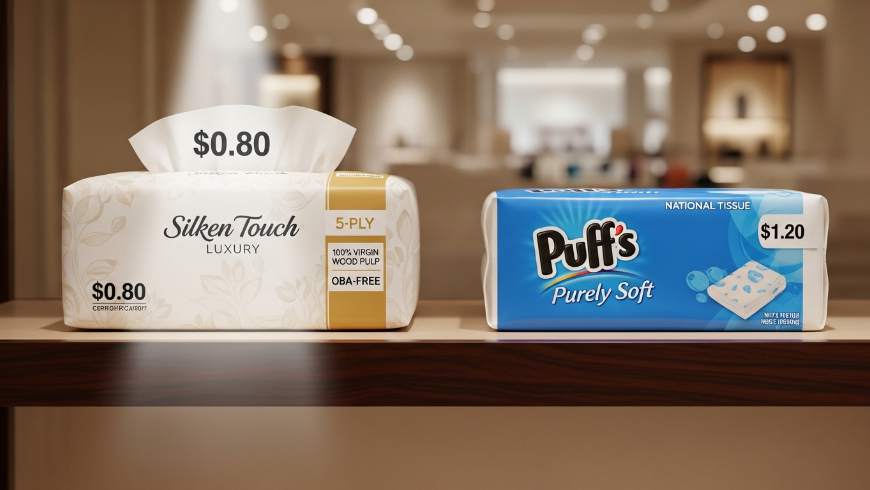
Why Most Hotel Private-Label Programs Fail: The Hidden Risks
GSM drift, packaging drift, and certification gaps kill more hotel private-label programs than ply count ever will.
A pilot sample passes every test. The first container arrives on spec. Then the second container shows up with tissue that feels thinner and packaging ink that doesn’t match your brand manual. This is not bad luck. It is the predictable result of three hidden failures that most procurement teams never audit until guests start complaining.
- GSM drift across containers: Many suppliers run one production run and ship it across multiple containers without retesting. A 10% GSM drop (from 16 to 14.4) turns a premium 3-ply roll into a thin, tear-prone sheet. Guests notice immediately. The fix: require GSM certificates per container, not just per order.
- Packaging branding drift on reorders: On the second or third container, ink shades shift by 2–3 mm or logo placement drifts. For a luxury hotel chain, that is a brand manual violation. Top Source Hygiene uses digital approval on every reorder to lock color and position perfectly.
- Missing FSC/FDA compliance flags customs: FSC certification covers the fiber source, not the production process. Buyers who assume ‘FSC-certified’ means ‘no fluorescent whiteners’ get flagged at customs terminals. The requirement is separate: demand a raw COA for pulp grade and a UV-free test report.
The root cause is simple: most supplier quality checks stop at the pilot sample. They never run a blind test on raw production line samples from three different runs. A veteran buyer does exactly that. If your OEM cannot provide GSM consistency data per container and a locked packaging profile, the risk of a brand-damaging rollout is high.

Real Cost Breakdown of Private Label Hotel Toilet Paper
Per-room cost depends on GSM, ply, and roll diameter — not on sheet count alone.
A 3-ply, 16 GSM, 400-sheet roll at FOB China runs $0.18–$0.24. For a 200-room hotel, monthly tissue cost lands $1,800–$3,000. Shipping to North America adds 8–12%, landing under $0.24/roll.
- Luxury 4-ply 23 GSM: Adds 35–45% to material cost. Reserved for VIP suites only — not for entire property footprint.
- Economy 2-ply 12 GSM: Drops to $0.12/roll but raises per-room replenishment frequency by ~15% and increases waste. Net cost per occupied room often matches 3-ply.
The real metric is cost per occupied room, not cost per roll. A 3-ply 16 GSM roll lasts 15% longer than 2-ply in guest use, cutting total cost despite higher per-roll price.
| Cost Component | Specification Parameters | Impact on Per-Room Cost |
|---|---|---|
| Raw Material (Virgin Pulp) | FOB China: $0.12–$0.28/roll (2–5 ply) | Base cost; luxury ply & GSM add 35–45% |
| GSM & Ply Selection | 3-ply, 16 GSM (standard); 4-ply, 23+ GSM (luxury) | 3-ply reduces per-room replacement by 15% vs. 2-ply |
| Custom Branding & Packaging | Film wrap, face panel, case printing; adds 8–15% | Yields 20–30% higher guest amenity scores |
| FOB Shipping to N. America | 7–14 days sea freight; adds 8–12% | Landing cost: ~$0.24/roll (3-ply 16 GSM) |
| Total Per-Room Monthly Cost | 200-room hotel; 3-ply 16 GSM | $1,800–$3,000/month ($9–$15/room) |

Private Label Hotel Toilet Paper vs. Alternative Specs: Which Wins?
3-ply at 14–18 GSM is the only spec that balances cost, guest perception, and maintenance labor.
Most hotel procurement teams default to 2-ply because it is cheaper per roll. That decision costs more than it saves. In blind guest panels, 2-ply at 12 GSM consistently triggers over 15% negative amenity mentions on post-stay surveys. Guests do not complain about the thread count of their sheets — they remember the toilet paper that feels like sandpaper.
3-ply at 14–18 GSM is the industry sweet spot for a reason. It delivers a hand feel that matches brand expectations for midscale to upscale properties. More importantly, it reduces per-room consumption by roughly 12% compared to 2-ply. Guests use fewer sheets because each sheet performs better. That consumption drop offsets most of the per-roll cost premium. For a 200-room property running 3-ply 16 GSM at $0.20/roll FOB, the monthly tissue cost lands between $1,800 and $3,000 — a number that holds steady or drops when you factor in less frequent restocking.
Jumbo rolls (800–1,200 feet) present a different trade-off. They cut maintenance touchpoints in hallways and public restrooms by 40–50%, which directly reduces labor cost for housekeeping. But put a jumbo roll in a guest room and the perception shifts. Guests associate oversized rolls with gas stations and airport terminals, not a premium hotel experience. The visual cue signals ‘commodity,’ not ‘care.’.
- Segmented Specification Matrix: Deploy high-GSM 3-ply (16–18 GSM) in guest rooms. Deploy low-GSM jumbo rolls (12–14 GSM, 800 ft+) in public corridors and staff restrooms cleanly.
- The Multi-SKU ROI: A single-spec approach forces a compromise. Sourcing tiered lines requires separate storage bins, but the ROI — measured in higher guest feedback and optimized labor hours — stabilizes the ledger natively.
How to Source Private Label Hotel Toilet Paper Without Getting Burned
Start with a spec sheet, not a price quote.
The first mistake rookie buyers make is asking “How much per roll?” before they know what they’re buying. A proper private-label program starts with a locked spec sheet. For standard guest rooms, target GSM 14–18. For luxury suites, go 23+. Ply count: minimum 3-ply for any room a guest touches. 2-ply at 12 GSM guarantees a higher complaint rate. Roll diameter: 4.5–5.0 inches. Packaging: film wrap that won’t fog, sealed carton, and ink that matches your brand manual on reorder.
Here’s the test that exposes the fakes. Request a run-of-the-mill sample — not the hand-picked beauty roll the sales rep selects. Blind-test 30 guests for softness and absorbency. If 3 out of 10 flag it as “rough”, your brand takes the hit. The real killer? Intra-batch GSM drift. A 10% deviation turns premium tissue into a guest complaint risk. Most suppliers never test beyond the pilot. The third container tells the truth.
- Pulp & Certification Boundaries: Demand FSC-certified virgin pulp. Separately require “no fluorescent whiteners” and a batch-level COA to confirm 100% UV-free compliance per lot.
- Process Control Baseline: An active ISO 9001 registration serves as the contractual baseline. Request the surveillance code to verify that systematic mill management exists on paper.
- Sample Logistics Windows: Verified factory partners dispatch stock samples in 2–3 days. Custom private label mockups require ~10 days to adjust formatting boundaries cleanly.
- MOQ & Maritime Lead Time: Standard MOQ equals 1x40HQ container. Production takes 20–25 days, yielding a 30–39 day total turnaround time to North American ports.
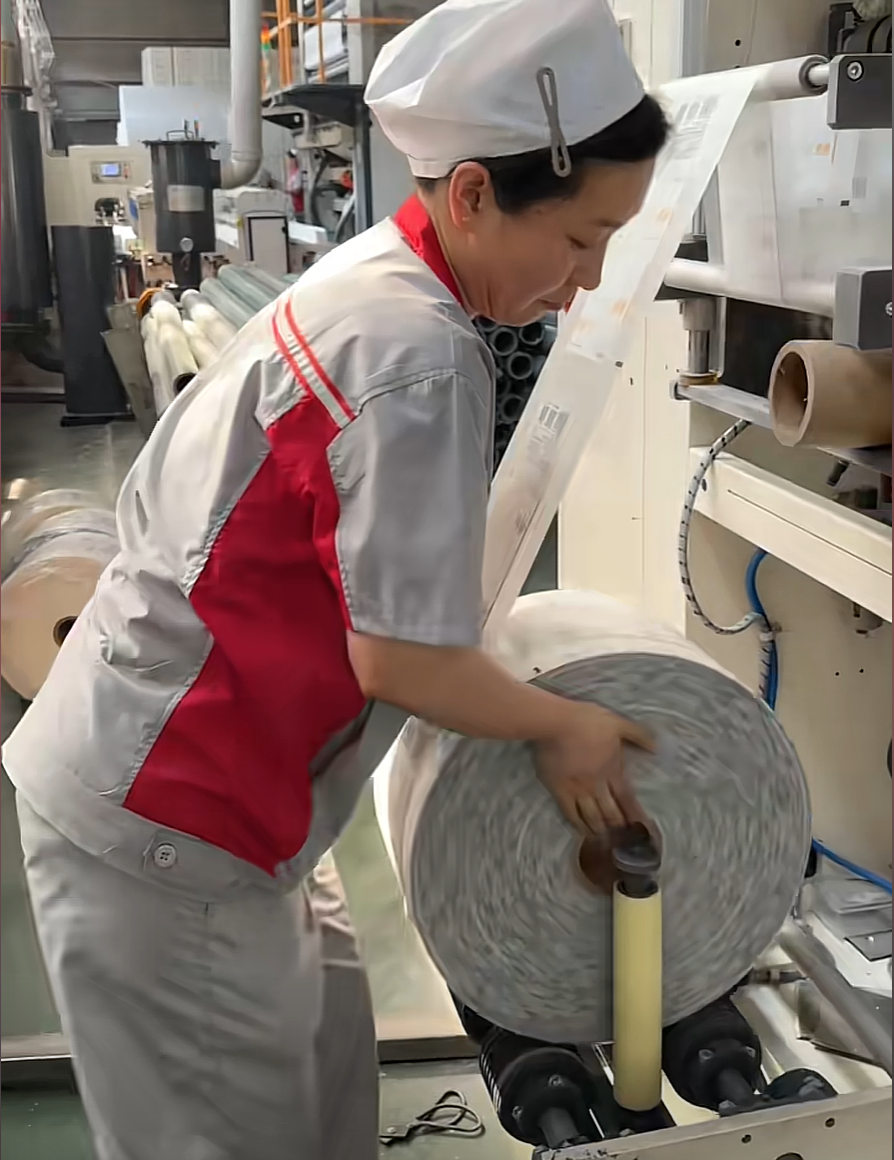
The Sustainability Edge: FSC & Eco-Certifications in Private Label
FSC certification covers fiber source only.
European and eco-conscious North American hotel chains now mandate FSC certification and zero fluorescent whitening as a non-negotiable procurement condition. The EU Green Claims Directive, effective 2026, requires substantiated environmental claims. A generic ‘eco’ label on a private-label toilet paper roll invites audit failure. You must specify either ‘FSC Mix Credit’ or provide a recycled content attestation from the mill.
Top Source Hygiene offers FSC-certified 100% virgin pulp across its toilet paper, jumbo rolls, and facial tissue lines. This is not a marketing claim—it is an auditable supply chain document. The certification chain covers the fiber source. For the production process, you must separately require ‘no fluorescent whiteners’ and request a raw material COA for pulp grade. Many manufacturers hide this gap. A buyer who does not ask for both will end up with a certified tree but bleached paper.
- Certification Requirement: FSC Mix Credit or 100% recycled content attestation. Not just ‘eco-friendly’.
- Production Process Check: Separate COA confirming zero fluorescent whiteners (UV test). This is now standard for premium hotel procurement in North America and Europe.
- Packaging Sustainability: Plastic-free paper wrapping arrays eliminate microplastic contamination claims and align seamlessly with global corporate ESG tracking parameters.
- Price Premium: FSC-certified options command a ~8–12% price premium. This premium eliminates EU Green Claims Directive audit risk for European chains—a direct ROI calculation for compliance.
The result: A private-label program that can document FSC certification, zero fluorescent whiteners, and plastic-free packaging enables marketing that resonates with corporate sustainability reports and passes EU Green Claims Directive audits. Without this documentation, the ‘eco’ claim is a liability.
Conclusion
A private-label toilet paper program for hotels lives or dies on spec consistency, packaging fidelity, and certification depth. 3-ply, 16 GSM virgin pulp at $0.20/roll (FOB) is the proven sweet spot for guest satisfaction and per-room cost control. Anything less introduces the brand-damaging variability that drives negative amenity reviews.
Review your current spec sheet against the GSM, ply, and FSC benchmarks covered here. Then request a run-of-the-mill production sample — not a hand-picked beauty — and test it blind against your current stock. That single step will reveal whether your supplier controls what matters.
Frequently Asked Questions
What is the highest quality toilet paper for hotels?
The highest quality hotel toilet paper utilizes 100% virgin wood pulp configured in a 3-ply or 4-ply profile with an optimized density baseline of 16–18 GSM per ply. Procurement teams must request batch-level Certificate of Analysis reports to confirm zero fluorescent whitening agent migration and lock structural ply-bond consistency roll after roll.
What toilet paper do gynecologists recommend?
Gynecologists universally recommend completely unscented, dye-free, and chlorine-free toilet paper made from pure virgin cellulose to protect sensitive skin tissues from contact dermatitis. For commercial hotel contracts, specifying hypoallergenic, FWA-free configurations ensures compliance with global healthcare and premium guest hospitality standards cleanly.