 Skip to content

A procurement manager sourcing FDA FSC toilet paper certification for a hotel chain faces a specific tension: the brand team wants the eco-label on the packaging, but the compliance team needs proof the paperwork holds up at customs. Most novice buyers assume a supplier’s website claim is enough. It is not. The real work starts when you ask for the FSC license code and the Certificate of Analysis.
Standard toilet paper is not FDA-registered unless you make a therapeutic claim. Print “hypoallergenic” on a private-label roll and you shift the product into FDA jurisdiction. That is a common mistake that triggers holds. FSC certification, on the other hand, is a marketing asset — but only if the supplier’s annual audit is active. A supplier can legally waive that audit by reporting zero FSC sales, meaning the certificate stays valid while no chain-of-custody exists for your order. You need to verify before you sign the contract.
Why Most Imported Toilet Paper Fails Compliance
A supplier can hold an FSC certificate but never sell FSC paper unless you verify the chain-of-custody.
Most compliance failures in imported toilet paper aren’t caused by bad paper. They’re caused by bad paperwork — or no paperwork at all. For a hotel buyer in North America or Europe, a 40-foot container of private-label toilet paper that gets flagged at customs doesn’t just delay a shipment. It triggers an 8-to-12-week hold, emergency sourcing at spot prices, and a brand reputation hit that takes months to repair. The average cost of that disruption runs between $15,000 and $25,000 in lost amenity value alone.
The two most common failure points are FSC certification integrity and FDA jurisdiction traps. Most novice buyers assume a supplier’s website logo means the product is certified. It doesn’t. And many assume standard toilet paper is FDA-regulated. It isn’t — unless your packaging says something you didn’t intend.
- The FSC loophole: FSC certification (category P6.4) requires annual surveillance fees. The certificate is valid for five years — but only if the holder completes annual audits. Here’s the catch most suppliers exploit: if a certificate holder declares ‘zero FSC sales’ in a given year, they can legally waive that year’s audit. That means a supplier can hold an active FSC certificate on paper but never actually produce a single roll of FSC-certified toilet paper. The fix: demand an invoice referencing the supplier’s specific FSC license code, then verify it on the official FSC database (search.fsc.org).
- The FDA trap on packaging: Standard toilet paper is not FDA-regulated under FDA CPG Sec 100.600. No registration, no pre-market approval. But the moment your private-label packaging includes a therapeutic or cosmetic claim — words like ‘hypoallergenic,’ ‘dermatologist-tested,’ or ‘soothing’ — that product falls under FDA jurisdiction. Customs sees it as an unregistered medical claim. The container gets held. The fix: review your packaging copy with a regulatory lens before production. If you want those claims, confirm the supplier has FDA facility registration.
- Packaging-stage mistakes: Compliance failures often start at the packaging stage, not the paper mill. Misprinted FSC logos, incorrect license codes, or missing Chain-of-Custody declarations on the shipping cartons are common errors. The result: customs flags the shipment as ‘misbranded.’ The fix: request a pre-production packaging proof that includes the exact FSC license code and logo placement, and cross-check it against the active certificate before loading.
For a novice procurement manager, the real risk isn’t the paper — it’s assuming the supplier’s claims are self-verifying. They aren’t. A 10-minute database check and a packaging review before production can prevent an 8-week customs hold and a $20,000 emergency sourcing bill.

FDA vs FSC: Which Certification Matters for Hotels?
FDA registration remains a distinct legal baseline activated strictly by cosmetic or medical copy marketing parameters.
Most hotel buyers assume both FDA and FSC are mandatory for imported private-label toilet paper. The reality is more specific—and the risk of getting it wrong is higher than most realize.
- Legal Registration Boundaries: Standard toilet paper (plain, unscented, no therapeutic claims) does NOT require active pre-market approval. Per FDA CPG Sec 100.600, jurisdiction only activates if you market the product as ‘medicated,’ ‘antibacterial,’ or ‘soothing.’
- FSC Commercial Surcharges: FSC certification for tissue paper (category P6.4) verifies that the wood fiber comes from responsibly managed forests. It costs a supplier $500–$2,000 for the initial audit plus annual fees, with a 5-year validity and required annual surveillance audits.
- The Strategic Risk Matrix: FDA compliance for standard toilet paper costs the supplier essentially nothing—no registration fee, no annual audit. FSC certification costs $500–$2,000 upfront plus annual surveillance fees. For the buyer, the real cost of not verifying FSC is a rejected shipment, brand reputation damage, and up to 30% premium loss on eco-labeled hotel amenities.
Real-world ROI example: A European hotel chain introduced FSC-certified eco-friendly facial tissues sourced from a verified supplier. The result: a 30% surge in tissue sales, with shoppers praising the product’s environmental credentials. The chain avoided compliance loopholes by demanding invoices referencing the specific FSC license code and confirming the annual audit was current. Had they accepted a generic ‘FSC-certified’ claim without verification, the marketing benefit would have been zero—和 greenwashing 的高额公关危机风险。
3-Step FSC Verification for Private Label Toilet Paper
The official FSC registry serves as the primary gateway to verify contract tracing.
The FSC database (search.fsc.org) is the only authoritative source. Searching by the supplier’s legal name alone is unreliable — you must use their unique license code. A certificate status of ‘Active’ is step one, but it tells you nothing about whether your specific order was produced under chain-of-custody.
- Step 1: Confirm Active Status: Ask your supplier for their FSC license code (format: FSC-CXXXXXX). Enter it on the FSC certificate search page. Confirm the status reads ‘Active’ and the certificate scope includes P6.4 (tissue paper).
- Step 2: Match Legal Entity: Cross-check the legal entity name on your proforma invoice against the certificate holder name in the FSC database. A mismatch — even a minor abbreviation — means the entity billing you is not the certificate holder.
- Step 3: Demand the Sales Declaration: FSC rules allow a certificate holder to waive their annual surveillance audit by declaring ‘zero FSC sales’ that year. Request a copy of the most recent FSC sales declaration or audit report. If they cannot produce it, you are buying unverified fiber.
A real-world example: in 2026, a European hotel group rejected an entire container of private-label jumbo rolls because the supplier’s FSC certificate had been ‘waived’ for two consecutive years. The buyer had assumed the active certificate on the database meant compliance. It did not. Verification takes 10 minutes. A rejected shipment costs 8–12 weeks and $15,000–$25,000 in emergency sourcing.
Specs Sheet: What Your Supplier Must Provide
A Certificate of Analysis is the single document that kills or confirms a hotel toilet paper deal.
When a novice procurement manager asks for a supplier’s paperwork, the first document that should hit their inbox is the Certificate of Analysis (COA). Not the FSC certificate, not the ISO badge — the COA. This is the lab-issued report card that proves the actual fiber content, ply count, GSM, absorbency rate, and tensile strength of the paper in the container. Without it, you are buying on a promise.
For hotel buyers, the COA is non-negotiable because it directly contradicts or confirms the supplier’s softness and quality claims. If the supplier says 3-ply but the COA shows 2.8-ply equivalent density, your guest bathroom experience drops. If the GSM is off by 5 points, the roll feels thin and the dispenser jams. A COA from a third-party lab (not the factory’s own internal test) is the only reliable pre-shipment proof.
- Certificate of Analysis (COA): Proves fiber type (virgin vs recycled), ply count, GSM, absorbency (g/m²), and tensile strength. Ask for a COA from a third-party lab like SGS or Intertek. Reject factory-only internal COAs unless backed by ISO 9001 surveillance audit records.
- FSC Chain of Custody (CoC) Certificate: Verifies that the wood fiber comes from FSC-certified forests. Critical for marketing eco-label claims. Must include the supplier’s exact license code (e.g., FSC-C123456). Verify on search.fsc.org.
- Material Safety Data Sheet (MSDS): Required by your brand safety and compliance team. Lists chemical additives, bleaching agents, and any residual processing aids. For US hotel chains, confirm no PFAS, no formaldehyde-releasing agents, and no optical brighteners if claiming “fluorescent-free.”
- EPA TSCA Statement (for US imports): Confirms that the bleaching process (e.g., elemental chlorine-free or totally chlorine-free) complies with US Toxic Substances Control Act. Without this, US Customs can hold your container for chemical inspection, adding 4–6 weeks and $2,000–$5,000 in storage fees.
The COA is the most critical because it is the only document that validates the product’s physical performance — the exact attributes that drive guest satisfaction scores and dispenser reliability. A hotel chain that sources 50,000 rolls per month cannot afford a batch that disintegrates on contact. Demand the COA before the price quote.
How to Source Compliant Hotel Toilet Paper Safely
A 10-minute FSC database check can save you from a $25,000 compliance crisis.
Before you commit to a full container order, run through this three-step risk mitigation checklist. It separates suppliers with real compliance infrastructure from those who just print logos on a certificate.
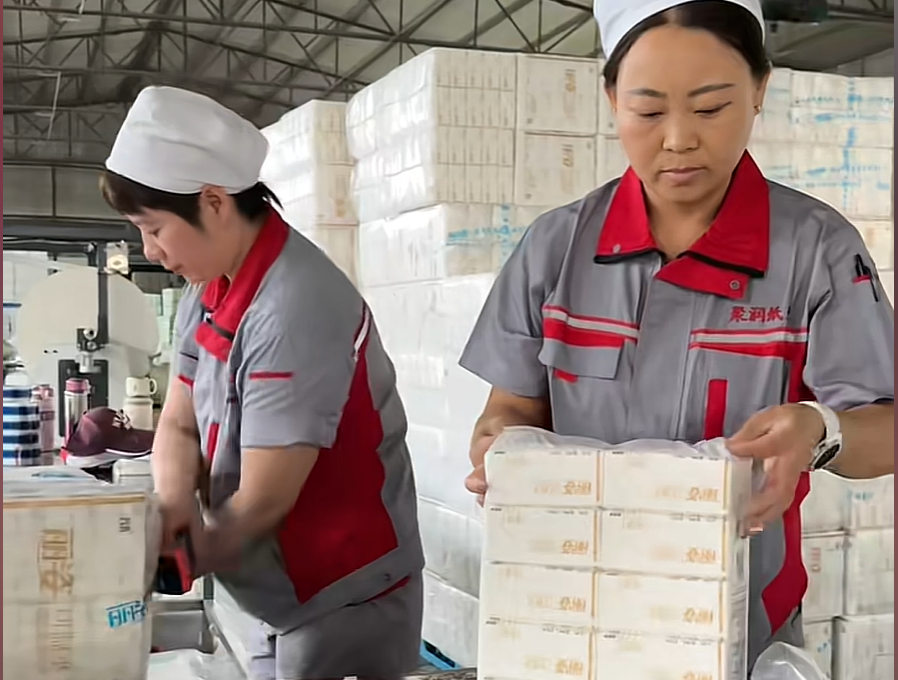
- Step 1: Request a pilot production run: Do not skip this. A pilot run of 5–10 cartons under your private label forces the supplier to actually use their certified raw material and print your packaging. If they hesitate or offer excuses, you have your answer. A factory with transparent QA metrics can schedule a pilot in under 7 days.
- Step 2: Confirm the FSC license code — not just the logo: Ask for the supplier’s exact FSC license code (e.g., FSC-C123456) and search it on the official FSC database at search.fsc.org. Confirm the legal entity name matches your invoice exactly.
- Step 3: Request a Certificate of Analysis (COA) before payment: It should list ply, GSM, fiber type (100% virgin wood pulp), absorbency rate, and a statement confirming no PFAS or fluorescent whiteners. If the supplier cannot provide a COA on company letterhead within 48 hours, they do not have batch-level quality control.
A manufacturer with an audited factory and transparent QA metrics can provide these three documents instantly. If you have to chase them for a COA or an FSC license code, the risk of a rejected shipment — costing $15,000 to $25,000 in lost amenity value and emergency sourcing — is unacceptably high.
Conclusion
For a novice buyer, the difference between a smooth launch and a PR crisis comes down to two documents: a valid FSC license code on the invoice and a COA that confirms no therapeutic claims were made. Skip the verification, and an 8-week customs hold and a $20,000 emergency sourcing bill become your problem.
Review the FSC Certification Verification page to see how a transparent audit trail and an FDA-ready production line remove that risk before you place your first order.
Frequently Asked Questions
What does FSC certified mean for toilet paper?
FSC certification means the toilet paper comes from responsibly managed forests that are independently audited. For buyers, it is a marketing must in Europe and North America to prove compliance with zero-deforestation mandates. Always request the supplier’s chain-of-custody certificate number, not just their general FSC certificate.
Which toilet paper does not contain PFAS in the USA?
Standard virgin wood pulp toilet paper from suppliers like Top Source Hygiene typically does not contain added PFAS, but you must request a Certificate of Analysis (COA) to confirm. The real risk resides in low-grade recycled alternatives. Request a COA for PFAS specifically in your procurement contract.
How can I verify an FSC certification?
You verify FSC certification by asking for the supplier’s chain-of-custody certificate number and checking it on the FSC public database (info.fsc.org). A supplier can hold an active certificate but pass non-certified stock unless audited lot by lot. Check the certificate number on the FSC public database and match it to your order invoice.
Is FDA registration required for imported toilet paper?
No, FDA registration is not required for standard imported toilet paper because it is not a medical device or drug. However, the paper must comply with EPA TSCA regulations at port entry points. Request a COA for EPA TSCA compliance, not FDA registration, for standard toilet paper.
Where does the US get most of their toilet paper?
The US gets most of its toilet paper from domestic mills in the South and Pacific Northwest. However, for custom-branded or private label toilet paper, many hotels and retailers source direct containers from China to capture ex-factory margin efficiencies. For custom runs, compare domestic vs. import cost including logistics and lead time.
